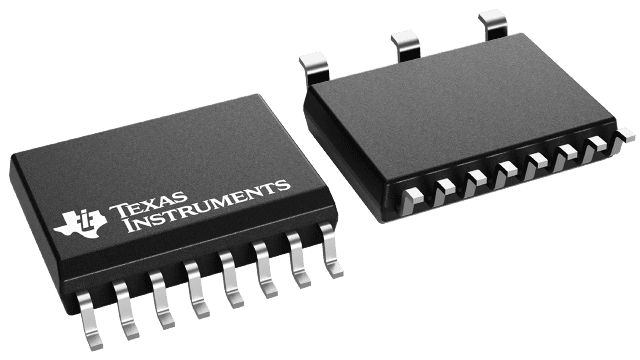
TPS929120-Q112-channel automotive 40-V high-side LED driver with FlexWire interface | Evaluation Boards | 2 | Active | With increasing demand for animation in automotive lighting, LEDs must be controlled independently. Therefore, LED drivers with digital interfaces are essential to effectively drive pixel-controlled lighting applications. In exterior lighting, multiple lamp functions are typically located on different PCB boards with off-board wires connected to each other. It is difficult for a traditional single-ended interface to meet the strict EMC requirements. By using an industrial-standard CAN physical layer, the UART-based FlexWire interface of the TPS929120-Q1 easily accomplishes long distance off-board communication without impacting EMC.
The TPS929120-Q1 is a 12-channel, 40-V high-side LED driver that controls the 8-bit output current and 12-bit PWM duty cycles. The device meets multiple regulation requirements with LED open-circuit, short-to-ground, and single LED short-circuit diagnostics. A configurable watchdog also automatically sets fail-safe states when the MCU connection is lost, and, with programmable EEPROM, TPS929120-Q1 can flexibly be set for different application scenarios.
With increasing demand for animation in automotive lighting, LEDs must be controlled independently. Therefore, LED drivers with digital interfaces are essential to effectively drive pixel-controlled lighting applications. In exterior lighting, multiple lamp functions are typically located on different PCB boards with off-board wires connected to each other. It is difficult for a traditional single-ended interface to meet the strict EMC requirements. By using an industrial-standard CAN physical layer, the UART-based FlexWire interface of the TPS929120-Q1 easily accomplishes long distance off-board communication without impacting EMC.
The TPS929120-Q1 is a 12-channel, 40-V high-side LED driver that controls the 8-bit output current and 12-bit PWM duty cycles. The device meets multiple regulation requirements with LED open-circuit, short-to-ground, and single LED short-circuit diagnostics. A configurable watchdog also automatically sets fail-safe states when the MCU connection is lost, and, with programmable EEPROM, TPS929120-Q1 can flexibly be set for different application scenarios. |
TPS929121-Q112-channel automotive 40-V high-side LED driver with FlexWire interface | LED Drivers | 2 | Active | With increasing demand for animation in automotive lighting, LEDs must be controlled independently. Therefore, LED drivers with digital interfaces are essential to effectively drive pixel-controlled lighting applications. In exterior lighting, multiple lamp functions are typically located on different PCB boards with off-board wires connected to each other. It is difficult for a traditional single-ended interface to meet the strict EMC requirements. By using an industrial-standard CAN physical layer, the UART-based FlexWire interface of the TPS929121-Q1 easily accomplishes long distance off-board communication without impacting EMC.
The TPS929121-Q1 is a 12-channel, 40-V high-side LED driver that controls the 8-bit output current and 12-bit PWM duty cycles. The device meets multiple regulation requirements with LED open-circuit, short-to-ground, and single LED short-circuit diagnostics. A configurable watchdog also automatically sets fail-safe states when the MCU connection is lost, and, with programmable EEPROM, TPS929121-Q1 can flexibly be set for different application scenarios.
With increasing demand for animation in automotive lighting, LEDs must be controlled independently. Therefore, LED drivers with digital interfaces are essential to effectively drive pixel-controlled lighting applications. In exterior lighting, multiple lamp functions are typically located on different PCB boards with off-board wires connected to each other. It is difficult for a traditional single-ended interface to meet the strict EMC requirements. By using an industrial-standard CAN physical layer, the UART-based FlexWire interface of the TPS929121-Q1 easily accomplishes long distance off-board communication without impacting EMC.
The TPS929121-Q1 is a 12-channel, 40-V high-side LED driver that controls the 8-bit output current and 12-bit PWM duty cycles. The device meets multiple regulation requirements with LED open-circuit, short-to-ground, and single LED short-circuit diagnostics. A configurable watchdog also automatically sets fail-safe states when the MCU connection is lost, and, with programmable EEPROM, TPS929121-Q1 can flexibly be set for different application scenarios. |
TPS929160-Q1Automotive 16-channel 40-V high-side LED and OLED driver | Power Management (PMIC) | 1 | Active | With the increasing demand for animation in automotive lighting, LEDs must be controlled independently. Therefore, LED drivers with digital interfaces are essential to effectively drive pixel-controlled lighting applications. In exterior lighting, multiple lamp functions are typically located on different PCB boards with off-board wires connected to each other. It is difficult for a traditional single-ended interface to meet the strict EMC requirements. By using an industrial-standard CAN physical layer, the UART-based FlexWire interface of the TPS929160-Q1 easily accomplishes long distance off-board communication without impacting EMC.
The TPS929160-Q1 is a 16-channel, 40V high-side LED driver that controls the 8-bit output current and 12-bit PWM duty cycles. The device meets multiple regulation requirements with LED open-circuit, short-to-ground, and single LED short-circuit diagnostics. A configurable watchdog also automatically sets FAIL-SAFE states when the MCU connection is lost, and, with programmable EEPROM, TPS929160-Q1 can flexibly be set for different application scenarios.
With the increasing demand for animation in automotive lighting, LEDs must be controlled independently. Therefore, LED drivers with digital interfaces are essential to effectively drive pixel-controlled lighting applications. In exterior lighting, multiple lamp functions are typically located on different PCB boards with off-board wires connected to each other. It is difficult for a traditional single-ended interface to meet the strict EMC requirements. By using an industrial-standard CAN physical layer, the UART-based FlexWire interface of the TPS929160-Q1 easily accomplishes long distance off-board communication without impacting EMC.
The TPS929160-Q1 is a 16-channel, 40V high-side LED driver that controls the 8-bit output current and 12-bit PWM duty cycles. The device meets multiple regulation requirements with LED open-circuit, short-to-ground, and single LED short-circuit diagnostics. A configurable watchdog also automatically sets FAIL-SAFE states when the MCU connection is lost, and, with programmable EEPROM, TPS929160-Q1 can flexibly be set for different application scenarios. |
TPS99000-Q1DLP® system management and illumination controller for DLP553x-Q1 chipset | Power Management - Specialized | 2 | Active | The TPS99000-Q1 system management and illumination controller is part of theDLP553x-Q1andDLP462x-Q1chipset, which also includes the DLPC23x-Q1 DMD display controller. The chipset provides all functions needed to support and exceed typical 5000:1 display dimming requirements forHead-Up Display (HUD)applications, with typical requirements of 3 nits to 15,000 nits brightness range and tight color point control. An integrated DMD high-voltage regulator supplies DMD mirror reference voltages, meeting the required tight tolerances. The power supply sequencer and monitor provide robust coordination of power-up and power-down events for the entire chipset.
The TPS99000-Q1 illumination controller integrates a 12-bit ADC, two DACs (12-bit and 10-bit), and two high-performance photodiode signal conditioning transimpedance amplifiers (TIAs) as the core components of the illumination control system. The ADC is capable of automatic sampling up to 63 events per video frame.
Advanced system status monitoring circuits provide real-time visibility into display sub-system operational condition, including two processor watchdog circuits, two die temperature monitors, comprehensive supply monitoring for overvoltage and undervoltage detection, checksum and password register protection with byte-level parity on SPI bus transactions, an excessive brightness monitor circuit, and other built-in test functions.
The TPS99000-Q1 system management and illumination controller is part of theDLP553x-Q1andDLP462x-Q1chipset, which also includes the DLPC23x-Q1 DMD display controller. The chipset provides all functions needed to support and exceed typical 5000:1 display dimming requirements forHead-Up Display (HUD)applications, with typical requirements of 3 nits to 15,000 nits brightness range and tight color point control. An integrated DMD high-voltage regulator supplies DMD mirror reference voltages, meeting the required tight tolerances. The power supply sequencer and monitor provide robust coordination of power-up and power-down events for the entire chipset.
The TPS99000-Q1 illumination controller integrates a 12-bit ADC, two DACs (12-bit and 10-bit), and two high-performance photodiode signal conditioning transimpedance amplifiers (TIAs) as the core components of the illumination control system. The ADC is capable of automatic sampling up to 63 events per video frame.
Advanced system status monitoring circuits provide real-time visibility into display sub-system operational condition, including two processor watchdog circuits, two die temperature monitors, comprehensive supply monitoring for overvoltage and undervoltage detection, checksum and password register protection with byte-level parity on SPI bus transactions, an excessive brightness monitor circuit, and other built-in test functions. |
TPS99001-Q1DLP® system management & illumination controller for automotive exterior lighting | Integrated Circuits (ICs) | 2 | Active | TheTPS99001-Q1system management controller is part of theDLP553x-Q1andDLP462x-Q1chipset, which also includes the DLPC23x-Q1 DMD display controller. An integrated DMD high-voltage regulator supplies DMD mirror reference voltages, meeting the required tight tolerances. The power supply sequencer and monitor provide robust coordination of power-up and power-down events for the entire chipset.
The TPS99001-Q1 controller integrates a 12-bit ADC as one of the core components of the control system. The ADC is capable of automatic sampling up to 63 events per video frame.
Advanced system status monitoring circuits provide real-time visibility into display sub-system operational condition, including two processor watchdog circuits, two die temperature monitors, comprehensive supply monitoring for overvoltage and undervoltage detection, checksum and password register protection with byte-level parity on SPI bus transactions, and other built-in test functions.
To aid in the design and manufacture of automotive-qualified projectors based on DLP technology, there are several establishedoptical module manufacturers and design housesthat can be leveraged to support your design.
TheTPS99001-Q1system management controller is part of theDLP553x-Q1andDLP462x-Q1chipset, which also includes the DLPC23x-Q1 DMD display controller. An integrated DMD high-voltage regulator supplies DMD mirror reference voltages, meeting the required tight tolerances. The power supply sequencer and monitor provide robust coordination of power-up and power-down events for the entire chipset.
The TPS99001-Q1 controller integrates a 12-bit ADC as one of the core components of the control system. The ADC is capable of automatic sampling up to 63 events per video frame.
Advanced system status monitoring circuits provide real-time visibility into display sub-system operational condition, including two processor watchdog circuits, two die temperature monitors, comprehensive supply monitoring for overvoltage and undervoltage detection, checksum and password register protection with byte-level parity on SPI bus transactions, and other built-in test functions.
To aid in the design and manufacture of automotive-qualified projectors based on DLP technology, there are several establishedoptical module manufacturers and design housesthat can be leveraged to support your design. |
TPSF12C3Common-mode active EMI filter (AEF) for three-phase systems | Evaluation Boards | 2 | Active | The TPSF12C3 is an active filter IC designed to reduce common-mode (CM) electromagnetic interference (EMI) in three-phase AC power systems.
The active EMI filter (AEF) configured with voltage sense and current inject (VSCI) uses a capacitive multiplier circuit to emulate the Y-capacitors in a conventional passive filter design. The device senses the high-frequency noise on each power line using a set of sense capacitors and injects noise-canceling currents back into the power lines using an injection capacitor. The effective active capacitance is set by the circuit gain and the injection capacitance. The AEF sensing and injection impedances use relatively low capacitance values with small component footprints. The device includes integrated filtering, compensation and protection circuitry, and an enable input.
The TPSF12C3 provides a very low impedance path for CM noise in the frequency range of interest for EMI measurement. Enabling up to 30 dB of CM noise reduction at the lower end of specified frequency ranges (for example, 150 kHz to 3 MHz) significantly reduces the size, weight and cost of the CM filter implementation.
The TPSF12C3 is an active filter IC designed to reduce common-mode (CM) electromagnetic interference (EMI) in three-phase AC power systems.
The active EMI filter (AEF) configured with voltage sense and current inject (VSCI) uses a capacitive multiplier circuit to emulate the Y-capacitors in a conventional passive filter design. The device senses the high-frequency noise on each power line using a set of sense capacitors and injects noise-canceling currents back into the power lines using an injection capacitor. The effective active capacitance is set by the circuit gain and the injection capacitance. The AEF sensing and injection impedances use relatively low capacitance values with small component footprints. The device includes integrated filtering, compensation and protection circuitry, and an enable input.
The TPSF12C3 provides a very low impedance path for CM noise in the frequency range of interest for EMI measurement. Enabling up to 30 dB of CM noise reduction at the lower end of specified frequency ranges (for example, 150 kHz to 3 MHz) significantly reduces the size, weight and cost of the CM filter implementation. |
TPSF12C3-Q1Automotive common-mode active EMI filter (AEF) for three-phase systems | Filters - Active | 1 | Active | The TPSF12C3-Q1 is an active filter IC designed to reduce common-mode (CM) electromagnetic interference (EMI) in three-phase AC power systems.
The active EMI filter (AEF) configured with voltage sense and current inject (VSCI) uses a capacitive multiplier circuit to emulate the Y-capacitors in a conventional passive filter design. The device senses the high-frequency noise on each power line using a set of sense capacitors and injects noise-canceling currents back into the power lines using an injection capacitor. The effective active capacitance is set by the circuit gain and the injection capacitance. The AEF sensing and injection impedances use relatively low capacitance values with small component footprints. The device includes integrated filtering, compensation and protection circuitry, and an enable input.
The TPSF12C3-Q1 provides a very low impedance path for CM noise in the frequency range of interest for EMI measurement. Enabling up to 30 dB of CM noise reduction at the lower end of specified frequency ranges (for example, 150 kHz to 3 MHz) significantly reduces the size, weight and cost of the CM filter implementation.
The TPSF12C3-Q1 is an active filter IC designed to reduce common-mode (CM) electromagnetic interference (EMI) in three-phase AC power systems.
The active EMI filter (AEF) configured with voltage sense and current inject (VSCI) uses a capacitive multiplier circuit to emulate the Y-capacitors in a conventional passive filter design. The device senses the high-frequency noise on each power line using a set of sense capacitors and injects noise-canceling currents back into the power lines using an injection capacitor. The effective active capacitance is set by the circuit gain and the injection capacitance. The AEF sensing and injection impedances use relatively low capacitance values with small component footprints. The device includes integrated filtering, compensation and protection circuitry, and an enable input.
The TPSF12C3-Q1 provides a very low impedance path for CM noise in the frequency range of interest for EMI measurement. Enabling up to 30 dB of CM noise reduction at the lower end of specified frequency ranges (for example, 150 kHz to 3 MHz) significantly reduces the size, weight and cost of the CM filter implementation. |
TPSI2072-Q1Automotive, two-channel 600-V 50-mA isolated switch with 2-mA avalanche rating | Solid State Relays (SSR) | 1 | Active | The TPSI2072-Q1 is a two channel isolated solid state relay designed for high voltage automotive and industrial applications. The TPSI2072-Q1 uses TI’s high reliability capacitive isolation technology in combination with internal back-to-back MOSFETs to form a completely integrated solution requiring no secondary side power supply. The TPSI2072-Q1 improves system reliability as TI’s capacitive isolation technology does not suffer from mechanical wearout or photo degradation failure modes common in mechanical relay and photo relay components.
The primary side of the device is powered by only 9 mA of input current and incorporates fail-safe EN1 and EN2 pins preventing any possibility of back powering the VDD supply. In most applications, the VDD pin of the device should be connected to a system supply between 4.5 V–20 V and the EN1 and EN2 pins of the device should be driven by a GPIO output with logic HI between 2.1 V–20 V. In other applications, the VDD, EN1, and EN2 pins could be driven together directly from the system supply or from a GPIO output.
Each channel on the secondary side consists of back-to-back MOSFETs with a standoff voltage of +/-600 V from SM to S1 and SM to S2. The TPSI2072-Q1 MOSFET’s avalanche robustness and thermally conscious package design allow it to robustly support system level dielectric withstand testing (HiPot) and DC fast charger surge currents of up to 2 mA without requiring any external components.
The TPSI2072-Q1 is a two channel isolated solid state relay designed for high voltage automotive and industrial applications. The TPSI2072-Q1 uses TI’s high reliability capacitive isolation technology in combination with internal back-to-back MOSFETs to form a completely integrated solution requiring no secondary side power supply. The TPSI2072-Q1 improves system reliability as TI’s capacitive isolation technology does not suffer from mechanical wearout or photo degradation failure modes common in mechanical relay and photo relay components.
The primary side of the device is powered by only 9 mA of input current and incorporates fail-safe EN1 and EN2 pins preventing any possibility of back powering the VDD supply. In most applications, the VDD pin of the device should be connected to a system supply between 4.5 V–20 V and the EN1 and EN2 pins of the device should be driven by a GPIO output with logic HI between 2.1 V–20 V. In other applications, the VDD, EN1, and EN2 pins could be driven together directly from the system supply or from a GPIO output.
Each channel on the secondary side consists of back-to-back MOSFETs with a standoff voltage of +/-600 V from SM to S1 and SM to S2. The TPSI2072-Q1 MOSFET’s avalanche robustness and thermally conscious package design allow it to robustly support system level dielectric withstand testing (HiPot) and DC fast charger surge currents of up to 2 mA without requiring any external components. |
| Development Boards, Kits, Programmers | 1 | Active | |
TPSI2140-Q1Automotive 1200-V 50-mA isolated switch with 2-mA avalanche rating | Solid State Relays (SSR) | 1 | Active | The TPSI2140-Q1 is an isolated solid state relay designed for high voltage automotive and industrial applications. The TPSI2140-Q1 uses TI’s high reliability capacitive isolation technology in combination with internal back-to-back MOSFETs to form a completely integrated solution requiring no secondary side power supply.
The primary side of the device is powered by only 9 mA of input current and incorporates a fail-safe EN pin preventing any possibility of back powering the VDD supply. In most applications, the VDD pin of the device should be connected to a system supply between 5 V–20 V and the EN pin of the device should be driven by a GPIO output with logic HI between 2.1 V–20 V. In other applications, The VDD and EN pins could be driven together directly from the system supply or from a GPIO output. All control configurations of the TPSI2140-Q1 do not require additional external components such as a resistor and/or low side switch that are typically required in photo relay solutions.
The secondary side consists of back-to-back MOSFETs with a standoff voltage of ±1.2 kV from S1 to S2. The TPSI2140-Q1 MOSFET’s avalanche robustness and thermally conscious package design allow it to robustly support system level dielectric withstand testing (HiPot) and DC fast charger surge currents of up to 2 mA without requiring any external components.
The TPSI2140-Q1 is an isolated solid state relay designed for high voltage automotive and industrial applications. The TPSI2140-Q1 uses TI’s high reliability capacitive isolation technology in combination with internal back-to-back MOSFETs to form a completely integrated solution requiring no secondary side power supply.
The primary side of the device is powered by only 9 mA of input current and incorporates a fail-safe EN pin preventing any possibility of back powering the VDD supply. In most applications, the VDD pin of the device should be connected to a system supply between 5 V–20 V and the EN pin of the device should be driven by a GPIO output with logic HI between 2.1 V–20 V. In other applications, The VDD and EN pins could be driven together directly from the system supply or from a GPIO output. All control configurations of the TPSI2140-Q1 do not require additional external components such as a resistor and/or low side switch that are typically required in photo relay solutions.
The secondary side consists of back-to-back MOSFETs with a standoff voltage of ±1.2 kV from S1 to S2. The TPSI2140-Q1 MOSFET’s avalanche robustness and thermally conscious package design allow it to robustly support system level dielectric withstand testing (HiPot) and DC fast charger surge currents of up to 2 mA without requiring any external components. |