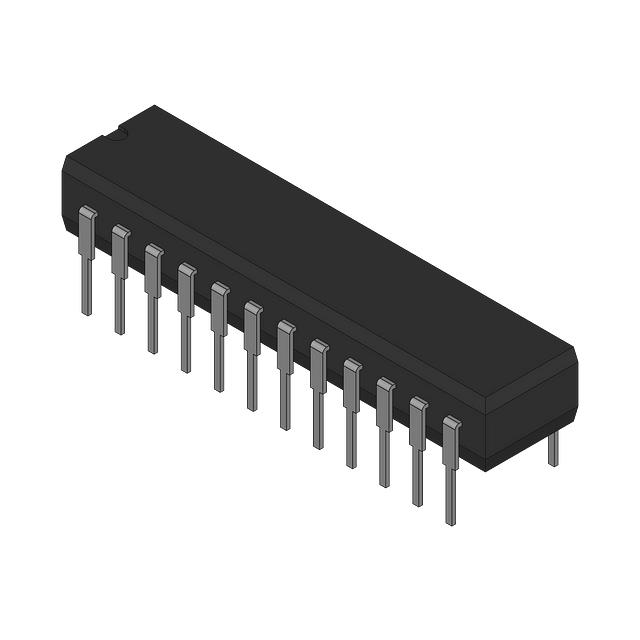
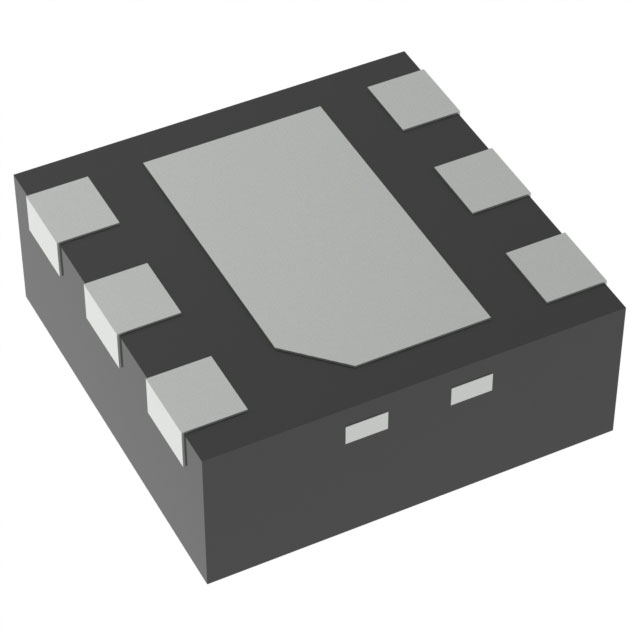
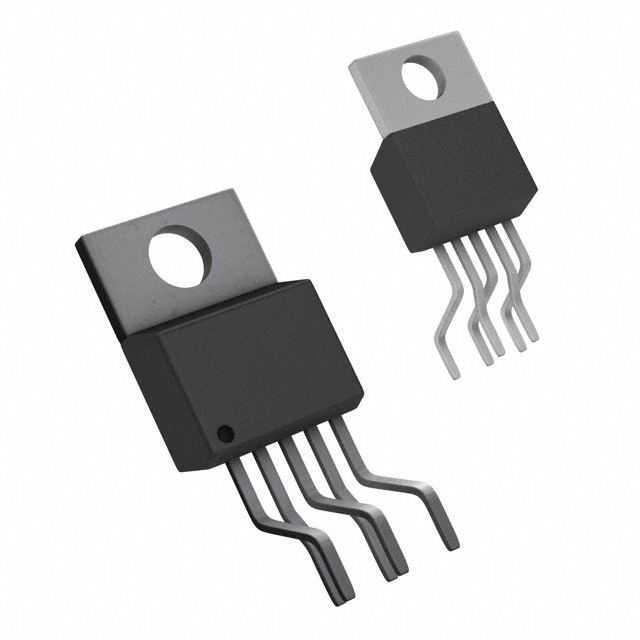
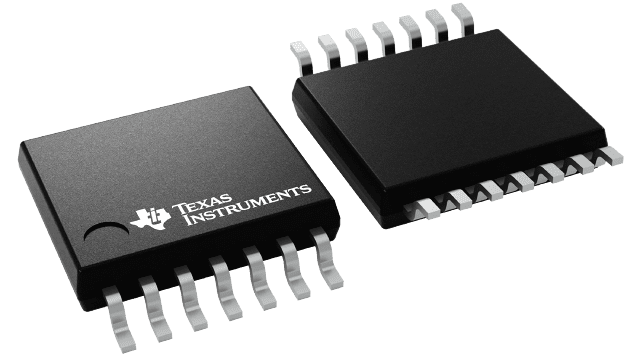
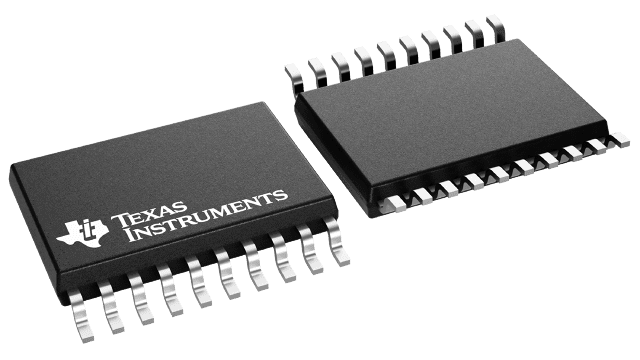
SN74LV6T14-EPEnhanced-product six-bit inverting fixed-direction level translator with Schmitt-trigger inputs | Gates and Inverters | 1 | Active | The SN74LV6T14-EP device contains six independent Inverter with Schmitt-trigger inputs. Each gate performs the Boolean function Y = A in positive logic. The output level is referenced to the supply voltage (VCC) and supports 1.8-V, 2.5V, 3.3V, and 5V CMOS levels.
The input is designed with a lower threshold circuit to support up translation for lower voltage CMOS inputs (for example, 1.2V input to 1.8V output or 1.8V input to 3.3V output). In addition, the 5V tolerant input pins enable down translation (for example, 3.3V to 2.5V output).
The SN74LV6T14-EP device contains six independent Inverter with Schmitt-trigger inputs. Each gate performs the Boolean function Y = A in positive logic. The output level is referenced to the supply voltage (VCC) and supports 1.8-V, 2.5V, 3.3V, and 5V CMOS levels.
The input is designed with a lower threshold circuit to support up translation for lower voltage CMOS inputs (for example, 1.2V input to 1.8V output or 1.8V input to 3.3V output). In addition, the 5V tolerant input pins enable down translation (for example, 3.3V to 2.5V output). |
SN74LV6T14-Q1Automotive 1.8-V to 5.5-V single power supply 6-bit inverters with tri-state outputs | Integrated Circuits (ICs) | 2 | Active | The SN74LV6T14-Q1 device contains six independent Inverter with Schmitt-trigger inputs. Each gate performs the Boolean function Y = A in positive logic. The output level is referenced to the supply voltage (V CC) and supports 1.8-V, 2.5-V, 3.3-V, and 5-V CMOS levels.
The input is designed with a lower threshold circuit to support up translation for lower voltage CMOS inputs (for example, 1.2 V input to 1.8 V output or 1.8 V input to 3.3 V output). In addition, the 5-V tolerant input pins enable down translation (for example, 3.3 V to 2.5 V output).
The SN74LV6T14-Q1 device contains six independent Inverter with Schmitt-trigger inputs. Each gate performs the Boolean function Y = A in positive logic. The output level is referenced to the supply voltage (V CC) and supports 1.8-V, 2.5-V, 3.3-V, and 5-V CMOS levels.
The input is designed with a lower threshold circuit to support up translation for lower voltage CMOS inputs (for example, 1.2 V input to 1.8 V output or 1.8 V input to 3.3 V output). In addition, the 5-V tolerant input pins enable down translation (for example, 3.3 V to 2.5 V output). |
SN74LV6T171.8-V to 5.5-V single power supply 6-bit buffers with tri-state outputs | Buffers, Drivers, Receivers, Transceivers | 2 | Active | The SN74LV6T17 device contains six independent Buffers with Schmitt-trigger inputs. Each gate performs the Boolean function Y = A in positive logic. The output level is referenced to the supply voltage (V CC) and supports 1.8-V, 2.5-V, 3.3-V, and 5-V CMOS levels.
The input is designed with a lower threshold circuit to support up translation for lower voltage CMOS inputs (for example, 1.2 V input to 1.8 V output or 1.8 V input to 3.3 V output). In addition, the 5-V tolerant input pins enable down translation (for example, 3.3 V to 2.5 V output).
The SN74LV6T17 device contains six independent Buffers with Schmitt-trigger inputs. Each gate performs the Boolean function Y = A in positive logic. The output level is referenced to the supply voltage (V CC) and supports 1.8-V, 2.5-V, 3.3-V, and 5-V CMOS levels.
The input is designed with a lower threshold circuit to support up translation for lower voltage CMOS inputs (for example, 1.2 V input to 1.8 V output or 1.8 V input to 3.3 V output). In addition, the 5-V tolerant input pins enable down translation (for example, 3.3 V to 2.5 V output). |
SN74LV6T17-Q1Automotive 1.8-V to 5.5-V single power supply 6-bit buffers with tri-state outputs | Integrated Circuits (ICs) | 1 | Active | The SN74LV6T17-Q1 device contains six independent Buffers with Schmitt-trigger inputs. Each gate performs the Boolean function Y = A in positive logic. The output level is referenced to the supply voltage (V CC) and supports 1.8-V, 2.5-V, 3.3-V, and 5-V CMOS levels.
The input is designed with a lower threshold circuit to support up translation for lower voltage CMOS inputs (for example, 1.2 V input to 1.8 V output or 1.8 V input to 3.3 V output). In addition, the 5-V tolerant input pins enable down translation (for example, 3.3 V to 2.5 V output).
The SN74LV6T17-Q1 device contains six independent Buffers with Schmitt-trigger inputs. Each gate performs the Boolean function Y = A in positive logic. The output level is referenced to the supply voltage (V CC) and supports 1.8-V, 2.5-V, 3.3-V, and 5-V CMOS levels.
The input is designed with a lower threshold circuit to support up translation for lower voltage CMOS inputs (for example, 1.2 V input to 1.8 V output or 1.8 V input to 3.3 V output). In addition, the 5-V tolerant input pins enable down translation (for example, 3.3 V to 2.5 V output). |
SN74LV74A-Q1Automotive Catalog Dual Positive-Edge-Triggered D-Type Flip-Flop | Logic | 14 | Active | These dual positive-edge-triggered D-type flip-flops are designed for 2-V to 5.5-V VCCoperation.
A low level at the preset (PRE) or clear (CLR) inputs sets or resets the outputs, regardless of the levels of the other inputs. WhenPREandCLRare inactive (high), data at the data (D) inputs meeting the setup-time requirements is transferred to the outputs on the positive-going edge of the clock pulse. Clock triggering occurs at a voltage level and is not directly related to the rise time of the clock pulse. Following the hold-time interval, data at the D input can be changed without affecting the levels at the outputs.
This device is fully specified for partial-power-down applications using Ioff. The Ioffcircuitry disables the outputs, preventing damaging current backflow through the devices when they are powered down.
These dual positive-edge-triggered D-type flip-flops are designed for 2-V to 5.5-V VCCoperation.
A low level at the preset (PRE) or clear (CLR) inputs sets or resets the outputs, regardless of the levels of the other inputs. WhenPREandCLRare inactive (high), data at the data (D) inputs meeting the setup-time requirements is transferred to the outputs on the positive-going edge of the clock pulse. Clock triggering occurs at a voltage level and is not directly related to the rise time of the clock pulse. Following the hold-time interval, data at the D input can be changed without affecting the levels at the outputs.
This device is fully specified for partial-power-down applications using Ioff. The Ioffcircuitry disables the outputs, preventing damaging current backflow through the devices when they are powered down. |
SN74LV815110-ch, 2-V to 5.5-V buffers with TTL-compatible CMOS inputs | Integrated Circuits (ICs) | 5 | Active | The SN74LV8151 is a 10-bit universal Schmitt-trigger buffer with 3-state outputs, designed for 2-V to 5.5-V VCCoperation. The logic control (T/C\) pin allows the user to configure Y1 to Y8 as noninverting or inverting outputs. When T/C\ is high, the Y outputs are noninverted (true logic ), and when T/C\ is low, the Y outputs are inverted (complementary logic).
When output-enable (OE)\ input is low, the device passes data from Dn to Yn. When OE\ is high, the Y outputs are in the high-impedance state. The path A to P is a simple Schmitt-trigger buffer, and the path B to N is a simple Schmitt-trigger inverter.
This device is fully specified for partial-power-down applications using Ioff. The Ioffcircuitry disables the outputs, preventing damaging current backflow through the device when it is powered down.
To ensure the high-impedance state during power up or power down, OE\ should be tied to VCCthrough a pullup resistor; the minimum value of the resistor is determined by the current-sinking capability of the driver.
The SN74LV8151 is a 10-bit universal Schmitt-trigger buffer with 3-state outputs, designed for 2-V to 5.5-V VCCoperation. The logic control (T/C\) pin allows the user to configure Y1 to Y8 as noninverting or inverting outputs. When T/C\ is high, the Y outputs are noninverted (true logic ), and when T/C\ is low, the Y outputs are inverted (complementary logic).
When output-enable (OE)\ input is low, the device passes data from Dn to Yn. When OE\ is high, the Y outputs are in the high-impedance state. The path A to P is a simple Schmitt-trigger buffer, and the path B to N is a simple Schmitt-trigger inverter.
This device is fully specified for partial-power-down applications using Ioff. The Ioffcircuitry disables the outputs, preventing damaging current backflow through the device when it is powered down.
To ensure the high-impedance state during power up or power down, OE\ should be tied to VCCthrough a pullup resistor; the minimum value of the resistor is determined by the current-sinking capability of the driver. |
| Logic | 6 | Active | The SN74LV8153 is a serial-to-parallel data converter. It accepts serial input data and outputs 8-bit parallel data.
The automatic data-rate detection feature of the SN74LV8153 eliminates the need for an external oscillator and helps with cost and board real-estate savings.
The OUTSEL pin is used to choose between open collector and push-pull outputs. The open-collector option is suitable when this device is used in applications such as LED interface, where high drive current is required. SOUT is the output that acknowledges reception of the serial data.
To ensure the high-impedance state during power up or power down, OE\ should be tied to VCC1through a pullup resistor; the minimum value of the resistor is determined by the current-sinking capability of the driver.
The SN74LV8153 is a serial-to-parallel data converter. It accepts serial input data and outputs 8-bit parallel data.
The automatic data-rate detection feature of the SN74LV8153 eliminates the need for an external oscillator and helps with cost and board real-estate savings.
The OUTSEL pin is used to choose between open collector and push-pull outputs. The open-collector option is suitable when this device is used in applications such as LED interface, where high drive current is required. SOUT is the output that acknowledges reception of the serial data.
To ensure the high-impedance state during power up or power down, OE\ should be tied to VCC1through a pullup resistor; the minimum value of the resistor is determined by the current-sinking capability of the driver. |
SN74LV86A-Q1Enhanced product 4-ch, 2-input, 2-V to 5.5-V XOR (exclusive OR) gates | Integrated Circuits (ICs) | 11 | Active | The SN74LV86A is a quadruple 2-input exclusive-OR gate designed for 2-V to 5.5-V VCCoperation.
This device contains four independent 2-input exclusive-OR gates. It performs the Boolean function Y = AB or Y = A\B + AB\ in positive logic.
A common application is as a true/complement element. If one of the inputs is low, the other input is reproduced in true form at the output. If one of the inputs is high, the signal on the other input is reproduced inverted at the output.
The SN74LV86A is a quadruple 2-input exclusive-OR gate designed for 2-V to 5.5-V VCCoperation.
This device contains four independent 2-input exclusive-OR gates. It performs the Boolean function Y = AB or Y = A\B + AB\ in positive logic.
A common application is as a true/complement element. If one of the inputs is low, the other input is reproduced in true form at the output. If one of the inputs is high, the signal on the other input is reproduced inverted at the output. |
SN74LV8T1641.65-V to 5.5-V 8-bit, parallel-out serial shift registers with logic level shifter | Unclassified | 1 | Active | The SN74LV8T164 device contains an 8-bit shift register with AND-gated serial inputs and an asynchronous clear (CLR) input. The gated serial (A and B) inputs permit complete control over incoming data; a low at either input inhibits entry of the new data and resets the first flip-flop to the low level at the next clock (CLK) pulse. A high-level input enables the other input, which then determines the state of the first flip-flop. Data at the serial inputs can be changed while CLK is high or low, provided the minimum set-up time requirements are met. Clocking occurs on the low-to-high-level transition of CLK.
The input is designed with a reduced threshold circuit to support up translation when the supply voltage is larger than the input voltage. Additionally, the 5V tolerant input pins enable down translation when the input voltage is larger than the supply voltage. The output level is always referenced to the supply voltage (VCC) and supports 1.8V, 2.5V, 3.3V, and 5V CMOS levels.
The SN74LV8T164 device contains an 8-bit shift register with AND-gated serial inputs and an asynchronous clear (CLR) input. The gated serial (A and B) inputs permit complete control over incoming data; a low at either input inhibits entry of the new data and resets the first flip-flop to the low level at the next clock (CLK) pulse. A high-level input enables the other input, which then determines the state of the first flip-flop. Data at the serial inputs can be changed while CLK is high or low, provided the minimum set-up time requirements are met. Clocking occurs on the low-to-high-level transition of CLK.
The input is designed with a reduced threshold circuit to support up translation when the supply voltage is larger than the input voltage. Additionally, the 5V tolerant input pins enable down translation when the input voltage is larger than the supply voltage. The output level is always referenced to the supply voltage (VCC) and supports 1.8V, 2.5V, 3.3V, and 5V CMOS levels. |
SN74LV8T164-Q1Automotive, 1.65-V to 5.5-V 8-bit, parallel-out serial shift registers with logic level shifter | Unclassified | 1 | Active | The SN74LV8T164-Q1 device contains an 8-bit shift register with AND-gated serial inputs and an asynchronous clear (CLR) input. The gated serial (A and B) inputs permit complete control over incoming data; a low at either input inhibits entry of the new data and resets the first flip-flop to the low level at the next clock (CLK) pulse. A high-level input enables the other input, which then determines the state of the first flip-flop. Data at the serial inputs can be changed while CLK is high or low, provided the minimum set-up time requirements are met. Clocking occurs on the low-to-high-level transition of CLK.
The input is designed with a reduced threshold circuit to support up translation when the supply voltage is larger than the input voltage. Additionally, the 5V tolerant input pins enable down translation when the input voltage is larger than the supply voltage. The output level is always referenced to the supply voltage (VCC) and supports 1.8V, 2.5V, 3.3V, and 5V CMOS levels.
The SN74LV8T164-Q1 device contains an 8-bit shift register with AND-gated serial inputs and an asynchronous clear (CLR) input. The gated serial (A and B) inputs permit complete control over incoming data; a low at either input inhibits entry of the new data and resets the first flip-flop to the low level at the next clock (CLK) pulse. A high-level input enables the other input, which then determines the state of the first flip-flop. Data at the serial inputs can be changed while CLK is high or low, provided the minimum set-up time requirements are met. Clocking occurs on the low-to-high-level transition of CLK.
The input is designed with a reduced threshold circuit to support up translation when the supply voltage is larger than the input voltage. Additionally, the 5V tolerant input pins enable down translation when the input voltage is larger than the supply voltage. The output level is always referenced to the supply voltage (VCC) and supports 1.8V, 2.5V, 3.3V, and 5V CMOS levels. |