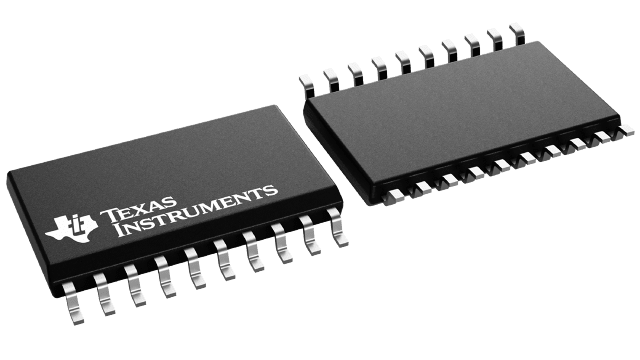
| Logic | 3 | Active | This octal bus transceiver is designed for asynchronous communication between data buses. The devices transmit data from the A bus to the B bus or from the B bus to the A bus depending upon the logic level at the direction-control (DIR) input. The output-enable () input can be used to disable the device so the buses are effectively isolated.
The outputs are in a high-impedance state during power up and power down while the supply voltage is less than approximately 3 V.
The SN64BCT245 is characterized for operation from -40°C to 85°C and 0°C to 70°C.
This octal bus transceiver is designed for asynchronous communication between data buses. The devices transmit data from the A bus to the B bus or from the B bus to the A bus depending upon the logic level at the direction-control (DIR) input. The output-enable () input can be used to disable the device so the buses are effectively isolated.
The outputs are in a high-impedance state during power up and power down while the supply voltage is less than approximately 3 V.
The SN64BCT245 is characterized for operation from -40°C to 85°C and 0°C to 70°C. |
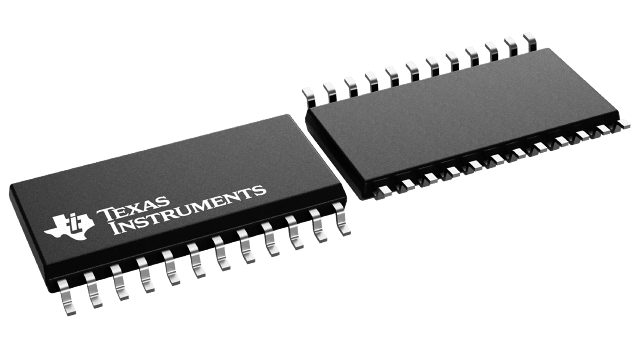
| Buffers, Drivers, Receivers, Transceivers | 4 | Active | The SN64BCT25245 is a 25-octal bus transceiver designed for asynchronous communication between data buses. It improves both the performance and density of 3-state memory address drivers, clock drivers, and bus-oriented transceivers.
The device allows data transmission from the A bus to the B bus or from the B bus to the A bus depending upon the logic level at the direction-control (DIR) input. The output-enable () input can disable the device so that both buses are effectively isolated.
This transceiver is capable of sinking 188-mA IOL, which facilitates switching 25-transmission lines on the incident wave. The distributed VCCand GND pins minimize switching noise for more reliable system operation.
The outputs are in a high-impedance state during power up and power down while the supply voltage is less than approximately 3 V.
The SN64BCT25245 is characterized for operation from -40°C to 85°C and 0°C to 70°C.
The SN64BCT25245 is a 25-octal bus transceiver designed for asynchronous communication between data buses. It improves both the performance and density of 3-state memory address drivers, clock drivers, and bus-oriented transceivers.
The device allows data transmission from the A bus to the B bus or from the B bus to the A bus depending upon the logic level at the direction-control (DIR) input. The output-enable () input can disable the device so that both buses are effectively isolated.
This transceiver is capable of sinking 188-mA IOL, which facilitates switching 25-transmission lines on the incident wave. The distributed VCCand GND pins minimize switching noise for more reliable system operation.
The outputs are in a high-impedance state during power up and power down while the supply voltage is less than approximately 3 V.
The SN64BCT25245 is characterized for operation from -40°C to 85°C and 0°C to 70°C. |
SN64BCT7578-ch, 4.5-V to 5.5-V buffers with TTL-compatible CMOS inputs and open-collector outputs | Buffers, Drivers, Receivers, Transceivers | 2 | Obsolete | This octal buffer and line driver is designed specifically to improve both the performance and density of 3-state memory address drivers, clock drivers, and bus-oriented receivers and transmitters. The device provides complementary output-enable (OE and) inputs and noninverting outputs.
The SN64BCT757 is characterized for operation from -40°C to 85°C and 0°C to 70°C.
This octal buffer and line driver is designed specifically to improve both the performance and density of 3-state memory address drivers, clock drivers, and bus-oriented receivers and transmitters. The device provides complementary output-enable (OE and) inputs and noninverting outputs.
The SN64BCT757 is characterized for operation from -40°C to 85°C and 0°C to 70°C. |
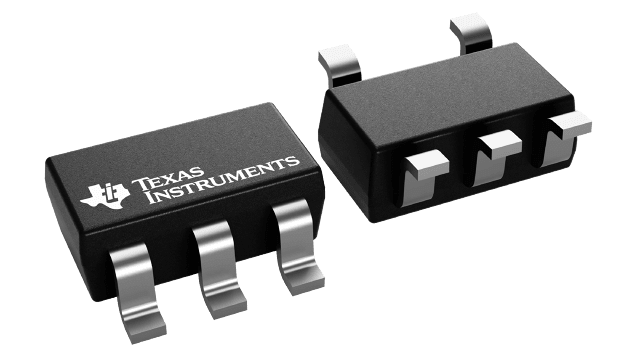
SN6501Low-noise, 350-mA, 410-kHz transformer driver for isolated power supplies | DC/DC & AC/DC (Off-Line) SMPS Evaluation Boards | 4 | Active | The SN6501 is a monolithic oscillator/power-driver, specifically designed for small form factor, isolated power supplies in isolated interface applications. The device drives a low-profile, center-tapped transformer primary from a 3.3-V or 5-V DC power supply. The secondary can be wound to provide any isolated voltage based on transformer turns ratio.
The SN6501 consists of an oscillator followed by a gate drive circuit that provides the complementary output signals to drive the ground referenced N-channel power switches. The internal logic ensures break-before-make action between the two switches.
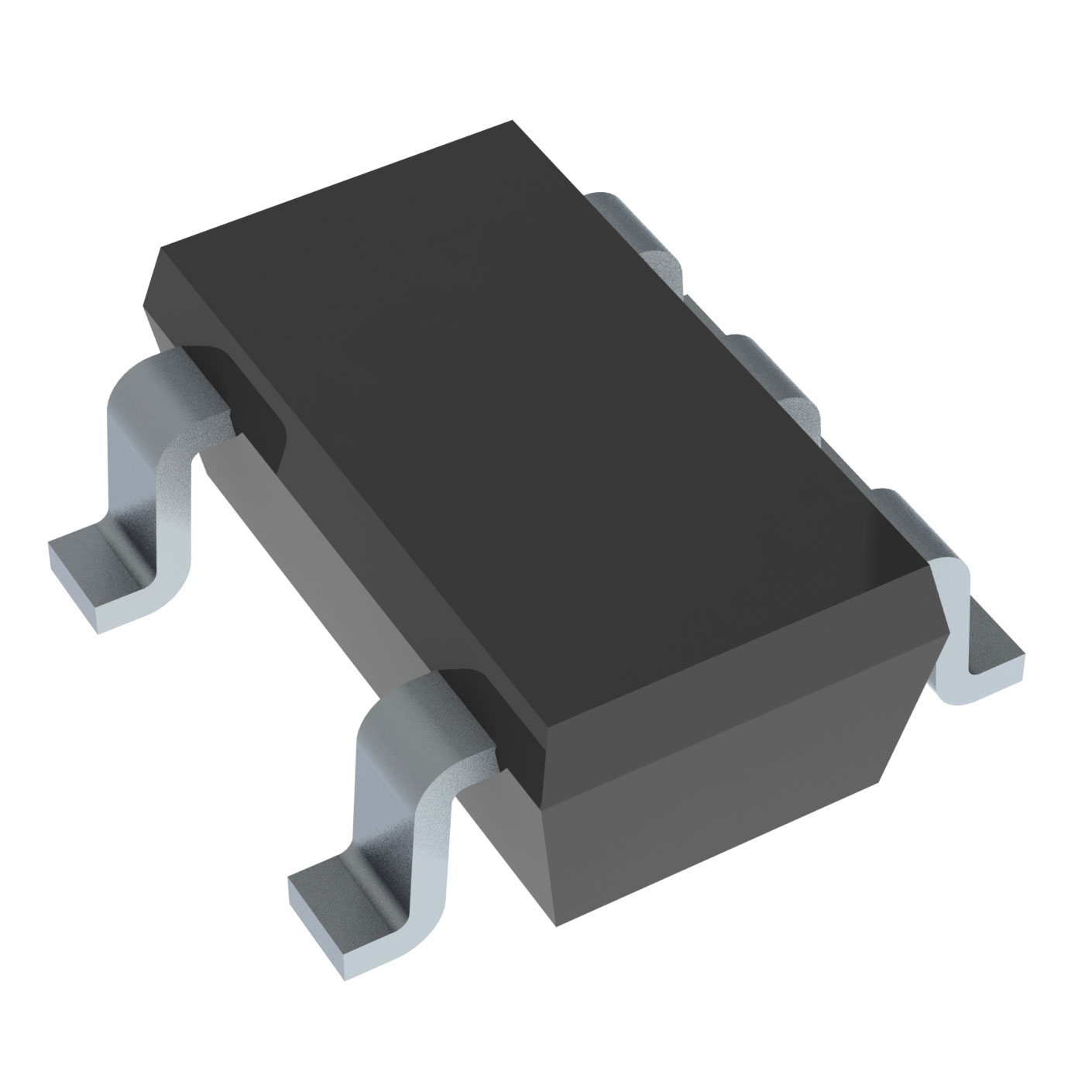
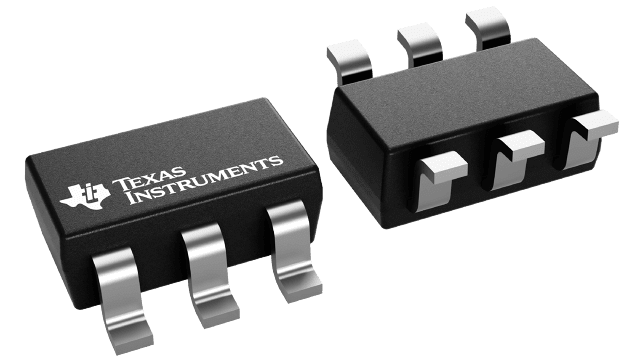
The SN6501 is available in a small SOT-23 (5) package, and is specified for operation at temperatures from –40°C to 125°C.
The SN6501 is a monolithic oscillator/power-driver, specifically designed for small form factor, isolated power supplies in isolated interface applications. The device drives a low-profile, center-tapped transformer primary from a 3.3-V or 5-V DC power supply. The secondary can be wound to provide any isolated voltage based on transformer turns ratio.
The SN6501 consists of an oscillator followed by a gate drive circuit that provides the complementary output signals to drive the ground referenced N-channel power switches. The internal logic ensures break-before-make action between the two switches.
The SN6501 is available in a small SOT-23 (5) package, and is specified for operation at temperatures from –40°C to 125°C. |
SN6505B-Q1Automotive, low-noise, 1-A, 420-kHz transformer driver with soft start for isolated power supplies | Development Boards, Kits, Programmers | 8 | Active | The SN6505x-Q1 is a low-noise, low-EMI push-pull transformer driver, specifically designed for small form factor, isolated power supplies. It drives low-profile, center-tapped transformers from a 2.25 V to 5 V DC power supply. Very low noise and EMI are achieved by slew rate control of the output switch voltage and through Spread Spectrum Clocking (SSC). The SN6505x-Q1 consists of an oscillator followed by a gate drive circuit that provides the complementary output signals to drive ground-referenced N-channel power switches. The device includes two 1-A Power-MOSFET switches to ensure start-up under heavy loads. The switching clock can also be provided externally for accurate placement of switcher harmonics, or when operating with multiple transformer drivers. The internal protection features include a 1.7 A current limiting, under-voltage lockout, thermal shutdown, and break-before-make circuitry. SN6505A-Q1 and SN6505B-Q1 include a soft-start feature that prevents high inrush current during power up with large load capacitors. Soft-start feature has been disabled in SN6505D-Q1 for applications that require fast output start-up.SN6505A-Q1 has a 160 kHz internal oscillator for applications that need to minimize emissions whereas SN6505B-Q1 and SN6505D-Q1havea 420 kHz internal oscillators for applications that require higher efficiency and smaller transformer size. The SN6505x-Q1 is available in a small 6-pin SOT23/DBV package. The device operation is characterized for a temperature range from -40°C to 125°C.
The SN6505x-Q1 is a low-noise, low-EMI push-pull transformer driver, specifically designed for small form factor, isolated power supplies. It drives low-profile, center-tapped transformers from a 2.25 V to 5 V DC power supply. Very low noise and EMI are achieved by slew rate control of the output switch voltage and through Spread Spectrum Clocking (SSC). The SN6505x-Q1 consists of an oscillator followed by a gate drive circuit that provides the complementary output signals to drive ground-referenced N-channel power switches. The device includes two 1-A Power-MOSFET switches to ensure start-up under heavy loads. The switching clock can also be provided externally for accurate placement of switcher harmonics, or when operating with multiple transformer drivers. The internal protection features include a 1.7 A current limiting, under-voltage lockout, thermal shutdown, and break-before-make circuitry. SN6505A-Q1 and SN6505B-Q1 include a soft-start feature that prevents high inrush current during power up with large load capacitors. Soft-start feature has been disabled in SN6505D-Q1 for applications that require fast output start-up.SN6505A-Q1 has a 160 kHz internal oscillator for applications that need to minimize emissions whereas SN6505B-Q1 and SN6505D-Q1havea 420 kHz internal oscillators for applications that require higher efficiency and smaller transformer size. The SN6505x-Q1 is available in a small 6-pin SOT23/DBV package. The device operation is characterized for a temperature range from -40°C to 125°C. |
SN6507-Q1Automotive low-emission 36-V push-pull transformer driver with duty cycle control | Power Management (PMIC) | 1 | Active | The SN6507 -Q1 is a high voltage, high frequency push-pull transformer driver providing isolated power in a small solution size. The device comes with the push-pull topology’s benefits of simplicity, low EMI, and flux cancellation to prevent transformer saturation. Further space savings are achieved through duty-cycle control, which reduces component count for wide-input ranges, and by selecting a high switching frequency, reducing the size of the transformer.
The device integrates a controller and two 0.5-A NMOS power switches that switch out of phase. Its input operating range is programmed with precision undervoltage lockouts. The device is protected from fault conditions by over-current protection (OCP), adjustable under-voltage lockout (UVLO), over voltage lockout (OVLO), thermal shutdown (TSD), and break-before-make circuitry.
The programmable Soft Start (SS) minimizes inrush currents and provides power supply sequencing for critical power up requirements. Spread Spectrum Clocking (SSC) and pin-configurable Slew Rate Control (SRC) further reduces radiated and conducted emissions for ultra-low EMI requirements.
The SN6507 -Q1 is available in a 10-pin HVSSOP DGQ package. The device operation is characterized for a temperature range from –55°C to 125°C.
The SN6507 -Q1 is a high voltage, high frequency push-pull transformer driver providing isolated power in a small solution size. The device comes with the push-pull topology’s benefits of simplicity, low EMI, and flux cancellation to prevent transformer saturation. Further space savings are achieved through duty-cycle control, which reduces component count for wide-input ranges, and by selecting a high switching frequency, reducing the size of the transformer.
The device integrates a controller and two 0.5-A NMOS power switches that switch out of phase. Its input operating range is programmed with precision undervoltage lockouts. The device is protected from fault conditions by over-current protection (OCP), adjustable under-voltage lockout (UVLO), over voltage lockout (OVLO), thermal shutdown (TSD), and break-before-make circuitry.
The programmable Soft Start (SS) minimizes inrush currents and provides power supply sequencing for critical power up requirements. Spread Spectrum Clocking (SSC) and pin-configurable Slew Rate Control (SRC) further reduces radiated and conducted emissions for ultra-low EMI requirements.
The SN6507 -Q1 is available in a 10-pin HVSSOP DGQ package. The device operation is characterized for a temperature range from –55°C to 125°C. |
| Integrated Circuits (ICs) | 1 | Obsolete | |
| Integrated Circuits (ICs) | 1 | Obsolete | |
| Interface | 2 | Active | |
| Integrated Circuits (ICs) | 5 | Active | The SN65176B and SN75176B differential bus transceivers are designed for bidirectional data communication on multipoint bus transmission lines. They are designed for balanced transmission lines and meet ANSI Standards TIA/EIA-422-B and TIA/EIA-485-A and ITU Recommendations V.11 and X.27.
The SN65176B and SN75176B devices combine a 3-state differential line driver and a differential input line receiver, both of which operate from a single 5-V power supply. The driver and receiver have active-high and active-low enables, respectively, that can be connected together externally to function as a direction control. The driver differential outputs and the receiver differential inputs are connected internally to form differential input/output (I/O) bus ports that are designed to offer minimum loading to the bus when the driver is disabled or VCC= 0. These ports feature wide positive and negative common-mode voltage ranges, making the device suitable for party-line applications.
The driver is designed for up to 60 mA of sink or source current. The driver features positive and negative current limiting and thermal shutdown for protection from line-fault conditions. Thermal shutdown is designed to occur at a junction temperature of approximately 150°C. The receiver features a minimum input impedance of 12 kΩ, an input sensitivity of ±200 mV, and a typical input hysteresis of 50 mV.
The SN65176B and SN75176B differential bus transceivers are designed for bidirectional data communication on multipoint bus transmission lines. They are designed for balanced transmission lines and meet ANSI Standards TIA/EIA-422-B and TIA/EIA-485-A and ITU Recommendations V.11 and X.27.
The SN65176B and SN75176B devices combine a 3-state differential line driver and a differential input line receiver, both of which operate from a single 5-V power supply. The driver and receiver have active-high and active-low enables, respectively, that can be connected together externally to function as a direction control. The driver differential outputs and the receiver differential inputs are connected internally to form differential input/output (I/O) bus ports that are designed to offer minimum loading to the bus when the driver is disabled or VCC= 0. These ports feature wide positive and negative common-mode voltage ranges, making the device suitable for party-line applications.
The driver is designed for up to 60 mA of sink or source current. The driver features positive and negative current limiting and thermal shutdown for protection from line-fault conditions. Thermal shutdown is designed to occur at a junction temperature of approximately 150°C. The receiver features a minimum input impedance of 12 kΩ, an input sensitivity of ±200 mV, and a typical input hysteresis of 50 mV. |