T
Texas Instruments
| Series | Category | # Parts | Status | Description |
|---|---|---|---|---|
| Part | Spec A | Spec B | Spec C | Spec D | Description |
|---|---|---|---|---|---|



| Series | Category | # Parts | Status | Description |
|---|---|---|---|---|
| Part | Spec A | Spec B | Spec C | Spec D | Description |
|---|---|---|---|---|---|
| Part | Category | Description |
|---|---|---|
 Texas Instruments | Integrated Circuits (ICs) | BUS DRIVER, BCT/FBT SERIES |
 Texas Instruments | Integrated Circuits (ICs) | 12BIT 3.3V~3.6V 210MHZ PARALLEL VQFN-48-EP(7X7) ANALOG TO DIGITAL CONVERTERS (ADC) ROHS |
Texas Instruments | Integrated Circuits (ICs) | TMX320DRE311 179PIN UBGA 200MHZ |
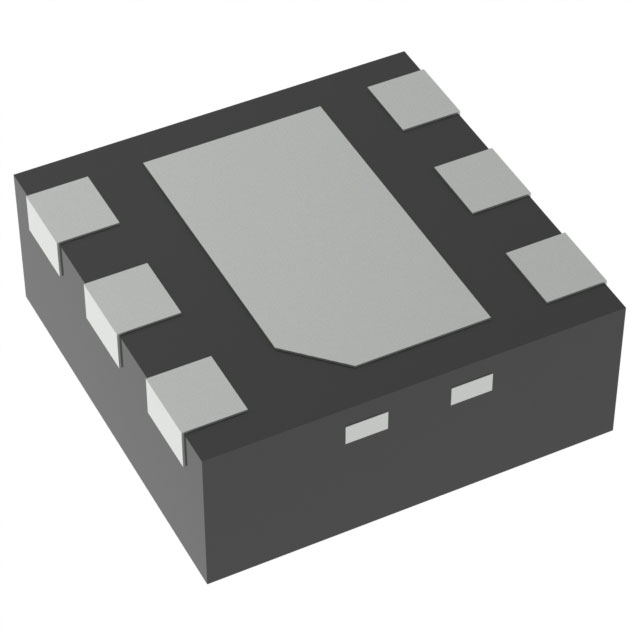 Texas Instruments TPS61040DRVTG4Unknown | Integrated Circuits (ICs) | IC LED DRV RGLTR PWM 350MA 6WSON |
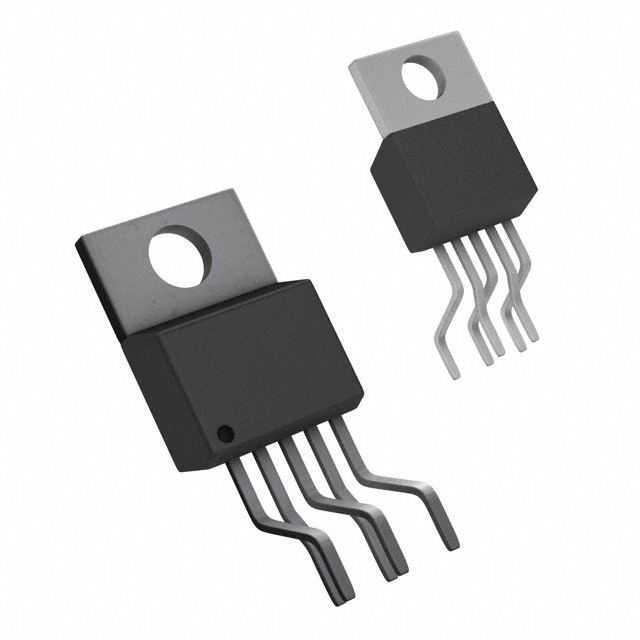 Texas Instruments LP3876ET-2.5Obsolete | Integrated Circuits (ICs) | IC REG LINEAR 2.5V 3A TO220-5 |
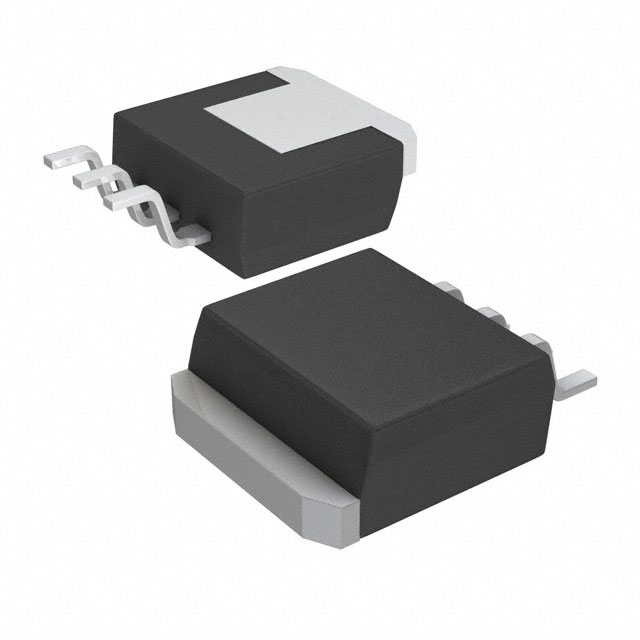 Texas Instruments LMS1585ACSX-ADJObsolete | Integrated Circuits (ICs) | IC REG LIN POS ADJ 5A DDPAK |
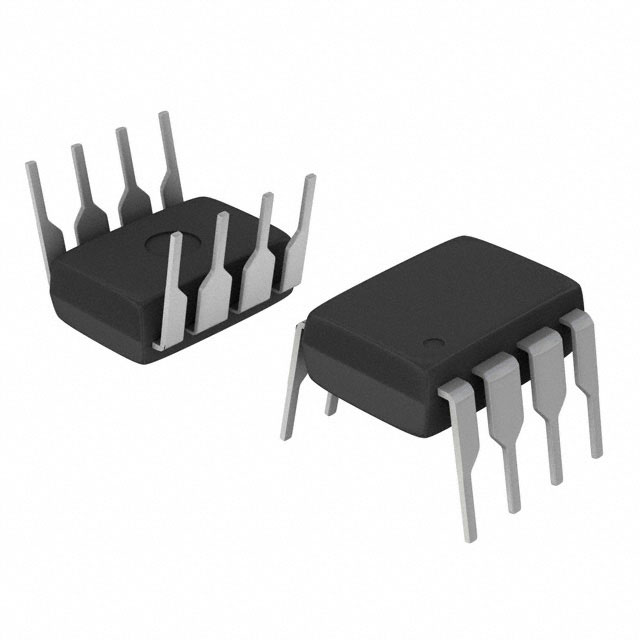 Texas Instruments INA111APG4Obsolete | Integrated Circuits (ICs) | IC INST AMP 1 CIRCUIT 8DIP |
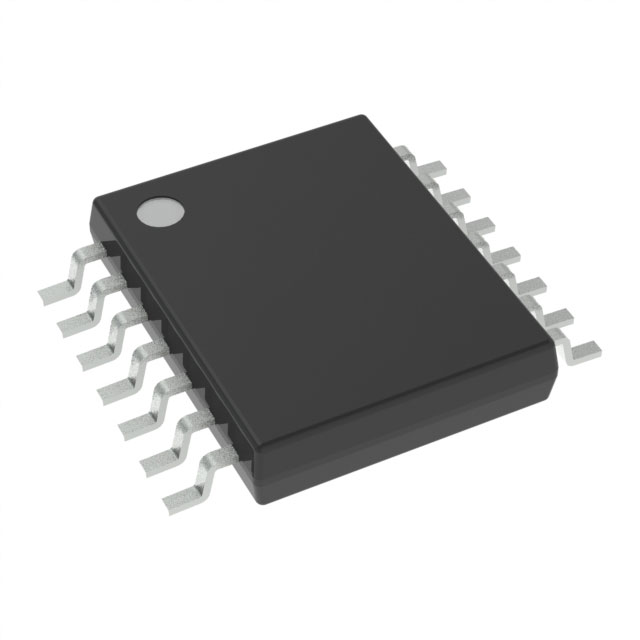 Texas Instruments | Integrated Circuits (ICs) | AUTOMOTIVE, QUAD 36V 1.2MHZ OPERATIONAL AMPLIFIER |
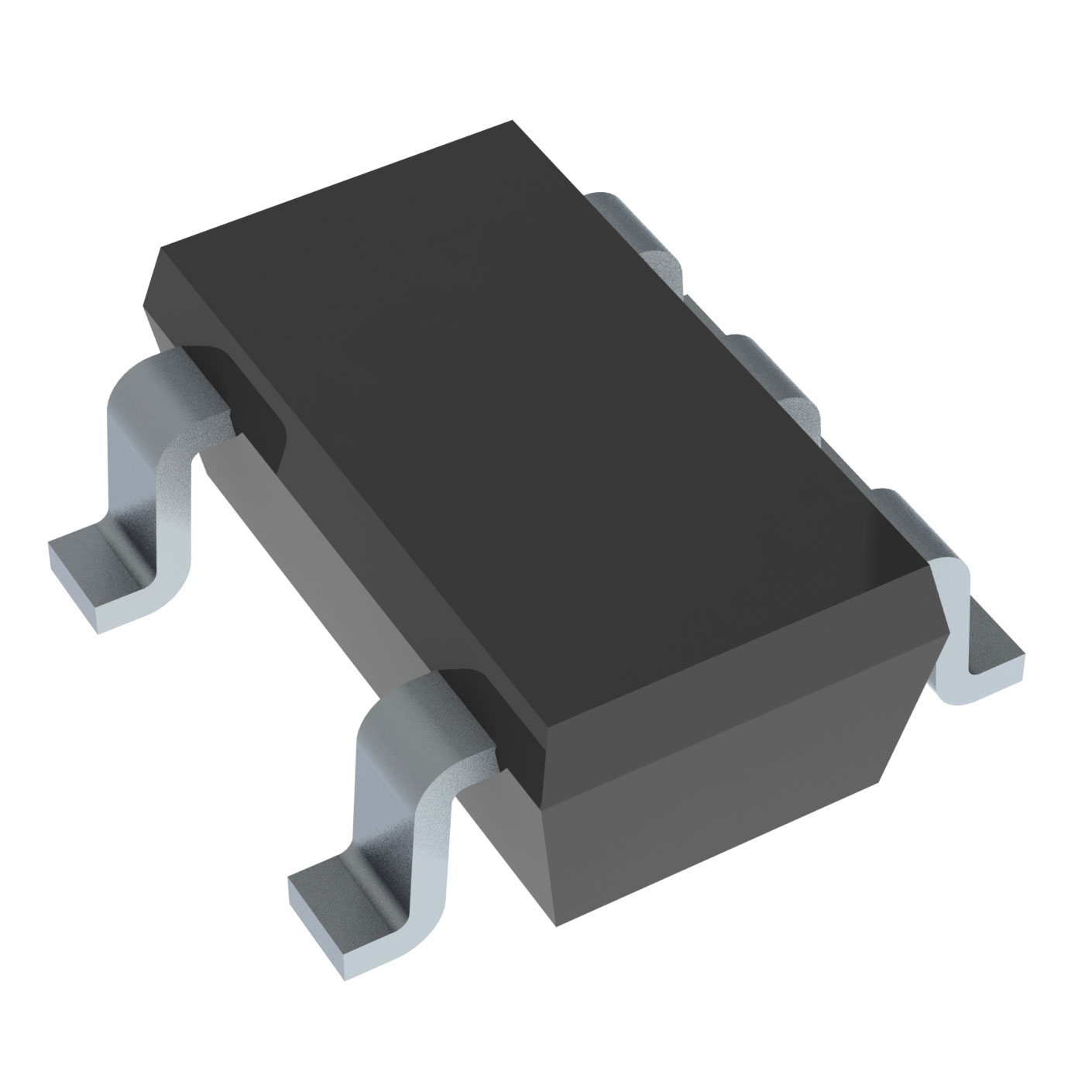 Texas Instruments OPA340NA/3KG4Unknown | Integrated Circuits (ICs) | IC OPAMP GP 1 CIRCUIT SOT23-5 |
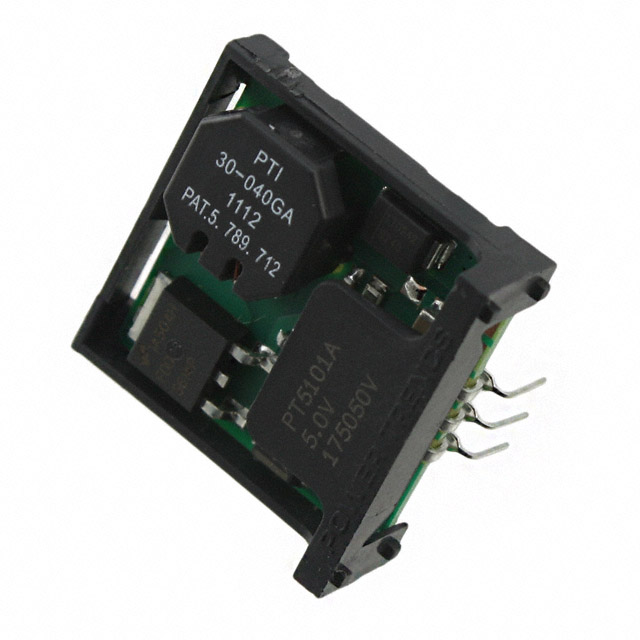 Texas Instruments PT5112AObsolete | Power Supplies - Board Mount | DC DC CONVERTER 8V 8W |
| Series | Category | # Parts | Status | Description |
|---|---|---|---|---|
| Transient Voltage Suppressors (TVS) | 2 | Obsolete | ||
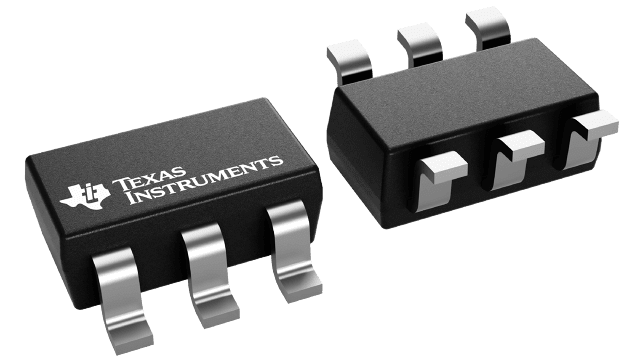
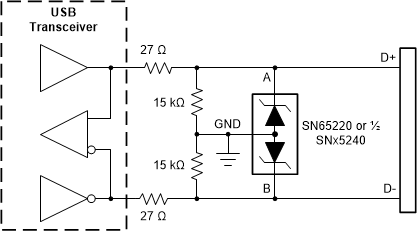
SN65220-Q1Automotive catalog single USB port transient suppressors | Circuit Protection | 5 | Active | The SN65220 is a single transient voltage suppressor designed to provide electrical noise transient protection to universal serial bus (USB) 1.1 ports. Note that the input capacitance of the device makes it unsuitable for high-speed USB 2.0 applications.
Any cabled I/O can be subjected to electrical noise transients from various sources. These noise transients can cause damage to the USB transceiver and/or the USB ASIC if they are of sufficient magnitude and duration.
USB ports are typically implemented in 3-V or 5-V digital CMOS with limited ESD protection. The SN65220 can significantly increase the port ESD protection level and reduce the risk of damage to the circuits of the USB port. The IEC1000-4-2 ESD performance of the SN65220 is measured at the system level. Therefore, system design impacts the results of these tests. A high compliance level may be attained with proper board design and layout.
The SN65220 is a single transient voltage suppressor designed to provide electrical noise transient protection to universal serial bus (USB) 1.1 ports. Note that the input capacitance of the device makes it unsuitable for high-speed USB 2.0 applications.
Any cabled I/O can be subjected to electrical noise transients from various sources. These noise transients can cause damage to the USB transceiver and/or the USB ASIC if they are of sufficient magnitude and duration.
USB ports are typically implemented in 3-V or 5-V digital CMOS with limited ESD protection. The SN65220 can significantly increase the port ESD protection level and reduce the risk of damage to the circuits of the USB port. The IEC1000-4-2 ESD performance of the SN65220 is measured at the system level. Therefore, system design impacts the results of these tests. A high compliance level may be attained with proper board design and layout. |
SN65240Dual universal serial bus port transient suppressor | Transient Voltage Suppressors (TVS) | 6 | Active | The SN65220 device is a dual, and the SN65240 and SN75240 devices are quadruple, unidirectional transient voltage suppressors (TVS). These devices provide electrical noise transient protection to Universal Serial Bus (USB) low and full-speed ports. The input capacitance of 35 pF makes it unsuitable for high-speed USB 2.0 applications.
Any cabled I/O can be subjected to electrical noise transients from various sources. These noise transients can cause damage to the USB transceiver or the USB ASIC if they are of sufficient magnitude and duration.
The SN65220, SN65240, and SN75240 devices ESD performance is measured at the system level, according to IEC61000-4-2; system design, however, impacts the results of these tests. To accomplish a high compliance level, careful board design and layout techniques are required.
The SN65220 device is a dual, and the SN65240 and SN75240 devices are quadruple, unidirectional transient voltage suppressors (TVS). These devices provide electrical noise transient protection to Universal Serial Bus (USB) low and full-speed ports. The input capacitance of 35 pF makes it unsuitable for high-speed USB 2.0 applications.
Any cabled I/O can be subjected to electrical noise transients from various sources. These noise transients can cause damage to the USB transceiver or the USB ASIC if they are of sufficient magnitude and duration.
The SN65220, SN65240, and SN75240 devices ESD performance is measured at the system level, according to IEC61000-4-2; system design, however, impacts the results of these tests. To accomplish a high compliance level, careful board design and layout techniques are required. |
SN65472-EPSN65472-EP Dual Peripheral Driver | Integrated Circuits (ICs) | 2 | Active | The SN65472 dual peripheral driver is functionally interchangeable with series SN75452B and series SN75462 peripheral drivers, but is designed for use in systems that require higher breakdown voltages than either of those series can provide at the expense of slightly slower switching speeds than series 75452B (limits are the same as series SN75462). Typical applications include high-speed logic buffers, power drivers, relay drivers, lamp drivers, MOS drivers, line drivers, and memory drivers.
The SN65472 is a dual peripheral NAND driver (assuming positive logic), with the output of the logic gates internally connected to the bases of the npn output transistors.
This device is characterized for operation from –40°C to 125°C.
The SN65472 dual peripheral driver is functionally interchangeable with series SN75452B and series SN75462 peripheral drivers, but is designed for use in systems that require higher breakdown voltages than either of those series can provide at the expense of slightly slower switching speeds than series 75452B (limits are the same as series SN75462). Typical applications include high-speed logic buffers, power drivers, relay drivers, lamp drivers, MOS drivers, line drivers, and memory drivers.
The SN65472 is a dual peripheral NAND driver (assuming positive logic), with the output of the logic gates internally connected to the bases of the npn output transistors.
This device is characterized for operation from –40°C to 125°C. |
| Uncategorized | 4 | Obsolete | ||
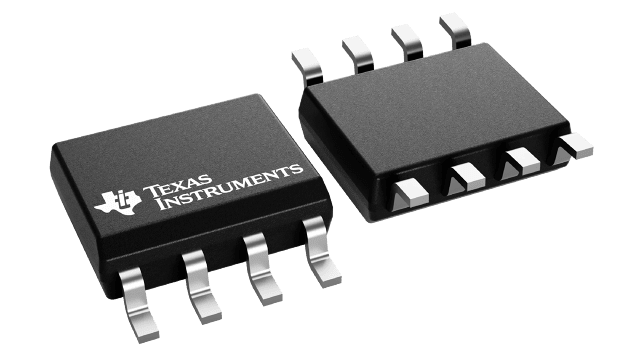
SN65ALS1176Differential Bus Transceiver | Drivers, Receivers, Transceivers | 3 | Active | The SN65ALS1176 differential bus transceiver is designed for bidirectional data communication on multipoint bus transmission lines. The device is designed for balanced transmission lines and meets TIA/EIA-422-B, TIA/EIA-485-A, and ITU Recommendations V.11 and X.27.
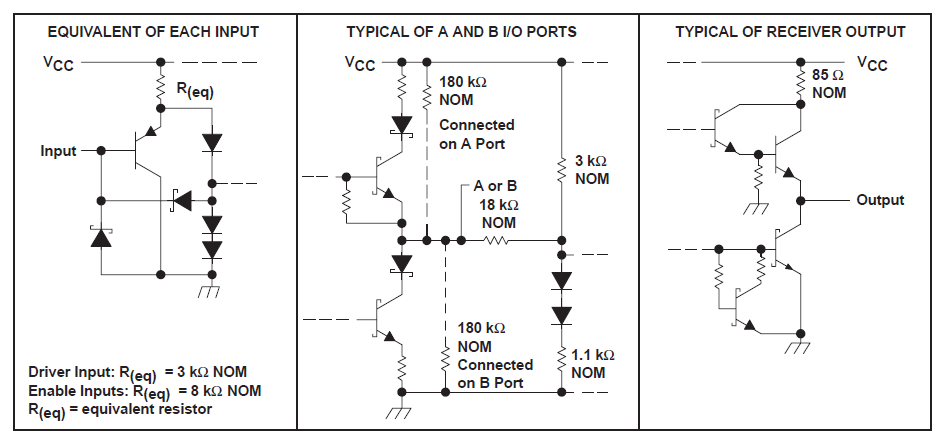
The SN65ALS1176 combines a 3-state differential line driver and a differential input line receiver, both of which operate from a single 5-V power supply. The driver and receiver have active-high and active-low enables, respectively, that can be connected together externally to function as a direction control. The driver differential outputs and the receiver differential inputs are connected internally to form a differential input/output (I/O) bus port that is designed to offer minimum loading to the bus when the driver is disabled or VCC= 0. This port features wide positive and negative common-mode voltage ranges, making the device an excellent choice for party-line applications.
The SN65ALS1176 is characterized for operation from – 25°C to 85°C.
The SN65ALS1176 differential bus transceiver is designed for bidirectional data communication on multipoint bus transmission lines. The device is designed for balanced transmission lines and meets TIA/EIA-422-B, TIA/EIA-485-A, and ITU Recommendations V.11 and X.27.
The SN65ALS1176 combines a 3-state differential line driver and a differential input line receiver, both of which operate from a single 5-V power supply. The driver and receiver have active-high and active-low enables, respectively, that can be connected together externally to function as a direction control. The driver differential outputs and the receiver differential inputs are connected internally to form a differential input/output (I/O) bus port that is designed to offer minimum loading to the bus when the driver is disabled or VCC= 0. This port features wide positive and negative common-mode voltage ranges, making the device an excellent choice for party-line applications.
The SN65ALS1176 is characterized for operation from – 25°C to 85°C. |
SN65ALS180Differential Driver And Receiver Pair | Integrated Circuits (ICs) | 3 | Active | Differential Driver And Receiver Pair |
| Drivers, Receivers, Transceivers | 6 | Active | ||
SN65C1167EDual Differential Drivers and Receivers With +/-8-kV IEC ESD Protection | Integrated Circuits (ICs) | 5 | Active | The SN65C1167E and SN65C1168E consist of dual drivers and dual receivers with ±15kV ESD (Human Body Model [HBM]) and ±8-kV ESD (IEC61000-4-2 Air-Gap Discharge and Contact Discharge) for RS-422 bus pins. The devices meet the requirements of TIA/EIA-422-B and ITU recommendation V.11.
The SN65C1167E combines dual 3-state differential line drivers and 3-state differential line receivers, both of which operate from a single 5V power supply. The driver and receiver have active-high and active-low enables, respectively, which can be connected together externally to function as direction control.
SN65C1168E drivers have individual active-high enables.
The SN65C1167E and SN65C1168E consist of dual drivers and dual receivers with ±15kV ESD (Human Body Model [HBM]) and ±8-kV ESD (IEC61000-4-2 Air-Gap Discharge and Contact Discharge) for RS-422 bus pins. The devices meet the requirements of TIA/EIA-422-B and ITU recommendation V.11.
The SN65C1167E combines dual 3-state differential line drivers and 3-state differential line receivers, both of which operate from a single 5V power supply. The driver and receiver have active-high and active-low enables, respectively, which can be connected together externally to function as direction control.
SN65C1168E drivers have individual active-high enables. |
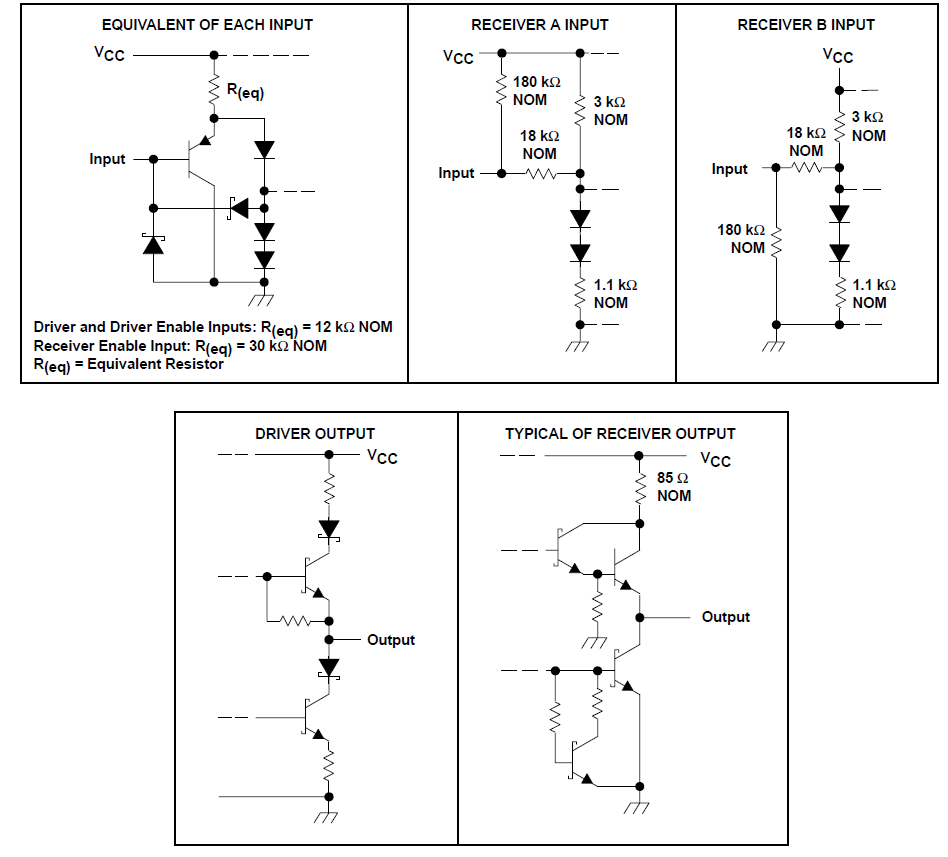
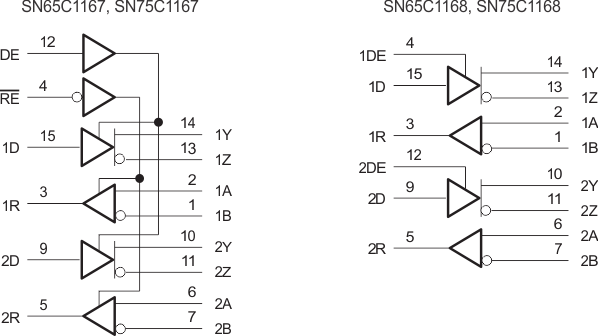
SN65C1168Dual Differential Drivers And Receivers | Drivers, Receivers, Transceivers | 9 | Active | The SN65C1167, SN75C1167, SN65C1168, and SN75C1168 dual drivers and receivers are integrated circuits designed for balanced transmission lines. The devices meet TIA/EIA-422-B and ITU recommendation V.11.
The SN65C1167 and SN75C1167 combine dual 3-state differential line drivers and 3-state differential line receivers, both of which operate from a single 5V power supply. The driver and receiver have active-high and active-low enables, respectively, which can be connected together externally to function as direction control. The SN65C1168 and SN75C1168 drivers have individual active-high enables.
The SN65C1167, SN75C1167, SN65C1168, and SN75C1168 dual drivers and receivers are integrated circuits designed for balanced transmission lines. The devices meet TIA/EIA-422-B and ITU recommendation V.11.
The SN65C1167 and SN75C1167 combine dual 3-state differential line drivers and 3-state differential line receivers, both of which operate from a single 5V power supply. The driver and receiver have active-high and active-low enables, respectively, which can be connected together externally to function as direction control. The SN65C1168 and SN75C1168 drivers have individual active-high enables. |