



SN6507-Q1 Series
Automotive low-emission 36-V push-pull transformer driver with duty cycle control
Manufacturer: Texas Instruments
Catalog
Automotive low-emission 36-V push-pull transformer driver with duty cycle control
| Part | Qualification | Voltage - Supply [Max] | Voltage - Supply [Min] | Grade | Current - Supply | Mounting Type | Package / Case | Package / Case | Applications | Operating Temperature [Max] | Operating Temperature [Min] | Supplier Device Package |
|---|---|---|---|---|---|---|---|---|---|---|---|---|
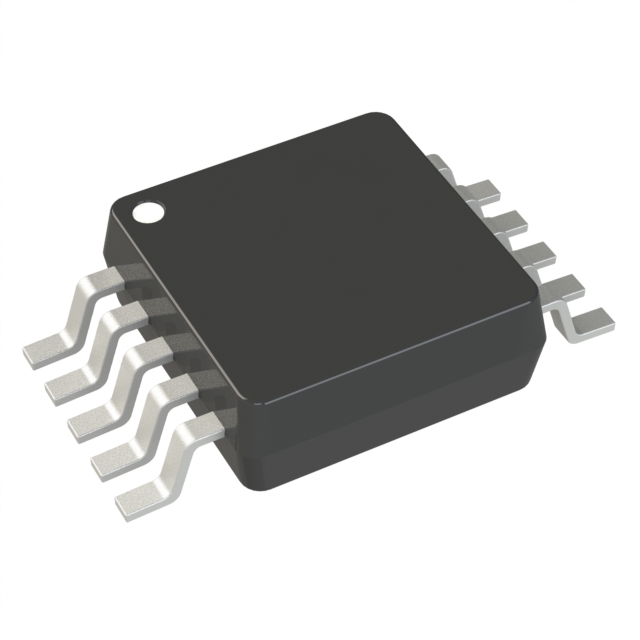 Texas Instruments | AEC-Q100 | 36 V | 3 V | Automotive | 3 mA | Surface Mount | 0.118 in 3 Lead | 10-MSOP 10-TFSOP Exposed Pad | Transformer Driver | 125 °C | -55 °C | 10-HVSSOP |
Key Features
• SN6507-Q1 has an internal oscillator to set the switching frequency of the power stage. As the two power switches are out of phase, the oscillator frequency is twice of the actual switching frequency of each power switch. The duty cycle is fixed with 70 ns deadtime to avoid shoot-through. The duty cycle is changeable if duty cycle feature is enabled. Please refer to Section 8.3.3.SN6507-Q1 has a wide switching frequency range from 100 kHz up to 2 MHz, which is pin-programmable through a resistor (RCLK) to GND. Below table lists the value of RCLKto achieve certain operating frequencies (fSW). The choice of switching frequency is a trade-off between power efficiency and size of capacitive and inductive components. For example, when operating at higher switching frequency, the size of the transformer and inductor is reduced, resulting in a smaller design footprint and lower cost. However, higher frequency increases switching losses and consequently degrades the overall power supply efficiency.Figure 8-6 can also be used to estimate the programmable switching frequency, fSW, using an external resistor value, RCLK, where RCLKis in kΩ and fSWis in kHz:If CLK pin is shorted to GND, the part switches at its default frequency, FSW. CLK pin floating is not a valid state of operation and will cause the part to stop switching until an external clock signal is present.SN6507-Q1 has an internal oscillator to set the switching frequency of the power stage. As the two power switches are out of phase, the oscillator frequency is twice of the actual switching frequency of each power switch. The duty cycle is fixed with 70 ns deadtime to avoid shoot-through. The duty cycle is changeable if duty cycle feature is enabled. Please refer to Section 8.3.3.SN6507-Q1 has a wide switching frequency range from 100 kHz up to 2 MHz, which is pin-programmable through a resistor (RCLK) to GND. Below table lists the value of RCLKto achieve certain operating frequencies (fSW). The choice of switching frequency is a trade-off between power efficiency and size of capacitive and inductive components. For example, when operating at higher switching frequency, the size of the transformer and inductor is reduced, resulting in a smaller design footprint and lower cost. However, higher frequency increases switching losses and consequently degrades the overall power supply efficiency.Figure 8-6 can also be used to estimate the programmable switching frequency, fSW, using an external resistor value, RCLK, where RCLKis in kΩ and fSWis in kHz:If CLK pin is shorted to GND, the part switches at its default frequency, FSW. CLK pin floating is not a valid state of operation and will cause the part to stop switching until an external clock signal is present.
Description
AI
The SN6507 -Q1 is a high voltage, high frequency push-pull transformer driver providing isolated power in a small solution size. The device comes with the push-pull topology’s benefits of simplicity, low EMI, and flux cancellation to prevent transformer saturation. Further space savings are achieved through duty-cycle control, which reduces component count for wide-input ranges, and by selecting a high switching frequency, reducing the size of the transformer.
The device integrates a controller and two 0.5-A NMOS power switches that switch out of phase. Its input operating range is programmed with precision undervoltage lockouts. The device is protected from fault conditions by over-current protection (OCP), adjustable under-voltage lockout (UVLO), over voltage lockout (OVLO), thermal shutdown (TSD), and break-before-make circuitry.
The programmable Soft Start (SS) minimizes inrush currents and provides power supply sequencing for critical power up requirements. Spread Spectrum Clocking (SSC) and pin-configurable Slew Rate Control (SRC) further reduces radiated and conducted emissions for ultra-low EMI requirements.
The SN6507 -Q1 is available in a 10-pin HVSSOP DGQ package. The device operation is characterized for a temperature range from –55°C to 125°C.
The SN6507 -Q1 is a high voltage, high frequency push-pull transformer driver providing isolated power in a small solution size. The device comes with the push-pull topology’s benefits of simplicity, low EMI, and flux cancellation to prevent transformer saturation. Further space savings are achieved through duty-cycle control, which reduces component count for wide-input ranges, and by selecting a high switching frequency, reducing the size of the transformer.
The device integrates a controller and two 0.5-A NMOS power switches that switch out of phase. Its input operating range is programmed with precision undervoltage lockouts. The device is protected from fault conditions by over-current protection (OCP), adjustable under-voltage lockout (UVLO), over voltage lockout (OVLO), thermal shutdown (TSD), and break-before-make circuitry.
The programmable Soft Start (SS) minimizes inrush currents and provides power supply sequencing for critical power up requirements. Spread Spectrum Clocking (SSC) and pin-configurable Slew Rate Control (SRC) further reduces radiated and conducted emissions for ultra-low EMI requirements.
The SN6507 -Q1 is available in a 10-pin HVSSOP DGQ package. The device operation is characterized for a temperature range from –55°C to 125°C.