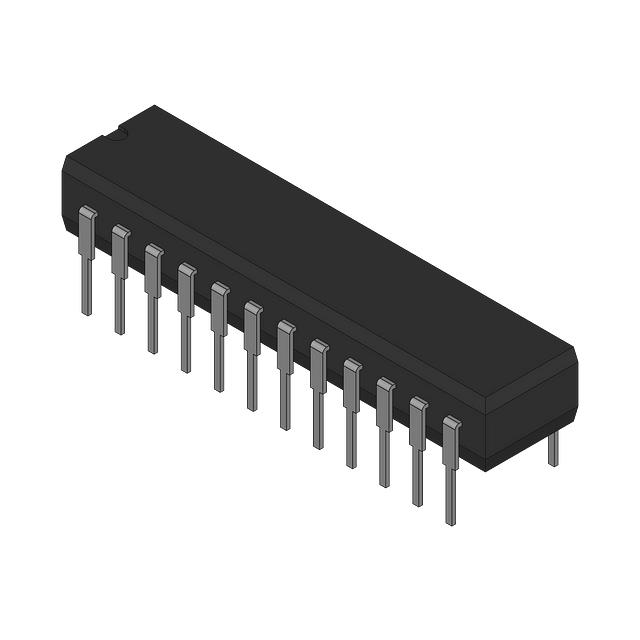
SN55ALS161Octal General-Purpose Interface Bus Transceiver | Integrated Circuits (ICs) | 1 | Active | Octal General-Purpose Interface Bus Transceiver |
| Drivers, Receivers, Transceivers | 1 | Active | The HVD251 is intended for use in applications employing the Controller Area Network (CAN) serial communication physical layer in accordance with the ISO 11898 Standard. The HVD251 provides differential transmit capability to the bus and differential receive capability to a CAN controller at speeds up to 1 megabits per second (Mbps).
Designed for operation in harsh environments, the device features cross-wire, overvoltage and loss of ground protection to ±36 V. Also featured are overtemperature protection as well as –7-V to 12-V common-mode range, and tolerance to transients of ±200 V. The transceiver interfaces the single-ended CAN controller with the differential CAN bus found in industrial, building automation, and automotive applications.
Rs, pin 8, selects one of three different modes of operation: high-speed, slope control, or low-power mode. The high-speed mode of operation is selected by connecting pin 8 to ground, allowing the transmitter output transistors to switch as fast as possible with no limitation on the rise and fall slope. The rise and fall slope can be adjusted by connecting a resistor to ground at pin 8; the slope is proportional to the pin’s output current. Slope control with an external resistor value of 10 kΩ gives about 15-V / µs slew rate; 100 kΩ gives about 2-V/µs slew rate.
If a high logic level is applied to the Rs pin 8, the device enters a low-current standby mode where the driver is switched off and the receiver remains active. The local protocol controller returns the device to the normal mode when it transmits to the bus.
The HVD251 is intended for use in applications employing the Controller Area Network (CAN) serial communication physical layer in accordance with the ISO 11898 Standard. The HVD251 provides differential transmit capability to the bus and differential receive capability to a CAN controller at speeds up to 1 megabits per second (Mbps).
Designed for operation in harsh environments, the device features cross-wire, overvoltage and loss of ground protection to ±36 V. Also featured are overtemperature protection as well as –7-V to 12-V common-mode range, and tolerance to transients of ±200 V. The transceiver interfaces the single-ended CAN controller with the differential CAN bus found in industrial, building automation, and automotive applications.
Rs, pin 8, selects one of three different modes of operation: high-speed, slope control, or low-power mode. The high-speed mode of operation is selected by connecting pin 8 to ground, allowing the transmitter output transistors to switch as fast as possible with no limitation on the rise and fall slope. The rise and fall slope can be adjusted by connecting a resistor to ground at pin 8; the slope is proportional to the pin’s output current. Slope control with an external resistor value of 10 kΩ gives about 15-V / µs slew rate; 100 kΩ gives about 2-V/µs slew rate.
If a high logic level is applied to the Rs pin 8, the device enters a low-current standby mode where the driver is switched off and the receiver remains active. The local protocol controller returns the device to the normal mode when it transmits to the bus. |
| Drivers, Receivers, Transceivers | 2 | Active | These devices have robust 3.3-V drivers and receivers in a small package for demanding industrial applications. The bus pins are robust to ESD events with high levels of protection to human-body model and IEC contact discharge specifications.
Each of these devices combines a differential driver and a differential receiver which operate from a single 3.3-V power supply. The driver differential outputs and the receiver differential inputs are connected internally to form a bus port suitable for half-duplex (two-wire bus) communication. These devices feature a wide common-mode voltage range making the devices suitable for multi-point applications over long cable runs. These devices are characterized from –55°C to 125°C.
These devices have robust 3.3-V drivers and receivers in a small package for demanding industrial applications. The bus pins are robust to ESD events with high levels of protection to human-body model and IEC contact discharge specifications.
Each of these devices combines a differential driver and a differential receiver which operate from a single 3.3-V power supply. The driver differential outputs and the receiver differential inputs are connected internally to form a bus port suitable for half-duplex (two-wire bus) communication. These devices feature a wide common-mode voltage range making the devices suitable for multi-point applications over long cable runs. These devices are characterized from –55°C to 125°C. |
| Evaluation and Demonstration Boards and Kits | 1 | Active | |
SN55LBC172Quadruple Low-Power Differential Line Driver | Integrated Circuits (ICs) | 2 | Active | The SN55LBC172 is a monolithic quadruple differential line driver with 3-state outputs. This device is designed to meet the requirements of the Electronics Industry Association (EIA) standard RS-485. The SN55LBC172 is optimized for balanced multipoint bus transmission at data rates up to and exceeding 10 million bits per second. The driver features wide positive and negative common-mode output voltage ranges, current limiting, and thermal-shutdown circuitry, making it suitable for party-line applications in noisy environments. The device is designed using the LinBiCMOS™ process, facilitating ultralow power consumption and inherent robustness.
The SN55LBC172 provides positive- and negative-current limiting and thermal shutdown for protection from line fault conditions on the transmission bus line. This device offers optimum performance when used with the SN55LBC173M quadruple line receiver.
The SN55LBC172 is a monolithic quadruple differential line driver with 3-state outputs. This device is designed to meet the requirements of the Electronics Industry Association (EIA) standard RS-485. The SN55LBC172 is optimized for balanced multipoint bus transmission at data rates up to and exceeding 10 million bits per second. The driver features wide positive and negative common-mode output voltage ranges, current limiting, and thermal-shutdown circuitry, making it suitable for party-line applications in noisy environments. The device is designed using the LinBiCMOS™ process, facilitating ultralow power consumption and inherent robustness.
The SN55LBC172 provides positive- and negative-current limiting and thermal shutdown for protection from line fault conditions on the transmission bus line. This device offers optimum performance when used with the SN55LBC173M quadruple line receiver. |
SN55LBC175Quadruple Low-Power Differential Line Receiver | Interface | 2 | Active | The SN55LBC175 is a monolithic quadruple differential line receiver with 3-state outputs and is designed to meet the requirements of the EIA Standards RS-422-A, RS-423-A, RS-485, and CCITT V.11. This device is optimized for balanced multipoint bus transmission at data rates up to and exceeding 10 million bits per second. The receivers are enabled in pairs with an active-high enable input. Each differential receiver input features high impedance, hysteresis for increased noise immunity, and sensitivity of ±200 mV over a common-mode input voltage range of 12 V to -7 V. Fail-safe design ensures that if the inputs are open-circuited, the outputs are always high. This device is designed using the Texas Instruments proprietary LinBiCMOSTMtechnology allowing low power consumption, high switching speeds, and robustness.
This device offers optimum performance when used with the SN55LBC174 quadruple line driver. The SN55LBC175 is available in the 16-pin CDIP (J) package, a 16-pin CPAK (W) package, or a 20-pin LCCC (FK) package.
The SN55LBC175 is characterized over the military temperature range of -55°C to 125°C.
The SN55LBC175 is a monolithic quadruple differential line receiver with 3-state outputs and is designed to meet the requirements of the EIA Standards RS-422-A, RS-423-A, RS-485, and CCITT V.11. This device is optimized for balanced multipoint bus transmission at data rates up to and exceeding 10 million bits per second. The receivers are enabled in pairs with an active-high enable input. Each differential receiver input features high impedance, hysteresis for increased noise immunity, and sensitivity of ±200 mV over a common-mode input voltage range of 12 V to -7 V. Fail-safe design ensures that if the inputs are open-circuited, the outputs are always high. This device is designed using the Texas Instruments proprietary LinBiCMOSTMtechnology allowing low power consumption, high switching speeds, and robustness.
This device offers optimum performance when used with the SN55LBC174 quadruple line driver. The SN55LBC175 is available in the 16-pin CDIP (J) package, a 16-pin CPAK (W) package, or a 20-pin LCCC (FK) package.
The SN55LBC175 is characterized over the military temperature range of -55°C to 125°C. |
| Integrated Circuits (ICs) | 2 | Active | The SN55LBC180, SN65LBC180 and SN75LBC180 combine a differential line driver and receiver with 3-state outputs and operate from a single 5-V supply. The driver and receiver have active-high and active-low enables, respectively, which can be externally connected to function as a direction control. The driver differential outputs and the receiver differential inputs are connected to separate terminals for full-duplex operation and are designed to present minimum loading to the bus whether disabled or powered off (VCC= 0). These parts feature a wide common-mode voltage range making them suitable for point-to-point or multipoint data-bus applications.
The devices also provide positive and negative output-current limiting and thermal shutdown for protection from line fault conditions. The line driver shuts down at a junction temperature of approximately 172°C.
The SN75LBC180 is characterized for operation over the commercial temperature range of 0°C to 70°C. The SN65LBC180 is characterized over the industrial temperature range of –40°C to 85°C.
The SN55LBC180 is characterized for operation over the military temperature range of –55°C to 125°C.
The SN55LBC180, SN65LBC180 and SN75LBC180 combine a differential line driver and receiver with 3-state outputs and operate from a single 5-V supply. The driver and receiver have active-high and active-low enables, respectively, which can be externally connected to function as a direction control. The driver differential outputs and the receiver differential inputs are connected to separate terminals for full-duplex operation and are designed to present minimum loading to the bus whether disabled or powered off (VCC= 0). These parts feature a wide common-mode voltage range making them suitable for point-to-point or multipoint data-bus applications.
The devices also provide positive and negative output-current limiting and thermal shutdown for protection from line fault conditions. The line driver shuts down at a junction temperature of approximately 172°C.
The SN75LBC180 is characterized for operation over the commercial temperature range of 0°C to 70°C. The SN65LBC180 is characterized over the industrial temperature range of –40°C to 85°C.
The SN55LBC180 is characterized for operation over the military temperature range of –55°C to 125°C. |
| Drivers, Receivers, Transceivers | 3 | Active | The SN55LVDS31, SN65LVDS31, SN65LVDS3487, and SN65LVDS9638 devices are differential line drivers that implement the electrical characteristics of low-voltage differential signaling (LVDS). This signaling technique lowers the output voltage levels of 5-V differential standard levels (such as TIA/EIA-422B) to reduce the power, increase the switching speeds, and allow operation with a 3.3-V supply rail. Any of the four current-mode drivers will deliver a minimum differential output voltage magnitude of 247 mV into a 100-Ω load when enabled.
The SN55LVDS31, SN65LVDS31, SN65LVDS3487, and SN65LVDS9638 devices are differential line drivers that implement the electrical characteristics of low-voltage differential signaling (LVDS). This signaling technique lowers the output voltage levels of 5-V differential standard levels (such as TIA/EIA-422B) to reduce the power, increase the switching speeds, and allow operation with a 3.3-V supply rail. Any of the four current-mode drivers will deliver a minimum differential output voltage magnitude of 247 mV into a 100-Ω load when enabled. |
SN64BCT125A4-ch, 4.5-V to 5.5-V buffers with TTL-compatible CMOS inputs and 3-state outputs | Buffers, Drivers, Receivers, Transceivers | 4 | Active | The SN64BCT125A bus buffer features independent line drivers with 3-state outputs. Each output is disabled when the associated output-enable () input is high.
The SN64BCT125A is characterized for operation from -40°C to 85°C and 0°C to 70°C.
The SN64BCT125A bus buffer features independent line drivers with 3-state outputs. Each output is disabled when the associated output-enable () input is high.
The SN64BCT125A is characterized for operation from -40°C to 85°C and 0°C to 70°C. |
SN64BCT126A4-ch, 4.5-V to 5.5-V buffers with TTL-compatible CMOS inputs and 3-state outputs | Logic | 5 | Active | The SN64BCT126A bus buffer features independent line drivers with 3-state outputs. Each output is disabled when the associated output-enable (OE) input is low.
The SN64BCT126A is characterized for operation from - 40°C to 85°C and 0°C to 70°C.
The SN64BCT126A bus buffer features independent line drivers with 3-state outputs. Each output is disabled when the associated output-enable (OE) input is low.
The SN64BCT126A is characterized for operation from - 40°C to 85°C and 0°C to 70°C. |