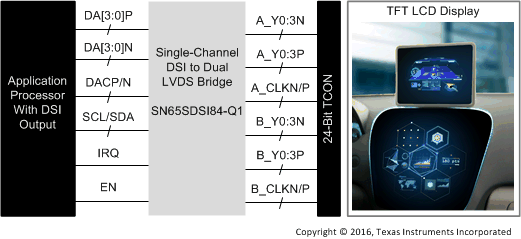
65DSI84Automotive single channel MIPI® DSI to dual-link LVDS bridge | Integrated Circuits (ICs) | 2 | Active | The SN65DSI84-Q1 DSI-to-LVDS bridge features a single-channel MIPI D-PHY receiver front-end configuration with four lanes per channel operating at 1 Gbps per lane and a maximum input bandwidth of 4 Gbps. The bridge decodes MIPI®DSI 18-bpp RGB666 and 24-bpp RGB888 packets and converts the formatted video data-stream to an LVDS output operating at pixel clocks operating from 25 MHz to 154 MHz, offering a dual-link LVDS or single-link LVDS with four data lanes per link.
The SN65DSI84-Q1 device is well suited for WUXGA (1920 × 1080) at 60 frames per second (fps) with up to 24 bits-per-pixel (bpp). Partial line buffering is implemented to accommodate the data stream mismatch between the DSI and LVDS interfaces.
The SN65DSI84-Q1 device is implemented in a small outline 10 mm × 10 mm HTQFP package with a0.5-mm pitch, and operates across a temperature range from –40°C to 105°C.
The SN65DSI84-Q1 DSI-to-LVDS bridge features a single-channel MIPI D-PHY receiver front-end configuration with four lanes per channel operating at 1 Gbps per lane and a maximum input bandwidth of 4 Gbps. The bridge decodes MIPI®DSI 18-bpp RGB666 and 24-bpp RGB888 packets and converts the formatted video data-stream to an LVDS output operating at pixel clocks operating from 25 MHz to 154 MHz, offering a dual-link LVDS or single-link LVDS with four data lanes per link.
The SN65DSI84-Q1 device is well suited for WUXGA (1920 × 1080) at 60 frames per second (fps) with up to 24 bits-per-pixel (bpp). Partial line buffering is implemented to accommodate the data stream mismatch between the DSI and LVDS interfaces.
The SN65DSI84-Q1 device is implemented in a small outline 10 mm × 10 mm HTQFP package with a0.5-mm pitch, and operates across a temperature range from –40°C to 105°C. |
65DSI85Automotive dual-channel MIPI DSI to dual-link Flatlink™ LVDS bridge | Interface | 3 | Active | The SN65DSI85-Q1 DSI-to-LVDS bridge features a dual-channel MIPI D-PHY receiver front-endconfiguration with four lanes per channel operating at 1 Gbps per lane and a maximum input bandwidth of 8 Gbps. The bridge decodes MIPI DSI 18-bpp RGB666 and 24-bpp RGB888 packets and converts the formatted video data-stream to an LVDS output operating at pixel clocks operating from 25 MHz to 154 MHz, offering a dual-link LVDS, single-link LVDS, or two Single-Link LVDS interfaces with four data lanes per link.
The SN65DSI85-Q1 device is well suited for WQXGA (2560 × 1600) at 60 frames per second (fps), as well as 3D Graphics at WUXGA and True HD (1920 × 1080) resolutions at an equivalent 120 fps with up to 24 bits-per-pixel (bpp). Partial line buffering is implemented to accommodate the data stream mismatch between the DSI and LVDS interfaces.
The SN65DSI85-Q1 device is implemented in a small outline 10 mm × 10 mm HTQFP package with a0.5-mm pitch, and operates across a temperature range from –40°C to 105°C.
The SN65DSI85-Q1 DSI-to-LVDS bridge features a dual-channel MIPI D-PHY receiver front-endconfiguration with four lanes per channel operating at 1 Gbps per lane and a maximum input bandwidth of 8 Gbps. The bridge decodes MIPI DSI 18-bpp RGB666 and 24-bpp RGB888 packets and converts the formatted video data-stream to an LVDS output operating at pixel clocks operating from 25 MHz to 154 MHz, offering a dual-link LVDS, single-link LVDS, or two Single-Link LVDS interfaces with four data lanes per link.
The SN65DSI85-Q1 device is well suited for WQXGA (2560 × 1600) at 60 frames per second (fps), as well as 3D Graphics at WUXGA and True HD (1920 × 1080) resolutions at an equivalent 120 fps with up to 24 bits-per-pixel (bpp). Partial line buffering is implemented to accommodate the data stream mismatch between the DSI and LVDS interfaces.
The SN65DSI85-Q1 device is implemented in a small outline 10 mm × 10 mm HTQFP package with a0.5-mm pitch, and operates across a temperature range from –40°C to 105°C. |
65DSI86Automotive MIPI® DSI bridge to eDP | Specialized | 3 | Active | The SN65DSI86 DSI to embedded DisplayPort (eDP) bridge features a dual-channel MIPI D-PHY receiver front-end configuration with four lanes per channel operating at 1.5 Gbps per lane and a maximum input bandwidth of 12 Gbps. The bridge decodes MIPI DSI 18-bpp RGB666 and 24-bpp RGB888 packets and converts the formatted video data stream to a DisplayPort with up to four lanes at either 1.62 Gbps, 2.16 Gbps, 2.43 Gbps, 2.7 Gbps, 3.24 Gbps, 4.32 Gbps, or 5.4 Gbps.
The SN65DSI86 is well suited for WQXGA at 60 frames per second, as well as 3D graphics at 4K and true HD (1920 × 1080) resolutions at an equivalent 120 fps with up to 24 bpp. Partial line buffering is implemented to accommodate the data stream mismatch between the DSI and DisplayPort interfaces.
The SN65DSI86 DSI to embedded DisplayPort (eDP) bridge features a dual-channel MIPI D-PHY receiver front-end configuration with four lanes per channel operating at 1.5 Gbps per lane and a maximum input bandwidth of 12 Gbps. The bridge decodes MIPI DSI 18-bpp RGB666 and 24-bpp RGB888 packets and converts the formatted video data stream to a DisplayPort with up to four lanes at either 1.62 Gbps, 2.16 Gbps, 2.43 Gbps, 2.7 Gbps, 3.24 Gbps, 4.32 Gbps, or 5.4 Gbps.
The SN65DSI86 is well suited for WQXGA at 60 frames per second, as well as 3D graphics at 4K and true HD (1920 × 1080) resolutions at an equivalent 120 fps with up to 24 bpp. Partial line buffering is implemented to accommodate the data stream mismatch between the DSI and DisplayPort interfaces. |
| Interface | 1 | Active | |
| Translators, Level Shifters | 4 | Active | |
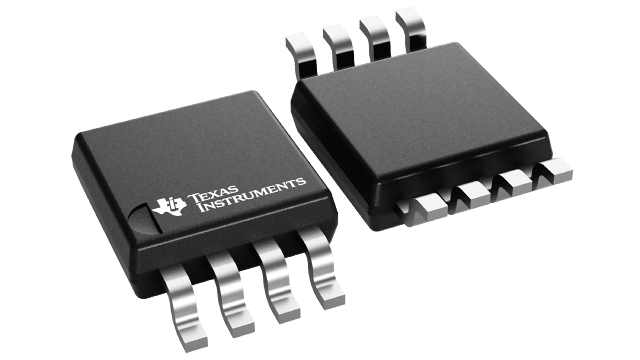
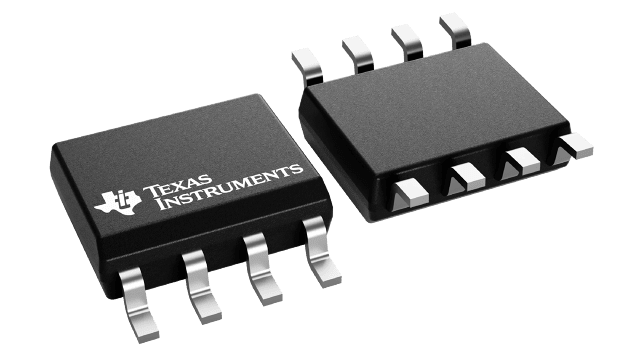
65EPT223.3-V dual LVTTL/LVCMOS to differential LVPECL buffer | Integrated Circuits (ICs) | 2 | Active | The SN65EPT22 is a low power dual LVTTL to LVPECL translator device. The device includes circuitry to maintain known logic HIGH level when inputs are in open condition. The SN65EPT22 is housed in an industry standard SOIC-8 package and is also available in TSSOP-8 package option.
The SN65EPT22 is a low power dual LVTTL to LVPECL translator device. The device includes circuitry to maintain known logic HIGH level when inputs are in open condition. The SN65EPT22 is housed in an industry standard SOIC-8 package and is also available in TSSOP-8 package option. |
| Logic | 2 | Active | |
| Evaluation and Demonstration Boards and Kits | 2 | Active | |
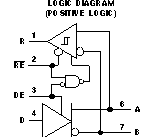
65HVD05High-Output RS-485 Transceiver | Integrated Circuits (ICs) | 2 | Active | The SN65HVD05, SN75HVD05, SN65HVD06, SN75HVD06, SN65HVD07, and SN75HVD07 combine a 3-state differential line driver and differential line receiver. They are designed for balanced data transmission and interoperate with ANSI TIA/EIA-485-A and ISO 8482E standard-compliant devices. The driver is designed to provide a differential output voltage greater than that required by these standards for increased noise margin. The drivers and receivers have active-high and active-low enables respectively, which can be externally connected together to function as direction control.
The driver differential outputs and receiver differential inputs connect internally to form a differential input/ output (I/O) bus port that is designed to offer minimum loading to the bus whenever the driver is disabled or not powered. These devices feature wide positive and negative common-mode voltage ranges, making them suitable for party-line applications.
The SN65HVD05, SN75HVD05, SN65HVD06, SN75HVD06, SN65HVD07, and SN75HVD07 combine a 3-state differential line driver and differential line receiver. They are designed for balanced data transmission and interoperate with ANSI TIA/EIA-485-A and ISO 8482E standard-compliant devices. The driver is designed to provide a differential output voltage greater than that required by these standards for increased noise margin. The drivers and receivers have active-high and active-low enables respectively, which can be externally connected together to function as direction control.
The driver differential outputs and receiver differential inputs connect internally to form a differential input/ output (I/O) bus port that is designed to offer minimum loading to the bus whenever the driver is disabled or not powered. These devices feature wide positive and negative common-mode voltage ranges, making them suitable for party-line applications. |
| Integrated Circuits (ICs) | 4 | Active | |