T
Texas Instruments
| Series | Category | # Parts | Status | Description |
|---|---|---|---|---|
| Part | Spec A | Spec B | Spec C | Spec D | Description |
|---|---|---|---|---|---|



| Series | Category | # Parts | Status | Description |
|---|---|---|---|---|
| Part | Spec A | Spec B | Spec C | Spec D | Description |
|---|---|---|---|---|---|
| Part | Category | Description |
|---|---|---|
 Texas Instruments BQ2002CSNTRG4Unknown | Integrated Circuits (ICs) | LINEAR BATTERY CHARGER NICD/NIMH 2000MA 0V TO 6V 8-PIN SOIC T/R |
 Texas Instruments LM3676SDX-3.3Obsolete | Integrated Circuits (ICs) | IC REG BUCK 3.3V 600MA 8WSON |
 Texas Instruments | Integrated Circuits (ICs) | TMX320DRE311 179PIN UBGA 200MHZ |
 Texas Instruments UCC3580N-1G4Obsolete | Integrated Circuits (ICs) | IC REG CTRLR FWRD CONV 16DIP |
 Texas Instruments LM2831YMF EVALObsolete | Development Boards Kits Programmers | EVAL BOARD FOR LM2831 |
 Texas Instruments | Integrated Circuits (ICs) | BUFFER/LINE DRIVER 8-CH NON-INVERTING 3-ST CMOS 20-PIN SSOP T/R |
 Texas Instruments | Integrated Circuits (ICs) | ANALOG OTHER PERIPHERALS |
Texas Instruments | Integrated Circuits (ICs) | RADIATION-HARDENED, QMLP 60V HAL |
 Texas Instruments SN75LVDS051DRObsolete | Integrated Circuits (ICs) | IC TRANSCEIVER FULL 2/2 16SOIC |
 Texas Instruments | Integrated Circuits (ICs) | AUTOMOTIVE OCTAL D-TYPE FLIP-FLO |
| Series | Category | # Parts | Status | Description |
|---|---|---|---|---|
65C32223- to 5.5-V dual channel 1Mbps RS-232 line driver/receiver with +/-15-kV IEC-ESD protection | Interface | 7 | Active | The SN65C3222E and SN75C3222E consist of two line drivers, two line receivers, and a dual charge-pump circuit with ±15-kV ESD protection pin to pin (serial-port connection pins, including GND).
The devices meet the requirements of TIA/EIA-232-F and provide the electrical interface between an asynchronous communication controller and the serial-port connector. The charge pump and four small external capacitors allow operation from a single 3-V to 5.5-V supply. The devices operate at typical data signaling rates up to 1000 kbit/s and are improved drop-in replacements for industry-popular ’3222 two-driver, two-receiver functions.
The SN65C3222E and SN75C3222E can be placed in the power-down mode by setting the power-down (PWRDOWN) input low, which draws only 1 µA from the power supply. When the devices are powered down, the receivers remain active while the drivers are placed in the high-impedance state. Also, during power down, the onboard charge pump is disabled; V+ is lowered to VCC, and V– is raised toward GND. Receiver outputs also can be placed in the high-impedance state by setting enable (EN) high.
The SN65C3222E and SN75C3222E consist of two line drivers, two line receivers, and a dual charge-pump circuit with ±15-kV ESD protection pin to pin (serial-port connection pins, including GND).
The devices meet the requirements of TIA/EIA-232-F and provide the electrical interface between an asynchronous communication controller and the serial-port connector. The charge pump and four small external capacitors allow operation from a single 3-V to 5.5-V supply. The devices operate at typical data signaling rates up to 1000 kbit/s and are improved drop-in replacements for industry-popular ’3222 two-driver, two-receiver functions.
The SN65C3222E and SN75C3222E can be placed in the power-down mode by setting the power-down (PWRDOWN) input low, which draws only 1 µA from the power supply. When the devices are powered down, the receivers remain active while the drivers are placed in the high-impedance state. Also, during power down, the onboard charge pump is disabled; V+ is lowered to VCC, and V– is raised toward GND. Receiver outputs also can be placed in the high-impedance state by setting enable (EN) high. |
65C32233- to 5.5-V dual channel 1Mbps RS-232 line driver/receiver with +/-15-kV IEC-ESD protection | Integrated Circuits (ICs) | 10 | Active | The SN65C3223 and SN75C3223 consist of two line drivers, two line receivers, and a dual charge-pump circuit with ±15-kV ESD protection pin to pin (serial-port connection pins, including GND). The devices provide the electrical interface between an asynchronous communication controller and the serial-port connector. The charge pump and four small external capacitors allow operation from a single 3-V to 5.5-V supply. The devices operate at data signaling rates up to 1 Mbit/s and a driver output slew rate of 24 V/µs to 150 V/µs.
Flexible control options for power management are available when the serial port is inactive. The auto-powerdown feature functions when FORCEON is low and FORCEOFF\ is high. During this mode of operation, if the device does not sense a valid RS-232 signal, the driver outputs are disabled. If FORCEOFF\ is set low and EN is high, both drivers and receivers are shut off, and the supply current is reduced to 1 µA. Disconnecting the serial port or turning off the peripheral drivers causes auto-powerdown to occur. Auto-powerdown can be disabled when FORCEON and FORCEOFF\ are high. With auto-powerdown enabled, the device is activated automatically when a valid signal is applied to any receiver input. The INVALID\ output is used to notify the user if an RS-232 signal is present at any receiver input. INVALID\ is high (valid data) if any receiver input voltage is greater than 2.7 V or less than –2.7 V or has been between –0.3 V and 0.3 V for less than 30 µs. INVALID\ is low (invalid data) if the receiver input voltage is between –0.3 V and 0.3 V for more than 30 µs. Refer to Figure 4 for receiver input levels.
The SN65C3223 and SN75C3223 consist of two line drivers, two line receivers, and a dual charge-pump circuit with ±15-kV ESD protection pin to pin (serial-port connection pins, including GND). The devices provide the electrical interface between an asynchronous communication controller and the serial-port connector. The charge pump and four small external capacitors allow operation from a single 3-V to 5.5-V supply. The devices operate at data signaling rates up to 1 Mbit/s and a driver output slew rate of 24 V/µs to 150 V/µs.
Flexible control options for power management are available when the serial port is inactive. The auto-powerdown feature functions when FORCEON is low and FORCEOFF\ is high. During this mode of operation, if the device does not sense a valid RS-232 signal, the driver outputs are disabled. If FORCEOFF\ is set low and EN is high, both drivers and receivers are shut off, and the supply current is reduced to 1 µA. Disconnecting the serial port or turning off the peripheral drivers causes auto-powerdown to occur. Auto-powerdown can be disabled when FORCEON and FORCEOFF\ are high. With auto-powerdown enabled, the device is activated automatically when a valid signal is applied to any receiver input. The INVALID\ output is used to notify the user if an RS-232 signal is present at any receiver input. INVALID\ is high (valid data) if any receiver input voltage is greater than 2.7 V or less than –2.7 V or has been between –0.3 V and 0.3 V for less than 30 µs. INVALID\ is low (invalid data) if the receiver input voltage is between –0.3 V and 0.3 V for more than 30 µs. Refer to Figure 4 for receiver input levels. |
65C32323- to 5.5-V dual channel 1Mbps RS-232 line driver/receiver with +/-15-kV ESD protection | Integrated Circuits (ICs) | 17 | Active | The SN65C3232E and SN75C3232E consist of two line drivers, two line receivers, and a dual charge-pump circuit with ±15-kV ESD protection pin to pin (serial-port connection pins, including GND). These devices provide the electrical interface between an asynchronous communication controller and the serial-port connector. The charge pump and four small external capacitors allow operation from a single 3-V to 5.5-V supply. The devices operate at data signaling rates up to 1 Mbit/s and a driver output slew rate of 14 V/µs to 150 V/µs.
spacer
spacer
The SN65C3232E and SN75C3232E consist of two line drivers, two line receivers, and a dual charge-pump circuit with ±15-kV ESD protection pin to pin (serial-port connection pins, including GND). These devices provide the electrical interface between an asynchronous communication controller and the serial-port connector. The charge pump and four small external capacitors allow operation from a single 3-V to 5.5-V supply. The devices operate at data signaling rates up to 1 Mbit/s and a driver output slew rate of 14 V/µs to 150 V/µs.
spacer
spacer |
65C32383- to 5.5-V multichannel 1Mbps RS-232 line driver/receiver with +/-15-kV ESD protection | Drivers, Receivers, Transceivers | 7 | Active | The ’C3238 devices consist of five line drivers, three line receivers, and a dual charge-pump circuit with ±15-kV ESD protection pin to pin (serial-port connection pins, including GND). The charge pump and four small external capacitors allow operation from a single 3-V to 5.5-V supply. In addition, these devices include an always-active noninverting output (ROUT1B), which allows applications using the ring indicator to transmit data while the device is powered down. These devices operate at data signaling rates up to 1 Mbit/s, and at an increased slew-rate range of 24 V/µs to 150 V/µs.
Flexible control options for power management are featured when the serial-port and driver inputs are inactive. The auto-powerdown plus feature functions when FORCEON is low and FORCEOFF\ is high. During this mode of operation, if the device does not sense valid signal transitions on all receiver and driver inputs for 30 s, the built-in charge-pump and drivers are powered down, reducing the supply current to 1 µA. By disconnecting the serial port or placing the peripheral drivers off, auto-powerdown plus will occur if there is no activity in the logic levels for the driver inputs. Auto-powerdown plus can be disabled when FORCEON and FORCEOFF\ are high. With auto-powerdown plus enabled, the device automatically activates once a valid signal is applied to any receiver or driver input. INVALID\ is high (valid data) if any receiver input voltage is greater than 2.7 V or less than –2.7 V or has been between –0.3 V and 0.3 V for less than 30 µs. INVALID\ is low (invalid data) if all receiver input voltages are between –0.3 V and 0.3 V for more than 30 µs. Refer to Figure 5 for receiver input levels.
The ’C3238 devices consist of five line drivers, three line receivers, and a dual charge-pump circuit with ±15-kV ESD protection pin to pin (serial-port connection pins, including GND). The charge pump and four small external capacitors allow operation from a single 3-V to 5.5-V supply. In addition, these devices include an always-active noninverting output (ROUT1B), which allows applications using the ring indicator to transmit data while the device is powered down. These devices operate at data signaling rates up to 1 Mbit/s, and at an increased slew-rate range of 24 V/µs to 150 V/µs.
Flexible control options for power management are featured when the serial-port and driver inputs are inactive. The auto-powerdown plus feature functions when FORCEON is low and FORCEOFF\ is high. During this mode of operation, if the device does not sense valid signal transitions on all receiver and driver inputs for 30 s, the built-in charge-pump and drivers are powered down, reducing the supply current to 1 µA. By disconnecting the serial port or placing the peripheral drivers off, auto-powerdown plus will occur if there is no activity in the logic levels for the driver inputs. Auto-powerdown plus can be disabled when FORCEON and FORCEOFF\ are high. With auto-powerdown plus enabled, the device automatically activates once a valid signal is applied to any receiver or driver input. INVALID\ is high (valid data) if any receiver input voltage is greater than 2.7 V or less than –2.7 V or has been between –0.3 V and 0.3 V for less than 30 µs. INVALID\ is low (invalid data) if all receiver input voltages are between –0.3 V and 0.3 V for more than 30 µs. Refer to Figure 5 for receiver input levels. |
65C32433- to 5.5-V multichannel 1Mbps RS-232 line driver/receiver with +/-15-kV ESD protection | Interface | 5 | Active | The SN65C3243 and SN75C3243 consist of three line drivers, five line receivers, and a dual charge-pump circuit with ±15-kV ESD protection pin to pin (serial-port connection pins, including GND). This device provides the electrical interface between an asynchronous communication controller and the serial-port connector. The charge pump and four small external capacitors allow operation from a single 3-V to 5.5-V supply. In addition, this device includes an always-active noninverting output (ROUT2B), which allows applications using the ring indicator to transmit data while the device is powered down. The device operates at data signaling rates up to 1 Mbit/s and an increased slew-rate range of 24 V/µs to 150 V/µs.
The SN65C3243 and SN75C3243 consist of three line drivers, five line receivers, and a dual charge-pump circuit with ±15-kV ESD protection pin to pin (serial-port connection pins, including GND). This device provides the electrical interface between an asynchronous communication controller and the serial-port connector. The charge pump and four small external capacitors allow operation from a single 3-V to 5.5-V supply. In addition, this device includes an always-active noninverting output (ROUT2B), which allows applications using the ring indicator to transmit data while the device is powered down. The device operates at data signaling rates up to 1 Mbit/s and an increased slew-rate range of 24 V/µs to 150 V/µs. |
| Development Boards, Kits, Programmers | 5 | Active | ||
| Video Processing | 2 | Active | ||
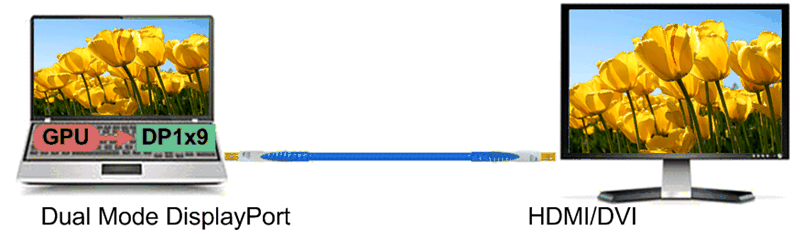
65DP1596-Gbps DP++ 1.1 to HDMI 2.0 retimer -40 to 85C operating temperature | Linear | 2 | Active | The SNx5DP159 device is a dual mode[1] DisplayPort to transition-minimized differential signal (TMDS) retimer supporting digital video interface (DVI) 1.0 and high-definition multimedia interface (HDMI) 1.4b and 2.0b output signals. The SNx5DP159 device supports the dual mode standard version 1.1 type 1 and type 2 through the DDC link or AUX channel. The SNx5DP159 device supports data rate up to 6-Gbps per data lane to support Ultra HD (4K × 2K / 60-Hz) 8-bits per color high-resolution video and HDTV with 16-bit color depth at 1080p (1920 × 1080 / 60-Hz). The SNx5DP159 device can automatically configure itself as a re-driver at data rates <1 Gbps, or as a retimer at more than this data rate. This feature can be turned off through I2C[4] programming.
For signal integrity, the SNx5DP159 device implements several features. The SNx5DP159 receiver supports both adaptive and fixed equalization to clean up inter-symbol interference (ISI) jitter or loss from the bandwidth-limited board traces or cables. When working as a retimer, the embedded clock data recovery (CDR) cleans up the input high frequency and random jitter from video source. The transmitter provides several features for passing compliance and reducing system-level design issues like de-emphasis, which compensates for the attenuation when driving long cables or high-loss board traces. The SNx5DP159 device also includes TMDS output amplitude adjust using an external resistor on the Vsadj pin, source termination selection, and output slew rate control. Device operation and configuration can be programmed by pin strapping or I2C[4].
The SNx5DP159 device implements several methods for power management and active power reduction.
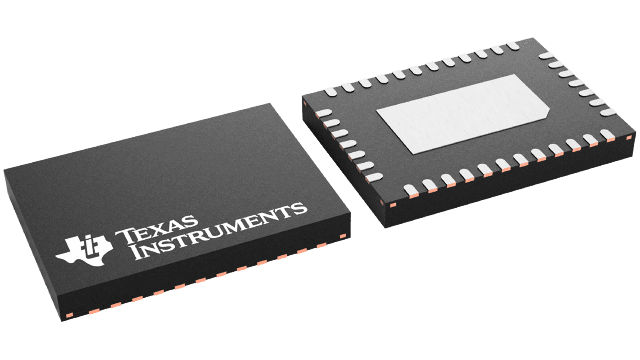
The SNx5DP159 receiver uses several methods to determine whether the application supports HDMI1.4b[2] or HDMI2.0[3] data rates. The SNx5DP159 receiver comes in two packages: a 40-pin RSB supporting space-constrained applications and a 48-pin RGZ version supporting the full feature set for DisplayPort dual-mode standard version 1.1 in applications such as dongles.
The SN65DP159 device is characterized for an industrial operational temperature range from –40°C to 85°C.
The SN75DP159 device is characterized for an extended commercial operational temperature range from 0°C to 85°C.
The SNx5DP159 device is a dual mode[1] DisplayPort to transition-minimized differential signal (TMDS) retimer supporting digital video interface (DVI) 1.0 and high-definition multimedia interface (HDMI) 1.4b and 2.0b output signals. The SNx5DP159 device supports the dual mode standard version 1.1 type 1 and type 2 through the DDC link or AUX channel. The SNx5DP159 device supports data rate up to 6-Gbps per data lane to support Ultra HD (4K × 2K / 60-Hz) 8-bits per color high-resolution video and HDTV with 16-bit color depth at 1080p (1920 × 1080 / 60-Hz). The SNx5DP159 device can automatically configure itself as a re-driver at data rates <1 Gbps, or as a retimer at more than this data rate. This feature can be turned off through I2C[4] programming.
For signal integrity, the SNx5DP159 device implements several features. The SNx5DP159 receiver supports both adaptive and fixed equalization to clean up inter-symbol interference (ISI) jitter or loss from the bandwidth-limited board traces or cables. When working as a retimer, the embedded clock data recovery (CDR) cleans up the input high frequency and random jitter from video source. The transmitter provides several features for passing compliance and reducing system-level design issues like de-emphasis, which compensates for the attenuation when driving long cables or high-loss board traces. The SNx5DP159 device also includes TMDS output amplitude adjust using an external resistor on the Vsadj pin, source termination selection, and output slew rate control. Device operation and configuration can be programmed by pin strapping or I2C[4].
The SNx5DP159 device implements several methods for power management and active power reduction.
The SNx5DP159 receiver uses several methods to determine whether the application supports HDMI1.4b[2] or HDMI2.0[3] data rates. The SNx5DP159 receiver comes in two packages: a 40-pin RSB supporting space-constrained applications and a 48-pin RGZ version supporting the full feature set for DisplayPort dual-mode standard version 1.1 in applications such as dongles.
The SN65DP159 device is characterized for an industrial operational temperature range from –40°C to 85°C.
The SN75DP159 device is characterized for an extended commercial operational temperature range from 0°C to 85°C. |
| Video Processing | 1 | Active | ||
65DSI83Single-channel MIPI® DSI to single-link LVDS bridge & Flatlink™ integrated circuit | Integrated Circuits (ICs) | 4 | Active | The SN65DSI83 DSI to FlatLink bridge device features a single-channel MIPI D-PHY receiver front-end configuration with four lanes per channel operating at 1 Gbps per lane; a maximum input bandwidth of 4 Gbps. The bridge decodes MIPI DSI 18 bpp RGB666 and 24 bpp RGB888 packets and converts the formatted video data stream to a FlatLink-compatible LVDS output operating at pixel clocks operating from 25 MHz to 154 MHz, offering a Single-Link LVDS with four data lanes per link.
The SN65DSI83 device can support up to WUXGA 1920 × 1200 at 60 frames per second, at 24 bpp with reduced blanking. The SN65DSI83 device is also suitable for applications using 60 fps 1366 × 768 / 1280 × 800 at 18 bpp and 24 bpp. Partial line buffering is implemented to accommodate the data stream mismatch between the DSI and LVDS interfaces.
Designed with industry-compliant interface technology, the SN65DSI83 device is compatible with a wide range of microprocessors, and is designed with a range of power management features including low-swing LVDS outputs, and the MIPI defined ultra-low power state (ULPS) support.
The SN65DSI83 device is implemented in a small outline 5-mm × 5-mm nFBGA at 0.5-mm pitch package, and operates across a temperature range from –40°C to 85°C.
The SN65DSI83 DSI to FlatLink bridge device features a single-channel MIPI D-PHY receiver front-end configuration with four lanes per channel operating at 1 Gbps per lane; a maximum input bandwidth of 4 Gbps. The bridge decodes MIPI DSI 18 bpp RGB666 and 24 bpp RGB888 packets and converts the formatted video data stream to a FlatLink-compatible LVDS output operating at pixel clocks operating from 25 MHz to 154 MHz, offering a Single-Link LVDS with four data lanes per link.
The SN65DSI83 device can support up to WUXGA 1920 × 1200 at 60 frames per second, at 24 bpp with reduced blanking. The SN65DSI83 device is also suitable for applications using 60 fps 1366 × 768 / 1280 × 800 at 18 bpp and 24 bpp. Partial line buffering is implemented to accommodate the data stream mismatch between the DSI and LVDS interfaces.
Designed with industry-compliant interface technology, the SN65DSI83 device is compatible with a wide range of microprocessors, and is designed with a range of power management features including low-swing LVDS outputs, and the MIPI defined ultra-low power state (ULPS) support.
The SN65DSI83 device is implemented in a small outline 5-mm × 5-mm nFBGA at 0.5-mm pitch package, and operates across a temperature range from –40°C to 85°C. |