| Power Management (PMIC) | 17 | Active | |
| Integrated Circuits (ICs) | 6 | Active | |
| Power Management (PMIC) | 4 | Active | |
TPS65921Integrated Power Management IC (PMIC) with 3 DC/DC's, 4 LDOs, USB HS Transceiver | Integrated Circuits (ICs) | 6 | NRND | The TPS65921 device is a highly integrated power-management circuit (IC) that supports the power and peripheral requirements of the OMAP application processors. The device contains power management, a universal serial bus (USB) high-speed (HS) transceiver, an analog-to-digital converter (ADC), a real-time clock (RTC), a keypad interface, and an embedded power control (EPC). The power portion of the device contains three buck converters, two controllable by a dedicated SmartReflex class-3 interface, multiple low-dropout (LDO) regulators, an EPC to manage the power-sequencing requirements of OMAP, and an RTC module. The USB module provides an HS 2.0 transceiver suitable for direct connection to the OMAP universal transceiver macrocell interface (UTMI) + low pin interface (ULPI) with an integrated charge pump (CP).
The device also provides auxiliary modules: ADC, keypad interface, and general-purpose inputs/outputs (GPIOs) muxed with the JTAG functions. The keypad interface implements a built-in scanning algorithm to decode hardware-based key presses and to reduce software use, with multiple additional GPIOs that can be used as interrupts when they are configured as inputs.
The TPS65921 device is a highly integrated power-management circuit (IC) that supports the power and peripheral requirements of the OMAP application processors. The device contains power management, a universal serial bus (USB) high-speed (HS) transceiver, an analog-to-digital converter (ADC), a real-time clock (RTC), a keypad interface, and an embedded power control (EPC). The power portion of the device contains three buck converters, two controllable by a dedicated SmartReflex class-3 interface, multiple low-dropout (LDO) regulators, an EPC to manage the power-sequencing requirements of OMAP, and an RTC module. The USB module provides an HS 2.0 transceiver suitable for direct connection to the OMAP universal transceiver macrocell interface (UTMI) + low pin interface (ULPI) with an integrated charge pump (CP).
The device also provides auxiliary modules: ADC, keypad interface, and general-purpose inputs/outputs (GPIOs) muxed with the JTAG functions. The keypad interface implements a built-in scanning algorithm to decode hardware-based key presses and to reduce software use, with multiple additional GPIOs that can be used as interrupts when they are configured as inputs. |
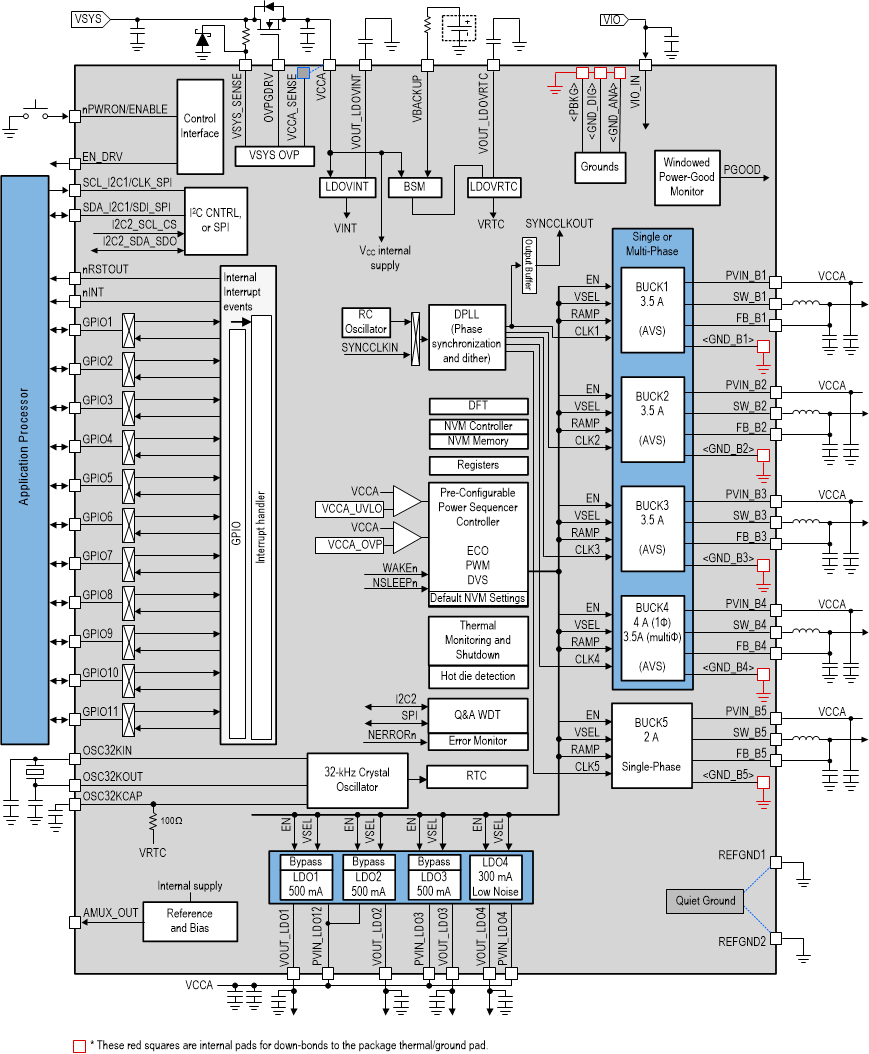
TPS6593-Q1Automotive 2.8-V to 5.5-V PMIC with 5 bucks and 4 LDOs | Integrated Circuits (ICs) | 3 | Active | The TPS6593-Q1 device provides four flexible multi-phase configurable BUCK regulators with 3.5 A output current per phase, and one additional BUCK regulator with 2 A output current.
All of the BUCK regulators can be synchronized to an internal 2.2-MHz or 4.4-MHz or an external 1-MHz, 2-MHz, or 4-MHz clock signal. To improve the EMC performance, an integrated spread-spectrum modulation can be added to the synchronized BUCK switching clock signal. This clock signal can also be made available to external devices through a GPIO output pin. The device provides four LDOs: three with 500-mA capability, which can be configured as load switches; one with 300-mA capability and low-noise performance.
Non-volatile memory (NVM) is used to control the default power sequences and default configurations, such as output voltage and GPIO configurations. The NVM is pre-programmed to allow start-up without external programming. Most static configurations, stored in the register map of the device, can be changed from the default through SPI or I 2C interfaces to configure the device to meet many different system needs. The NVM contains a bit-integrity-error detection feature (CRC) to stop the power-up sequence if an error is detected, preventing the system from starting in an unknown state.
The TPS6593-Q1 includes a 32-kHz crystal oscillator, which generates an accurate 32-kHz clock for the integrated RTC module. A backup-battery management provides power to the crystal oscillator and the real-time clock (RTC) module from a coin cell battery or a super-cap in the event of power loss from the main supply.
The TPS6593-Q1 device includes protection and diagnostic mechanisms such as voltage monitoring on the input supply, voltage monitoring on all BUCK and LDO regulator outputs, register and interface CRC, current-limit, short-circuit protection, thermal pre-warning, and over-temperature shutdown. The device also includes a Q&A or trigger mode watchdog to monitor for MCU software lockup, and two error signal monitor (ESM) inputs with fault injection options to monitor the error signals from the attached SoC or MCU. The TPS6593-Q1 can notify the processor of these events through the interrupt handler, allowing the MCU to take action in response.
The TPS6593-Q1 device provides four flexible multi-phase configurable BUCK regulators with 3.5 A output current per phase, and one additional BUCK regulator with 2 A output current.
All of the BUCK regulators can be synchronized to an internal 2.2-MHz or 4.4-MHz or an external 1-MHz, 2-MHz, or 4-MHz clock signal. To improve the EMC performance, an integrated spread-spectrum modulation can be added to the synchronized BUCK switching clock signal. This clock signal can also be made available to external devices through a GPIO output pin. The device provides four LDOs: three with 500-mA capability, which can be configured as load switches; one with 300-mA capability and low-noise performance.
Non-volatile memory (NVM) is used to control the default power sequences and default configurations, such as output voltage and GPIO configurations. The NVM is pre-programmed to allow start-up without external programming. Most static configurations, stored in the register map of the device, can be changed from the default through SPI or I 2C interfaces to configure the device to meet many different system needs. The NVM contains a bit-integrity-error detection feature (CRC) to stop the power-up sequence if an error is detected, preventing the system from starting in an unknown state.
The TPS6593-Q1 includes a 32-kHz crystal oscillator, which generates an accurate 32-kHz clock for the integrated RTC module. A backup-battery management provides power to the crystal oscillator and the real-time clock (RTC) module from a coin cell battery or a super-cap in the event of power loss from the main supply.
The TPS6593-Q1 device includes protection and diagnostic mechanisms such as voltage monitoring on the input supply, voltage monitoring on all BUCK and LDO regulator outputs, register and interface CRC, current-limit, short-circuit protection, thermal pre-warning, and over-temperature shutdown. The device also includes a Q&A or trigger mode watchdog to monitor for MCU software lockup, and two error signal monitor (ESM) inputs with fault injection options to monitor the error signals from the attached SoC or MCU. The TPS6593-Q1 can notify the processor of these events through the interrupt handler, allowing the MCU to take action in response. |
TPS65930Integrated Power Management IC (PMIC) with 3 DC/DC's, 4 LDO's, Audio Codec, USB HS Transceiver | Power Management - Specialized | 4 | Active | The TPS65920 and TPS65930 devices are power-management ICs for OMAP and other mobile applications. The devices include power-management, a universal serial bus (USB) high-speed (HS) transceiver, light-emitting diode (LED) drivers, an analog-to-digital converter (ADC), a real-time clock (RTC), and an embedded power control (EPC). In addition, the TPS65930 includes a full audio codec with two digital-to-analog converters (DACs) and two ADCs to implement dual voice channels, and a stereo downlink channel that can play all standard audio sample rates through a multiple format inter-integrated sound (I2S)/time division multiplexing (TDM) interface.
These optimized devices supports the power and peripheral requirements of the OMAP application processors. The power portion of the devices contains three buck converters, two controllable by a dedicated SmartReflex class-3 interface, multiple low dropout (LDO) regulators, an EPC to manage the power sequencing requirements of OMAP, and an RTC and backup module. The RTC can be powered by a backup battery when the main supply is not present, and the devices include a coin-cell charger to recharge the backup battery as needed.
The USB module provides a HS 2.0 OTG transceiver suitable for direct connection to the OMAP UTMI+ low pin interface (ULPI), with an integrated charge pump and full support for the carkit CEA-936A specification. An ADC is provided for monitoring signals, such as supply voltage, entering the device, and two additional an external ADC inputs are input is provided for system use.
The devices provide driver circuitry to power two LED circuits that can illuminate a panel or provide user indicators. The drivers also provide pulse width modulation (PWM) circuits to control the illumination levels of the LEDs. A keypad interface implements a built-in scanning algorithm to decode hardware-based key presses and reduce software use, with multiple additional general-purpose input/output devices (GPIOs) that can be used as interrupts when configured as inputs.
The TPS65920 and TPS65930 devices are power-management ICs for OMAP and other mobile applications. The devices include power-management, a universal serial bus (USB) high-speed (HS) transceiver, light-emitting diode (LED) drivers, an analog-to-digital converter (ADC), a real-time clock (RTC), and an embedded power control (EPC). In addition, the TPS65930 includes a full audio codec with two digital-to-analog converters (DACs) and two ADCs to implement dual voice channels, and a stereo downlink channel that can play all standard audio sample rates through a multiple format inter-integrated sound (I2S)/time division multiplexing (TDM) interface.
These optimized devices supports the power and peripheral requirements of the OMAP application processors. The power portion of the devices contains three buck converters, two controllable by a dedicated SmartReflex class-3 interface, multiple low dropout (LDO) regulators, an EPC to manage the power sequencing requirements of OMAP, and an RTC and backup module. The RTC can be powered by a backup battery when the main supply is not present, and the devices include a coin-cell charger to recharge the backup battery as needed.
The USB module provides a HS 2.0 OTG transceiver suitable for direct connection to the OMAP UTMI+ low pin interface (ULPI), with an integrated charge pump and full support for the carkit CEA-936A specification. An ADC is provided for monitoring signals, such as supply voltage, entering the device, and two additional an external ADC inputs are input is provided for system use.
The devices provide driver circuitry to power two LED circuits that can illuminate a panel or provide user indicators. The drivers also provide pulse width modulation (PWM) circuits to control the illumination levels of the LEDs. A keypad interface implements a built-in scanning algorithm to decode hardware-based key presses and reduce software use, with multiple additional general-purpose input/output devices (GPIOs) that can be used as interrupts when configured as inputs. |
| Voltage Regulators - Linear + Switching | 12 | Active | |
| Integrated Circuits (ICs) | 5 | Active | |
TPS65951Integrated power management IC (PMIC) audio codec silicon | Integrated Circuits (ICs) | 2 | Active | The TPS65951 device is a power-management IC for mobile cellular handsets powered by a Li-ion, Li-ion polymer, or cobalt-nickel-manganese cell battery. The device can be connected to an application processor and/or a modem. This optimized power-management IC is designed to support the specific power requirements of the OMAP processor devices. The TPS65951 contains several buck converters, low dropout (LDO) regulators, a battery charger interface, and a host of other features and functions. The audio portion of the TPS65951 is an entire audio module with audio codecs, digital filters, input preamplifiers and amplifiers, and class-D output amplifiers.
This TPS65951 Data Manual presents the electrical and mechanical specifications for the TPS65951 device.
The TPS65951 device is a power-management IC for mobile cellular handsets powered by a Li-ion, Li-ion polymer, or cobalt-nickel-manganese cell battery. The device can be connected to an application processor and/or a modem. This optimized power-management IC is designed to support the specific power requirements of the OMAP processor devices. The TPS65951 contains several buck converters, low dropout (LDO) regulators, a battery charger interface, and a host of other features and functions. The audio portion of the TPS65951 is an entire audio module with audio codecs, digital filters, input preamplifiers and amplifiers, and class-D output amplifiers.
This TPS65951 Data Manual presents the electrical and mechanical specifications for the TPS65951 device. |
TPS65980Thunderbolt™ Bus Power Power Management IC (PMIC) | Development Boards, Kits, Programmers | 3 | Active | The TPS65980 DC/DC switching regulator that receives power from a Thunderbolt™ or Thunderbolt™ 2 power bus ranging from 2.5-V to 15.75-V and generates three separate 3.3-V supply outputs.
The TBT_OUT supply provides power to the local peripheral Thunderbolt™ controller and support circuitry. The CBL_OUT supply provides power back to the Thunderbolt™ cable and has adjustable current limit. The DEV_OUT supply provides power to all other circuitry in the device to perform its designed function.
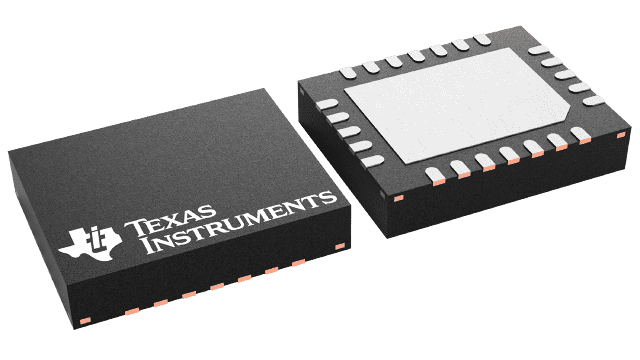
The TPS65980 is available in a 24-pin5mm x 4mm x 0.9mm VQFN package.
The TPS65980 DC/DC switching regulator that receives power from a Thunderbolt™ or Thunderbolt™ 2 power bus ranging from 2.5-V to 15.75-V and generates three separate 3.3-V supply outputs.
The TBT_OUT supply provides power to the local peripheral Thunderbolt™ controller and support circuitry. The CBL_OUT supply provides power back to the Thunderbolt™ cable and has adjustable current limit. The DEV_OUT supply provides power to all other circuitry in the device to perform its designed function.
The TPS65980 is available in a 24-pin5mm x 4mm x 0.9mm VQFN package. |