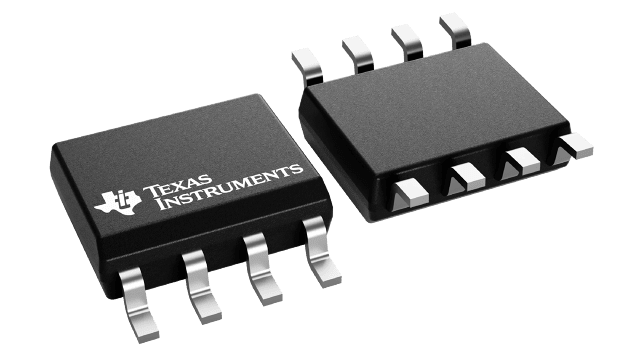
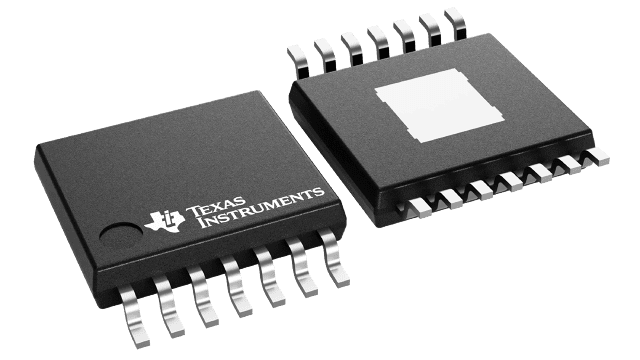
TPS542323.5-V to 28-V input, 2-A step-down converter with eco-mode | DC/DC & AC/DC (Off-Line) SMPS Evaluation Boards | 3 | Active | The TPS54232 is a 28-V, nonsynchronous buck converter that integrates a low RDS(on)high-side MOSFET. To increase efficiency at light loads, a pulse-skipping Eco-Mode feature is automatically activated. Furthermore, the 1-µA shutdown supply current allows the device to be used in battery-powered applications. Current mode control with internal slope compensation simplifies the external compensation calculations and reduces component count while allowing the use of ceramic output capacitors. A resistor divider programs the hysteresis of the input undervoltage lockout. An overvoltage transient protection circuit limits voltage overshoots during startup and transient conditions. A cycle-by-cycle current limit scheme, frequency fold back, and thermal shutdown protect the device and the load in the event of an overload condition. The TPS54232 is available in an 8-pin SOIC package.
The TPS54232 is a 28-V, nonsynchronous buck converter that integrates a low RDS(on)high-side MOSFET. To increase efficiency at light loads, a pulse-skipping Eco-Mode feature is automatically activated. Furthermore, the 1-µA shutdown supply current allows the device to be used in battery-powered applications. Current mode control with internal slope compensation simplifies the external compensation calculations and reduces component count while allowing the use of ceramic output capacitors. A resistor divider programs the hysteresis of the input undervoltage lockout. An overvoltage transient protection circuit limits voltage overshoots during startup and transient conditions. A cycle-by-cycle current limit scheme, frequency fold back, and thermal shutdown protect the device and the load in the event of an overload condition. The TPS54232 is available in an 8-pin SOIC package. |
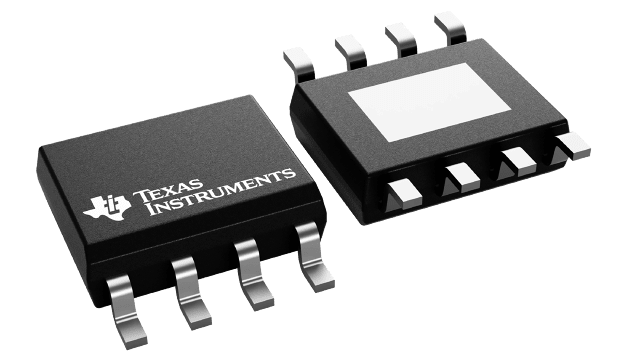
TPS54233-Q1Automotive 3.5V to 28V, 300kHz Fixed Frequency 2A Buck Converter with Eco-Mode™ | Integrated Circuits (ICs) | 3 | Active | The TPS54233-Q1 is a 28 V, 2 A non-synchronous buck converter that integrates a low RDS(on)high side MOSFET. To increase efficiency at light loads, a pulse skipping Eco-mode™ feature is automatically activated. Furthermore, the 1 µA shutdown supply current allows the device to be used in battery powered applications. Current mode control with internal slope compensation simplifies the external compensation calculations and reduces component count while allowing the use of ceramic output capacitors. A resistor divider programs the Hysteresis of the input under-voltage lockout. An overvoltage transient protection circuit limits voltage overshoots during startup and transient conditions. A cycle by cycle current limit scheme, frequency fold back and thermal shutdown protect the device and the load in the event of an overload condition. The TPS54233-Q1 is available in an 8-pin SOIC package that has been internally optimized to improve thermal performance.
The TPS54233-Q1 is a 28 V, 2 A non-synchronous buck converter that integrates a low RDS(on)high side MOSFET. To increase efficiency at light loads, a pulse skipping Eco-mode™ feature is automatically activated. Furthermore, the 1 µA shutdown supply current allows the device to be used in battery powered applications. Current mode control with internal slope compensation simplifies the external compensation calculations and reduces component count while allowing the use of ceramic output capacitors. A resistor divider programs the Hysteresis of the input under-voltage lockout. An overvoltage transient protection circuit limits voltage overshoots during startup and transient conditions. A cycle by cycle current limit scheme, frequency fold back and thermal shutdown protect the device and the load in the event of an overload condition. The TPS54233-Q1 is available in an 8-pin SOIC package that has been internally optimized to improve thermal performance. |
TPS54239E4.5V to 23V Input, 2A Synchronous Step-Down Converter with D-CAP2 Mode | Voltage Regulators - DC DC Switching Regulators | 3 | Active | The TPS54239E is an adaptive on-time D-CAP2™ mode synchronous buck converter. The TPS54239E enables system designers to complete the suite of various end-equipment power bus regulators with a cost effective, low component count, low standby current solution. The main control loop for the TPS54239E uses the D-CAP2™ mode control that provides a fast transient response with no external compensation components. The adaptive on-time control supports seamless transition between PWM mode at higher load conditions and Eco-mode™ operation at light loads. Eco-mode™ allows the TPS54239 to maintain high efficiency during lighter load conditions. The TPS54239E also has a proprietary circuit that enables the device to adopt to both low equivalent series resistance (ESR) output capacitors, such as POSCAP or SP-CAP, and ultra-low ESR ceramic capacitors. The device operates from 4.5-V to 23-V VIN input. The output voltage can be programmed between 0.76 V and 7 V. The device also features an adjustable soft start time. The TPS54239E is available in the 8-pin DDA package, and designed to operate from –40°C to 85°C.
The TPS54239E is an adaptive on-time D-CAP2™ mode synchronous buck converter. The TPS54239E enables system designers to complete the suite of various end-equipment power bus regulators with a cost effective, low component count, low standby current solution. The main control loop for the TPS54239E uses the D-CAP2™ mode control that provides a fast transient response with no external compensation components. The adaptive on-time control supports seamless transition between PWM mode at higher load conditions and Eco-mode™ operation at light loads. Eco-mode™ allows the TPS54239 to maintain high efficiency during lighter load conditions. The TPS54239E also has a proprietary circuit that enables the device to adopt to both low equivalent series resistance (ESR) output capacitors, such as POSCAP or SP-CAP, and ultra-low ESR ceramic capacitors. The device operates from 4.5-V to 23-V VIN input. The output voltage can be programmed between 0.76 V and 7 V. The device also features an adjustable soft start time. The TPS54239E is available in the 8-pin DDA package, and designed to operate from –40°C to 85°C. |
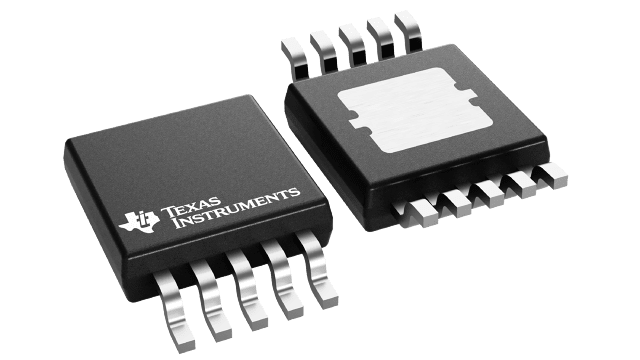
TPS54240-Q1Automotive 3.5V to 42V, 2.5A Buck Converter with Eco-Mode™ | Evaluation Boards | 5 | Active | The TPS54240 device is a 42-V, 2.5-A, step-down regulator with an integrated high-side MOSFET. Current mode control provides simple external compensation and flexible component selection. A low-ripple, pulse skip mode reduces the no load, regulated output supply current to 138 µA. Using the enable pin, shutdown supply current is reduced to 1.3 µA, when the enable pin is low.
Undervoltage lockout is internally set at 2.5 V, but it can be increased using the enable pin. The output voltage startup ramp is controlled by the slow-start pin that can also be configured for sequencing and tracking. An open-drain power good signal indicates the output is within 94% to 107% of its nominal voltage.
A wide switching frequency range allows efficiency and optimization of external component size. Frequency foldback and thermal shutdown protects the part during an overload condition.
The TPS54240 is available in 10-pin, thermally-enhanced HVSSOP and 10-pin 3-mm × 3-mm PowerPAD package.
The TPS54240 device is a 42-V, 2.5-A, step-down regulator with an integrated high-side MOSFET. Current mode control provides simple external compensation and flexible component selection. A low-ripple, pulse skip mode reduces the no load, regulated output supply current to 138 µA. Using the enable pin, shutdown supply current is reduced to 1.3 µA, when the enable pin is low.
Undervoltage lockout is internally set at 2.5 V, but it can be increased using the enable pin. The output voltage startup ramp is controlled by the slow-start pin that can also be configured for sequencing and tracking. An open-drain power good signal indicates the output is within 94% to 107% of its nominal voltage.
A wide switching frequency range allows efficiency and optimization of external component size. Frequency foldback and thermal shutdown protects the part during an overload condition.
The TPS54240 is available in 10-pin, thermally-enhanced HVSSOP and 10-pin 3-mm × 3-mm PowerPAD package. |
TPS54260-EPAutomotive 3.5V to 60V, 2.5A Step-down Converter with Eco-Mode™ | DC/DC & AC/DC (Off-Line) SMPS Evaluation Boards | 8 | Active | The TPS54260 device is a 60-V, 2.5-A, step-down regulator with an integrated high-side MOSFET. Current mode control provides simple external compensation and flexible component selection. A low-ripple, pulse skip mode reduces the no load, regulated output supply current to 138 µA. Using the enable pin, shutdown supply current is reduced to1.3 µA, when the enable pin is low.
Undervoltage lockout (UVLO) is internally set at2.5 V, but can be increased using the enable pin. The output voltage startup ramp is controlled by the slow-start pin that can also be configured for sequencing and tracking. An open-drain powergood signal indicates the output is within 94% to 107% of its nominal voltage.
A wide switching frequency range allows efficiency and external component size to be optimized. Frequency foldback and thermal shutdown protects the part during an overload condition.
The TPS54260 is available in 10-pin thermally enhanced MSOP and 10-pin 3-mm × 3-mm SON PowerPAD packages.
The TPS54260 device is a 60-V, 2.5-A, step-down regulator with an integrated high-side MOSFET. Current mode control provides simple external compensation and flexible component selection. A low-ripple, pulse skip mode reduces the no load, regulated output supply current to 138 µA. Using the enable pin, shutdown supply current is reduced to1.3 µA, when the enable pin is low.
Undervoltage lockout (UVLO) is internally set at2.5 V, but can be increased using the enable pin. The output voltage startup ramp is controlled by the slow-start pin that can also be configured for sequencing and tracking. An open-drain powergood signal indicates the output is within 94% to 107% of its nominal voltage.
A wide switching frequency range allows efficiency and external component size to be optimized. Frequency foldback and thermal shutdown protects the part during an overload condition.
The TPS54260 is available in 10-pin thermally enhanced MSOP and 10-pin 3-mm × 3-mm SON PowerPAD packages. |
TPS54262-EPEnhanced Plastic 2A, 60V Step Down DC/DC Converter with Low Iq, Voltage Supervision and Reset | DC/DC & AC/DC (Off-Line) SMPS Evaluation Boards | 3 | Active | The TPS54262-Q1 device is a 60-V, 2-A step-down switch-mode power supply with a low-power mode and a programmable voltage supervisor with an integrated NMOS switching FET. Integrated input voltage line feed forward topology improves line transient regulation of the voltage mode buck regulator. The regulator has a cycle-by-cycle current limit. The device also features low-power mode operation under light-load conditions which reduces the supply current to 50 µA (typical). By pulling the EN pin low, the supply shutdown current is reduced to 1 µA (typical).
An open-drain reset signal indicates when the nominal output drops below the reset threshold set by an external resistor divider network. The output voltage start-up ramp is controlled by a soft-start capacitor. There is an internal undervoltage shut down which is activated when the input supply ramps down to 2.6 V. The device features a short circuit protection circuit which protects the device during overload condition, and also has a thermal shutdown protection.
The TPS54262-Q1 device is a 60-V, 2-A step-down switch-mode power supply with a low-power mode and a programmable voltage supervisor with an integrated NMOS switching FET. Integrated input voltage line feed forward topology improves line transient regulation of the voltage mode buck regulator. The regulator has a cycle-by-cycle current limit. The device also features low-power mode operation under light-load conditions which reduces the supply current to 50 µA (typical). By pulling the EN pin low, the supply shutdown current is reduced to 1 µA (typical).
An open-drain reset signal indicates when the nominal output drops below the reset threshold set by an external resistor divider network. The output voltage start-up ramp is controlled by a soft-start capacitor. There is an internal undervoltage shut down which is activated when the input supply ramps down to 2.6 V. The device features a short circuit protection circuit which protects the device during overload condition, and also has a thermal shutdown protection. |
TPS542834.5V to 28V Input, Dual 2A Output, 300kHz Step-Down Converter with Internal Compensation | Voltage Regulators - DC DC Switching Regulators | 2 | Active | TPS54283 and TPS54286 are dual output non-synchronous buck converters capable of supporting 2-A output applications that operate from a 4.5-V to 28-V input supply voltage, and require output voltages between 0.8 V and 90% of the input voltage.
With internally-determined operating frequency, soft start time, and control loop compensation, these converters provide many features with a minimum of external components. Channel 1 overcurrent protection is set at 3 A, while Channel 2 overcurrent protection level is selected by connecting a pin to ground, to BP, or left floating. The setting levels are used to allow for scaling of external components for applications not needing the full load capability of both outputs.
The outputs may be enabled independently, or may be configured to allow either ratiometric or sequential startup sequencing. Additionally, the two outputs may also be powered from different sources.
TPS54283 and TPS54286 are dual output non-synchronous buck converters capable of supporting 2-A output applications that operate from a 4.5-V to 28-V input supply voltage, and require output voltages between 0.8 V and 90% of the input voltage.
With internally-determined operating frequency, soft start time, and control loop compensation, these converters provide many features with a minimum of external components. Channel 1 overcurrent protection is set at 3 A, while Channel 2 overcurrent protection level is selected by connecting a pin to ground, to BP, or left floating. The setting levels are used to allow for scaling of external components for applications not needing the full load capability of both outputs.
The outputs may be enabled independently, or may be configured to allow either ratiometric or sequential startup sequencing. Additionally, the two outputs may also be powered from different sources. |
| Voltage Regulators - DC DC Switching Regulators | 3 | Active | |
TPS542904.5 V to 18 V input, 300 kHz, 1.5 / 2.5 A dual synchronous step-down converter | Power Management (PMIC) | 2 | Active | The TPS54290, TPS54291, and TPS54292 devices are dual-output, fully synchronous buck converters capable of supporting applications with a minimal number of external components. It operates from a 4.5-V to 18-V input supply voltage, and supports output voltages as low as 0.8 V and as high as 90% of the input voltage.
Both high-side and low-side MOSFETs are integrated to provide fully synchronous conversion with higher efficiency. Channel 1 can provide up to 1.5 A of continuous current. Meanwhile, Channel 2 supports up to 2.5 A.
Current mode control simplifies the compensation. The external compensation adds flexibility for the user to choose different type of output capacitors.
180° out-of-phase operation reduces the ripple current through the input capacitor, providing the benefit of reducing input capacitance, alleviating EMI and increasing capacitor life.
The TPS54290, TPS54291, and TPS54292 devices are dual-output, fully synchronous buck converters capable of supporting applications with a minimal number of external components. It operates from a 4.5-V to 18-V input supply voltage, and supports output voltages as low as 0.8 V and as high as 90% of the input voltage.
Both high-side and low-side MOSFETs are integrated to provide fully synchronous conversion with higher efficiency. Channel 1 can provide up to 1.5 A of continuous current. Meanwhile, Channel 2 supports up to 2.5 A.
Current mode control simplifies the compensation. The external compensation adds flexibility for the user to choose different type of output capacitors.
180° out-of-phase operation reduces the ripple current through the input capacitor, providing the benefit of reducing input capacitance, alleviating EMI and increasing capacitor life. |
TPS542914.5 V to 18 V input, 600 kHz, 1.5 / 2.5 A dual synchronous step-down converter | Development Boards, Kits, Programmers | 3 | Active | The TPS54290, TPS54291, and TPS54292 devices are dual-output, fully synchronous buck converters capable of supporting applications with a minimal number of external components. It operates from a 4.5-V to 18-V input supply voltage, and supports output voltages as low as 0.8 V and as high as 90% of the input voltage.
Both high-side and low-side MOSFETs are integrated to provide fully synchronous conversion with higher efficiency. Channel 1 can provide up to 1.5 A of continuous current. Meanwhile, Channel 2 supports up to 2.5 A.
Current mode control simplifies the compensation. The external compensation adds flexibility for the user to choose different type of output capacitors.
180° out-of-phase operation reduces the ripple current through the input capacitor, providing the benefit of reducing input capacitance, alleviating EMI and increasing capacitor life.
The TPS54290, TPS54291, and TPS54292 devices are dual-output, fully synchronous buck converters capable of supporting applications with a minimal number of external components. It operates from a 4.5-V to 18-V input supply voltage, and supports output voltages as low as 0.8 V and as high as 90% of the input voltage.
Both high-side and low-side MOSFETs are integrated to provide fully synchronous conversion with higher efficiency. Channel 1 can provide up to 1.5 A of continuous current. Meanwhile, Channel 2 supports up to 2.5 A.
Current mode control simplifies the compensation. The external compensation adds flexibility for the user to choose different type of output capacitors.
180° out-of-phase operation reduces the ripple current through the input capacitor, providing the benefit of reducing input capacitance, alleviating EMI and increasing capacitor life. |