| AC DC Converters, Offline Switches | 3 | Active | |
UCC28750Current-mode flyback controller with secondary-side regulation (SSR) for offline applications | AC DC Converters, Offline Switches | 7 | Active | UCC28750 is a highly-integrated current-mode, continuous-conduction-capable, PWM controller optimized for high performance, low standby power, and cost effective offline flyback converter applications using an opto-coupler. During light-load conditions the device enters frequency foldback and burst modes, improving light-load efficiency. The burst-mode algorithm used in UCC28750 controls the minimum effective switching frequency to prevent audible noise during light-load conditions. Frequency dithering improves EMI performance, and is active in normal, frequency foldback, and power boost operations.
UCC28750 provides protection features that enable a robust converter design with minimal external components. Output over-power protection (OPP) and cycle-by-cycle over-current limit protect the load and power-stage components from electrical stress. Over-voltage and under-voltage lockout (OVLO and UVLO) prevent switching in unwanted input conditions. The FLT pin provides line brown-out sensing and protection, or external over-temperature and over-voltage protection, depending on the device variant. The FLT pin is also used to disable the device through external control by pulling the pin to ground, regardless of the device variant.
UCC28750 is a highly-integrated current-mode, continuous-conduction-capable, PWM controller optimized for high performance, low standby power, and cost effective offline flyback converter applications using an opto-coupler. During light-load conditions the device enters frequency foldback and burst modes, improving light-load efficiency. The burst-mode algorithm used in UCC28750 controls the minimum effective switching frequency to prevent audible noise during light-load conditions. Frequency dithering improves EMI performance, and is active in normal, frequency foldback, and power boost operations.
UCC28750 provides protection features that enable a robust converter design with minimal external components. Output over-power protection (OPP) and cycle-by-cycle over-current limit protect the load and power-stage components from electrical stress. Over-voltage and under-voltage lockout (OVLO and UVLO) prevent switching in unwanted input conditions. The FLT pin provides line brown-out sensing and protection, or external over-temperature and over-voltage protection, depending on the device variant. The FLT pin is also used to disable the device through external control by pulling the pin to ground, regardless of the device variant. |
| Power Management (PMIC) | 5 | Active | |
UCC28781-Q1Automotive, high-density, zero-voltage switching (ZVS) flyback controller with integrated SR control | Power Management (PMIC) | 2 | Active | The UCC28781-Q1 is a zero-voltage-switching (ZVS) controller which can be used at very high switching frequencies to minimize the size of the transformer and enable high power density.
With direct synchronous rectifier (SR) control, the controller does not need a separate SR controller, as it can drive the SR FET directly to maximize efficiency and simplify design. (For isolated applications, an isolated gate-driver IC is required.)
Using adaptive dead-time control for ZVS, switching losses and EMI are minimized. This design results in a controller with extremely high conversion efficiency across the entire operating range.
The programmable adaptive burst mode (ABM) gives flexibility to control when the controller enters and exits standby mode to optimize standby power in light and no-load conditions. ABM also helps to reduce ripple and minimize audible noise.
The controller offers multiple protection modes with automatic restart (retry) responses.
The UCC28781-Q1 is a zero-voltage-switching (ZVS) controller which can be used at very high switching frequencies to minimize the size of the transformer and enable high power density.
With direct synchronous rectifier (SR) control, the controller does not need a separate SR controller, as it can drive the SR FET directly to maximize efficiency and simplify design. (For isolated applications, an isolated gate-driver IC is required.)
Using adaptive dead-time control for ZVS, switching losses and EMI are minimized. This design results in a controller with extremely high conversion efficiency across the entire operating range.
The programmable adaptive burst mode (ABM) gives flexibility to control when the controller enters and exits standby mode to optimize standby power in light and no-load conditions. ABM also helps to reduce ripple and minimize audible noise.
The controller offers multiple protection modes with automatic restart (retry) responses. |
UCC28782High-density flyback controller for active-clamp (ACF) and zero-voltage switching (ZVS) topologies | Evaluation Boards | 5 | Active | The UCC28782 is a high-density active-clamp flyback (ACF) controller for USB Type C™ PD applications and allows for efficiencies over 93% by recovering the leakage inductance energy and adaptive ZVS tracking over the full load range.
With a maximum frequency of 1.5 MHz the magnetics can be minimized. Frequency dithering helps to improve EMI margin. The UCC28782 also integrates dynamic bias power management to optimize the gate drive for Si or GaN MOSFETs.
Adaptive Burst Mode (ABM) combined with Low Power Mode (LPM) and Standby Power mode (SBP) work together to increase light-load efficiency while reducing ripple and audible noise.
The UCC28782 also integrates an X-Cap discharge function to discharge the residual input voltage when power is removed.
The UCC28782 has multiple protection modes and options for retry or latch-off responses depending on the application needs. See Device Comparison Table.
The UCC28782 is a high-density active-clamp flyback (ACF) controller for USB Type C™ PD applications and allows for efficiencies over 93% by recovering the leakage inductance energy and adaptive ZVS tracking over the full load range.
With a maximum frequency of 1.5 MHz the magnetics can be minimized. Frequency dithering helps to improve EMI margin. The UCC28782 also integrates dynamic bias power management to optimize the gate drive for Si or GaN MOSFETs.
Adaptive Burst Mode (ABM) combined with Low Power Mode (LPM) and Standby Power mode (SBP) work together to increase light-load efficiency while reducing ripple and audible noise.
The UCC28782 also integrates an X-Cap discharge function to discharge the residual input voltage when power is removed.
The UCC28782 has multiple protection modes and options for retry or latch-off responses depending on the application needs. See Device Comparison Table. |
| LED Driver Evaluation Boards | 2 | Obsolete | |
| Power Management (PMIC) | 4 | Active | The UCC28810 and UCC28811 are general lighting power controllers for low to medium power lumens applications requiring power factor correction and EMC compliance. It is designed for controlling a flyback, buck or boost converter operating in critical conduction mode. It features a transconductance voltage amplifier for feedback error processing, a simple current reference generator for generating a current command proportional to the input voltage, a current-sense (PWM) comparator, PWM logic and a totem-pole driver for driving an external FET.
In the critical conduction mode operation, the PWM circuit is self-oscillating with the turn-on being governed by a transformer zero energy detector (TZE pin) and the turn-off being governed by the current sense comparator. Additionally, the controller provides features such as peak current limit, restart timer, overvoltage protection (OVP), and enable.
The efficient system performance is attained by incorporation of zero power detect function which allows the controller output to shut down at light load conditions without running into overvoltage. The device also features an innovative slew rate enhancement circuit which improves the large signal transient performance of the voltage error amplifier. The low start-up and operating currents of the device result in low power consumption and ease of start-up. The highly-accurate internal bandgap reference leads to tight regulation of the output voltage in normal and OVP conditions, resulting in higher system reliability. The enable comparator ensures that the controller is off if the feedback sense path is broken or if the input voltage is very low.
There are two key parametric differences between UCC28810 and UCC28811, the UVLO turn-on threshold and the gMamplifier source current. The UVLO turn-on threshold of the UCC28810 is 15.8 V and for the UCC28811 it is 12.5 V. The gMamplifier source current for UCC28810 is typically 1.3 mA, and for the UCC28811 it is 300µA. The higher UVLO turn-on threshold of the UCC28810 allows quicker and easier start-up with a smaller VDD capacitance while the lower UVLO turn-on threshold of UCC28811 allows operation of the critical conduction mode controller to be easily controlled by the downstream PWM controller in two-stage power converters. The UCC28810 gMamplifier also provides a full 1.3-mA typical source current for faster start-up and improved transient response when the output is low either at start-up or during transient conditions. The UCC28811 is suitable for applications such as street lights and larger area luminaires where a two-stage power conversion is needed. The UCC28810 is suitable for applications such as commercial or residential retrofit luminaires where there is no down-stream PWM conversion and the advantages of smaller VDD capacitor and improved transient response can be realized.
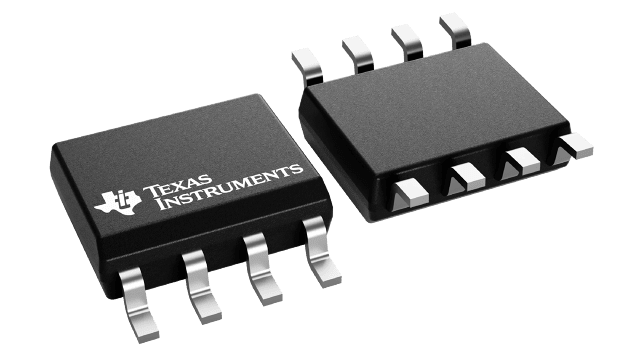
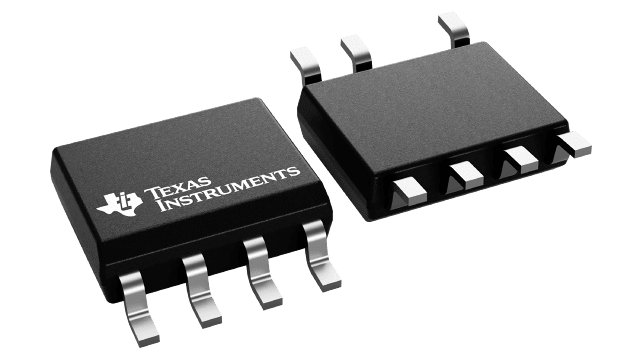
Devices are available in the industrial temperature range of –40°C to 105°C. Package offering is an 8-pin SOIC (D) package.
The UCC28810 and UCC28811 are general lighting power controllers for low to medium power lumens applications requiring power factor correction and EMC compliance. It is designed for controlling a flyback, buck or boost converter operating in critical conduction mode. It features a transconductance voltage amplifier for feedback error processing, a simple current reference generator for generating a current command proportional to the input voltage, a current-sense (PWM) comparator, PWM logic and a totem-pole driver for driving an external FET.
In the critical conduction mode operation, the PWM circuit is self-oscillating with the turn-on being governed by a transformer zero energy detector (TZE pin) and the turn-off being governed by the current sense comparator. Additionally, the controller provides features such as peak current limit, restart timer, overvoltage protection (OVP), and enable.
The efficient system performance is attained by incorporation of zero power detect function which allows the controller output to shut down at light load conditions without running into overvoltage. The device also features an innovative slew rate enhancement circuit which improves the large signal transient performance of the voltage error amplifier. The low start-up and operating currents of the device result in low power consumption and ease of start-up. The highly-accurate internal bandgap reference leads to tight regulation of the output voltage in normal and OVP conditions, resulting in higher system reliability. The enable comparator ensures that the controller is off if the feedback sense path is broken or if the input voltage is very low.
There are two key parametric differences between UCC28810 and UCC28811, the UVLO turn-on threshold and the gMamplifier source current. The UVLO turn-on threshold of the UCC28810 is 15.8 V and for the UCC28811 it is 12.5 V. The gMamplifier source current for UCC28810 is typically 1.3 mA, and for the UCC28811 it is 300µA. The higher UVLO turn-on threshold of the UCC28810 allows quicker and easier start-up with a smaller VDD capacitance while the lower UVLO turn-on threshold of UCC28811 allows operation of the critical conduction mode controller to be easily controlled by the downstream PWM controller in two-stage power converters. The UCC28810 gMamplifier also provides a full 1.3-mA typical source current for faster start-up and improved transient response when the output is low either at start-up or during transient conditions. The UCC28811 is suitable for applications such as street lights and larger area luminaires where a two-stage power conversion is needed. The UCC28810 is suitable for applications such as commercial or residential retrofit luminaires where there is no down-stream PWM conversion and the advantages of smaller VDD capacitor and improved transient response can be realized.
Devices are available in the industrial temperature range of –40°C to 105°C. Package offering is an 8-pin SOIC (D) package. |
| LED Drivers | 2 | Active | The UCC28810 and UCC28811 are general lighting power controllers for low to medium power lumens applications requiring power factor correction and EMC compliance. It is designed for controlling a flyback, buck or boost converter operating in critical conduction mode. It features a transconductance voltage amplifier for feedback error processing, a simple current reference generator for generating a current command proportional to the input voltage, a current-sense (PWM) comparator, PWM logic and a totem-pole driver for driving an external FET.
In the critical conduction mode operation, the PWM circuit is self-oscillating with the turn-on being governed by a transformer zero energy detector (TZE pin) and the turn-off being governed by the current sense comparator. Additionally, the controller provides features such as peak current limit, restart timer, overvoltage protection (OVP), and enable.
The efficient system performance is attained by incorporation of zero power detect function which allows the controller output to shut down at light load conditions without running into overvoltage. The device also features an innovative slew rate enhancement circuit which improves the large signal transient performance of the voltage error amplifier. The low start-up and operating currents of the device result in low power consumption and ease of start-up. The highly-accurate internal bandgap reference leads to tight regulation of the output voltage in normal and OVP conditions, resulting in higher system reliability. The enable comparator ensures that the controller is off if the feedback sense path is broken or if the input voltage is very low.
There are two key parametric differences between UCC28810 and UCC28811, the UVLO turn-on threshold and the gMamplifier source current. The UVLO turn-on threshold of the UCC28810 is 15.8 V and for the UCC28811 it is 12.5 V. The gMamplifier source current for UCC28810 is typically 1.3 mA, and for the UCC28811 it is 300µA. The higher UVLO turn-on threshold of the UCC28810 allows quicker and easier start-up with a smaller VDD capacitance while the lower UVLO turn-on threshold of UCC28811 allows operation of the critical conduction mode controller to be easily controlled by the downstream PWM controller in two-stage power converters. The UCC28810 gMamplifier also provides a full 1.3-mA typical source current for faster start-up and improved transient response when the output is low either at start-up or during transient conditions. The UCC28811 is suitable for applications such as street lights and larger area luminaires where a two-stage power conversion is needed. The UCC28810 is suitable for applications such as commercial or residential retrofit luminaires where there is no down-stream PWM conversion and the advantages of smaller VDD capacitor and improved transient response can be realized.
Devices are available in the industrial temperature range of –40°C to 105°C. Package offering is an 8-pin SOIC (D) package.
The UCC28810 and UCC28811 are general lighting power controllers for low to medium power lumens applications requiring power factor correction and EMC compliance. It is designed for controlling a flyback, buck or boost converter operating in critical conduction mode. It features a transconductance voltage amplifier for feedback error processing, a simple current reference generator for generating a current command proportional to the input voltage, a current-sense (PWM) comparator, PWM logic and a totem-pole driver for driving an external FET.
In the critical conduction mode operation, the PWM circuit is self-oscillating with the turn-on being governed by a transformer zero energy detector (TZE pin) and the turn-off being governed by the current sense comparator. Additionally, the controller provides features such as peak current limit, restart timer, overvoltage protection (OVP), and enable.
The efficient system performance is attained by incorporation of zero power detect function which allows the controller output to shut down at light load conditions without running into overvoltage. The device also features an innovative slew rate enhancement circuit which improves the large signal transient performance of the voltage error amplifier. The low start-up and operating currents of the device result in low power consumption and ease of start-up. The highly-accurate internal bandgap reference leads to tight regulation of the output voltage in normal and OVP conditions, resulting in higher system reliability. The enable comparator ensures that the controller is off if the feedback sense path is broken or if the input voltage is very low.
There are two key parametric differences between UCC28810 and UCC28811, the UVLO turn-on threshold and the gMamplifier source current. The UVLO turn-on threshold of the UCC28810 is 15.8 V and for the UCC28811 it is 12.5 V. The gMamplifier source current for UCC28810 is typically 1.3 mA, and for the UCC28811 it is 300µA. The higher UVLO turn-on threshold of the UCC28810 allows quicker and easier start-up with a smaller VDD capacitance while the lower UVLO turn-on threshold of UCC28811 allows operation of the critical conduction mode controller to be easily controlled by the downstream PWM controller in two-stage power converters. The UCC28810 gMamplifier also provides a full 1.3-mA typical source current for faster start-up and improved transient response when the output is low either at start-up or during transient conditions. The UCC28811 is suitable for applications such as street lights and larger area luminaires where a two-stage power conversion is needed. The UCC28810 is suitable for applications such as commercial or residential retrofit luminaires where there is no down-stream PWM conversion and the advantages of smaller VDD capacitor and improved transient response can be realized.
Devices are available in the industrial temperature range of –40°C to 105°C. Package offering is an 8-pin SOIC (D) package. |
| Power Management (PMIC) | 1 | Obsolete | |
| Power Management (PMIC) | 4 | NRND | |