T
Texas Instruments
| Series | Category | # Parts | Status | Description |
|---|---|---|---|---|
| Part | Spec A | Spec B | Spec C | Spec D | Description |
|---|---|---|---|---|---|



| Series | Category | # Parts | Status | Description |
|---|---|---|---|---|
| Part | Spec A | Spec B | Spec C | Spec D | Description |
|---|---|---|---|---|---|
| Part | Category | Description |
|---|---|---|
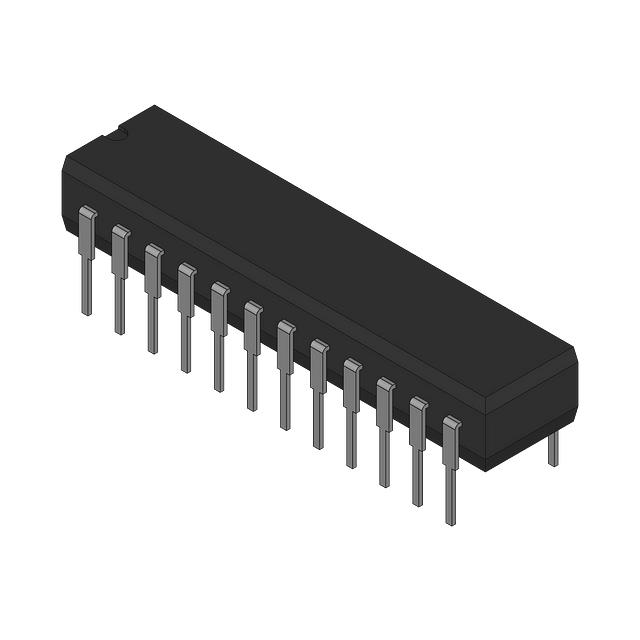 Texas Instruments | Integrated Circuits (ICs) | BUS DRIVER, BCT/FBT SERIES |
 Texas Instruments | Integrated Circuits (ICs) | 12BIT 3.3V~3.6V 210MHZ PARALLEL VQFN-48-EP(7X7) ANALOG TO DIGITAL CONVERTERS (ADC) ROHS |
Texas Instruments | Integrated Circuits (ICs) | TMX320DRE311 179PIN UBGA 200MHZ |
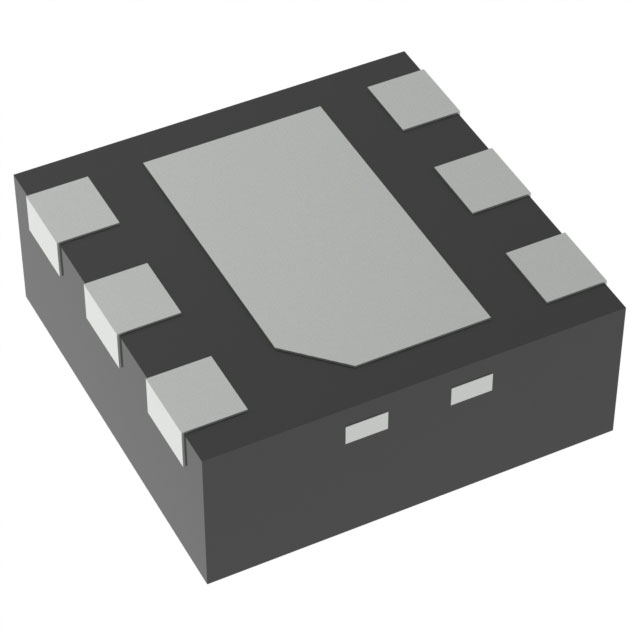 Texas Instruments TPS61040DRVTG4Unknown | Integrated Circuits (ICs) | IC LED DRV RGLTR PWM 350MA 6WSON |
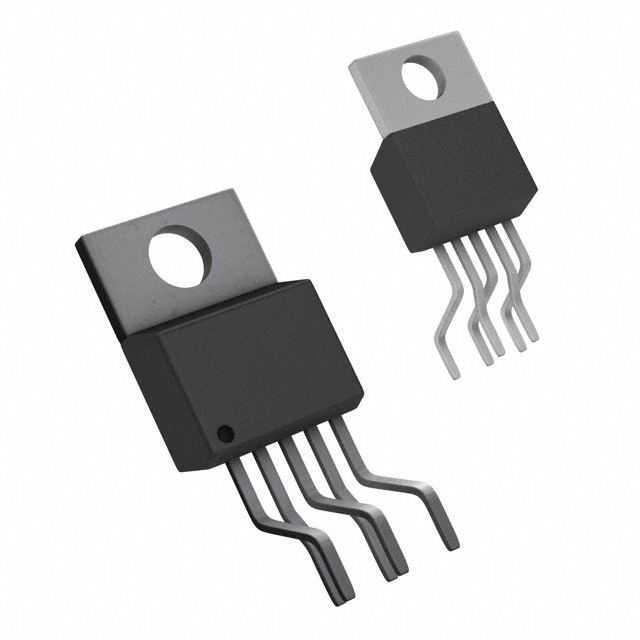 Texas Instruments LP3876ET-2.5Obsolete | Integrated Circuits (ICs) | IC REG LINEAR 2.5V 3A TO220-5 |
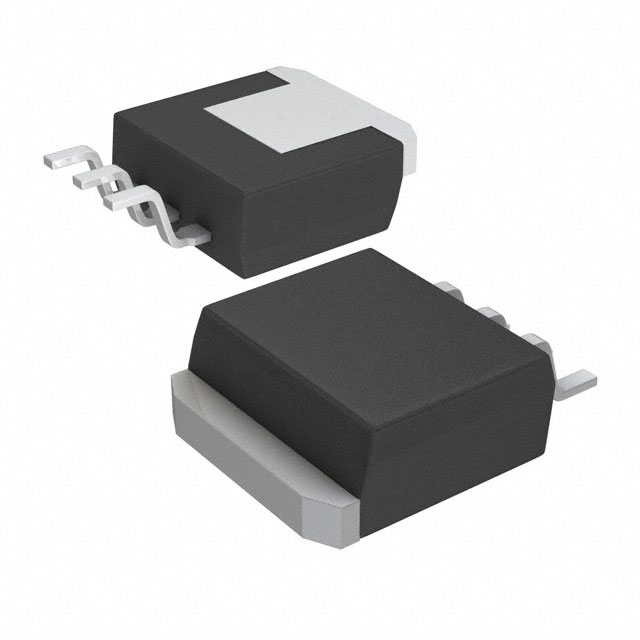 Texas Instruments LMS1585ACSX-ADJObsolete | Integrated Circuits (ICs) | IC REG LIN POS ADJ 5A DDPAK |
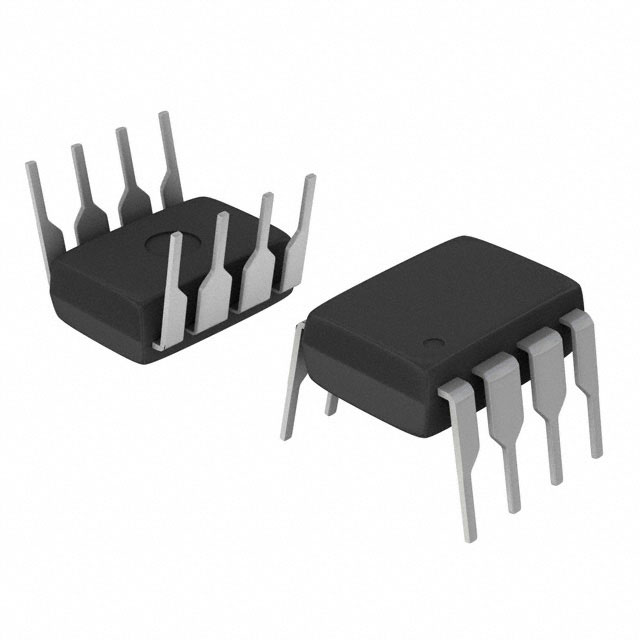 Texas Instruments INA111APG4Obsolete | Integrated Circuits (ICs) | IC INST AMP 1 CIRCUIT 8DIP |
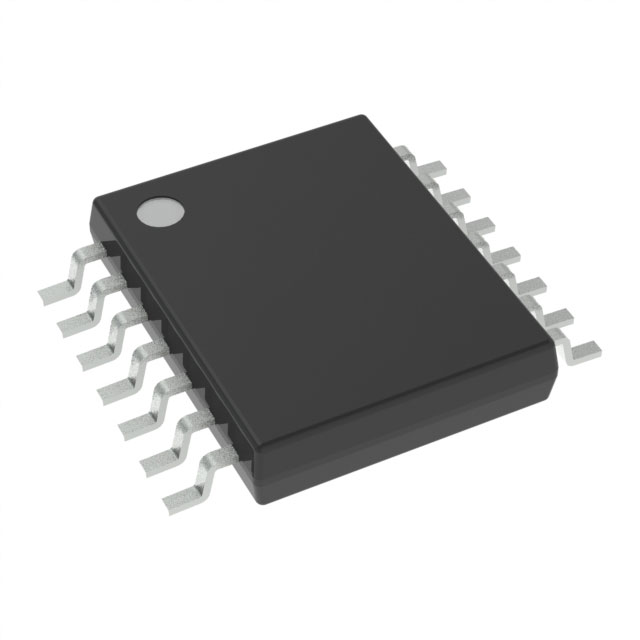 Texas Instruments | Integrated Circuits (ICs) | AUTOMOTIVE, QUAD 36V 1.2MHZ OPERATIONAL AMPLIFIER |
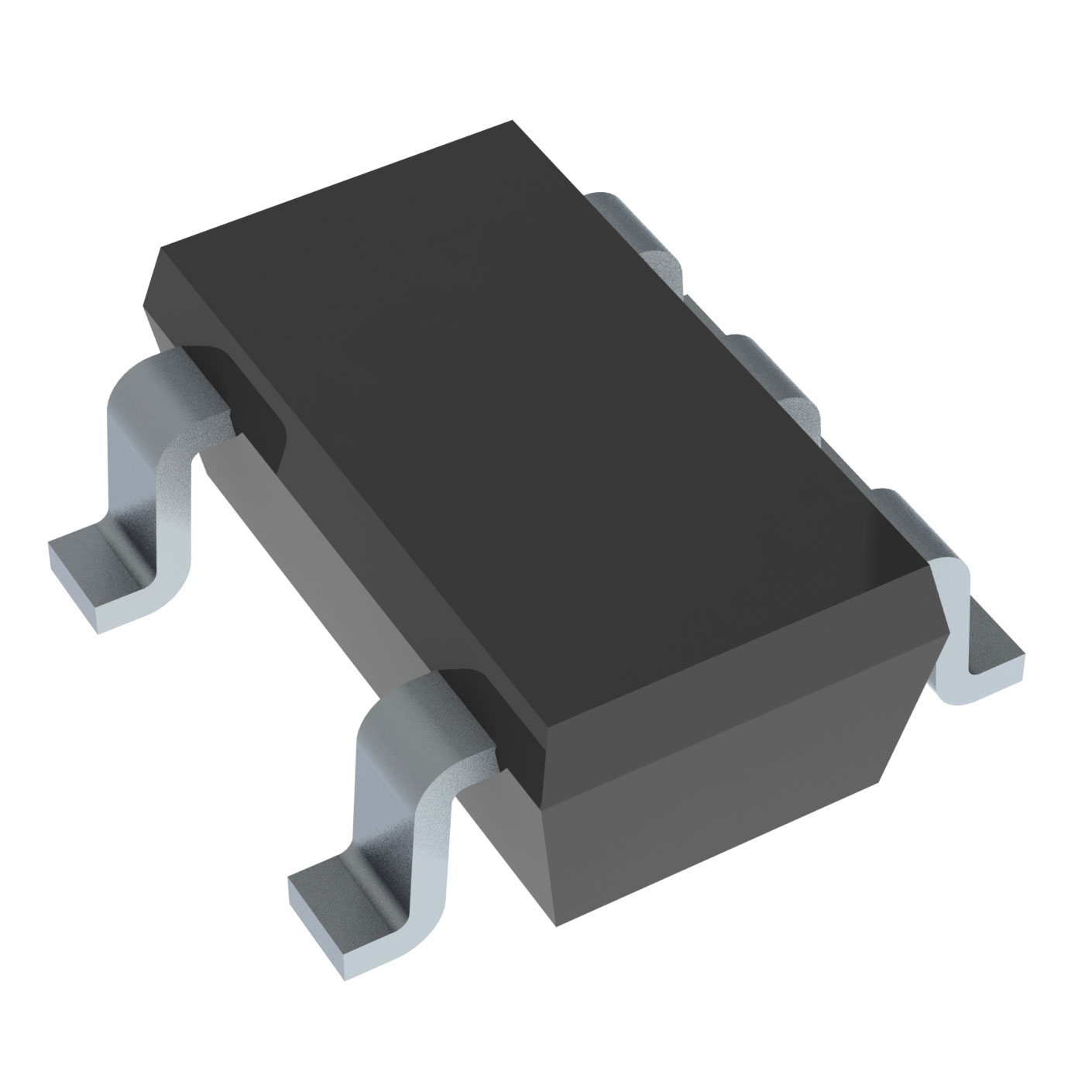 Texas Instruments OPA340NA/3KG4Unknown | Integrated Circuits (ICs) | IC OPAMP GP 1 CIRCUIT SOT23-5 |
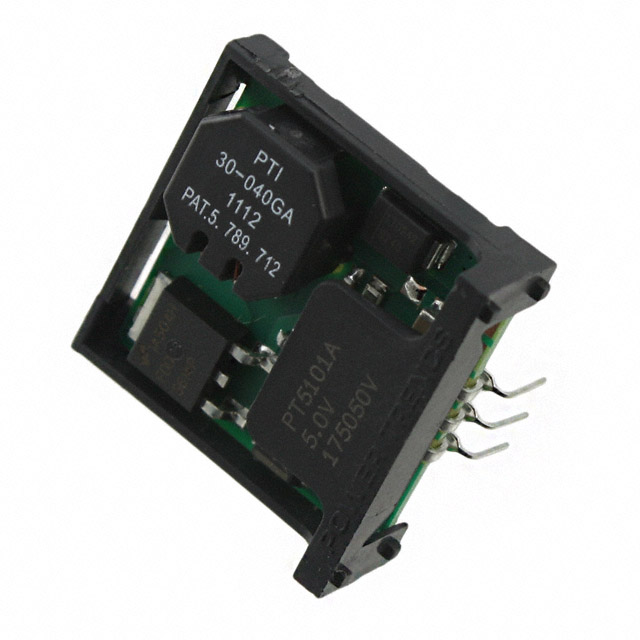 Texas Instruments PT5112AObsolete | Power Supplies - Board Mount | DC DC CONVERTER 8V 8W |
| Series | Category | # Parts | Status | Description |
|---|---|---|---|---|
TPS7A25125300-mA, 18-V, ultra-low-IQ, high-accuracy, adjustable low-dropout voltage regulator with power good | Power Management (PMIC) | 6 | Active | The TPS7A25 low-dropout (LDO) linear voltage regulator introduces a combination of a 2.4-V to 18-V input voltage range with very-low quiescent current (IQ). These features help modern appliances meet increasingly stringent energy requirements, and help extend battery life in portable-power solutions.
The TPS7A25 is available in both fixed and adjustable versions. For more flexibility or higher output voltages, the adjustable version uses feedback resistors to set the output voltage from 1.24 V to 17.64 V. Both versions have a 1% output regulation accuracy that provides precision regulation for most microcontroller (MCU) references.
The TPS7A25 LDO operates more efficiently than standard linear regulators because the maximum dropout voltage is less than 340 mV at 300 mA of current. This maximum dropout voltage allows for 92.5% efficiency from a 5.4-V input voltage (VIN) to a 5.0-V output voltage (VOUT).
The power-good (PG) indicator can be used to either hold an MCU in reset until power is good, or for sequencing. The PG pin is an open-drain output; therefore, the pin is easily level-shifted for monitoring by a rail other than VOUT. The built-in current limit and thermal shutdown help protect the regulator in the event of a load short or fault.
For a higher output current alternative, consider theTPS7A26.
The TPS7A25 low-dropout (LDO) linear voltage regulator introduces a combination of a 2.4-V to 18-V input voltage range with very-low quiescent current (IQ). These features help modern appliances meet increasingly stringent energy requirements, and help extend battery life in portable-power solutions.
The TPS7A25 is available in both fixed and adjustable versions. For more flexibility or higher output voltages, the adjustable version uses feedback resistors to set the output voltage from 1.24 V to 17.64 V. Both versions have a 1% output regulation accuracy that provides precision regulation for most microcontroller (MCU) references.
The TPS7A25 LDO operates more efficiently than standard linear regulators because the maximum dropout voltage is less than 340 mV at 300 mA of current. This maximum dropout voltage allows for 92.5% efficiency from a 5.4-V input voltage (VIN) to a 5.0-V output voltage (VOUT).
The power-good (PG) indicator can be used to either hold an MCU in reset until power is good, or for sequencing. The PG pin is an open-drain output; therefore, the pin is easily level-shifted for monitoring by a rail other than VOUT. The built-in current limit and thermal shutdown help protect the regulator in the event of a load short or fault.
For a higher output current alternative, consider theTPS7A26. |
TPS7A26125500-mA, 18-V, ultra-low-IQ, high-accuracy, adjustable low-dropout voltage regulator with power good | Evaluation Boards | 4 | Active | The TPS7A26 low-dropout (LDO) linear voltage regulator supports a 2.4-V to 18-V input voltage range with very-low quiescent current (IQ). These features help modern appliances meet increasingly stringent energy requirements and help extend battery life in portable-power solutions.
The TPS7A26 is available in both fixed and adjustable versions. For more flexibility or higher output voltages, the adjustable version uses feedback resistors to set the output voltage from 1.24 V to 17.4 V. Both versions have 1% output regulation accuracy that provides precision regulation for microcontroller (MCU) references.
With the open-drain, power-good (PG) output the device can provide a reset to an MCU or be wire-ORed and level-shifted with other open-drain PGs to provide a system-wide PG or reset.
The TPS7A26 LDO operates more efficiently than standard linear regulators because the maximum dropout voltage is less than 590 mV at 500 mA of current. This maximum dropout voltage allows for 87.7% efficiency from a 5.7-V input voltage (VIN) to5.0-V output voltage (VOUT).
For lower power applications, consider theTPS7A25.
The TPS7A26 low-dropout (LDO) linear voltage regulator supports a 2.4-V to 18-V input voltage range with very-low quiescent current (IQ). These features help modern appliances meet increasingly stringent energy requirements and help extend battery life in portable-power solutions.
The TPS7A26 is available in both fixed and adjustable versions. For more flexibility or higher output voltages, the adjustable version uses feedback resistors to set the output voltage from 1.24 V to 17.4 V. Both versions have 1% output regulation accuracy that provides precision regulation for microcontroller (MCU) references.
With the open-drain, power-good (PG) output the device can provide a reset to an MCU or be wire-ORed and level-shifted with other open-drain PGs to provide a system-wide PG or reset.
The TPS7A26 LDO operates more efficiently than standard linear regulators because the maximum dropout voltage is less than 590 mV at 500 mA of current. This maximum dropout voltage allows for 87.7% efficiency from a 5.7-V input voltage (VIN) to5.0-V output voltage (VOUT).
For lower power applications, consider theTPS7A25. |
| Evaluation Boards | 1 | Obsolete | ||
TPS7A3001200-mA, low-noise, high-PSRR, negative, adjustable low-dropout voltage regulator with enable | Development Boards, Kits, Programmers | 5 | Active | The TPS7A30 series of devices are negative, high-voltage (–35 V), ultralow-noise (15.1 µVRMS, 72-dB PSRR) linear regulators that can source a maximum load of 200 mA.
These linear regulators include a CMOS logic-level-compatible enable pin and capacitor-programmable soft-start function that allows for customized power-management schemes. Other features include built-in current limit and thermal shutdown protection to safeguard the device and system during fault conditions.
The TPS7A30 family is designed using bipolar technology, and is ideal for high-accuracy, high-precision instrumentation applications where clean voltage rails are critical to maximize system performance. This design makes the device an excellent choice to power operational amplifiers, analog-to-digital converters (ADCs), digital-to-analog converters (DACs), and other high-performance analog circuitry.
In addition, the TPS7A30 family of linear regulators is suitable for post dc-dc converter regulation. By filtering out the output voltage ripple inherent to dc-dc switching conversion, maximum system performance is provided in sensitive instrumentation, test and measurement, audio, and RF applications.
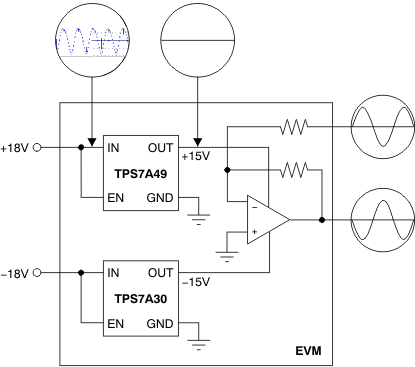
For applications that require positive and negative high-performance rails, consider TI’s TPS7A49 family of positive high-voltage, ultralow-noise linear regulators.
The TPS7A30 series of devices are negative, high-voltage (–35 V), ultralow-noise (15.1 µVRMS, 72-dB PSRR) linear regulators that can source a maximum load of 200 mA.
These linear regulators include a CMOS logic-level-compatible enable pin and capacitor-programmable soft-start function that allows for customized power-management schemes. Other features include built-in current limit and thermal shutdown protection to safeguard the device and system during fault conditions.
The TPS7A30 family is designed using bipolar technology, and is ideal for high-accuracy, high-precision instrumentation applications where clean voltage rails are critical to maximize system performance. This design makes the device an excellent choice to power operational amplifiers, analog-to-digital converters (ADCs), digital-to-analog converters (DACs), and other high-performance analog circuitry.
In addition, the TPS7A30 family of linear regulators is suitable for post dc-dc converter regulation. By filtering out the output voltage ripple inherent to dc-dc switching conversion, maximum system performance is provided in sensitive instrumentation, test and measurement, audio, and RF applications.
For applications that require positive and negative high-performance rails, consider TI’s TPS7A49 family of positive high-voltage, ultralow-noise linear regulators. |
TPS7A33011-A, high-PSRR, negative, adjustable low-dropout voltage regulator with enable | Power Management (PMIC) | 2 | Active | The TPS7A33 series of linear regulators are negative voltage (–36 V), ultralow-noise (16-µVRMS, 72-dB PSRR) linear regulators capable of sourcing a maximum load of 1 A.
The TPS7A33 series include a complementary metal oxide semiconductor (CMOS) logic-level-compatible enable pin (EN) to allow for user-customizable power management schemes. Other features available include built-in current limit and thermal shutdown features to protect the device and system during fault conditions.
The TPS7A33 family is designed using bipolar technology primarily for high-accuracy, high-precision instrumentation applications, where clean voltage rails are critical to maximize system performance. This feature makes it ideal to power operational amplifiers, analog-to-digital converters (ADCs), digital-to-analog converters (DACs), and other high-performance analog circuitry.
In addition, the TPS7A33 family of linear regulators is suitable for post DC-DC converter regulation. By filtering out the output voltage ripple inherent to DC-DC switching conversion, maximum system performance is ensured in sensitive instrumentation, medical, test and measurement, audio, and RF applications.
For applications where positive and negative high-performance rails are required, consider the TPS7A4700 positive high-voltage, ultralow-noise, low-dropout linear regulator as well.
The TPS7A33 series of linear regulators are negative voltage (–36 V), ultralow-noise (16-µVRMS, 72-dB PSRR) linear regulators capable of sourcing a maximum load of 1 A.
The TPS7A33 series include a complementary metal oxide semiconductor (CMOS) logic-level-compatible enable pin (EN) to allow for user-customizable power management schemes. Other features available include built-in current limit and thermal shutdown features to protect the device and system during fault conditions.
The TPS7A33 family is designed using bipolar technology primarily for high-accuracy, high-precision instrumentation applications, where clean voltage rails are critical to maximize system performance. This feature makes it ideal to power operational amplifiers, analog-to-digital converters (ADCs), digital-to-analog converters (DACs), and other high-performance analog circuitry.
In addition, the TPS7A33 family of linear regulators is suitable for post DC-DC converter regulation. By filtering out the output voltage ripple inherent to DC-DC switching conversion, maximum system performance is ensured in sensitive instrumentation, medical, test and measurement, audio, and RF applications.
For applications where positive and negative high-performance rails are required, consider the TPS7A4700 positive high-voltage, ultralow-noise, low-dropout linear regulator as well. |
TPS7A3401200-mA, low-IQ, negative, adjustable low-dropout voltage regulator with enable | Integrated Circuits (ICs) | 2 | Active | The TPS7A3401 device is a negative, high-voltage (–20-V), low-noise linear regulator capable of sourcing a maximum load of 200 mA.
These linear regulators include a CMOS logic-level-compatible enable pin. Other features available include built-in current limit and thermal shutdown protection to safeguard the device and system during fault conditions.
The TPS7A3401 is designed using bipolar technology, and is ideal for instrumentation applications where clean voltage rails are critical for improving system performance. This design makes it a cost-effective choice to power operational amplifiers, analog-to-digital converters (ADCs), digital-to-analog converters (DACs), and other analog circuitry.
In addition, the TPS7A3401 linear regulator is suitable for cost-effective, post DC-DC converter regulation. By filtering out the output voltage ripple inherent to DC-DC switching conversion, increased system performance is provided in instrumentation applications.
The TPS7A3401 device is a negative, high-voltage (–20-V), low-noise linear regulator capable of sourcing a maximum load of 200 mA.
These linear regulators include a CMOS logic-level-compatible enable pin. Other features available include built-in current limit and thermal shutdown protection to safeguard the device and system during fault conditions.
The TPS7A3401 is designed using bipolar technology, and is ideal for instrumentation applications where clean voltage rails are critical for improving system performance. This design makes it a cost-effective choice to power operational amplifiers, analog-to-digital converters (ADCs), digital-to-analog converters (DACs), and other analog circuitry.
In addition, the TPS7A3401 linear regulator is suitable for cost-effective, post DC-DC converter regulation. By filtering out the output voltage ripple inherent to DC-DC switching conversion, increased system performance is provided in instrumentation applications. |
TPS7A35011-A, low-noise, adjustable low-dropout voltage regulator with enable | Evaluation Boards | 2 | Active | The TPS7A3501 is a positive voltage, low-noise(3.8-µVRMS) power filter capable of sourcing a 1-A load suitable for quiet supply solutions. Power filters, such as the TPS7A3501, provide voltage regulation across the input and output terminals with high efficiency (low insertion loss), and power-supply rejection. The device is ideally suited as a noise filter for 3.3-V, 2.5-V, and 1.8-V supplies at up to 1 A.
The input-to-output voltage regulation is also user-programmable, from 200 mV to 500 mV, with a single external resistor. If no resistor is used, the TPS7A3501 provides 330 mV of input-to-output voltage regulation. The device is stable with 10-µF input and output ceramic capacitors and a 10-nF noise-reduction ceramic capacitor.
The TPS7A3501 is fully specified over a wide temperature of –40°C to 125°C. The device is offered in a low thermal resistance, 2-mm × 2-mm, WSON-6 package. Unlike passive filters, the TPS7A3501 provides thermal and current protection for itself and surrounding circuitry.
The TPS7A3501 is a positive voltage, low-noise(3.8-µVRMS) power filter capable of sourcing a 1-A load suitable for quiet supply solutions. Power filters, such as the TPS7A3501, provide voltage regulation across the input and output terminals with high efficiency (low insertion loss), and power-supply rejection. The device is ideally suited as a noise filter for 3.3-V, 2.5-V, and 1.8-V supplies at up to 1 A.
The input-to-output voltage regulation is also user-programmable, from 200 mV to 500 mV, with a single external resistor. If no resistor is used, the TPS7A3501 provides 330 mV of input-to-output voltage regulation. The device is stable with 10-µF input and output ceramic capacitors and a 10-nF noise-reduction ceramic capacitor.
The TPS7A3501 is fully specified over a wide temperature of –40°C to 125°C. The device is offered in a low thermal resistance, 2-mm × 2-mm, WSON-6 package. Unlike passive filters, the TPS7A3501 provides thermal and current protection for itself and surrounding circuitry. |
TPS7A37011-A, high-accuracy, ultra-low-dropout voltage regulator with reverse current protection & enable | Integrated Circuits (ICs) | 1 | Active | The TPS7A37 family of linear low-dropout (LDO) voltage regulators uses an NMOS pass element in a voltage-follower configuration. This topology is relatively insensitive to output capacitor value and ESR, allowing a wide variety of load configurations. Load transient response is excellent, even with a small 1-µF ceramic output capacitor. The NMOS topology also allows very low dropout.
The TPS7A37 family uses an advanced BiCMOS process to yield high precision while delivering very low dropout voltages and low ground pin current. Current consumption, when not enabled, is under 20 nA and ideal for portable applications. These devices are protected by thermal shutdown and foldback current limit.
The TPS7A37 family of linear low-dropout (LDO) voltage regulators uses an NMOS pass element in a voltage-follower configuration. This topology is relatively insensitive to output capacitor value and ESR, allowing a wide variety of load configurations. Load transient response is excellent, even with a small 1-µF ceramic output capacitor. The NMOS topology also allows very low dropout.
The TPS7A37 family uses an advanced BiCMOS process to yield high precision while delivering very low dropout voltages and low ground pin current. Current consumption, when not enabled, is under 20 nA and ideal for portable applications. These devices are protected by thermal shutdown and foldback current limit. |
| Linear Voltage Regulator Evaluation Boards | 1 | Obsolete | ||
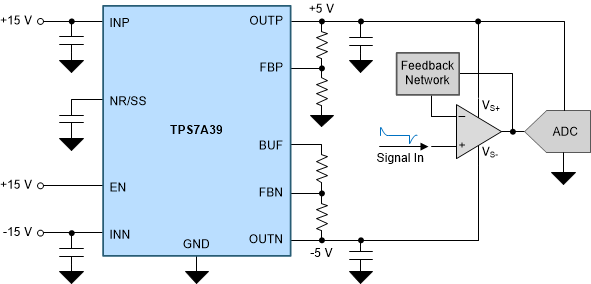
TPS7A3901150-mA, 33-V, low-noise, high-PSRR, dual-channel positive & negative low-dropout voltage regulator | Development Boards, Kits, Programmers | 2 | Active | The TPS7A39 device is a dual, monolithic, high-PSRR, positive and negative low-dropout (LDO) voltage regulator capable of sourcing (and sinking) up to 150 mA of current. The regulated outputs can be independently and externally adjusted to symmetrical or asymmetrical voltages, making this device an ideal dual, bipolar power supply for signal conditioning.
Both positive and negative outputs of the TPS7A39 ratiometrically track each other during startup to mitigate floating conditions and other power-supply sequencing issues common in dual-rail systems. The negative output can regulate up to 0 V, extending the common-mode range for single-supply amplifiers. The TPS7A39 also features high PSRR to eliminate power-supply noise, such as switching noise, that can compromise signal integrity.
Both regulators are controlled with a single positive logic enable pin for interfacing with standard digital logic. A capacitor-programmable soft-start function controls in-rush current and start-up time. The internal reference voltage of the TPS7A39 can be overridden with an external reference to enable precision outputs, output voltage margining, or to track other power supplies. Additionally, the TPS7A39 has a buffered reference output that can be used as a voltage reference for other components in the system.
These features make the TPS7A39 a robust, simplified solution to power operational amplifiers, digital-to-analog converters (DACs), and other precision analog circuitry.
The TPS7A39 device is a dual, monolithic, high-PSRR, positive and negative low-dropout (LDO) voltage regulator capable of sourcing (and sinking) up to 150 mA of current. The regulated outputs can be independently and externally adjusted to symmetrical or asymmetrical voltages, making this device an ideal dual, bipolar power supply for signal conditioning.
Both positive and negative outputs of the TPS7A39 ratiometrically track each other during startup to mitigate floating conditions and other power-supply sequencing issues common in dual-rail systems. The negative output can regulate up to 0 V, extending the common-mode range for single-supply amplifiers. The TPS7A39 also features high PSRR to eliminate power-supply noise, such as switching noise, that can compromise signal integrity.
Both regulators are controlled with a single positive logic enable pin for interfacing with standard digital logic. A capacitor-programmable soft-start function controls in-rush current and start-up time. The internal reference voltage of the TPS7A39 can be overridden with an external reference to enable precision outputs, output voltage margining, or to track other power supplies. Additionally, the TPS7A39 has a buffered reference output that can be used as a voltage reference for other components in the system.
These features make the TPS7A39 a robust, simplified solution to power operational amplifiers, digital-to-analog converters (DACs), and other precision analog circuitry. |