| Power Management (PMIC) | 1 | Active | The TPS6521855 is a single chip, power-management IC (PMIC) specifically designed to support the AM64x line of processors in both portable (Li-Ion battery) and nonportable (5-V adapter) applications. The device is characterized across a –40°C to +105°C temperature range, making it suitable for various industrial applications.
The TPS6521855 is a single chip, power-management IC (PMIC) specifically designed to support the AM64x line of processors in both portable (Li-Ion battery) and nonportable (5-V adapter) applications. The device is characterized across a –40°C to +105°C temperature range, making it suitable for various industrial applications. |
TPS65218D0Integrated power management (PMIC) for ARM® Cortex™-A8/A9 SOCs and FPGAs | Evaluation Boards | 10 | Active | The TPS65218D0 is a single chip, power-management IC (PMIC) specifically designed to support the AM335x and AM438x line of processors in both portable (Li-Ion battery) and nonportable (5-V adapter) applications. The device is characterized across a –40°C to +105°C temperature range, making it suitable for various industrial applications.
The TPS65218D0 is specifically designed to provide power management for all the functionalities of the AM438x processor. The DC/DC converters DCDC1 through DCDC4 are intended to power the core, MPU, DDR memory, and 3.3-V analog and I/O, respectively. LDO1 provides the 1.8-V analog and I/O for the processor. GPIO1 and GPO2 allow for memory reset and GPIO3 allows for warm reset (335x only) of the DCDC1 and DCDC2 converters. The I2C interface allows the user to enable and disable all voltage regulators, load switches, and GPIOs. Additionally, UVLO and supervisor voltage thresholds, power-up sequence, and power-down sequence can be programmed through I2C. Interrupts for overtemperature, overcurrent, and undervoltage can be monitored as well. The supervisor monitors DCDC1 through DCDC4 and LDO1. The supervisor has two settings, one for typical undervoltage tolerance (STRICT = 0b), and one for tight undervoltage and overvoltage tolerances (STRICT = 1b). A power-good signal indicates proper regulation of the five voltage regulators.
Three hysteretic step-down converters are targeted at providing power for the processor core, MPU, and DDRx memory. The default output voltages for each converter can be adjusted through the I2C interface. DCDC1 and DCDC2 feature dynamic voltage scaling to provide power at all operating points of the processor. DCDC1 and DCDC2 also have programmable slew rates to help protect processor components. DCDC3 remains powered while the processor is in a sleep mode to maintain power to DDRx memory. Backup power provides two step-down converters for the tamper, RTC, or both domains of the processor if system power fails or is disabled. If both system power and coin-cell battery are connected to the PMIC, power is not drawn from the coin-cell battery. A separate power good signal monitors the backup converters. A battery backup monitor determines the power level of the coin-cell battery.
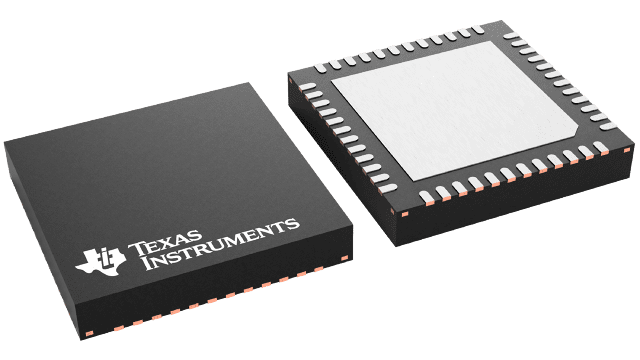
The TPS65218D0 device is available in a 48-pin VQFN package (6 mm × 6 mm, 0.4-mm pitch).
The TPS65218D0 is a single chip, power-management IC (PMIC) specifically designed to support the AM335x and AM438x line of processors in both portable (Li-Ion battery) and nonportable (5-V adapter) applications. The device is characterized across a –40°C to +105°C temperature range, making it suitable for various industrial applications.
The TPS65218D0 is specifically designed to provide power management for all the functionalities of the AM438x processor. The DC/DC converters DCDC1 through DCDC4 are intended to power the core, MPU, DDR memory, and 3.3-V analog and I/O, respectively. LDO1 provides the 1.8-V analog and I/O for the processor. GPIO1 and GPO2 allow for memory reset and GPIO3 allows for warm reset (335x only) of the DCDC1 and DCDC2 converters. The I2C interface allows the user to enable and disable all voltage regulators, load switches, and GPIOs. Additionally, UVLO and supervisor voltage thresholds, power-up sequence, and power-down sequence can be programmed through I2C. Interrupts for overtemperature, overcurrent, and undervoltage can be monitored as well. The supervisor monitors DCDC1 through DCDC4 and LDO1. The supervisor has two settings, one for typical undervoltage tolerance (STRICT = 0b), and one for tight undervoltage and overvoltage tolerances (STRICT = 1b). A power-good signal indicates proper regulation of the five voltage regulators.
Three hysteretic step-down converters are targeted at providing power for the processor core, MPU, and DDRx memory. The default output voltages for each converter can be adjusted through the I2C interface. DCDC1 and DCDC2 feature dynamic voltage scaling to provide power at all operating points of the processor. DCDC1 and DCDC2 also have programmable slew rates to help protect processor components. DCDC3 remains powered while the processor is in a sleep mode to maintain power to DDRx memory. Backup power provides two step-down converters for the tamper, RTC, or both domains of the processor if system power fails or is disabled. If both system power and coin-cell battery are connected to the PMIC, power is not drawn from the coin-cell battery. A separate power good signal monitors the backup converters. A battery backup monitor determines the power level of the coin-cell battery.
The TPS65218D0 device is available in a 48-pin VQFN package (6 mm × 6 mm, 0.4-mm pitch). |
TPS65219Integrated power management (PMIC) for Arm® Cortex®- A53 processors and FPGAs | Power Management (PMIC) | 8 | Active | The TPS65219 is a Power Management IC (PMIC) designed to supply a wide range of SoCs in both portable and stationary applications. The device is characterized across an ambient temperature range of -40°C to +105°C, making the PMIC an excellent choice for various industrial applications. The device includes three synchronous stepdown DC-DC converters and four linear regulators.
The DC-DC converters are capable of 1x 3.5A and 2x 2 A. The converters require a small 470nH inductor, 4.7µF input capacitance, and a minimum 10µF output capacitance per rail depending on the switching mode configuration.
Two of the LDOs support output currents of 400mA at an output voltage range of 0.6V to 3.4V. These LDOs support bypass mode, acting as a load-switch, and allow voltage-changes during operation. The other two LDOs support output currents of 300mA at an output voltage range of 1.2V to 3.3V. These LDOs also support load-switch mode.
The I2C-interface, IOs, GPIOs and multi-function-pins (MFP) allow a seamless interface to a wide range of SoCs.
The TPS65219 is a Power Management IC (PMIC) designed to supply a wide range of SoCs in both portable and stationary applications. The device is characterized across an ambient temperature range of -40°C to +105°C, making the PMIC an excellent choice for various industrial applications. The device includes three synchronous stepdown DC-DC converters and four linear regulators.
The DC-DC converters are capable of 1x 3.5A and 2x 2 A. The converters require a small 470nH inductor, 4.7µF input capacitance, and a minimum 10µF output capacitance per rail depending on the switching mode configuration.
Two of the LDOs support output currents of 400mA at an output voltage range of 0.6V to 3.4V. These LDOs support bypass mode, acting as a load-switch, and allow voltage-changes during operation. The other two LDOs support output currents of 300mA at an output voltage range of 1.2V to 3.3V. These LDOs also support load-switch mode.
The I2C-interface, IOs, GPIOs and multi-function-pins (MFP) allow a seamless interface to a wide range of SoCs. |
TPS65219-Q1Automotive power management IC (PMIC) with three buck converters and four LDOs | Power Management - Specialized | 2 | Active | The TPS65219-Q1 is a Power Management IC (PMIC) designed to supply a wide range of SoCs in automotive applications. The device is characterized across an ambient temperature range of -40°C to +125°C, making the PMIC an excellent choice for automotive applications. The device includes three synchronous stepdown DC-DC converters and four linear regulators.
The DC-DC converters are capable of 1x 3.5A and 2x 2 A. The converters require a small 470nH inductor, 4.7µF input capacitance, and a minimum 10µF output capacitance per rail depending on the switching mode configuration.
Two of the LDOs support output currents of 400mA at an output voltage range of 0.6V to 3.4V. These LDOs support bypass mode, acting as a load-switch, and allow voltage-changes during operation. The other two LDOs support output currents of 300mA at an output voltage range of 1.2V to 3.3V. These LDOs also support load-switch mode.
The I2C-interface, IOs, GPIOs and multi-function-pins (MFP) allow a seamless interface to a wide range of SoCs.
The TPS65219-Q1 is a Power Management IC (PMIC) designed to supply a wide range of SoCs in automotive applications. The device is characterized across an ambient temperature range of -40°C to +125°C, making the PMIC an excellent choice for automotive applications. The device includes three synchronous stepdown DC-DC converters and four linear regulators.
The DC-DC converters are capable of 1x 3.5A and 2x 2 A. The converters require a small 470nH inductor, 4.7µF input capacitance, and a minimum 10µF output capacitance per rail depending on the switching mode configuration.
Two of the LDOs support output currents of 400mA at an output voltage range of 0.6V to 3.4V. These LDOs support bypass mode, acting as a load-switch, and allow voltage-changes during operation. The other two LDOs support output currents of 300mA at an output voltage range of 1.2V to 3.3V. These LDOs also support load-switch mode.
The I2C-interface, IOs, GPIOs and multi-function-pins (MFP) allow a seamless interface to a wide range of SoCs. |
TPS6521905User-programmable power management IC (PMIC) with three step-down DC/DC converters and four LDOs | Voltage Regulators - Linear + Switching | 1 | Active | The TPS6521905 is a Power Management IC (PMIC) designed to supply a wide range of SoCs in both portable and stationary applications. The device is characterized across an ambient temperature range of -40°C to +105°C, making the PMIC an excellent choice for various industrial applications. The device includes three synchronous stepdown DC-DC converters and four linear regulators.
The DC-DC converters are capable of 1x 3.5A and 2x 2 A. The converters require a small 470nH inductor, 4.7µF input capacitance, and a minimum 10µF output capacitance per rail depending on the switching mode configuration.
Two of the LDOs support output currents of 400mA at an output voltage range of 0.6V to 3.4V. These LDOs support bypass mode, acting as a load-switch, and allow voltage-changes during operation. The other two LDOs support output currents of 300mA at an output voltage range of 1.2V to 3.3V. These LDOs also support load-switch mode.
The I2C-interface, IOs, GPIOs and multi-function-pins (MFP) allow a seamless interface to a wide range of SoCs.
The TPS6521905 is a Power Management IC (PMIC) designed to supply a wide range of SoCs in both portable and stationary applications. The device is characterized across an ambient temperature range of -40°C to +105°C, making the PMIC an excellent choice for various industrial applications. The device includes three synchronous stepdown DC-DC converters and four linear regulators.
The DC-DC converters are capable of 1x 3.5A and 2x 2 A. The converters require a small 470nH inductor, 4.7µF input capacitance, and a minimum 10µF output capacitance per rail depending on the switching mode configuration.
Two of the LDOs support output currents of 400mA at an output voltage range of 0.6V to 3.4V. These LDOs support bypass mode, acting as a load-switch, and allow voltage-changes during operation. The other two LDOs support output currents of 300mA at an output voltage range of 1.2V to 3.3V. These LDOs also support load-switch mode.
The I2C-interface, IOs, GPIOs and multi-function-pins (MFP) allow a seamless interface to a wide range of SoCs. |
TPS6521905-Q1Automotive user-programmable power management IC (PMIC) with three buck converters and four LDOs | Power Management (PMIC) | 1 | Active | The TPS6521905-Q1 is a Power Management IC (PMIC) designed to supply a wide range of SoCs in automotive applications. The device is characterized across an ambient temperature range of -40°C to +125°C, making the PMIC an excellent choice for automotive applications. The device includes three synchronous stepdown DC-DC converters and four linear regulators.
The DC-DC converters are capable of 1x 3.5A and 2x 2 A. The converters require a small 470nH inductor, 4.7µF input capacitance, and a minimum 10µF output capacitance per rail depending on the switching mode configuration.
Two of the LDOs support output currents of 400mA at an output voltage range of 0.6V to 3.4V. These LDOs support bypass mode, acting as a load-switch, and allow voltage-changes during operation. The other two LDOs support output currents of 300mA at an output voltage range of 1.2V to 3.3V. These LDOs also support load-switch mode.
The I2C-interface, IOs, GPIOs and multi-function-pins (MFP) allow a seamless interface to a wide range of SoCs.
The TPS6521905-Q1 is a Power Management IC (PMIC) designed to supply a wide range of SoCs in automotive applications. The device is characterized across an ambient temperature range of -40°C to +125°C, making the PMIC an excellent choice for automotive applications. The device includes three synchronous stepdown DC-DC converters and four linear regulators.
The DC-DC converters are capable of 1x 3.5A and 2x 2 A. The converters require a small 470nH inductor, 4.7µF input capacitance, and a minimum 10µF output capacitance per rail depending on the switching mode configuration.
Two of the LDOs support output currents of 400mA at an output voltage range of 0.6V to 3.4V. These LDOs support bypass mode, acting as a load-switch, and allow voltage-changes during operation. The other two LDOs support output currents of 300mA at an output voltage range of 1.2V to 3.3V. These LDOs also support load-switch mode.
The I2C-interface, IOs, GPIOs and multi-function-pins (MFP) allow a seamless interface to a wide range of SoCs. |
TPS652202.5-V to 5.5-V PMIC with three step-down DC/DC converters & four LDOs for Sitara AM64x processor | Power Management (PMIC) | 1 | Active | The TPS65220 is a Power Management IC (PMIC) designed to supply a wide range of SoCs in both portable and stationaryautomotive applications. The device is characterized across an ambient temperature range of -40°C to +125°C, making the PMIC an excellent choice for various industrialautomotive applications. The device includes three synchronous stepdown DC-DC converters and four linear regulators.
The DC-DC converters are capable of 1x 3.5A and 2x 2 A. The converters require a small 470nH inductor, 4.7µF input capacitance, and a minimum 10µF output capacitance per rail depending on the switching mode configuration.
Two of the LDOs support output currents of 400mA at an output voltage range of 0.6V to 3.4V. These LDOs support bypass mode, acting as a load-switch, and allow voltage-changes during operation. The other two LDOs support output currents of 300mA at an output voltage range of 1.2V to 3.3V. These LDOs also support load-switch mode.
The I2C-interface, IOs, GPIOs and multi-function-pins (MFP) allow a seamless interface to a wide range of SoCs.
The TPS65220 is a Power Management IC (PMIC) designed to supply a wide range of SoCs in both portable and stationaryautomotive applications. The device is characterized across an ambient temperature range of -40°C to +125°C, making the PMIC an excellent choice for various industrialautomotive applications. The device includes three synchronous stepdown DC-DC converters and four linear regulators.
The DC-DC converters are capable of 1x 3.5A and 2x 2 A. The converters require a small 470nH inductor, 4.7µF input capacitance, and a minimum 10µF output capacitance per rail depending on the switching mode configuration.
Two of the LDOs support output currents of 400mA at an output voltage range of 0.6V to 3.4V. These LDOs support bypass mode, acting as a load-switch, and allow voltage-changes during operation. The other two LDOs support output currents of 300mA at an output voltage range of 1.2V to 3.3V. These LDOs also support load-switch mode.
The I2C-interface, IOs, GPIOs and multi-function-pins (MFP) allow a seamless interface to a wide range of SoCs. |
TPS6522005-EPEnhanced-product PMIC with three step-down DC/DC converters and four LDOs | Integrated Circuits (ICs) | 1 | Active | The TPS6522005-EP is a Power Management IC (PMIC) designed to supply a wide range of SoCs in both portable and stationary applications. The device is characterized across an ambient temperature range of -55°C to +125°C, making the PMIC an excellent choice for various industrial applications. The device includes three synchronous stepdown DC-DC converters and four linear regulators.
The DC-DC converters are capable of 1x 3.5A and 2x 2 A. The converters require a small 470nH inductor, 4.7µF input capacitance, and a minimum 10µF output capacitance per rail depending on the switching mode configuration.
Two of the LDOs support output currents of 400mA at an output voltage range of 0.6V to 3.4V. These LDOs support bypass mode, acting as a load-switch, and allow voltage-changes during operation. The other two LDOs support output currents of 300mA at an output voltage range of 1.2V to 3.3V. These LDOs also support load-switch mode.
The I2C-interface, IOs, GPIOs and multi-function-pins (MFP) allow a seamless interface to a wide range of SoCs.
The TPS6522005-EP is a Power Management IC (PMIC) designed to supply a wide range of SoCs in both portable and stationary applications. The device is characterized across an ambient temperature range of -55°C to +125°C, making the PMIC an excellent choice for various industrial applications. The device includes three synchronous stepdown DC-DC converters and four linear regulators.
The DC-DC converters are capable of 1x 3.5A and 2x 2 A. The converters require a small 470nH inductor, 4.7µF input capacitance, and a minimum 10µF output capacitance per rail depending on the switching mode configuration.
Two of the LDOs support output currents of 400mA at an output voltage range of 0.6V to 3.4V. These LDOs support bypass mode, acting as a load-switch, and allow voltage-changes during operation. The other two LDOs support output currents of 300mA at an output voltage range of 1.2V to 3.3V. These LDOs also support load-switch mode.
The I2C-interface, IOs, GPIOs and multi-function-pins (MFP) allow a seamless interface to a wide range of SoCs. |
TPS65230Power Management IC (PMIC) for Digital Set Top Boxes | Special Purpose Regulators | 1 | Active | The TPS652x provides one PWM buck controller, two adjustable, synchronous buck regulators, two independent USB power switches and a supply voltage supervisor (SVS) to provide main power functions for satellite set top boxes, xDSL and cable modem applications operating off a single 12- to 22-V supply.
The SMPS have integrated switching FETs for optimized power efficiency and reduced external component count. Each USB switch provides up to 0.5-A (TPS65230) or 1-A (TPS65231) of current as required by downstream USB devices. All power blocks have thermal and over current/short circuit protection.
The SVS provides two inputs for monitoring positive supply rails. The active-low open-drain output remains low for at least 180 ms after all supply rails rise above their rising edge threshold. Threshold value for VMON1 input is set for monitoring a 3.3-V rail without the need for additional external components. Threshold for VMON2 input is set to 0.8 V and requires resistor dividers on the input to monitor any positive voltage in the system. The nBOR/nHOT open-drain output is pulled low if the input supply drops below 9.3 V or the chip temperature approaches the thermal shutdown limit. This allows the system processor to save critical data and shut down gracefully before the supply fails.
The TPS65230 and TPS65231 can be controlled either through parallel I/Os or through I2C interface. When the pull-up resistor on the USBFLAG2/nINT pin is connected to a 3.3-V or lower supply the I2C interface is disabled and the device is controlled through parallel I/O pins only. With the pull-up resistor connected to 6 V the I2C interface is enabled and the device is controlled by writing to the control registers. Any fault or abnormal operating condition is flagged by the interrupt pin. The interrupt is cleared by reading the status register via the I2C interface.
The TPS652x provides one PWM buck controller, two adjustable, synchronous buck regulators, two independent USB power switches and a supply voltage supervisor (SVS) to provide main power functions for satellite set top boxes, xDSL and cable modem applications operating off a single 12- to 22-V supply.
The SMPS have integrated switching FETs for optimized power efficiency and reduced external component count. Each USB switch provides up to 0.5-A (TPS65230) or 1-A (TPS65231) of current as required by downstream USB devices. All power blocks have thermal and over current/short circuit protection.
The SVS provides two inputs for monitoring positive supply rails. The active-low open-drain output remains low for at least 180 ms after all supply rails rise above their rising edge threshold. Threshold value for VMON1 input is set for monitoring a 3.3-V rail without the need for additional external components. Threshold for VMON2 input is set to 0.8 V and requires resistor dividers on the input to monitor any positive voltage in the system. The nBOR/nHOT open-drain output is pulled low if the input supply drops below 9.3 V or the chip temperature approaches the thermal shutdown limit. This allows the system processor to save critical data and shut down gracefully before the supply fails.
The TPS65230 and TPS65231 can be controlled either through parallel I/Os or through I2C interface. When the pull-up resistor on the USBFLAG2/nINT pin is connected to a 3.3-V or lower supply the I2C interface is disabled and the device is controlled through parallel I/O pins only. With the pull-up resistor connected to 6 V the I2C interface is enabled and the device is controlled by writing to the control registers. Any fault or abnormal operating condition is flagged by the interrupt pin. The interrupt is cleared by reading the status register via the I2C interface. |
TPS65231A2Power Management IC (PMIC) for Digital Set-Top Boxes | Integrated Circuits (ICs) | 2 | Active | The TPS652x provides one PWM buck controller, two adjustable, synchronous buck regulators, two independent USB power switches and a supply voltage supervisor (SVS) to provide main power functions for satellite set top boxes, xDSL and cable modem applications operating off a single 12- to 22-V supply.
The SMPS have integrated switching FETs for optimized power efficiency and reduced external component count. Each USB switch provides up to 0.5-A (TPS65230) or 1-A (TPS65231) of current as required by downstream USB devices. All power blocks have thermal and over current/short circuit protection.
The SVS provides two inputs for monitoring positive supply rails. The active-low open-drain output remains low for at least 180 ms after all supply rails rise above their rising edge threshold. Threshold value for VMON1 input is set for monitoring a 3.3-V rail without the need for additional external components. Threshold for VMON2 input is set to 0.8 V and requires resistor dividers on the input to monitor any positive voltage in the system. The nBOR/nHOT open-drain output is pulled low if the input supply drops below 9.3 V or the chip temperature approaches the thermal shutdown limit. This allows the system processor to save critical data and shut down gracefully before the supply fails.
The TPS65230 and TPS65231 can be controlled either through parallel I/Os or through I2C interface. When the pull-up resistor on the USBFLAG2/nINT pin is connected to a 3.3-V or lower supply the I2C interface is disabled and the device is controlled through parallel I/O pins only. With the pull-up resistor connected to 6 V the I2C interface is enabled and the device is controlled by writing to the control registers. Any fault or abnormal operating condition is flagged by the interrupt pin. The interrupt is cleared by reading the status register via the I2C interface.
The TPS652x provides one PWM buck controller, two adjustable, synchronous buck regulators, two independent USB power switches and a supply voltage supervisor (SVS) to provide main power functions for satellite set top boxes, xDSL and cable modem applications operating off a single 12- to 22-V supply.
The SMPS have integrated switching FETs for optimized power efficiency and reduced external component count. Each USB switch provides up to 0.5-A (TPS65230) or 1-A (TPS65231) of current as required by downstream USB devices. All power blocks have thermal and over current/short circuit protection.
The SVS provides two inputs for monitoring positive supply rails. The active-low open-drain output remains low for at least 180 ms after all supply rails rise above their rising edge threshold. Threshold value for VMON1 input is set for monitoring a 3.3-V rail without the need for additional external components. Threshold for VMON2 input is set to 0.8 V and requires resistor dividers on the input to monitor any positive voltage in the system. The nBOR/nHOT open-drain output is pulled low if the input supply drops below 9.3 V or the chip temperature approaches the thermal shutdown limit. This allows the system processor to save critical data and shut down gracefully before the supply fails.
The TPS65230 and TPS65231 can be controlled either through parallel I/Os or through I2C interface. When the pull-up resistor on the USBFLAG2/nINT pin is connected to a 3.3-V or lower supply the I2C interface is disabled and the device is controlled through parallel I/O pins only. With the pull-up resistor connected to 6 V the I2C interface is enabled and the device is controlled by writing to the control registers. Any fault or abnormal operating condition is flagged by the interrupt pin. The interrupt is cleared by reading the status register via the I2C interface. |