T
Texas Instruments
| Series | Category | # Parts | Status | Description |
|---|---|---|---|---|
| Part | Spec A | Spec B | Spec C | Spec D | Description |
|---|---|---|---|---|---|



| Series | Category | # Parts | Status | Description |
|---|---|---|---|---|
| Part | Spec A | Spec B | Spec C | Spec D | Description |
|---|---|---|---|---|---|
| Part | Category | Description |
|---|---|---|
 Texas Instruments | Integrated Circuits (ICs) | BUS DRIVER, BCT/FBT SERIES |
 Texas Instruments | Integrated Circuits (ICs) | 12BIT 3.3V~3.6V 210MHZ PARALLEL VQFN-48-EP(7X7) ANALOG TO DIGITAL CONVERTERS (ADC) ROHS |
Texas Instruments | Integrated Circuits (ICs) | TMX320DRE311 179PIN UBGA 200MHZ |
 Texas Instruments TPS61040DRVTG4Unknown | Integrated Circuits (ICs) | IC LED DRV RGLTR PWM 350MA 6WSON |
 Texas Instruments LP3876ET-2.5Obsolete | Integrated Circuits (ICs) | IC REG LINEAR 2.5V 3A TO220-5 |
 Texas Instruments LMS1585ACSX-ADJObsolete | Integrated Circuits (ICs) | IC REG LIN POS ADJ 5A DDPAK |
 Texas Instruments INA111APG4Obsolete | Integrated Circuits (ICs) | IC INST AMP 1 CIRCUIT 8DIP |
 Texas Instruments | Integrated Circuits (ICs) | AUTOMOTIVE, QUAD 36V 1.2MHZ OPERATIONAL AMPLIFIER |
 Texas Instruments OPA340NA/3KG4Unknown | Integrated Circuits (ICs) | IC OPAMP GP 1 CIRCUIT SOT23-5 |
 Texas Instruments PT5112AObsolete | Power Supplies - Board Mount | DC DC CONVERTER 8V 8W |
| Series | Category | # Parts | Status | Description |
|---|---|---|---|---|
| Motor Drivers, Controllers | 2 | Obsolete | ||
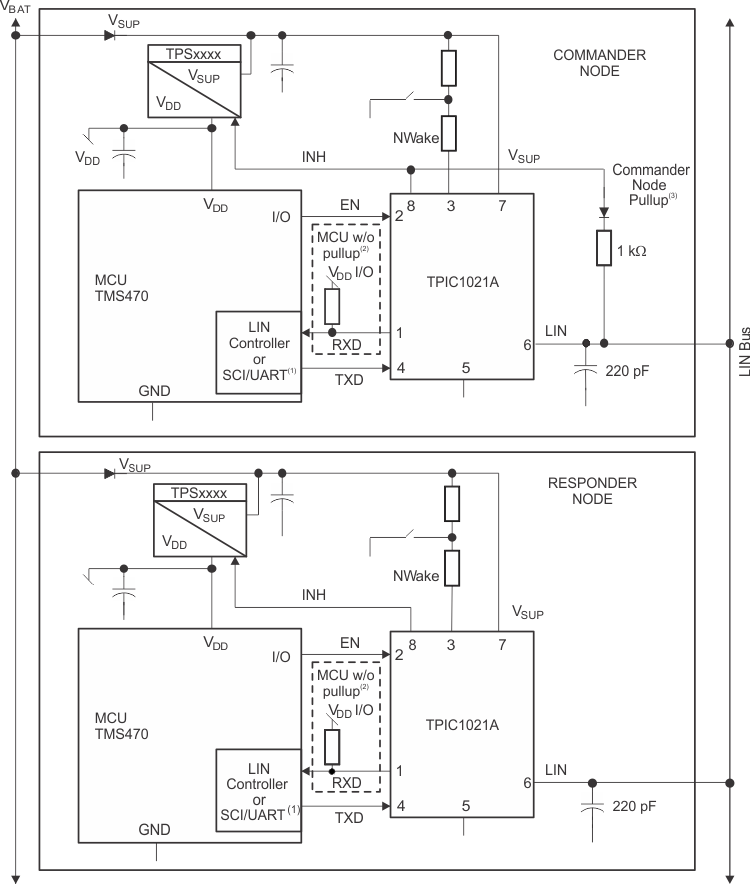
TPIC1021A-Q1Automotive LIN physical interface | Interface | 5 | NRND | The TPIC1021A is the Local Interconnect Network (LIN) physical interface, which integrates the serial transceiver with wake-up and protection features. The LIN bus is a single-wire bidirectional bus typically used for low-speed, in-vehicle networks using data rates between 2.4 kbps and 20 kbps. The LIN protocol output data stream on TXD is converted by the TPIC1021A into the LIN bus signal through a current-limited, wave-shaping driver as outlined by the LIN Physical Layer Specification Revision 2.0. The receiver converts the data stream from the LIN bus and outputs the data stream through RXD. The LIN bus has two states: dominant state (voltage near ground) and the recessive state (voltage near battery). In the recessive state, the LIN bus is pulled high by the TPIC1021A’s internal pullup resistor (30 kΩ) and series diode, so no external pullup components are required for responder applications. Commander applications require an external pullup resistor (1 kΩ) plus a series diode per the LIN specification.
The TPIC1021A is the Local Interconnect Network (LIN) physical interface, which integrates the serial transceiver with wake-up and protection features. The LIN bus is a single-wire bidirectional bus typically used for low-speed, in-vehicle networks using data rates between 2.4 kbps and 20 kbps. The LIN protocol output data stream on TXD is converted by the TPIC1021A into the LIN bus signal through a current-limited, wave-shaping driver as outlined by the LIN Physical Layer Specification Revision 2.0. The receiver converts the data stream from the LIN bus and outputs the data stream through RXD. The LIN bus has two states: dominant state (voltage near ground) and the recessive state (voltage near battery). In the recessive state, the LIN bus is pulled high by the TPIC1021A’s internal pullup resistor (30 kΩ) and series diode, so no external pullup components are required for responder applications. Commander applications require an external pullup resistor (1 kΩ) plus a series diode per the LIN specification. |
| Transistors | 1 | Obsolete | ||
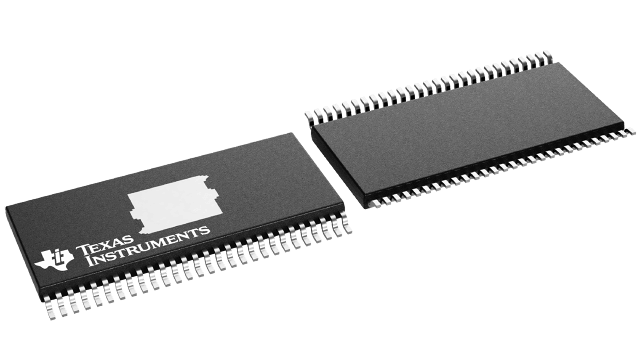
TPIC2040Serial interface controlled 7-ch motor driver for optical disk drive | Motor Drivers, Controllers | 1 | Unknown | TPIC2040 is a very-low noise type motor driver IC suitable for slim or ultra-slim DVD reader/writer. This IC includes integrated current sense resistance that measures SPM current and reduces drive system cost. The 7-channel driver IC controlled by serial I/F is optimum for driving a spindle motor, a sled motor, a load motor, and Focus / Tracking / Tilt actuators. The spindle motor driver uses BEMF detection for sensorless startup and control of the spindle motor
As the output stage of all channels works in efficient PWM driving, it is possible to attain low-power operation by PWM control. Deadband less control is possible for a focus / tracking / tilt actuator driver. In addition, the spindle part output current limiting circuit, thermal shutdown circuit, sled-end detection circuit, actuator protection and power-reset circuit are built in.
TPIC2040 is a very-low noise type motor driver IC suitable for slim or ultra-slim DVD reader/writer. This IC includes integrated current sense resistance that measures SPM current and reduces drive system cost. The 7-channel driver IC controlled by serial I/F is optimum for driving a spindle motor, a sled motor, a load motor, and Focus / Tracking / Tilt actuators. The spindle motor driver uses BEMF detection for sensorless startup and control of the spindle motor
As the output stage of all channels works in efficient PWM driving, it is possible to attain low-power operation by PWM control. Deadband less control is possible for a focus / tracking / tilt actuator driver. In addition, the spindle part output current limiting circuit, thermal shutdown circuit, sled-end detection circuit, actuator protection and power-reset circuit are built in. |
TPIC2060ASerial interface controlled 9-ch motor driver for optical disk drive | Motor Drivers, Controllers | 1 | Unknown | The TPIC2060A is a low-noise motor driver IC suitable for 12-V ODD. The 9-channel driver IC controlled by a serial interface is optimized for driving a spindle motor, a sled motor (stepping motor applicable), a load motor, focus / tracking / tilt actuators, and stepping motor for collimator lens.
This IC has an integrated current sense resistance that measures SPM current, which reduces drive system costs. The spindle motor driver part builds in sensorless logic, which attains low-noise operation at the start and run times. The user does not need to self-start the device using the starting circuit or perform position detection by BEMF of a motor or sensors such as a Hall device. As the output stage of all channels works in efficient PWM driving, the user can attain low-power operation by PWM control. Dead-zone-less control is possible for a focus / tracking / tilt actuator driver. In addition, the spindle part output current limiting circuit, the thermal shutdown circuit, the sled-end detection circuit, collimator-lens-end detection circuit, actuator protection, and pre-driver for a 9-V LDO are built in. The newly added, built-in thermometer measures IC temperature.
The TPIC2060A is a low-noise motor driver IC suitable for 12-V ODD. The 9-channel driver IC controlled by a serial interface is optimized for driving a spindle motor, a sled motor (stepping motor applicable), a load motor, focus / tracking / tilt actuators, and stepping motor for collimator lens.
This IC has an integrated current sense resistance that measures SPM current, which reduces drive system costs. The spindle motor driver part builds in sensorless logic, which attains low-noise operation at the start and run times. The user does not need to self-start the device using the starting circuit or perform position detection by BEMF of a motor or sensors such as a Hall device. As the output stage of all channels works in efficient PWM driving, the user can attain low-power operation by PWM control. Dead-zone-less control is possible for a focus / tracking / tilt actuator driver. In addition, the spindle part output current limiting circuit, the thermal shutdown circuit, the sled-end detection circuit, collimator-lens-end detection circuit, actuator protection, and pre-driver for a 9-V LDO are built in. The newly added, built-in thermometer measures IC temperature. |
| Motor Drivers, Controllers | 2 | Obsolete | ||
| Uncategorized | 1 | Obsolete | ||
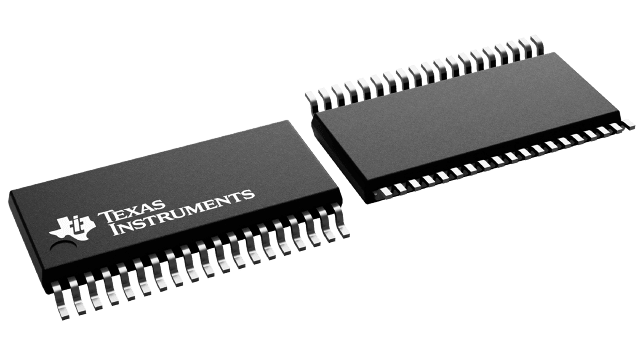
TPIC26035.5-V to 25-V 6-channel Serial Interface low-side driver | Integrated Circuits (ICs) | 3 | Active | The TPIC2603 is a monolithic low-side driver which provides serial interface and diagnostics to control six on-board power DMOS switches. Each channel has independent OFF-state open-load sense, ON-state shorted-load/short-to-battery protection, over-battery-voltage-lockout protection, and over-temperature sense with fault status reported through the serial interface. The device also provides inductive voltage transient protection for each drain output. The TPIC2603 drives inductive and resistive loads such as relays, valves, and lamps.
Serial data input (SDI) is transferred through the serial register when CS\ is low on low-to-high transitions of the serial clock (SCLK). Each string of data must consist of 8 or 16 bits of data. A logic high input data bit turns the respective output channel ON and a logic low data bit turns it OFF. CS\ must be transited high after all of the serial data has been clocked into the device. A low-to-high transition of CS\ transfers the last six bits of serial data to the output buffer, places the serial data out (SDO) terminal in a high-impedance state, and re-enables the fault register. Fault data for the device is sent out the SDO terminal. The first bit of the shift register is exclusively ORed with the fault registers. When a fault exists, the SDI data is inverted as it is transferred out of SDO. Fault data consists of fault flags for over-temperature (bit 6) and shorted/open-load (bits 0-5) for each of the six output channels. Fault register bits are set or cleared asynchronously, when CS\ is high to reflect the current state of the hardware. The fault must be present when CS\ is transited from high to low to be captured and reported in the serial fault data. New faults cannot be captured in the serial register when CS\ is low.
When an over-current or shorted-load fault occurs, the channel transits into a low duty cycle pulse-width-modulated (PWM) signal as long as the fault is present. More detail on fault detection operation is presented in the device operation section of this data sheet.
The TPIC2603 provides pulldown resistors on all active-high inputs except SCLK. A pullup resistor is used on CS\.
The TPIC2603 is characterized for operation over the operating case temperature of -40°C to 125°C.
The TPIC2603 is a monolithic low-side driver which provides serial interface and diagnostics to control six on-board power DMOS switches. Each channel has independent OFF-state open-load sense, ON-state shorted-load/short-to-battery protection, over-battery-voltage-lockout protection, and over-temperature sense with fault status reported through the serial interface. The device also provides inductive voltage transient protection for each drain output. The TPIC2603 drives inductive and resistive loads such as relays, valves, and lamps.
Serial data input (SDI) is transferred through the serial register when CS\ is low on low-to-high transitions of the serial clock (SCLK). Each string of data must consist of 8 or 16 bits of data. A logic high input data bit turns the respective output channel ON and a logic low data bit turns it OFF. CS\ must be transited high after all of the serial data has been clocked into the device. A low-to-high transition of CS\ transfers the last six bits of serial data to the output buffer, places the serial data out (SDO) terminal in a high-impedance state, and re-enables the fault register. Fault data for the device is sent out the SDO terminal. The first bit of the shift register is exclusively ORed with the fault registers. When a fault exists, the SDI data is inverted as it is transferred out of SDO. Fault data consists of fault flags for over-temperature (bit 6) and shorted/open-load (bits 0-5) for each of the six output channels. Fault register bits are set or cleared asynchronously, when CS\ is high to reflect the current state of the hardware. The fault must be present when CS\ is transited from high to low to be captured and reported in the serial fault data. New faults cannot be captured in the serial register when CS\ is low.
When an over-current or shorted-load fault occurs, the channel transits into a low duty cycle pulse-width-modulated (PWM) signal as long as the fault is present. More detail on fault detection operation is presented in the device operation section of this data sheet.
The TPIC2603 provides pulldown resistors on all active-high inputs except SCLK. A pullup resistor is used on CS\.
The TPIC2603 is characterized for operation over the operating case temperature of -40°C to 125°C. |
| Interface | 1 | Obsolete | ||
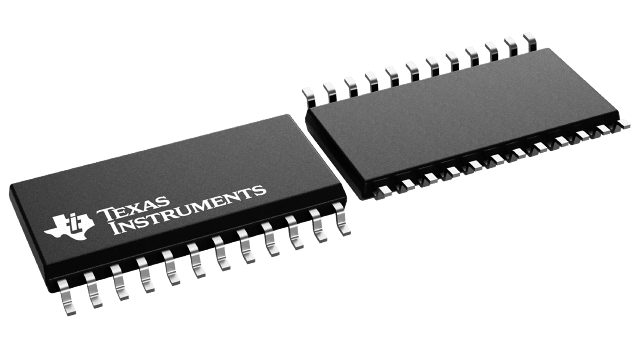
TPIC28108-bit LED driver with I2C interface | Integrated Circuits (ICs) | 2 | Active | The TPIC2810 device is a monolithic, medium-voltage, low-current, 8-bit shift register design to drive low-side switched resistive loads such as LEDs. The device is not recommended for switching inductive loads.
This device contains an 8-bit, serial-in, parallel-out shift register that feeds an 8-bit D-type storage register. Data transfers through the shift register via an I2C bus interface. Data is transferred into the data shift register only after the group ID and device address have been verified. The subaddress directs the I2C bus interface to read or write data to the device or transfer data to the output. When output enable (G)\ is held high, all drain outputs are off. When G\ is held low, data from the output storage register is transparent to the output buffers. When data in the output buffers is low, the DMOS transistor outputs are off. When data is high, the DMOS transistor outputs have sink-current capability.
The TPIC2810 device has an internal power-up clear to initialize all registers to an off state when power is applied to the device. It also has a thermal sensor to monitor the die temperature and shut the drain outputs off, if an over current condition occurs.
Outputs are low-side, open-drain DMOS transistors with output ratings of 40 V and 100 mA continuous sink-current capability. Each output provides a 210-mA maximum current limit at TC= 25°C. The current limit decreases as the junction temperature increases for additional device protection. The device also provides up to 3000 V of ESD protection on output terminals and 2000 V of ESD protection on input terminals when tested using the human-body model.
The TPIC2810 device is characterized for operation over the operating case temperature range of –40°C to 125°C.
The TPIC2810 device is a monolithic, medium-voltage, low-current, 8-bit shift register design to drive low-side switched resistive loads such as LEDs. The device is not recommended for switching inductive loads.
This device contains an 8-bit, serial-in, parallel-out shift register that feeds an 8-bit D-type storage register. Data transfers through the shift register via an I2C bus interface. Data is transferred into the data shift register only after the group ID and device address have been verified. The subaddress directs the I2C bus interface to read or write data to the device or transfer data to the output. When output enable (G)\ is held high, all drain outputs are off. When G\ is held low, data from the output storage register is transparent to the output buffers. When data in the output buffers is low, the DMOS transistor outputs are off. When data is high, the DMOS transistor outputs have sink-current capability.
The TPIC2810 device has an internal power-up clear to initialize all registers to an off state when power is applied to the device. It also has a thermal sensor to monitor the die temperature and shut the drain outputs off, if an over current condition occurs.
Outputs are low-side, open-drain DMOS transistors with output ratings of 40 V and 100 mA continuous sink-current capability. Each output provides a 210-mA maximum current limit at TC= 25°C. The current limit decreases as the junction temperature increases for additional device protection. The device also provides up to 3000 V of ESD protection on output terminals and 2000 V of ESD protection on input terminals when tested using the human-body model.
The TPIC2810 device is characterized for operation over the operating case temperature range of –40°C to 125°C. |