Catalog
Automotive LIN physical interface
Key Features
• LIN physical layer specification revision 2.0 compliant and conforms to SAEJ2602 recommended practice for LINLIN bus speed up to 20-kbps LIN specified maximumSleep mode: ultra-low current consumption, allows wake-up events from LIN bus, wake-up input (external switch), or host MCUhigh-speed receive capableESD protection to ±12 kV (human-body model) on LIN pinLIN pin handles voltage from –40 V to 40 VSurvives transient damage in automotive environment (ISO 7637)Extended operation with supply from 7 V to 27 V DC (LIN specification 7 V to 18 V)Interfaces to MCU with 5-V or 3.3-V I/O pinsDominant state time-out protectionWake-up request on RXD pinControl of external voltage regulator (INH pin)Integrated pullup resistor and series diode for LIN responder applicationsLow electromagnetic emission (EME), high electromagnetic immunity (EMI)Bus terminal short-circuit protected for short to battery or short to groundThermally protectedGround disconnection fail-safe at system levelGround shift operation at system levelUnpowered node does not disturb the networkSupports ISO9141 (K-Line)-like functionsLIN physical layer specification revision 2.0 compliant and conforms to SAEJ2602 recommended practice for LINLIN bus speed up to 20-kbps LIN specified maximumSleep mode: ultra-low current consumption, allows wake-up events from LIN bus, wake-up input (external switch), or host MCUhigh-speed receive capableESD protection to ±12 kV (human-body model) on LIN pinLIN pin handles voltage from –40 V to 40 VSurvives transient damage in automotive environment (ISO 7637)Extended operation with supply from 7 V to 27 V DC (LIN specification 7 V to 18 V)Interfaces to MCU with 5-V or 3.3-V I/O pinsDominant state time-out protectionWake-up request on RXD pinControl of external voltage regulator (INH pin)Integrated pullup resistor and series diode for LIN responder applicationsLow electromagnetic emission (EME), high electromagnetic immunity (EMI)Bus terminal short-circuit protected for short to battery or short to groundThermally protectedGround disconnection fail-safe at system levelGround shift operation at system levelUnpowered node does not disturb the networkSupports ISO9141 (K-Line)-like functions
Description
AI
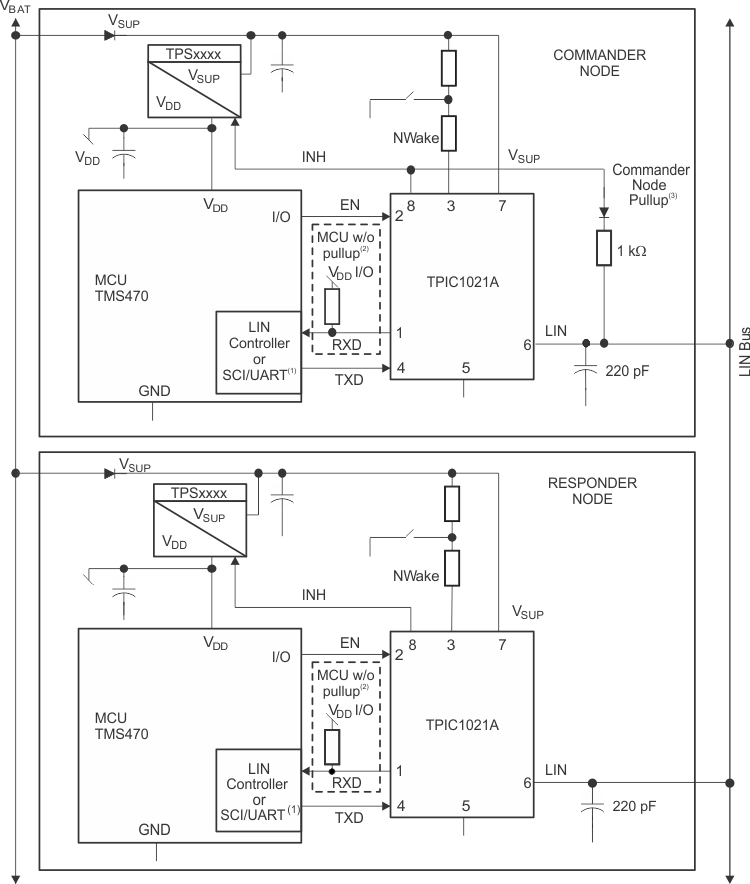
The TPIC1021A is the Local Interconnect Network (LIN) physical interface, which integrates the serial transceiver with wake-up and protection features. The LIN bus is a single-wire bidirectional bus typically used for low-speed, in-vehicle networks using data rates between 2.4 kbps and 20 kbps. The LIN protocol output data stream on TXD is converted by the TPIC1021A into the LIN bus signal through a current-limited, wave-shaping driver as outlined by the LIN Physical Layer Specification Revision 2.0. The receiver converts the data stream from the LIN bus and outputs the data stream through RXD. The LIN bus has two states: dominant state (voltage near ground) and the recessive state (voltage near battery). In the recessive state, the LIN bus is pulled high by the TPIC1021A’s internal pullup resistor (30 kΩ) and series diode, so no external pullup components are required for responder applications. Commander applications require an external pullup resistor (1 kΩ) plus a series diode per the LIN specification.
The TPIC1021A is the Local Interconnect Network (LIN) physical interface, which integrates the serial transceiver with wake-up and protection features. The LIN bus is a single-wire bidirectional bus typically used for low-speed, in-vehicle networks using data rates between 2.4 kbps and 20 kbps. The LIN protocol output data stream on TXD is converted by the TPIC1021A into the LIN bus signal through a current-limited, wave-shaping driver as outlined by the LIN Physical Layer Specification Revision 2.0. The receiver converts the data stream from the LIN bus and outputs the data stream through RXD. The LIN bus has two states: dominant state (voltage near ground) and the recessive state (voltage near battery). In the recessive state, the LIN bus is pulled high by the TPIC1021A’s internal pullup resistor (30 kΩ) and series diode, so no external pullup components are required for responder applications. Commander applications require an external pullup resistor (1 kΩ) plus a series diode per the LIN specification.