T
Texas Instruments
| Series | Category | # Parts | Status | Description |
|---|---|---|---|---|
| Part | Spec A | Spec B | Spec C | Spec D | Description |
|---|---|---|---|---|---|



| Series | Category | # Parts | Status | Description |
|---|---|---|---|---|
| Part | Spec A | Spec B | Spec C | Spec D | Description |
|---|---|---|---|---|---|
| Series | Category | # Parts | Status | Description |
|---|---|---|---|---|
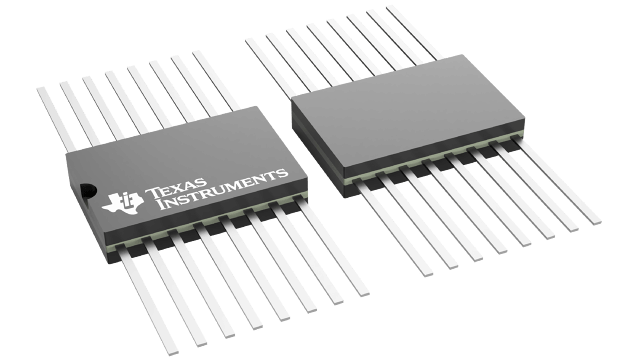
SN54BCT540Octal Buffers/Drivers With 3-State Outputs | Logic | 1 | Active | The SN54BCT540 and SN74BCT540A octal buffers and line drivers are ideal for driving bus lines or buffer memory-address registers. The devices feature inputs and outputs on opposite sides of the package to facilitate printed circuit board layout.
The 3-state control gate is a 2-input AND gate with active-low inputs so that if either output-enable (OE1\ or OE2\) input is high, all corresponding outputs are in the high-impedance state.
To ensure the high-impedance state during power up or power down, OE\ should be tied to VCCthrough a pullup resistor; the minimum value of the resistor is determined by the current-sinking capability of the driver.
The SN54BCT540 and SN74BCT540A octal buffers and line drivers are ideal for driving bus lines or buffer memory-address registers. The devices feature inputs and outputs on opposite sides of the package to facilitate printed circuit board layout.
The 3-state control gate is a 2-input AND gate with active-low inputs so that if either output-enable (OE1\ or OE2\) input is high, all corresponding outputs are in the high-impedance state.
To ensure the high-impedance state during power up or power down, OE\ should be tied to VCCthrough a pullup resistor; the minimum value of the resistor is determined by the current-sinking capability of the driver. |
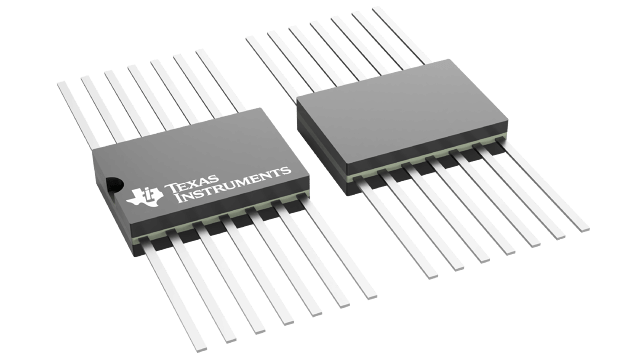
SN54BCT646Octal Bus Transceivers And Registers With 3-State Outputs | Buffers, Drivers, Receivers, Transceivers | 1 | Active | These devices consist of bus transceiver circuits, D-type flip-flops, and control circuitry arranged for multiplexed transmission of data directly from the input bus or from the internal registers. Data on the A or B bus is clocked into the registers on the low-to-high transition of the appropriate clock (CLKAB or CLKBA) input. Figure 1 illustrates the four fundamental bus-management functions that can be performed with the ’BCT646 devices.
Output-enable (OE)\ and direction-control (DIR) inputs are provided to control the transceiver functions. In the transceiver mode, data present at the high-impedance port can be stored in either register or in both.
The select-control (SAB and SBA) inputs can multiplex stored and real-time (transparent mode) data. The direction control (DIR) determines which bus will receive data when OE\ is low. In the isolation mode (OE\ high), A data can be stored in one register and/or B data can be stored in the other register.
These devices consist of bus transceiver circuits, D-type flip-flops, and control circuitry arranged for multiplexed transmission of data directly from the input bus or from the internal registers. Data on the A or B bus is clocked into the registers on the low-to-high transition of the appropriate clock (CLKAB or CLKBA) input. Figure 1 illustrates the four fundamental bus-management functions that can be performed with the ’BCT646 devices.
Output-enable (OE)\ and direction-control (DIR) inputs are provided to control the transceiver functions. In the transceiver mode, data present at the high-impedance port can be stored in either register or in both.
The select-control (SAB and SBA) inputs can multiplex stored and real-time (transparent mode) data. The direction control (DIR) determines which bus will receive data when OE\ is low. In the isolation mode (OE\ high), A data can be stored in one register and/or B data can be stored in the other register. |
SN54BCT8244AScan Test Devices With Octal Buffers | Logic | 1 | Active | The 'BCT8244A scan test devices with octal buffers are members of the Texas Instruments SCOPETMtestability integrated-circuit family. This family of devices supports IEEE Standard 1149.1-1990 boundary scan to facilitate testing of complex circuit-board assemblies. Scan access to the test circuitry is accomplished via the 4-wire test access port (TAP) interface.
In the normal mode, these devices are functionally equivalent to the 'F244 and 'BCT244 octal buffers. The test circuitry can be activated by the TAP to take snapshot samples of the data appearing at the device terminals or to perform a self test on the boundary-test cells. Activating the TAP in normal mode does not affect the functional operation of the SCOPETMoctal buffers.
In the test mode, the normal operation of the SCOPETMoctal buffers is inhibited and the test circuitry is enabled to observe and control the I/O boundary of the device. When enabled, the test circuitry can perform boundary-scan test operations, as described in IEEE Standard 1149.1-1990.
Four dedicated test terminals control the operation of the test circuitry: test data input (TDI), test data output (TDO), test mode select (TMS), and test clock (TCK). Additionally, the test circuitry performs other testing functions such as parallel-signature analysis (PSA) on data inputs and pseudo-random pattern generation (PRPG) from data outputs. All testing and scan operations are synchronized to the TAP interface.
The SN54BCT8244A is characterized for operation over the full military temperature range of -55°C to 125°C. The SN74BCT8244A is characterized for operation from 0°C to 70°C.
The 'BCT8244A scan test devices with octal buffers are members of the Texas Instruments SCOPETMtestability integrated-circuit family. This family of devices supports IEEE Standard 1149.1-1990 boundary scan to facilitate testing of complex circuit-board assemblies. Scan access to the test circuitry is accomplished via the 4-wire test access port (TAP) interface.
In the normal mode, these devices are functionally equivalent to the 'F244 and 'BCT244 octal buffers. The test circuitry can be activated by the TAP to take snapshot samples of the data appearing at the device terminals or to perform a self test on the boundary-test cells. Activating the TAP in normal mode does not affect the functional operation of the SCOPETMoctal buffers.
In the test mode, the normal operation of the SCOPETMoctal buffers is inhibited and the test circuitry is enabled to observe and control the I/O boundary of the device. When enabled, the test circuitry can perform boundary-scan test operations, as described in IEEE Standard 1149.1-1990.
Four dedicated test terminals control the operation of the test circuitry: test data input (TDI), test data output (TDO), test mode select (TMS), and test clock (TCK). Additionally, the test circuitry performs other testing functions such as parallel-signature analysis (PSA) on data inputs and pseudo-random pattern generation (PRPG) from data outputs. All testing and scan operations are synchronized to the TAP interface.
The SN54BCT8244A is characterized for operation over the full military temperature range of -55°C to 125°C. The SN74BCT8244A is characterized for operation from 0°C to 70°C. |
SN54BCT8374AScan Test Devices With Octal D-type Edge-Triggered Flip-Flops | Logic | 1 | Active | The 'BCT8374A scan test devices with octal edge-triggered D-type flip-flops are members of the Texas Instruments SCOPETMtestability integrated-circuit family. This family of devices supports IEEE Standard 1149.1-1990 boundary scan to facilitate testing of complex circuit-board assemblies. Scan access to the test circuitry is accomplished via the 4-wire test access port (TAP) interface.
In the normal mode, these devices are functionally equivalent to the 'F374 and 'BCT374 octal D-type flip-flops. The test circuitry can be activated by the TAP to take snapshot samples of the data appearing at the device terminals or to perform a self test on the boundary-test cells. Activating the TAP in normal mode does not affect the functional operation of the SCOPETMoctal flip-flops.
In the test mode, the normal operation of the SCOPETMoctal flip-flops is inhibited and the test circuitry is enabled to observe and control the I/O boundary of the device. When enabled, the test circuitry can perform boundary-scan test operations as described in IEEE Standard 1149.1-1990.
Four dedicated test terminals control the operation of the test circuitry: test data input (TDI), test data output (TDO), test mode select (TMS), and test clock (TCK). Additionally, the test circuitry performs other testing functions such as parallel-signature analysis (PSA) on data inputs and pseudo-random pattern generation (PRPG) from data outputs. All testing and scan operations are synchronized to the TAP interface.
The SN54BCT8374A is characterized for operation over the full military temperature range of -55°C to 125°C. The SN74BCT8374A is characterized for operation from 0°C to 70°C.
The 'BCT8374A scan test devices with octal edge-triggered D-type flip-flops are members of the Texas Instruments SCOPETMtestability integrated-circuit family. This family of devices supports IEEE Standard 1149.1-1990 boundary scan to facilitate testing of complex circuit-board assemblies. Scan access to the test circuitry is accomplished via the 4-wire test access port (TAP) interface.
In the normal mode, these devices are functionally equivalent to the 'F374 and 'BCT374 octal D-type flip-flops. The test circuitry can be activated by the TAP to take snapshot samples of the data appearing at the device terminals or to perform a self test on the boundary-test cells. Activating the TAP in normal mode does not affect the functional operation of the SCOPETMoctal flip-flops.
In the test mode, the normal operation of the SCOPETMoctal flip-flops is inhibited and the test circuitry is enabled to observe and control the I/O boundary of the device. When enabled, the test circuitry can perform boundary-scan test operations as described in IEEE Standard 1149.1-1990.
Four dedicated test terminals control the operation of the test circuitry: test data input (TDI), test data output (TDO), test mode select (TMS), and test clock (TCK). Additionally, the test circuitry performs other testing functions such as parallel-signature analysis (PSA) on data inputs and pseudo-random pattern generation (PRPG) from data outputs. All testing and scan operations are synchronized to the TAP interface.
The SN54BCT8374A is characterized for operation over the full military temperature range of -55°C to 125°C. The SN74BCT8374A is characterized for operation from 0°C to 70°C. |
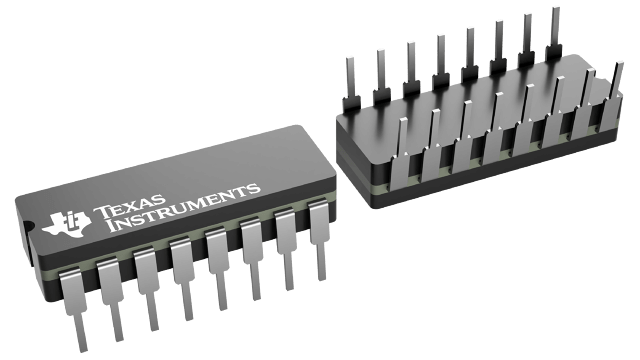
SN54F04Military 6-ch, 4.5-V to 5.5-V bipolar inverters | Gates and Inverters | 1 | Active | These devices contain six independent inverters. They perform the Boolean function Y = A\.
The SN54F04 is characterized for operation over the full military temperature range of -55°C to 125°C. The SN74F04 is characterized for operation from 0°C to 70°C.
These devices contain six independent inverters. They perform the Boolean function Y = A\.
The SN54F04 is characterized for operation over the full military temperature range of -55°C to 125°C. The SN74F04 is characterized for operation from 0°C to 70°C. |
SN54F2834-Bit Binary Full Adders With Fast Carry | Integrated Circuits (ICs) | 1 | Active | The ´F283 is a full adder that performs the addition of two 4-bit binary words. The sum ( ) outputs are provided for each bit and the resultant carry (C4) output is obtained from the fourth bit.
The device features full internal look-ahead across all four bits generating the carry term C4 in typically 5.7 ns. This capability provides the system designer with partial look-ahead performance at the economy and reduced package count of a ripple-carry implementation.
The adder logic, including the carry, is implemented in its true form. End-around carry can be accomplished without the need for logic or level inversion.
The ´F283 can be used with either all-active-high (positive logic) or all-active-low (negative logic) operands.
The SN54F283 is characterized for operation over the full military temperature range of -55°C to 125°C. The SN74F283 is characterized for operation from 0°C to 70°C.
The ´F283 is a full adder that performs the addition of two 4-bit binary words. The sum ( ) outputs are provided for each bit and the resultant carry (C4) output is obtained from the fourth bit.
The device features full internal look-ahead across all four bits generating the carry term C4 in typically 5.7 ns. This capability provides the system designer with partial look-ahead performance at the economy and reduced package count of a ripple-carry implementation.
The adder logic, including the carry, is implemented in its true form. End-around carry can be accomplished without the need for logic or level inversion.
The ´F283 can be used with either all-active-high (positive logic) or all-active-low (negative logic) operands.
The SN54F283 is characterized for operation over the full military temperature range of -55°C to 125°C. The SN74F283 is characterized for operation from 0°C to 70°C. |
SN54HC00Military 4-ch, 2-input, 2-V to 6-V 5.2 mA drive strength NAND gate | Gates and Inverters | 3 | Active | This device contains four independent 2-input NAND Gates. Each gate performs the Boolean function Y =A ● Bin positive logic.
This device contains four independent 2-input NAND Gates. Each gate performs the Boolean function Y =A ● Bin positive logic. |
SN54HC04-DIEHex Inverter. | Integrated Circuits (ICs) | 2 | Active | The SN54HC04-DIE contains six independent inverters and performs the Boolean function Y =Ain positive logic.
The SN54HC04-DIE contains six independent inverters and performs the Boolean function Y =Ain positive logic. |
SN54HC08-DIEQuadruple 2-Input Positive-AND Gates, SN54HC08-DIE | Gates and Inverters | 1 | Active | The SN54HC08-DIE device contains four independent 2-input AND gates. Each gate performs the Boolean function of Y = A • B or Y = A + B in positive logic.
The SN54HC08-DIE device contains four independent 2-input AND gates. Each gate performs the Boolean function of Y = A • B or Y = A + B in positive logic. |
SN54HC112Dual J-K Negative-Edge-Triggered Flip-Flops With Clear And Preset | Flip Flops | 4 | Active | The SNx4HC112 devices contain two independent J-K negative-edge-triggered flip-flops. A low level at the preset (PRE) or clear (CLR) inputs sets or resets the outputs, regardless of the levels of the other inputs. When PRE and CLR are inactive (high), data at the J and K inputs meeting the setup time requirements are transferred to the outputs on the negative-going edge of the clock (CLK) pulse. Clock triggering occurs at a voltage level and is not directly related to the fall time of the CLK pulse. Following the hold-time interval, data at the J and K inputs may be changed without affecting the levels at the outputs. These versatile flip-flops perform as toggle flip-flops by tying J and K high.
The SNx4HC112 devices contain two independent J-K negative-edge-triggered flip-flops. A low level at the preset (PRE) or clear (CLR) inputs sets or resets the outputs, regardless of the levels of the other inputs. When PRE and CLR are inactive (high), data at the J and K inputs meeting the setup time requirements are transferred to the outputs on the negative-going edge of the clock (CLK) pulse. Clock triggering occurs at a voltage level and is not directly related to the fall time of the CLK pulse. Following the hold-time interval, data at the J and K inputs may be changed without affecting the levels at the outputs. These versatile flip-flops perform as toggle flip-flops by tying J and K high. |
| Part | Category | Description |
|---|---|---|
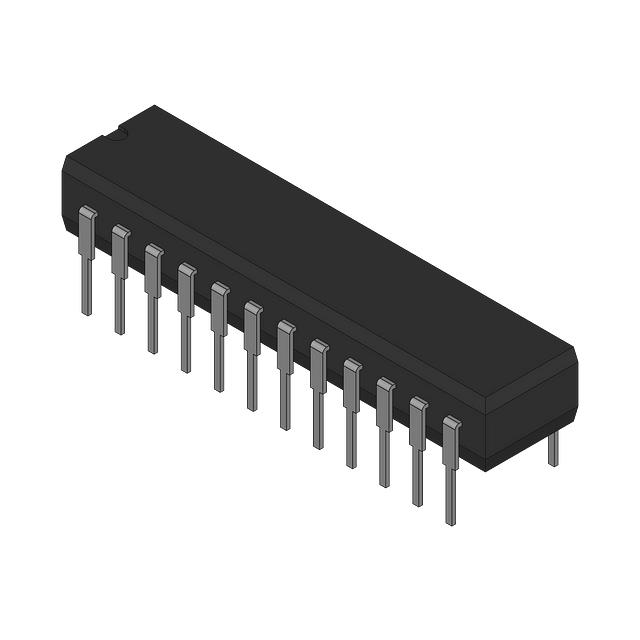 Texas Instruments | Integrated Circuits (ICs) | BUS DRIVER, BCT/FBT SERIES |
 Texas Instruments | Integrated Circuits (ICs) | 12BIT 3.3V~3.6V 210MHZ PARALLEL VQFN-48-EP(7X7) ANALOG TO DIGITAL CONVERTERS (ADC) ROHS |
Texas Instruments | Integrated Circuits (ICs) | TMX320DRE311 179PIN UBGA 200MHZ |
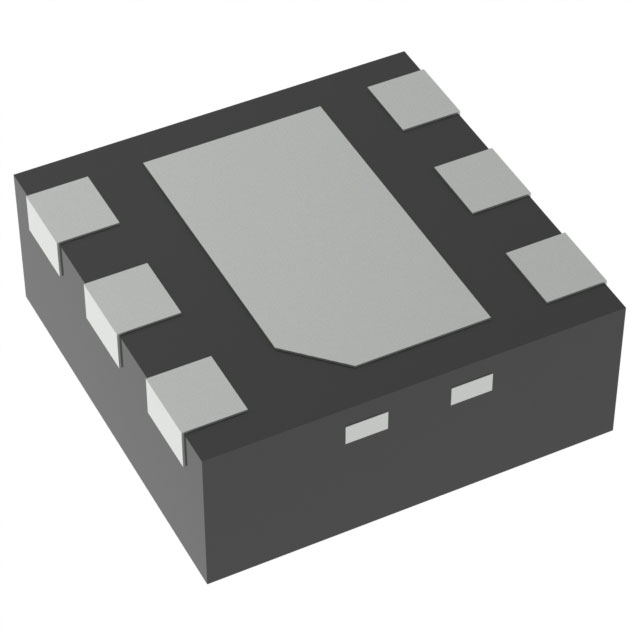 Texas Instruments TPS61040DRVTG4Unknown | Integrated Circuits (ICs) | IC LED DRV RGLTR PWM 350MA 6WSON |
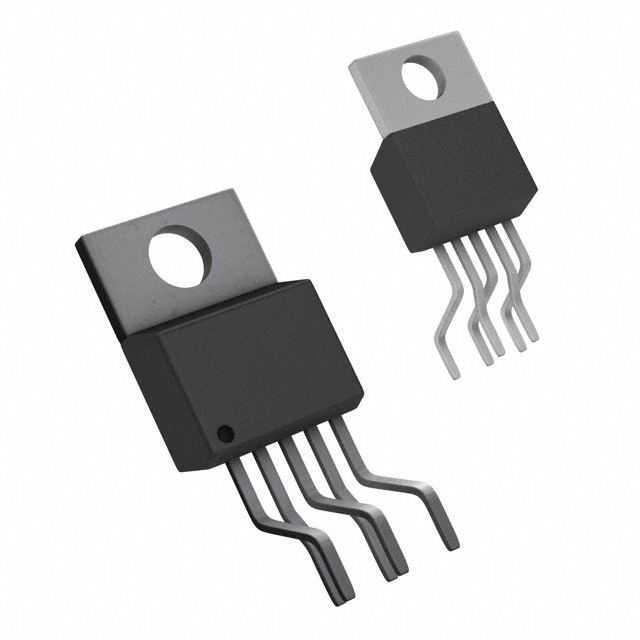 Texas Instruments LP3876ET-2.5Obsolete | Integrated Circuits (ICs) | IC REG LINEAR 2.5V 3A TO220-5 |
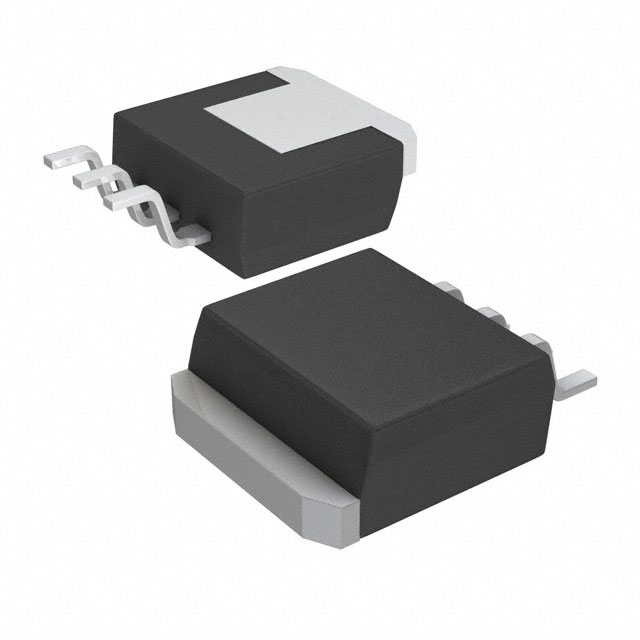 Texas Instruments LMS1585ACSX-ADJObsolete | Integrated Circuits (ICs) | IC REG LIN POS ADJ 5A DDPAK |
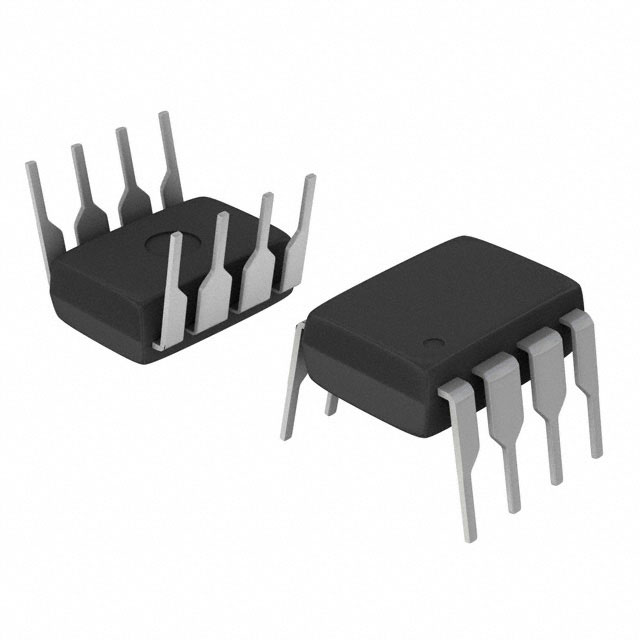 Texas Instruments INA111APG4Obsolete | Integrated Circuits (ICs) | IC INST AMP 1 CIRCUIT 8DIP |
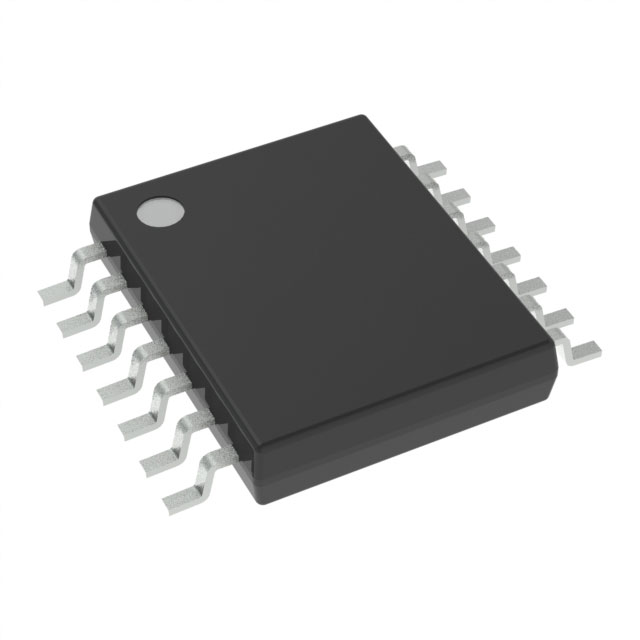 Texas Instruments | Integrated Circuits (ICs) | AUTOMOTIVE, QUAD 36V 1.2MHZ OPERATIONAL AMPLIFIER |
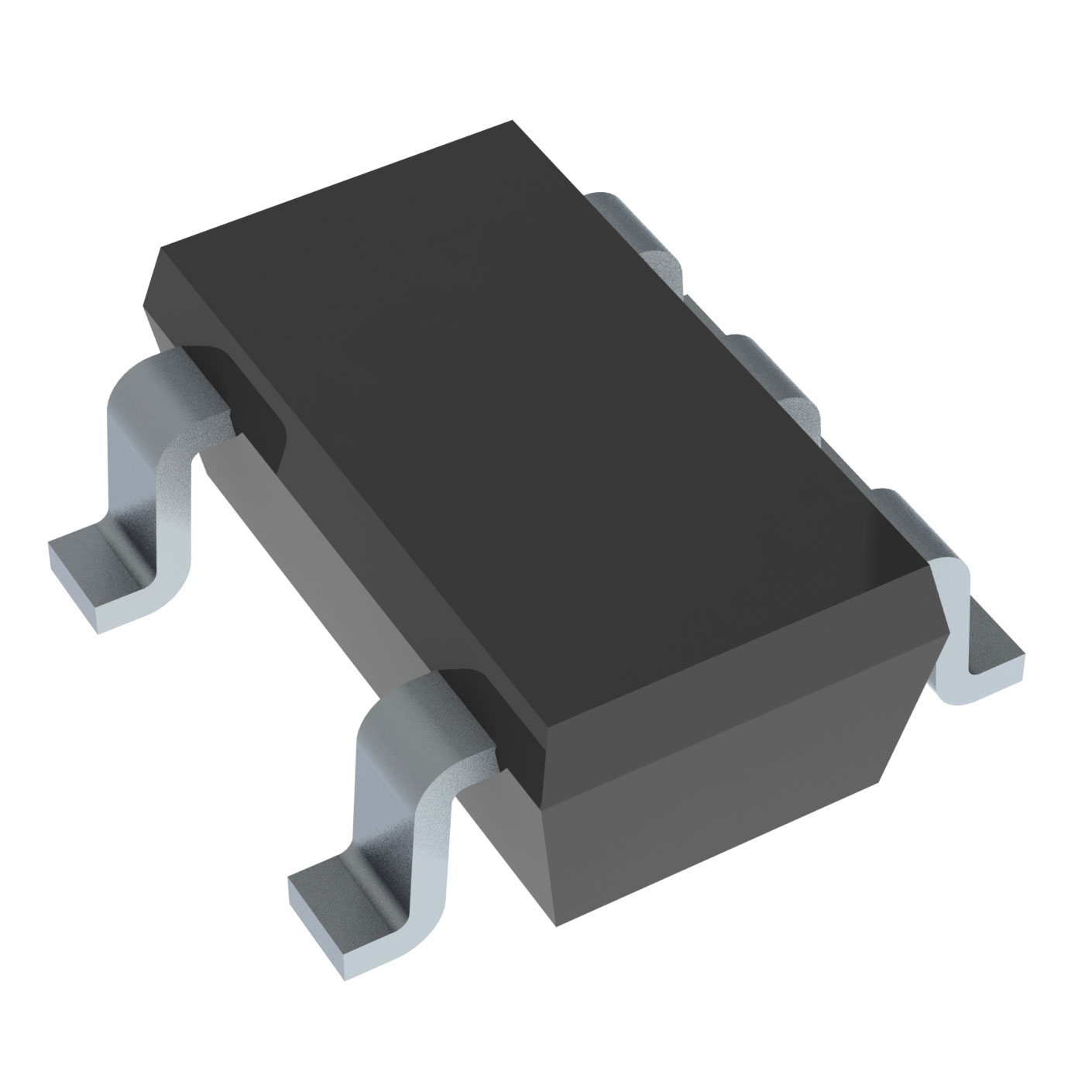 Texas Instruments OPA340NA/3KG4Unknown | Integrated Circuits (ICs) | IC OPAMP GP 1 CIRCUIT SOT23-5 |
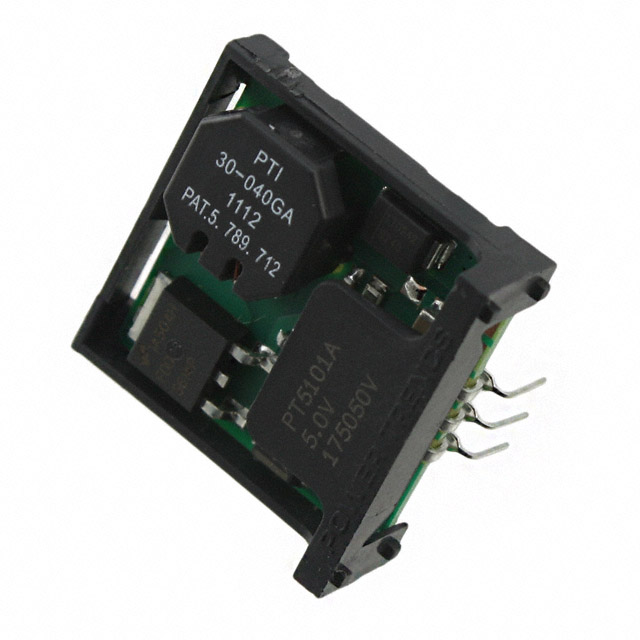 Texas Instruments PT5112AObsolete | Power Supplies - Board Mount | DC DC CONVERTER 8V 8W |