SM7330288 MHz, Precision, Low Noise, 1.8V CMOS Input, Decompensated Operational Amplifier | Amplifiers | 2 | Active | The SM73302 low noise, CMOS input operational amplifier offers a low input voltage noise density of 5.8 nV/√Hzwhile consuming only 1.15 mA of quiescent current. The SM73302 is stable at a gain of 10 and has a gain bandwidth (GBW) product of 88 MHz. The SM73302 has a supply voltage range of 1.8V to 5.5V and can operate from a single supply. The SM73302 features a rail-to-rail output stage, and is part of the precision amplifier family and is ideal for a variety of instrumentation applications.
The SM73302 provides optimal performance in low voltage and low noise systems. A CMOS input stage, with typical input bias currents in the range of a few femtoamperes, and an input common mode voltage range, which includes ground, makes the SM73302 ideal for low power sensor applications where high speeds are needed.
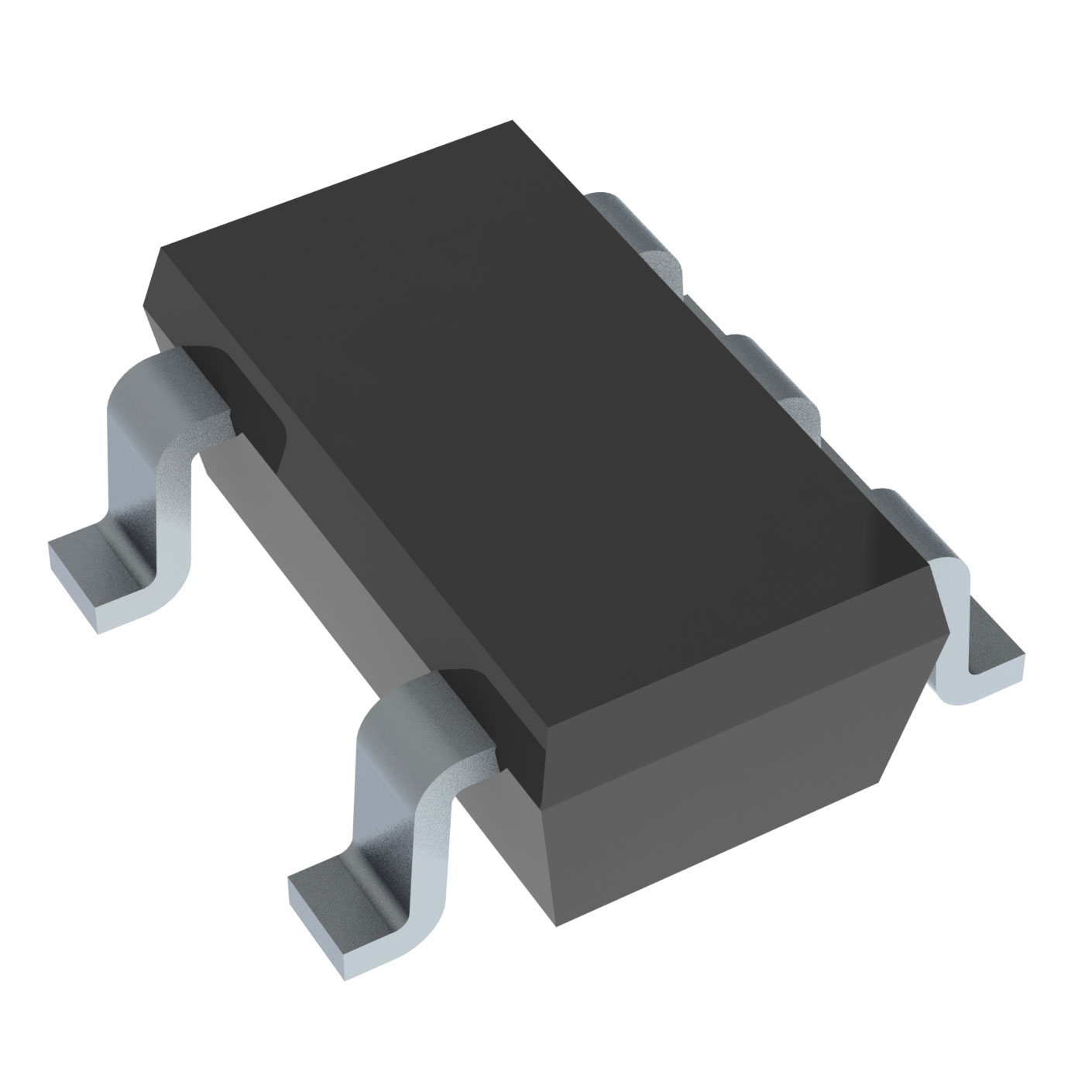
The SM73302 is manufactured using an advanced VIP50 process. The SM73302 is offered in a 5-Pin SOT-23 package.
The SM73302 low noise, CMOS input operational amplifier offers a low input voltage noise density of 5.8 nV/√Hzwhile consuming only 1.15 mA of quiescent current. The SM73302 is stable at a gain of 10 and has a gain bandwidth (GBW) product of 88 MHz. The SM73302 has a supply voltage range of 1.8V to 5.5V and can operate from a single supply. The SM73302 features a rail-to-rail output stage, and is part of the precision amplifier family and is ideal for a variety of instrumentation applications.
The SM73302 provides optimal performance in low voltage and low noise systems. A CMOS input stage, with typical input bias currents in the range of a few femtoamperes, and an input common mode voltage range, which includes ground, makes the SM73302 ideal for low power sensor applications where high speeds are needed.
The SM73302 is manufactured using an advanced VIP50 process. The SM73302 is offered in a 5-Pin SOT-23 package. |
SM73307Dual, precision, 17-MHz, low-noise, CMOS input amplifier | Instrumentation, Op Amps, Buffer Amps | 3 | Active | The SM73307 is a dual, low noise, low offset, CMOS input, rail-to-rail output precision amplifier with a high gain bandwidth product. The SM73307 is ideal for a variety of instrumentation applications including solar photovoltaic.
Utilizing a CMOS input stage, the SM73307 achieves an input bias current of 100 fA, an input referred voltage noise of 5.8 nV/√Hz, and an input offset voltage of less than ±150 μV. These features make the SM73307 a superior choice for precision applications.
Consuming only 1.30 mA of supply current per channel, the SM73307 offers a high gain bandwidth product of 17 MHz, enabling accurate amplification at high closed loop gains.
The SM73307 has a supply voltage range of 1.8V to 5.5V, which makes it an ideal choice for portable low power applications with low supply voltage requirements.
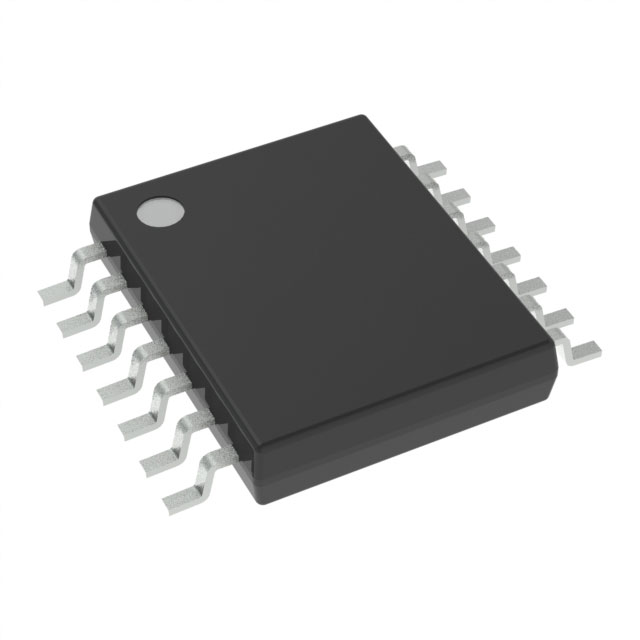
The SM73307 is built with TI’s advanced VIP50 process technology and is offered in an 8-pin VSSOP package.
The SM73307 incorporates enhanced manufacturing and support processes for the photovoltaic and automotive market, including defect detection methodologies. Reliability qualification is compliant with the requirements and temperature grades defined in the Renewable Energy Grade and AEC-Q100 standards.
The SM73307 is a dual, low noise, low offset, CMOS input, rail-to-rail output precision amplifier with a high gain bandwidth product. The SM73307 is ideal for a variety of instrumentation applications including solar photovoltaic.
Utilizing a CMOS input stage, the SM73307 achieves an input bias current of 100 fA, an input referred voltage noise of 5.8 nV/√Hz, and an input offset voltage of less than ±150 μV. These features make the SM73307 a superior choice for precision applications.
Consuming only 1.30 mA of supply current per channel, the SM73307 offers a high gain bandwidth product of 17 MHz, enabling accurate amplification at high closed loop gains.
The SM73307 has a supply voltage range of 1.8V to 5.5V, which makes it an ideal choice for portable low power applications with low supply voltage requirements.
The SM73307 is built with TI’s advanced VIP50 process technology and is offered in an 8-pin VSSOP package.
The SM73307 incorporates enhanced manufacturing and support processes for the photovoltaic and automotive market, including defect detection methodologies. Reliability qualification is compliant with the requirements and temperature grades defined in the Renewable Energy Grade and AEC-Q100 standards. |
SM73308Low Offset, Low Noise, RRO Operational Amplifiers | Integrated Circuits (ICs) | 2 | Active | The SM73308 is a single low noise precision operational amplifier intended for use in a wide range of applications. Other important characteristics include: an extended operating temperature range of −40°C to 125°C, the tiny SC70-5 package, and low input bias current.
The extended temperature range of −40°C to 125°C allows the SM73308 to accommodate a broad range of applications. The SM73308 expands TI’s Silicon Dust amplifier portfolio offering enhancements in size, speed, and power savings. The SM73308 is ensured to operate over the voltage range of 2.7V to 5.0V and has rail-to-rail output.
The SM73308 is designed for precision, low noise, low voltage, and miniature systems. This amplifier provides rail-to-rail output swing into heavy loads. The maximum input offset is 850 μV at room temperature and the input common mode voltage range includes ground.
The SM73308 is offered in the tiny SC70-5 package.
The SM73308 is a single low noise precision operational amplifier intended for use in a wide range of applications. Other important characteristics include: an extended operating temperature range of −40°C to 125°C, the tiny SC70-5 package, and low input bias current.
The extended temperature range of −40°C to 125°C allows the SM73308 to accommodate a broad range of applications. The SM73308 expands TI’s Silicon Dust amplifier portfolio offering enhancements in size, speed, and power savings. The SM73308 is ensured to operate over the voltage range of 2.7V to 5.0V and has rail-to-rail output.
The SM73308 is designed for precision, low noise, low voltage, and miniature systems. This amplifier provides rail-to-rail output swing into heavy loads. The maximum input offset is 850 μV at room temperature and the input common mode voltage range includes ground.
The SM73308 is offered in the tiny SC70-5 package. |
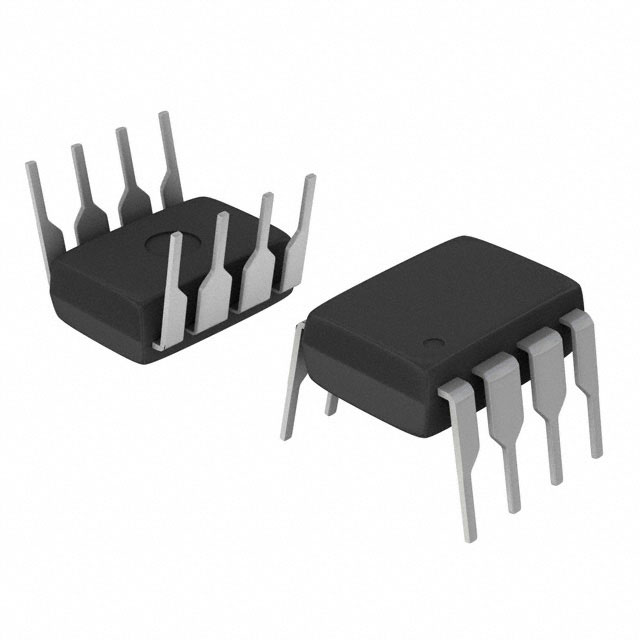
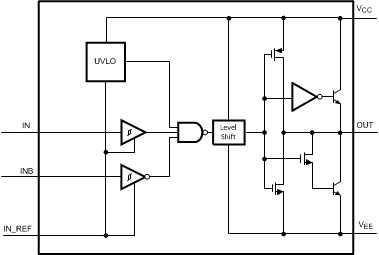
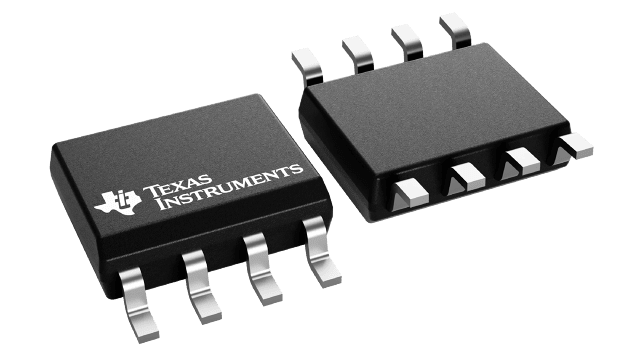
SM741013-A/7-A single channel gate driver with input ground for split supply operation | Gate Drivers | 2 | Active | The SM74101 MOSFET gate driver provides high peak gate drive current in the tiny WSON-6 package (SOT23 equivalent footprint), with improved power dissipation required for high frequency operation. The compound output driver stage includes MOS and bipolar transistors operating in parallel that together sink more than 7A peak from capacitive loads. Combining the unique characteristics of MOS and bipolar devices reduces drive current variation with voltage and temperature. Under-voltage lockout protection is provided to prevent damage to the MOSFET due to insufficient gate turn-on voltage. The SM74101 provides both inverting and non-inverting inputs to satisfy requirements for inverting and non-inverting gate drive with a single device type.
The SM74101 MOSFET gate driver provides high peak gate drive current in the tiny WSON-6 package (SOT23 equivalent footprint), with improved power dissipation required for high frequency operation. The compound output driver stage includes MOS and bipolar transistors operating in parallel that together sink more than 7A peak from capacitive loads. Combining the unique characteristics of MOS and bipolar devices reduces drive current variation with voltage and temperature. Under-voltage lockout protection is provided to prevent damage to the MOSFET due to insufficient gate turn-on voltage. The SM74101 provides both inverting and non-inverting inputs to satisfy requirements for inverting and non-inverting gate drive with a single device type. |
SM741041.8-A, 100-V half bridge gate driver with 8-V UVLO and adaptive delay | Power Management (PMIC) | 4 | Active | The SM74104 High Voltage Gate Driver is designed to drive both the high side and the low side N-Channel MOSFETs in a synchronous buck configuration. The floating high-side driver is capable of working with supply voltages up to 100V. The high side and low side gate drivers are controlled from a single input. Each change in state is controlled in an adaptive manner to prevent shoot-through issues. In addition to the adaptive transition timing, an additional delay time can be added, proportional to an external setting resistor. An integrated high voltage diode is provided to charge the high side gate drive bootstrap capacitor. A robust level shifter operates at high speed while consuming low power and providing clean level transitions from the control logic to the high side gate driver. Under-voltage lockout is provided on both the low side and the high side power rails.
The SM74104 High Voltage Gate Driver is designed to drive both the high side and the low side N-Channel MOSFETs in a synchronous buck configuration. The floating high-side driver is capable of working with supply voltages up to 100V. The high side and low side gate drivers are controlled from a single input. Each change in state is controlled in an adaptive manner to prevent shoot-through issues. In addition to the adaptive transition timing, an additional delay time can be added, proportional to an external setting resistor. An integrated high voltage diode is provided to charge the high side gate drive bootstrap capacitor. A robust level shifter operates at high speed while consuming low power and providing clean level transitions from the control logic to the high side gate driver. Under-voltage lockout is provided on both the low side and the high side power rails. |
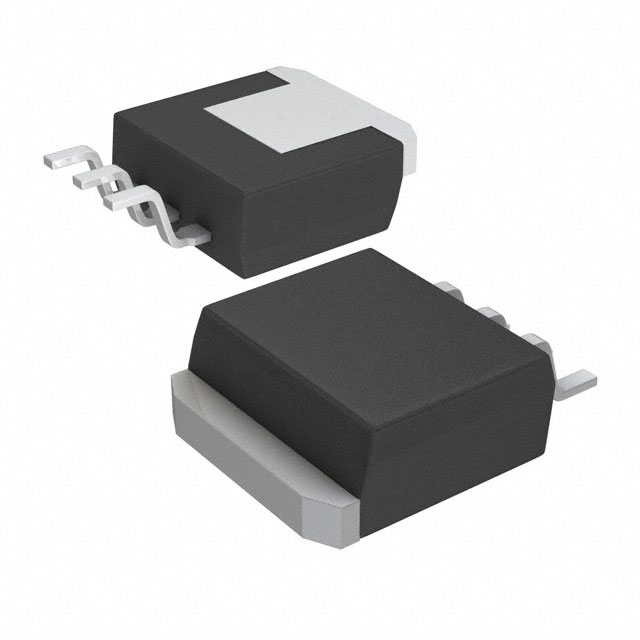
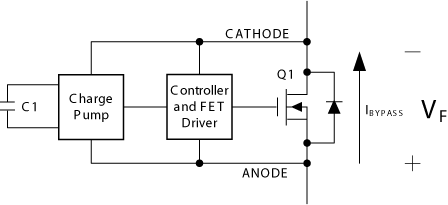
SM746110.5-V to 30-V smart bypass diode | Integrated Circuits (ICs) | 1 | Active | The SM74611 device is a smart bypass diode used in photovoltaic applications. The SM74611 device serves the purpose of providing an alternate path for string current when parts of the panel are shaded during normal operation. Without bypass diodes, the shaded cells will exhibit a hot spot which is caused by excessive power dissipation in the reverse biased cells.
Currently, conventional P-N junction diodes or Schottky diodes are used to mitigate this issue. Unfortunately the forward voltage drop for these diodes is still considered high (approximately 0.6 V for normal diodes and 0.4 V for Schottky). With 10 A of currents flowing through these diodes, the power dissipation can reach as high as 6 W. This in turn will raise the temperature inside the junction box where these diodes normally reside and reduce module reliability.
The advantage of the SM74611 is that it has a lower forward voltage drop than P-N junction and Schottky diodes. It has a typical average forward voltage drop of 26 mV at 8 A of current. This translates into typical power dissipation of 208 mW, which is significantly lower than the 3.2 W of conventional Schottky diodes. The SM74611 is also footprint and pin compatible with conventional D2PAK Schottky diodes, making it a drop-in replacement in many applications.
The SM74611 device is a smart bypass diode used in photovoltaic applications. The SM74611 device serves the purpose of providing an alternate path for string current when parts of the panel are shaded during normal operation. Without bypass diodes, the shaded cells will exhibit a hot spot which is caused by excessive power dissipation in the reverse biased cells.
Currently, conventional P-N junction diodes or Schottky diodes are used to mitigate this issue. Unfortunately the forward voltage drop for these diodes is still considered high (approximately 0.6 V for normal diodes and 0.4 V for Schottky). With 10 A of currents flowing through these diodes, the power dissipation can reach as high as 6 W. This in turn will raise the temperature inside the junction box where these diodes normally reside and reduce module reliability.
The advantage of the SM74611 is that it has a lower forward voltage drop than P-N junction and Schottky diodes. It has a typical average forward voltage drop of 26 mV at 8 A of current. This translates into typical power dissipation of 208 mW, which is significantly lower than the 3.2 W of conventional Schottky diodes. The SM74611 is also footprint and pin compatible with conventional D2PAK Schottky diodes, making it a drop-in replacement in many applications. |
| Development Boards, Kits, Programmers | 1 | Active | |
| Adapter, Breakout Boards | 1 | Active | |
SMJ320C25Military grade C25 floating-point DSP - ceramic package | DSP (Digital Signal Processors) | 2 | Active | This data sheet provides design documentation for the SMJ320C25 and the SMJ320C25-50 digital signal processor (DSP) devices in the SMJ320™ family of VLSI digital signal processors and peripherals. The SMJ320 family supports a wide range of digital signal processing applications such as tactical communications, guidance, military modems, speech processing, spectrum analysis, audio processing, digital filtering, high-speed control, graphics, and other computation-intensive applications.
Differences between the SMJ320C25 and the SMJ320C25-50 are specifically identified, as in the following paragraph and in the parameter tables on pages 18 through 24 of this data sheet. When not specifically differentiated, the term SMJ320C25 is used to describe both devices.
The SMJ320C25 has a 100-ns instruction cycle time. The SMJ320C25-50 has an 80-ns instruction cycle time. With these fast instruction cycle times and their innovative memory configurations, these devices perform operations necessary for many real-time digital signal processing algorithms. Since most instructions require only one cycle, the SMJ320C25 is capable of executing 12.5 million instructions per second. On-chip data RAM of 544 16-bit words, on-chip program ROM of 4K words, direct addressing of up to 64K words of external data memory space and 64K words of external program memory space, and multiprocessor interface features for sharing global memory minimize unnecessary data transfers to take full advantage of the capabilities of the instruction set.
This data sheet provides design documentation for the SMJ320C25 and the SMJ320C25-50 digital signal processor (DSP) devices in the SMJ320™ family of VLSI digital signal processors and peripherals. The SMJ320 family supports a wide range of digital signal processing applications such as tactical communications, guidance, military modems, speech processing, spectrum analysis, audio processing, digital filtering, high-speed control, graphics, and other computation-intensive applications.
Differences between the SMJ320C25 and the SMJ320C25-50 are specifically identified, as in the following paragraph and in the parameter tables on pages 18 through 24 of this data sheet. When not specifically differentiated, the term SMJ320C25 is used to describe both devices.
The SMJ320C25 has a 100-ns instruction cycle time. The SMJ320C25-50 has an 80-ns instruction cycle time. With these fast instruction cycle times and their innovative memory configurations, these devices perform operations necessary for many real-time digital signal processing algorithms. Since most instructions require only one cycle, the SMJ320C25 is capable of executing 12.5 million instructions per second. On-chip data RAM of 544 16-bit words, on-chip program ROM of 4K words, direct addressing of up to 64K words of external data memory space and 64K words of external program memory space, and multiprocessor interface features for sharing global memory minimize unnecessary data transfers to take full advantage of the capabilities of the instruction set. |
| Integrated Circuits (ICs) | 2 | Active | The SMJ320C50 digital signal processor (DSP) is a high-performance, 16-bit, fixed-point processor manufactured in 0.72-um double-level metal CMOS technology. The SMJ320C50 is the first DSP from TI designed as a fully static device. Full-static CMOS design contributes to low power consumption while maintaining high performance, making it ideal for applications such as battery-operated communications systems, satellite systems, and advanced control algorithms.
A number of enhancements to the basic SMJ320C2x architecture give the C50 a minimum 2× performance over the previous generation. A four-deep instruction pipeline, that incorporates delayed branching, delayed call to subroutine, and delayed return from subroutine, allows the C50 to perform instructions in fewer cycles. The addition of a parallel logic unit (PLU) gives the C50 a method for manipulating bits in data memory without using the accumulator and ALU. The C50 has additional shifting and scaling capability for proper alignment of multiplicands or storage of values to data memory.
The C50 achieves its low-power consumption through the IDLE2 instruction. IDLE2 removes the functional clock from the internal hardware of the C50, which puts it into a total-sleep mode that uses only 7 uA. A low-logic level on an external interrupt with a duration of at least five clock cycles ends the IDLE2 mode.
The C50 is available with two clock speeds. The clock frequencies are 50 MHz, providing a 40-ns cycle time, and 66 MHz, providing a 30-ns cycle time. The available options are listed in Table 1.
The SMJ320C50 digital signal processor (DSP) is a high-performance, 16-bit, fixed-point processor manufactured in 0.72-um double-level metal CMOS technology. The SMJ320C50 is the first DSP from TI designed as a fully static device. Full-static CMOS design contributes to low power consumption while maintaining high performance, making it ideal for applications such as battery-operated communications systems, satellite systems, and advanced control algorithms.
A number of enhancements to the basic SMJ320C2x architecture give the C50 a minimum 2× performance over the previous generation. A four-deep instruction pipeline, that incorporates delayed branching, delayed call to subroutine, and delayed return from subroutine, allows the C50 to perform instructions in fewer cycles. The addition of a parallel logic unit (PLU) gives the C50 a method for manipulating bits in data memory without using the accumulator and ALU. The C50 has additional shifting and scaling capability for proper alignment of multiplicands or storage of values to data memory.
The C50 achieves its low-power consumption through the IDLE2 instruction. IDLE2 removes the functional clock from the internal hardware of the C50, which puts it into a total-sleep mode that uses only 7 uA. A low-logic level on an external interrupt with a duration of at least five clock cycles ends the IDLE2 mode.
The C50 is available with two clock speeds. The clock frequencies are 50 MHz, providing a 40-ns cycle time, and 66 MHz, providing a 30-ns cycle time. The available options are listed in Table 1. |