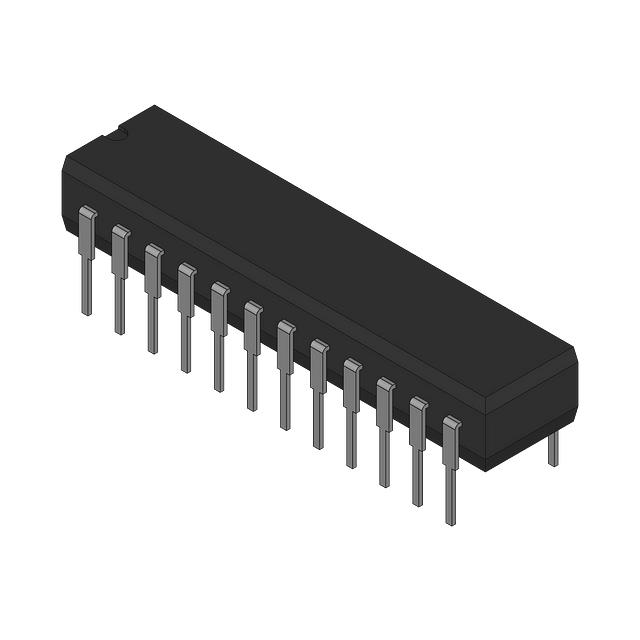
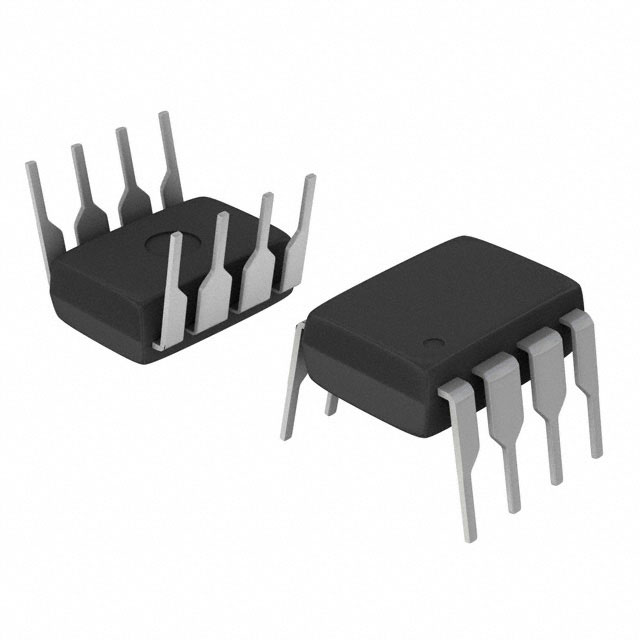
| Embedded | 1 | Active | The SM320LF2407A-EP is a member of the TMS320C24x™ generation of digital signal processor (DSP) controllers, and is part of the TMS320C2000™ platform of fixed-point DSPs. The 240xA devices offer the enhanced TMS320™ DSP architectural design of the C2xx core CPU for low-cost, low-power, and high-performance processing capabilities. Several advanced peripherals, optimized for digital motor and motion control applications, have been integrated to provide a true single-chip DSP controller. While code-compatible with the existing C24x™. DSP controller devices, the 2407A offers increased processing performance (40 MIPS) and a higher level of peripheral integration. See theTMS320x240xA Device Summarysection for device-specific features.
The 240xA generation offers an array of memory sizes and different peripherals tailored to meet the specific price/performance points required by various applications. Flash devices of up to 32K words offer a cost-effective reprogrammable solution for volume production. The 240xA devices offer a password-based "code security" feature which is useful in preventing unauthorized duplication of proprietary code stored in on-chip Flash/ROM. Note that Flash-based devices contain a 256-word boot ROM to facilitate in-circuit programming. The 240xA family also includes ROM devices that are fully pin-to-pin compatible with their Flash counterparts.
All 240xA devices offer at least one event manager module which has been optimized for digital motor control and power conversion applications. Capabilities of this module include center- and/or edge-aligned PWM generation, programmable deadband to prevent shoot-through faults, and synchronized analog-to-digital conversion. Devices with dual event managers enable multiple motor and/or converter control with a single 240xA DSP controller. Select EV pins have been provided with an "input-qualifier" circuitry, which minimizes inadvertent pin-triggering by glitches.
The high-performance, 10-bit analog-to-digital converter (ADC) has a minimum conversion time of 375 ns and offers up to 16 channels of analog input. The autosequencing capability of the ADC allows a maximum of 16 conversions to take place in a single conversion session without any CPU overhead.
A serial communications interface (SCI) is integrated on all devices to provide asynchronous communication to other devices in the system. For systems requiring additional communication interfaces, the 2407A offers a 16-bit synchronous serial peripheral interface (SPI). The 2407A offers a controller area network (CAN) communications module that meets 2.0B specifications. To maximize device flexibility, functional pins are also configurable as general-purpose inputs/outputs (GPIOs).
To streamline development time, JTAG-compliant scan-based emulation has been integrated into all devices. This provides non-intrusive real-time capabilities required to debug digital control systems. A complete suite of code-generation tools from C compilers to the industry-standard Code Composer Studio™ debugger supports this family. Numerous third-party developers not only offer device-level development tools, but also system-level design and development support.
The SM320LF2407A-EP is a member of the TMS320C24x™ generation of digital signal processor (DSP) controllers, and is part of the TMS320C2000™ platform of fixed-point DSPs. The 240xA devices offer the enhanced TMS320™ DSP architectural design of the C2xx core CPU for low-cost, low-power, and high-performance processing capabilities. Several advanced peripherals, optimized for digital motor and motion control applications, have been integrated to provide a true single-chip DSP controller. While code-compatible with the existing C24x™. DSP controller devices, the 2407A offers increased processing performance (40 MIPS) and a higher level of peripheral integration. See theTMS320x240xA Device Summarysection for device-specific features.
The 240xA generation offers an array of memory sizes and different peripherals tailored to meet the specific price/performance points required by various applications. Flash devices of up to 32K words offer a cost-effective reprogrammable solution for volume production. The 240xA devices offer a password-based "code security" feature which is useful in preventing unauthorized duplication of proprietary code stored in on-chip Flash/ROM. Note that Flash-based devices contain a 256-word boot ROM to facilitate in-circuit programming. The 240xA family also includes ROM devices that are fully pin-to-pin compatible with their Flash counterparts.
All 240xA devices offer at least one event manager module which has been optimized for digital motor control and power conversion applications. Capabilities of this module include center- and/or edge-aligned PWM generation, programmable deadband to prevent shoot-through faults, and synchronized analog-to-digital conversion. Devices with dual event managers enable multiple motor and/or converter control with a single 240xA DSP controller. Select EV pins have been provided with an "input-qualifier" circuitry, which minimizes inadvertent pin-triggering by glitches.
The high-performance, 10-bit analog-to-digital converter (ADC) has a minimum conversion time of 375 ns and offers up to 16 channels of analog input. The autosequencing capability of the ADC allows a maximum of 16 conversions to take place in a single conversion session without any CPU overhead.
A serial communications interface (SCI) is integrated on all devices to provide asynchronous communication to other devices in the system. For systems requiring additional communication interfaces, the 2407A offers a 16-bit synchronous serial peripheral interface (SPI). The 2407A offers a controller area network (CAN) communications module that meets 2.0B specifications. To maximize device flexibility, functional pins are also configurable as general-purpose inputs/outputs (GPIOs).
To streamline development time, JTAG-compliant scan-based emulation has been integrated into all devices. This provides non-intrusive real-time capabilities required to debug digital control systems. A complete suite of code-generation tools from C compilers to the industry-standard Code Composer Studio™ debugger supports this family. Numerous third-party developers not only offer device-level development tools, but also system-level design and development support. |
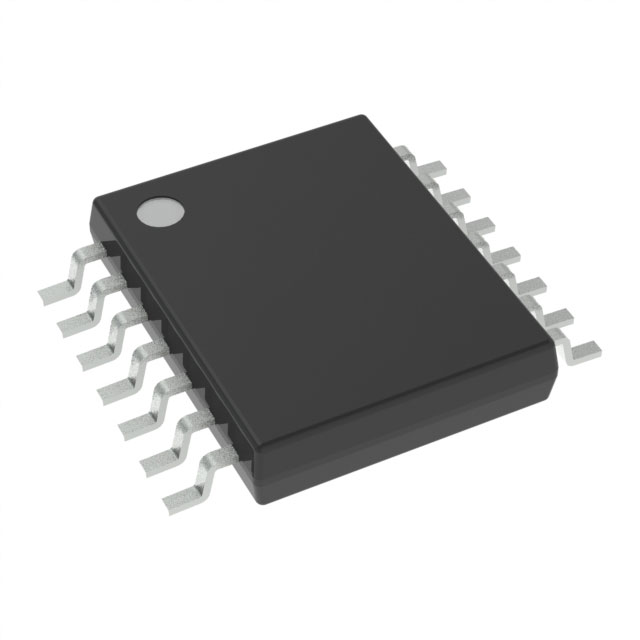
| DSP (Digital Signal Processors) | 18 | Active | The SM320C6727B is the next generation of Texas Instruments’ C67x generation of high-performance 32-/64-bit floating-point digital signal processor.
Enhanced C67x+ CPU.The C67x+ CPU is an enhanced version of the C67x CPU used on the C671x DSPs. It is compatible with the C67x CPU but offers significant improvements in speed, code density, and floating-point performance per clock cycle. At 300 MHz, the CPU is capable of a maximum performance of 2400 MIPS/1800 MFLOPS by executing up to eight instructions (six of which are floating-point instructions) in parallel each cycle. The CPU natively supports 32-bit fixed-point, 32-bit single-precision floating-point, and 64-bit double-precision floating-point arithmetic.
Efficient Memory System.The memory controller maps the large on-chip 256K-byte RAM and 384K-byte ROM as unified program/data memory. Development is simplified since there is no fixed division between program and data memory size as on some other devices.
The memory controller supports single-cycle data accesses from the C67x+ CPU to the RAM and ROM. Up to three parallel accesses to the internal RAM and ROM from three of the following four sources are supported:
The large (32K-byte) program cache translates to a high hit rate for most applications. This prevents most program/data access conflicts to the on-chip memory. It also enables effective program execution from an off-chip memory such as an SDRAM.
High-Performance Crossbar Switch.A high-performance crossbar switch acts as a central hub between the different bus masters (CPU, dMAX, UHPI) and different targets (peripherals and memory). The crossbar is partially connected; some connections are not supported (for example, UHPI-to-peripheral connections).
Multiple transfers occur in parallel through the crossbar as long as there is no conflict between bus masters for a particular target. When a conflict does occur, the arbitration is a simple and deterministic fixed-priority scheme.
The dMAX is given highest-priority since it is responsible for the most time-critical I/O transfers, followed next by the UHPI, and finally by the CPU.
dMAX Dual Data Movement Accelerator.The dMAX is a module designed to perform Data Movement Acceleration. The Data Movement Accelerator (dMAX) controller handles user-programmed data transfers between the internal data memory controller and the device peripherals on the C672x DSP. The dMAX allows movement of data to/from any addressable memory space including internal memory, peripherals, and external memory.
The dMAX controller includes features such as the capability to perform three-dimensional data transfers for advanced data sorting, and the capability to manage a section of the memory as a circular buffer/FIFO with delay-tap based reading and writing of data. The dMAX controller is capable of concurrently processing two transfer requests (provided that they are to/from different source/destinations).
External Memory Interface (EMIF) for Flexibility and Expansion.The external memory interface on the C672x supports a single bank of SDRAM and a single bank of asynchronous memory. The EMIF data width is 16 bits wide on the C6726 and C6722, and 32 bits wide on the C6727.
SDRAM support includes x16 and x32 SDRAM devices with 1, 2, or 4 banks.
The C6726 and C6722 support SDRAM devices up to 128M bits.
The C6727 extends SDRAM support to 256M-bit and 512M-bit devices.
Asynchronous memory support is typically used to boot from a parallel non-multiplexed NOR flash device that can be 8, 16, or 32 bits wide. Booting from larger flash devices than are natively supported by the dedicated EMIF address lines is accomplished by using general-purpose I/O pins for upper address lines.
The asynchronous memory interface can also be configured to support 8- or 16-bit-wide NAND flash. It includes a hardware ECC calculation (for single-bit errors) that can operate on blocks of data up to 512 bytes.
Universal Host-Port Interface (UHPI) for High-Speed ParallelI/O.The Universal Host-Port Interface (UHPI) is a parallel interface through which an external host CPU can access memories on the DSP. Three modes are supported by the C672x UHPI:
The UHPI can also be restricted to accessing a single page (64K bytes) of memory anywhere in the address space of the C672x; this page can be changed, but only by the C672x CPU. This feature allows the UHPI to be used for high-speed data transfers even in systems where security is an important requirement.
The UHPI is only available on the C6727.
Multichannel Audio Serial Ports (McASP0, McASP1, and McASP2) - Up to 16 Stereo Channels I2S.The multichannel audio serial port (McASP) seamlessly interfaces to CODECs, DACs, ADCs, and other devices. It supports the ubiquitous IIS format as well as many variations of this format, including time division multiplex (TDM) formats with up to 32 time slots.
Each McASP includes a transmit and receive section which may operate independently or synchronously; furthermore, each section includes its own flexible clock generator and extensive error-checking logic.
As data passes through the McASP, it can be realigned so that the fixed-point representation used by the application code can be independent of the representation used by the external devices without requiring any CPU overhead to make the conversion.
The McASP is a configurable module and supports between 2 and 16 serial data pins. It also has the option of supporting a Digital Interface Transmitter (DIT) mode with a full 384 bits of channel status and user data memory.
McASP2 is not available on the C6722.
Inter-Integrated Circuit Serial Ports (I2C0, I2C1).The C672x includes two inter-integrated circuit (I2C) serial ports. A typical application is to configure one I2C serial port as a slave to an external user-interface microcontroller. The other I2C serial port may then be used by the C672x DSP to control external peripheral devices, such as a CODEC or network controller, which are functionally peripherals of the DSP device.
The two I2C serial ports are pin-multiplexed with the SPI0 serial port.
Serial Peripheral Interface Ports (SPI0, SPI1).As in the case of the I2C serial ports, the C672x DSP also includes two serial peripheral interface (SPI) serial ports. This allows one SPI port to be configured as a slave to control the DSP while the other SPI serial port is used by the DSP to control external peripherals.
The SPI ports support a basic 3-pin mode as well as optional 4- and 5-pin modes. The optional pins include a slave chip-select pin and an enable pin which implements handshaking automatically in hardware for maximum SPI throughput.
The SPI0 port is pin-multiplexed with the two I2C serial ports (I2C0 and I2C1). The SPI1 serial port is pin-multiplexed with five of the serial data pins from McASP0 and McASP1.
Real-Time Interrupt Timer (RTI).The real-time interrupt timer module includes:
Clock Generation (PLL and OSC).The C672x DSP includes an on-chip oscillator that supports crystals in the range of 12 MHz to 25 MHz. Alternatively, the clock can be provided externally through the CLKIN pin.
The DSP includes a flexible, software-programmable phase-locked loop (PLL) clock generator. Three different clock domains (SYSCLK1, SYSCLK2, and SYSCLK3) are generated by dividing down the PLL output. SYSCLK1 is the clock used by the CPU, memory controller, and memories. SYSCLK2 is used by the peripheral subsystem and dMAX. SYSCLK3 is used exclusively for the EMIF.
The SM320C6727B is the next generation of Texas Instruments’ C67x generation of high-performance 32-/64-bit floating-point digital signal processor.
Enhanced C67x+ CPU.The C67x+ CPU is an enhanced version of the C67x CPU used on the C671x DSPs. It is compatible with the C67x CPU but offers significant improvements in speed, code density, and floating-point performance per clock cycle. At 300 MHz, the CPU is capable of a maximum performance of 2400 MIPS/1800 MFLOPS by executing up to eight instructions (six of which are floating-point instructions) in parallel each cycle. The CPU natively supports 32-bit fixed-point, 32-bit single-precision floating-point, and 64-bit double-precision floating-point arithmetic.
Efficient Memory System.The memory controller maps the large on-chip 256K-byte RAM and 384K-byte ROM as unified program/data memory. Development is simplified since there is no fixed division between program and data memory size as on some other devices.
The memory controller supports single-cycle data accesses from the C67x+ CPU to the RAM and ROM. Up to three parallel accesses to the internal RAM and ROM from three of the following four sources are supported:
The large (32K-byte) program cache translates to a high hit rate for most applications. This prevents most program/data access conflicts to the on-chip memory. It also enables effective program execution from an off-chip memory such as an SDRAM.
High-Performance Crossbar Switch.A high-performance crossbar switch acts as a central hub between the different bus masters (CPU, dMAX, UHPI) and different targets (peripherals and memory). The crossbar is partially connected; some connections are not supported (for example, UHPI-to-peripheral connections).
Multiple transfers occur in parallel through the crossbar as long as there is no conflict between bus masters for a particular target. When a conflict does occur, the arbitration is a simple and deterministic fixed-priority scheme.
The dMAX is given highest-priority since it is responsible for the most time-critical I/O transfers, followed next by the UHPI, and finally by the CPU.
dMAX Dual Data Movement Accelerator.The dMAX is a module designed to perform Data Movement Acceleration. The Data Movement Accelerator (dMAX) controller handles user-programmed data transfers between the internal data memory controller and the device peripherals on the C672x DSP. The dMAX allows movement of data to/from any addressable memory space including internal memory, peripherals, and external memory.
The dMAX controller includes features such as the capability to perform three-dimensional data transfers for advanced data sorting, and the capability to manage a section of the memory as a circular buffer/FIFO with delay-tap based reading and writing of data. The dMAX controller is capable of concurrently processing two transfer requests (provided that they are to/from different source/destinations).
External Memory Interface (EMIF) for Flexibility and Expansion.The external memory interface on the C672x supports a single bank of SDRAM and a single bank of asynchronous memory. The EMIF data width is 16 bits wide on the C6726 and C6722, and 32 bits wide on the C6727.
SDRAM support includes x16 and x32 SDRAM devices with 1, 2, or 4 banks.
The C6726 and C6722 support SDRAM devices up to 128M bits.
The C6727 extends SDRAM support to 256M-bit and 512M-bit devices.
Asynchronous memory support is typically used to boot from a parallel non-multiplexed NOR flash device that can be 8, 16, or 32 bits wide. Booting from larger flash devices than are natively supported by the dedicated EMIF address lines is accomplished by using general-purpose I/O pins for upper address lines.
The asynchronous memory interface can also be configured to support 8- or 16-bit-wide NAND flash. It includes a hardware ECC calculation (for single-bit errors) that can operate on blocks of data up to 512 bytes.
Universal Host-Port Interface (UHPI) for High-Speed ParallelI/O.The Universal Host-Port Interface (UHPI) is a parallel interface through which an external host CPU can access memories on the DSP. Three modes are supported by the C672x UHPI:
The UHPI can also be restricted to accessing a single page (64K bytes) of memory anywhere in the address space of the C672x; this page can be changed, but only by the C672x CPU. This feature allows the UHPI to be used for high-speed data transfers even in systems where security is an important requirement.
The UHPI is only available on the C6727.
Multichannel Audio Serial Ports (McASP0, McASP1, and McASP2) - Up to 16 Stereo Channels I2S.The multichannel audio serial port (McASP) seamlessly interfaces to CODECs, DACs, ADCs, and other devices. It supports the ubiquitous IIS format as well as many variations of this format, including time division multiplex (TDM) formats with up to 32 time slots.
Each McASP includes a transmit and receive section which may operate independently or synchronously; furthermore, each section includes its own flexible clock generator and extensive error-checking logic.
As data passes through the McASP, it can be realigned so that the fixed-point representation used by the application code can be independent of the representation used by the external devices without requiring any CPU overhead to make the conversion.
The McASP is a configurable module and supports between 2 and 16 serial data pins. It also has the option of supporting a Digital Interface Transmitter (DIT) mode with a full 384 bits of channel status and user data memory.
McASP2 is not available on the C6722.
Inter-Integrated Circuit Serial Ports (I2C0, I2C1).The C672x includes two inter-integrated circuit (I2C) serial ports. A typical application is to configure one I2C serial port as a slave to an external user-interface microcontroller. The other I2C serial port may then be used by the C672x DSP to control external peripheral devices, such as a CODEC or network controller, which are functionally peripherals of the DSP device.
The two I2C serial ports are pin-multiplexed with the SPI0 serial port.
Serial Peripheral Interface Ports (SPI0, SPI1).As in the case of the I2C serial ports, the C672x DSP also includes two serial peripheral interface (SPI) serial ports. This allows one SPI port to be configured as a slave to control the DSP while the other SPI serial port is used by the DSP to control external peripherals.
The SPI ports support a basic 3-pin mode as well as optional 4- and 5-pin modes. The optional pins include a slave chip-select pin and an enable pin which implements handshaking automatically in hardware for maximum SPI throughput.
The SPI0 port is pin-multiplexed with the two I2C serial ports (I2C0 and I2C1). The SPI1 serial port is pin-multiplexed with five of the serial data pins from McASP0 and McASP1.
Real-Time Interrupt Timer (RTI).The real-time interrupt timer module includes:
Clock Generation (PLL and OSC).The C672x DSP includes an on-chip oscillator that supports crystals in the range of 12 MHz to 25 MHz. Alternatively, the clock can be provided externally through the CLKIN pin.
The DSP includes a flexible, software-programmable phase-locked loop (PLL) clock generator. Three different clock domains (SYSCLK1, SYSCLK2, and SYSCLK3) are generated by dividing down the PLL output. SYSCLK1 is the clock used by the CPU, memory controller, and memories. SYSCLK2 is used by the peripheral subsystem and dMAX. SYSCLK3 is used exclusively for the EMIF. |
| DSP (Digital Signal Processors) | 2 | Obsolete | |
| Evaluation Boards | 1 | Obsolete | |
| Development Boards, Kits, Programmers | 1 | Active | |
| Integrated Circuits (ICs) | 1 | Active | The SM34020APCM40 graphics system processor (GSP) is the second generation of an advanced high-performance CMOS 32-bit microprocessor optimized for graphics display systems. With a built-in instruction cache (I-cache), the ability to simultaneously access memory and registers, and an instruction set designed to expedite raster graphics operations, the SM34020APCM40 provides user-programmable control of the CRT interface, as well as the memory interface [both standard DRAM and multiport video RAM (VRAM)]. The 4-gigabit (512-megabyte) physical address space is addressable on bit boundaries using variable width data fields (1 to 32 bits). Additional graphics addressing modes support 1-, 2-, 4-, 8-, 16-, and 32-bit-wide pixels.
The SM34020APCM40 graphics system processor (GSP) is the second generation of an advanced high-performance CMOS 32-bit microprocessor optimized for graphics display systems. With a built-in instruction cache (I-cache), the ability to simultaneously access memory and registers, and an instruction set designed to expedite raster graphics operations, the SM34020APCM40 provides user-programmable control of the CRT interface, as well as the memory interface [both standard DRAM and multiport video RAM (VRAM)]. The 4-gigabit (512-megabyte) physical address space is addressable on bit boundaries using variable width data fields (1 to 32 bits). Additional graphics addressing modes support 1-, 2-, 4-, 8-, 16-, and 32-bit-wide pixels. |
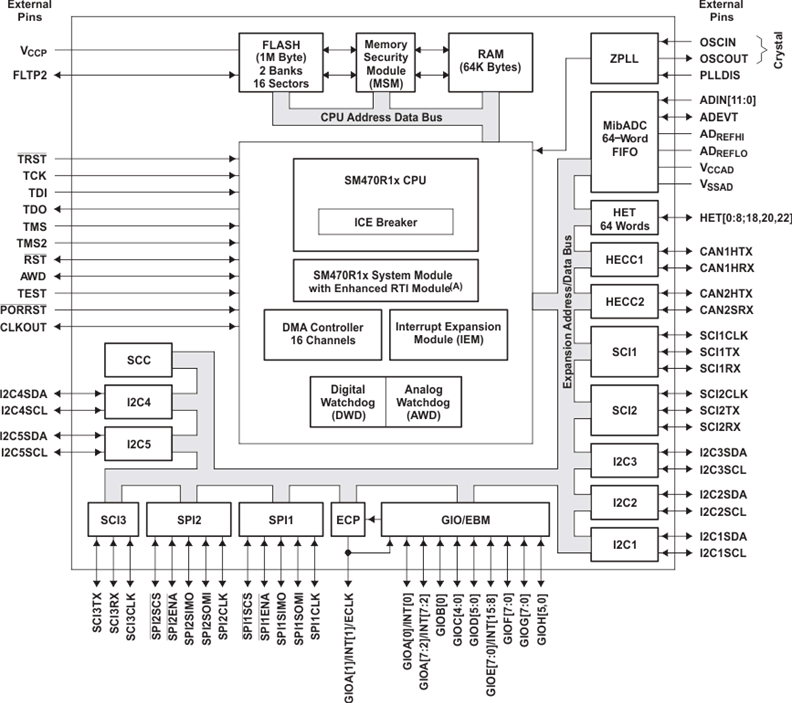
| Embedded | 2 | Obsolete | The SM470R1B1M(3)devices are members of the Texas Instruments SM470R1x family of general-purpose 16-/32-bit reduced instruction set computer (RISC) microcontrollers. The B1M microcontroller offers high performance using the high-speed ARM7TDMI 16-/32-bit RISC central processing unit (CPU), resulting in a high instruction throughput while maintaining greater code efficiency. The ARM7TDMI 16-/32-bit RISC CPU views memory as a linear collection of bytes numbered upwards from zero. The SM470R1B1M uses the big-endian format where the most significant byte of a word is stored at the lowest numbered byte and the least significant byte of a word is stored at the highest numbered byte.
High-end embedded control applications demand more performance from their controllers while maintaining low costs. The B1M RISC core architecture offers solutions to these performance and cost demands while maintaining low power consumption.
The B1M devices contain the following:
The functions performed by the 470+ system module (SYS) include:
The enhanced RTI module on the B1M has the option to be driven by the oscillator clock. The DWD is a 25-bit resettable decrementing counter that provides a system reset when the watchdog counter expires. This data sheet includes device-specific information such as memory and peripheral select assignment, interrupt priority, and a device memory map. For a more detailed functional description of the SYS module, see theTMS470R1x System Module Reference Guide(SPNU189).
The B1M memory includes general-purpose SRAM supporting single-cycle read/write accesses in byte, half-word, and word modes.
The flash memory on this device is a nonvolatile, electrically erasable, and programmable memory implemented with a 32-bit-wide data bus interface. The flash operates with a system clock frequency of up to 24 MHz or 30 MHz, depending on the input voltage. When in pipeline mode, the flash operates with a system clock frequency of up to 48 MHz or 60 MHz, depending on the input voltage. For more detailed information on the flash, see 8.2.1.4.
The MSM and the JTAG security module prevent unauthorized access and visibility to on-chip memory, thereby preventing reverse engineering or manipulation of proprietary code.
The B1M device has twelve communication interfaces: two SPIs, three SCIs, two HECCs, and five I2Cs. The SPI provides a convenient method of serial interaction for high-speed communications between similar shift-register type devices. The SCI is a full-duplex, serial I/O interface intended for asynchronous communication between the CPU and other peripherals using the standard non-return-to-zero (NRZ) format. The HECC uses a serial, multimaster communication protocol that efficiently supports distributed realtime control with robust communication rates of up to 1 Mbps. These CAN peripherals are ideal for applications operating in noisy and harsh environments (for example, industrial fields) that require reliable serial communication or multiplexed wiring. The I2C module is a multimaster communication module providing an interface between the B1M microcontroller and an I2C-compatible device through the I2C serial bus. The I2C supports both 100 Kbps and 400 Kbps speeds. For more detailed functional information on the SPI, SCI, and CAN peripherals, see the specific reference guides (SPNU195, SPNU196, and SPNU197). For more detailed functional information on the I2C, see theTMS470R1x Inter- Integrated Circuit (I2C) Reference Guide(SPNU223).
The HET is an advanced intelligent timer that provides sophisticated timing functions for realtime applications. The timer is software-controlled, using a reduced instruction set, with a specialized timer micromachine and an attached I/O port. The HET can be used for compare, capture, or general-purpose I/O. It is especially well-suited for applications requiring multiple sensor information and drive actuators with complex and accurate time pulses. The HET used in this device is the high-end timer lite. It has fewer I/Os than the usual 32 in a standard HET. For more detailed functional information on the HET, see theTMS470R1x High-End Timer (HET) Reference Guide(SPNU199).
The B1M HET peripheral contains the XOR-share feature. This feature allows two adjacent HET high-resolution channels to be XORed together, making it possible to output smaller pulses than a standard HET. For more detailed information on the HET XOR-share feature, see theTMS470R1x High-End Timer (HET) Reference Guide(SPNU199).
The B1M device has one 10-bit-resolution, sample-and-hold MibADC. Each of the MibADC channels can be converted individually or can be grouped by software for sequential conversion sequences. There are three separate groupings, two of which can be triggered by an external event. Each sequence can be converted once when triggered or configured for continuous conversion mode. For more detailed functional information on the MibADC, see theTMS470R1x Multi-Buffered Analog-to-Digital Converter (MibADC) Reference Guide(SPNU206).
The ZPLL clock module contains a phase-locked loop, a clock-monitor circuit, a clock-enable circuit, and a prescaler (with prescale values of 1 to 8). The function of the ZPLL is to multiply the external frequency reference to a higher frequency for internal use. The ZPLL provides ACLK to the system (SYS) module. The SYS module subsequently provides system clock (SYSCLK), realtime interrupt clock (RTICLK), CPU clock (MCLK), and peripheral interface clock (ICLK) to all other B1M device modules. For more detailed functional information on the ZPLL, see theTMS470R1x Zero-Pin Phase-Locked Loop (ZPLL) Clock Module Reference Guide(SPNU212).
ACLK should not be confused with the MibADC internal clock, ADCLK. ACLK is the continuous system clock from an external resonator/crystal reference.
The EBM is a standalone module that supports the multiplexing of the GIO functions and the expansion bus interface. For more information on the EBM, see theTMS470R1x Expansion Bus Module (EBM) Reference Guide(SPNU222).
The B1M device also has an external clock prescaler (ECP) module that when enabled, outputs a continuous external clock (ECLK) on a specified GIO pin. The ECLK frequency is a user-programmable ratio of the peripheral interface clock (ICLK) frequency. For more detailed functional information on the ECP, see theTMS470R1x External Clock Prescaler (ECP) Reference Guide(SPNU202).
The SM470R1B1M(3)devices are members of the Texas Instruments SM470R1x family of general-purpose 16-/32-bit reduced instruction set computer (RISC) microcontrollers. The B1M microcontroller offers high performance using the high-speed ARM7TDMI 16-/32-bit RISC central processing unit (CPU), resulting in a high instruction throughput while maintaining greater code efficiency. The ARM7TDMI 16-/32-bit RISC CPU views memory as a linear collection of bytes numbered upwards from zero. The SM470R1B1M uses the big-endian format where the most significant byte of a word is stored at the lowest numbered byte and the least significant byte of a word is stored at the highest numbered byte.
High-end embedded control applications demand more performance from their controllers while maintaining low costs. The B1M RISC core architecture offers solutions to these performance and cost demands while maintaining low power consumption.
The B1M devices contain the following:
The functions performed by the 470+ system module (SYS) include:
The enhanced RTI module on the B1M has the option to be driven by the oscillator clock. The DWD is a 25-bit resettable decrementing counter that provides a system reset when the watchdog counter expires. This data sheet includes device-specific information such as memory and peripheral select assignment, interrupt priority, and a device memory map. For a more detailed functional description of the SYS module, see theTMS470R1x System Module Reference Guide(SPNU189).
The B1M memory includes general-purpose SRAM supporting single-cycle read/write accesses in byte, half-word, and word modes.
The flash memory on this device is a nonvolatile, electrically erasable, and programmable memory implemented with a 32-bit-wide data bus interface. The flash operates with a system clock frequency of up to 24 MHz or 30 MHz, depending on the input voltage. When in pipeline mode, the flash operates with a system clock frequency of up to 48 MHz or 60 MHz, depending on the input voltage. For more detailed information on the flash, see 8.2.1.4.
The MSM and the JTAG security module prevent unauthorized access and visibility to on-chip memory, thereby preventing reverse engineering or manipulation of proprietary code.
The B1M device has twelve communication interfaces: two SPIs, three SCIs, two HECCs, and five I2Cs. The SPI provides a convenient method of serial interaction for high-speed communications between similar shift-register type devices. The SCI is a full-duplex, serial I/O interface intended for asynchronous communication between the CPU and other peripherals using the standard non-return-to-zero (NRZ) format. The HECC uses a serial, multimaster communication protocol that efficiently supports distributed realtime control with robust communication rates of up to 1 Mbps. These CAN peripherals are ideal for applications operating in noisy and harsh environments (for example, industrial fields) that require reliable serial communication or multiplexed wiring. The I2C module is a multimaster communication module providing an interface between the B1M microcontroller and an I2C-compatible device through the I2C serial bus. The I2C supports both 100 Kbps and 400 Kbps speeds. For more detailed functional information on the SPI, SCI, and CAN peripherals, see the specific reference guides (SPNU195, SPNU196, and SPNU197). For more detailed functional information on the I2C, see theTMS470R1x Inter- Integrated Circuit (I2C) Reference Guide(SPNU223).
The HET is an advanced intelligent timer that provides sophisticated timing functions for realtime applications. The timer is software-controlled, using a reduced instruction set, with a specialized timer micromachine and an attached I/O port. The HET can be used for compare, capture, or general-purpose I/O. It is especially well-suited for applications requiring multiple sensor information and drive actuators with complex and accurate time pulses. The HET used in this device is the high-end timer lite. It has fewer I/Os than the usual 32 in a standard HET. For more detailed functional information on the HET, see theTMS470R1x High-End Timer (HET) Reference Guide(SPNU199).
The B1M HET peripheral contains the XOR-share feature. This feature allows two adjacent HET high-resolution channels to be XORed together, making it possible to output smaller pulses than a standard HET. For more detailed information on the HET XOR-share feature, see theTMS470R1x High-End Timer (HET) Reference Guide(SPNU199).
The B1M device has one 10-bit-resolution, sample-and-hold MibADC. Each of the MibADC channels can be converted individually or can be grouped by software for sequential conversion sequences. There are three separate groupings, two of which can be triggered by an external event. Each sequence can be converted once when triggered or configured for continuous conversion mode. For more detailed functional information on the MibADC, see theTMS470R1x Multi-Buffered Analog-to-Digital Converter (MibADC) Reference Guide(SPNU206).
The ZPLL clock module contains a phase-locked loop, a clock-monitor circuit, a clock-enable circuit, and a prescaler (with prescale values of 1 to 8). The function of the ZPLL is to multiply the external frequency reference to a higher frequency for internal use. The ZPLL provides ACLK to the system (SYS) module. The SYS module subsequently provides system clock (SYSCLK), realtime interrupt clock (RTICLK), CPU clock (MCLK), and peripheral interface clock (ICLK) to all other B1M device modules. For more detailed functional information on the ZPLL, see theTMS470R1x Zero-Pin Phase-Locked Loop (ZPLL) Clock Module Reference Guide(SPNU212).
ACLK should not be confused with the MibADC internal clock, ADCLK. ACLK is the continuous system clock from an external resonator/crystal reference.
The EBM is a standalone module that supports the multiplexing of the GIO functions and the expansion bus interface. For more information on the EBM, see theTMS470R1x Expansion Bus Module (EBM) Reference Guide(SPNU222).
The B1M device also has an external clock prescaler (ECP) module that when enabled, outputs a continuous external clock (ECLK) on a specified GIO pin. The ECLK frequency is a user-programmable ratio of the peripheral interface clock (ICLK) frequency. For more detailed functional information on the ECP, see theTMS470R1x External Clock Prescaler (ECP) Reference Guide(SPNU202). |
SM72238Micropower voltage regulator | Voltage Regulators - Linear, Low Drop Out (LDO) Regulators | 8 | Active | The SM72238 is a micropower voltage regulator with very low quiescent current (75µA typ.) and very low dropout voltage (typ. 40mV at light loads and 380mV at 100mA). It is ideally suited for use in battery-powered systems. Furthermore, the quiescent current of the SM72238 increases only slightly in dropout, prolonging battery life.
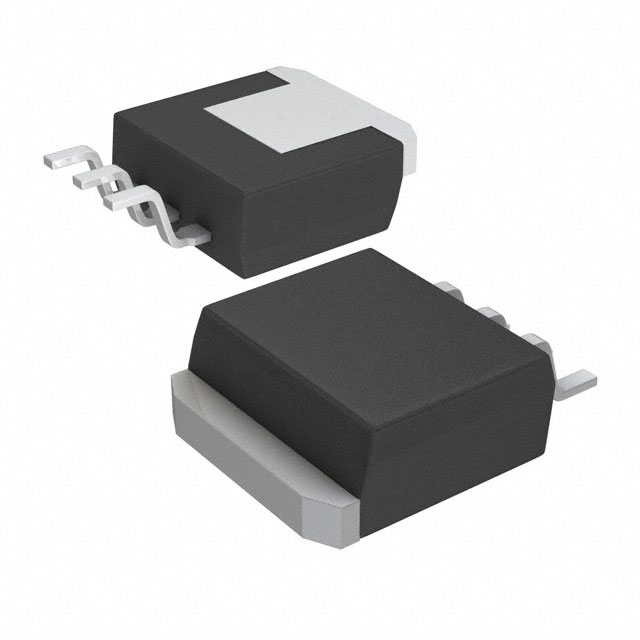
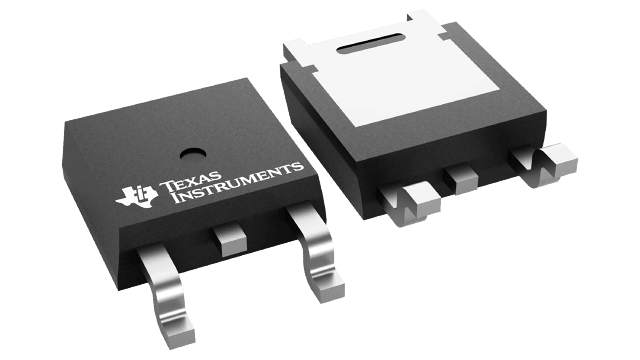
The SM72238 is available in the surface-mount D-Pak package.
Careful design of the SM72238 has minimized all contributions to the error budget. This includes a tight initial tolerance (.5% typ.), extremely good load and line regulation (.05% typ.) and a very low output voltage temperature coefficient, making the part useful as a low-power voltage reference.
The SM72238 is a micropower voltage regulator with very low quiescent current (75µA typ.) and very low dropout voltage (typ. 40mV at light loads and 380mV at 100mA). It is ideally suited for use in battery-powered systems. Furthermore, the quiescent current of the SM72238 increases only slightly in dropout, prolonging battery life.
The SM72238 is available in the surface-mount D-Pak package.
Careful design of the SM72238 has minimized all contributions to the error budget. This includes a tight initial tolerance (.5% typ.), extremely good load and line regulation (.05% typ.) and a very low output voltage temperature coefficient, making the part useful as a low-power voltage reference. |
SM722405-pin microprocessor reset circuit | Power Management (PMIC) | 5 | Active | The SM72240 microprocessor supervisory circuit monitors the power supplies in microprocessor and digital systems. It provides a reset to the microprocessor during power-up, power-down, brown-out conditions, and manual reset.
The SM72240 asserts a reset signal whenever the supply decreases below the factory-programmed reset threshold. Reset will be asserted for at least 100ms even after VCCrises above the reset threshold.
The SM72240 has an active-low open-drainRESEToutput.
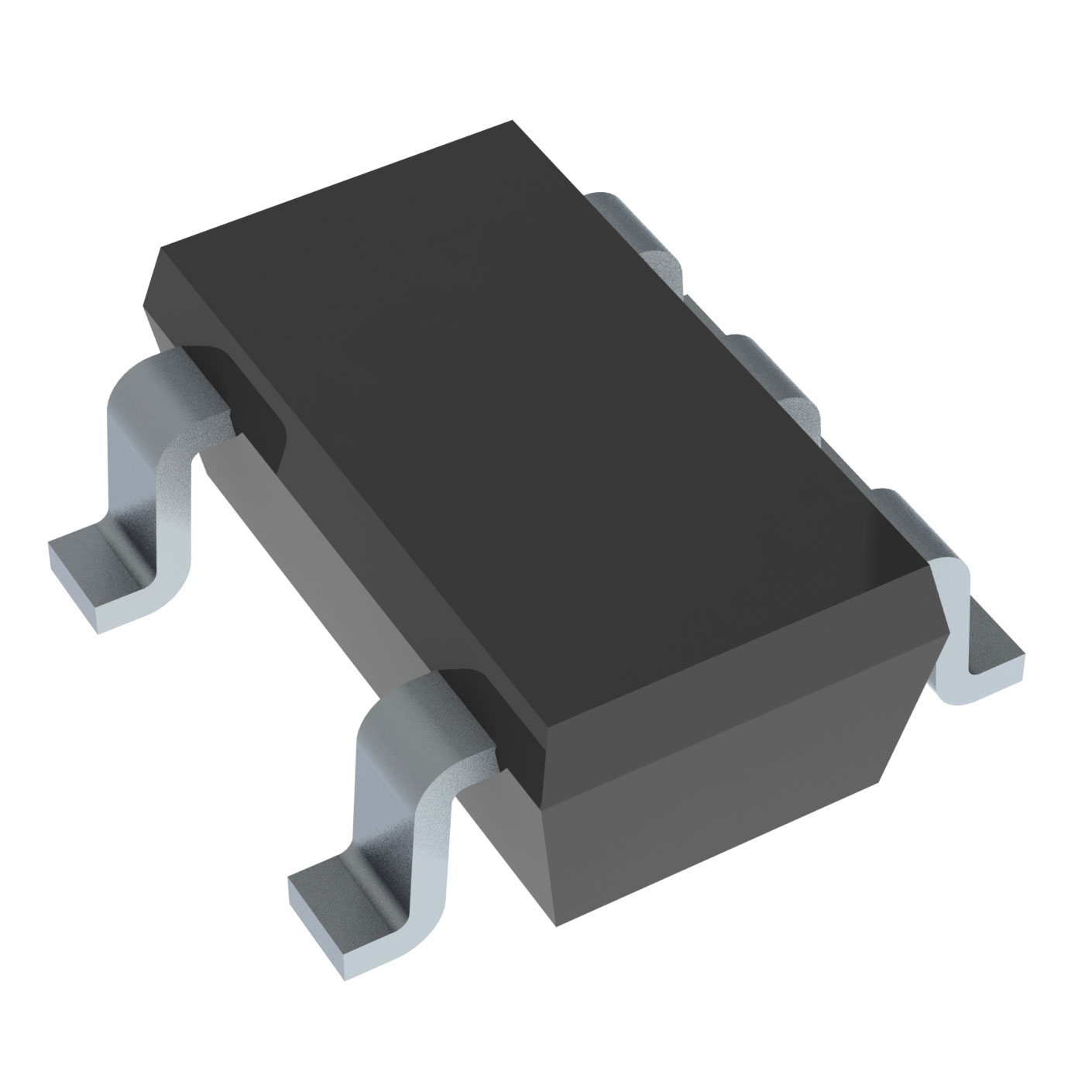
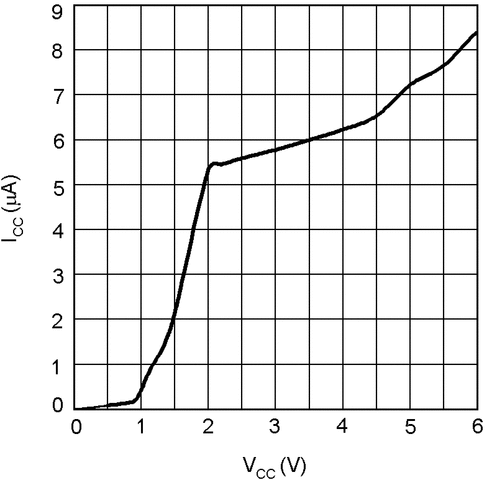
The SM72240 is suitable for monitoring 5V. With a low supply current of only 6µA, the SM72240 is ideal for use in portable equipment. The SM72240 is available in the 5-pin SOT-23 package.
The SM72240 microprocessor supervisory circuit monitors the power supplies in microprocessor and digital systems. It provides a reset to the microprocessor during power-up, power-down, brown-out conditions, and manual reset.
The SM72240 asserts a reset signal whenever the supply decreases below the factory-programmed reset threshold. Reset will be asserted for at least 100ms even after VCCrises above the reset threshold.
The SM72240 has an active-low open-drainRESEToutput.
The SM72240 is suitable for monitoring 5V. With a low supply current of only 6µA, the SM72240 is ideal for use in portable equipment. The SM72240 is available in the 5-pin SOT-23 package. |
| Power Management (PMIC) | 5 | Active | |