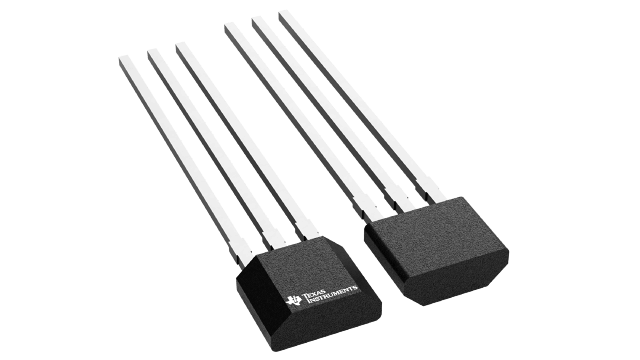
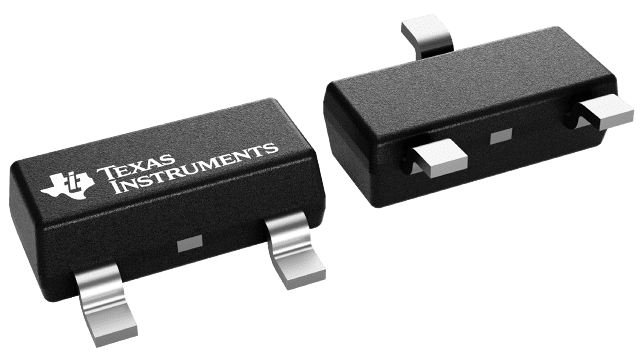
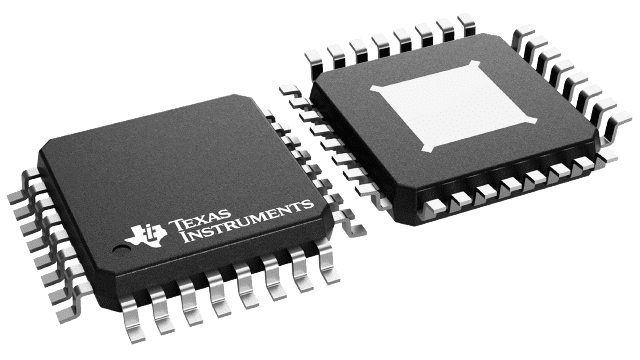
DRV5033-Q1Automotive 2.7V to 38V Hall Effect Omnipolar Switch | Magnetic Sensors | 10 | Active | The DRV5033-Q1 device is a chopper-stabilized Hall Effect Sensor that offers a magnetic sensing solution with superior sensitivity stability over temperature and integrated protection features.
The DRV5033-Q1 responds the same to both polarities of magnetic field direction. When the applied magnetic flux density exceeds the BOPthreshold, the DRV5033-Q1 open-drain output goes low. The output stays low until the field decreases to less than BRP, and then the output goes to high impedance. The output current sink capability is 30 mA. A wide operating voltage range from 2.7 to 38 V with reverse polarity protection up to –22 V makes the device suitable for a wide range of automotive applications.
Internal protection functions are provided for reverse supply conditions, load dump, and output short circuit or over current.
The DRV5033-Q1 device is a chopper-stabilized Hall Effect Sensor that offers a magnetic sensing solution with superior sensitivity stability over temperature and integrated protection features.
The DRV5033-Q1 responds the same to both polarities of magnetic field direction. When the applied magnetic flux density exceeds the BOPthreshold, the DRV5033-Q1 open-drain output goes low. The output stays low until the field decreases to less than BRP, and then the output goes to high impedance. The output current sink capability is 30 mA. A wide operating voltage range from 2.7 to 38 V with reverse polarity protection up to –22 V makes the device suitable for a wide range of automotive applications.
Internal protection functions are provided for reverse supply conditions, load dump, and output short circuit or over current. |
| Sensors, Transducers | 51 | Active | |
DRV5055-Q1Automotive, ratiometric linear Hall-effect sensor with analog output | Development Boards, Kits, Programmers | 26 | Active | The DRV5055 is a linear Hall effect sensor that responds proportionally to magnetic flux density. The device can be used for accurate position sensing in a wide range of applications.
The device operates from 3.3-V or 5-V power supplies. When no magnetic field is present, the analog output drives half of VCC. The output changes linearly with the applied magnetic flux density, and four sensitivity options enable maximal output voltage swing based on the required sensing range. North and south magnetic poles produce unique voltages.
Magnetic flux perpendicular to the top of the package is sensed, and the two package options provide different sensing directions.
The device uses a ratiometric architecture that can eliminate error from VCCtolerance when the external analog-to-digital converter (ADC) uses the same VCCfor its reference. Additionally, the device features magnet temperature compensation to counteract how magnets drift for linear performance across a wide –40°C to 125°C temperature range. Device options for no temperature compensation of magnet drift are also available.
The DRV5055 is a linear Hall effect sensor that responds proportionally to magnetic flux density. The device can be used for accurate position sensing in a wide range of applications.
The device operates from 3.3-V or 5-V power supplies. When no magnetic field is present, the analog output drives half of VCC. The output changes linearly with the applied magnetic flux density, and four sensitivity options enable maximal output voltage swing based on the required sensing range. North and south magnetic poles produce unique voltages.
Magnetic flux perpendicular to the top of the package is sensed, and the two package options provide different sensing directions.
The device uses a ratiometric architecture that can eliminate error from VCCtolerance when the external analog-to-digital converter (ADC) uses the same VCCfor its reference. Additionally, the device features magnet temperature compensation to counteract how magnets drift for linear performance across a wide –40°C to 125°C temperature range. Device options for no temperature compensation of magnet drift are also available. |
DRV5056-Q1Automotive, ratiometric unipolar linear hall effect sensor with analog output | Linear, Compass (ICs) | 28 | Active | The DRV5056 is a linear Hall effect sensor that responds proportionally to flux density of a magnetic south pole. The device can be used for accurate position sensing in a wide range of applications.
Featuring a unipolar magnetic response, the analog output drives 0.6 V when no magnetic field is present, and increases when a south magnetic pole is applied. This response maximizes the output dynamic range in applications that sense one magnetic pole. Four sensitivity options further maximize the output swing based on the required sensing range.
The device operates from 3.3-V or 5-V power supplies. Magnetic flux perpendicular to the top of the package is sensed, and the two package options provide different sensing directions.
The device uses a ratiometric architecture that can minimize error from VCCtolerance when the external analog-to-digital converter (ADC) uses the same VCCfor its reference. Additionally, the device features magnet temperature compensation to counteract how magnets drift for linear performance across a wide temperature range. Device options for no temperature compensation of magnet drift are also available.
The A1 to A4 options support a temperature range of –40°C to +125°C. The A6 version supports a temperature range of 0°C to 85°C.
The DRV5056 is a linear Hall effect sensor that responds proportionally to flux density of a magnetic south pole. The device can be used for accurate position sensing in a wide range of applications.
Featuring a unipolar magnetic response, the analog output drives 0.6 V when no magnetic field is present, and increases when a south magnetic pole is applied. This response maximizes the output dynamic range in applications that sense one magnetic pole. Four sensitivity options further maximize the output swing based on the required sensing range.
The device operates from 3.3-V or 5-V power supplies. Magnetic flux perpendicular to the top of the package is sensed, and the two package options provide different sensing directions.
The device uses a ratiometric architecture that can minimize error from VCCtolerance when the external analog-to-digital converter (ADC) uses the same VCCfor its reference. Additionally, the device features magnet temperature compensation to counteract how magnets drift for linear performance across a wide temperature range. Device options for no temperature compensation of magnet drift are also available.
The A1 to A4 options support a temperature range of –40°C to +125°C. The A6 version supports a temperature range of 0°C to 85°C. |
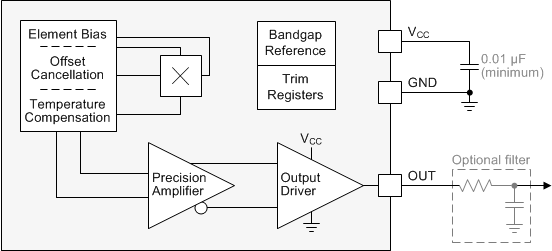
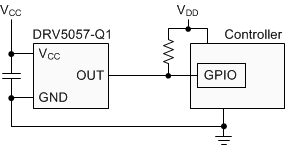
DRV5057-Q1Automotive linear hall effect sensor with digital PWM output | Linear, Compass (ICs) | 18 | Active | The DRV5057 is a linear Hall effect sensor that responds proportionally to magnetic flux density. The device can be used for accurate position sensing in a wide range of applications.
The device operates from 3.3-V or 5-V power supplies. When no magnetic field is present, the output produces a clock with a 50% duty cycle. The output duty cycle changes linearly with the applied magnetic flux density, and four sensitivity options maximize the output dynamic range based on the required sensing range. North and south magnetic poles produce unique outputs. The typical pulse-width modulation (PWM) carrier frequency is 2 kHz.
Magnetic flux perpendicular to the top of the package is sensed, and the two package options provide different sensing directions.
Because the PWM signal is based on edge-to-edge timing, signal integrity is maintained in the presence of voltage noise or ground potential mismatch. This signal is suitable for distance transmission in noisy environments, and the always-present clock allows the system controller to confirm there are good interconnects. Additionally, the device features magnet temperature compensation to counteract how magnets drift for linear performance across a wide –40°C to +125°C temperature range. Device options for no temperature compensation of magnet drift are also available.
The DRV5057 is a linear Hall effect sensor that responds proportionally to magnetic flux density. The device can be used for accurate position sensing in a wide range of applications.
The device operates from 3.3-V or 5-V power supplies. When no magnetic field is present, the output produces a clock with a 50% duty cycle. The output duty cycle changes linearly with the applied magnetic flux density, and four sensitivity options maximize the output dynamic range based on the required sensing range. North and south magnetic poles produce unique outputs. The typical pulse-width modulation (PWM) carrier frequency is 2 kHz.
Magnetic flux perpendicular to the top of the package is sensed, and the two package options provide different sensing directions.
Because the PWM signal is based on edge-to-edge timing, signal integrity is maintained in the presence of voltage noise or ground potential mismatch. This signal is suitable for distance transmission in noisy environments, and the always-present clock allows the system controller to confirm there are good interconnects. Additionally, the device features magnet temperature compensation to counteract how magnets drift for linear performance across a wide –40°C to +125°C temperature range. Device options for no temperature compensation of magnet drift are also available. |
| Specialized ICs | 2 | Active | |
| Power Management (PMIC) | 1 | Obsolete | |
| Power Management (PMIC) | 5 | Active | |
DRV592High-Efficiency H-Bridge (Requires External PWM) | Power Management (PMIC) | 1 | Active | The DRV592 is a high-efficiency, high-current H-bridge ideal for driving a wide variety of thermoelectric cooler elements in systems powered from 2.8 V to 5.5 V. Low output stage on-resistance significantly decreases power dissipation in the amplifier.
The DRV592 may be driven from any external PWM generator such as a DSP, a microcontroller, or a FPGA. The frequency may vary from dc (i.e., on or off) to 1 MHz. The inputs are compatible with TTL logic levels.
The DRV592 is internally protected against thermal and current overloads. Logic-level fault indicators signal when the junction temperature has reached approximately 130°C to allow for system-level shutdown before the amplifier’s internal thermal shutdown circuitry activates. The fault indicators also signal when an over-current event has occurred. If the over-current circuitry is tripped, the DRV592 automatically resets.
The DRV592 is a high-efficiency, high-current H-bridge ideal for driving a wide variety of thermoelectric cooler elements in systems powered from 2.8 V to 5.5 V. Low output stage on-resistance significantly decreases power dissipation in the amplifier.
The DRV592 may be driven from any external PWM generator such as a DSP, a microcontroller, or a FPGA. The frequency may vary from dc (i.e., on or off) to 1 MHz. The inputs are compatible with TTL logic levels.
The DRV592 is internally protected against thermal and current overloads. Logic-level fault indicators signal when the junction temperature has reached approximately 130°C to allow for system-level shutdown before the amplifier’s internal thermal shutdown circuitry activates. The fault indicators also signal when an over-current event has occurred. If the over-current circuitry is tripped, the DRV592 automatically resets. |
DRV593+/-3 A High-Efficiency PWM Power Driver | Power Management - Specialized | 1 | Active | The DRV593 and DRV594 are high-efficiency, high-current power amplifiers ideal for driving a wide variety of thermoelectric cooler elements in systems powered from 2.8 V to 5.5 V. The operation of the device requires only one inductor and capacitor for the output filter, saving significant printed-circuit board area. Pulse-width modulation (PWM) operation and low output stage on-resistance significantly decrease power dissipation in the amplifier.
The DRV593 and DRV594 are internally protected against thermal and current overloads. Logic-level fault indicators signal when the junction temperature has reached approximately 128°C to allow for system-level shutdown before the amplifier’s internal thermal shutdown circuitry activates. The fault indicators also signal when an overcurrent event has occurred. If the overcurrent circuitry is tripped, the devices automatically reset (see application information section for more details).
The PWM switching frequency may be set to 500 kHz or 100 kHz depending on system requirements. To eliminate external components, the gain is fixed at 2.3 V/V for the DRV593. For the DRV594, the gain is fixed at 14.5 V/V.
The DRV593 and DRV594 are high-efficiency, high-current power amplifiers ideal for driving a wide variety of thermoelectric cooler elements in systems powered from 2.8 V to 5.5 V. The operation of the device requires only one inductor and capacitor for the output filter, saving significant printed-circuit board area. Pulse-width modulation (PWM) operation and low output stage on-resistance significantly decrease power dissipation in the amplifier.
The DRV593 and DRV594 are internally protected against thermal and current overloads. Logic-level fault indicators signal when the junction temperature has reached approximately 128°C to allow for system-level shutdown before the amplifier’s internal thermal shutdown circuitry activates. The fault indicators also signal when an overcurrent event has occurred. If the overcurrent circuitry is tripped, the devices automatically reset (see application information section for more details).
The PWM switching frequency may be set to 500 kHz or 100 kHz depending on system requirements. To eliminate external components, the gain is fixed at 2.3 V/V for the DRV593. For the DRV594, the gain is fixed at 14.5 V/V. |