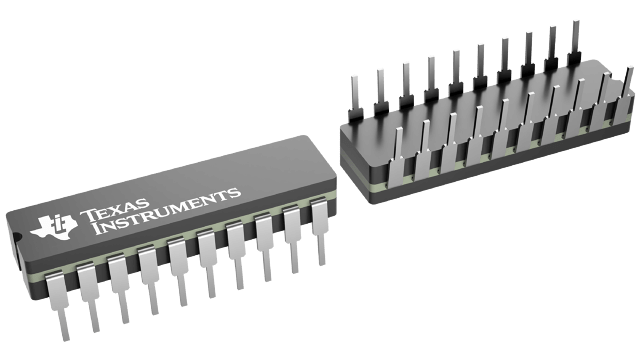
T
Texas Instruments
| Series | Category | # Parts | Status | Description |
|---|---|---|---|---|
| Part | Spec A | Spec B | Spec C | Spec D | Description |
|---|---|---|---|---|---|



| Series | Category | # Parts | Status | Description |
|---|---|---|---|---|
| Part | Spec A | Spec B | Spec C | Spec D | Description |
|---|---|---|---|---|---|
| Part | Category | Description |
|---|---|---|
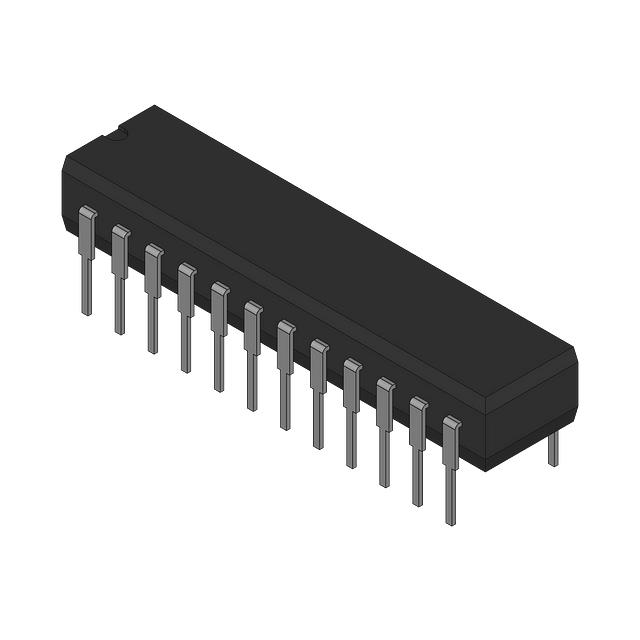 Texas Instruments | Integrated Circuits (ICs) | BUS DRIVER, BCT/FBT SERIES |
 Texas Instruments | Integrated Circuits (ICs) | 12BIT 3.3V~3.6V 210MHZ PARALLEL VQFN-48-EP(7X7) ANALOG TO DIGITAL CONVERTERS (ADC) ROHS |
Texas Instruments | Integrated Circuits (ICs) | TMX320DRE311 179PIN UBGA 200MHZ |
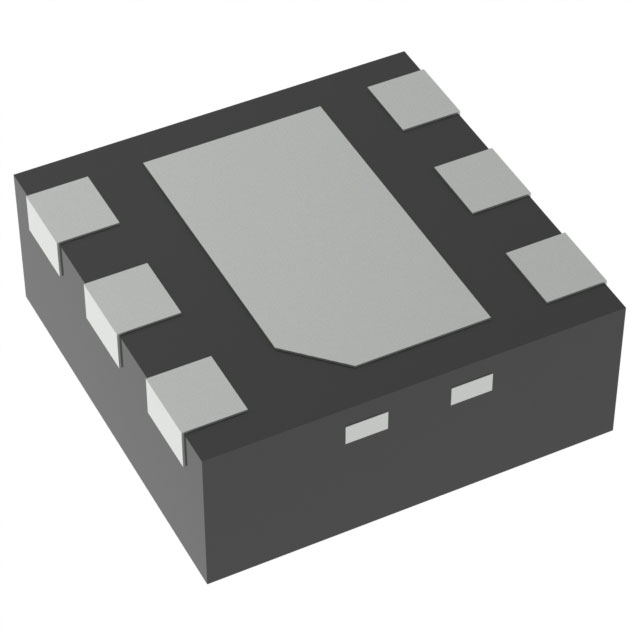 Texas Instruments TPS61040DRVTG4Unknown | Integrated Circuits (ICs) | IC LED DRV RGLTR PWM 350MA 6WSON |
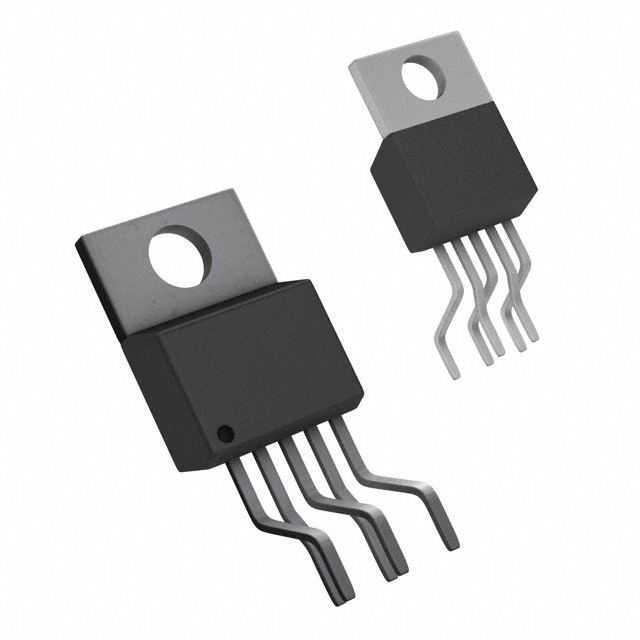 Texas Instruments LP3876ET-2.5Obsolete | Integrated Circuits (ICs) | IC REG LINEAR 2.5V 3A TO220-5 |
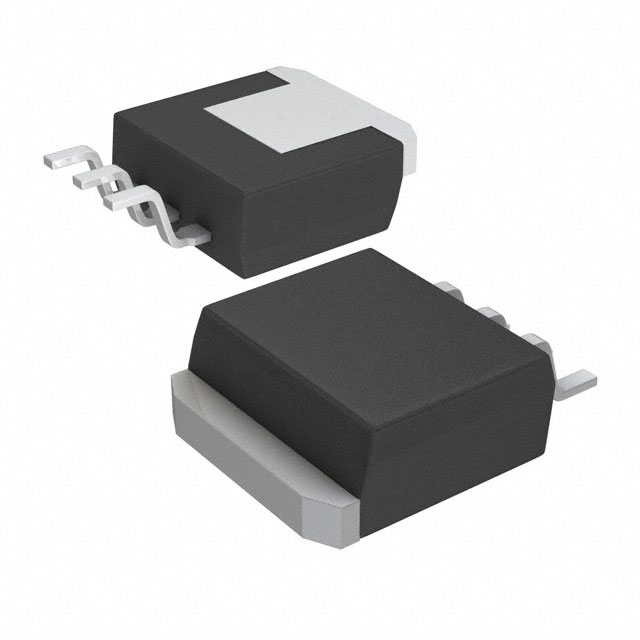 Texas Instruments LMS1585ACSX-ADJObsolete | Integrated Circuits (ICs) | IC REG LIN POS ADJ 5A DDPAK |
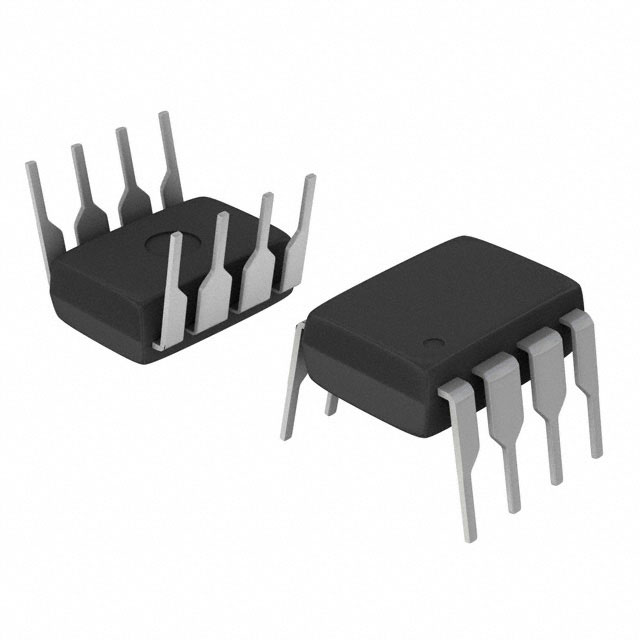 Texas Instruments INA111APG4Obsolete | Integrated Circuits (ICs) | IC INST AMP 1 CIRCUIT 8DIP |
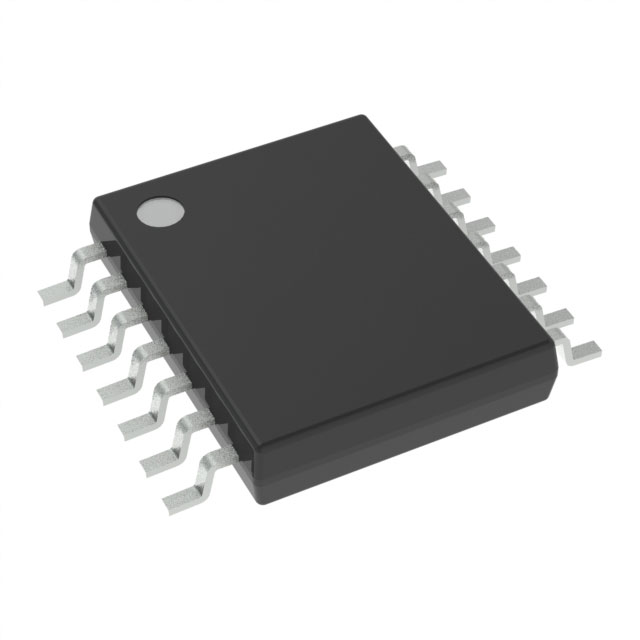 Texas Instruments | Integrated Circuits (ICs) | AUTOMOTIVE, QUAD 36V 1.2MHZ OPERATIONAL AMPLIFIER |
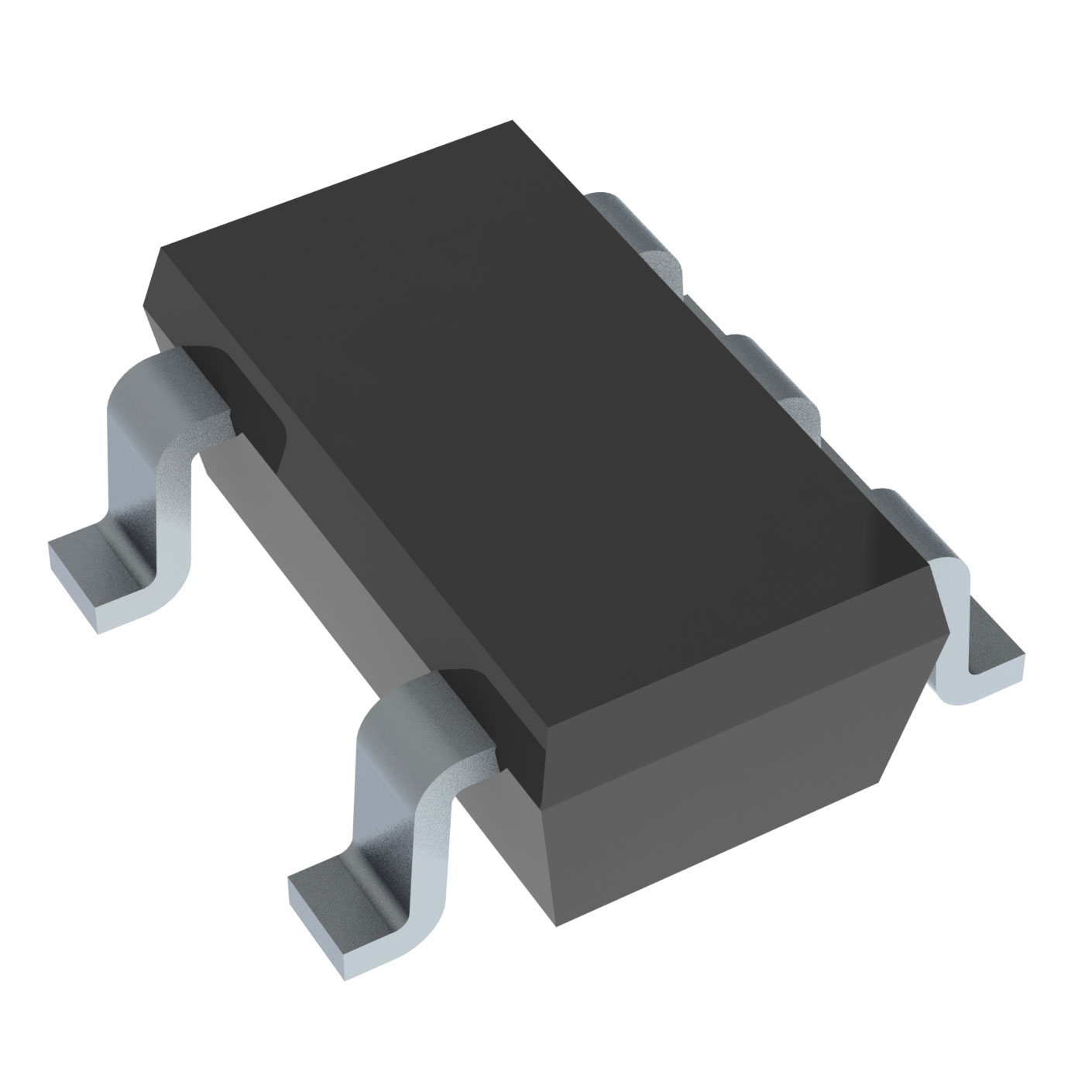 Texas Instruments OPA340NA/3KG4Unknown | Integrated Circuits (ICs) | IC OPAMP GP 1 CIRCUIT SOT23-5 |
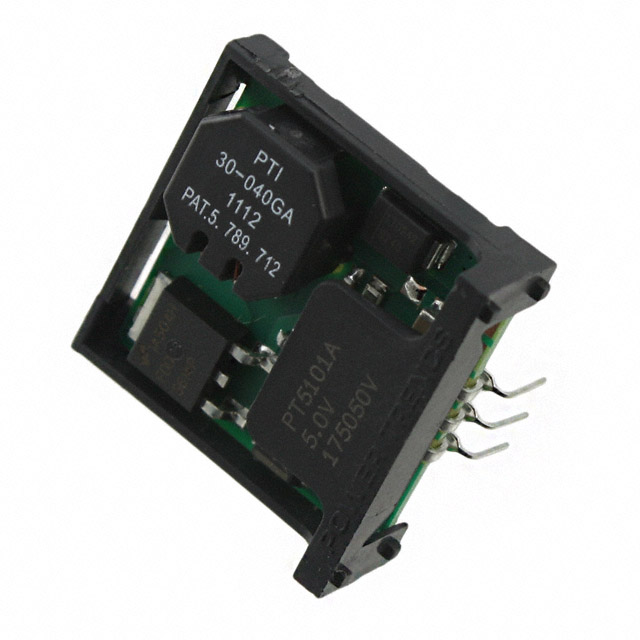 Texas Instruments PT5112AObsolete | Power Supplies - Board Mount | DC DC CONVERTER 8V 8W |
| Series | Category | # Parts | Status | Description |
|---|---|---|---|---|
CSD97394Q4MCSD97394Q4M Synchronous Buck NexFET™ Power Stage | Power Management (PMIC) | 2 | Active | The CSD97394Q4M NexFET™ Power Stage is a highly-optimized design for use in a high-power, high-density synchronous buck converter. This product integrates the driver IC and NexFET technology to complete the power stage switching function. The driver IC has a built-in selectable diode emulation function that enables DCM operation to improve light load efficiency. In addition, the driver IC supports ULQ mode that enables connected standby for Windows®8. With the PWM input in tri-state, quiescent current is reduced to 130 µA, with immediate response. When SKIP# is held at tri-state, the current is reduced to 8 µA (typically 20 µs is required to resume switching). This combination produces a high current, high efficiency, and high speed switching device in a small 3.5 × 4.5 mm outline package. In addition, the PCB footprint is optimized to help reduce design time and simplify the completion of the overall system design.
The CSD97394Q4M NexFET™ Power Stage is a highly-optimized design for use in a high-power, high-density synchronous buck converter. This product integrates the driver IC and NexFET technology to complete the power stage switching function. The driver IC has a built-in selectable diode emulation function that enables DCM operation to improve light load efficiency. In addition, the driver IC supports ULQ mode that enables connected standby for Windows®8. With the PWM input in tri-state, quiescent current is reduced to 130 µA, with immediate response. When SKIP# is held at tri-state, the current is reduced to 8 µA (typically 20 µs is required to resume switching). This combination produces a high current, high efficiency, and high speed switching device in a small 3.5 × 4.5 mm outline package. In addition, the PCB footprint is optimized to help reduce design time and simplify the completion of the overall system design. |
CSD97395Q4MCSD97395Q4M High Frequency Synchronous Buck NexFET™ Power Stage | Full Half-Bridge (H Bridge) Drivers | 2 | Active | The CSD97395Q4M NexFET7trade; Power Stage is a highly optimized design for use in a high-power, high-density synchronous buck converter. This product integrates the driver IC and NexFET technology to complete the power stage switching function. The driver IC has a built-in selectable diode emulation function that enables DCM operation to improve light load efficiency. In addition, the driver IC supports ULQ mode that enables connected standby for Windows®8. With the PWM input in tri-state, quiescent current is reduced to 130 µA, with immediate response. When SKIP# is held at tri-state, the current is reduced to 8 µA (typically 20 µs is required to resume switching). This combination produces a high current, high efficiency, and high speed switching device in a small 3.5 × 4.5 mm outline package. In addition, the PCB footprint is optimized to help reduce design time and simplify the completion of the overall system design.
The CSD97395Q4M NexFET7trade; Power Stage is a highly optimized design for use in a high-power, high-density synchronous buck converter. This product integrates the driver IC and NexFET technology to complete the power stage switching function. The driver IC has a built-in selectable diode emulation function that enables DCM operation to improve light load efficiency. In addition, the driver IC supports ULQ mode that enables connected standby for Windows®8. With the PWM input in tri-state, quiescent current is reduced to 130 µA, with immediate response. When SKIP# is held at tri-state, the current is reduced to 8 µA (typically 20 µs is required to resume switching). This combination produces a high current, high efficiency, and high speed switching device in a small 3.5 × 4.5 mm outline package. In addition, the PCB footprint is optimized to help reduce design time and simplify the completion of the overall system design. |
CSD97396Q4M30A Synchronous Buck NexFET Power Stage | Power Management (PMIC) | 1 | Active | The CSD97396Q4M NexFET Power Stage is a highly optimized design for use in a high-power, high-density synchronous buck converter. This product integrates the driver IC and NexFET technology to complete the power stage switching function. The driver IC has a built-in selectable diode emulation function that enables DCM operation to improve light load efficiency. In addition, the driver IC supports ULQ mode that enables connected standby for Windows 8. With the PWM input in tri-state, quiescent current is reduced to 130 µA, with immediate response. When SKIP# is held at tri-state, the current is reduced to 8 µA (typically 20 µs is required to resume switching). This combination produces a high current, high efficiency, and high speed switching device in a small 3.5 × 4.5 mm outline package. In addition, the PCB footprint is optimized to help reduce design time and simplify the completion of the overall system design.
The CSD97396Q4M NexFET Power Stage is a highly optimized design for use in a high-power, high-density synchronous buck converter. This product integrates the driver IC and NexFET technology to complete the power stage switching function. The driver IC has a built-in selectable diode emulation function that enables DCM operation to improve light load efficiency. In addition, the driver IC supports ULQ mode that enables connected standby for Windows 8. With the PWM input in tri-state, quiescent current is reduced to 130 µA, with immediate response. When SKIP# is held at tri-state, the current is reduced to 8 µA (typically 20 µs is required to resume switching). This combination produces a high current, high efficiency, and high speed switching device in a small 3.5 × 4.5 mm outline package. In addition, the PCB footprint is optimized to help reduce design time and simplify the completion of the overall system design. |
CY29FCT520T8-Bit Multi-Level Pipeline Register | Logic | 9 | Active | The CY29FCT520T is a multilevel 8-bit-wide pipeline register. The device consists of four registers, A1, A2, B1, and B2, which are configured by the instruction inputs I0, I1as a single four-level pipeline or as two two-level pipelines. The contents of any register can be read at the multiplexed output at any time by using the multiplex-selection controls (S0and S1).
The pipeline registers are positive-edge triggered, and data is shifted by the rising edge of the clock input. Instruction I = 0 selects the four-level pipeline mode. Instruction I = 1 selects the two-level B pipeline, while I = 2 selects the two-level A pipeline. I = 3 is the hold instruction; no shifting is performed by the clock in this mode.
In the two-level operation mode, data is shifted from level 1 to level 2 and new data is loaded into level 1.
This device is fully specified for partial-power-down applications using Ioff. The Ioffcircuitry disables the outputs, preventing damaging current backflow through the device when it is powered down.
The CY29FCT520T is a multilevel 8-bit-wide pipeline register. The device consists of four registers, A1, A2, B1, and B2, which are configured by the instruction inputs I0, I1as a single four-level pipeline or as two two-level pipelines. The contents of any register can be read at the multiplexed output at any time by using the multiplex-selection controls (S0and S1).
The pipeline registers are positive-edge triggered, and data is shifted by the rising edge of the clock input. Instruction I = 0 selects the four-level pipeline mode. Instruction I = 1 selects the two-level B pipeline, while I = 2 selects the two-level A pipeline. I = 3 is the hold instruction; no shifting is performed by the clock in this mode.
In the two-level operation mode, data is shifted from level 1 to level 2 and new data is loaded into level 1.
This device is fully specified for partial-power-down applications using Ioff. The Ioffcircuitry disables the outputs, preventing damaging current backflow through the device when it is powered down. |
CY29FCT52TOctal Registered Transceivers with 3-State Outputs | Buffers, Drivers, Receivers, Transceivers | 2 | Active | The CY29FCT52T has two 8-bit back-to-back registers that store data flowing in both directions between two bidirectional buses. Separate clock, clock enable, and 3-state output-enable signals are provided for each register. Both A outputs and B outputs are specified to sink 64 mA.
This device is fully specified for partial-power-down applications using Ioff. The Ioffcircuitry disables the outputs, preventing damaging current backflow through the device when it is powered down.
The CY29FCT52T has two 8-bit back-to-back registers that store data flowing in both directions between two bidirectional buses. Separate clock, clock enable, and 3-state output-enable signals are provided for each register. Both A outputs and B outputs are specified to sink 64 mA.
This device is fully specified for partial-power-down applications using Ioff. The Ioffcircuitry disables the outputs, preventing damaging current backflow through the device when it is powered down. |
CY29FCT818T-MILDiagnostic Scan Register | Integrated Circuits (ICs) | 1 | Active | The CY29FCT818T contains a high-speed 8-bit general-purpose data pipeline register and a high-speed 8-bit shadow register. The general-purpose register can be used in an 8-bit-wide data path for a normal system application. The shadow register is designed for applications such as diagnostics in sequential circuits, where it is desirable to load known data at a specific location in the circuit and to read the data at that location.
The shadow register can load data from the output of the device, and can be used as a right-shift register with bit-serial input (SDI) and output (SDO), using DCLK. The data register input is multiplexed to enable loading from the shadow register or from the data input pins, using PCLK. Data can be loaded simultaneously from the shadow register to the pipeline register, and from the pipeline register to the shadow register, provided setup-time and hold-time requirements are satisfied, with respect to the two independent clock inputs.
In a typical application, the general-purpose register in this device replaces an 8-bit data register in the normal data path of a system. The shadow register is placed in an auxiliary bit-serial loop that is used for diagnostics. During diagnostic operation, data is shifted serially into the shadow register, then transferred to the general-purpose register to load a known value into the data path. To read the contents at that point in the data path, the data is transferred from the data register into the shadow register, then shifted serially in the auxiliary diagnostic loop to make it accessible to the diagnostics controller. This data then is compared with the expected value to diagnose faulty operation of the sequential circuit.
This device is fully specified for partial-power-down applications using Ioff. The Ioffcircuitry disables the outputs, preventing damaging current backflow through the device when it is powered down.
The CY29FCT818T contains a high-speed 8-bit general-purpose data pipeline register and a high-speed 8-bit shadow register. The general-purpose register can be used in an 8-bit-wide data path for a normal system application. The shadow register is designed for applications such as diagnostics in sequential circuits, where it is desirable to load known data at a specific location in the circuit and to read the data at that location.
The shadow register can load data from the output of the device, and can be used as a right-shift register with bit-serial input (SDI) and output (SDO), using DCLK. The data register input is multiplexed to enable loading from the shadow register or from the data input pins, using PCLK. Data can be loaded simultaneously from the shadow register to the pipeline register, and from the pipeline register to the shadow register, provided setup-time and hold-time requirements are satisfied, with respect to the two independent clock inputs.
In a typical application, the general-purpose register in this device replaces an 8-bit data register in the normal data path of a system. The shadow register is placed in an auxiliary bit-serial loop that is used for diagnostics. During diagnostic operation, data is shifted serially into the shadow register, then transferred to the general-purpose register to load a known value into the data path. To read the contents at that point in the data path, the data is transferred from the data register into the shadow register, then shifted serially in the auxiliary diagnostic loop to make it accessible to the diagnostics controller. This data then is compared with the expected value to diagnose faulty operation of the sequential circuit.
This device is fully specified for partial-power-down applications using Ioff. The Ioffcircuitry disables the outputs, preventing damaging current backflow through the device when it is powered down. |
CY54FCT138T1-of-8 Decoder | Integrated Circuits (ICs) | 2 | Active | The \x92FCT138T devices are 1-of-8 decoders. These devices accept three binary weighted inputs (A0, A1, A2) and, when enabled, provide eight mutually exclusive active-low outputs (O\0\x96O\7). The \x92FCT138T devices feature three enable inputs: two active low (E\1, E\2) and one active high (E3).
All outputs are high unless E\1and E\2are low and E3is high. This multiple-enable function allows easy parallel expansion of the device to a 1-of-32 (five lines to 32 lines) decoder with just four \x92FCT138T devices and one inverter.
These devices are fully specified for partial-power-down applications using Ioff. The Ioffcircuitry disables the outputs, preventing damaging current backflow through the device when it is powered down.
The \x92FCT138T devices are 1-of-8 decoders. These devices accept three binary weighted inputs (A0, A1, A2) and, when enabled, provide eight mutually exclusive active-low outputs (O\0\x96O\7). The \x92FCT138T devices feature three enable inputs: two active low (E\1, E\2) and one active high (E3).
All outputs are high unless E\1and E\2are low and E3is high. This multiple-enable function allows easy parallel expansion of the device to a 1-of-32 (five lines to 32 lines) decoder with just four \x92FCT138T devices and one inverter.
These devices are fully specified for partial-power-down applications using Ioff. The Ioffcircuitry disables the outputs, preventing damaging current backflow through the device when it is powered down. |
CY54FCT163TSynchronous 4-Bit Binary Counter | Counters, Dividers | 1 | Active | The \x92FCT163T devices are high-speed synchronous modulo-16 binary counters. They are synchronously presettable for application in programmable dividers. These devices have two types of count-enable (CEP and CET) inputs, plus a terminal-count (TC) output for versatility in forming synchronous multistaged counters. The \x92FCT163T devices have a synchronous-reset (SR\) input that overrides counting and parallel loading, and allows the outputs to be reset simultaneously on the rising edge of the clock.
These devices are fully specified for partial-power-down applications using Ioff. The Ioffcircuitry disables the outputs, preventing damaging current backflow through the device when it is powered down.
The \x92FCT163T devices are high-speed synchronous modulo-16 binary counters. They are synchronously presettable for application in programmable dividers. These devices have two types of count-enable (CEP and CET) inputs, plus a terminal-count (TC) output for versatility in forming synchronous multistaged counters. The \x92FCT163T devices have a synchronous-reset (SR\) input that overrides counting and parallel loading, and allows the outputs to be reset simultaneously on the rising edge of the clock.
These devices are fully specified for partial-power-down applications using Ioff. The Ioffcircuitry disables the outputs, preventing damaging current backflow through the device when it is powered down. |
CY54FCT373TOctal Transparent D-Type Latches with 3-State Outputs | Latches | 1 | Active | The \x92FCT373T devices consist of eight latches with 3-state outputs for bus-organized applications. When the latch-enable (LE) input is high, the flip-flops appear transparent to the data. Data that meets the required setup times are latched when LE transitions from high to low. Data appears on the bus when the output-enable (OE\) input is low. When OE\ is high, the bus output is in the high-impedance state. In this mode, data can be entered into the latches.
These devices are fully specified for partial-power-down applications using Ioff. The Ioffcircuitry disables the outputs, preventing damaging current backflow through the device when it is powered down.
The \x92FCT373T devices consist of eight latches with 3-state outputs for bus-organized applications. When the latch-enable (LE) input is high, the flip-flops appear transparent to the data. Data that meets the required setup times are latched when LE transitions from high to low. Data appears on the bus when the output-enable (OE\) input is low. When OE\ is high, the bus output is in the high-impedance state. In this mode, data can be entered into the latches.
These devices are fully specified for partial-power-down applications using Ioff. The Ioffcircuitry disables the outputs, preventing damaging current backflow through the device when it is powered down. |
CY54FCT377TOctal D-Type Flip-Flops with Enable | Integrated Circuits (ICs) | 1 | Active | The \x92FCT377T devices have eight triggered D-type flip-flops with individual data (D) inputs. The common buffered clock (CP) inputs load all flip-flops simultaneously when the clock-enable (CE\) input is low. The register is fully edge triggered. The state of each D input at one setup time before the low-to-high clock transition is transferred to the corresponding flip-flop output (O). CE\ must be stable only one setup time prior to the low-to-high clock transition for predictable operation.
These devices are fully specified for partial-power-down applications using Ioff. The Ioffcircuitry disables the outputs, preventing damaging current backflow through the device when it is powered down.
The \x92FCT377T devices have eight triggered D-type flip-flops with individual data (D) inputs. The common buffered clock (CP) inputs load all flip-flops simultaneously when the clock-enable (CE\) input is low. The register is fully edge triggered. The state of each D input at one setup time before the low-to-high clock transition is transferred to the corresponding flip-flop output (O). CE\ must be stable only one setup time prior to the low-to-high clock transition for predictable operation.
These devices are fully specified for partial-power-down applications using Ioff. The Ioffcircuitry disables the outputs, preventing damaging current backflow through the device when it is powered down. |