TPS92642-Q1Automotive synchronous buck infrared LED driver | Power Management (PMIC) | 1 | Active | The TPS92642-Q1 is a monolithic, synchronous Buck LED driver with a wide 5.5-V to 36-V operating input voltage range and 40-V tolerance that supports load dump for duration of 400 ms. The TPS92642-Q1 implements an adaptive on-time average current mode control based on inductor valley current detection. The adaptive on-time control provides near constant switching frequency that can be set between 100 kHz and 2.2 MHz. Inductor current sensing and closed-loop feedback enables better than ±4% accuracy over wide input, output and ambient temperature.
The high-performance infrared LED driver can independently modulate LED current using both analog or PWM dimming techniques. Linear analog dimming range with over 15:1 range is obtained by setting the IADJ voltage. PWM dimming of LED current is achieved by directly modulating the UDIM input pin with desired duty cycle. The device incorporates an internal pulse monitoring circuit that limits the maximum pulse duty cycle.
The TPS92642-Q1 incorporates advanced diagnostic and fault protection featuring: cycle-by-cycle switch current limit, bootstrap undervoltage, LED open, LED short and thermal shutdown.
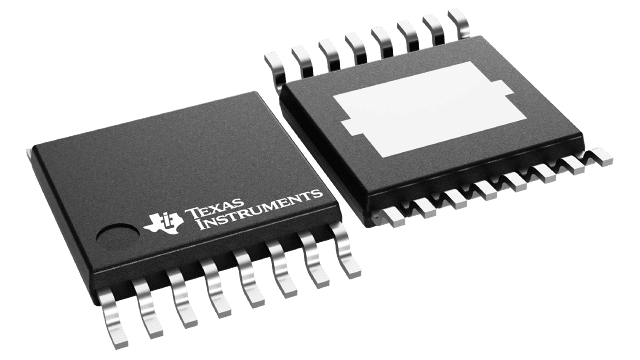
The TPS92642-Q1 is available in a 6.6-mm × 5.1-mm thermally-enhanced 16-pin HTSSOP package with 0.65-mm lead pitch.
The TPS92642-Q1 is a monolithic, synchronous Buck LED driver with a wide 5.5-V to 36-V operating input voltage range and 40-V tolerance that supports load dump for duration of 400 ms. The TPS92642-Q1 implements an adaptive on-time average current mode control based on inductor valley current detection. The adaptive on-time control provides near constant switching frequency that can be set between 100 kHz and 2.2 MHz. Inductor current sensing and closed-loop feedback enables better than ±4% accuracy over wide input, output and ambient temperature.
The high-performance infrared LED driver can independently modulate LED current using both analog or PWM dimming techniques. Linear analog dimming range with over 15:1 range is obtained by setting the IADJ voltage. PWM dimming of LED current is achieved by directly modulating the UDIM input pin with desired duty cycle. The device incorporates an internal pulse monitoring circuit that limits the maximum pulse duty cycle.
The TPS92642-Q1 incorporates advanced diagnostic and fault protection featuring: cycle-by-cycle switch current limit, bootstrap undervoltage, LED open, LED short and thermal shutdown.
The TPS92642-Q1 is available in a 6.6-mm × 5.1-mm thermally-enhanced 16-pin HTSSOP package with 0.65-mm lead pitch. |
TPS92643Automotive 3-A synchronous buck LED driver | LED Drivers | 1 | Active | The TPS92643-Q1 is a monolithic, synchronous Buck LED driver with a wide 5.5-V to 36-V operating input voltage range and 40-V tolerance that supports load dump for duration of 400 ms. The TPS92643-Q1 implements an adaptive on-time average current mode control based on inductor valley current detection. The adaptive on-time control provides near constant switching frequency that can be set between 100 kHz and 2.2 MHz. Inductor current sensing and closed-loop feedback enables better than ±4% accuracy over wide input, output and ambient temperature.
The high-performance LED driver can independently modulate LED current using both analog or PWM dimming techniques. Linear analog dimming range with over 15:1 range is obtained by setting the IADJ voltage. PWM dimming of LED current is achieved by directly modulating the UDIM input pin with desired duty cycle or setting the analog voltage at APWM to enable internal analog-to-PWM conversion. The internal PWM generator translates the external analog voltage by comparing it to an internal 1.4-kHz ramp signal.
The TPS92643-Q1 incorporates advanced diagnostic and fault protection featuring: cycle-by-cycle switch current limit, bootstrap undervoltage, LED open, LED short and thermal shutdown.
The TPS92643-Q1 is available in a 6.6-mm × 5.1-mm thermally-enhanced 16-pin HTSSOP package with 0.65-mm lead pitch.
The TPS92643-Q1 is a monolithic, synchronous Buck LED driver with a wide 5.5-V to 36-V operating input voltage range and 40-V tolerance that supports load dump for duration of 400 ms. The TPS92643-Q1 implements an adaptive on-time average current mode control based on inductor valley current detection. The adaptive on-time control provides near constant switching frequency that can be set between 100 kHz and 2.2 MHz. Inductor current sensing and closed-loop feedback enables better than ±4% accuracy over wide input, output and ambient temperature.
The high-performance LED driver can independently modulate LED current using both analog or PWM dimming techniques. Linear analog dimming range with over 15:1 range is obtained by setting the IADJ voltage. PWM dimming of LED current is achieved by directly modulating the UDIM input pin with desired duty cycle or setting the analog voltage at APWM to enable internal analog-to-PWM conversion. The internal PWM generator translates the external analog voltage by comparing it to an internal 1.4-kHz ramp signal.
The TPS92643-Q1 incorporates advanced diagnostic and fault protection featuring: cycle-by-cycle switch current limit, bootstrap undervoltage, LED open, LED short and thermal shutdown.
The TPS92643-Q1 is available in a 6.6-mm × 5.1-mm thermally-enhanced 16-pin HTSSOP package with 0.65-mm lead pitch. |
TPS92660TPS92660 two string LED driver with I2C/EPROM current Trim | Integrated Circuits (ICs) | 3 | Active | The TPS92660 is a two-output LED driver with one time programmable (OTP) ROM and I2C interface for LED current trim. The current trim provides a way for LED fixture manufacturers to produce LED lighting fixtures at a consistent lumen output without binning LEDs.
One output of the device is a non-synchronous buck controller which is used to regulate current of higher power white LEDs. The other output of the device is a linear regulator controller which is used to regulate current of lower power red LEDs. The TPS92660 is used for applications of controlled CCT (correlated color temperature) LED lights by mixing white LEDs with red LEDs.
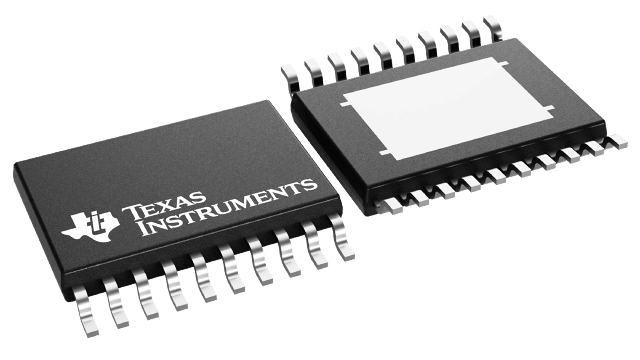
This device is available in a 20-pin, TSSOP exposed pad package.
The TPS92660 is a two-output LED driver with one time programmable (OTP) ROM and I2C interface for LED current trim. The current trim provides a way for LED fixture manufacturers to produce LED lighting fixtures at a consistent lumen output without binning LEDs.
One output of the device is a non-synchronous buck controller which is used to regulate current of higher power white LEDs. The other output of the device is a linear regulator controller which is used to regulate current of lower power red LEDs. The TPS92660 is used for applications of controlled CCT (correlated color temperature) LED lights by mixing white LEDs with red LEDs.
This device is available in a 20-pin, TSSOP exposed pad package. |
| Power Management (PMIC) | 1 | Active | |
TPS9266212-Channel high-brightness LED matrix manager for automotive headlight systems | Power Management (PMIC) | 3 | Active | The TPS92662A-Q1 LED matrix manager device enables fully dynamic adaptive lighting solutions by providing individual pixel-level LED control. The device includes four sub-strings of three series-connected integrated switches for bypassing individual LEDs. The individual sub-strings allow the device to accept either single or multiple current sources.
The TPS92662A-Q1 features a programmable Pierce crystal oscillator driver. Optimal performance is achieved by selecting the driver strength based on the quartz crystal or ceramic resonator manufacturers recommendations. The device also incorporates a selectable drive strength clock buffer. The rise and fall times and the EMI generated by clock signal is controlled by varying the drive strength of the clock buffer. When necessary, the clock buffer can be disabled to eliminate the noise generated by the clock signal and provide the lowest EMI performance.
The TPS92662A-Q1 supports the multi-drop universal asynchronous receiver transmitter (UART) serial interface and is compatible with TPS92662-Q1 and TPS92663-Q1 devices. The I2C communication interface can be used to read from and write to an external EEPROM that can store system calibration data.
An on-board 8-bit ADC with two multiplexed inputs can be used for system temperature compensation and used to measure a binning value which allows for LED binning and coding.
The internal charge pump rail supplies the gate drive voltage for the LED bypass switches. The low on-resistance (RDS(on)) of the bypass switch minimizes conduction loss and power dissipation.
The TPS92662A-Q1 and TPS92662-Q1 both incorporate identical register settings for programming phase shift and pulse width of each individual LED in the string and for reporting LED open and short circuit faults.
The TPS92662A-Q1 LED matrix manager device enables fully dynamic adaptive lighting solutions by providing individual pixel-level LED control. The device includes four sub-strings of three series-connected integrated switches for bypassing individual LEDs. The individual sub-strings allow the device to accept either single or multiple current sources.
The TPS92662A-Q1 features a programmable Pierce crystal oscillator driver. Optimal performance is achieved by selecting the driver strength based on the quartz crystal or ceramic resonator manufacturers recommendations. The device also incorporates a selectable drive strength clock buffer. The rise and fall times and the EMI generated by clock signal is controlled by varying the drive strength of the clock buffer. When necessary, the clock buffer can be disabled to eliminate the noise generated by the clock signal and provide the lowest EMI performance.
The TPS92662A-Q1 supports the multi-drop universal asynchronous receiver transmitter (UART) serial interface and is compatible with TPS92662-Q1 and TPS92663-Q1 devices. The I2C communication interface can be used to read from and write to an external EEPROM that can store system calibration data.
An on-board 8-bit ADC with two multiplexed inputs can be used for system temperature compensation and used to measure a binning value which allows for LED binning and coding.
The internal charge pump rail supplies the gate drive voltage for the LED bypass switches. The low on-resistance (RDS(on)) of the bypass switch minimizes conduction loss and power dissipation.
The TPS92662A-Q1 and TPS92662-Q1 both incorporate identical register settings for programming phase shift and pulse width of each individual LED in the string and for reporting LED open and short circuit faults. |
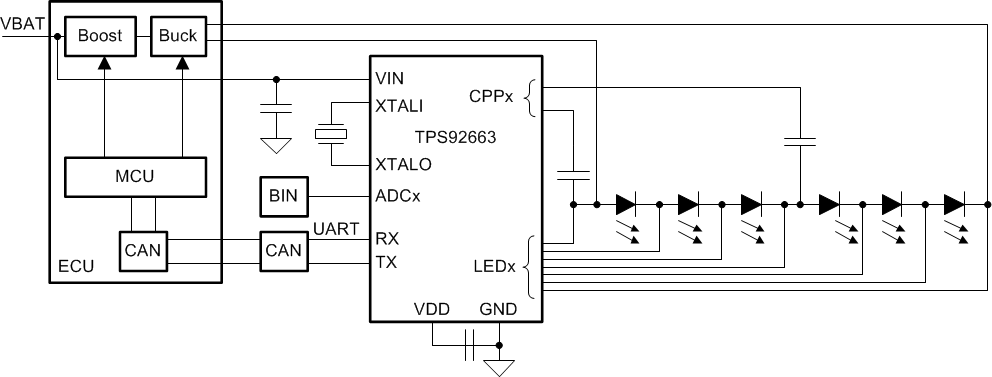
TPS926636-channel high-Brightness LED Matrix Manager for automotive Headlight Systems | LED Drivers | 3 | Active | The TPS92663-Q1 LED matrix manager device enables fully dynamic adaptive lighting solutions by providing individual pixel-level LED control.
The device includes two sub-strings of three series-connected integrated switches for bypassing individual LEDs. The individual sub-strings allow the device to accept either single or multiple current sources. It also allows a parallel connection of two switches to bypass high-current LEDs.
A master microcontroller may be used to control and manage the TPS92663-Q1 devices via a multi-drop universal asynchronous receiver transmitter (UART) serial interface. The serial interface supports the use of CAN transceivers for a more robust physical layer. An application can use the TPS92663-Q1 device and the TPS92662-Q1 device on the same bus.
An on-device, 8 bit ADC with two multiplexed inputs can be used for system temperature compensation and used to measure a binning value which allows for LED binning and coding.
The internal charge pump rail supplies the gate drive voltage for the LED bypass switches. The low on-resistance (RDS(on)) of the bypass switch minimizes conduction loss and power dissipation.
The phase shift and pulse width for each individual LED in the string are programmable. The device uses an internal register to adjust the PWM frequency. Multiple devices can be synchronized. The switch transitions during PWM dimming operation have a programmable slew rate to mitigate EMI concerns.
The device features open LED protection with programmable threshold. The serial interface reports open LED and short LED faults.
The TPS92663-Q1 LED matrix manager device enables fully dynamic adaptive lighting solutions by providing individual pixel-level LED control.
The device includes two sub-strings of three series-connected integrated switches for bypassing individual LEDs. The individual sub-strings allow the device to accept either single or multiple current sources. It also allows a parallel connection of two switches to bypass high-current LEDs.
A master microcontroller may be used to control and manage the TPS92663-Q1 devices via a multi-drop universal asynchronous receiver transmitter (UART) serial interface. The serial interface supports the use of CAN transceivers for a more robust physical layer. An application can use the TPS92663-Q1 device and the TPS92662-Q1 device on the same bus.
An on-device, 8 bit ADC with two multiplexed inputs can be used for system temperature compensation and used to measure a binning value which allows for LED binning and coding.
The internal charge pump rail supplies the gate drive voltage for the LED bypass switches. The low on-resistance (RDS(on)) of the bypass switch minimizes conduction loss and power dissipation.
The phase shift and pulse width for each individual LED in the string are programmable. The device uses an internal register to adjust the PWM frequency. Multiple devices can be synchronized. The switch transitions during PWM dimming operation have a programmable slew rate to mitigate EMI concerns.
The device features open LED protection with programmable threshold. The serial interface reports open LED and short LED faults. |
| LED Drivers | 1 | Active | |
TPS92665-Q116-channel low noise LED matrix manager with internal clock | LED Drivers | 1 | Active | The TPS92665 LED matrix manager device enables fully dynamic adaptive lighting solutions by providing individual pixel-level LED control. The device includes four sub-strings of four series connected integrated switches for bypassing individual LEDs. The individual sub-strings allow the device to accept either single or multiple current sources.
The TPS92665 features an internal oscillator. The internal oscillator can be shared to other system devices through the internal low noise LVDS transmitter and receiver blocks. The multi-drop, universal, asynchronous, receiver transmitter (UART) serial interface is compatible with TPS92664, TPS92667, TPS92662x and TPS92663x devices. An on-board ADC with multiplexed inputs samples all LED channels as well as IC die temperature. The ADC also samples dedicated ADC inputs for use with system temperature compensation, LED binning and coding.
The TPS92665 incorporates registers for programming phase shift and pulse width of each individual LED in the string and for reporting LED open, short faults and functional parameters.
The TPS92665 LED matrix manager device enables fully dynamic adaptive lighting solutions by providing individual pixel-level LED control. The device includes four sub-strings of four series connected integrated switches for bypassing individual LEDs. The individual sub-strings allow the device to accept either single or multiple current sources.
The TPS92665 features an internal oscillator. The internal oscillator can be shared to other system devices through the internal low noise LVDS transmitter and receiver blocks. The multi-drop, universal, asynchronous, receiver transmitter (UART) serial interface is compatible with TPS92664, TPS92667, TPS92662x and TPS92663x devices. An on-board ADC with multiplexed inputs samples all LED channels as well as IC die temperature. The ADC also samples dedicated ADC inputs for use with system temperature compensation, LED binning and coding.
The TPS92665 incorporates registers for programming phase shift and pulse width of each individual LED in the string and for reporting LED open, short faults and functional parameters. |
TPS92667-Q1Automotive low-noise 16-channel LED matrix manager with advanced diagnostics | Integrated Circuits (ICs) | 1 | Active | The TPS92667 LED matrix manager device enables fully dynamic adaptive lighting solutions by providing individual pixel-level LED control. The device includes four sub-strings of four series connected integrated switches for bypassing individual LEDs. The individual sub-strings allow the device to accept either single or multiple current sources.
The TPS92667 has an internal low noise LVDS receiver input for a system clock provided by a TPS92664 or TPS92665 device. The multi-drop, universal, asynchronous, receiver transmitter (UART) serial interface is compatible with TPS92664, TPS92665, TPS92662x and TPS92663x devices.
The TPS92667 incorporates registers for programming phase shift and pulse width of each individual LED in the string and for reporting LED open, short faults and functional parameters.
The TPS92667 LED matrix manager device enables fully dynamic adaptive lighting solutions by providing individual pixel-level LED control. The device includes four sub-strings of four series connected integrated switches for bypassing individual LEDs. The individual sub-strings allow the device to accept either single or multiple current sources.
The TPS92667 has an internal low noise LVDS receiver input for a system clock provided by a TPS92664 or TPS92665 device. The multi-drop, universal, asynchronous, receiver transmitter (UART) serial interface is compatible with TPS92664, TPS92665, TPS92662x and TPS92663x devices.
The TPS92667 incorporates registers for programming phase shift and pulse width of each individual LED in the string and for reporting LED open, short faults and functional parameters. |
| LED Driver Evaluation Boards | 4 | Active | |