| Power Management (PMIC) | 1 | Active | |
TPS7A20L300-mA low-noise, low-IQ voltage regulator with high PSRR and 1.2-V logic-compatible enable | Voltage Regulators - Linear, Low Drop Out (LDO) Regulators | 5 | Active | The TPS7A20L is an ultra-small, low-dropout (LDO) linear regulator that can source 300mA of output current. The TPS7A20L is designed to provide low noise, high PSRR, and excellent load and line transient performance that can meet the requirements of RF and other sensitive analog circuits. Using innovative design techniques, the TPS7A20L offers an ultra-low noise performance without the addition of a noise bypass capacitor. The TPS7A20L also provides the advantage of low quiescent current, which can be beneficial for battery-powered applications. With an input voltage range of 1.6V to 6.0V and an output range of 0.8V to 5.5V, the TPS7A20L can be used for a wide variety of applications. The device uses a precision reference circuit to provide a maximum accuracy of 1.5% over load, line, and temperature variations.
The TPS7A20L features an internal soft-start to lower the inrush current, thus minimizing the input voltage drop during start up. The device is stable with small ceramic capacitors, allowing for a small overall solution size.
The TPS7A20L has a smart enable input circuit with an internally controlled pulldown resistor that keeps the LDO disabled even when the EN pin is left floating and helps eliminate the external components used to pulldown the EN pin. The enable input logic thresholds are compatible with the output levels of 1.2V logic devices.
The TPS7A20L is an ultra-small, low-dropout (LDO) linear regulator that can source 300mA of output current. The TPS7A20L is designed to provide low noise, high PSRR, and excellent load and line transient performance that can meet the requirements of RF and other sensitive analog circuits. Using innovative design techniques, the TPS7A20L offers an ultra-low noise performance without the addition of a noise bypass capacitor. The TPS7A20L also provides the advantage of low quiescent current, which can be beneficial for battery-powered applications. With an input voltage range of 1.6V to 6.0V and an output range of 0.8V to 5.5V, the TPS7A20L can be used for a wide variety of applications. The device uses a precision reference circuit to provide a maximum accuracy of 1.5% over load, line, and temperature variations.
The TPS7A20L features an internal soft-start to lower the inrush current, thus minimizing the input voltage drop during start up. The device is stable with small ceramic capacitors, allowing for a small overall solution size.
The TPS7A20L has a smart enable input circuit with an internally controlled pulldown resistor that keeps the LDO disabled even when the EN pin is left floating and helps eliminate the external components used to pulldown the EN pin. The enable input logic thresholds are compatible with the output levels of 1.2V logic devices. |
TPS7A20U75mA, ultra-low-noise low-IQhigh-PSRR low-dropout (LDO) linear regulator | Power Management (PMIC) | 6 | Active | The TPS7A20U is an ultra-small, low-dropout (LDO) linear regulator that sources 75mA of output current. The TPS7A20U is designed to provide low noise, high PSRR, and excellent load and line transient performance. This performance meets the requirements of RF and other sensitive analog circuits. Using innovative design techniques, the TPS7A20U offers ultra-low noise performance without the addition of a noise bypass capacitor. The TPS7A20U also provides the advantage of low quiescent current, which is designed for battery-powered applications. With a 1.6V to 6.0V input voltage range and a 0.8V to 5.5V output range, the TPS7A20U is applicable for a wide variety of applications. The device uses a precision reference circuit to provide a maximum accuracy of 1.5% over load, line, and temperature variations.
The TPS7A20U features an internal soft-start to lower the inrush current, thus minimizing the input voltage drop during start-up. The device is stable with small ceramic capacitors, allowing for a small overall solution size.
The TPS7A20U has a smart enable input circuit with an internally controlled pulldown resistor that keeps the LDO disabled. The LDO remains disabled even when the EN pin is left floating and helps eliminate the external components used to pulldown the EN pin.
The TPS7A20U is an ultra-small, low-dropout (LDO) linear regulator that sources 75mA of output current. The TPS7A20U is designed to provide low noise, high PSRR, and excellent load and line transient performance. This performance meets the requirements of RF and other sensitive analog circuits. Using innovative design techniques, the TPS7A20U offers ultra-low noise performance without the addition of a noise bypass capacitor. The TPS7A20U also provides the advantage of low quiescent current, which is designed for battery-powered applications. With a 1.6V to 6.0V input voltage range and a 0.8V to 5.5V output range, the TPS7A20U is applicable for a wide variety of applications. The device uses a precision reference circuit to provide a maximum accuracy of 1.5% over load, line, and temperature variations.
The TPS7A20U features an internal soft-start to lower the inrush current, thus minimizing the input voltage drop during start-up. The device is stable with small ceramic capacitors, allowing for a small overall solution size.
The TPS7A20U has a smart enable input circuit with an internally controlled pulldown resistor that keeps the LDO disabled. The LDO remains disabled even when the EN pin is left floating and helps eliminate the external components used to pulldown the EN pin. |
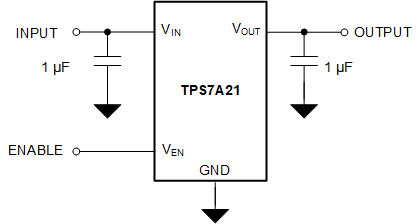
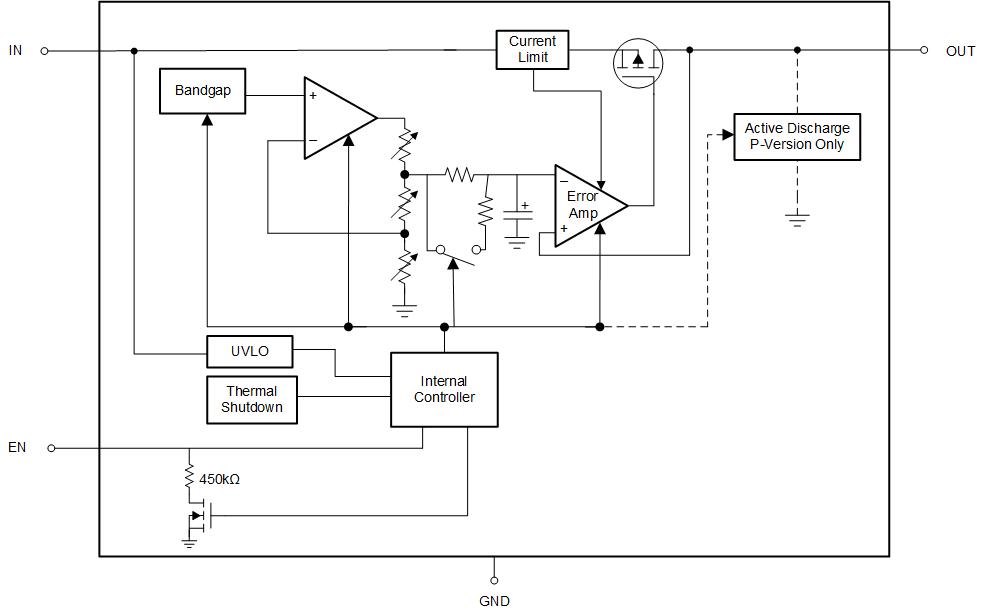
TPS7A21500mA, low-noise ultra-low-IQ high-PSRR low-dropout (LDO) voltage regulator | Power Management (PMIC) | 6 | Active | The TPS7A21 is an ultra-small, low-dropout (LDO) linear voltage regulator that can source 500 mA of output current. The device provides low noise, high PSRR, and excellent load and line transient performance to meet the requirements of RF and other sensitive analog circuits. Innovative design techniques result in low-noise performance without the addition of an external noise bypass capacitor. With the device low quiescent current, the TPS7A21 is a good choice for battery-powered systems. The 2.0-V to 6.0-V input voltage range and 0.8-V to 5.5-V output voltage range support a variety of system requirements. The internal precision reference circuit enables excellent accuracy; the maximum output voltage tolerance is 1.5% over load, line, and temperature variations.
An internal soft-start circuit helps control the inrush current, thus minimizing the input voltage drop during start up. The LDO is stable with small ceramic capacitors, allowing for a small overall solution size.
A smart enable input circuit with an internally controlled pulldown resistor keeps the LDO disabled even when the EN pin is unconnected and helps eliminate external components that are otherwise required to pull down the EN input.
The TPS7A21 is an ultra-small, low-dropout (LDO) linear voltage regulator that can source 500 mA of output current. The device provides low noise, high PSRR, and excellent load and line transient performance to meet the requirements of RF and other sensitive analog circuits. Innovative design techniques result in low-noise performance without the addition of an external noise bypass capacitor. With the device low quiescent current, the TPS7A21 is a good choice for battery-powered systems. The 2.0-V to 6.0-V input voltage range and 0.8-V to 5.5-V output voltage range support a variety of system requirements. The internal precision reference circuit enables excellent accuracy; the maximum output voltage tolerance is 1.5% over load, line, and temperature variations.
An internal soft-start circuit helps control the inrush current, thus minimizing the input voltage drop during start up. The LDO is stable with small ceramic capacitors, allowing for a small overall solution size.
A smart enable input circuit with an internally controlled pulldown resistor keeps the LDO disabled even when the EN pin is unconnected and helps eliminate external components that are otherwise required to pull down the EN input. |
| Linear Voltage Regulator Evaluation Boards | 1 | Active | |
TPS7A21-Q1Automotive, 500mA, low-noise ultra-low-IQ high-PSRR low-dropout (LDO) voltage regulator | Voltage Regulators - Linear, Low Drop Out (LDO) Regulators | 20 | Active | The TPS7A21-Q1 is a small, low-dropout (LDO) linear voltage regulator that sources 500mA of output current. The device provides low noise, high PSRR, and excellent load and line transient performance to meet the requirements of RF and other sensitive analog circuits in automotive applications. Innovative design techniques result in low-noise performance without the addition of an external noise bypass capacitor. The TPS7A21-Q1 low quiescent current is a good choice for low-power systems. The 2.0V to 6.0V input voltage range and 0.8V to 5.5V output voltage range support a variety of system requirements.
An internal soft-start circuit helps control inrush current, thus minimizing the input voltage drop during start-up. The LDO is stable with small ceramic capacitors, allowing for a small overall solution size.
A smart enable input circuit with an internally controlled pulldown resistor keeps the LDO disabled even when the EN pin is unconnected. This circuit also helps eliminate external components that are otherwise required to pull down the EN input.
The TPS7A21-Q1 is a small, low-dropout (LDO) linear voltage regulator that sources 500mA of output current. The device provides low noise, high PSRR, and excellent load and line transient performance to meet the requirements of RF and other sensitive analog circuits in automotive applications. Innovative design techniques result in low-noise performance without the addition of an external noise bypass capacitor. The TPS7A21-Q1 low quiescent current is a good choice for low-power systems. The 2.0V to 6.0V input voltage range and 0.8V to 5.5V output voltage range support a variety of system requirements.
An internal soft-start circuit helps control inrush current, thus minimizing the input voltage drop during start-up. The LDO is stable with small ceramic capacitors, allowing for a small overall solution size.
A smart enable input circuit with an internally controlled pulldown resistor keeps the LDO disabled even when the EN pin is unconnected. This circuit also helps eliminate external components that are otherwise required to pull down the EN input. |
| Power Management (PMIC) | 8 | Active | |
| Power Management (PMIC) | 7 | Active | |
TPS7A26500-mA, 18-V, ultra-low-IQ, high-accuracy, adjustable low-dropout voltage regulator with power good | Evaluation Boards | 8 | Active | The TPS7A26 low-dropout (LDO) linear voltage regulator supports a 2.4-V to 18-V input voltage range with very-low quiescent current (IQ). These features help modern appliances meet increasingly stringent energy requirements and help extend battery life in portable-power solutions.
The TPS7A26 is available in both fixed and adjustable versions. For more flexibility or higher output voltages, the adjustable version uses feedback resistors to set the output voltage from 1.24 V to 17.4 V. Both versions have 1% output regulation accuracy that provides precision regulation for microcontroller (MCU) references.
With the open-drain, power-good (PG) output the device can provide a reset to an MCU or be wire-ORed and level-shifted with other open-drain PGs to provide a system-wide PG or reset.
The TPS7A26 LDO operates more efficiently than standard linear regulators because the maximum dropout voltage is less than 590 mV at 500 mA of current. This maximum dropout voltage allows for 87.7% efficiency from a 5.7-V input voltage (VIN) to5.0-V output voltage (VOUT).
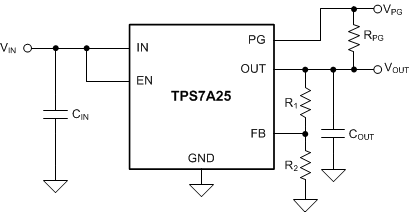
For lower power applications, consider theTPS7A25.
The TPS7A26 low-dropout (LDO) linear voltage regulator supports a 2.4-V to 18-V input voltage range with very-low quiescent current (IQ). These features help modern appliances meet increasingly stringent energy requirements and help extend battery life in portable-power solutions.
The TPS7A26 is available in both fixed and adjustable versions. For more flexibility or higher output voltages, the adjustable version uses feedback resistors to set the output voltage from 1.24 V to 17.4 V. Both versions have 1% output regulation accuracy that provides precision regulation for microcontroller (MCU) references.
With the open-drain, power-good (PG) output the device can provide a reset to an MCU or be wire-ORed and level-shifted with other open-drain PGs to provide a system-wide PG or reset.
The TPS7A26 LDO operates more efficiently than standard linear regulators because the maximum dropout voltage is less than 590 mV at 500 mA of current. This maximum dropout voltage allows for 87.7% efficiency from a 5.7-V input voltage (VIN) to5.0-V output voltage (VOUT).
For lower power applications, consider theTPS7A25. |
| Evaluation Boards | 1 | Obsolete | |