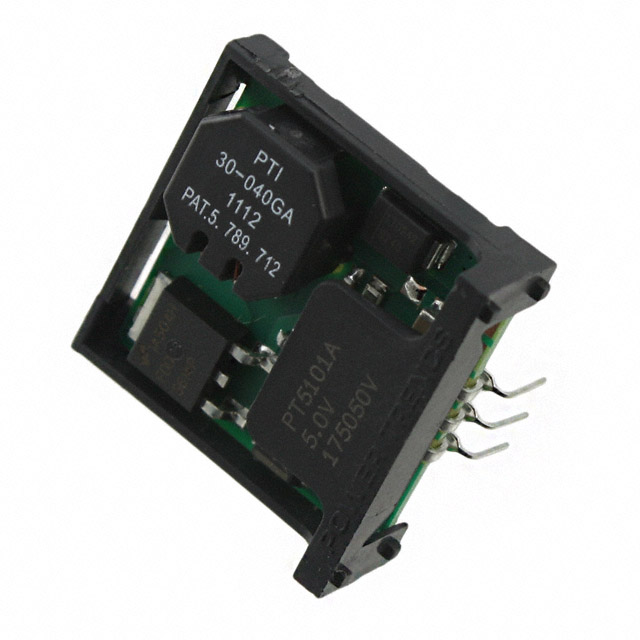
| Development Boards, Kits, Programmers | 1 | Obsolete | |
BQ2000TSwitch-mode multi-chemistry battery charger with dT/dt termination | Battery Chargers | 13 | Active | The bq2000T is a programmable, monolithic IC for fast-charge management of nickel cadmium (NiCd), nickel metal-hydride (NiMH), or lithium-ion (Li-Ion) batteries in single- or multi-chemistry applications. The bq2000T chooses the proper battery chemistry (either nickel or lithium) and proceeds with the optimal charging and termination algorithms. This process eliminates undesirable, undercharged, or overcharged conditions, and allows accurate and safe termination of fast charge.
Depending on the chemistry, the bq2000T provides a number of charge termination criteria:
For safety, the bq2000T inhibits fast charge until the battery voltage and temperature are within user-defined limits. If the battery voltage is below the low-voltage threshold, the bq2000T uses trickle-charge to condition the battery. For NiMH batteries, the bq2000T provides an optional top-off charge to maximize the battery capacity.
The integrated high-speed comparator allows the bq2000T to be the basis for a complete, high-efficiency battery charger circuit for both nickel-based and lithium-based chemistries.
The bq2000T is a programmable, monolithic IC for fast-charge management of nickel cadmium (NiCd), nickel metal-hydride (NiMH), or lithium-ion (Li-Ion) batteries in single- or multi-chemistry applications. The bq2000T chooses the proper battery chemistry (either nickel or lithium) and proceeds with the optimal charging and termination algorithms. This process eliminates undesirable, undercharged, or overcharged conditions, and allows accurate and safe termination of fast charge.
Depending on the chemistry, the bq2000T provides a number of charge termination criteria:
For safety, the bq2000T inhibits fast charge until the battery voltage and temperature are within user-defined limits. If the battery voltage is below the low-voltage threshold, the bq2000T uses trickle-charge to condition the battery. For NiMH batteries, the bq2000T provides an optional top-off charge to maximize the battery capacity.
The integrated high-speed comparator allows the bq2000T to be the basis for a complete, high-efficiency battery charger circuit for both nickel-based and lithium-based chemistries. |
BQ2002GNiCd/NiMH battery charge controller with dT/dt termination and low-temperature fault | Power Management (PMIC) | 21 | Active | The bq2002E and bq2002G Fast-Charge ICs are low-cost CMOS battery-charge controllers providing reliable charge termination for both NiCd and NiMH battery applications. Controlling a current-limited or constant-current supply allows the bq2002E/G to be the basis for a cost-effective stand-alone or system-integrated charger. The bq2002E/G integrates fast charge with optional top-off and pulsed-trickle control in a single IC for charging one or more NiCd or NiMH battery cells.
Fast charge is initiated on application of the charging supply or battery replacement. For safety, fast charge is inhibited if the battery temperature and voltage are outside configured limits.
Fast charge is terminated by any of the following:
After fast charge, the bq2002E/G optionally tops-off and pulse-trickles the battery per the pre-configured limits. Fast charge may be inhibited using the INH pin. The bq2002E/G may also be placed in low-standby-power mode to reduce system power consumption. The bq2002E differs from the bq2002G only in that a slightly different set of fast-charge and top-off time limits is available. All differences between the two ICs are illustrated in Table 1.
The bq2002E and bq2002G Fast-Charge ICs are low-cost CMOS battery-charge controllers providing reliable charge termination for both NiCd and NiMH battery applications. Controlling a current-limited or constant-current supply allows the bq2002E/G to be the basis for a cost-effective stand-alone or system-integrated charger. The bq2002E/G integrates fast charge with optional top-off and pulsed-trickle control in a single IC for charging one or more NiCd or NiMH battery cells.
Fast charge is initiated on application of the charging supply or battery replacement. For safety, fast charge is inhibited if the battery temperature and voltage are outside configured limits.
Fast charge is terminated by any of the following:
After fast charge, the bq2002E/G optionally tops-off and pulse-trickles the battery per the pre-configured limits. Fast charge may be inhibited using the INH pin. The bq2002E/G may also be placed in low-standby-power mode to reduce system power consumption. The bq2002E differs from the bq2002G only in that a slightly different set of fast-charge and top-off time limits is available. All differences between the two ICs are illustrated in Table 1. |
BQ2003Switch-mode NiCd/NiMH battery charger with negative dV and dT/dt termination | Battery Chargers | 10 | Active | The bq2003 Fast Charge IC provides comprehensive fast charge control functions together with high-speed switching power control circuitry on a monolithic CMOS device.
Integration of closed-loop current control circuitry allows the bq2003 to be the basis of a cost-effective solution for stand-alone and system-integrated chargers for batteries of one or more cells.
Switch-activated discharge-before-charge allows bq2003-based chargers to support battery conditioning and capacity determination.
High-efficiency power conversion is accomplished using the bq2003 as a hysteretic PWM controller for switch-mode regulation of the charging current. The bq2003 may alternatively be used to gate an externally regulated charging current.
Fast charge may begin on application of the charging supply, replacement of the battery, or switch depression. For safety, fast charge is inhibited unless/until the battery temperature and voltage are within configured limits.
Temperature, voltage, and time are monitored throughout fast charge. Fast charge is terminated by any of the following:
After fast charge, an optional top-off phase is available. Constant-current maintenence charge is provided by an external trickle resistor.
The bq2003 Fast Charge IC provides comprehensive fast charge control functions together with high-speed switching power control circuitry on a monolithic CMOS device.
Integration of closed-loop current control circuitry allows the bq2003 to be the basis of a cost-effective solution for stand-alone and system-integrated chargers for batteries of one or more cells.
Switch-activated discharge-before-charge allows bq2003-based chargers to support battery conditioning and capacity determination.
High-efficiency power conversion is accomplished using the bq2003 as a hysteretic PWM controller for switch-mode regulation of the charging current. The bq2003 may alternatively be used to gate an externally regulated charging current.
Fast charge may begin on application of the charging supply, replacement of the battery, or switch depression. For safety, fast charge is inhibited unless/until the battery temperature and voltage are within configured limits.
Temperature, voltage, and time are monitored throughout fast charge. Fast charge is terminated by any of the following:
After fast charge, an optional top-off phase is available. Constant-current maintenence charge is provided by an external trickle resistor. |
BQ2004HNiCd/NiMH buck charger w/negative dV, PVD, dT/dt termination and timing setup3 | Integrated Circuits (ICs) | 10 | Active | The bq2004E and bq2004H Fast Charge ICs provide comprehensive fast charge control functions together with high-speed switching power control circuitry on a monolithic CMOS device.
Integration of closed-loop current control circuitry allows the bq2004 to be the basis of a cost-effective solution for stand-alone and system-integrated chargers for batteries of one or more cells.
Switch-activated discharge-before-charge allows bq2004E/H-based chargers to support battery conditioning and capacity determination.
High-efficiency power conversion is accomplished using the bq2004E/H as a hysteretic PWM controller for switch-mode regulation of the charging current. The bq2004E/H may alternatively be used to gate an externally regulated charging current.
Fast charge may begin on application of the charging supply, replacement of the battery, or switch depression. For safety, fast charge is inhibited unless/until the battery temperature and voltage are within configured limits.
Temperature, voltage, and time are monitored throughout fast charge. Fast charge is terminated by any of the following:
After fast charge, optional top-off and pulsed current maintenance phases with appropriate display mode selections are available.
The bq2004H differs from the bq2004E only in that fast charge, hold-off, and top-off time units have been scaled up by a factor of two, and the bq2004H provides different display selections.
The bq2004E and bq2004H Fast Charge ICs provide comprehensive fast charge control functions together with high-speed switching power control circuitry on a monolithic CMOS device.
Integration of closed-loop current control circuitry allows the bq2004 to be the basis of a cost-effective solution for stand-alone and system-integrated chargers for batteries of one or more cells.
Switch-activated discharge-before-charge allows bq2004E/H-based chargers to support battery conditioning and capacity determination.
High-efficiency power conversion is accomplished using the bq2004E/H as a hysteretic PWM controller for switch-mode regulation of the charging current. The bq2004E/H may alternatively be used to gate an externally regulated charging current.
Fast charge may begin on application of the charging supply, replacement of the battery, or switch depression. For safety, fast charge is inhibited unless/until the battery temperature and voltage are within configured limits.
Temperature, voltage, and time are monitored throughout fast charge. Fast charge is terminated by any of the following:
After fast charge, optional top-off and pulsed current maintenance phases with appropriate display mode selections are available.
The bq2004H differs from the bq2004E only in that fast charge, hold-off, and top-off time units have been scaled up by a factor of two, and the bq2004H provides different display selections. |
BQ2005Switch-mode NiCd/NiMH battery charger for sequential charging of dual battery packs | Power Management (PMIC) | 2 | Active | The bq2005 Fast-Charge IC provides comprehensive fast charge control functions together with high-speed switching power control circuitry on a monolithic CMOS device for sequential charge management in dual battery pack applications.
Integration of closed-loop current control circuitry allows the bq2005 to be the basis of a cost-effective solution for stand-alone and system-integrated chargers for batteries of one or more cells.
Switch-activated discharge-before-charge allows bq2005-based chargers to support battery conditioning and capacity determination.
High-efficiency power conversion is accomplished using the bq2005 as a hysteretic PWM controller for switch-mode regulation of the charging current. The bq2005 may alternatively be used to gate an externally regulated charging current.
Fast charge may begin on application of the charging supply, replacement of the battery, or switch depression. For safety, fast charge is inhibited unless/until the battery temperature and voltage are within configured limits.
Temperature, voltage, and time are monitored throughout fast charge. Fast charge is terminated by any of the following:
After fast charge, optional top-off and pulsed current maintenance phases are available.
The bq2005 Fast-Charge IC provides comprehensive fast charge control functions together with high-speed switching power control circuitry on a monolithic CMOS device for sequential charge management in dual battery pack applications.
Integration of closed-loop current control circuitry allows the bq2005 to be the basis of a cost-effective solution for stand-alone and system-integrated chargers for batteries of one or more cells.
Switch-activated discharge-before-charge allows bq2005-based chargers to support battery conditioning and capacity determination.
High-efficiency power conversion is accomplished using the bq2005 as a hysteretic PWM controller for switch-mode regulation of the charging current. The bq2005 may alternatively be used to gate an externally regulated charging current.
Fast charge may begin on application of the charging supply, replacement of the battery, or switch depression. For safety, fast charge is inhibited unless/until the battery temperature and voltage are within configured limits.
Temperature, voltage, and time are monitored throughout fast charge. Fast charge is terminated by any of the following:
After fast charge, optional top-off and pulsed current maintenance phases are available. |
| Power Management (PMIC) | 1 | Obsolete | |
BQ2010NiCd/NiMH gas gauge with 1-wire (DQ) interface and 5 LED drivers | Power Management (PMIC) | 3 | Active | The bq2010 Gas Gauge IC is intended for battery-pack or in-system installation to maintain an accurate record of a battery’s available charge. The IC monitors a voltage drop across a sense resistor connected in series between the negative battery terminal and ground to determine charge and discharge activity of the battery.
NiMH and NiCd battery self-discharge is estimated based on an internal timer and temperature sensor. Compensations for battery temperature and rate of charge or discharge are applied to the charge, discharge, and self-discharge calculations to provide available charge information across a wide range of operating conditions. Battery capacity is automatically recalibrated, or "learned," in the course of a discharge cycle from full to empty.
Nominal available charge may be directly indicated using a five- or six-segment LED display. These segments are used to indicate graphically the nominal available charge.
The bq2010 supports a simple single-line bidirectional serial link to an external processor (common ground). The bq2010 outputs battery information in response to external commands over the serial link.
The bq2010 may operate directly from 3 or 4 cells. With the REF output and an external transistor, a simple, inexpensive regulator can be built to provide VCCacross a greater number of cells.
Internal registers include available charge, temperature, capacity, battery ID, battery status, and programming pin settings. To support subassembly testing, the outputs may also be controlled. The external processor may also overwrite some of the bq2010 gas gauge data registers.
The bq2010 Gas Gauge IC is intended for battery-pack or in-system installation to maintain an accurate record of a battery’s available charge. The IC monitors a voltage drop across a sense resistor connected in series between the negative battery terminal and ground to determine charge and discharge activity of the battery.
NiMH and NiCd battery self-discharge is estimated based on an internal timer and temperature sensor. Compensations for battery temperature and rate of charge or discharge are applied to the charge, discharge, and self-discharge calculations to provide available charge information across a wide range of operating conditions. Battery capacity is automatically recalibrated, or "learned," in the course of a discharge cycle from full to empty.
Nominal available charge may be directly indicated using a five- or six-segment LED display. These segments are used to indicate graphically the nominal available charge.
The bq2010 supports a simple single-line bidirectional serial link to an external processor (common ground). The bq2010 outputs battery information in response to external commands over the serial link.
The bq2010 may operate directly from 3 or 4 cells. With the REF output and an external transistor, a simple, inexpensive regulator can be built to provide VCCacross a greater number of cells.
Internal registers include available charge, temperature, capacity, battery ID, battery status, and programming pin settings. To support subassembly testing, the outputs may also be controlled. The external processor may also overwrite some of the bq2010 gas gauge data registers. |
| Power Management (PMIC) | 2 | Obsolete | |
BQ2012NiCd/NiMH gas gauge with 1-wire (DQ) interface, 5 LED drivers and Slow-charge Control | Power Management (PMIC) | 2 | Active | The bq2012 Gas Gauge IC is intended for battery-pack or in-system installation to maintain an accurate record of available battery charge. The IC monitors a voltage drop across a sense resistor connected in series between the negative battery terminal and ground to determine charge and discharge activity of the battery.
Self-discharge of NiMH and NiCd batteries is estimated based on an internal timer and temperature sensor. Compensations for battery temperature and rate of charge or discharge are applied to the charge, discharge, and self-discharge calculations to provide available charge information across a wide range of operating conditions. Battery capacity is automatically recalibrated, or "learned," in the course of a discharge cycle from full to empty.
The bq2012 includes a charge control output that, when used with other full-charge safety termination methods, can provide a cost-effective means of controlling charge based on the battery’s charge state.
Nominal available charge may be directly indicated using a five- or six-segment LED display. These segments are used to graphically indicate nominal available charge.
The bq2012 supports a simple single-line bidirectional serial link to an external processor (common ground). The bq2012 outputs battery information in response to external commands over the serial link.
Internal registers include available charge, temperature, capacity, battery ID, battery status, and programming pin settings. To support subassembly testing, the outputs may also be controlled. The external processor may also overwrite some of the bq2012 gas gauge data registers.
The bq2012 may operate directly from three or four cells. With the REF output and an external transistor, a simple, inexpensive regulator can be built to provide VCCacross a greater number of cells.
The bq2012 Gas Gauge IC is intended for battery-pack or in-system installation to maintain an accurate record of available battery charge. The IC monitors a voltage drop across a sense resistor connected in series between the negative battery terminal and ground to determine charge and discharge activity of the battery.
Self-discharge of NiMH and NiCd batteries is estimated based on an internal timer and temperature sensor. Compensations for battery temperature and rate of charge or discharge are applied to the charge, discharge, and self-discharge calculations to provide available charge information across a wide range of operating conditions. Battery capacity is automatically recalibrated, or "learned," in the course of a discharge cycle from full to empty.
The bq2012 includes a charge control output that, when used with other full-charge safety termination methods, can provide a cost-effective means of controlling charge based on the battery’s charge state.
Nominal available charge may be directly indicated using a five- or six-segment LED display. These segments are used to graphically indicate nominal available charge.
The bq2012 supports a simple single-line bidirectional serial link to an external processor (common ground). The bq2012 outputs battery information in response to external commands over the serial link.
Internal registers include available charge, temperature, capacity, battery ID, battery status, and programming pin settings. To support subassembly testing, the outputs may also be controlled. The external processor may also overwrite some of the bq2012 gas gauge data registers.
The bq2012 may operate directly from three or four cells. With the REF output and an external transistor, a simple, inexpensive regulator can be built to provide VCCacross a greater number of cells. |