T
Texas Instruments
| Series | Category | # Parts | Status | Description |
|---|---|---|---|---|
| Part | Spec A | Spec B | Spec C | Spec D | Description |
|---|---|---|---|---|---|



| Series | Category | # Parts | Status | Description |
|---|---|---|---|---|
| Part | Spec A | Spec B | Spec C | Spec D | Description |
|---|---|---|---|---|---|
| Part | Category | Description |
|---|---|---|
 Texas Instruments BQ2002CSNTRG4Unknown | Integrated Circuits (ICs) | LINEAR BATTERY CHARGER NICD/NIMH 2000MA 0V TO 6V 8-PIN SOIC T/R |
 Texas Instruments LM3676SDX-3.3Obsolete | Integrated Circuits (ICs) | IC REG BUCK 3.3V 600MA 8WSON |
 Texas Instruments | Integrated Circuits (ICs) | TMX320DRE311 179PIN UBGA 200MHZ |
 Texas Instruments UCC3580N-1G4Obsolete | Integrated Circuits (ICs) | IC REG CTRLR FWRD CONV 16DIP |
 Texas Instruments LM2831YMF EVALObsolete | Development Boards Kits Programmers | EVAL BOARD FOR LM2831 |
 Texas Instruments | Integrated Circuits (ICs) | BUFFER/LINE DRIVER 8-CH NON-INVERTING 3-ST CMOS 20-PIN SSOP T/R |
 Texas Instruments | Integrated Circuits (ICs) | ANALOG OTHER PERIPHERALS |
Texas Instruments | Integrated Circuits (ICs) | RADIATION-HARDENED, QMLP 60V HAL |
 Texas Instruments SN75LVDS051DRObsolete | Integrated Circuits (ICs) | IC TRANSCEIVER FULL 2/2 16SOIC |
 Texas Instruments | Integrated Circuits (ICs) | AUTOMOTIVE OCTAL D-TYPE FLIP-FLO |
| Series | Category | # Parts | Status | Description |
|---|---|---|---|---|
TPS652634.5V to 18V Input Voltage, 3A/2A/2A Output Current Step-Down Converter with I2C controlled DVS. | Evaluation Boards | 7 | Active | The TPS65263-Q1 incorporates triple-synchronous buck converters with 4.0- to 18-V wide input voltage. The converter with constant frequency peak current mode is designed to simplify its application while giving designers options to optimize the system according to targeted applications. The switching frequency of the converters is adjustable from 200 kHz to 2.3 MHz with an external resistor. 180° out-of-phase operation between buck1 and buck2, buck3 (buck2 and buck3 run in phase) minimizes the input filter requirements.
The initial start-up voltage of each buck can be set with external feedback resistors. The output voltage of buck2 can be dynamically scaled from 0.68 to 1.95 V in 10-mV steps with I 2C-controlled 7 bits VID. The VID voltage transition slew rate is programmable with 3-bits control through I 2C bus to optimize overshoot/undershoot during VID voltage transition.
Each buck in TPS65263-Q1 can be I 2C controlled for enabling/disabling output voltage, setting the pulse skipping mode (PSM) or forced continuous current (FCC) mode at light load condition and reading the power-good status, overcurrent warning, and die temperature warning.
The TPS65263-Q1 features overvoltage, overcurrent, short-circuit, and overtemperature protection.
The TPS65263-Q1 incorporates triple-synchronous buck converters with 4.0- to 18-V wide input voltage. The converter with constant frequency peak current mode is designed to simplify its application while giving designers options to optimize the system according to targeted applications. The switching frequency of the converters is adjustable from 200 kHz to 2.3 MHz with an external resistor. 180° out-of-phase operation between buck1 and buck2, buck3 (buck2 and buck3 run in phase) minimizes the input filter requirements.
The initial start-up voltage of each buck can be set with external feedback resistors. The output voltage of buck2 can be dynamically scaled from 0.68 to 1.95 V in 10-mV steps with I 2C-controlled 7 bits VID. The VID voltage transition slew rate is programmable with 3-bits control through I 2C bus to optimize overshoot/undershoot during VID voltage transition.
Each buck in TPS65263-Q1 can be I 2C controlled for enabling/disabling output voltage, setting the pulse skipping mode (PSM) or forced continuous current (FCC) mode at light load condition and reading the power-good status, overcurrent warning, and die temperature warning.
The TPS65263-Q1 features overvoltage, overcurrent, short-circuit, and overtemperature protection. |
TPS652654.5- to 17-V Input Voltage, 5-A/3-A/2-A Output Current Triple Buck Converter | Integrated Circuits (ICs) | 2 | Active | The TPS65265 incorporates triple synchronous buck converters with 4.5-V to 17-V wide input voltage range that encompassed most intermediate bus voltage operating off 5-, 9-, 12- or 15-V power bus or battery. The converter with constant frequency peak current mode is designed to simplify its application while giving designers options to optimize the system according to targeted applications. The switching frequency of the converters can be adjustable from 250 kHz to 2.3 MHz with an external resistor or external clock. 120° out-of-phase operation between Buck1, Buck2, and Buck3 minimizes the input filter requirements.
The TPS65265 operates in pulse skipping mode (PSM) with driving MODE pin to high or leaving float and operates in force continuous current mode (FCC) with connecting MODE pin to GND. PSM mode provides high efficiency by reducing switching losses at light load and FCC mode reduces noise susceptibility and RF interference.
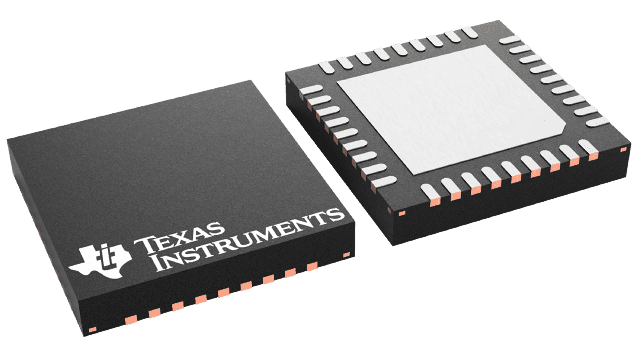
The TPS65265 is available in a 32-pin thermal enhanced QFN (RHB) 5-mm × 5-mm thin package.
The TPS65265 incorporates triple synchronous buck converters with 4.5-V to 17-V wide input voltage range that encompassed most intermediate bus voltage operating off 5-, 9-, 12- or 15-V power bus or battery. The converter with constant frequency peak current mode is designed to simplify its application while giving designers options to optimize the system according to targeted applications. The switching frequency of the converters can be adjustable from 250 kHz to 2.3 MHz with an external resistor or external clock. 120° out-of-phase operation between Buck1, Buck2, and Buck3 minimizes the input filter requirements.
The TPS65265 operates in pulse skipping mode (PSM) with driving MODE pin to high or leaving float and operates in force continuous current mode (FCC) with connecting MODE pin to GND. PSM mode provides high efficiency by reducing switching losses at light load and FCC mode reduces noise susceptibility and RF interference.
The TPS65265 is available in a 32-pin thermal enhanced QFN (RHB) 5-mm × 5-mm thin package. |
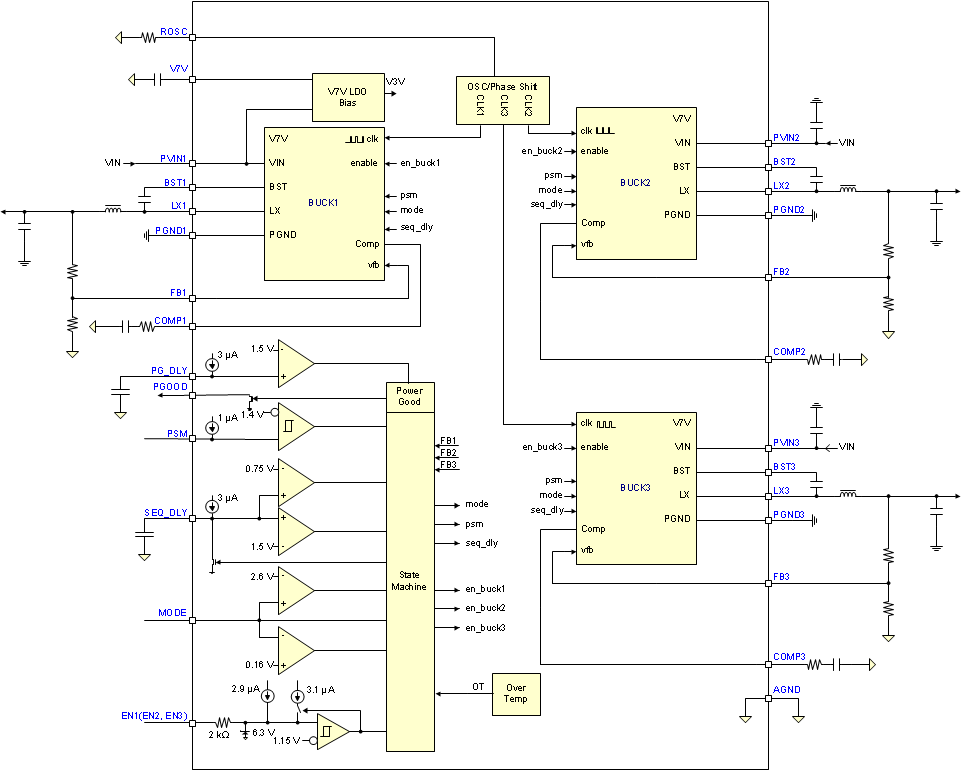
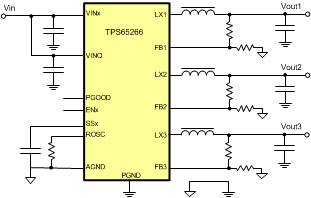
TPS652662.7V to 6.5V Input Voltage, 3A/2A/2A Output Current Synchronous Buck Converters | Development Boards, Kits, Programmers | 5 | Active | The TPS65266 incorporates 3 channels of high-efficiency synchronous buck converter for applications operating off the adaptor or battery with input voltage lower than 6.5 V.
The buck DC/DC converter integrates power MOSFETs for optimized power efficiency and reduces external component counts. The peak current mode control simplifies the compensation and fast transient response. High clock frequency allows smaller and low-value inductors and capacitors. External compensation supports optimized loop compensation and fast transient response. In light load condition, the buck converter operates in FCC mode for a reduction in noise susceptibility and RF interference. Cycle-by-cycle overcurrent limiting with hiccup mode limits MOSFET power dissipation in short circuit or overloading fault conditions.
The TPS65266 features a power-good supervisor circuit that monitors all converter outputs. The PGOOD pin is asserted after the output voltages in each channel are in regulation and sequencing is done.
When continuous heavy overload or short circuit increases power dissipation in the buck converter, internal thermal protection circuit shuts off the device to prevent damage. Recovery from a thermal shutdown is automatic after the device has cooled sufficiently.
The TPS65266 incorporates 3 channels of high-efficiency synchronous buck converter for applications operating off the adaptor or battery with input voltage lower than 6.5 V.
The buck DC/DC converter integrates power MOSFETs for optimized power efficiency and reduces external component counts. The peak current mode control simplifies the compensation and fast transient response. High clock frequency allows smaller and low-value inductors and capacitors. External compensation supports optimized loop compensation and fast transient response. In light load condition, the buck converter operates in FCC mode for a reduction in noise susceptibility and RF interference. Cycle-by-cycle overcurrent limiting with hiccup mode limits MOSFET power dissipation in short circuit or overloading fault conditions.
The TPS65266 features a power-good supervisor circuit that monitors all converter outputs. The PGOOD pin is asserted after the output voltages in each channel are in regulation and sequencing is done.
When continuous heavy overload or short circuit increases power dissipation in the buck converter, internal thermal protection circuit shuts off the device to prevent damage. Recovery from a thermal shutdown is automatic after the device has cooled sufficiently. |
| Integrated Circuits (ICs) | 2 | Active | ||
| Voltage Regulators - DC DC Switching Regulators | 4 | Active | ||
| DC/DC & AC/DC (Off-Line) SMPS Evaluation Boards | 5 | Active | ||
TPS652764.5-V to 18-V Input, Dual (6-A and 3.5-A) Synchronous Step-Down Converter with I2C Control | DC/DC & AC/DC (Off-Line) SMPS Evaluation Boards | 4 | Active | TPS65276V is a monolithic dual synchronous buck converter with wide 4.5V to 18V operating input voltage range that encompassed most intermediate bus voltage operating off 5-, 9-, 12- or 15-V power bus or battery. The converter with constant frequency peak current mode control is designed to simplify its application while giving the designers options to optimize their usage according to the target applications.
Each buck converter in TPS65276V has external feedback resistors that can be used for setting the initial start up voltage. The feedback voltage reference for this start-up option is 0.6 V. Once the VID DAC is updated via the I2C, the buck converter switches feedback resistors from external to internal. The output voltage in each buck can be programmable from 0.68 V to 1.95 V in 10-mV steps with I2C Controlled 7-Bits VID.
Each buck converter in TPS65276V can also be I2C controlled for enabling/disabling output voltage, setting the pulse skipping mode and reading the power good status and die temperature warning.
The switching frequency of the converters can be set from 200 kHz to 1.6 MHz with an external resistor. Two converters have clock signal with 180° out-of-phase.
TPS65276V features dedicated enable pin when I2C interface is not used. Independent soft-start pin provides flexibility in power up programmability. Constant frequency peak current mode control simplifies the compensation and provides fast transient response. Cycle-by-cycle over current protection and hiccup mode operation limit MOSFET power dissipation in short circuit or over loading fault conditions. Low side reverse over current protection also prevents excessive sinking current from damaging the converter.
TPS65273V also features a light load pulse skipping mode (PSM) that can be controlled by I2C or MODE pin configuration. The PSM mode allows a power loss reduction on the input power supplied to the system to achieve high efficiency at light loading.
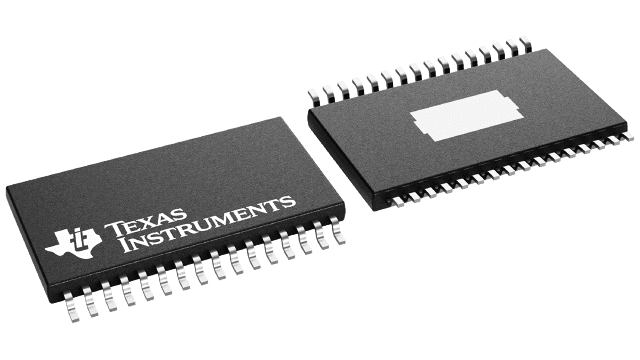
The TPS65273V is available in a 32-pin thermally enhanced HTSSOP (DAP) package and 36-pin QFN 6-mm × 6-mm (RHH) package.
TPS65276V is a monolithic dual synchronous buck converter with wide 4.5V to 18V operating input voltage range that encompassed most intermediate bus voltage operating off 5-, 9-, 12- or 15-V power bus or battery. The converter with constant frequency peak current mode control is designed to simplify its application while giving the designers options to optimize their usage according to the target applications.
Each buck converter in TPS65276V has external feedback resistors that can be used for setting the initial start up voltage. The feedback voltage reference for this start-up option is 0.6 V. Once the VID DAC is updated via the I2C, the buck converter switches feedback resistors from external to internal. The output voltage in each buck can be programmable from 0.68 V to 1.95 V in 10-mV steps with I2C Controlled 7-Bits VID.
Each buck converter in TPS65276V can also be I2C controlled for enabling/disabling output voltage, setting the pulse skipping mode and reading the power good status and die temperature warning.
The switching frequency of the converters can be set from 200 kHz to 1.6 MHz with an external resistor. Two converters have clock signal with 180° out-of-phase.
TPS65276V features dedicated enable pin when I2C interface is not used. Independent soft-start pin provides flexibility in power up programmability. Constant frequency peak current mode control simplifies the compensation and provides fast transient response. Cycle-by-cycle over current protection and hiccup mode operation limit MOSFET power dissipation in short circuit or over loading fault conditions. Low side reverse over current protection also prevents excessive sinking current from damaging the converter.
TPS65273V also features a light load pulse skipping mode (PSM) that can be controlled by I2C or MODE pin configuration. The PSM mode allows a power loss reduction on the input power supplied to the system to achieve high efficiency at light loading.
The TPS65273V is available in a 32-pin thermally enhanced HTSSOP (DAP) package and 36-pin QFN 6-mm × 6-mm (RHH) package. |
TPS652794.5-V to 18-V Input, Dual 5-A Synchronous Step-Down Converter | Integrated Circuits (ICs) | 8 | Active | TPS65279 is a monolithic dual synchronous buck converter with wide 4.5-V to 18-V operating input voltage range that encompassed most intermediate bus voltage operating off 5-, 9-, 12- or 15-V power bus or battery. The converter with constant frequency peak current mode control is designed to simplify its application while giving the designers options to optimize their usage according to the target applications.
Two bucks in TPS65279 can be paralleled to delivery up to 10-A load current by using current sharing mode, connect ISHARE pin high. Two phase operation in current sharing reduces system filtering capacitance and inductance, alleviates EMI and improves output voltage ripple and noise.
TPS65279 features a dedicated enable pin. An independent soft-start pin provides flexibility in power up programmability. Constant frequency peak current mode control simplifies the compensation and provides fast transient response. Cycle-by-cycle overcurrent protection and hiccup mode operation limit MOSFET power dissipation in short circuit or over loading fault conditions.
Low-side reverse overcurrent protection also prevents excessive sinking current from damaging the converter. TPS65279 also features a light load pulse skipping mode (PSM) controlled by MODE pin configuration.
The TPS65279 is available in a 32-pin thermally-enhanced HTSSOP (DAP) package and 36-pin 6-mm × 6-mm VQFN (RHH) package.
TPS65279 is a monolithic dual synchronous buck converter with wide 4.5-V to 18-V operating input voltage range that encompassed most intermediate bus voltage operating off 5-, 9-, 12- or 15-V power bus or battery. The converter with constant frequency peak current mode control is designed to simplify its application while giving the designers options to optimize their usage according to the target applications.
Two bucks in TPS65279 can be paralleled to delivery up to 10-A load current by using current sharing mode, connect ISHARE pin high. Two phase operation in current sharing reduces system filtering capacitance and inductance, alleviates EMI and improves output voltage ripple and noise.
TPS65279 features a dedicated enable pin. An independent soft-start pin provides flexibility in power up programmability. Constant frequency peak current mode control simplifies the compensation and provides fast transient response. Cycle-by-cycle overcurrent protection and hiccup mode operation limit MOSFET power dissipation in short circuit or over loading fault conditions.
Low-side reverse overcurrent protection also prevents excessive sinking current from damaging the converter. TPS65279 also features a light load pulse skipping mode (PSM) controlled by MODE pin configuration.
The TPS65279 is available in a 32-pin thermally-enhanced HTSSOP (DAP) package and 36-pin 6-mm × 6-mm VQFN (RHH) package. |
TPS652805.5V to 18V input, fixed 5V output, 4A synchronous buck converter with dual load switches | Integrated Circuits (ICs) | 1 | Active | The TPS65280 incorporates dual N-channel MOSFET power switches for USB power distribution systems that require dual power switches in a single package. It also integrates a buck converter which regulates an accurate 5-V output voltage from a 5.5-V to 18-V power bus to supply the power for power switches. The device is intended to provide a total USB power distribution solution for digital TV, set-top boxes, VOIP phones and tablet PC applications, where precision current limiting is required or heavy capacitive loads or short circuits are encountered.
A dual 85-mΩ independent power distribution switch limits the output current to a typical 1.2 A (manufacture trim 0.8 A, 1.6 A, and 2 A available options) when output current load exceeds the current limit threshold. TPS65280 device limits output current to a safe level by using a constant current mode when output load exceeds the current limit threshold. After delitching time, TPS65280 provides circuit breaker functionality by latching off the power switch during over-current or reverse-voltage situations. Two back-to-back power MOSFETs prevent the current injects from output to input in shutdown. An internal reverse-voltage comparator disables the power switch when the output voltage is driven higher than the input to protect the circuits on the input side of the switch in normal operation. The nFAULT1/2 output asserts low during over-current and reverse-voltage conditions.
The buck DC/DC converter integrates power MOSFETs for optimized power efficiency and reduced external component count for a fixed 5-V output voltage. A wide 5.5-V to 18-V input supply range to buck encompasses most intermediate bus voltages operating off a 9-V, 12-V or 15-V power bus. Constant frequency peak current mode control simplifies the compensation and fast transient response. Equipped with enable and soft-start pins, the DC/DC can be precisely sequenced and ramp up in order to align with other rails in the system. Cycle-by-cycle over-current protection and operating in hiccup mode limit MOSFET power dissipation during buck output short circuit or over loading fault conditions. The switching frequency of the converter can be programmed from 300 kHz to 1.4 MHz with an external resistor at the ROSC pin. With the ROSC pin connecting to the V7V pin, floating, or grounding, a default fixed switching frequency can be selected to reduce the external component. The internal oscillator can be synchronized with a free-run external clock in frequency.
When continuous heavy overload or short circuit increases power dissipation in the buck converter or power switches, the internal thermal protection circuit shuts off both the buck regulator and power switches to prevent damage. Recovery from a thermal shutdown is automatic once the device has cooled sufficiently.
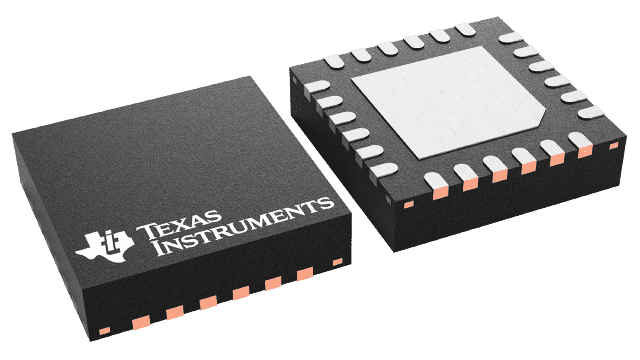
The TPS65280 is available in a 24-lead thermally enhanced QFN (RGE) 4-mm × 4-mm thin package.
The TPS65280 incorporates dual N-channel MOSFET power switches for USB power distribution systems that require dual power switches in a single package. It also integrates a buck converter which regulates an accurate 5-V output voltage from a 5.5-V to 18-V power bus to supply the power for power switches. The device is intended to provide a total USB power distribution solution for digital TV, set-top boxes, VOIP phones and tablet PC applications, where precision current limiting is required or heavy capacitive loads or short circuits are encountered.
A dual 85-mΩ independent power distribution switch limits the output current to a typical 1.2 A (manufacture trim 0.8 A, 1.6 A, and 2 A available options) when output current load exceeds the current limit threshold. TPS65280 device limits output current to a safe level by using a constant current mode when output load exceeds the current limit threshold. After delitching time, TPS65280 provides circuit breaker functionality by latching off the power switch during over-current or reverse-voltage situations. Two back-to-back power MOSFETs prevent the current injects from output to input in shutdown. An internal reverse-voltage comparator disables the power switch when the output voltage is driven higher than the input to protect the circuits on the input side of the switch in normal operation. The nFAULT1/2 output asserts low during over-current and reverse-voltage conditions.
The buck DC/DC converter integrates power MOSFETs for optimized power efficiency and reduced external component count for a fixed 5-V output voltage. A wide 5.5-V to 18-V input supply range to buck encompasses most intermediate bus voltages operating off a 9-V, 12-V or 15-V power bus. Constant frequency peak current mode control simplifies the compensation and fast transient response. Equipped with enable and soft-start pins, the DC/DC can be precisely sequenced and ramp up in order to align with other rails in the system. Cycle-by-cycle over-current protection and operating in hiccup mode limit MOSFET power dissipation during buck output short circuit or over loading fault conditions. The switching frequency of the converter can be programmed from 300 kHz to 1.4 MHz with an external resistor at the ROSC pin. With the ROSC pin connecting to the V7V pin, floating, or grounding, a default fixed switching frequency can be selected to reduce the external component. The internal oscillator can be synchronized with a free-run external clock in frequency.
When continuous heavy overload or short circuit increases power dissipation in the buck converter or power switches, the internal thermal protection circuit shuts off both the buck regulator and power switches to prevent damage. Recovery from a thermal shutdown is automatic once the device has cooled sufficiently.
The TPS65280 is available in a 24-lead thermally enhanced QFN (RGE) 4-mm × 4-mm thin package. |
TPS652814.5V to 18V, 3A, Precision Adjustable Current Limited Power Distribution Switch | Power Distribution Switches, Load Drivers | 5 | Active | The TPS65281/TPS65281-1 incorporates an N-channel back-to-back power MOSFET switch and a monolithic buck converter. The device is intended to provide a total power distribution solution for digital TV, set-top boxes, tablet PC and VOIP phones etc applications, where precision current limiting is required or heavy capacitive load or short circuit are encountered.
A 100-mΩ independent power distribution switch limits the output current to a programmable current limit threshold between typical 75 mA and 2.7 A by using an external resistor. The current limit accauracy as tight as ±6% can be achieved at higher current limit setting. TPS65281 provides circuit breaker functionality by latching off the power switch during over-current or reverse-voltage situations. TPS65281-1 limits output current to a safe level by using a constant current mode when the output load exceeds the current limit threshold. An internal reverse-voltage comparator disables the power switch when the output voltage is driven higher than the input to protect the device on the input side of the switch in normal operation. The nFAULT output asserts low under over-current and reverse-voltage conditions. Back-to-back power MOSFETs structure prevents the reverse current injection from an active load at output port during shutdown of power switch.
The buck DC/DC converter integrates power MOSFETs for optimized power efficiency and reduced external component count. A wide 4.5-V to 18-V input supply range to buck encompasses most intermediate bus voltages operating off 5-V, 9-V, 12-V or 15-V power bus. Constant frequency peak current mode control simplifies the compensation and provides fast transient response. The buck can be precisely sequenced and ramp up in order to align with other rails in the system with the soft-start pin. With SS pin floating, the built-in 1ms soft-start time prevents in-rush current. Cycle-by-cycle over current protection and hiccup operation limit MOSFET power dissipation in short circuit or over loading fault conditions. The switching frequency of the converter can be programmed from 300 kHz to 1.4 MHz with an external resistor at ROSC pin. With ROSC pin connecting to V7V pin, floating, or grounding, a default fixed switching frequency can be selected to reduce an external resistor.
The TPS65281/TPS65281-1 is available in a 16-lead thermally enhanced QFN (RGV) 4-mm × 4-mm thin package.
The TPS65281/TPS65281-1 incorporates an N-channel back-to-back power MOSFET switch and a monolithic buck converter. The device is intended to provide a total power distribution solution for digital TV, set-top boxes, tablet PC and VOIP phones etc applications, where precision current limiting is required or heavy capacitive load or short circuit are encountered.
A 100-mΩ independent power distribution switch limits the output current to a programmable current limit threshold between typical 75 mA and 2.7 A by using an external resistor. The current limit accauracy as tight as ±6% can be achieved at higher current limit setting. TPS65281 provides circuit breaker functionality by latching off the power switch during over-current or reverse-voltage situations. TPS65281-1 limits output current to a safe level by using a constant current mode when the output load exceeds the current limit threshold. An internal reverse-voltage comparator disables the power switch when the output voltage is driven higher than the input to protect the device on the input side of the switch in normal operation. The nFAULT output asserts low under over-current and reverse-voltage conditions. Back-to-back power MOSFETs structure prevents the reverse current injection from an active load at output port during shutdown of power switch.
The buck DC/DC converter integrates power MOSFETs for optimized power efficiency and reduced external component count. A wide 4.5-V to 18-V input supply range to buck encompasses most intermediate bus voltages operating off 5-V, 9-V, 12-V or 15-V power bus. Constant frequency peak current mode control simplifies the compensation and provides fast transient response. The buck can be precisely sequenced and ramp up in order to align with other rails in the system with the soft-start pin. With SS pin floating, the built-in 1ms soft-start time prevents in-rush current. Cycle-by-cycle over current protection and hiccup operation limit MOSFET power dissipation in short circuit or over loading fault conditions. The switching frequency of the converter can be programmed from 300 kHz to 1.4 MHz with an external resistor at ROSC pin. With ROSC pin connecting to V7V pin, floating, or grounding, a default fixed switching frequency can be selected to reduce an external resistor.
The TPS65281/TPS65281-1 is available in a 16-lead thermally enhanced QFN (RGV) 4-mm × 4-mm thin package. |