T
Texas Instruments
| Series | Category | # Parts | Status | Description |
|---|---|---|---|---|
| Part | Spec A | Spec B | Spec C | Spec D | Description |
|---|---|---|---|---|---|



| Series | Category | # Parts | Status | Description |
|---|---|---|---|---|
| Part | Spec A | Spec B | Spec C | Spec D | Description |
|---|---|---|---|---|---|
| Part | Category | Description |
|---|---|---|
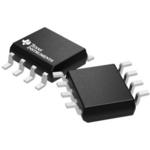 Texas Instruments BQ2002CSNTRG4Unknown | Integrated Circuits (ICs) | LINEAR BATTERY CHARGER NICD/NIMH 2000MA 0V TO 6V 8-PIN SOIC T/R |
 Texas Instruments LM3676SDX-3.3Obsolete | Integrated Circuits (ICs) | IC REG BUCK 3.3V 600MA 8WSON |
 Texas Instruments | Integrated Circuits (ICs) | TMX320DRE311 179PIN UBGA 200MHZ |
 Texas Instruments UCC3580N-1G4Obsolete | Integrated Circuits (ICs) | IC REG CTRLR FWRD CONV 16DIP |
 Texas Instruments LM2831YMF EVALObsolete | Development Boards Kits Programmers | EVAL BOARD FOR LM2831 |
 Texas Instruments | Integrated Circuits (ICs) | BUFFER/LINE DRIVER 8-CH NON-INVERTING 3-ST CMOS 20-PIN SSOP T/R |
 Texas Instruments | Integrated Circuits (ICs) | ANALOG OTHER PERIPHERALS |
Texas Instruments | Integrated Circuits (ICs) | RADIATION-HARDENED, QMLP 60V HAL |
 Texas Instruments SN75LVDS051DRObsolete | Integrated Circuits (ICs) | IC TRANSCEIVER FULL 2/2 16SOIC |
 Texas Instruments | Integrated Circuits (ICs) | AUTOMOTIVE OCTAL D-TYPE FLIP-FLO |
| Series | Category | # Parts | Status | Description |
|---|---|---|---|---|
| DC/DC & AC/DC (Off-Line) SMPS Evaluation Boards | 1 | Active | ||
TPS63031High Efficient Single Inductor Buck-Boost Converter with 1-A Switches | Integrated Circuits (ICs) | 3 | Active | The TPS6303x devices provide a power supply solution for products powered by either a two-cell or three-cell alkaline, NiCd or NiMH battery, or a one-cell Li-ion or Li-polymer battery. Output currents can go as high as 600 mA while using a single-cell Li-ion or Li-polymer battery, and discharge it down to 2.5 V or lower. The buck-boost converter is based on a fixed-frequency, pulse width modulation (PWM) controller using synchronous rectification to obtain maximum efficiency. At low-load currents, the converter enters power-save mode to maintain high efficiency over a wide load current range. The power-save mode can be disabled, forcing the converter to operate at a fixed switching frequency. The maximum average current in the switches is limited to a typical value of 1000 mA. The output voltage is programmable using an external resistor divider, or is fixed internally on the chip. The converter can be disabled to minimize battery drain. During shutdown, the load is disconnected from the battery.
The TPS6303x devices operate over a free air temperature range of –40°C to 85°C. The devices are packaged in a 10-pin VSON package measuring 2.5-mm × 2.5-mm (DSK).
The TPS6303x devices provide a power supply solution for products powered by either a two-cell or three-cell alkaline, NiCd or NiMH battery, or a one-cell Li-ion or Li-polymer battery. Output currents can go as high as 600 mA while using a single-cell Li-ion or Li-polymer battery, and discharge it down to 2.5 V or lower. The buck-boost converter is based on a fixed-frequency, pulse width modulation (PWM) controller using synchronous rectification to obtain maximum efficiency. At low-load currents, the converter enters power-save mode to maintain high efficiency over a wide load current range. The power-save mode can be disabled, forcing the converter to operate at a fixed switching frequency. The maximum average current in the switches is limited to a typical value of 1000 mA. The output voltage is programmable using an external resistor divider, or is fixed internally on the chip. The converter can be disabled to minimize battery drain. During shutdown, the load is disconnected from the battery.
The TPS6303x devices operate over a free air temperature range of –40°C to 85°C. The devices are packaged in a 10-pin VSON package measuring 2.5-mm × 2.5-mm (DSK). |
| Voltage Regulators - DC DC Switching Regulators | 2 | Active | ||
TPS63050TPS6305x Single Inductor Buck-Boost with 1-A Switches and Adjustable Soft Start | Power Management (PMIC) | 6 | Active | The TPS6305x family of devices is a high efficiency, low quiescent-current buck-boost converter, suitable for applications where the input voltage is higher or lower than the output.
Continuous output current can go as high as 500 mA in boost mode and as high as 1 A in buck mode. The maximum average current in the switches is limited to a typical value of 1 A. The TPS6305x family of devices regulate the output voltage over the complete input voltage range by automatically switching between buck or boost mode depending on the input voltage, ensuring seamless transition between modes.
The buck-boost converter is based on a fixed-frequency, pulse-width-modulation (PWM) controller using synchronous rectification to obtain the highest efficiency. At low load currents, the converter enters Power Save Mode to maintain high efficiency over the complete load current range.
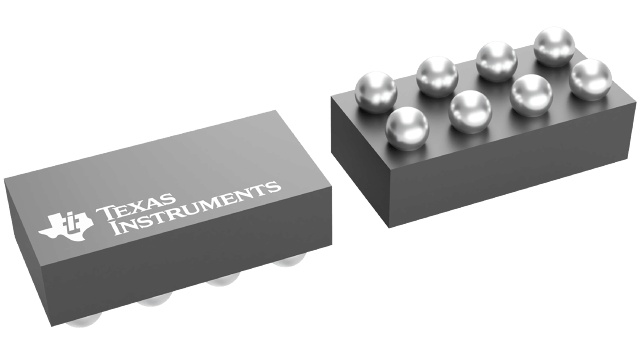
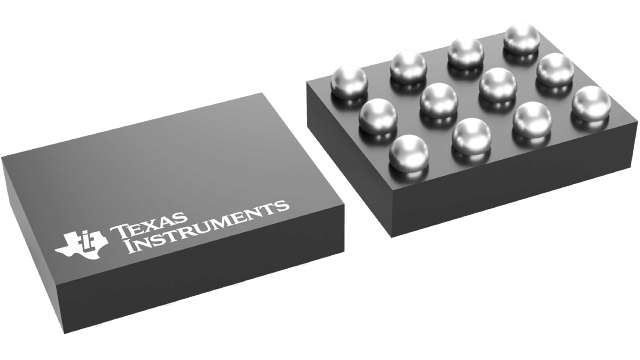
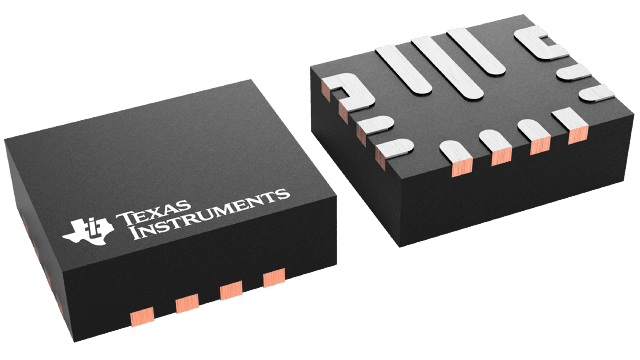
The PFM/PWM pin allows the user to select between automatic-PFM/PWM mode operation and forced-PWM operation. During PWM mode a fixed-frequency of typically 2.5 MHz is used. The output voltage is programmable using an external resistor divider, or is fixed internally on the chip. The converter can be disabled to minimize battery drain. During shutdown, the load is disconnected from the battery. The device is packaged in a 12-pin DSBGA and in a 12-pin HotRod package.
The TPS6305x family of devices is a high efficiency, low quiescent-current buck-boost converter, suitable for applications where the input voltage is higher or lower than the output.
Continuous output current can go as high as 500 mA in boost mode and as high as 1 A in buck mode. The maximum average current in the switches is limited to a typical value of 1 A. The TPS6305x family of devices regulate the output voltage over the complete input voltage range by automatically switching between buck or boost mode depending on the input voltage, ensuring seamless transition between modes.
The buck-boost converter is based on a fixed-frequency, pulse-width-modulation (PWM) controller using synchronous rectification to obtain the highest efficiency. At low load currents, the converter enters Power Save Mode to maintain high efficiency over the complete load current range.
The PFM/PWM pin allows the user to select between automatic-PFM/PWM mode operation and forced-PWM operation. During PWM mode a fixed-frequency of typically 2.5 MHz is used. The output voltage is programmable using an external resistor divider, or is fixed internally on the chip. The converter can be disabled to minimize battery drain. During shutdown, the load is disconnected from the battery. The device is packaged in a 12-pin DSBGA and in a 12-pin HotRod package. |
TPS63051Tiny Single Inductor Buck Boost Converter | Evaluation Boards | 5 | Active | The TPS6305x family of devices is a high efficiency, low quiescent-current buck-boost converter, suitable for applications where the input voltage is higher or lower than the output.
Continuous output current can go as high as 500 mA in boost mode and as high as 1 A in buck mode. The maximum average current in the switches is limited to a typical value of 1 A. The TPS6305x family of devices regulate the output voltage over the complete input voltage range by automatically switching between buck or boost mode depending on the input voltage, ensuring seamless transition between modes.
The buck-boost converter is based on a fixed-frequency, pulse-width-modulation (PWM) controller using synchronous rectification to obtain the highest efficiency. At low load currents, the converter enters Power Save Mode to maintain high efficiency over the complete load current range.
The PFM/PWM pin allows the user to select between automatic-PFM/PWM mode operation and forced-PWM operation. During PWM mode a fixed-frequency of typically 2.5 MHz is used. The output voltage is programmable using an external resistor divider, or is fixed internally on the chip. The converter can be disabled to minimize battery drain. During shutdown, the load is disconnected from the battery. The device is packaged in a 12-pin DSBGA and in a 12-pin HotRod package.
The TPS6305x family of devices is a high efficiency, low quiescent-current buck-boost converter, suitable for applications where the input voltage is higher or lower than the output.
Continuous output current can go as high as 500 mA in boost mode and as high as 1 A in buck mode. The maximum average current in the switches is limited to a typical value of 1 A. The TPS6305x family of devices regulate the output voltage over the complete input voltage range by automatically switching between buck or boost mode depending on the input voltage, ensuring seamless transition between modes.
The buck-boost converter is based on a fixed-frequency, pulse-width-modulation (PWM) controller using synchronous rectification to obtain the highest efficiency. At low load currents, the converter enters Power Save Mode to maintain high efficiency over the complete load current range.
The PFM/PWM pin allows the user to select between automatic-PFM/PWM mode operation and forced-PWM operation. During PWM mode a fixed-frequency of typically 2.5 MHz is used. The output voltage is programmable using an external resistor divider, or is fixed internally on the chip. The converter can be disabled to minimize battery drain. During shutdown, the load is disconnected from the battery. The device is packaged in a 12-pin DSBGA and in a 12-pin HotRod package. |
TPS630602.5V to 12V input voltage, 93% Efficient, 2.25A Switch Current Limit, Buck-Boost Converter | Integrated Circuits (ICs) | 4 | Active | The TPS63060 provides a power supply solution for products powered by either three-cell up to six-cell alkaline, NiCd or NiMH battery, or a one-cell or dual-cell Li-Ion or Li-polymer battery. Output currents can go as high as 2A while using a dual-cell Li-Ion or Li-Polymer Battery, and discharge it down to 5V or lower. The buck-boost converter is based on a fixed frequency, pulse-width-modulation (PWM) controller using synchronous rectification to obtain maximum efficiency. At low load currents, the converter enters Power Save mode to maintain high efficiency over a wide load current range. The Power Save mode can be disabled, forcing the converter to operate at a fixed switching frequency. The maximum average current in the switches is limited to a typical value of 2.25A. The output voltage is programmable using an external resistor divider, or is fixed internally on the chip. The converter can be disabled to minimize battery drain. During shutdown, the load is disconnected from the battery. The device is packaged in a 10-pin SON PowerPAD package measuring 3mm × 3mm (DSC).
The TPS63060 provides a power supply solution for products powered by either three-cell up to six-cell alkaline, NiCd or NiMH battery, or a one-cell or dual-cell Li-Ion or Li-polymer battery. Output currents can go as high as 2A while using a dual-cell Li-Ion or Li-Polymer Battery, and discharge it down to 5V or lower. The buck-boost converter is based on a fixed frequency, pulse-width-modulation (PWM) controller using synchronous rectification to obtain maximum efficiency. At low load currents, the converter enters Power Save mode to maintain high efficiency over a wide load current range. The Power Save mode can be disabled, forcing the converter to operate at a fixed switching frequency. The maximum average current in the switches is limited to a typical value of 2.25A. The output voltage is programmable using an external resistor divider, or is fixed internally on the chip. The converter can be disabled to minimize battery drain. During shutdown, the load is disconnected from the battery. The device is packaged in a 10-pin SON PowerPAD package measuring 3mm × 3mm (DSC). |
TPS63060-EPHIGH INPUT VOLTAGE BUCK-BOOST CONVERTER WITH 2-A SWITCH CURRENT | Integrated Circuits (ICs) | 1 | Active | The TPS63060 provides a power supply solution for products powered by either three-cell up to six-cell alkaline, NiCd or NiMH battery, or a one-cell or dual-cell Li-Ion or Li-polymer battery. Output currents can go as high as 2A while using a dual-cell Li-Ion or Li-Polymer Battery, and discharge it down to 5V or lower. The buck-boost converter is based on a fixed frequency, pulse-width-modulation (PWM) controller using synchronous rectification to obtain maximum efficiency. At low load currents, the converter enters Power Save mode to maintain high efficiency over a wide load current range. The Power Save mode can be disabled, forcing the converter to operate at a fixed switching frequency. The maximum average current in the switches is limited to a typical value of 2.25A. The output voltage is programmable using an external resistor divider, or is fixed internally on the chip. The converter can be disabled to minimize battery drain. During shutdown, the load is disconnected from the battery. The device is packaged in a 10-pin SON PowerPAD package measuring 3mm × 3mm (DSC).
The TPS63060 provides a power supply solution for products powered by either three-cell up to six-cell alkaline, NiCd or NiMH battery, or a one-cell or dual-cell Li-Ion or Li-polymer battery. Output currents can go as high as 2A while using a dual-cell Li-Ion or Li-Polymer Battery, and discharge it down to 5V or lower. The buck-boost converter is based on a fixed frequency, pulse-width-modulation (PWM) controller using synchronous rectification to obtain maximum efficiency. At low load currents, the converter enters Power Save mode to maintain high efficiency over a wide load current range. The Power Save mode can be disabled, forcing the converter to operate at a fixed switching frequency. The maximum average current in the switches is limited to a typical value of 2.25A. The output voltage is programmable using an external resistor divider, or is fixed internally on the chip. The converter can be disabled to minimize battery drain. During shutdown, the load is disconnected from the battery. The device is packaged in a 10-pin SON PowerPAD package measuring 3mm × 3mm (DSC). |
TPS630612.5V to 12V input voltage, 93% Efficient, 2.25A Switch Current Limit, Buck-Boost Converter | Voltage Regulators - DC DC Switching Regulators | 2 | Active | The TPS6306x devices provide a power supply solution for products powered by either three-cell up to six-cell alkaline, NiCd or NiMH battery, or a one-cell or dual-cell Li-Ion or Li-polymer battery. Output currents can go as high as 2 A while using a dual-cell Li-Ion or Li-polymer battery, and discharge to 5 V or lower. The buck-boost converter is based on a fixed frequency, pulse width modulation (PWM) controller using synchronous rectification to obtain maximum efficiency. At low load currents, the converter enters power save mode to maintain high efficiency over a wide load current range. The power save mode can be disabled, forcing the converter to operate at a fixed switching frequency. The maximum average current in the switches is limited to a typical value of 2.25 A. The output voltage is programmable using an external resistor divider, or is fixed internally on the chip. The converter can be disabled to minimize battery drain. During shutdown, the load disconnects from the battery.
The devices are available in a 3 mm × 3 mm, 10-pin, WSON (DSC) package.
The TPS6306x devices provide a power supply solution for products powered by either three-cell up to six-cell alkaline, NiCd or NiMH battery, or a one-cell or dual-cell Li-Ion or Li-polymer battery. Output currents can go as high as 2 A while using a dual-cell Li-Ion or Li-polymer battery, and discharge to 5 V or lower. The buck-boost converter is based on a fixed frequency, pulse width modulation (PWM) controller using synchronous rectification to obtain maximum efficiency. At low load currents, the converter enters power save mode to maintain high efficiency over a wide load current range. The power save mode can be disabled, forcing the converter to operate at a fixed switching frequency. The maximum average current in the switches is limited to a typical value of 2.25 A. The output voltage is programmable using an external resistor divider, or is fixed internally on the chip. The converter can be disabled to minimize battery drain. During shutdown, the load disconnects from the battery.
The devices are available in a 3 mm × 3 mm, 10-pin, WSON (DSC) package. |
| Power Management (PMIC) | 7 | Active | ||
| DC/DC & AC/DC (Off-Line) SMPS Evaluation Boards | 1 | Active | ||