T
Texas Instruments
| Series | Category | # Parts | Status | Description |
|---|---|---|---|---|
| Part | Spec A | Spec B | Spec C | Spec D | Description |
|---|---|---|---|---|---|



| Series | Category | # Parts | Status | Description |
|---|---|---|---|---|
| Part | Spec A | Spec B | Spec C | Spec D | Description |
|---|---|---|---|---|---|
| Part | Category | Description |
|---|---|---|
 Texas Instruments BQ2002CSNTRG4Unknown | Integrated Circuits (ICs) | LINEAR BATTERY CHARGER NICD/NIMH 2000MA 0V TO 6V 8-PIN SOIC T/R |
 Texas Instruments LM3676SDX-3.3Obsolete | Integrated Circuits (ICs) | IC REG BUCK 3.3V 600MA 8WSON |
 Texas Instruments | Integrated Circuits (ICs) | TMX320DRE311 179PIN UBGA 200MHZ |
 Texas Instruments UCC3580N-1G4Obsolete | Integrated Circuits (ICs) | IC REG CTRLR FWRD CONV 16DIP |
 Texas Instruments LM2831YMF EVALObsolete | Development Boards Kits Programmers | EVAL BOARD FOR LM2831 |
 Texas Instruments | Integrated Circuits (ICs) | BUFFER/LINE DRIVER 8-CH NON-INVERTING 3-ST CMOS 20-PIN SSOP T/R |
 Texas Instruments | Integrated Circuits (ICs) | ANALOG OTHER PERIPHERALS |
Texas Instruments | Integrated Circuits (ICs) | RADIATION-HARDENED, QMLP 60V HAL |
 Texas Instruments SN75LVDS051DRObsolete | Integrated Circuits (ICs) | IC TRANSCEIVER FULL 2/2 16SOIC |
 Texas Instruments | Integrated Circuits (ICs) | AUTOMOTIVE OCTAL D-TYPE FLIP-FLO |
| Series | Category | # Parts | Status | Description |
|---|---|---|---|---|
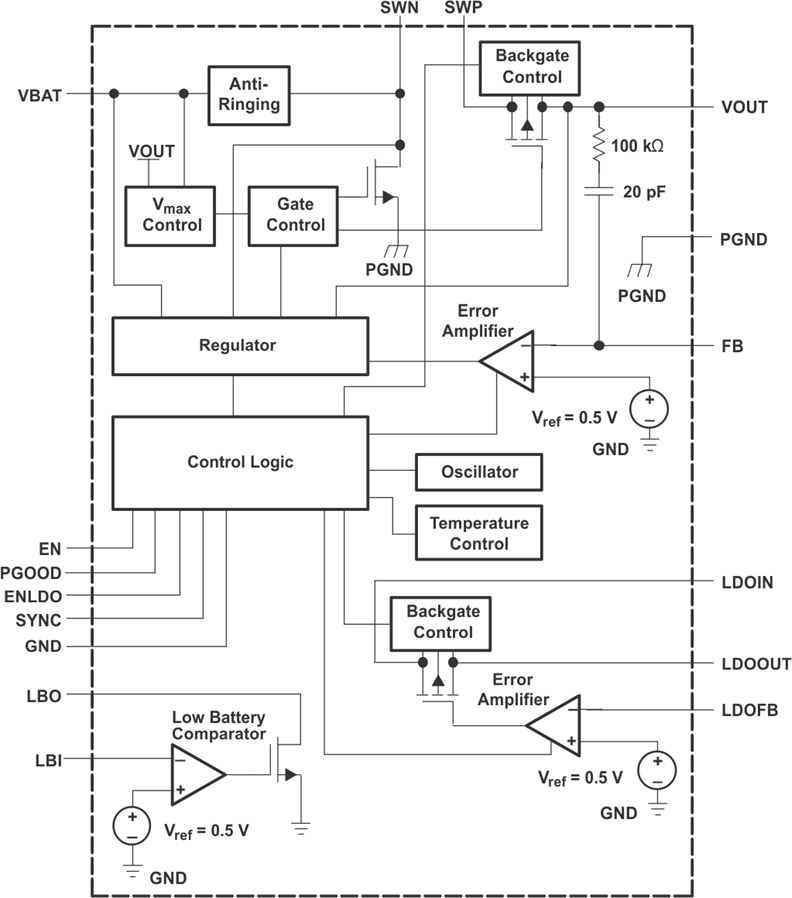
TPS61100Dual output converter (boost DC/DC + LDO) for single/dual cell applications | Integrated Circuits (ICs) | 5 | Obsolete | The TPS6110x devices provide a complete power supply solution for products powered by either one or two Alkaline, NiCd, or NiMH battery cells. The converter generates two stable output voltages that are either adjusted by an external resistor divider or fixed internally on the chip. It stays in operation with supply voltages down to 0.8 V. The implemented boost converter is based on a fixed frequency, pulse-width-modulation (PWM) controller using a synchronous rectifier to obtain maximum efficiency.
The maximum peak current in the boost switch is limited to a value of 1800 mA.
The converter can be disabled to minimize battery drain. During shutdown, the load is completely disconnected from the battery. An auto discharge function allows discharging the output capacitors during shutdown mode. This is especially useful in microcontroller applications where the microcontroller or microprocessor should not remain active due to the stored voltage on the output capacitors. Programming the ADEN-pin disables this feature. A low-EMI mode is implemented to reduce ringing and in effect lower radiated electromagnetic energy when the converter enters the discontinuous conduction mode. A power good output at the boost stage provides additional control of cascaded power supply components.
The built-in LDO can be used for a second output voltage derived either from the boost output or directly from the battery. The output voltage of this LDO can be programmed by an external resistor divider or is fixed internally on the chip. The LDO can be enabled separately i.e., using the power good of the boost stage.
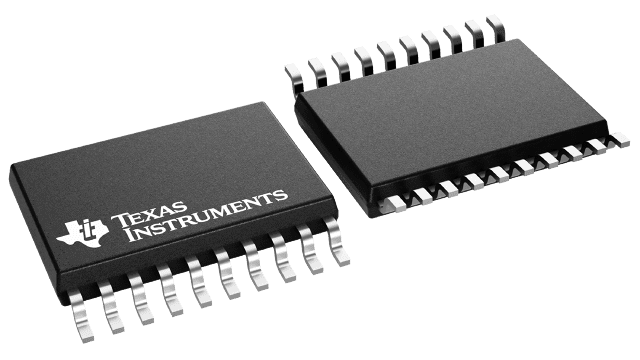
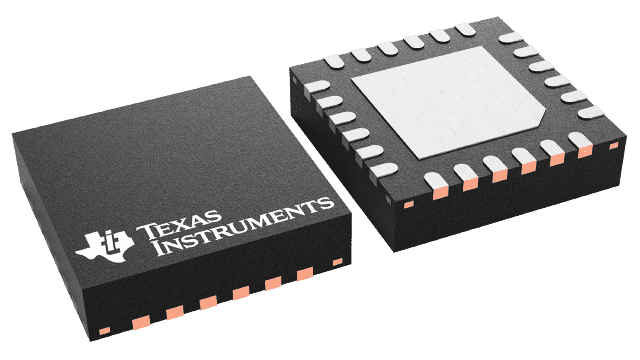
The device is packaged in a 20-pin TSSOP (20 PW) package or in a 24-pin QFN (24 RGE) package.
The TPS6110x devices provide a complete power supply solution for products powered by either one or two Alkaline, NiCd, or NiMH battery cells. The converter generates two stable output voltages that are either adjusted by an external resistor divider or fixed internally on the chip. It stays in operation with supply voltages down to 0.8 V. The implemented boost converter is based on a fixed frequency, pulse-width-modulation (PWM) controller using a synchronous rectifier to obtain maximum efficiency.
The maximum peak current in the boost switch is limited to a value of 1800 mA.
The converter can be disabled to minimize battery drain. During shutdown, the load is completely disconnected from the battery. An auto discharge function allows discharging the output capacitors during shutdown mode. This is especially useful in microcontroller applications where the microcontroller or microprocessor should not remain active due to the stored voltage on the output capacitors. Programming the ADEN-pin disables this feature. A low-EMI mode is implemented to reduce ringing and in effect lower radiated electromagnetic energy when the converter enters the discontinuous conduction mode. A power good output at the boost stage provides additional control of cascaded power supply components.
The built-in LDO can be used for a second output voltage derived either from the boost output or directly from the battery. The output voltage of this LDO can be programmed by an external resistor divider or is fixed internally on the chip. The LDO can be enabled separately i.e., using the power good of the boost stage.
The device is packaged in a 20-pin TSSOP (20 PW) package or in a 24-pin QFN (24 RGE) package. |
| Integrated Circuits (ICs) | 2 | Obsolete | ||
| Power Management (PMIC) | 1 | Obsolete | ||
| Voltage Regulators - Linear + Switching | 3 | Obsolete | ||
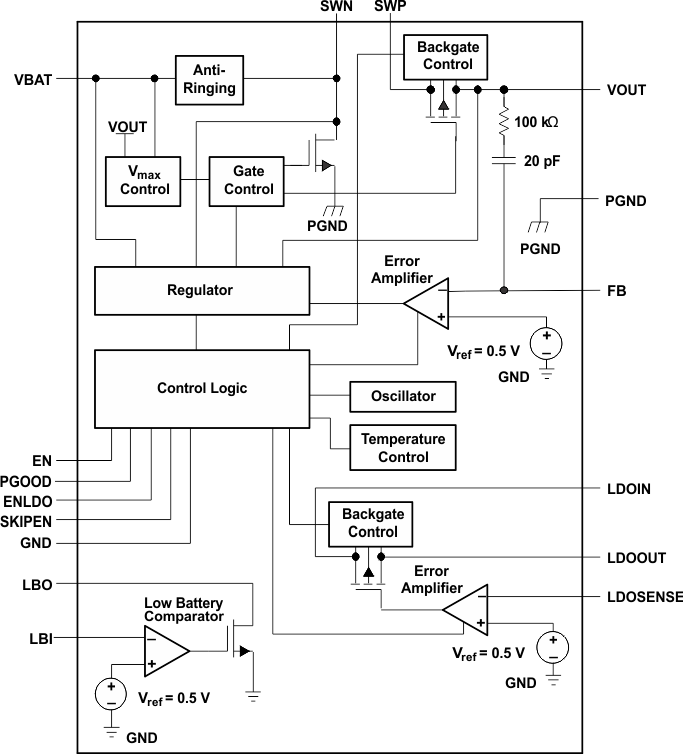
TPS61120Adjustable, 95% Efficient Boost Converter with 200-mA LDO for 1-Cell LiIon or Dual-Cell Applications | Development Boards, Kits, Programmers | 6 | Active | The TPS6112x devices provide a complete power supply solution for products powered by either a one-cell Li-Ion or Li-Polymer by either a one-cell Li-Ion or Li-Polymer battery, or a two- to four-cell Alkaline, NiCd, or NiMH battery. The devices can generate two stable output voltages that are either adjusted by an external resistor divider or are fixed internally on the chip. The device also provides a simple solution for generating 3.3 V out of a one-cell Li-Ion or Li-Polymer battery at a maximum output current of at least 200 mA with supply voltages down to 1.8 V. The implemented boost converter is based on a fixed frequency, pulse-width-modulation (PWM) controller using a synchronous rectifier to obtain maximum efficiency. The maximum peak current in the boost switch is limited to a value of 1600 mA.
The converter can be disabled to minimize battery drain. During shutdown, the load is completely disconnected from the battery. A low-EMI mode is implemented to reduce ringing and, in effect, lower radiated electromagnetic energy when the converter enters discontinuous conduction mode. A power good output at the boost stage simplifies control of any connected circuits like cascaded power supply stages or microprocessors.
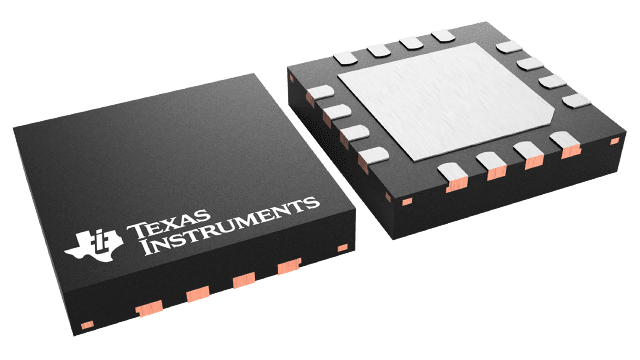
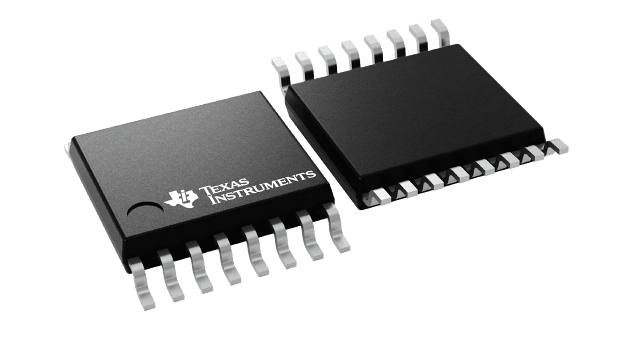
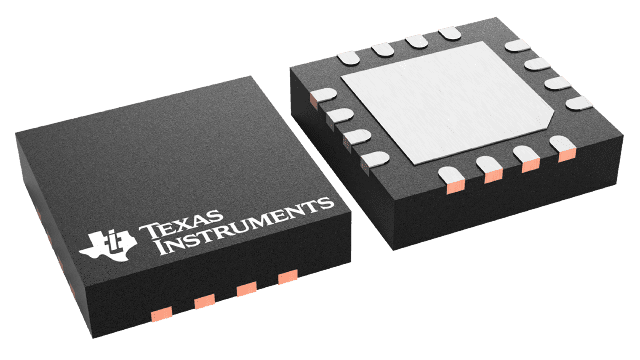
The built-in LDO can be used for a second output voltage derived either from the boost output or directly from the battery. The LDO can be enabled separately that is, using the power good of the boost stage. The device is packaged in a 16-pin VQFN (RSA) package measuring 4 mm × 4 mm or in a 16-pin TSSOP (PW) package.
The TPS6112x devices provide a complete power supply solution for products powered by either a one-cell Li-Ion or Li-Polymer by either a one-cell Li-Ion or Li-Polymer battery, or a two- to four-cell Alkaline, NiCd, or NiMH battery. The devices can generate two stable output voltages that are either adjusted by an external resistor divider or are fixed internally on the chip. The device also provides a simple solution for generating 3.3 V out of a one-cell Li-Ion or Li-Polymer battery at a maximum output current of at least 200 mA with supply voltages down to 1.8 V. The implemented boost converter is based on a fixed frequency, pulse-width-modulation (PWM) controller using a synchronous rectifier to obtain maximum efficiency. The maximum peak current in the boost switch is limited to a value of 1600 mA.
The converter can be disabled to minimize battery drain. During shutdown, the load is completely disconnected from the battery. A low-EMI mode is implemented to reduce ringing and, in effect, lower radiated electromagnetic energy when the converter enters discontinuous conduction mode. A power good output at the boost stage simplifies control of any connected circuits like cascaded power supply stages or microprocessors.
The built-in LDO can be used for a second output voltage derived either from the boost output or directly from the battery. The LDO can be enabled separately that is, using the power good of the boost stage. The device is packaged in a 16-pin VQFN (RSA) package measuring 4 mm × 4 mm or in a 16-pin TSSOP (PW) package. |
| Integrated Circuits (ICs) | 3 | Obsolete | ||
| Integrated Circuits (ICs) | 3 | Obsolete | ||
| Integrated Circuits (ICs) | 4 | Active | ||
| Integrated Circuits (ICs) | 2 | Active | ||
| Integrated Circuits (ICs) | 2 | Obsolete | ||