T
Texas Instruments
| Series | Category | # Parts | Status | Description |
|---|---|---|---|---|
| Part | Spec A | Spec B | Spec C | Spec D | Description |
|---|---|---|---|---|---|



| Series | Category | # Parts | Status | Description |
|---|---|---|---|---|
| Part | Spec A | Spec B | Spec C | Spec D | Description |
|---|---|---|---|---|---|
| Part | Category | Description |
|---|---|---|
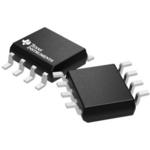 Texas Instruments BQ2002CSNTRG4Unknown | Integrated Circuits (ICs) | LINEAR BATTERY CHARGER NICD/NIMH 2000MA 0V TO 6V 8-PIN SOIC T/R |
 Texas Instruments LM3676SDX-3.3Obsolete | Integrated Circuits (ICs) | IC REG BUCK 3.3V 600MA 8WSON |
 Texas Instruments | Integrated Circuits (ICs) | TMX320DRE311 179PIN UBGA 200MHZ |
 Texas Instruments UCC3580N-1G4Obsolete | Integrated Circuits (ICs) | IC REG CTRLR FWRD CONV 16DIP |
 Texas Instruments LM2831YMF EVALObsolete | Development Boards Kits Programmers | EVAL BOARD FOR LM2831 |
 Texas Instruments | Integrated Circuits (ICs) | BUFFER/LINE DRIVER 8-CH NON-INVERTING 3-ST CMOS 20-PIN SSOP T/R |
 Texas Instruments | Integrated Circuits (ICs) | ANALOG OTHER PERIPHERALS |
Texas Instruments | Integrated Circuits (ICs) | RADIATION-HARDENED, QMLP 60V HAL |
 Texas Instruments SN75LVDS051DRObsolete | Integrated Circuits (ICs) | IC TRANSCEIVER FULL 2/2 16SOIC |
 Texas Instruments | Integrated Circuits (ICs) | AUTOMOTIVE OCTAL D-TYPE FLIP-FLO |
| Series | Category | # Parts | Status | Description |
|---|---|---|---|---|
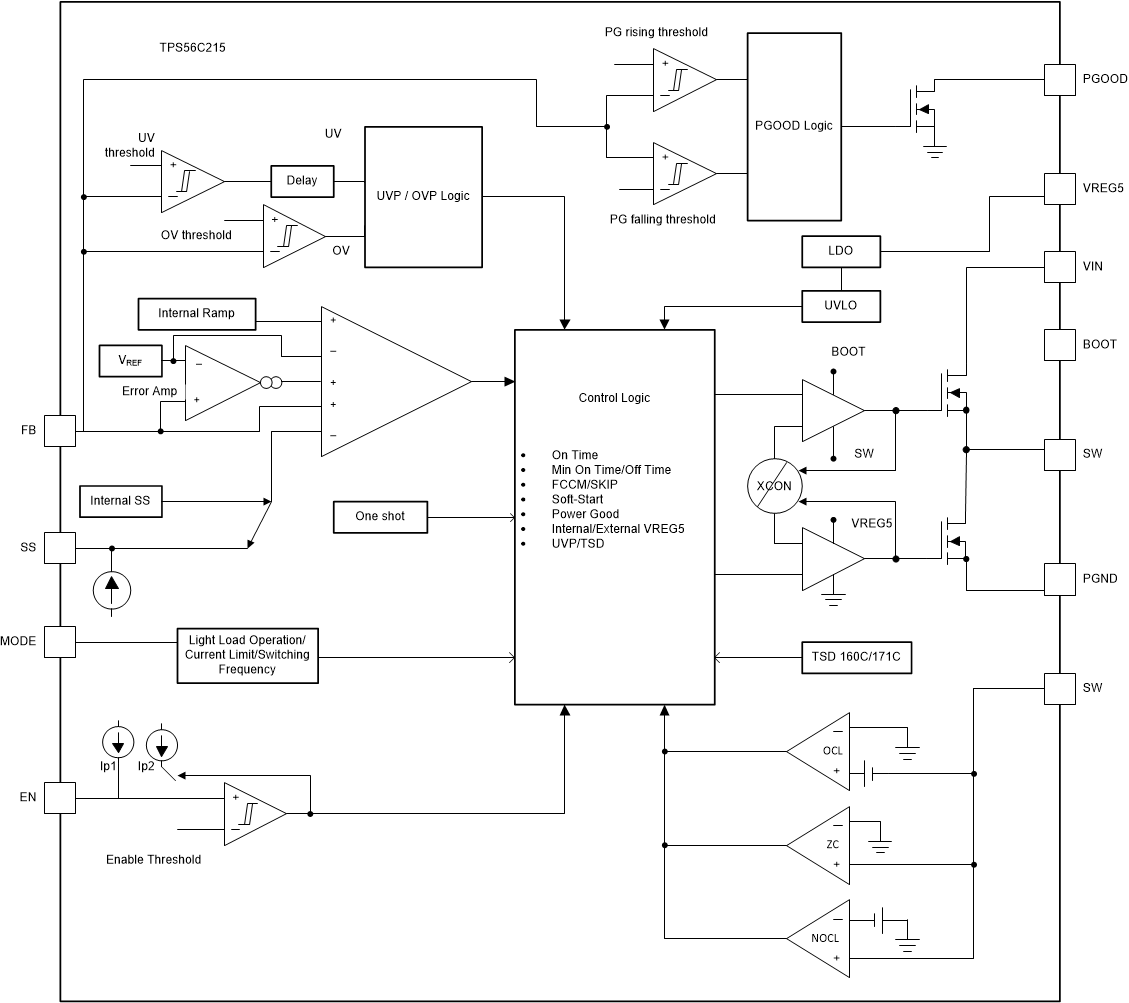
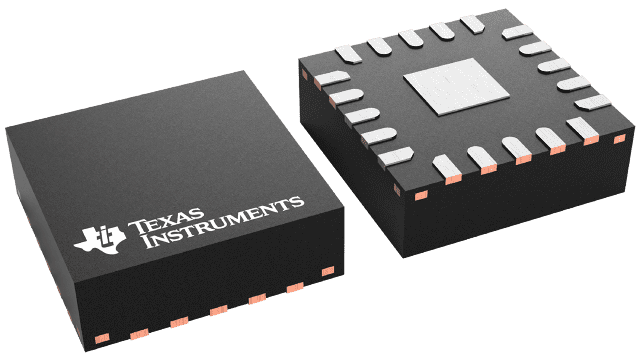
TPS56C2153.8-V to 17-V, 12-A synchronous SWIFT™ buck converter with D-CAP3 control | Integrated Circuits (ICs) | 2 | Active | The TPS56C215 is a small monolithic 12A synchronous buck converter with an adaptive on-time D-CAP3 control mode. The device integrates low RDS(on) power MOSFETs that enable high efficiency and offers ease-of-use with minimum external component count for space-conscious power systems. Competitive features include a very accurate reference voltage, fast load transient response, auto-skip mode operation for light load efficiency, adjustable current limit and no requirement for external compensation. A forced continuous conduction mode helps meet tight voltage regulation accuracy requirements for performance DSPs and FPGAs. The TPS56C215 is available in a thermally enhanced, 18-pin, HotRod QFN package and is designed to operate from –40°C to 150°C junction temperature.
The TPS56C215 is a small monolithic 12A synchronous buck converter with an adaptive on-time D-CAP3 control mode. The device integrates low RDS(on) power MOSFETs that enable high efficiency and offers ease-of-use with minimum external component count for space-conscious power systems. Competitive features include a very accurate reference voltage, fast load transient response, auto-skip mode operation for light load efficiency, adjustable current limit and no requirement for external compensation. A forced continuous conduction mode helps meet tight voltage regulation accuracy requirements for performance DSPs and FPGAs. The TPS56C215 is available in a thermally enhanced, 18-pin, HotRod QFN package and is designed to operate from –40°C to 150°C junction temperature. |
| Integrated Circuits (ICs) | 1 | Active | ||
| Power Management (PMIC) | 2 | Active | ||
| Power Management (PMIC) | 1 | Active | ||
| Voltage Regulators - DC DC Switching Regulators | 1 | Active | ||
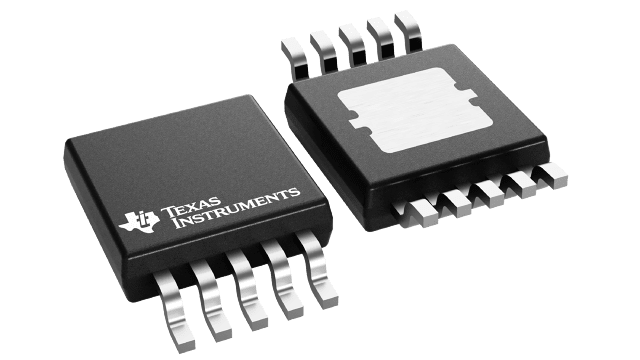
TPS57060-Q1Automotive 3.5V to 60V, 500mA Buck Converter with Eco-Mode™ | Voltage Regulators - DC DC Switching Regulators | 2 | Active | The TPS57060-Q1 device is a 60-V 0.5-A step-down regulator with an integrated high-side MOSFET. Current-mode control provides simple external compensation and flexible component selection. A low-ripple pulse-skip mode reduces the no load, regulated output supply current to 116 μA. When the enable pin is in the low state, the shutdown current is reduced to 1.3 μA.
Undervoltage lockout is internally set at 2.5 V, but can be increased using the enable pin. The output voltage startup ramp is controlled by the slow start pin that can also be configured for sequencing and tracking. An open-drain power good signal indicates the output is within 92% to 109% of the nominal voltage.
A wide switching frequency range allows efficiency and external component size to be optimized. Frequency fold back and thermal shutdown protects the part during an overload condition.
The TPS57060-Q1 device is available in a 10-pin thermally enhanced MSOP-PowerPAD package (DGQ) and a VSON (DRC) package.
The TPS57060-Q1 device is a 60-V 0.5-A step-down regulator with an integrated high-side MOSFET. Current-mode control provides simple external compensation and flexible component selection. A low-ripple pulse-skip mode reduces the no load, regulated output supply current to 116 μA. When the enable pin is in the low state, the shutdown current is reduced to 1.3 μA.
Undervoltage lockout is internally set at 2.5 V, but can be increased using the enable pin. The output voltage startup ramp is controlled by the slow start pin that can also be configured for sequencing and tracking. An open-drain power good signal indicates the output is within 92% to 109% of the nominal voltage.
A wide switching frequency range allows efficiency and external component size to be optimized. Frequency fold back and thermal shutdown protects the part during an overload condition.
The TPS57060-Q1 device is available in a 10-pin thermally enhanced MSOP-PowerPAD package (DGQ) and a VSON (DRC) package. |
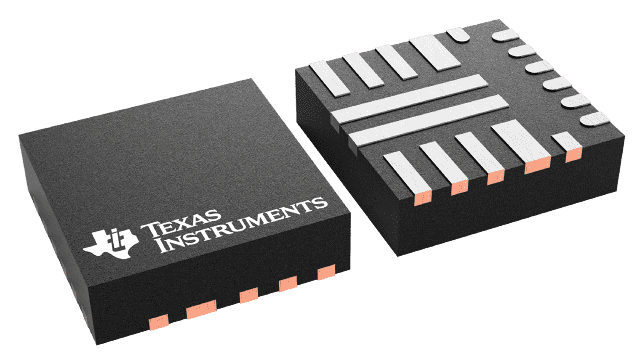
TPS57112Automotive 2.95-V to 6-V, 2-A, 2-MHz synchronous buck converter | DC/DC & AC/DC (Off-Line) SMPS Evaluation Boards | 3 | Active | The TPS57112C-Q1 device is a full-featured 6-V, 2-A, synchronous step-down current-mode converter with two integrated MOSFETs.
The TPS57112C-Q1 device enables small designs by integrating the MOSFETs, implementing current-mode control to reduce external component count, reducing inductor size by enabling up to 2-MHz switching frequency, and minimizing the IC footprint with a small 3-mm × 3-mm thermally enhanced QFN package.
The TPS57112C-Q1 device provides accurate regulation for a variety of loads with a ±1% voltage reference (Vref) over temperature.
The integrated 12-mΩ MOSFETs and 515-µA typical supply current maximize efficiency. Using the enable pin to enter the shutdown mode reduces supply current to 5.5 µA, typical.
The internal undervoltage lockout setting is 2.45 V, but programming the threshold with a resistor network on the enable pin can increase the setting. The slow-start pin controls the output-voltage start-up ramp. An open-drain power-good signal indicates when the output is within 93% to 107% of its nominal voltage.
Frequency foldback and thermal shutdown protect the device during an overcurrent condition.
The TPS57112C-Q1 device is a full-featured 6-V, 2-A, synchronous step-down current-mode converter with two integrated MOSFETs.
The TPS57112C-Q1 device enables small designs by integrating the MOSFETs, implementing current-mode control to reduce external component count, reducing inductor size by enabling up to 2-MHz switching frequency, and minimizing the IC footprint with a small 3-mm × 3-mm thermally enhanced QFN package.
The TPS57112C-Q1 device provides accurate regulation for a variety of loads with a ±1% voltage reference (Vref) over temperature.
The integrated 12-mΩ MOSFETs and 515-µA typical supply current maximize efficiency. Using the enable pin to enter the shutdown mode reduces supply current to 5.5 µA, typical.
The internal undervoltage lockout setting is 2.45 V, but programming the threshold with a resistor network on the enable pin can increase the setting. The slow-start pin controls the output-voltage start-up ramp. An open-drain power-good signal indicates when the output is within 93% to 107% of its nominal voltage.
Frequency foldback and thermal shutdown protect the device during an overcurrent condition. |
| Evaluation Boards | 4 | Active | ||
TPS57114-EP2.95V to 6V Input, 3.5-A Output, 2MHz, Synchronous Step Down Switcher | Integrated Circuits (ICs) | 1 | Active | The TPS57114-EP device is a full-featured 6-V, 3.5-A, synchronous step-down current-mode converter with two integrated MOSFETs.
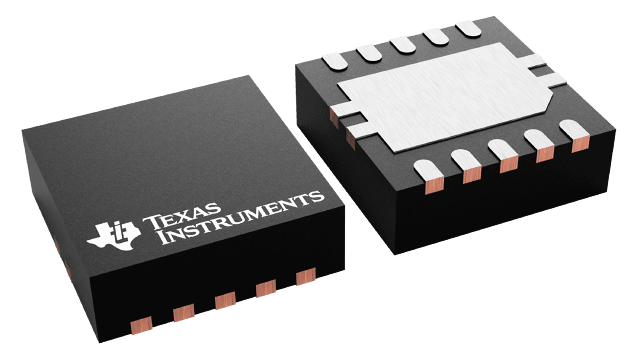
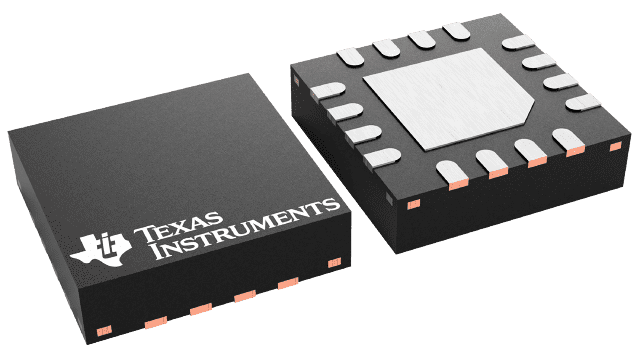
The TPS57114-EP enables small designs by integrating the MOSFETs, implementing current-mode control to reduce external component count, reducing inductor size by enabling up to 2-MHz switching frequency, and minimizing the IC footprint with a small 3-mm × 3-mm thermally-enhanced WQFN package.
The TPS57114-EP provides accurate regulation for a variety of loads with an accurate ±1% voltage reference (VREF) over temperature.
The integrated 12-mΩ MOSFETs and 515-µA typical supply current maximize efficiency. Entering shutdown mode by using the enable pin reduces the shutdown supply current to 5.5 µA.
The internal undervoltage lockout (UVLO) setting is 2.45 V, but programming the threshold with a resistor network on the enable pin can increase it. The slow-start pin controls the output-voltage start-up ramp. An open-drain power-good signal indicates the output is within 93% to 107% of its nominal voltage.
Frequency foldback and thermal shutdown protect the device during an overcurrent condition.
The SwitcherPro software tool, available atwww.ti.com/switcherpro, supports the TPS57114-EP.
For more SWIFT documentation, see the TI website atwww.ti.com/swift.
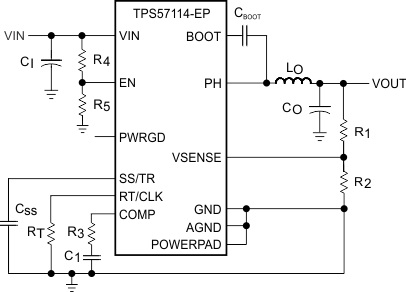
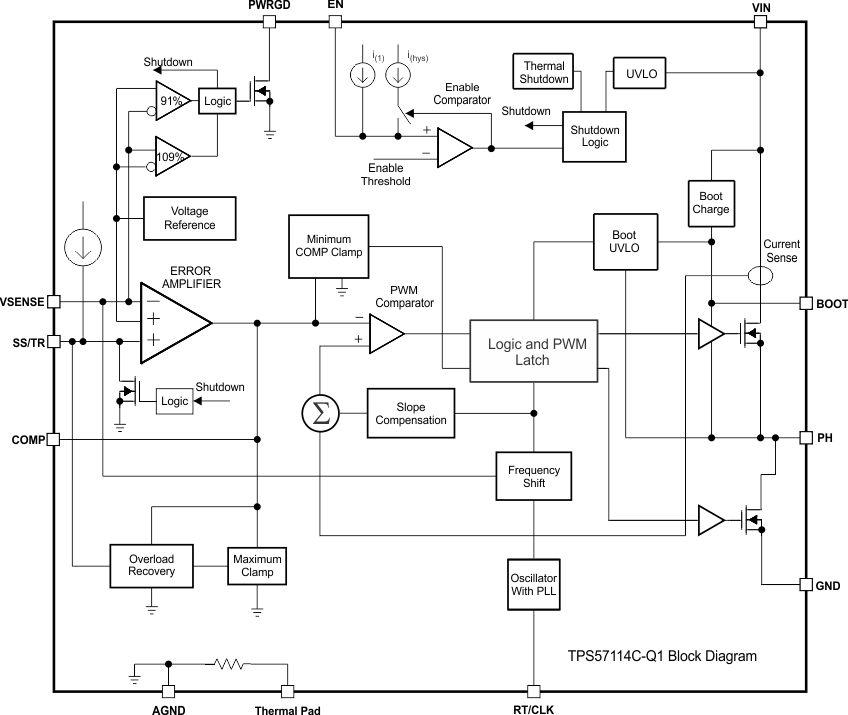
TPS57114-EP is a current mode controller used to support various topologies such as buck converter configuration.
Current mode control is a two-loop system. The switching power supply inductor is hidden within the inner current control loop. This simplifies the design of the outer voltage control loop and improves power supply performance in many ways, including better dynamics. The objective of this inner loop is to control the state-space averaged inductor current, but in practice, the instantaneous peak inductor current is the basis for control (switch current—equal to inductor current during the on time—is often sensed). If the inductor ripple current is small, peak inductor current control is nearly equivalent to average inductor current control.
The peak method of inductor current control functions by comparing the upslope of inductor current (or switch current) to a current program level set by the outer loop. The comparator turns the power switch off when the instantaneous current reaches the desired level. The current ramp is usually quite small compared to the programming level, especially when VIN is low. As a result, this method is extremely susceptible to noise. A noise spike is generated each time the switch turns on. A fraction of a volt coupled into the control circuit can cause it to turn off immediately, resulting in a subharmonic operating mode with much greater ripple. Circuit layout and bypassing are critically important to successful operation.
The peak current mode control method is inherently unstable at duty ratios exceeding 0.5, resulting in subharmonic oscillation. A compensating ramp (with slope equal to the inductor current downslope) is usually applied to the comparator input to eliminate this instability. Slope compensation must be added to the sensed current waveform or subtracted from the control voltage to ensure stability above a 50% duty cycle. A compensating ramp (with slope equal to the inductor current downslope) is usually applied to the comparator input to eliminate this instability. Current limit control design has numerous advantages: Current mode control provided peak switch current limiting – pulse-by-pulse current limit. The control loop is simplified as one pole because the output inductor is pushed to higher frequency, thus a two-pole system turns into two real poles. Thus, the system reduces to a first-order system and simplifies the control.Multiple converters can be paralleled and allow equal current sharing amount the various converters.Inherently provides for input voltage feed-forward because any perturbation in the input voltage is reflected in the switch or inductor current. Because switch or inductor current is a direct-control input, this perturbation is rapidly corrected.The error amplifier output (outer control loop) defines the level at which the primary current (inner loop) regulates the pulse duration and output voltage.
The TPS57114-EP device is a full-featured 6-V, 3.5-A, synchronous step-down current-mode converter with two integrated MOSFETs.
The TPS57114-EP enables small designs by integrating the MOSFETs, implementing current-mode control to reduce external component count, reducing inductor size by enabling up to 2-MHz switching frequency, and minimizing the IC footprint with a small 3-mm × 3-mm thermally-enhanced WQFN package.
The TPS57114-EP provides accurate regulation for a variety of loads with an accurate ±1% voltage reference (VREF) over temperature.
The integrated 12-mΩ MOSFETs and 515-µA typical supply current maximize efficiency. Entering shutdown mode by using the enable pin reduces the shutdown supply current to 5.5 µA.
The internal undervoltage lockout (UVLO) setting is 2.45 V, but programming the threshold with a resistor network on the enable pin can increase it. The slow-start pin controls the output-voltage start-up ramp. An open-drain power-good signal indicates the output is within 93% to 107% of its nominal voltage.
Frequency foldback and thermal shutdown protect the device during an overcurrent condition.
The SwitcherPro software tool, available atwww.ti.com/switcherpro, supports the TPS57114-EP.
For more SWIFT documentation, see the TI website atwww.ti.com/swift.
TPS57114-EP is a current mode controller used to support various topologies such as buck converter configuration.
Current mode control is a two-loop system. The switching power supply inductor is hidden within the inner current control loop. This simplifies the design of the outer voltage control loop and improves power supply performance in many ways, including better dynamics. The objective of this inner loop is to control the state-space averaged inductor current, but in practice, the instantaneous peak inductor current is the basis for control (switch current—equal to inductor current during the on time—is often sensed). If the inductor ripple current is small, peak inductor current control is nearly equivalent to average inductor current control.
The peak method of inductor current control functions by comparing the upslope of inductor current (or switch current) to a current program level set by the outer loop. The comparator turns the power switch off when the instantaneous current reaches the desired level. The current ramp is usually quite small compared to the programming level, especially when VIN is low. As a result, this method is extremely susceptible to noise. A noise spike is generated each time the switch turns on. A fraction of a volt coupled into the control circuit can cause it to turn off immediately, resulting in a subharmonic operating mode with much greater ripple. Circuit layout and bypassing are critically important to successful operation.
The peak current mode control method is inherently unstable at duty ratios exceeding 0.5, resulting in subharmonic oscillation. A compensating ramp (with slope equal to the inductor current downslope) is usually applied to the comparator input to eliminate this instability. Slope compensation must be added to the sensed current waveform or subtracted from the control voltage to ensure stability above a 50% duty cycle. A compensating ramp (with slope equal to the inductor current downslope) is usually applied to the comparator input to eliminate this instability. Current limit control design has numerous advantages: Current mode control provided peak switch current limiting – pulse-by-pulse current limit. The control loop is simplified as one pole because the output inductor is pushed to higher frequency, thus a two-pole system turns into two real poles. Thus, the system reduces to a first-order system and simplifies the control.Multiple converters can be paralleled and allow equal current sharing amount the various converters.Inherently provides for input voltage feed-forward because any perturbation in the input voltage is reflected in the switch or inductor current. Because switch or inductor current is a direct-control input, this perturbation is rapidly corrected.The error amplifier output (outer control loop) defines the level at which the primary current (inner loop) regulates the pulse duration and output voltage. |
| Power Management (PMIC) | 1 | Active | ||