T
Texas Instruments
| Series | Category | # Parts | Status | Description |
|---|---|---|---|---|
| Part | Spec A | Spec B | Spec C | Spec D | Description |
|---|---|---|---|---|---|

| Series | Category | # Parts | Status | Description |
|---|---|---|---|---|
| Part | Spec A | Spec B | Spec C | Spec D | Description |
|---|---|---|---|---|---|

| Part | Category | Description |
|---|---|---|
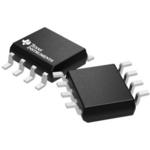
Texas Instruments | Integrated Circuits (ICs) | BUS DRIVER, BCT/FBT SERIES |
Texas Instruments | Integrated Circuits (ICs) | 12BIT 3.3V~3.6V 210MHZ PARALLEL VQFN-48-EP(7X7) ANALOG TO DIGITAL CONVERTERS (ADC) ROHS |
Texas Instruments | Integrated Circuits (ICs) | TMX320DRE311 179PIN UBGA 200MHZ |
Texas Instruments TPS61040DRVTG4Unknown | Integrated Circuits (ICs) | IC LED DRV RGLTR PWM 350MA 6WSON |
Texas Instruments LP3876ET-2.5Obsolete | Integrated Circuits (ICs) | IC REG LINEAR 2.5V 3A TO220-5 |
Texas Instruments LMS1585ACSX-ADJObsolete | Integrated Circuits (ICs) | IC REG LIN POS ADJ 5A DDPAK |
Texas Instruments INA111APG4Obsolete | Integrated Circuits (ICs) | IC INST AMP 1 CIRCUIT 8DIP |
Texas Instruments | Integrated Circuits (ICs) | AUTOMOTIVE, QUAD 36V 1.2MHZ OPERATIONAL AMPLIFIER |
Texas Instruments OPA340NA/3KG4Unknown | Integrated Circuits (ICs) | IC OPAMP GP 1 CIRCUIT SOT23-5 |
Texas Instruments PT5112AObsolete | Power Supplies - Board Mount | DC DC CONVERTER 8V 8W |
| Series | Category | # Parts | Status | Description |
|---|---|---|---|---|
ADS160216-Bit, 2.5MSPS Analog-to-Digital Converter | Data Acquisition | 2 | Active | The ADS1602 is a high-speed, high-precision, delta-sigma (ΔΣ) analog-to-digital converter (ADC) manufactured on an advanced CMOS process. The ADS1602 oversampling topology reduces clock jitter sensitivity during the sampling of high-frequency, large amplitude signals by a factor of four over that achieved by Nyquist-rate ADCs. Consequently, signal-to-noise ratio (SNR) is particularly improved. Total harmonic distortion (THD) is –101dB, and the spurious-free dynamic range (SFDR) is 103dB.
Optimized for power and performance, the ADS1602 dissipates only 530mW while providing a full-scale differential input range of ±3V. Having such a wide input range makes out-of-range signals unlikely. The OTR pin indicates if an analog input out-of-range condition does occur. The differential input signal is measured against the differential reference, which can be generated internally or supplied externally on the ADS1602.
The ADS1602 uses an inherently stable advanced modulator with an on-chip decimation filter. The filter stop band extends to 38.6MHz, which greatly simplifies the antialiasing circuitry. The modulator samples the input signal up to 40MSPS, depending on fCLK, while the 16x decimation filter uses a series of four half-band FIR filter stages to provide 75dB of stop band attenuation and 0.001dB of passband ripple.
Output data is provided over a simple 3-wire serial interface at rates up to 2.5MSPS, with a –3dB bandwidth of 1.23MHz. The output data or its complementary format directly connects to DSPs such as TI’s TMS320 family, FPGAs, or ASICs. A dedicated synchronization pin enables simultaneous sampling with multiple ADS1602s in multi-channel systems. Power dissipation is set by an external resistor that allows a reduction in dissipation when operating at slower speeds. All of the ADS1602 features are controlled by dedicated I/O pins, which simplify operation by eliminating the need for on-chip registers.
The high performing, easy-to-use ADS1602 is especially suitable for demanding measurement applications in sonar, vibration analysis, and data acquisition. The ADS1602 is offered in a small, 7mm × 7mm TQFP-48 package and is specified from –40°C to +85°C.
The ADS1602 is a high-speed, high-precision, delta-sigma (ΔΣ) analog-to-digital converter (ADC) manufactured on an advanced CMOS process. The ADS1602 oversampling topology reduces clock jitter sensitivity during the sampling of high-frequency, large amplitude signals by a factor of four over that achieved by Nyquist-rate ADCs. Consequently, signal-to-noise ratio (SNR) is particularly improved. Total harmonic distortion (THD) is –101dB, and the spurious-free dynamic range (SFDR) is 103dB.
Optimized for power and performance, the ADS1602 dissipates only 530mW while providing a full-scale differential input range of ±3V. Having such a wide input range makes out-of-range signals unlikely. The OTR pin indicates if an analog input out-of-range condition does occur. The differential input signal is measured against the differential reference, which can be generated internally or supplied externally on the ADS1602.
The ADS1602 uses an inherently stable advanced modulator with an on-chip decimation filter. The filter stop band extends to 38.6MHz, which greatly simplifies the antialiasing circuitry. The modulator samples the input signal up to 40MSPS, depending on fCLK, while the 16x decimation filter uses a series of four half-band FIR filter stages to provide 75dB of stop band attenuation and 0.001dB of passband ripple.
Output data is provided over a simple 3-wire serial interface at rates up to 2.5MSPS, with a –3dB bandwidth of 1.23MHz. The output data or its complementary format directly connects to DSPs such as TI’s TMS320 family, FPGAs, or ASICs. A dedicated synchronization pin enables simultaneous sampling with multiple ADS1602s in multi-channel systems. Power dissipation is set by an external resistor that allows a reduction in dissipation when operating at slower speeds. All of the ADS1602 features are controlled by dedicated I/O pins, which simplify operation by eliminating the need for on-chip registers.
The high performing, easy-to-use ADS1602 is especially suitable for demanding measurement applications in sonar, vibration analysis, and data acquisition. The ADS1602 is offered in a small, 7mm × 7mm TQFP-48 package and is specified from –40°C to +85°C. |
ADS160516-bit, 5 MSPS Delta-Sigma, Analog-to-Digital Converter | Analog to Digital Converters (ADCs) Evaluation Boards | 2 | Active | The ADS1605 and ADS1606 are high-speed, high-precision, delta-sigma analog-to-digital converter (ADCs) with 16-bit resolution. The data rate is 5 mega-samples per second (MSPS), the bandwidth (–3dB) is 2.45MHz, and passband ripple is less than ±0.0025dB (to 2.2MHz). Both devices offer outstanding performance at these speeds with a signal-to-noise ratio up to 88dB, total harmonic distortion down to –99dB, and a spurious-free dynamic range up to 101dB. For even higher-speed operation, the data rate an be doubled to 10MSPS in 2X mode. The ADS1606 includes an adjustable first-in first-out buffer (FIFO) for the output data.
The input signal is measured against a voltage reference that can be generated on-chip or supplied externally. The digital output data is provided over a simple parallel interface that easily connects to digital signal processors (DSPs). An out-of-range monitor reports when the input range has been exceeded. The ADS1605/6 operate from a +5V analog supply (AVDD) and +3V digital supply (DVDD). The digital I/O supply (IOVDD) operates from +2.7 to +5.25V, enabling the digital interface to support a range of logic families. The analog power dissipation is set by an external resistor and can be reduced when operating at slower speeds. A power down mode, activated by a digital I/O pin, shuts down all circuitry. The ADS1605/6 are offered in a TQFP-64 package using TI PowerPAD™ technology.
The ADS1605 and ADS1606, along with their 18-bit counterparts, the ADS1625 and ADS1626, are well suited for the demanding measurement requirements of scientific instrumentation, automated test equipment, data acquisition, and medical imaging.
The ADS1605 and ADS1606 are high-speed, high-precision, delta-sigma analog-to-digital converter (ADCs) with 16-bit resolution. The data rate is 5 mega-samples per second (MSPS), the bandwidth (–3dB) is 2.45MHz, and passband ripple is less than ±0.0025dB (to 2.2MHz). Both devices offer outstanding performance at these speeds with a signal-to-noise ratio up to 88dB, total harmonic distortion down to –99dB, and a spurious-free dynamic range up to 101dB. For even higher-speed operation, the data rate an be doubled to 10MSPS in 2X mode. The ADS1606 includes an adjustable first-in first-out buffer (FIFO) for the output data.
The input signal is measured against a voltage reference that can be generated on-chip or supplied externally. The digital output data is provided over a simple parallel interface that easily connects to digital signal processors (DSPs). An out-of-range monitor reports when the input range has been exceeded. The ADS1605/6 operate from a +5V analog supply (AVDD) and +3V digital supply (DVDD). The digital I/O supply (IOVDD) operates from +2.7 to +5.25V, enabling the digital interface to support a range of logic families. The analog power dissipation is set by an external resistor and can be reduced when operating at slower speeds. A power down mode, activated by a digital I/O pin, shuts down all circuitry. The ADS1605/6 are offered in a TQFP-64 package using TI PowerPAD™ technology.
The ADS1605 and ADS1606, along with their 18-bit counterparts, the ADS1625 and ADS1626, are well suited for the demanding measurement requirements of scientific instrumentation, automated test equipment, data acquisition, and medical imaging. |
| Development Boards, Kits, Programmers | 4 | Active | ||
ADS161016-Bit, 10MSPS Delta-Sigma Analog-to-Digital Converter | Analog to Digital Converters (ADC) | 2 | NRND | The ADS1610 is a high-speed, high-precision, delta-sigma () analog-to-digital converter (ADC) with 16-bit resolution operating from a 5V analog and a 3V digital supply. Featuring an advanced multi-stage analog modulator combined with an on-chip digital decimation filter, the ADS1610 achieves 86 dBFS signal-to-noise ratio (SNR) in a 5MHz signal bandwidth; while the total harmonic distortion is -94dB.
The ADS1610topology provides key system-level design advantages with respect to anti-alias filtering and clock jitter. The design of the user's front-end anti-alias filter is simplified since the on-chip digital filter greatly attenuates out-of-band signals. The ADS1610s filter has abrick wallresponse with a very flat passband (±0.0002dB of ripple) followed immediately by a very wide stop band (5MHz to 55MHz). Clock jitter becomes especially critical when digitizing high frequency, large-amplitude signals. The ADS1610 significantly reduces clock jitter sensitivity by an effective averaging of clock jitter as a result of oversampling the input signal.
Output data is supplied over a parallel interface and easily connects to TMS320 digital signal processors (DSPs). The power dissipation can be adjusted with an external resistor, allowing for reduction at lower operating speeds.
With its outstanding high-speed performance, the ADS1610 is well-suited for demanding applications in data acquisition, scientific instruments, test and measurement equipment, and communications. The ADS1610 is offered in a TQFP64 package and is specified from -40°C to 85°C.
The ADS1610 is a high-speed, high-precision, delta-sigma () analog-to-digital converter (ADC) with 16-bit resolution operating from a 5V analog and a 3V digital supply. Featuring an advanced multi-stage analog modulator combined with an on-chip digital decimation filter, the ADS1610 achieves 86 dBFS signal-to-noise ratio (SNR) in a 5MHz signal bandwidth; while the total harmonic distortion is -94dB.
The ADS1610topology provides key system-level design advantages with respect to anti-alias filtering and clock jitter. The design of the user's front-end anti-alias filter is simplified since the on-chip digital filter greatly attenuates out-of-band signals. The ADS1610s filter has abrick wallresponse with a very flat passband (±0.0002dB of ripple) followed immediately by a very wide stop band (5MHz to 55MHz). Clock jitter becomes especially critical when digitizing high frequency, large-amplitude signals. The ADS1610 significantly reduces clock jitter sensitivity by an effective averaging of clock jitter as a result of oversampling the input signal.
Output data is supplied over a parallel interface and easily connects to TMS320 digital signal processors (DSPs). The power dissipation can be adjusted with an external resistor, allowing for reduction at lower operating speeds.
With its outstanding high-speed performance, the ADS1610 is well-suited for demanding applications in data acquisition, scientific instruments, test and measurement equipment, and communications. The ADS1610 is offered in a TQFP64 package and is specified from -40°C to 85°C. |
| Evaluation Boards | 4 | Active | ||
| Evaluation Boards | 3 | Active | ||
ADS1672High Speed High Resolution 625kSPS 24 bit Delta Sigma ADC | Analog to Digital Converters (ADCs) Evaluation Boards | 4 | Active | The ADS1672 is a high-speed, high-precision analog-to-digital converter (ADC). Using an advanced delta-sigma () architecture, it operates at speeds up to 625kSPS with outstanding ac performance and dc accuracy.
The ADS1672 ADC is comprised of a low-drift, chopper-stabilized modulator with out-of-range detection and a dual-path programmable digital filter. The dual filter path allows the user to select between two post-processing filters: low-latency or wide-bandwidth. The low-latency filter settles quickly in one cycle, for applications with large instantaneous changes, such as a multiplexer. The wide-bandwidth path provides an optimized frequency response for ac measurements with a passband ripple of less than 0.001dB, stop band attenuation of 86dB, and a bandwidth of 305kHz.
The ADS1672 is controlled through I/O pins—there are no registers to program. A dedicated START pin allows for direct control of conversions: toggle the START pin to begin a conversion, and then retrieve the output data. The flexible serial interface supports data readback with either standard CMOS and LVDS logic levels, allowing the ADS1672 to directly connect to a wide range of microcontrollers, digital signal processors (DSPs), or field-programmable grid arrays (FPGAs).
The ADS1672 operates from an analog supply of 5V and digital supply of 3V, and dissipates 350mW of power. When not in use, thePDWNpin can be used to power down all device circuitry. The device is fully specified over the industrial temperature range and is offered in a TQFP-64 package.
The ADS1672 is a high-speed, high-precision analog-to-digital converter (ADC). Using an advanced delta-sigma () architecture, it operates at speeds up to 625kSPS with outstanding ac performance and dc accuracy.
The ADS1672 ADC is comprised of a low-drift, chopper-stabilized modulator with out-of-range detection and a dual-path programmable digital filter. The dual filter path allows the user to select between two post-processing filters: low-latency or wide-bandwidth. The low-latency filter settles quickly in one cycle, for applications with large instantaneous changes, such as a multiplexer. The wide-bandwidth path provides an optimized frequency response for ac measurements with a passband ripple of less than 0.001dB, stop band attenuation of 86dB, and a bandwidth of 305kHz.
The ADS1672 is controlled through I/O pins—there are no registers to program. A dedicated START pin allows for direct control of conversions: toggle the START pin to begin a conversion, and then retrieve the output data. The flexible serial interface supports data readback with either standard CMOS and LVDS logic levels, allowing the ADS1672 to directly connect to a wide range of microcontrollers, digital signal processors (DSPs), or field-programmable grid arrays (FPGAs).
The ADS1672 operates from an analog supply of 5V and digital supply of 3V, and dissipates 350mW of power. When not in use, thePDWNpin can be used to power down all device circuitry. The device is fully specified over the industrial temperature range and is offered in a TQFP-64 package. |
ADS16754MSPS, 24-Bit Analog-to-Digital Converter | Evaluation Boards | 3 | Active | The ADS1675 is a high-speed, high-precision analog-to-digital converter (ADC). Using an advanced delta-sigma () architecture, it operates at speeds up to 4MSPS with outstanding ac performance and dc accuracy.
The ADS1675 ADC is comprised of a low-drift modulator with out-of-range detection and a dual-path programmable digital filter. The dual filter path allows the user to select between two post-processing filters: Low-Latency or Wide-Bandwidth. The Low-Latency filter settles quickly (as fast as 2.65µs) for applications with large instantaneous changes, such as a multiplexer. The Wide-Bandwidth path provides an optimized frequency response for ac measurements with a passband ripple of less than ±0.00002dB, stop band attenuation of 86dB, and a bandwidth of 1.7MHz.
The device offers two speed modes with distinct interface, resolution, and feature set. In the high-speed mode the device can be set to operate at either 4MSPS or 2MSPS. In the low-speed mode, it can be set to operate at either 1MSPS, 500KSPS, 250KSPS or 125KSPS.
The ADS1675 is controlled through I/O pins—there are no registers to program. A dedicated START pin allows for direct control of conversions: toggle the START pin to begin a conversion, and then retrieve the output data. The flexible serial interface supports data readback with either standard CMOS and LVDS logic levels, allowing the ADS1675 to directly connect to a wide range of microcontrollers, digital signal processors (DSPs), or field-programmable grid arrays (FPGAs).
The ADS1675 operates from an analog supply of 5V and digital supply of 3V, and dissipates 575mW of power. When not in use, thePDWNpin can be used to power down all device circuitry. The device is fully specified over the industrial temperature range and is offered in a TQFP-64 package.
The ADS1675 is a high-speed, high-precision analog-to-digital converter (ADC). Using an advanced delta-sigma () architecture, it operates at speeds up to 4MSPS with outstanding ac performance and dc accuracy.
The ADS1675 ADC is comprised of a low-drift modulator with out-of-range detection and a dual-path programmable digital filter. The dual filter path allows the user to select between two post-processing filters: Low-Latency or Wide-Bandwidth. The Low-Latency filter settles quickly (as fast as 2.65µs) for applications with large instantaneous changes, such as a multiplexer. The Wide-Bandwidth path provides an optimized frequency response for ac measurements with a passband ripple of less than ±0.00002dB, stop band attenuation of 86dB, and a bandwidth of 1.7MHz.
The device offers two speed modes with distinct interface, resolution, and feature set. In the high-speed mode the device can be set to operate at either 4MSPS or 2MSPS. In the low-speed mode, it can be set to operate at either 1MSPS, 500KSPS, 250KSPS or 125KSPS.
The ADS1675 is controlled through I/O pins—there are no registers to program. A dedicated START pin allows for direct control of conversions: toggle the START pin to begin a conversion, and then retrieve the output data. The flexible serial interface supports data readback with either standard CMOS and LVDS logic levels, allowing the ADS1675 to directly connect to a wide range of microcontrollers, digital signal processors (DSPs), or field-programmable grid arrays (FPGAs).
The ADS1675 operates from an analog supply of 5V and digital supply of 3V, and dissipates 575mW of power. When not in use, thePDWNpin can be used to power down all device circuitry. The device is fully specified over the industrial temperature range and is offered in a TQFP-64 package. |
| Data Acquisition | 3 | Active | ||
ADS2807Dual-Channel, 12-Bit, 50-MSPS Analog-to-Digital Converter (ADC) | Data Acquisition | 3 | Active | The ADS2807 is a dual, high-speed, high dynamic range, 12-bit pipelined Analog-to-Digital Converter (ADC). This converter includes a high-bandwidth track-and-hold that gives excellent spurious performance up to and beyond the Nyquist rate. The differential nature of this track-and-hold and ADC circuitry minimizes even-order harmonics and gives excellent common-mode noise immunity. The track-and-hold can also be operated single-ended.
The ADS2807 provides for setting the full-scale range of the converter without any external reference circuitry. The internal reference can be disabled allowing low-drive, external references to be used for improved tracking in multichannel systems.
The ADS2807 provides an over-range indicator flag to indicate an input signal that exceeds the full-scale input range of the converter. This flag can be used to reduce the gain of front-end gain control circuitry. There is also an output enable pin to allow for multiplexing and testability on a PC board.
The ADS2807 employs digital error correction techniques to provide excellent differential linearity for demanding imaging applications. The ADS2807 is available in a TQFP-64 power package.
The ADS2807 is a dual, high-speed, high dynamic range, 12-bit pipelined Analog-to-Digital Converter (ADC). This converter includes a high-bandwidth track-and-hold that gives excellent spurious performance up to and beyond the Nyquist rate. The differential nature of this track-and-hold and ADC circuitry minimizes even-order harmonics and gives excellent common-mode noise immunity. The track-and-hold can also be operated single-ended.
The ADS2807 provides for setting the full-scale range of the converter without any external reference circuitry. The internal reference can be disabled allowing low-drive, external references to be used for improved tracking in multichannel systems.
The ADS2807 provides an over-range indicator flag to indicate an input signal that exceeds the full-scale input range of the converter. This flag can be used to reduce the gain of front-end gain control circuitry. There is also an output enable pin to allow for multiplexing and testability on a PC board.
The ADS2807 employs digital error correction techniques to provide excellent differential linearity for demanding imaging applications. The ADS2807 is available in a TQFP-64 power package. |