T
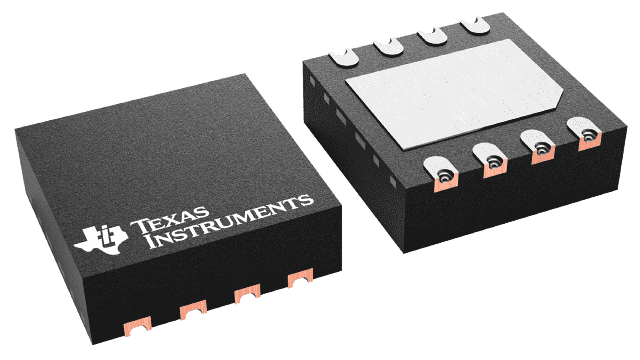
Texas Instruments
| Series | Category | # Parts | Status | Description |
|---|---|---|---|---|
| Part | Spec A | Spec B | Spec C | Spec D | Description |
|---|---|---|---|---|---|



| Series | Category | # Parts | Status | Description |
|---|---|---|---|---|
| Part | Spec A | Spec B | Spec C | Spec D | Description |
|---|---|---|---|---|---|
| Part | Category | Description |
|---|---|---|
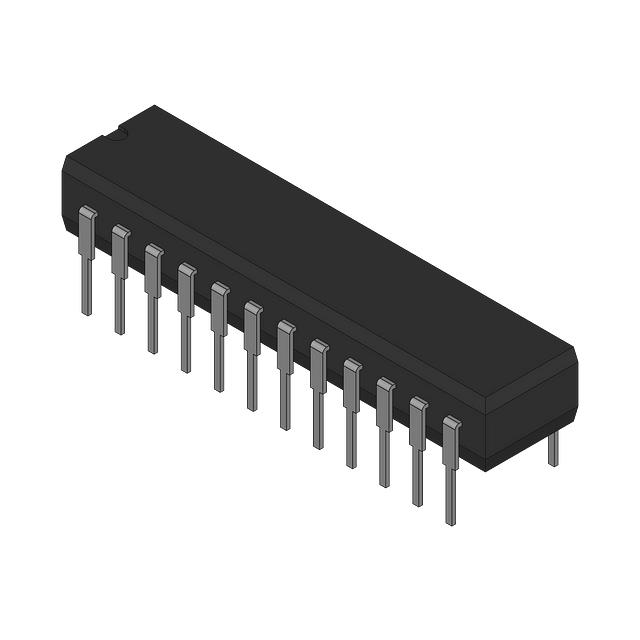 Texas Instruments | Integrated Circuits (ICs) | BUS DRIVER, BCT/FBT SERIES |
 Texas Instruments | Integrated Circuits (ICs) | 12BIT 3.3V~3.6V 210MHZ PARALLEL VQFN-48-EP(7X7) ANALOG TO DIGITAL CONVERTERS (ADC) ROHS |
Texas Instruments | Integrated Circuits (ICs) | TMX320DRE311 179PIN UBGA 200MHZ |
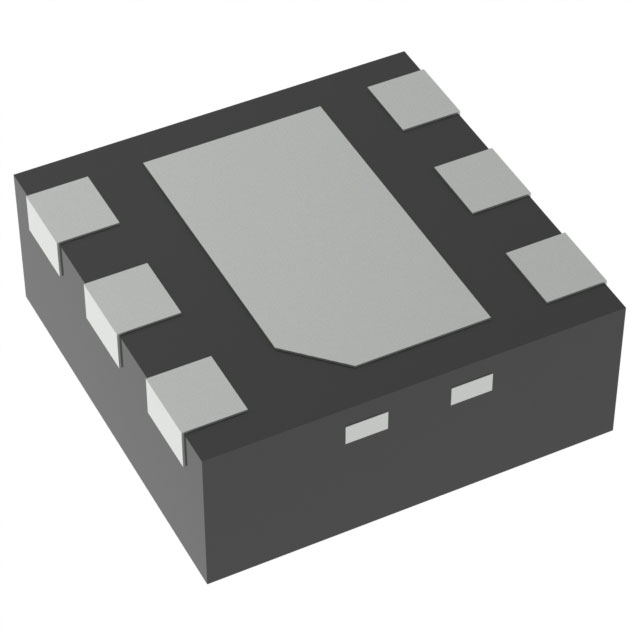 Texas Instruments TPS61040DRVTG4Unknown | Integrated Circuits (ICs) | IC LED DRV RGLTR PWM 350MA 6WSON |
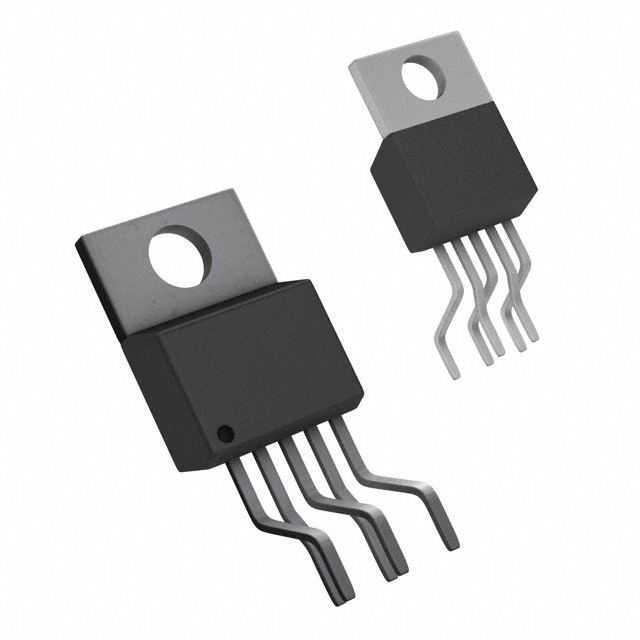 Texas Instruments LP3876ET-2.5Obsolete | Integrated Circuits (ICs) | IC REG LINEAR 2.5V 3A TO220-5 |
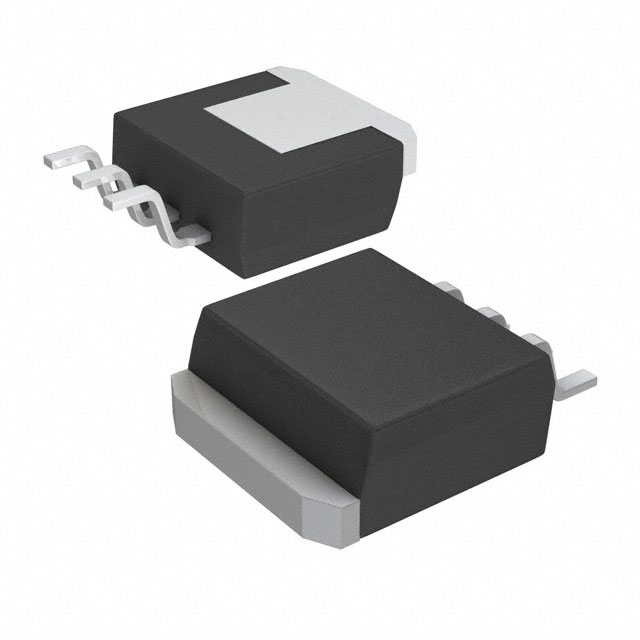 Texas Instruments LMS1585ACSX-ADJObsolete | Integrated Circuits (ICs) | IC REG LIN POS ADJ 5A DDPAK |
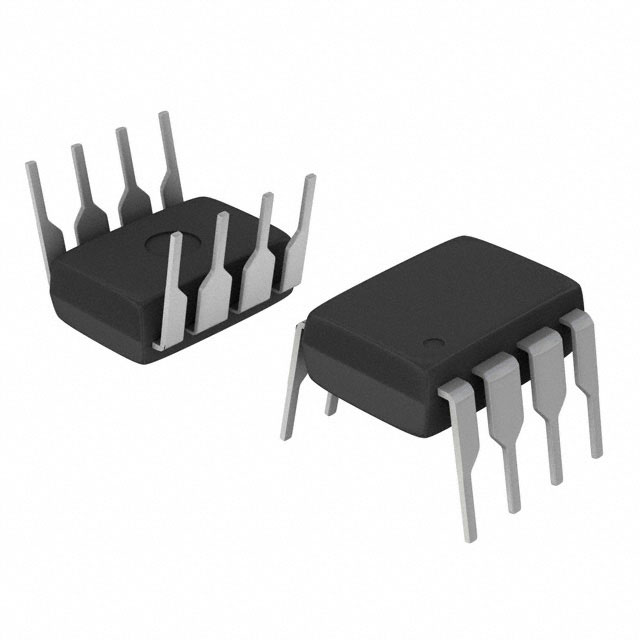 Texas Instruments INA111APG4Obsolete | Integrated Circuits (ICs) | IC INST AMP 1 CIRCUIT 8DIP |
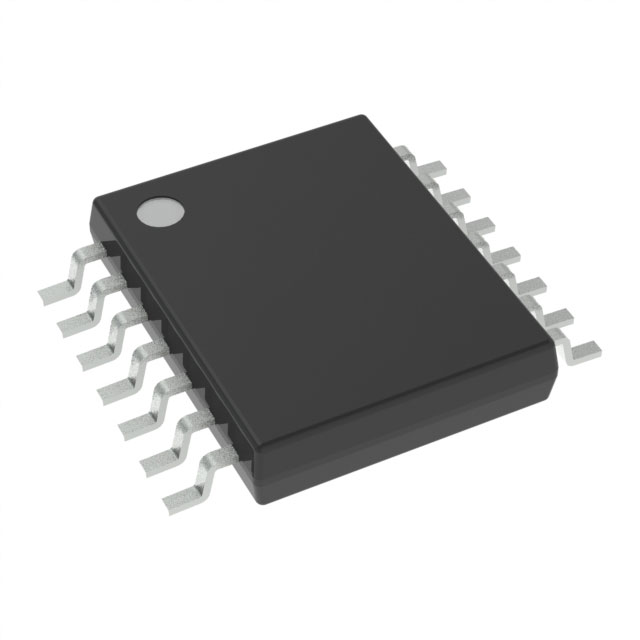 Texas Instruments | Integrated Circuits (ICs) | AUTOMOTIVE, QUAD 36V 1.2MHZ OPERATIONAL AMPLIFIER |
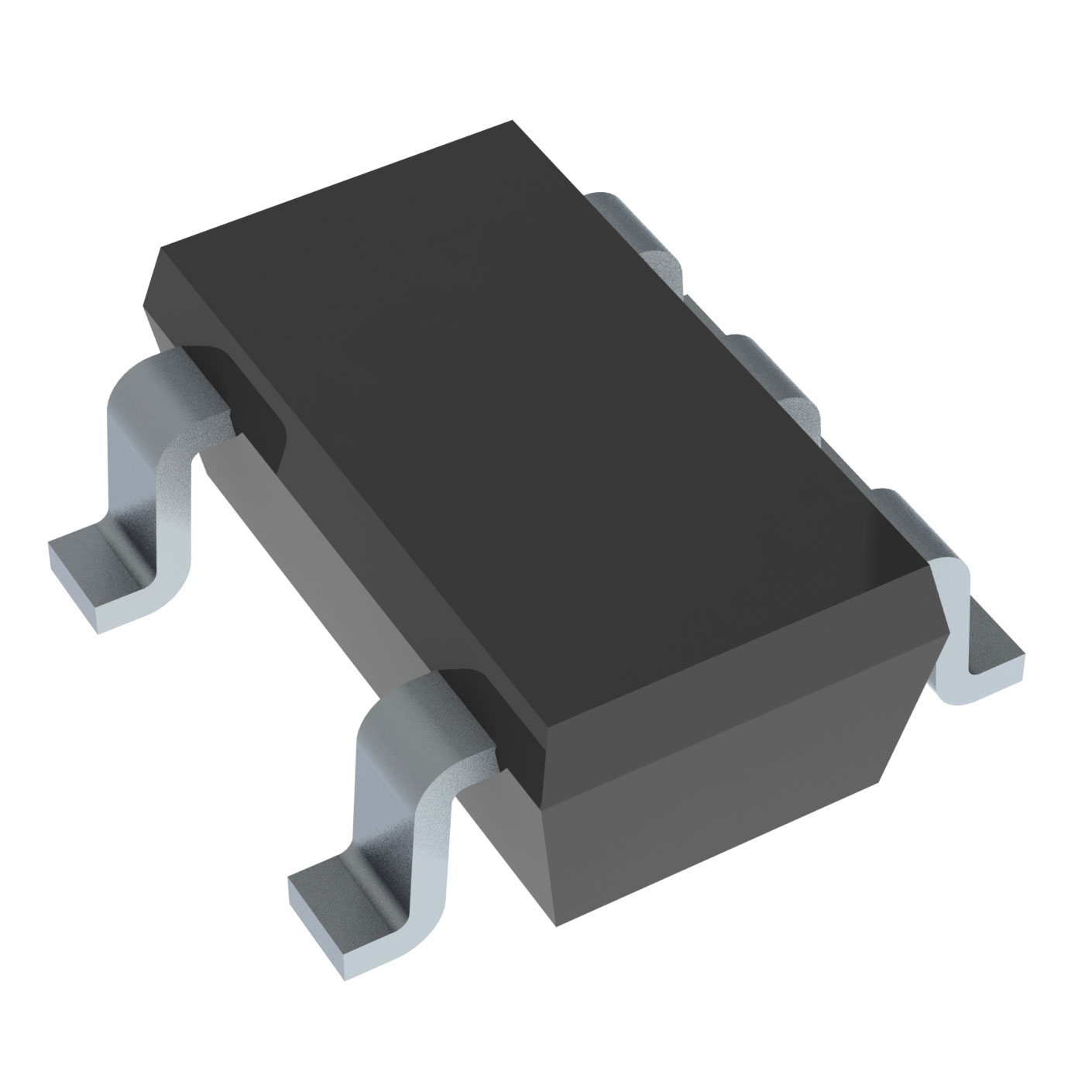 Texas Instruments OPA340NA/3KG4Unknown | Integrated Circuits (ICs) | IC OPAMP GP 1 CIRCUIT SOT23-5 |
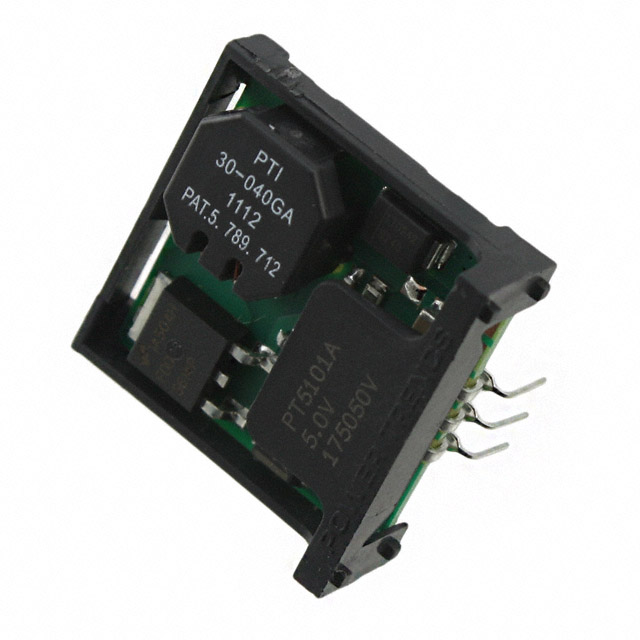 Texas Instruments PT5112AObsolete | Power Supplies - Board Mount | DC DC CONVERTER 8V 8W |
| Series | Category | # Parts | Status | Description |
|---|---|---|---|---|
TCAN1057A-Q1Automotive enhanced CAN transceiver with silent mode | Integrated Circuits (ICs) | 5 | Active | The TCAN1057A-Q1 is a high speed controller area network (CAN) transceivers that meet the physical layer requirements of the ISO 11898-2:2016 high-speed CAN specification.
The transceivers have certified electromagnetic compatibility (EMC) operation making it an ideal choice for classical CAN and CAN FD networks up to 5 megabits per second (Mbps). Up to 8Mbps operation in simpler networks is possible with these devices. The transceivers support two modes of operation; normal mode and silent mode. The transceivers also include many protection and diagnostic features including thermal shutdown (TSD), TXD-dominant timeout (DTO), and bus fault protection up to ±58V. The device has defined fail-safe behavior in supply under-voltage or floating pin scenarios.
The transceiver features an integrated level shifter on the VIO pin which supplies internal logic-level translation for interfacing the transceiver I/Os directly to 1.8V, 2.5V, 3.3V, or 5V logic level.
The TCAN1057A-Q1 is a high speed controller area network (CAN) transceivers that meet the physical layer requirements of the ISO 11898-2:2016 high-speed CAN specification.
The transceivers have certified electromagnetic compatibility (EMC) operation making it an ideal choice for classical CAN and CAN FD networks up to 5 megabits per second (Mbps). Up to 8Mbps operation in simpler networks is possible with these devices. The transceivers support two modes of operation; normal mode and silent mode. The transceivers also include many protection and diagnostic features including thermal shutdown (TSD), TXD-dominant timeout (DTO), and bus fault protection up to ±58V. The device has defined fail-safe behavior in supply under-voltage or floating pin scenarios.
The transceiver features an integrated level shifter on the VIO pin which supplies internal logic-level translation for interfacing the transceiver I/Os directly to 1.8V, 2.5V, 3.3V, or 5V logic level. |
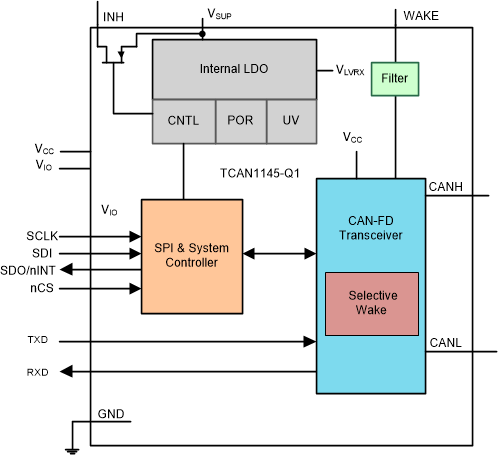
TCAN1144-Q1Automotive enhanced CAN FD and high speed CAN transceiver with Watchdog, LIMP, and bus diagnostics | Interface | 2 | Active | The TCAN114x-Q1 is a family of enhanced high-speed, CAN FD transceivers supporting data rates up to 5 Mbps. The devices are configured using serial peripheral interface (SPI) for access to full functionality. The TCAN114x-Q1 supports nominal processor IO voltages from 1.8 V to 5 V by applying the appropriate voltage to the VIOpin, allowing lower power processors to be used.
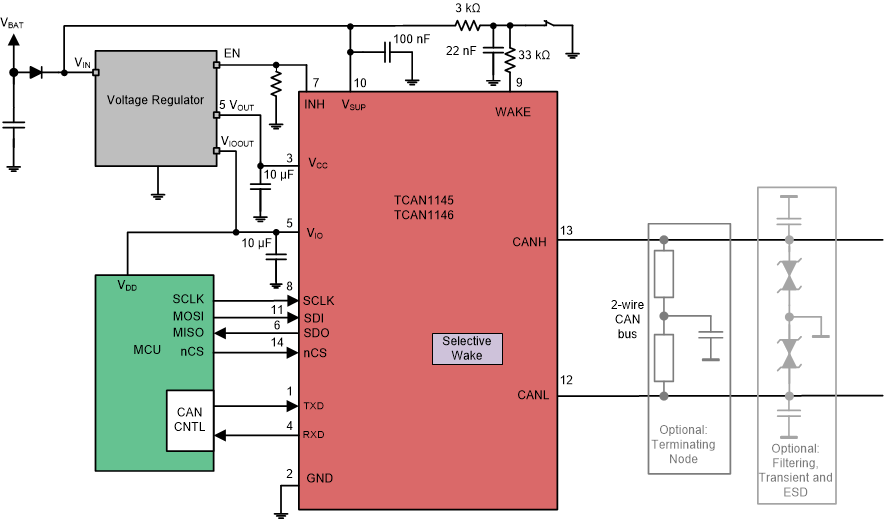
The TCAN1145-Q1 and TCAN1146-Q1 transceivers support selective wake (being able to wake-up based on WUF identification). This feature enables systems to implement partial networking and operate with a reduced number of nodes in an active state while the remaining nodes are in a low-power sleep mode). The transceivers and selective wake function meet the specifications of the ISO 11898-2:2016 standard.
The TCAN1144-Q1 and TCAN1146-Q1 are full featured devices supporting watchdog and advanced bus diagnostics. For ease of debug, the advanced bus fault diagnostics and communication feature can be used to determine specific bus faults.
The TCAN114x-Q1 is a family of enhanced high-speed CAN FD transceivers that are register compatible enabling system designers the flexibility to implement features needed without hardware modifications and with minimal software changes. The TCAN1144-Q1 and TCAN1146-Q1 inhibit (INH) pin can be used to either enable node power or be configured as a limp home pin when a watchdog error takes place.
The TCAN114x-Q1 is a family of enhanced high-speed, CAN FD transceivers supporting data rates up to 5 Mbps. The devices are configured using serial peripheral interface (SPI) for access to full functionality. The TCAN114x-Q1 supports nominal processor IO voltages from 1.8 V to 5 V by applying the appropriate voltage to the VIOpin, allowing lower power processors to be used.
The TCAN1145-Q1 and TCAN1146-Q1 transceivers support selective wake (being able to wake-up based on WUF identification). This feature enables systems to implement partial networking and operate with a reduced number of nodes in an active state while the remaining nodes are in a low-power sleep mode). The transceivers and selective wake function meet the specifications of the ISO 11898-2:2016 standard.
The TCAN1144-Q1 and TCAN1146-Q1 are full featured devices supporting watchdog and advanced bus diagnostics. For ease of debug, the advanced bus fault diagnostics and communication feature can be used to determine specific bus faults.
The TCAN114x-Q1 is a family of enhanced high-speed CAN FD transceivers that are register compatible enabling system designers the flexibility to implement features needed without hardware modifications and with minimal software changes. The TCAN1144-Q1 and TCAN1146-Q1 inhibit (INH) pin can be used to either enable node power or be configured as a limp home pin when a watchdog error takes place. |
TCAN1145-Q1Automotive CAN FD transceiver with partial networking via selective wake | Interface | 2 | Active | The TCAN114x-Q1 is a family of enhanced high-speed, CAN FD transceivers supporting data rates up to 5 Mbps. The devices are configured using serial peripheral interface (SPI) for access to full functionality. The TCAN114x-Q1 supports nominal processor IO voltages from 1.8 V to 5 V by applying the appropriate voltage to the VIOpin, allowing lower power processors to be used.
The TCAN1145-Q1 and TCAN1146-Q1 transceivers support selective wake (being able to wake-up based on WUF identification). This feature enables systems to implement partial networking and operate with a reduced number of nodes in an active state while the remaining nodes are in a low-power sleep mode). The transceivers and selective wake function meet the specifications of the ISO 11898-2:2016 standard.
The TCAN1144-Q1 and TCAN1146-Q1 are full featured devices supporting watchdog and advanced bus diagnostics. For ease of debug, the advanced bus fault diagnostics and communication feature can be used to determine specific bus faults.
The TCAN114x-Q1 is a family of enhanced high-speed CAN FD transceivers that are register compatible enabling system designers the flexibility to implement features needed without hardware modifications and with minimal software changes. The TCAN1144-Q1 and TCAN1146-Q1 inhibit (INH) pin can be used to either enable node power or be configured as a limp home pin when a watchdog error takes place.
The TCAN114x-Q1 is a family of enhanced high-speed, CAN FD transceivers supporting data rates up to 5 Mbps. The devices are configured using serial peripheral interface (SPI) for access to full functionality. The TCAN114x-Q1 supports nominal processor IO voltages from 1.8 V to 5 V by applying the appropriate voltage to the VIOpin, allowing lower power processors to be used.
The TCAN1145-Q1 and TCAN1146-Q1 transceivers support selective wake (being able to wake-up based on WUF identification). This feature enables systems to implement partial networking and operate with a reduced number of nodes in an active state while the remaining nodes are in a low-power sleep mode). The transceivers and selective wake function meet the specifications of the ISO 11898-2:2016 standard.
The TCAN1144-Q1 and TCAN1146-Q1 are full featured devices supporting watchdog and advanced bus diagnostics. For ease of debug, the advanced bus fault diagnostics and communication feature can be used to determine specific bus faults.
The TCAN114x-Q1 is a family of enhanced high-speed CAN FD transceivers that are register compatible enabling system designers the flexibility to implement features needed without hardware modifications and with minimal software changes. The TCAN1144-Q1 and TCAN1146-Q1 inhibit (INH) pin can be used to either enable node power or be configured as a limp home pin when a watchdog error takes place. |
TCAN1146-Q1Automotive CAN FD transceiver with watchdog, bus diagnostics and partial networking via sele | Drivers, Receivers, Transceivers | 2 | Active | The TCAN114x-Q1 is a family of enhanced high-speed, CAN FD transceivers supporting data rates up to 5 Mbps. The devices are configured using serial peripheral interface (SPI) for access to full functionality. The TCAN114x-Q1 supports nominal processor IO voltages from 1.8 V to 5 V by applying the appropriate voltage to the VIOpin, allowing lower power processors to be used.
The TCAN1145-Q1 and TCAN1146-Q1 transceivers support selective wake (being able to wake-up based on WUF identification). This feature enables systems to implement partial networking and operate with a reduced number of nodes in an active state while the remaining nodes are in a low-power sleep mode). The transceivers and selective wake function meet the specifications of the ISO 11898-2:2016 standard.
The TCAN1144-Q1 and TCAN1146-Q1 are full featured devices supporting watchdog and advanced bus diagnostics. For ease of debug, the advanced bus fault diagnostics and communication feature can be used to determine specific bus faults.
The TCAN114x-Q1 is a family of enhanced high-speed CAN FD transceivers that are register compatible enabling system designers the flexibility to implement features needed without hardware modifications and with minimal software changes. The TCAN1144-Q1 and TCAN1146-Q1 inhibit (INH) pin can be used to either enable node power or be configured as a limp home pin when a watchdog error takes place.
The TCAN114x-Q1 is a family of enhanced high-speed, CAN FD transceivers supporting data rates up to 5 Mbps. The devices are configured using serial peripheral interface (SPI) for access to full functionality. The TCAN114x-Q1 supports nominal processor IO voltages from 1.8 V to 5 V by applying the appropriate voltage to the VIOpin, allowing lower power processors to be used.
The TCAN1145-Q1 and TCAN1146-Q1 transceivers support selective wake (being able to wake-up based on WUF identification). This feature enables systems to implement partial networking and operate with a reduced number of nodes in an active state while the remaining nodes are in a low-power sleep mode). The transceivers and selective wake function meet the specifications of the ISO 11898-2:2016 standard.
The TCAN1144-Q1 and TCAN1146-Q1 are full featured devices supporting watchdog and advanced bus diagnostics. For ease of debug, the advanced bus fault diagnostics and communication feature can be used to determine specific bus faults.
The TCAN114x-Q1 is a family of enhanced high-speed CAN FD transceivers that are register compatible enabling system designers the flexibility to implement features needed without hardware modifications and with minimal software changes. The TCAN1144-Q1 and TCAN1146-Q1 inhibit (INH) pin can be used to either enable node power or be configured as a limp home pin when a watchdog error takes place. |
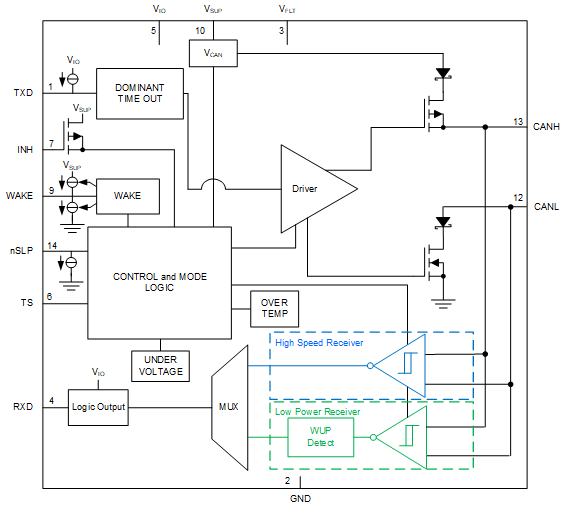
TCAN1162-Q1Automotive CAN-FD transceiver with integrated 5-V supply | Integrated Circuits (ICs) | 1 | Active | The TCAN1162-Q1 is a high-speed Controller Area Network (CAN) transceiver that meets the physical layer requirements of the ISO 11898-2:2016 high-speed CAN specification. The TCAN1162-Q1 supports both classical CAN and CAN FD networks up to 8 megabits per second (Mbps).
The TCAN1162-Q1 integrates a 5-V LDO with a wide input operating range which provides the CAN transceiver voltage thereby eliminating the need for the 5-V supply to be supplied from an external voltage source.
The TCAN1162-Q1 allows for system-level reductions in battery current consumption by selectively enabling the various power supplies that may be present on a system via the INH output pin. This allows an ultra-low-current sleep state where power is gated to all system components except for the TCAN1162-Q1, while monitoring the CAN bus. When a wake-up event is detected, the TCAN1162-Q1 initiates system start-up by driving INH high.
The TCAN1162-Q1 is a high-speed Controller Area Network (CAN) transceiver that meets the physical layer requirements of the ISO 11898-2:2016 high-speed CAN specification. The TCAN1162-Q1 supports both classical CAN and CAN FD networks up to 8 megabits per second (Mbps).
The TCAN1162-Q1 integrates a 5-V LDO with a wide input operating range which provides the CAN transceiver voltage thereby eliminating the need for the 5-V supply to be supplied from an external voltage source.
The TCAN1162-Q1 allows for system-level reductions in battery current consumption by selectively enabling the various power supplies that may be present on a system via the INH output pin. This allows an ultra-low-current sleep state where power is gated to all system components except for the TCAN1162-Q1, while monitoring the CAN bus. When a wake-up event is detected, the TCAN1162-Q1 initiates system start-up by driving INH high. |
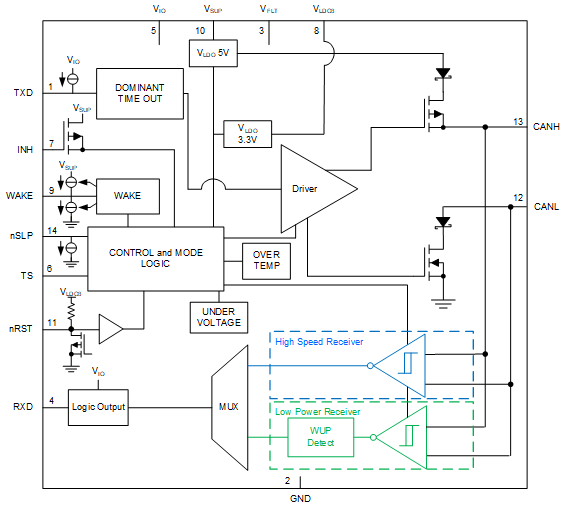
TCAN11623-Q1Automotive CAN-FD transceiver with integrated 5-V supply and 3.3-V, 70-mA LDO | Drivers, Receivers, Transceivers | 1 | Active | The TCAN1162x-Q1 are high-speed controller area network (CAN) system basis chips (SBC) that meet the physical layer requirements of the ISO 11898-2:2016 high-speed CAN specification. The TCAN1162x-Q1 supports both classical CAN and CAN FD networks up to 8 megabits per second (Mbps).
Both the TCAN11623-Q1 and TCAN11625-Q1 support a wide input supply range and integrates some form of an LDO output. The TCAN11625-Q1 has a 5-V LDO output (VCCOUT) which supplies the CAN transceiver voltage internally as well as additional current externally. The TCAN11623-Q1 has a 3.3-V LDO output (VLDO3), supplied from the 5-V LDO, supporting external loads.
The TCAN1162x-Q1 allows for system-level reductions in battery current consumption by selectively enabling the various power supplies that may be present on a system via the INH output pin. This allows an ultra-low-current sleep state where power is gated to all system components except for the TCAN1162x-Q1, while monitoring the CAN bus. When a wake-up event is detected, the TCAN1162x-Q1 initiates system start-up by driving INH high.
The TCAN1162x-Q1 are high-speed controller area network (CAN) system basis chips (SBC) that meet the physical layer requirements of the ISO 11898-2:2016 high-speed CAN specification. The TCAN1162x-Q1 supports both classical CAN and CAN FD networks up to 8 megabits per second (Mbps).
Both the TCAN11623-Q1 and TCAN11625-Q1 support a wide input supply range and integrates some form of an LDO output. The TCAN11625-Q1 has a 5-V LDO output (VCCOUT) which supplies the CAN transceiver voltage internally as well as additional current externally. The TCAN11623-Q1 has a 3.3-V LDO output (VLDO3), supplied from the 5-V LDO, supporting external loads.
The TCAN1162x-Q1 allows for system-level reductions in battery current consumption by selectively enabling the various power supplies that may be present on a system via the INH output pin. This allows an ultra-low-current sleep state where power is gated to all system components except for the TCAN1162x-Q1, while monitoring the CAN bus. When a wake-up event is detected, the TCAN1162x-Q1 initiates system start-up by driving INH high. |
TCAN11625-Q1Automotive CAN-FD transceiver with integrated 5-V supply and 5-V, 100-mA LDO | Integrated Circuits (ICs) | 1 | Active | The TCAN1162x-Q1 are high-speed controller area network (CAN) system basis chips (SBC) that meet the physical layer requirements of the ISO 11898-2:2016 high-speed CAN specification. The TCAN1162x-Q1 supports both classical CAN and CAN FD networks up to 8 megabits per second (Mbps).
Both the TCAN11623-Q1 and TCAN11625-Q1 support a wide input supply range and integrates some form of an LDO output. The TCAN11625-Q1 has a 5-V LDO output (VCCOUT) which supplies the CAN transceiver voltage internally as well as additional current externally. The TCAN11623-Q1 has a 3.3-V LDO output (VLDO3), supplied from the 5-V LDO, supporting external loads.
The TCAN1162x-Q1 allows for system-level reductions in battery current consumption by selectively enabling the various power supplies that may be present on a system via the INH output pin. This allows an ultra-low-current sleep state where power is gated to all system components except for the TCAN1162x-Q1, while monitoring the CAN bus. When a wake-up event is detected, the TCAN1162x-Q1 initiates system start-up by driving INH high.
The TCAN1162x-Q1 are high-speed controller area network (CAN) system basis chips (SBC) that meet the physical layer requirements of the ISO 11898-2:2016 high-speed CAN specification. The TCAN1162x-Q1 supports both classical CAN and CAN FD networks up to 8 megabits per second (Mbps).
Both the TCAN11623-Q1 and TCAN11625-Q1 support a wide input supply range and integrates some form of an LDO output. The TCAN11625-Q1 has a 5-V LDO output (VCCOUT) which supplies the CAN transceiver voltage internally as well as additional current externally. The TCAN11623-Q1 has a 3.3-V LDO output (VLDO3), supplied from the 5-V LDO, supporting external loads.
The TCAN1162x-Q1 allows for system-level reductions in battery current consumption by selectively enabling the various power supplies that may be present on a system via the INH output pin. This allows an ultra-low-current sleep state where power is gated to all system components except for the TCAN1162x-Q1, while monitoring the CAN bus. When a wake-up event is detected, the TCAN1162x-Q1 initiates system start-up by driving INH high. |
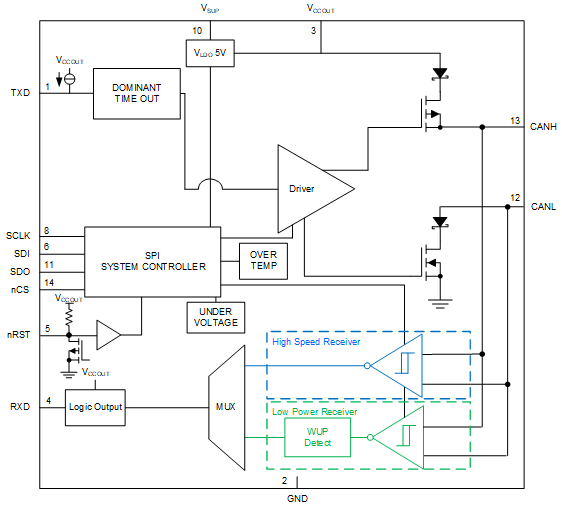
TCAN1164-Q1Automotive CAN FD system basis chip with LDO output and watchdog | Integrated Circuits (ICs) | 2 | Active | The TCAN1164-Q1 is a high-speed Controller Area Network (CAN) system basis chip (SBC) that meets the physical layer requirements of the ISO 11898-2:2016 high-speed CAN specification. The transceiver supports both classical CAN and CAN FD networks up to 8 megabits per second (Mbps) (TCAN1164-Q1) or 5-Mbps (TCAN1164T-Q1).
The TCAN1164-Q1 supports a wide input supply range and integrates a 5-V LDO output. The 5-V LDO output (VCCOUT) supplies the CAN transceiver voltage internally as well as additional current externally.
The TCAN1164-Q1 is a high-speed Controller Area Network (CAN) system basis chip (SBC) that meets the physical layer requirements of the ISO 11898-2:2016 high-speed CAN specification. The transceiver supports both classical CAN and CAN FD networks up to 8 megabits per second (Mbps) (TCAN1164-Q1) or 5-Mbps (TCAN1164T-Q1).
The TCAN1164-Q1 supports a wide input supply range and integrates a 5-V LDO output. The 5-V LDO output (VCCOUT) supplies the CAN transceiver voltage internally as well as additional current externally. |
TCAN1167-Q1Automotive CAN FD system basis chip with LDO output and watchdog | Drivers, Receivers, Transceivers | 1 | Active | The TCAN1167-Q1 is a high-speed Controller Area Network (CAN) system basis chip (SBC) that meets the physical layer requirements of the ISO 11898-2:2016 high-speed CAN specification. The transceiver supports both classical CAN and CAN FD networks up to 8 megabits per second (Mbps).
The TCAN1167-Q1 supports a wide input supply range and integrates a 5-V LDO output. The 5-V LDO output (VCCOUT) supplies the CAN transceiver voltage internally as well as additional current externally.
The TCAN1167-Q1 allows for system-level reductions in battery current consumption by selectively enabling the various power supplies that may be present on a system via the INH output pin. This allows an ultra-low-current sleep state where power is gated to all system components except for the TCAN1167-Q1, while monitoring the CAN bus. When a wake-up event is detected, the TCAN1167-Q1 initiates system start-up by driving INH high.
The TCAN1167-Q1 is a high-speed Controller Area Network (CAN) system basis chip (SBC) that meets the physical layer requirements of the ISO 11898-2:2016 high-speed CAN specification. The transceiver supports both classical CAN and CAN FD networks up to 8 megabits per second (Mbps).
The TCAN1167-Q1 supports a wide input supply range and integrates a 5-V LDO output. The 5-V LDO output (VCCOUT) supplies the CAN transceiver voltage internally as well as additional current externally.
The TCAN1167-Q1 allows for system-level reductions in battery current consumption by selectively enabling the various power supplies that may be present on a system via the INH output pin. This allows an ultra-low-current sleep state where power is gated to all system components except for the TCAN1167-Q1, while monitoring the CAN bus. When a wake-up event is detected, the TCAN1167-Q1 initiates system start-up by driving INH high. |
TCAN1462-Q1Automotive signal-improvement-capable CAN FD transceiver with standby | Integrated Circuits (ICs) | 2 | Active | The TCAN1462-Q1 is a high speed Controller Area Network (CAN) transceiver that meet the physical layer requirements of the ISO 11898-2:2016 high speed CAN specification and the CiA 601-4 Signal Improvement Capability (SIC) specification. The devices reduce signal ringing at dominant-to-recessive edge and enable higher throughput in complex network topologies. Signal improvement capability allows the applications to extract real benefit of CAN FD (flexible data rate) by operating at 2Mbps, or operating at 5Mbps or higher in large networks with multiple unterminated stubs.
The device meets the timing specifications mandated by CiA 601-4; thus, have much tighter bit timing symmetry compared to a regular CAN FD transceivers. This provides larger timing window to sample the correct bit and enables error-free communication in large complex star networks where ringing and bit distortion are inherent.
These devices are pin-compatible to 8-pin CAN FD transceivers, such as TCAN1044A-Q1 or TCAN1042-Q1.
The TCAN1462-Q1 with suffix ’V’ includes internal logic level translation via the VIO logic supply terminal to allow for interfacing directly to 1.8V, 2.5V, or 3.3V controllers. The transceivers support low power standby mode which allows remote wake-up via CAN bus compliant with ISO 11898-2:2016 defined wake-up pattern (WUP). The device family also includes many protection features such as undervoltage detection, thermal shutdown (TSD), driver dominant timeout (TXD DTO), and ±58V bus fault protection.
The TCAN1462-Q1 is a high speed Controller Area Network (CAN) transceiver that meet the physical layer requirements of the ISO 11898-2:2016 high speed CAN specification and the CiA 601-4 Signal Improvement Capability (SIC) specification. The devices reduce signal ringing at dominant-to-recessive edge and enable higher throughput in complex network topologies. Signal improvement capability allows the applications to extract real benefit of CAN FD (flexible data rate) by operating at 2Mbps, or operating at 5Mbps or higher in large networks with multiple unterminated stubs.
The device meets the timing specifications mandated by CiA 601-4; thus, have much tighter bit timing symmetry compared to a regular CAN FD transceivers. This provides larger timing window to sample the correct bit and enables error-free communication in large complex star networks where ringing and bit distortion are inherent.
These devices are pin-compatible to 8-pin CAN FD transceivers, such as TCAN1044A-Q1 or TCAN1042-Q1.
The TCAN1462-Q1 with suffix ’V’ includes internal logic level translation via the VIO logic supply terminal to allow for interfacing directly to 1.8V, 2.5V, or 3.3V controllers. The transceivers support low power standby mode which allows remote wake-up via CAN bus compliant with ISO 11898-2:2016 defined wake-up pattern (WUP). The device family also includes many protection features such as undervoltage detection, thermal shutdown (TSD), driver dominant timeout (TXD DTO), and ±58V bus fault protection. |