T
Texas Instruments
| Series | Category | # Parts | Status | Description |
|---|---|---|---|---|
| Part | Spec A | Spec B | Spec C | Spec D | Description |
|---|---|---|---|---|---|



| Series | Category | # Parts | Status | Description |
|---|---|---|---|---|
| Part | Spec A | Spec B | Spec C | Spec D | Description |
|---|---|---|---|---|---|
| Part | Category | Description |
|---|---|---|
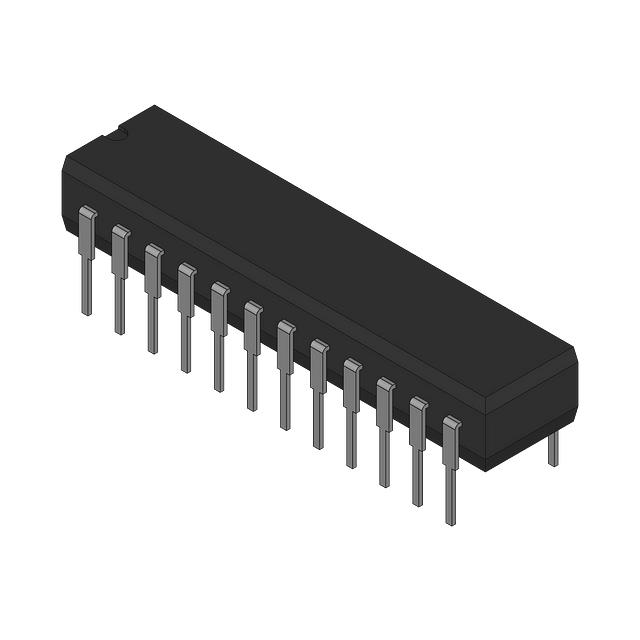 Texas Instruments | Integrated Circuits (ICs) | BUS DRIVER, BCT/FBT SERIES |
 Texas Instruments | Integrated Circuits (ICs) | 12BIT 3.3V~3.6V 210MHZ PARALLEL VQFN-48-EP(7X7) ANALOG TO DIGITAL CONVERTERS (ADC) ROHS |
Texas Instruments | Integrated Circuits (ICs) | TMX320DRE311 179PIN UBGA 200MHZ |
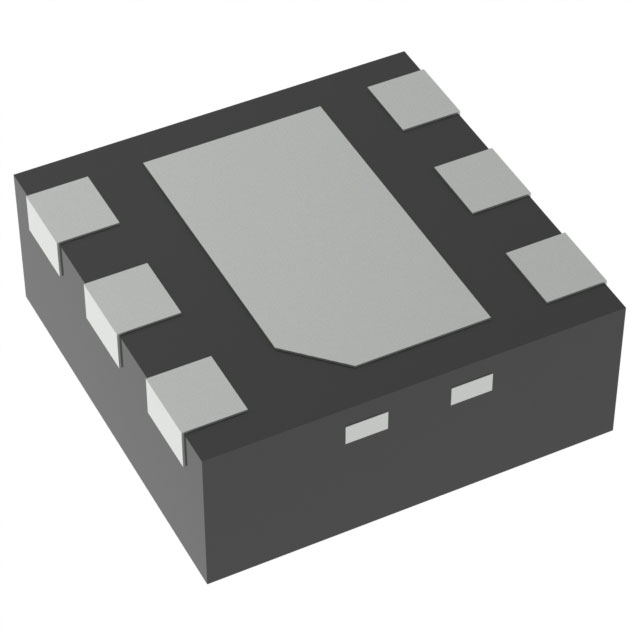 Texas Instruments TPS61040DRVTG4Unknown | Integrated Circuits (ICs) | IC LED DRV RGLTR PWM 350MA 6WSON |
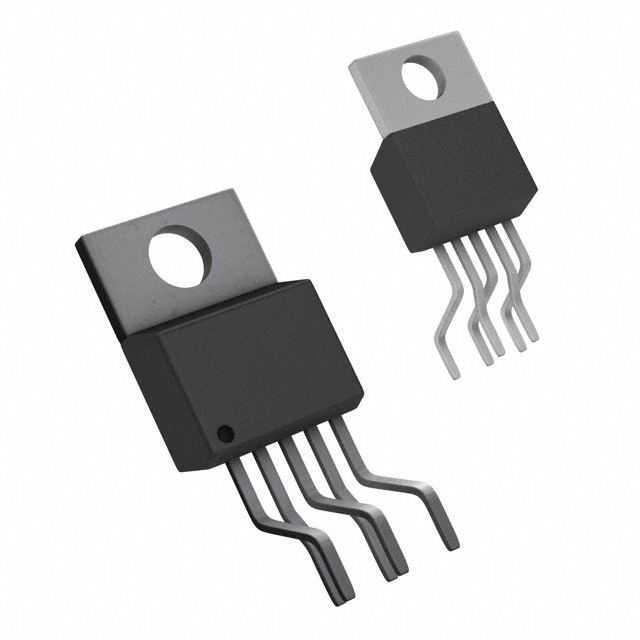 Texas Instruments LP3876ET-2.5Obsolete | Integrated Circuits (ICs) | IC REG LINEAR 2.5V 3A TO220-5 |
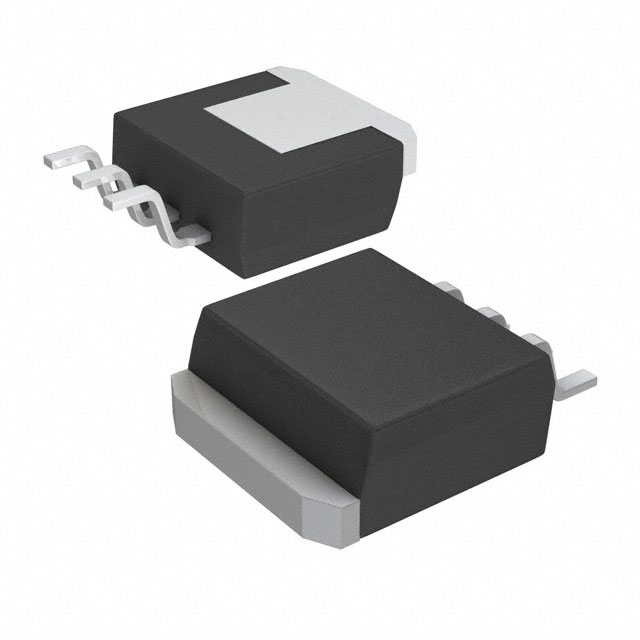 Texas Instruments LMS1585ACSX-ADJObsolete | Integrated Circuits (ICs) | IC REG LIN POS ADJ 5A DDPAK |
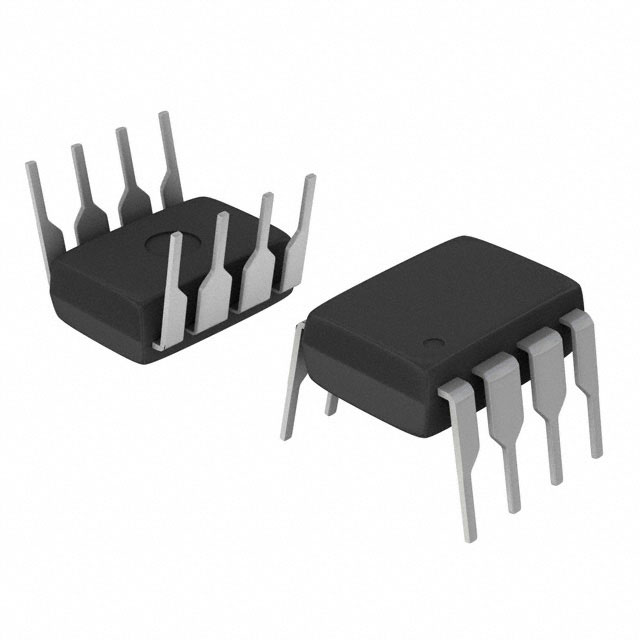 Texas Instruments INA111APG4Obsolete | Integrated Circuits (ICs) | IC INST AMP 1 CIRCUIT 8DIP |
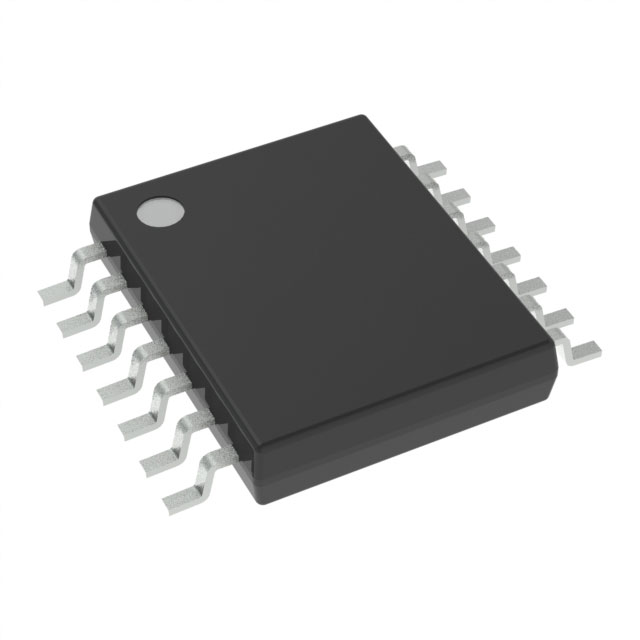 Texas Instruments | Integrated Circuits (ICs) | AUTOMOTIVE, QUAD 36V 1.2MHZ OPERATIONAL AMPLIFIER |
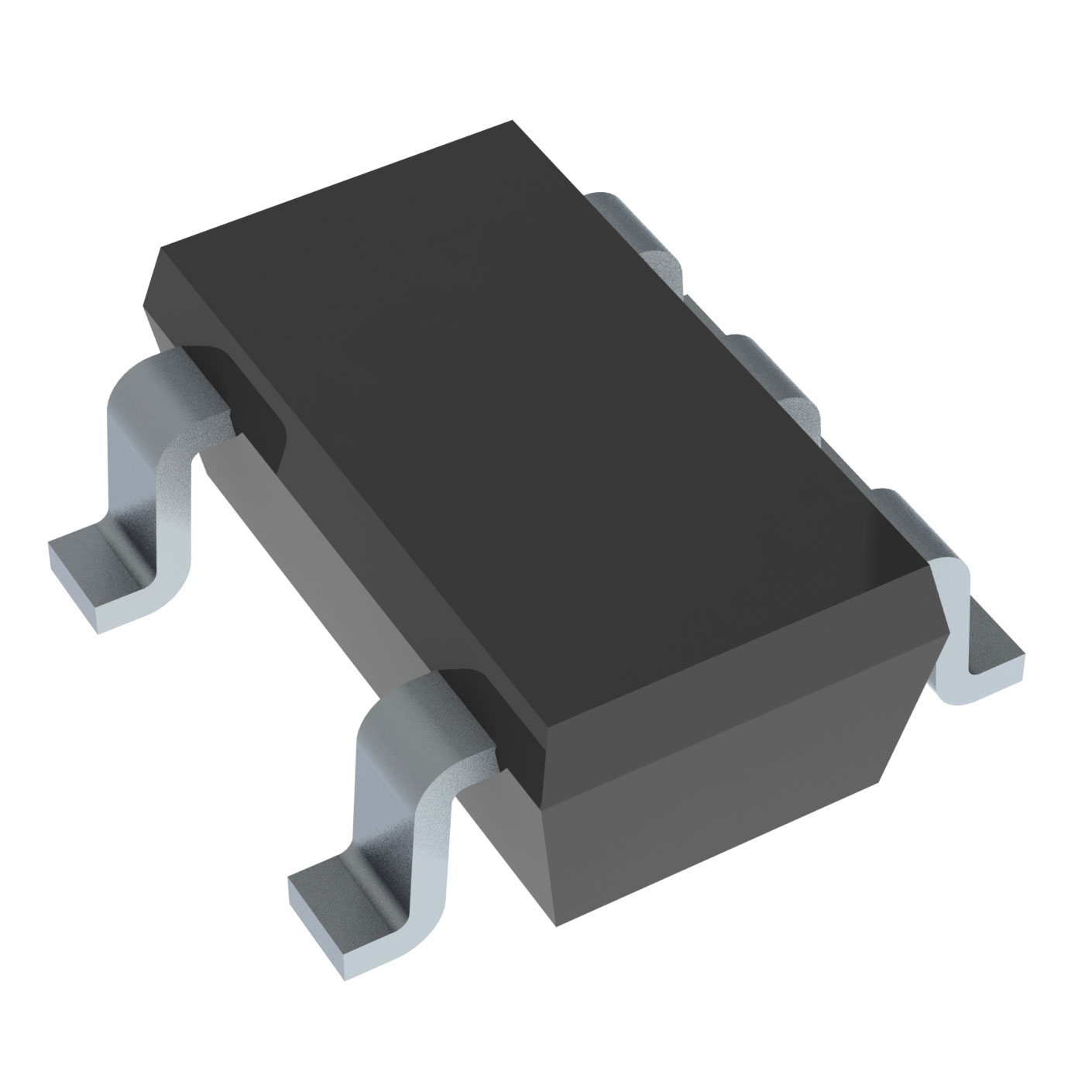 Texas Instruments OPA340NA/3KG4Unknown | Integrated Circuits (ICs) | IC OPAMP GP 1 CIRCUIT SOT23-5 |
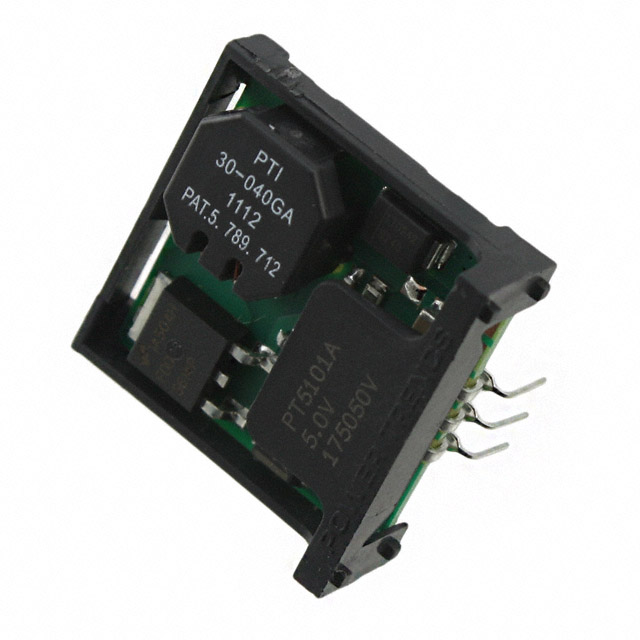 Texas Instruments PT5112AObsolete | Power Supplies - Board Mount | DC DC CONVERTER 8V 8W |
| Series | Category | # Parts | Status | Description |
|---|---|---|---|---|
SN75ALS164Octal General-Purpose Interface Bus Transceiver | Drivers, Receivers, Transceivers | 2 | Obsolete | The SN75ALS164 eight-channel general-purpose interface bus transceiver is a monolithic, high-speed, advanced low-power Schottky device designed to meet the requirements of IEEE Standard 488-1978. Each transceiver is designed to provide the bus-management and data-transfer signals between operating units of a multiple-controller instrumentation system. When combined with the SN75ALS160 octal bus transceiver, the SN75ALS164 provides the complete 16-wire interface for the IEEE 488 bus.
The SN75ALS164 features eight driver-receiver pairs connected in a front-to-back configuration to form input/output (I/O) ports at both the bus and terminal sides. All outputs are disabled (at the high-impedance state) during VCCpower-up and power-down transitions for glitch-free operation. The direction of data flow through these driver-receiver pairs is determined by the DC, TE, and SC enable signals. The SN75ALS164 is identical to the SN75ALS162 with the addition of an OR gate to help simplify board layouts in several popular applications. The ATN and EOI signals are ORed to provide the ATN + EOI output, which is a standard totem-pole output.
The driver outputs (GPIB I/O ports) feature active bus-terminating resistor circuits designed to provide a high impedance to the bus when supply voltage VCCis 0. The drivers are designed to handle loads up to 48 mA of sink current. Each receiver features pnp transistor inputs for high input impedance and hysteresis of 400 mV minimum for increased noise immunity. All receivers have 3-state outputs that present a high impedance to the terminal when disabled.
The SN75ALS164 is characterized for operation from 0°C to 70°C.
H = high level, L = low level, R = receive, T = transmit, X = irrelevant
Direction of data transmission is from the terminal side to the bus side, and the direction of data receiving is from the bus side to the terminal side.
Data transfer is noninverting in both directions.
ATN is a normal transceiver channel that functions additionally as an internal direction control or talk enable for EOI when the DC and TE inputs are in the same state. When DC and TE are in opposite states, the ATN channel functions as an independent transceiver only.
The SN75ALS164 eight-channel general-purpose interface bus transceiver is a monolithic, high-speed, advanced low-power Schottky device designed to meet the requirements of IEEE Standard 488-1978. Each transceiver is designed to provide the bus-management and data-transfer signals between operating units of a multiple-controller instrumentation system. When combined with the SN75ALS160 octal bus transceiver, the SN75ALS164 provides the complete 16-wire interface for the IEEE 488 bus.
The SN75ALS164 features eight driver-receiver pairs connected in a front-to-back configuration to form input/output (I/O) ports at both the bus and terminal sides. All outputs are disabled (at the high-impedance state) during VCCpower-up and power-down transitions for glitch-free operation. The direction of data flow through these driver-receiver pairs is determined by the DC, TE, and SC enable signals. The SN75ALS164 is identical to the SN75ALS162 with the addition of an OR gate to help simplify board layouts in several popular applications. The ATN and EOI signals are ORed to provide the ATN + EOI output, which is a standard totem-pole output.
The driver outputs (GPIB I/O ports) feature active bus-terminating resistor circuits designed to provide a high impedance to the bus when supply voltage VCCis 0. The drivers are designed to handle loads up to 48 mA of sink current. Each receiver features pnp transistor inputs for high input impedance and hysteresis of 400 mV minimum for increased noise immunity. All receivers have 3-state outputs that present a high impedance to the terminal when disabled.
The SN75ALS164 is characterized for operation from 0°C to 70°C.
H = high level, L = low level, R = receive, T = transmit, X = irrelevant
Direction of data transmission is from the terminal side to the bus side, and the direction of data receiving is from the bus side to the terminal side.
Data transfer is noninverting in both directions.
ATN is a normal transceiver channel that functions additionally as an internal direction control or talk enable for EOI when the DC and TE inputs are in the same state. When DC and TE are in opposite states, the ATN channel functions as an independent transceiver only. |
SN75ALS170ATriple differential bus transceiver | Interface | 3 | Active | The SN75ALS170 and SN75ALS170A triple differential bus transceivers are monolithic integrated circuits designed for bidirectional data communication on multipoint bus transmission lines. It is designed for balanced transmission lines and the driver meets ANSI Standards EIA/TIA-422-B and RS-485 and both the driver and receiver meet ITU Recommendation V.11. The SN75ALS170A is designed for FAST-20 SCSI and can transmit or receive data pulses as short as 30 ns with a maximum skew of 5 ns.
The SN75ALS170 and SN75ALS170A operate from a single 5-V power supply. The drivers and receivers have active-high and active-low enables, respectively, which are internally connected together to function as a direction control. The driver differential outputs and the receiver differential inputs are connected internally to form differential input/output (I/O) bus ports that are designed to offer minimum loading to the bus when the driver is disabled or VCC= 0. These ports feature wide positive and negative common-mode voltage ranges making the device suitable for party-line applications.
The SN75ALS170 and the SN75ALS170A are characterized for operation from 0°C to 70°C.
H = high level, L = low level, ? = indeterminate,X = irrelevant, Z = high impedance (off)
The SN75ALS170 and SN75ALS170A triple differential bus transceivers are monolithic integrated circuits designed for bidirectional data communication on multipoint bus transmission lines. It is designed for balanced transmission lines and the driver meets ANSI Standards EIA/TIA-422-B and RS-485 and both the driver and receiver meet ITU Recommendation V.11. The SN75ALS170A is designed for FAST-20 SCSI and can transmit or receive data pulses as short as 30 ns with a maximum skew of 5 ns.
The SN75ALS170 and SN75ALS170A operate from a single 5-V power supply. The drivers and receivers have active-high and active-low enables, respectively, which are internally connected together to function as a direction control. The driver differential outputs and the receiver differential inputs are connected internally to form differential input/output (I/O) bus ports that are designed to offer minimum loading to the bus when the driver is disabled or VCC= 0. These ports feature wide positive and negative common-mode voltage ranges making the device suitable for party-line applications.
The SN75ALS170 and the SN75ALS170A are characterized for operation from 0°C to 70°C.
H = high level, L = low level, ? = indeterminate,X = irrelevant, Z = high impedance (off) |
SN75ALS171ATriple Differential Bus Transceiver | Drivers, Receivers, Transceivers | 3 | Active | The SN75ALS171 and the SN75ALS171A triple differential bus transceivers are monolithic integrated circuits designed for bidirectional data communication on multipoint bus transmission lines. They are designed for balanced transmission lines, and each driver meets ANSI Standards EIA/TIA-422-B and RS-485 and both the drivers and receivers meet ITU Recommendation V.11. The SN75ALS171A is designed for FAST-20 SCSI and can transmit or receive data pulses as short as 30 ns with a maximum skew of 5 ns.
The SN75ALS171 and the SN75ALS171A operate from a single 5-V power supply. The drivers and receivers have individual active-high and active-low enables, respectively, which can be externally connected together to function as a direction control. The driver differential output and the receiver differential input pairs are connected internally to form differential input/output (I/O) bus ports that are designed to offer minimum loading to the bus when the driver is disabled or VCCis at 0 V. These ports feature wide positive and negative common-mode voltage ranges making the device suitable for party-line applications.
The SN75ALS171 and the SN75ALS171A are characterized for operation from 0°C to 70°C.
H = high level, L = low level, ? = indeterminate, X = irrelevant,Z = high impedance (off)
The SN75ALS171 and the SN75ALS171A triple differential bus transceivers are monolithic integrated circuits designed for bidirectional data communication on multipoint bus transmission lines. They are designed for balanced transmission lines, and each driver meets ANSI Standards EIA/TIA-422-B and RS-485 and both the drivers and receivers meet ITU Recommendation V.11. The SN75ALS171A is designed for FAST-20 SCSI and can transmit or receive data pulses as short as 30 ns with a maximum skew of 5 ns.
The SN75ALS171 and the SN75ALS171A operate from a single 5-V power supply. The drivers and receivers have individual active-high and active-low enables, respectively, which can be externally connected together to function as a direction control. The driver differential output and the receiver differential input pairs are connected internally to form differential input/output (I/O) bus ports that are designed to offer minimum loading to the bus when the driver is disabled or VCCis at 0 V. These ports feature wide positive and negative common-mode voltage ranges making the device suitable for party-line applications.
The SN75ALS171 and the SN75ALS171A are characterized for operation from 0°C to 70°C.
H = high level, L = low level, ? = indeterminate, X = irrelevant,Z = high impedance (off) |
SN75ALS172AQuadruple Differential Line Driver | Interface | 1 | Obsolete | The SN75ALS172A comprises four line drivers with 3-state differential outputs. Which are designed to meet the requirements of ANSI Standards EIA/TIA-422-B and RS-485 and ITU Recommendation V.11. The device is optimized for balanced multipoint bus transmission at rates of up to 20Mbaud. Each driver features wide positive and negative common-mode output voltage ranges, making the driver suitable for party-line applications in noisy environments.
The SN75ALS172A provides positive- and negative-current limiting, and thermal shutdown for protection from line-fault conditions on the transmission bus line. Shutdown occurs at a junction temperature of approximately 150°C.
The SN75ALS172A is characterized for operation from 0°C to 70°C.
The SN75ALS172A comprises four line drivers with 3-state differential outputs. Which are designed to meet the requirements of ANSI Standards EIA/TIA-422-B and RS-485 and ITU Recommendation V.11. The device is optimized for balanced multipoint bus transmission at rates of up to 20Mbaud. Each driver features wide positive and negative common-mode output voltage ranges, making the driver suitable for party-line applications in noisy environments.
The SN75ALS172A provides positive- and negative-current limiting, and thermal shutdown for protection from line-fault conditions on the transmission bus line. Shutdown occurs at a junction temperature of approximately 150°C.
The SN75ALS172A is characterized for operation from 0°C to 70°C. |
SN75ALS173Quadruple Differential Line Receiver | Integrated Circuits (ICs) | 4 | Active | The SN75ALS173 is a monolithic quadruple differential line receiver with 3-state outputs. It is designed to meet the requirements of ANSI Standards EIA/TIA-422-B, EIA/TIA-423-B, RS-485, and several ITU recommendations. Advanced low-power Schottky technology provides high speed without the usual power penalty. The four receivers have an ORed pair of enables in common. Either G high or G low enables all of the receivers. The device features high input impedance, input hysteresis for increased noise immunity, and input sensitivity of ±200 mV over a common-mode input voltage range of –12 V to 12 V.
The SN75ALS173 is characterized for operation from 0°C to 70°C.
The SN75ALS173 is a monolithic quadruple differential line receiver with 3-state outputs. It is designed to meet the requirements of ANSI Standards EIA/TIA-422-B, EIA/TIA-423-B, RS-485, and several ITU recommendations. Advanced low-power Schottky technology provides high speed without the usual power penalty. The four receivers have an ORed pair of enables in common. Either G high or G low enables all of the receivers. The device features high input impedance, input hysteresis for increased noise immunity, and input sensitivity of ±200 mV over a common-mode input voltage range of –12 V to 12 V.
The SN75ALS173 is characterized for operation from 0°C to 70°C. |
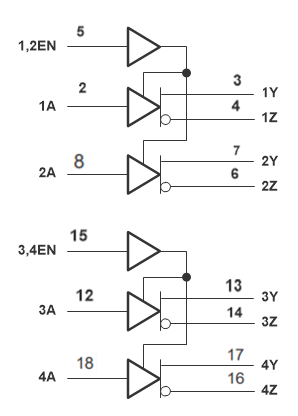
SN75ALS174AQuadruple differential line driver | Drivers, Receivers, Transceivers | 5 | Active | The SN75ALS174A is a quadruple line driver with tri-state differential outputs. It is designed to meet the requirements of ANSI Standards EIA/TIA-422-B and RS-485. This device is optimized for balanced multipoint bus transmission at rates of up to 20Mbit/s.
Each driver features wide positive and negative common-mode output voltage ranges that make them suitable for party-line applications in noisy environments.
The SN75ALS174A provides positive- and negative-current limiting and thermal shutdown for protection from line fault conditions on the transmission bus line. Shutdown occurs at a junction temperature of approximately 150°C.
The SN75ALS174A is characterized for operation from 0°C to 70°C.
The SN75ALS174A is a quadruple line driver with tri-state differential outputs. It is designed to meet the requirements of ANSI Standards EIA/TIA-422-B and RS-485. This device is optimized for balanced multipoint bus transmission at rates of up to 20Mbit/s.
Each driver features wide positive and negative common-mode output voltage ranges that make them suitable for party-line applications in noisy environments.
The SN75ALS174A provides positive- and negative-current limiting and thermal shutdown for protection from line fault conditions on the transmission bus line. Shutdown occurs at a junction temperature of approximately 150°C.
The SN75ALS174A is characterized for operation from 0°C to 70°C. |
SN75ALS175Quadruple Differential Line Receiver | Integrated Circuits (ICs) | 2 | Active | The SN75ALS175 is a monolithic quadruple differential line receiver with 3-state outputs. It is designed to meet the requirements of ANSI Standards EIA/TIA-422-B, EIA/TIA-423-B, and RS-485 and several ITU recommendations. Advanced low-power Schottky technology provides high speed without the usual power penalty. Each of the two pairs of receivers has a common active-high enable. The device features high input impedance, input hysteresis for increased noise immunity, and input sensitivity of ±200 mV over a common-mode input voltage range of –12 V to 12 V.
The SN75ALS175 is characterized for operation from 0°C to 70°C.
The SN75ALS175 is a monolithic quadruple differential line receiver with 3-state outputs. It is designed to meet the requirements of ANSI Standards EIA/TIA-422-B, EIA/TIA-423-B, and RS-485 and several ITU recommendations. Advanced low-power Schottky technology provides high speed without the usual power penalty. Each of the two pairs of receivers has a common active-high enable. The device features high input impedance, input hysteresis for increased noise immunity, and input sensitivity of ±200 mV over a common-mode input voltage range of –12 V to 12 V.
The SN75ALS175 is characterized for operation from 0°C to 70°C. |
SN75ALS176ADifferential Bus Transceiver | Integrated Circuits (ICs) | 10 | Active | Differential Bus Transceiver |
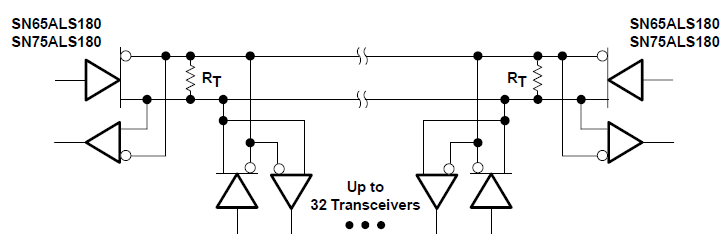
SN75ALS180Differential Driver And Receiver Pair | Integrated Circuits (ICs) | 3 | Active | Differential Driver And Receiver Pair |
SN75ALS191Dual Differential Line Driver | Interface | 6 | Active | The SN75ALS191 is a dual, high-speed, differential line driver designed to meet ANSI Standard EIA/TIA-422-B and ITU Recommendation V.11. The inputs are TTL- and CMOS-compatible and have input clamp diodes. Schottky-diode-clamped transistors minimize propagation delay time. This device operates from a single 5V power supply and is supplied in eight-pin packages.
The SN75ALS191 is characterized for operation from 0°C to 70°C.
The SN75ALS191 is a dual, high-speed, differential line driver designed to meet ANSI Standard EIA/TIA-422-B and ITU Recommendation V.11. The inputs are TTL- and CMOS-compatible and have input clamp diodes. Schottky-diode-clamped transistors minimize propagation delay time. This device operates from a single 5V power supply and is supplied in eight-pin packages.
The SN75ALS191 is characterized for operation from 0°C to 70°C. |