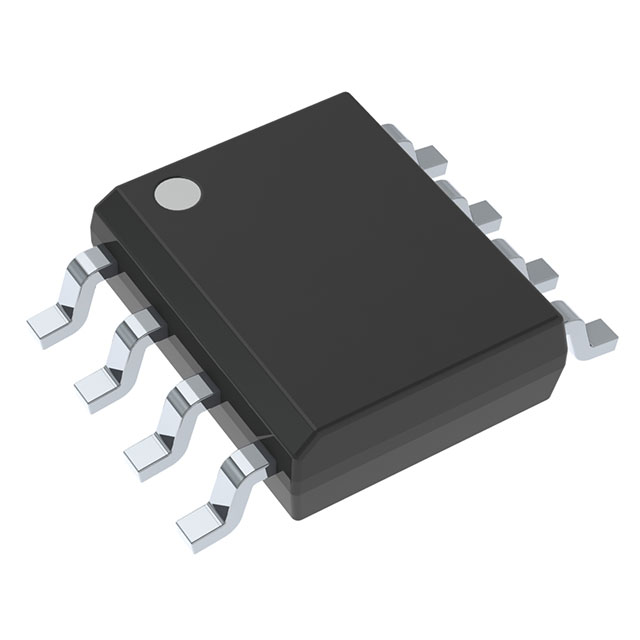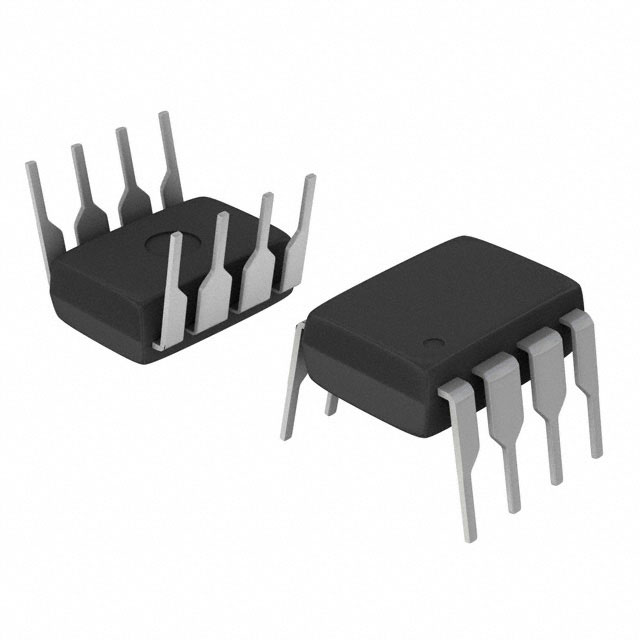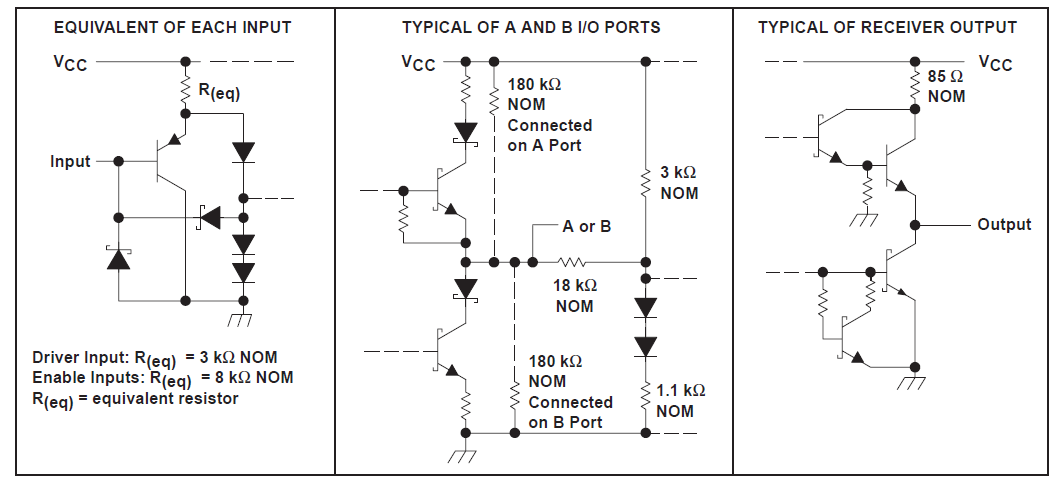
Catalog
Differential Bus Transceiver
Key Features
• Meet or exceed the requirements of TIA/EIA-422-B,TIA/EIA-485-A(1)and ITU recommendations V.11 and X.27Operate at data rates up to 35 MbaudFour skew limits available:SN65ALS176: 15 nsSN75ALS176: 10 nsSN75ALS176A: 7.5 nsSN75ALS176B: 5 nsDesigned for multipoint transmission onlong bus lines in noisy environmentsLow supply-current requirements: 30 mA maxWide positive and negative input/output bus-voltage rangesThermal shutdown protectionDriver positive and negative current limitingReceiver input hysteresisGlitch-free power-up and power-down protectionReceiver open-circuit fail-safe design(1)These devices meet or exceed the requirements of TIA/EIA-485-A, except for the Generator Contention Test (para. 3.4.2) and the Generator Current Limit (para. 3.4.3). The applied test voltage ranges are –6 V to 8 V for the SN75ALS176, SN75ALS176A, and SN75ALS176B and –4 V to 8 V for the SN65ALS180.Meet or exceed the requirements of TIA/EIA-422-B,TIA/EIA-485-A(1)and ITU recommendations V.11 and X.27Operate at data rates up to 35 MbaudFour skew limits available:SN65ALS176: 15 nsSN75ALS176: 10 nsSN75ALS176A: 7.5 nsSN75ALS176B: 5 nsDesigned for multipoint transmission onlong bus lines in noisy environmentsLow supply-current requirements: 30 mA maxWide positive and negative input/output bus-voltage rangesThermal shutdown protectionDriver positive and negative current limitingReceiver input hysteresisGlitch-free power-up and power-down protectionReceiver open-circuit fail-safe design(1)These devices meet or exceed the requirements of TIA/EIA-485-A, except for the Generator Contention Test (para. 3.4.2) and the Generator Current Limit (para. 3.4.3). The applied test voltage ranges are –6 V to 8 V for the SN75ALS176, SN75ALS176A, and SN75ALS176B and –4 V to 8 V for the SN65ALS180.