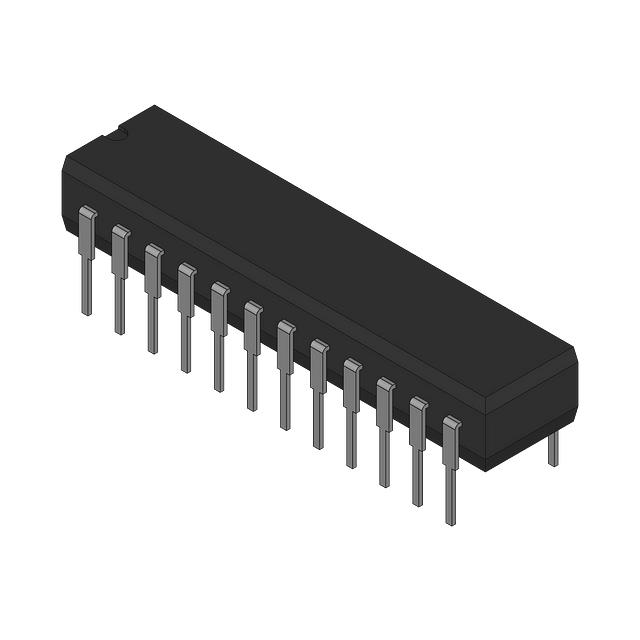
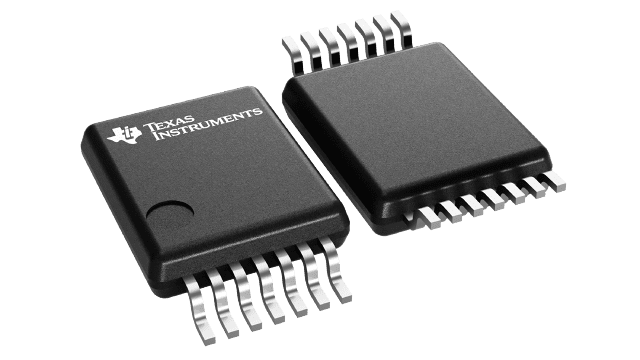
SN74CBTH162115-V, 1:1 (SPST), 24-channel FET bus switch with bus hold | Logic | 1 | LTB | The SN74CBTH16211 provides 24 bits of high-speed TTL-compatible bus switching. The low on-state resistance of the switch allows connections to be made with minimal propagation delay.
The device is organized as dual 12-bit bus switches with separate output-enable (OE\) inputs. It can be used as two 12-bit bus switches or one 24-bit bus switch. When OE\ is low, the associated 12-bit bus switch is on, and the A port is connected to the B port. When OE\ is high, the switch is open, and a high-impedance state exists between the two ports.
Active bus-hold circuitry is provided to hold unused or floating A and B ports at a valid logic level.
To ensure the high-impedance state during power up or power down, OE\ should be tied to VCCthrough a pullup resistor; the minimum value of the resistor is determined by the current-sinking capability of the driver.
The SN74CBTH16211 provides 24 bits of high-speed TTL-compatible bus switching. The low on-state resistance of the switch allows connections to be made with minimal propagation delay.
The device is organized as dual 12-bit bus switches with separate output-enable (OE\) inputs. It can be used as two 12-bit bus switches or one 24-bit bus switch. When OE\ is low, the associated 12-bit bus switch is on, and the A port is connected to the B port. When OE\ is high, the switch is open, and a high-impedance state exists between the two ports.
Active bus-hold circuitry is provided to hold unused or floating A and B ports at a valid logic level.
To ensure the high-impedance state during power up or power down, OE\ should be tied to VCCthrough a pullup resistor; the minimum value of the resistor is determined by the current-sinking capability of the driver. |
SN74CBTK68005-V, 1:1 (SPST), 10-channel general-purpose FET bus switch with active-clamp undershoot protection | Signal Switches, Multiplexers, Decoders | 4 | Active | The SN74CBTK6800 device provides ten bits of high-speed TTL-compatible bus switching. The low on-state resistance of the switch allows bidirectional connections to be made while adding near-zero propagation delay. The device also precharges the B port to a user-selectable bias voltage (BIASV) to minimize live-insertion noise.
The A and B ports have an active-clamp undershoot-protection circuit. When there is an undershoot, the active-clamp circuit is enabled and current from VCCis supplied to clamp the output, preventing the pass transistor from turning on.
The SN74CBTK6800 is organized as one 10-bit switch with a single enable (ON\) input. When ON\ is low, the switch is on, and port A is connected to port B. When ON\ is high, the switch between port A and port B is open. When ON\ is high or VCCis 0 V, B port is precharged to BIASV through the equivalent of a 10-kresistor.
The SN74CBTK6800 device provides ten bits of high-speed TTL-compatible bus switching. The low on-state resistance of the switch allows bidirectional connections to be made while adding near-zero propagation delay. The device also precharges the B port to a user-selectable bias voltage (BIASV) to minimize live-insertion noise.
The A and B ports have an active-clamp undershoot-protection circuit. When there is an undershoot, the active-clamp circuit is enabled and current from VCCis supplied to clamp the output, preventing the pass transistor from turning on.
The SN74CBTK6800 is organized as one 10-bit switch with a single enable (ON\) input. When ON\ is low, the switch is on, and port A is connected to port B. When ON\ is high, the switch between port A and port B is open. When ON\ is high or VCCis 0 V, B port is precharged to BIASV through the equivalent of a 10-kresistor. |
| Integrated Circuits (ICs) | 6 | Active | The SN74CBTLV16210 provides 20 bits of high-speed bus switching. The low on-state resistance of the switch allows connections to be made with minimal propagation delay.
The device is organized as dual 10-bit bus switches with separate output-enable (OE\) inputs. It can be used as two 10-bit bus switches or as one 20-bit bus switch. When OE\ is low, the associated 10-bit bus switch is on, and port A is connected to port B. When OE\ is high, the switch is open, and the high-impedance state exists between the two ports.
This device is fully specified for partial-power-down applications using Ioff. The Iofffeature ensures that damaging current will not backflow through the device when it is powered down. The device has isolation during power off.
To ensure the high-impedance state during power up or power down, OE\ should be tied to VCCthrough a pullup resistor; the minimum value of the resistor is determined by the current-sinking capability of the driver.
The SN74CBTLV16210 provides 20 bits of high-speed bus switching. The low on-state resistance of the switch allows connections to be made with minimal propagation delay.
The device is organized as dual 10-bit bus switches with separate output-enable (OE\) inputs. It can be used as two 10-bit bus switches or as one 20-bit bus switch. When OE\ is low, the associated 10-bit bus switch is on, and port A is connected to port B. When OE\ is high, the switch is open, and the high-impedance state exists between the two ports.
This device is fully specified for partial-power-down applications using Ioff. The Iofffeature ensures that damaging current will not backflow through the device when it is powered down. The device has isolation during power off.
To ensure the high-impedance state during power up or power down, OE\ should be tied to VCCthrough a pullup resistor; the minimum value of the resistor is determined by the current-sinking capability of the driver. |
SN74CBTLV162116.5-pF, 3.3-V, 1:1 (SPST), 24-channel FET bus switch (SSOP, TSSOP, TVSOP packages) | Integrated Circuits (ICs) | 7 | Active | The SN74CBTLV16211 provides 24 bits of high-speed bus switching. The low on-state resistance of the switch allows connections to be made with minimal propagation delay.
The device is organized as dual 12-bit bus switches with separate output-enable (OE\) inputs. It can be used as two 12-bit bus switches or as one 24-bit bus switch. When OE\ is low, the associated 12-bit bus switch is on, and port A is connected to port B. When OE\ is high, the switch is open, and the high-impedance state exists between the two ports.
This device is fully specified for partial-power-down applications using Ioff. The Iofffeature ensures that damaging current will not backflow through the device when it is powered down. The device has isolation during power off.
To ensure the high-impedance state during power up or power down, OE\ should be tied to VCCthrough a pullup resistor; the minimum value of the resistor is determined by the current-sinking capability of the driver.
The SN74CBTLV16211 provides 24 bits of high-speed bus switching. The low on-state resistance of the switch allows connections to be made with minimal propagation delay.
The device is organized as dual 12-bit bus switches with separate output-enable (OE\) inputs. It can be used as two 12-bit bus switches or as one 24-bit bus switch. When OE\ is low, the associated 12-bit bus switch is on, and port A is connected to port B. When OE\ is high, the switch is open, and the high-impedance state exists between the two ports.
This device is fully specified for partial-power-down applications using Ioff. The Iofffeature ensures that damaging current will not backflow through the device when it is powered down. The device has isolation during power off.
To ensure the high-impedance state during power up or power down, OE\ should be tied to VCCthrough a pullup resistor; the minimum value of the resistor is determined by the current-sinking capability of the driver. |
| Integrated Circuits (ICs) | 6 | Active | The SN74CBTLV16212 provides 24 bits of high-speed bus switching or exchanging. The low on-state resistance of the switch allows connections to be made with minimal propagation delay.
The device operates as a 24-bit bus switch or a 12-bit bus exchanger, which provides data exchanging between the four signal ports via the data-select (S0, S1, S2) terminals.
This device is fully specified for partial-power-down applications using Ioff. The Iofffeature ensures that damaging current will not backflow through the device when it is powered down. The device has isolation during power off.
The SN74CBTLV16212 is specified by the break-before-make feature to have no through current when switching between B ports.
The SN74CBTLV16212 provides 24 bits of high-speed bus switching or exchanging. The low on-state resistance of the switch allows connections to be made with minimal propagation delay.
The device operates as a 24-bit bus switch or a 12-bit bus exchanger, which provides data exchanging between the four signal ports via the data-select (S0, S1, S2) terminals.
This device is fully specified for partial-power-down applications using Ioff. The Iofffeature ensures that damaging current will not backflow through the device when it is powered down. The device has isolation during power off.
The SN74CBTLV16212 is specified by the break-before-make feature to have no through current when switching between B ports. |
SN74CBTLV162923.3V, 2:1 (SPDT), 12-channel general-purpose FET bus switch with internal pulldown resistors | Signal Switches, Multiplexers, Decoders | 3 | Active | The SN74CBTLV16292 is a 12-bit 1-of-2 high-speed FET multiplexer/demultiplexer. The low on-state resistance of the switch allows connections to be made with minimal propagation delay.
When the select (S) input is low, port A is connected to port B1, and RINTis connected to port B2. When S is high, port A is connected to port B2, and RINTis connected to port B1.
This device is fully specified for partial-power-down applications using Ioff. The Iofffeature ensures that damaging current will not backflow through the device when it is powered down. The device has isolation during power off.
The SN74CBTLV16292 is a 12-bit 1-of-2 high-speed FET multiplexer/demultiplexer. The low on-state resistance of the switch allows connections to be made with minimal propagation delay.
When the select (S) input is low, port A is connected to port B1, and RINTis connected to port B2. When S is high, port A is connected to port B2, and RINTis connected to port B1.
This device is fully specified for partial-power-down applications using Ioff. The Iofffeature ensures that damaging current will not backflow through the device when it is powered down. The device has isolation during power off. |
SN74CBTLV168003.3-V, 1:1 (SPST), 20-channel FET bus switch with precharged outputs | Signal Switches, Multiplexers, Decoders | 2 | Active | The SN74CBTLV16800 provides 20 bits of high-speed bus switching. The low on-state resistance of the switch allows connections to be made with minimal propagation delay. The device also precharges the B port to a user-selectable bias voltage (BIASV) to minimize live-insertion noise.
The device is organized as dual 10-bit bus switches with separate output-enable (OE\) inputs. It can be used as two 10-bit bus switches or one 20-bit bus switch. When OE\ is low, the associated 10-bit bus switch is on, and port A is connected to port B. When OE\ is high, the switch is open, the high-impedance state exists between the two ports, and port B is precharged to BIASV through the equivalent of a 10-kresistor.
This device is fully specified for partial-power-down applications using Ioff. The Iofffeature ensures that damaging current will not backflow through the device when it is powered down. The device has isolation during power off.
To ensure the high-impedance state during power up or power down, OE\ should be tied to VCCthrough a pullup resistor; the minimum value of the resistor is determined by the current-sinking capability of the driver.
The SN74CBTLV16800 provides 20 bits of high-speed bus switching. The low on-state resistance of the switch allows connections to be made with minimal propagation delay. The device also precharges the B port to a user-selectable bias voltage (BIASV) to minimize live-insertion noise.
The device is organized as dual 10-bit bus switches with separate output-enable (OE\) inputs. It can be used as two 10-bit bus switches or one 20-bit bus switch. When OE\ is low, the associated 10-bit bus switch is on, and port A is connected to port B. When OE\ is high, the switch is open, the high-impedance state exists between the two ports, and port B is precharged to BIASV through the equivalent of a 10-kresistor.
This device is fully specified for partial-power-down applications using Ioff. The Iofffeature ensures that damaging current will not backflow through the device when it is powered down. The device has isolation during power off.
To ensure the high-impedance state during power up or power down, OE\ should be tied to VCCthrough a pullup resistor; the minimum value of the resistor is determined by the current-sinking capability of the driver. |
| Logic | 5 | Active | The SN74CBTLV1G125 features a single high–speed line switch. The switch is disabled when the output–enable (OE) input is high.
This device is fully specified for partial–power–down applications using Ioff. The Iofffeature ensures that damaging current will not backflow through the device when it is powered down. The device has isolation during power off.
To ensure the high–impedance state during power up or power down,OEshould be tied to VCCthrough a pullup resistor; the minimum value of the resistor is determined by the current–sinking capability of the driver.
The SN74CBTLV1G125 features a single high–speed line switch. The switch is disabled when the output–enable (OE) input is high.
This device is fully specified for partial–power–down applications using Ioff. The Iofffeature ensures that damaging current will not backflow through the device when it is powered down. The device has isolation during power off.
To ensure the high–impedance state during power up or power down,OEshould be tied to VCCthrough a pullup resistor; the minimum value of the resistor is determined by the current–sinking capability of the driver. |
SN74CBTLV31253.3-V, 1:1 (SPST), 4-channel FET bus switch with powered-off protection | Logic | 10 | Active | The SN74CBTLV3125 quadruple FET bus switch features independent line switches. Each switch is disabled when the associated output-enable (OE\) input is high.
This device is fully specified for partial-power-down applications using Ioff. The Iofffeature ensures that damaging current will not backflow through the device when it is powered down. The device has isolation during power off.
To ensure the high-impedance state during power up or power down, OE\ should be tied to VCCthrough a pullup resistor; the minimum value of the resistor is determined by the current-sinking capability of the driver.
The SN74CBTLV3125 quadruple FET bus switch features independent line switches. Each switch is disabled when the associated output-enable (OE\) input is high.
This device is fully specified for partial-power-down applications using Ioff. The Iofffeature ensures that damaging current will not backflow through the device when it is powered down. The device has isolation during power off.
To ensure the high-impedance state during power up or power down, OE\ should be tied to VCCthrough a pullup resistor; the minimum value of the resistor is determined by the current-sinking capability of the driver. |
| Integrated Circuits (ICs) | 5 | Active | The SN74CBTLV3126 quadruple FET bus switch features independent line switches. Each switch is disabled when the associated output-enable (OE) input is low.
This device is fully specified for partial-power-down applications using Ioff. The Iofffeature ensures that damaging current will not backflow through the device when it is powered down. The SN74CBTLV3126 device has isolation during power off.
To ensure the high-impedance state during power up or power down, OE should be tied to GND through a pull down resistor; the minimum value of the resistor is determined by the current-sinking capability of the driver.
The SN74CBTLV3126 quadruple FET bus switch features independent line switches. Each switch is disabled when the associated output-enable (OE) input is low.
This device is fully specified for partial-power-down applications using Ioff. The Iofffeature ensures that damaging current will not backflow through the device when it is powered down. The SN74CBTLV3126 device has isolation during power off.
To ensure the high-impedance state during power up or power down, OE should be tied to GND through a pull down resistor; the minimum value of the resistor is determined by the current-sinking capability of the driver. |