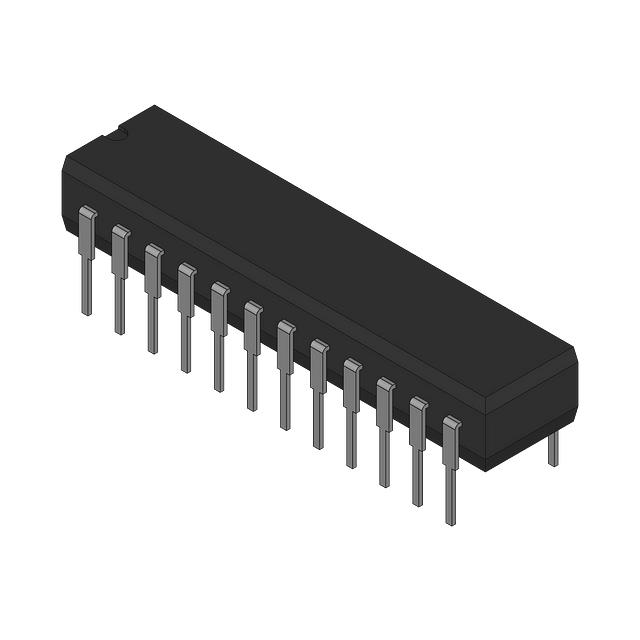
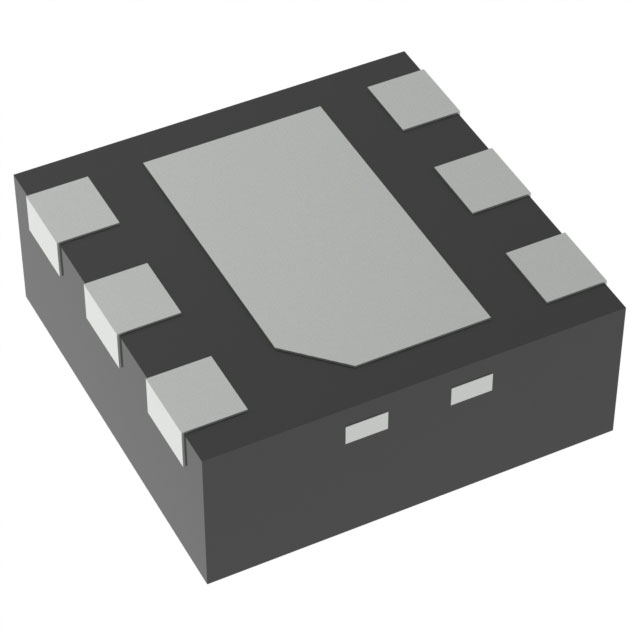
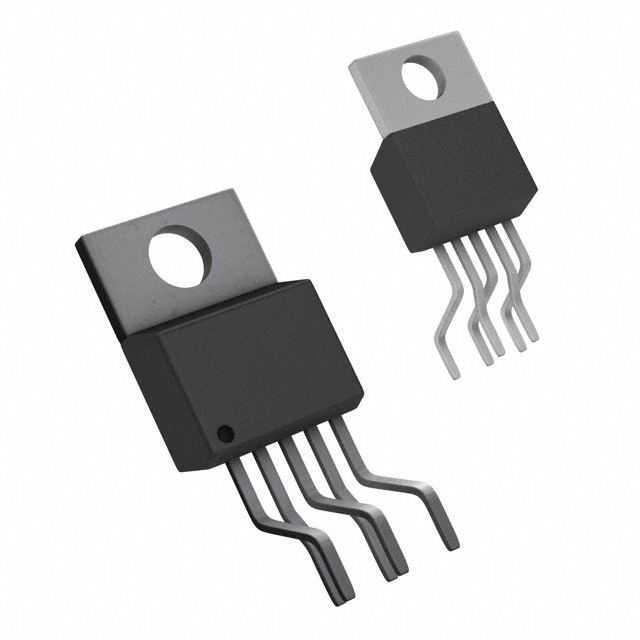
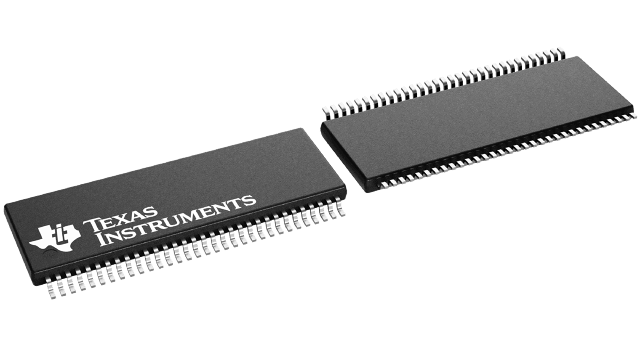
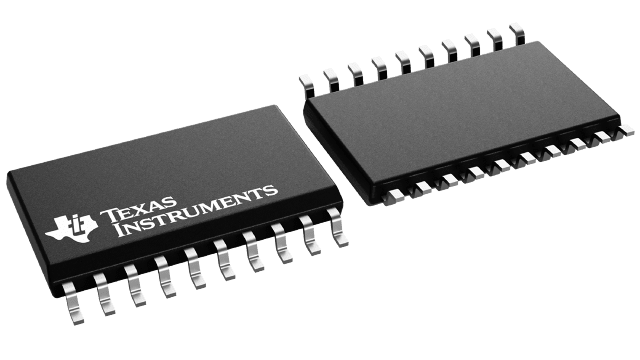
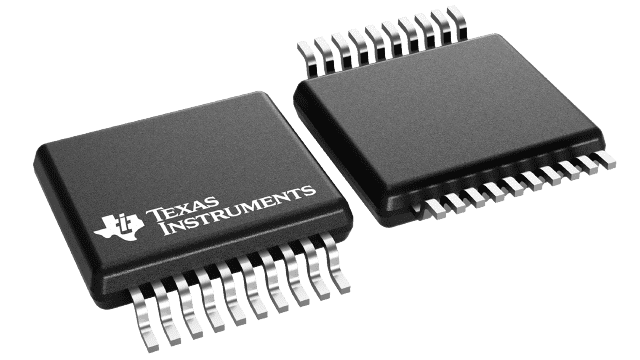
SN74ALVCH168203.3-V 10-Bit Flip-Flop with Dual Outputs and 3-State Outputs | Logic | 3 | Active | This 10-bit flip-flop is designed for 1.65-V to 3.6-V VCCoperation.
The flip-flops of the SN74ALVCH16820 are edge-triggered D-type flip-flops. On the positive transition of the clock (CLK) input, the device provides true data at the Q outputs.
A buffered output-enable (OE)\ input can be used to place the ten outputs in either a normal logic state (high or low logic level) or the high-impedance state. In the high-impedance state, the outputs neither load nor drive the bus lines significantly. The high-impedance state and increased drive provide the capability to drive bus lines without need for interface or pullup components.
OE\ input does not affect the internal operation of the flip-flops. Old data can be retained or new data can be entered while the outputs are in the high-impedance state.
To ensure the high-impedance state during power up or power down, OE\ should be tied to VCCthrough a pullup resistor; the minimum value of the resistor is determined by the current-sinking capability of the driver.
Active bus-hold circuitry is provided to hold unused or undriven inputs at a valid logic level. Use of pullup or pulldown resistors with the bus-hold circuitry is not recommended.
This 10-bit flip-flop is designed for 1.65-V to 3.6-V VCCoperation.
The flip-flops of the SN74ALVCH16820 are edge-triggered D-type flip-flops. On the positive transition of the clock (CLK) input, the device provides true data at the Q outputs.
A buffered output-enable (OE)\ input can be used to place the ten outputs in either a normal logic state (high or low logic level) or the high-impedance state. In the high-impedance state, the outputs neither load nor drive the bus lines significantly. The high-impedance state and increased drive provide the capability to drive bus lines without need for interface or pullup components.
OE\ input does not affect the internal operation of the flip-flops. Old data can be retained or new data can be entered while the outputs are in the high-impedance state.
To ensure the high-impedance state during power up or power down, OE\ should be tied to VCCthrough a pullup resistor; the minimum value of the resistor is determined by the current-sinking capability of the driver.
Active bus-hold circuitry is provided to hold unused or undriven inputs at a valid logic level. Use of pullup or pulldown resistors with the bus-hold circuitry is not recommended. |
SN74ALVCH168213.3-V 20-Bit Bus-Interface Flip-Flop with 3-State Outputs | Integrated Circuits (ICs) | 3 | Active | This 20-bit bus-interface flip-flop is designed for 1.65-V to 3.6-V VCCoperation.
The SN74ALVCH16821 can be used as two 10-bit flip-flops or one 20-bit flip-flop. The 20 flip-flops are edge-triggered D-type flip-flops. On the positive transition of the clock (CLK) input, the device provides true data at the Q outputs.
A buffered output-enable (OE)\ input can be used to place the ten outputs in either a normal logic state (high or low logic levels) or the high-impedance state. In the high-impedance state, the outputs neither load nor drive the bus lines significantly. The high-impedance state and increased drive provide the capability to drive bus lines without need for interface or pullup components.
OE\ does not affect the internal operation of the flip-flops. Old data can be retained or new data can be entered while the outputs are in the high-impedance state.
To ensure the high-impedance state during power up or power down, OE\ should be tied to VCCthrough a pullup resistor; the minimum value of the resistor is determined by the current-sinking capability of the driver.
Active bus-hold circuitry holds unused or undriven inputs at a valid logic state. Use of pullup or pulldown resistors with the bus-hold circuitry is not recommended.
This 20-bit bus-interface flip-flop is designed for 1.65-V to 3.6-V VCCoperation.
The SN74ALVCH16821 can be used as two 10-bit flip-flops or one 20-bit flip-flop. The 20 flip-flops are edge-triggered D-type flip-flops. On the positive transition of the clock (CLK) input, the device provides true data at the Q outputs.
A buffered output-enable (OE)\ input can be used to place the ten outputs in either a normal logic state (high or low logic levels) or the high-impedance state. In the high-impedance state, the outputs neither load nor drive the bus lines significantly. The high-impedance state and increased drive provide the capability to drive bus lines without need for interface or pullup components.
OE\ does not affect the internal operation of the flip-flops. Old data can be retained or new data can be entered while the outputs are in the high-impedance state.
To ensure the high-impedance state during power up or power down, OE\ should be tied to VCCthrough a pullup resistor; the minimum value of the resistor is determined by the current-sinking capability of the driver.
Active bus-hold circuitry holds unused or undriven inputs at a valid logic state. Use of pullup or pulldown resistors with the bus-hold circuitry is not recommended. |
| Integrated Circuits (ICs) | 2 | Active | This 18-bit bus-interface flip-flop is designed for 1.65-V to 3.6-V VCCoperation.
The SN74ALVCH16823 features 3-state outputs designed specifically for driving highly capacitive or relatively low-impedance loads. This device is particularly suitable for implementing wider buffer registers, I/O ports, bidirectional bus drivers with parity, and working registers.
The SN74ALVCH16823 can be used as two 9-bit flip-flops or one 18-bit flip-flop. With the clock-enable (CLKEN) input low, the D-type flip-flops enter data on the low-to-high transitions of the clock. TakingCLKENhigh disables the clock buffer, thus latching the outputs. Taking the clear (CLR) input low causes the Q outputs to go low independently of the clock.
A buffered output-enable (OE) input can be used to place the nine outputs in either a normal logic state (high or low logic levels) or the high-impedance state. In the high-impedance state, the outputs neither load nor drive the bus lines significantly. The high-impedance state and increased drive provide the capability to drive bus lines without need for interface or pullup components.
The output-enable (OE) input does not affect the internal operation of the flip-flops. Old data can be retained or new data can be entered while the outputs are in the high-impedance state.
To ensure the high-impedance state during power up or power down,OEshould be tied to VCCthrough a pullup resistor; the minimum value of the resistor is determined by the current-sinking capability of the driver.
Active bus-hold circuitry is provided to hold unused or floating data inputs at a valid logic level.
The SN74ALVCH16823 is characterized for operation from -40°C to 85°C.
This 18-bit bus-interface flip-flop is designed for 1.65-V to 3.6-V VCCoperation.
The SN74ALVCH16823 features 3-state outputs designed specifically for driving highly capacitive or relatively low-impedance loads. This device is particularly suitable for implementing wider buffer registers, I/O ports, bidirectional bus drivers with parity, and working registers.
The SN74ALVCH16823 can be used as two 9-bit flip-flops or one 18-bit flip-flop. With the clock-enable (CLKEN) input low, the D-type flip-flops enter data on the low-to-high transitions of the clock. TakingCLKENhigh disables the clock buffer, thus latching the outputs. Taking the clear (CLR) input low causes the Q outputs to go low independently of the clock.
A buffered output-enable (OE) input can be used to place the nine outputs in either a normal logic state (high or low logic levels) or the high-impedance state. In the high-impedance state, the outputs neither load nor drive the bus lines significantly. The high-impedance state and increased drive provide the capability to drive bus lines without need for interface or pullup components.
The output-enable (OE) input does not affect the internal operation of the flip-flops. Old data can be retained or new data can be entered while the outputs are in the high-impedance state.
To ensure the high-impedance state during power up or power down,OEshould be tied to VCCthrough a pullup resistor; the minimum value of the resistor is determined by the current-sinking capability of the driver.
Active bus-hold circuitry is provided to hold unused or floating data inputs at a valid logic level.
The SN74ALVCH16823 is characterized for operation from -40°C to 85°C. |
| Universal Bus Functions | 4 | Active | This 18-bit universal bus driver is designed for 1.65-V to 3.6-V VCCoperation.
Data flow from A to Y is controlled by the output-enable (OE)\ input. The device operates in the transparent mode when the latch-enable (LE) input is high. The A data is latched if the clock (CLK) input is held at a high or low logic level. If LE is low, the A data is stored in the latch/flip-flop on the low-to-high transition of CLK. When OE\ is high, the outputs are in the high-impedance state.
To ensure the high-impedance state during power up or power down, OE\ should be tied to VCCthrough a pullup resistor; the minimum value of the resistor is determined by the current-sinking capability of the driver.
Active bus-hold circuitry holds unused or undriven inputs at a valid logic state. Use of pullup or pulldown resistors with the bus-hold circuitry is not recommended.
This 18-bit universal bus driver is designed for 1.65-V to 3.6-V VCCoperation.
Data flow from A to Y is controlled by the output-enable (OE)\ input. The device operates in the transparent mode when the latch-enable (LE) input is high. The A data is latched if the clock (CLK) input is held at a high or low logic level. If LE is low, the A data is stored in the latch/flip-flop on the low-to-high transition of CLK. When OE\ is high, the outputs are in the high-impedance state.
To ensure the high-impedance state during power up or power down, OE\ should be tied to VCCthrough a pullup resistor; the minimum value of the resistor is determined by the current-sinking capability of the driver.
Active bus-hold circuitry holds unused or undriven inputs at a valid logic state. Use of pullup or pulldown resistors with the bus-hold circuitry is not recommended. |
| Latches | 1 | Active | This 20-bit bus-interface D-type latch is designed for 1.65-V to 3.6-V VCCoperation.
The SN74ALVCH16841 features 3-state outputs designed specifically for driving highly capacitive or relatively low-impedance loads. This device is particularly suitable for implementing buffer registers, unidirectional bus drivers, and working registers.
The SN74ALVCH16841 can be used as two 10-bit latches or one 20-bit latch. The 20 latches are transparent D-type latches. The device has noninverting data (D) inputs and provides true data at its outputs. While the latch-enable (1LE or 2LE) input is high, the Q outputs of the corresponding 10-bit latch follow the D inputs. When LE is taken low, the Q outputs are latched at the levels set up at the D inputs.
A buffered output-enable (1OE\ or 2OE\) input can be used to place the outputs of the corresponding 10-bit latch in either a normal logic state (high or low logic levels) or the high-impedance state. In the high-impedance state, the outputs neither load nor drive the bus lines significantly.
OE\ does not affect the internal operation of the latches. Old data can be retained or new data can be entered while the outputs are in the high-impedance state.
To ensure the high-impedance state during power up or power down, OE\ should be tied to VCCthrough a pullup resistor; the minimum value of the resistor is determined by the current-sinking capability of the driver.
Active bus-hold circuitry is provided to hold unused or floating data inputs at a valid logic level.
The SN74ALVCH16841 is characterized for operation from -40°C to 85°C.
This 20-bit bus-interface D-type latch is designed for 1.65-V to 3.6-V VCCoperation.
The SN74ALVCH16841 features 3-state outputs designed specifically for driving highly capacitive or relatively low-impedance loads. This device is particularly suitable for implementing buffer registers, unidirectional bus drivers, and working registers.
The SN74ALVCH16841 can be used as two 10-bit latches or one 20-bit latch. The 20 latches are transparent D-type latches. The device has noninverting data (D) inputs and provides true data at its outputs. While the latch-enable (1LE or 2LE) input is high, the Q outputs of the corresponding 10-bit latch follow the D inputs. When LE is taken low, the Q outputs are latched at the levels set up at the D inputs.
A buffered output-enable (1OE\ or 2OE\) input can be used to place the outputs of the corresponding 10-bit latch in either a normal logic state (high or low logic levels) or the high-impedance state. In the high-impedance state, the outputs neither load nor drive the bus lines significantly.
OE\ does not affect the internal operation of the latches. Old data can be retained or new data can be entered while the outputs are in the high-impedance state.
To ensure the high-impedance state during power up or power down, OE\ should be tied to VCCthrough a pullup resistor; the minimum value of the resistor is determined by the current-sinking capability of the driver.
Active bus-hold circuitry is provided to hold unused or floating data inputs at a valid logic level.
The SN74ALVCH16841 is characterized for operation from -40°C to 85°C. |
| Logic | 2 | Active | This 18-bit bus transceiver is designed for 1.65-V to 3.6-V VCCoperation.
The SN74ALVCH16863 is an 18-bit noninverting transceiver designed for synchronous communication between data buses. The control-function implementation minimizes external timing requirements.
The SN74ALVCH16863 can be used as two 9-bit transceivers or one 18-bit transceiver. They allow data transmission from the A bus to the B bus or from the B bus to the A bus, depending on the logic level at the output-enable (OEAB\ or OEBA\) inputs.
To ensure the high-impedance state during power up or power down, OE\ should be tied to VCCthrough a pullup resistor; the minimum value of the resistor is determined by the current-sinking capability of the driver.
Active bus-hold circuitry is provided to hold unused or floating data inputs at a valid logic level.
The SN74ALVCH16863 is characterized for operation from -40°C to 85°C.
This 18-bit bus transceiver is designed for 1.65-V to 3.6-V VCCoperation.
The SN74ALVCH16863 is an 18-bit noninverting transceiver designed for synchronous communication between data buses. The control-function implementation minimizes external timing requirements.
The SN74ALVCH16863 can be used as two 9-bit transceivers or one 18-bit transceiver. They allow data transmission from the A bus to the B bus or from the B bus to the A bus, depending on the logic level at the output-enable (OEAB\ or OEBA\) inputs.
To ensure the high-impedance state during power up or power down, OE\ should be tied to VCCthrough a pullup resistor; the minimum value of the resistor is determined by the current-sinking capability of the driver.
Active bus-hold circuitry is provided to hold unused or floating data inputs at a valid logic level.
The SN74ALVCH16863 is characterized for operation from -40°C to 85°C. |
SN74ALVCH1690118-bit universal bus transceiver with parity generators/checkers | Logic | 1 | Active | This 18-bit (dual-octal) noninverting registered transceiver is designed for 1.65-V to 3.6-V VCCoperation.
The SN74ALVCH16901 is a dual 9-bit to dual 9-bit parity transceiver with registers. The device can operate as a feed-through transceiver or it can generate/check parity from the two 8-bit data buses in either direction.
The SN74ALVCH16901 features independent clock (CLKAB or CLKBA), latch-enable (LEAB or LEBA), and dual 9-bit clock-enable (CLKENAB\ or CLKENBA\) inputs. It also provides parity-enable (SEL\) and parity-select (ODD/EVEN\) inputs and separate error-signal (ERRA\ or ERRB\) outputs for checking parity. The direction of data flow is controlled by OEAB\ and OEBA\. When SEL\ is low, the parity functions are enabled. When SEL\ is high, the parity functions are disabled and the device acts as an 18-bit registered transceiver.
To ensure the high-impedance state during power up or power down, OE\ should be tied to VCCthrough a pullup resistor; the minimum value of the resistor is determined by the current-sinking capability of the driver.
The A and B I/Os and APAR and BPAR inputs have bus-hold circuitry. Active bus-hold circuitry holds unused or undriven data inputs at a valid logic state. Use of pullup or pulldown resistors with the bus-hold circuitry is not recommended.
This 18-bit (dual-octal) noninverting registered transceiver is designed for 1.65-V to 3.6-V VCCoperation.
The SN74ALVCH16901 is a dual 9-bit to dual 9-bit parity transceiver with registers. The device can operate as a feed-through transceiver or it can generate/check parity from the two 8-bit data buses in either direction.
The SN74ALVCH16901 features independent clock (CLKAB or CLKBA), latch-enable (LEAB or LEBA), and dual 9-bit clock-enable (CLKENAB\ or CLKENBA\) inputs. It also provides parity-enable (SEL\) and parity-select (ODD/EVEN\) inputs and separate error-signal (ERRA\ or ERRB\) outputs for checking parity. The direction of data flow is controlled by OEAB\ and OEBA\. When SEL\ is low, the parity functions are enabled. When SEL\ is high, the parity functions are disabled and the device acts as an 18-bit registered transceiver.
To ensure the high-impedance state during power up or power down, OE\ should be tied to VCCthrough a pullup resistor; the minimum value of the resistor is determined by the current-sinking capability of the driver.
The A and B I/Os and APAR and BPAR inputs have bus-hold circuitry. Active bus-hold circuitry holds unused or undriven data inputs at a valid logic state. Use of pullup or pulldown resistors with the bus-hold circuitry is not recommended. |
SN74ALVCH169033.3-V 12-Bit Universal Bus Driver with Parity Checker and Dual 3-State Outputs | Universal Bus Functions | 4 | Active | This 12-bit universal bus driver is designed for 2.3-V to 3.6-V VCCoperation.
The SN74ALVCH16903 has dual outputs and can operate as a buffer or an edge-triggered register. In both modes, parity is checked on APAR, which arrives one cycle after the data to which it applies. The YERR\ output, which is produced one cycle after APAR, is open drain.
MODE selects one of the two data paths. When MODE is low, the device operates as an edge-triggered register. On the positive transition of the clock (CLK) input and when the clock-enable (CLKEN\) input is low, data set up at the A inputs is stored in the internal registers. On the positive transition of CLK and when CLKEN\ is high, only data set up at the 9A-12A inputs is stored in their internal registers. When MODE is high, the device operates as a buffer and data at the A inputs passes directly to the outputs. 11A/YERREN\ serves a dual purpose; it acts as a normal data bit and also enables YERR\ data to be clocked into the YERR\ output register.
When used as a single device, parity output enable (PAROE\) must be tied high; when parity input/output (PARI/O) is low, even parity is selected and when PARI/O is high, odd parity is selected. When used in pairs and PAROE\ is low, the parity sum is output on PARI/O for cascading to the second SN74ALVCH16903. When used in pairs and PAROE\ is high, PARI/O accepts a partial parity sum from the first SN74ALVCH16903.
A buffered output-enable (OE\) input can be used to place the 24 outputs and YERR\ in either a normal logic state (high or low logic levels) or a high-impedance state. In the high-impedance state, the outputs neither load nor drive the bus lines significantly. The high-impedance state and increased drive provide the capability to drive bus lines without need for interface or pullup components.
OE\ does not affect the internal operation of the device. Old data can be retained or new data can be entered while the outputs are in the high-impedance state.
To ensure the high-impedance state during power up or power down, OE\ should be tied to VCCthrough a pullup resistor; the minimum value of the resistor is determined by the current-sinking capability of the driver.
Active bus-hold circuitry is provided to hold unused or floating data inputs at a valid logic level.
The SN74ALVCH16903 is characterized for operation from 0°C to 70°C.
This 12-bit universal bus driver is designed for 2.3-V to 3.6-V VCCoperation.
The SN74ALVCH16903 has dual outputs and can operate as a buffer or an edge-triggered register. In both modes, parity is checked on APAR, which arrives one cycle after the data to which it applies. The YERR\ output, which is produced one cycle after APAR, is open drain.
MODE selects one of the two data paths. When MODE is low, the device operates as an edge-triggered register. On the positive transition of the clock (CLK) input and when the clock-enable (CLKEN\) input is low, data set up at the A inputs is stored in the internal registers. On the positive transition of CLK and when CLKEN\ is high, only data set up at the 9A-12A inputs is stored in their internal registers. When MODE is high, the device operates as a buffer and data at the A inputs passes directly to the outputs. 11A/YERREN\ serves a dual purpose; it acts as a normal data bit and also enables YERR\ data to be clocked into the YERR\ output register.
When used as a single device, parity output enable (PAROE\) must be tied high; when parity input/output (PARI/O) is low, even parity is selected and when PARI/O is high, odd parity is selected. When used in pairs and PAROE\ is low, the parity sum is output on PARI/O for cascading to the second SN74ALVCH16903. When used in pairs and PAROE\ is high, PARI/O accepts a partial parity sum from the first SN74ALVCH16903.
A buffered output-enable (OE\) input can be used to place the 24 outputs and YERR\ in either a normal logic state (high or low logic levels) or a high-impedance state. In the high-impedance state, the outputs neither load nor drive the bus lines significantly. The high-impedance state and increased drive provide the capability to drive bus lines without need for interface or pullup components.
OE\ does not affect the internal operation of the device. Old data can be retained or new data can be entered while the outputs are in the high-impedance state.
To ensure the high-impedance state during power up or power down, OE\ should be tied to VCCthrough a pullup resistor; the minimum value of the resistor is determined by the current-sinking capability of the driver.
Active bus-hold circuitry is provided to hold unused or floating data inputs at a valid logic level.
The SN74ALVCH16903 is characterized for operation from 0°C to 70°C. |
SN74ALVCH2448-ch, 1.65-V to 3.6-V buffers with bus-hold and 3-state outputs | Buffers, Drivers, Receivers, Transceivers | 3 | Active | This octal buffer/line driver is designed for 1.65-V to 3.6-V VCCoperation.
The SN74ALVCH244 is organized as two 4-bit line drivers with separate output-enable (OE)\ inputs. When OE\ is low, the device passes data from the A inputs to the Y outputs. When OE\ is high, the outputs are in the high-impedance state.
To ensure the high-impedance state during power up or power down, OE\ should be tied to VCCthrough a pullup resistor; the minimum value of the resistor is determined by the current-sinking capability of the driver.
Active bus-hold circuitry holds unused or undriven inputs at a valid logic state. Use of pullup or pulldown resistors with the bus-hold circuitry is not recommended.
This octal buffer/line driver is designed for 1.65-V to 3.6-V VCCoperation.
The SN74ALVCH244 is organized as two 4-bit line drivers with separate output-enable (OE)\ inputs. When OE\ is low, the device passes data from the A inputs to the Y outputs. When OE\ is high, the outputs are in the high-impedance state.
To ensure the high-impedance state during power up or power down, OE\ should be tied to VCCthrough a pullup resistor; the minimum value of the resistor is determined by the current-sinking capability of the driver.
Active bus-hold circuitry holds unused or undriven inputs at a valid logic state. Use of pullup or pulldown resistors with the bus-hold circuitry is not recommended. |
| Logic | 5 | Active | This octal bus transceiver is designed for 1.65-V to 3.6-V VCCoperation.
The SN74ALVCH245 is designed for asynchronous communication between data buses. The device transmits data from the A bus to the B bus or from the B bus to the A bus, depending on the logic level at the direction-control (DIR) input. The output-enable (OE)\ input can be used to disable the device so the buses are effectively isolated.
To ensure the high-impedance state during power up or power down, OE\ should be tied to VCCthrough a pullup resistor; the minimum value of the resistor is determined by the current-sinking capability of the driver.
Active bus-hold circuitry holds unused or undriven inputs at a valid logic state. Use of pullup or pulldown resistors with the bus-hold circuitry is not recommended.
This octal bus transceiver is designed for 1.65-V to 3.6-V VCCoperation.
The SN74ALVCH245 is designed for asynchronous communication between data buses. The device transmits data from the A bus to the B bus or from the B bus to the A bus, depending on the logic level at the direction-control (DIR) input. The output-enable (OE)\ input can be used to disable the device so the buses are effectively isolated.
To ensure the high-impedance state during power up or power down, OE\ should be tied to VCCthrough a pullup resistor; the minimum value of the resistor is determined by the current-sinking capability of the driver.
Active bus-hold circuitry holds unused or undriven inputs at a valid logic state. Use of pullup or pulldown resistors with the bus-hold circuitry is not recommended. |