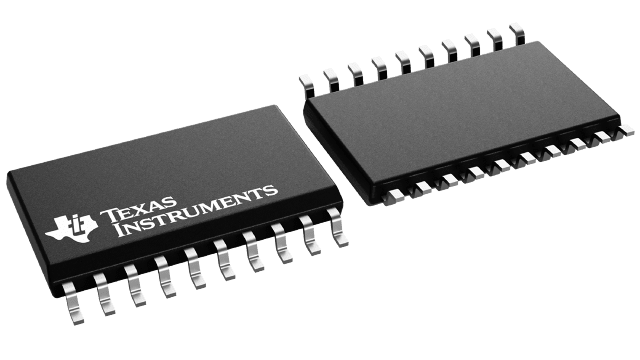
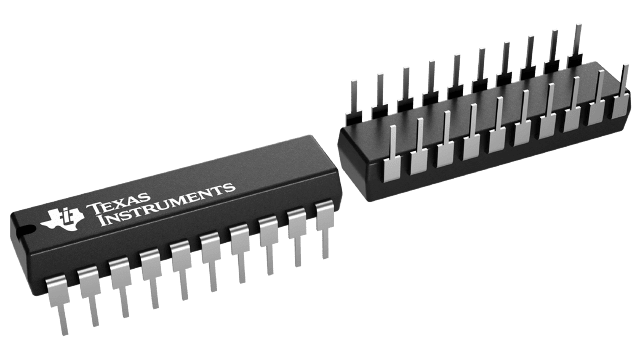
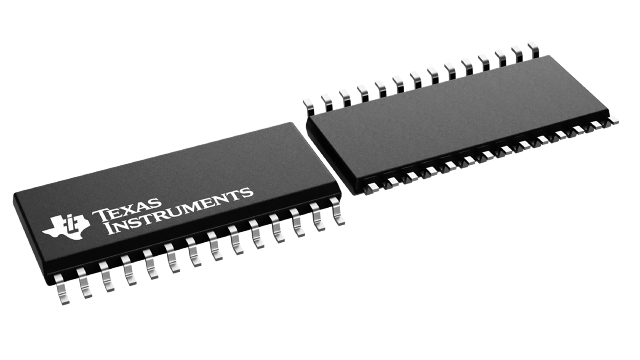
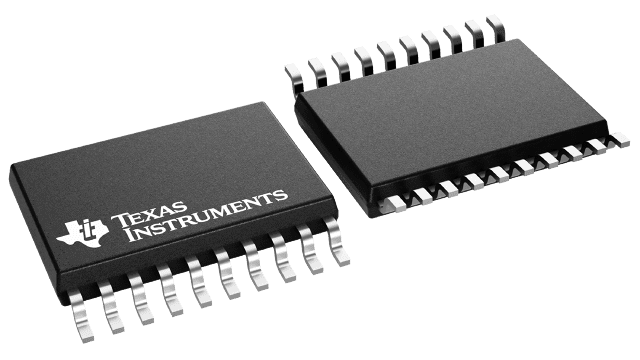
SN74ABT373Octal Transparent D-Type Latches With 3-State Outputs | Logic | 6 | Active | The eight latches of the 'ABT373 are transparent D-type latches. While the latch-enable (LE) input is high, the Q outputs follow the data (D) inputs. When LE is taken low, the Q outputs are latched at the logic levels set up at the D inputs.
A buffered output-enable (OE\) input can be used to place the eight outputs in either a normal logic state (high or low logic levels) or a high-impedance state. In the high-impedance state, the outputs neither load nor drive the bus lines significantly. The high-impedance state and increased drive provide the capability to drive bus lines without need for interface or pullup components.
OE\ does not affect the internal operations of the latches. Old data can be retained or new data can be entered while the outputs are in the high-impedance state.
To ensure the high-impedance state during power up or power down, OE\ should be tied to VCCthrough a pullup resistor; the minimum value of the resistor is determined by the current-sinking capability of the driver.
The SN54ABT373 is characterized for operation over the full military temperature range of -55°C to 125°C. The SN74ABT373 is characterized for operation from -40°C to 85°C.
The eight latches of the 'ABT373 are transparent D-type latches. While the latch-enable (LE) input is high, the Q outputs follow the data (D) inputs. When LE is taken low, the Q outputs are latched at the logic levels set up at the D inputs.
A buffered output-enable (OE\) input can be used to place the eight outputs in either a normal logic state (high or low logic levels) or a high-impedance state. In the high-impedance state, the outputs neither load nor drive the bus lines significantly. The high-impedance state and increased drive provide the capability to drive bus lines without need for interface or pullup components.
OE\ does not affect the internal operations of the latches. Old data can be retained or new data can be entered while the outputs are in the high-impedance state.
To ensure the high-impedance state during power up or power down, OE\ should be tied to VCCthrough a pullup resistor; the minimum value of the resistor is determined by the current-sinking capability of the driver.
The SN54ABT373 is characterized for operation over the full military temperature range of -55°C to 125°C. The SN74ABT373 is characterized for operation from -40°C to 85°C. |
SN74ABT374AOctal Edge-Triggered D-Type Flip-Flops with 3-State Outputs | Flip Flops | 8 | Active | These 8-bit flip-flops feature 3-state outputs designed specifically for driving highly capacitive or relatively low-impedance loads. They are particularly suitable for implementing buffer registers, I/O ports, bidirectional bus drivers, and working registers.
The eight flip-flops of the SN54ABT374 and SN74ABT374A are edge-triggered D-type flip-flops. On the positive transition of the clock (CLK) input, the Q outputs are set to the logic levels set up at the data (D) inputs.
A buffered output-enable () input can be used to place the eight outputs in either a normal logic state (high or low logic levels) or a high-impedance state. In the high-impedance state, the outputs neither load nor drive the bus lines significantly. The high-impedance state and increased drive provide the capability to drive bus lines without need for interface or pullup components.does not affect internal operations of the flip-flop. Old data can be retained or new data can be entered while the outputs are in the high-impedance state.
To ensure the high-impedance state during power up or power down,should be tied to VCCthrough a pullup resistor; the minimum value of the resistor is determined by the current-sinking capability of the driver.
The SN54ABT374 is characterized for operation over the full military temperature range of -55°C to 125°C. The SN74ABT374A is characterized for operation from -40°C to 85°C.
These 8-bit flip-flops feature 3-state outputs designed specifically for driving highly capacitive or relatively low-impedance loads. They are particularly suitable for implementing buffer registers, I/O ports, bidirectional bus drivers, and working registers.
The eight flip-flops of the SN54ABT374 and SN74ABT374A are edge-triggered D-type flip-flops. On the positive transition of the clock (CLK) input, the Q outputs are set to the logic levels set up at the data (D) inputs.
A buffered output-enable () input can be used to place the eight outputs in either a normal logic state (high or low logic levels) or a high-impedance state. In the high-impedance state, the outputs neither load nor drive the bus lines significantly. The high-impedance state and increased drive provide the capability to drive bus lines without need for interface or pullup components.does not affect internal operations of the flip-flop. Old data can be retained or new data can be entered while the outputs are in the high-impedance state.
To ensure the high-impedance state during power up or power down,should be tied to VCCthrough a pullup resistor; the minimum value of the resistor is determined by the current-sinking capability of the driver.
The SN54ABT374 is characterized for operation over the full military temperature range of -55°C to 125°C. The SN74ABT374A is characterized for operation from -40°C to 85°C. |
SN74ABT377AOctal Edge-Triggered D-Type Flip-Flops With Clock Enable | Logic | 8 | Active | These 8-bit positive-edge-triggered D-type flip-flops with a clock (CLK) input are particularly suitable for implementing buffer and storage registers, shift registers, and pattern generators.
Data (D) input information that meets the setup time requirements is transferred to the Q outputs on the positive-going edge of the clock pulse if the common clock-enable () input is low. Clock triggering occurs at a particular voltage level and is not directly related to the transition time of the positive-going pulse. When the buffered clock (CLK) input is at either the high or low level, the D-input signal has no effect at the output. The circuits are designed to prevent false clocking by transitions at.
The SN54ABT377 is characterized for operation over the full military temperature range of -55°C to 125°C. The SN74ABT377A is characterized for operation from -40°C to 85°C.
These 8-bit positive-edge-triggered D-type flip-flops with a clock (CLK) input are particularly suitable for implementing buffer and storage registers, shift registers, and pattern generators.
Data (D) input information that meets the setup time requirements is transferred to the Q outputs on the positive-going edge of the clock pulse if the common clock-enable () input is low. Clock triggering occurs at a particular voltage level and is not directly related to the transition time of the positive-going pulse. When the buffered clock (CLK) input is at either the high or low level, the D-input signal has no effect at the output. The circuits are designed to prevent false clocking by transitions at.
The SN54ABT377 is characterized for operation over the full military temperature range of -55°C to 125°C. The SN74ABT377A is characterized for operation from -40°C to 85°C. |
SN74ABT533AOctal Transparent D-Type Latches With 3-State Outputs | Logic | 6 | Active | These octal transparent D-type latches with 3-state outputs are designed specifically for driving highly capacitive or relatively low-impedance loads. They are particularly suitable for implementing buffer registers, I/O ports, bidirectional bus drivers, and working registers.
When the latch-enable (LE) input is high, the Q\ outputs follow the complements of the data (D) inputs. When LE is taken low, the Q\ outputs are latched at the inverse of the levels at the D inputs.
A buffered output-enable () input can be used to place the eight outputs in either a normal logic state (high or low logic levels) or a high-impedance state. In the high-impedance state, the outputs neither load nor drive the bus lines significantly. The high-impedance state and increased drive provide the capability to drive bus lines without need for interface or pullup components.
does not affect the internal operations of the latches. Previously stored data can be retained or new data can be entered while the outputs are in the high-impedance state.
To ensure the high-impedance state during power up or power down,should be tied to VCCthrough a pullup resistor; the minimum value of the resistor is determined by the current-sinking capability of the driver.
The SN54ABT533 is characterized for operation over the full military temperature range of -55°C to 125°C. The SN74ABT533A is characterized for operation from -40°C to 85°C.
These octal transparent D-type latches with 3-state outputs are designed specifically for driving highly capacitive or relatively low-impedance loads. They are particularly suitable for implementing buffer registers, I/O ports, bidirectional bus drivers, and working registers.
When the latch-enable (LE) input is high, the Q\ outputs follow the complements of the data (D) inputs. When LE is taken low, the Q\ outputs are latched at the inverse of the levels at the D inputs.
A buffered output-enable () input can be used to place the eight outputs in either a normal logic state (high or low logic levels) or a high-impedance state. In the high-impedance state, the outputs neither load nor drive the bus lines significantly. The high-impedance state and increased drive provide the capability to drive bus lines without need for interface or pullup components.
does not affect the internal operations of the latches. Previously stored data can be retained or new data can be entered while the outputs are in the high-impedance state.
To ensure the high-impedance state during power up or power down,should be tied to VCCthrough a pullup resistor; the minimum value of the resistor is determined by the current-sinking capability of the driver.
The SN54ABT533 is characterized for operation over the full military temperature range of -55°C to 125°C. The SN74ABT533A is characterized for operation from -40°C to 85°C. |
SN74ABT534AOctal Edge-Triggered D-Type Flip-Flops With 3-State Outputs | Flip Flops | 7 | Active | These 8-bit flip-flops with 3-state outputs are designed specifically for driving highly capacitive or relatively low-impedance loads. They are particularly suitable for implementing buffer registers, I/O ports, bidirectional bus drivers, and working registers.
The eight flip-flops are edge-triggered D-type flip-flops. On the positive transition of the clock (CLK), the Q\ outputs are set to the complement of the logic levels set up at the data (D) inputs.
A buffered output-enable () input can be used to place the eight outputs in either a normal logic state (high or low logic levels) or a high-impedance state. In the high-impedance state, the outputs neither load nor drive the bus lines significantly. The high-impedance state and increased drive provide the capability to drive bus lines without need for interface or pullup components.
does not affect the internal operations of the flip-flop. Previously stored data can be retained or new data can be entered while the outputs are in the high-impedance state.
To ensure the high-impedance state during power up or power down,should be tied to VCCthrough a pullup resistor; the minimum value of the resistor is determined by the current-sinking capability of the driver.
The SN54ABT534 is characterized for operation over the full military temperature range of -55°C to 125°C. The SN74ABT534A is characterized for operation from -40°C to 85°C.
These 8-bit flip-flops with 3-state outputs are designed specifically for driving highly capacitive or relatively low-impedance loads. They are particularly suitable for implementing buffer registers, I/O ports, bidirectional bus drivers, and working registers.
The eight flip-flops are edge-triggered D-type flip-flops. On the positive transition of the clock (CLK), the Q\ outputs are set to the complement of the logic levels set up at the data (D) inputs.
A buffered output-enable () input can be used to place the eight outputs in either a normal logic state (high or low logic levels) or a high-impedance state. In the high-impedance state, the outputs neither load nor drive the bus lines significantly. The high-impedance state and increased drive provide the capability to drive bus lines without need for interface or pullup components.
does not affect the internal operations of the flip-flop. Previously stored data can be retained or new data can be entered while the outputs are in the high-impedance state.
To ensure the high-impedance state during power up or power down,should be tied to VCCthrough a pullup resistor; the minimum value of the resistor is determined by the current-sinking capability of the driver.
The SN54ABT534 is characterized for operation over the full military temperature range of -55°C to 125°C. The SN74ABT534A is characterized for operation from -40°C to 85°C. |
SN74ABT5408-ch, 4.5-V to 5.5-V inverters with TTL-compatible CMOS inputs and 3-state outputs | Logic | 6 | Active | The ’ABT540 octal buffers and line drivers are ideal for driving bus lines or buffer memory address registers. The devices feature inputs and outputs on opposite sides of the package that facilitate printed circuit board layout.
The 3-state control gate is a 2-input AND gate with active-low inputs so that if either output-enable (OE1orOE2) input is high, all corresponding outputs are in the high-impedance state.
To ensure the high-impedance state during power up or power down,OEshould be tied to VCCthrough a pullup resistor; the minimum value of the resistor is determined by the current-sinking capability of the driver.
The SN54ABT540 is characterized for operation over the full military temperature range of -55°C to 125°C. The SN74ABT540 is characterized for operation from -40°C to 85°C.
The ’ABT540 octal buffers and line drivers are ideal for driving bus lines or buffer memory address registers. The devices feature inputs and outputs on opposite sides of the package that facilitate printed circuit board layout.
The 3-state control gate is a 2-input AND gate with active-low inputs so that if either output-enable (OE1orOE2) input is high, all corresponding outputs are in the high-impedance state.
To ensure the high-impedance state during power up or power down,OEshould be tied to VCCthrough a pullup resistor; the minimum value of the resistor is determined by the current-sinking capability of the driver.
The SN54ABT540 is characterized for operation over the full military temperature range of -55°C to 125°C. The SN74ABT540 is characterized for operation from -40°C to 85°C. |
SN74ABT5402A12-ch, 4.5-V to 5.5-V buffers with TTL-compatible CMOS inputs and 3-state outputs | Logic | 2 | Active | These 12-bit buffers and line drivers are designed specifically to improve both the performance and density of 3-state memory address drivers, clock drivers, and bus-oriented receivers and transmitters.
The 3-state control gate is a 2-input AND gate with active-low inputs so that if either output-enable (OE1\ or OE2\) input is high, all 12 outputs are in the high-impedance state.
The outputs, which are designed to source or sink up to 12 mA, include equivalent 25- series resistors to reduce overshoot and undershoot.
To ensure the high-impedance state during power up or power down, OE\ should be tied to VCCthrough a pullup resistor; the minimum value of the resistor is determined by the current-sinking capability of the driver.
The SN54ABT5402A is characterized for operation over the full military temperature range of -55°C to 125°C. The SN74ABT5402A is characterized for operation from -40°C to 85°C.
These 12-bit buffers and line drivers are designed specifically to improve both the performance and density of 3-state memory address drivers, clock drivers, and bus-oriented receivers and transmitters.
The 3-state control gate is a 2-input AND gate with active-low inputs so that if either output-enable (OE1\ or OE2\) input is high, all 12 outputs are in the high-impedance state.
The outputs, which are designed to source or sink up to 12 mA, include equivalent 25- series resistors to reduce overshoot and undershoot.
To ensure the high-impedance state during power up or power down, OE\ should be tied to VCCthrough a pullup resistor; the minimum value of the resistor is determined by the current-sinking capability of the driver.
The SN54ABT5402A is characterized for operation over the full military temperature range of -55°C to 125°C. The SN74ABT5402A is characterized for operation from -40°C to 85°C. |
SN74ABT541B-EPEnhanced product 8-ch, 4.5-V to 5.5-V buffers with TTL-compatible CMOS inputs and 3-state outputs | Integrated Circuits (ICs) | 14 | Active | The SN54ABT541 and SN74ABT541B octal buffers and line drivers are ideal for driving bus lines or buffering memory address registers. The devices feature inputs and outputs on opposite sides of the package to facilitate printed circuit board layout.
The 3-state control gate is a two-input AND gate with active-low inputs so that if either output-enable (OE1orOE2) input is high, all eight outputs are in the high-impedance state.
When VCCis between 0 and 2.1 V, the device is in the high-impedance state during power up or power down. However, to ensure the high-impedance state above 2.1 V,OEshould be tied to VCCthrough a pullup resistor; the minimum value of the resistor is determined by the current-sinking capability of the driver.
The SN54ABT541 is characterized for operation over the full military temperature range of -55°C to 125°C. The SN74ABT541B is characterized for operation from -40°C to 85°C.
The SN54ABT541 and SN74ABT541B octal buffers and line drivers are ideal for driving bus lines or buffering memory address registers. The devices feature inputs and outputs on opposite sides of the package to facilitate printed circuit board layout.
The 3-state control gate is a two-input AND gate with active-low inputs so that if either output-enable (OE1orOE2) input is high, all eight outputs are in the high-impedance state.
When VCCis between 0 and 2.1 V, the device is in the high-impedance state during power up or power down. However, to ensure the high-impedance state above 2.1 V,OEshould be tied to VCCthrough a pullup resistor; the minimum value of the resistor is determined by the current-sinking capability of the driver.
The SN54ABT541 is characterized for operation over the full military temperature range of -55°C to 125°C. The SN74ABT541B is characterized for operation from -40°C to 85°C. |
SN74ABT543AOctal Registered Transceivers With 3-State Outputs | Logic | 5 | Active | The 'ABT543A octal transceivers contain two sets of D-type latches for temporary storage of data flowing in either direction. Separate latch-enable (LEAB\ or LEBA\) and output-enable (OEAB\ or OEBA\) inputs are provided for each register to permit independent control in either direction of data flow.
The A-to-B enable (CEAB\) input must be low to enter data from A or to output data from B. If CEAB\ is low and LEAB\ is low, the A-to-B latches are transparent; a subsequent low-to-high transition of LEAB\ puts the A latches in the storage mode. With CEAB\ and OEAB\ both low, the 3-state B outputs are active and reflect the data present at the output of the A latches. Data flow from B to A is similar, but requires using the CEBA\, LEBA\, and OEBA\ inputs.
To ensure the high-impedance state during power up or power down, OE\ should be tied to VCCthrough a pullup resistor; the minimum value of the resistor is determined by the current-sinking capability of the driver.
The SN54ABT543A is characterized for operation over the full military temperature range of -55°C to 125°C. The SN74ABT543A is characterized for operation from -40°C to 85°C.
The 'ABT543A octal transceivers contain two sets of D-type latches for temporary storage of data flowing in either direction. Separate latch-enable (LEAB\ or LEBA\) and output-enable (OEAB\ or OEBA\) inputs are provided for each register to permit independent control in either direction of data flow.
The A-to-B enable (CEAB\) input must be low to enter data from A or to output data from B. If CEAB\ is low and LEAB\ is low, the A-to-B latches are transparent; a subsequent low-to-high transition of LEAB\ puts the A latches in the storage mode. With CEAB\ and OEAB\ both low, the 3-state B outputs are active and reflect the data present at the output of the A latches. Data flow from B to A is similar, but requires using the CEBA\, LEBA\, and OEBA\ inputs.
To ensure the high-impedance state during power up or power down, OE\ should be tied to VCCthrough a pullup resistor; the minimum value of the resistor is determined by the current-sinking capability of the driver.
The SN54ABT543A is characterized for operation over the full military temperature range of -55°C to 125°C. The SN74ABT543A is characterized for operation from -40°C to 85°C. |
SN74ABT573AOctal Transparent D-Type Latches With 3-State Outputs | Logic | 6 | Active | These 8-bit latches feature 3-state outputs designed specifically for driving highly capacitive or relatively low-impedance loads. They are particularly suitable for implementing buffer registers, I/O ports, bidirectional bus drivers, and working registers.
The eight latches of the SN54ABT573 and SN74ABT573A are transparent D-type latches. While the latch-enable (LE) input is high, the Q outputs follow the data (D) inputs. When LE is taken low, the Q outputs are latched at the logic levels set up at the D inputs.
A buffered output-enable (OE)\ input can be used to place the eight outputs in either a normal logic state (high or low logic levels) or the high-impedance state. In the high-impedance state, the outputs neither load nor drive the bus lines significantly. The high-impedance state and increased drive provide the capability to drive bus lines without need for interface or pullup components.
OE\ does not affect the internal operations of the latches. Old data can be retained or new data can be entered while the outputs are in the high-impedance state.
To ensure the high-impedance state during power up or power down, OE\ should be tied to VCCthrough a pullup resistor; the minimum value of the resistor is determined by the current-sinking capability of the driver.
This device is fully specified for partial-power-down applications using Ioff. The Ioffcircuitry disables the outputs, preventing damaging current backflow through the device when it is powered down.
These 8-bit latches feature 3-state outputs designed specifically for driving highly capacitive or relatively low-impedance loads. They are particularly suitable for implementing buffer registers, I/O ports, bidirectional bus drivers, and working registers.
The eight latches of the SN54ABT573 and SN74ABT573A are transparent D-type latches. While the latch-enable (LE) input is high, the Q outputs follow the data (D) inputs. When LE is taken low, the Q outputs are latched at the logic levels set up at the D inputs.
A buffered output-enable (OE)\ input can be used to place the eight outputs in either a normal logic state (high or low logic levels) or the high-impedance state. In the high-impedance state, the outputs neither load nor drive the bus lines significantly. The high-impedance state and increased drive provide the capability to drive bus lines without need for interface or pullup components.
OE\ does not affect the internal operations of the latches. Old data can be retained or new data can be entered while the outputs are in the high-impedance state.
To ensure the high-impedance state during power up or power down, OE\ should be tied to VCCthrough a pullup resistor; the minimum value of the resistor is determined by the current-sinking capability of the driver.
This device is fully specified for partial-power-down applications using Ioff. The Ioffcircuitry disables the outputs, preventing damaging current backflow through the device when it is powered down. |