T
Texas Instruments
| Series | Category | # Parts | Status | Description |
|---|---|---|---|---|
| Part | Spec A | Spec B | Spec C | Spec D | Description |
|---|---|---|---|---|---|



| Series | Category | # Parts | Status | Description |
|---|---|---|---|---|
| Part | Spec A | Spec B | Spec C | Spec D | Description |
|---|---|---|---|---|---|
| Part | Category | Description |
|---|---|---|
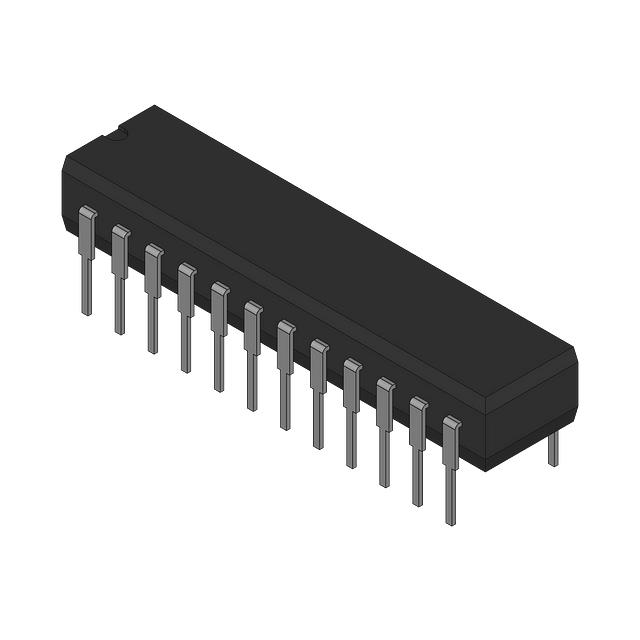 Texas Instruments | Integrated Circuits (ICs) | BUS DRIVER, BCT/FBT SERIES |
 Texas Instruments | Integrated Circuits (ICs) | 12BIT 3.3V~3.6V 210MHZ PARALLEL VQFN-48-EP(7X7) ANALOG TO DIGITAL CONVERTERS (ADC) ROHS |
Texas Instruments | Integrated Circuits (ICs) | TMX320DRE311 179PIN UBGA 200MHZ |
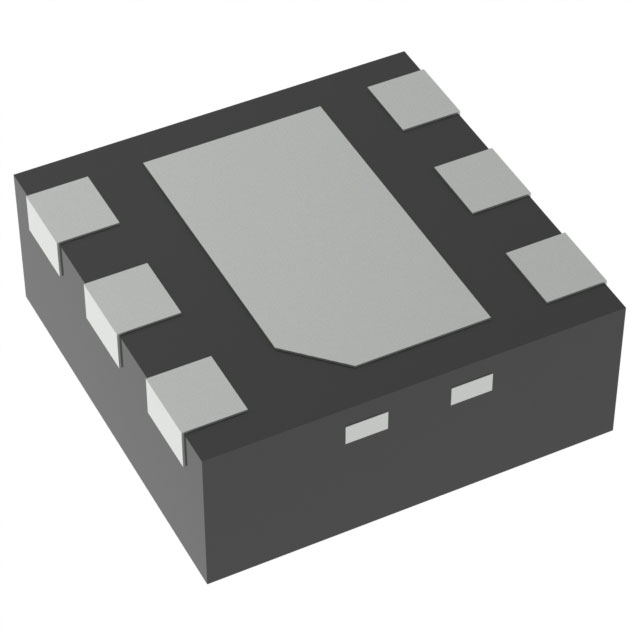 Texas Instruments TPS61040DRVTG4Unknown | Integrated Circuits (ICs) | IC LED DRV RGLTR PWM 350MA 6WSON |
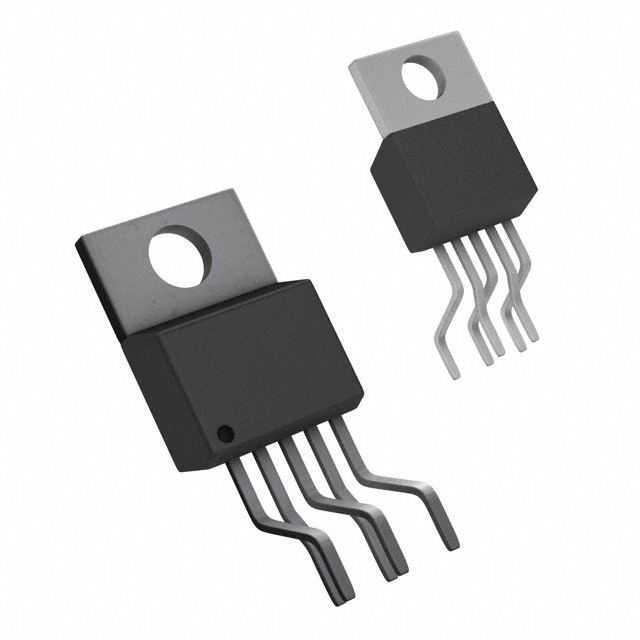 Texas Instruments LP3876ET-2.5Obsolete | Integrated Circuits (ICs) | IC REG LINEAR 2.5V 3A TO220-5 |
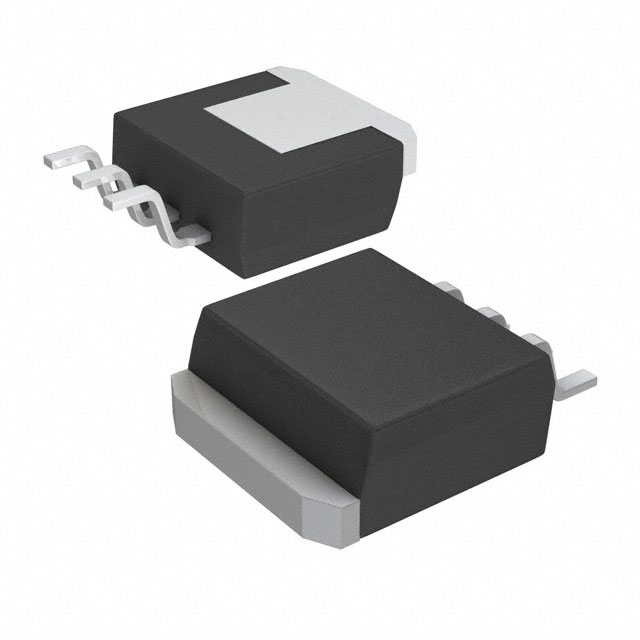 Texas Instruments LMS1585ACSX-ADJObsolete | Integrated Circuits (ICs) | IC REG LIN POS ADJ 5A DDPAK |
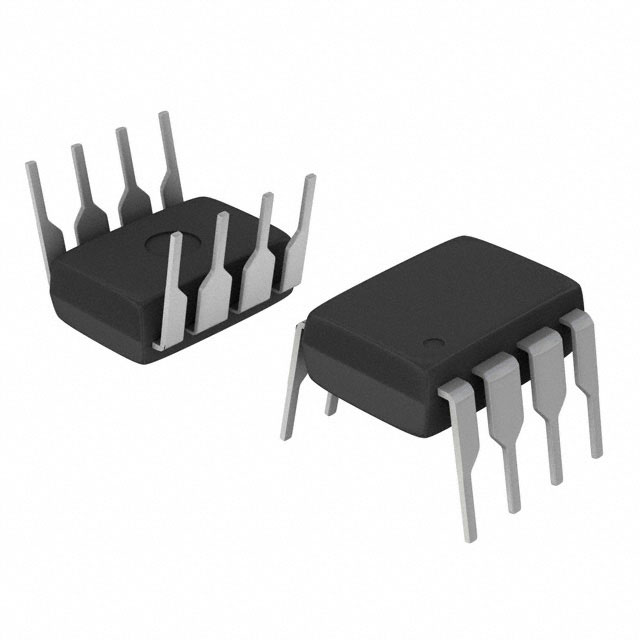 Texas Instruments INA111APG4Obsolete | Integrated Circuits (ICs) | IC INST AMP 1 CIRCUIT 8DIP |
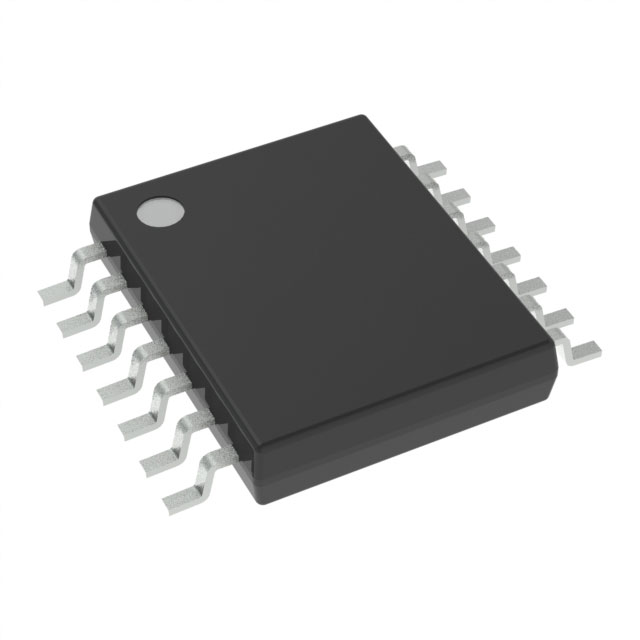 Texas Instruments | Integrated Circuits (ICs) | AUTOMOTIVE, QUAD 36V 1.2MHZ OPERATIONAL AMPLIFIER |
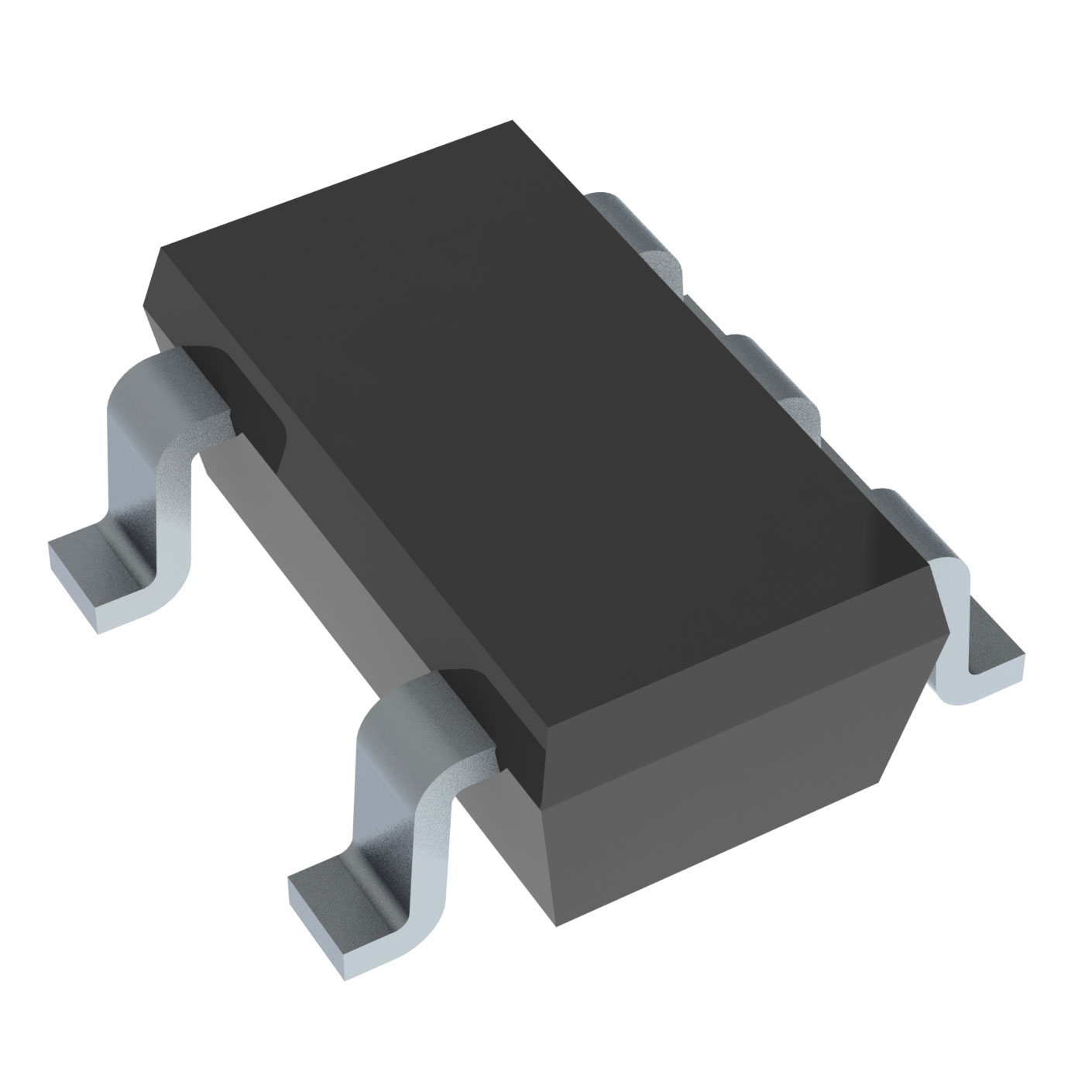 Texas Instruments OPA340NA/3KG4Unknown | Integrated Circuits (ICs) | IC OPAMP GP 1 CIRCUIT SOT23-5 |
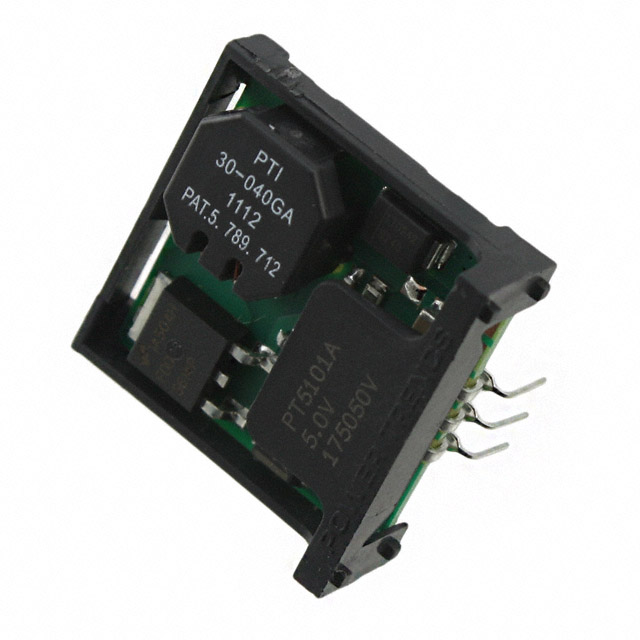 Texas Instruments PT5112AObsolete | Power Supplies - Board Mount | DC DC CONVERTER 8V 8W |
| Series | Category | # Parts | Status | Description |
|---|---|---|---|---|
SN54LS165AParallel-Load 8-Bit Shift Registers | Logic | 1 | Active | The ’165 and ’LS165A are 8-bit serial shift registers that shift the data in the direction of QAtoward QHwhen clocked. Parallel-in access to each stage is made available by eight individual, direct data inputs that are enabled by a low level at the shift/load (SH/LD\) input. These registers also feature gated clock (CLK) inputs and complementary outputs from the eighth bit. All inputs are diode-clamped to minimize transmission-line effects, thereby simplifying system design.
Clocking is accomplished through a two-input positive-NOR gate, permitting one input to be used as a clock-inhibit function. Holding either of the clock inputs high inhibits clocking, and holding either clock input low with SH/LD\ high enables the other clock input. Clock inhibit (CLK INH) should be changed to the high level only while CLK is high. Parallel loading is inhibited as long as SH/LD\ is high. Data at the parallel inputs are loaded directly into the register while SH/LD\ is low, independently of the levels of CLK, CLK INH, or serial (SER) inputs.
The ’165 and ’LS165A are 8-bit serial shift registers that shift the data in the direction of QAtoward QHwhen clocked. Parallel-in access to each stage is made available by eight individual, direct data inputs that are enabled by a low level at the shift/load (SH/LD\) input. These registers also feature gated clock (CLK) inputs and complementary outputs from the eighth bit. All inputs are diode-clamped to minimize transmission-line effects, thereby simplifying system design.
Clocking is accomplished through a two-input positive-NOR gate, permitting one input to be used as a clock-inhibit function. Holding either of the clock inputs high inhibits clocking, and holding either clock input low with SH/LD\ high enables the other clock input. Clock inhibit (CLK INH) should be changed to the high level only while CLK is high. Parallel loading is inhibited as long as SH/LD\ is high. Data at the parallel inputs are loaded directly into the register while SH/LD\ is low, independently of the levels of CLK, CLK INH, or serial (SER) inputs. |
SN54LS174Hex D-type Flip-Flops With Clear | Integrated Circuits (ICs) | 2 | Active | These monolithic, positive-edge-triggered flip-flops utilize TTL circuitry to implement D-type flip-flop logic. All have a direct clear input, and the '175, 'LS175, and 'S175 feature complementary outputs from each flip-flop.
Information at the D inputs meeting the setup time requirements is transferred to the Q outputs on the positive-going edge of the clock pulse. Clock triggering occurs at a particular voltage level and is not directly related to the transition time of the positive-going pulse. When the clock input is at either the high or low level, the D input signal has no effect at the output.
These circuits are fully compatible for use with most TTL circuits.
These monolithic, positive-edge-triggered flip-flops utilize TTL circuitry to implement D-type flip-flop logic. All have a direct clear input, and the '175, 'LS175, and 'S175 feature complementary outputs from each flip-flop.
Information at the D inputs meeting the setup time requirements is transferred to the Q outputs on the positive-going edge of the clock pulse. Clock triggering occurs at a particular voltage level and is not directly related to the transition time of the positive-going pulse. When the clock input is at either the high or low level, the D input signal has no effect at the output.
These circuits are fully compatible for use with most TTL circuits. |
SN54LS181Arithmetic Logic Units/Function Generators | Integrated Circuits (ICs) | 1 | Active | The 'LS181 and 'S181 are arithmetic logic units (ALU)/function generators that have a complexity of 75 equivalent gates on a monolithic chip. These circuits perform 16 binary arithmetic operations on two 4-bit words as shown in Tables 1 and 2. These operations are selected by the four function-select lines (S0, S1, S2, S3) and include addition, subtraction, decrement, and straight transfer. When performing arithmetic manipulations, the internal carries must be enabled by applying a low-level voltage to the mode control input (M). A full carry look-ahead scheme is made available in these devices for fast, simultaneous carry generation by means of two cascade-outputs (pins 15 and 17) for the four bits in the package. When used in conjunction with the SN54S182 or SN74S182 full carry look-ahead circuits, high-speed arithmetic operations can be performed. The typical addition times shown above illustrate the little additional time required for addition of longer words when full carry look-ahead is employed. The method of cascading 'S182 circuits with these ALUs to provide multi-level full carry look-ahead is illustrated under typical applications data for the 'S182.
If high speed is not of importance, a ripple-carry input (Cn) and a ripple-carry output (Cn+4) are available. However, the ripple-carry delay has also been minimized so that arithmetic manipulations for small word lengths can be performed without external circuitry.
The 'LS181 and 'S181 will accommodate active-high data if the pin designations are interpreted as follows:
Subtraction is accomplished by 1's complement addition where the 1's complement of the subtrahend is generated internally.The resultant output is A – B – 1, which requires an end-around or forced carry to provide A – B.
The 'LS181 or 'S181 can also be utilized as a comparator. The A = B output is internally decoded from the function outputs (F0, F1, F2, F3) so that when two words of equal magnitude are applied at the A and B inputs, it will assume a high level to indicate equality (A = B). The ALU must be in the subtract mode with Cn= H when performing this comparison. The A = B output is open-collector so that it can be wire-AND connected to give a comparison for more than four bits. The carry output (Cn+4) can also be used to supply relative magnitude information. Again, the ALU must be placed in the subtract mode by placing the function select inputs S3, S2, S1, S0 at L, H, H, L, respectively.
These circuits have been designed to not only incorporate all of the designer's requirements for arithmetic operations, but also to provide 16 possible functions of two Boolean variables without the use of external circuitry. These logic functions are selected by use of the four function-select inputs (S0, S1, S2, S3) with the mode-control input (M) at a high level to disable the internal carry. The 16 logic functions are detailed in Tables 1 and 2 and include exclusive-OR, NAND, AND, NOR, and OR functions.
Series 54, 54LS, and 54S devices are characterized for operation over the full military temperature range of -55°C to 125°C; Series 74LS and 74S devices are characterized for operation from 0°C to 70°C.
The 'LS181 and 'S181 are arithmetic logic units (ALU)/function generators that have a complexity of 75 equivalent gates on a monolithic chip. These circuits perform 16 binary arithmetic operations on two 4-bit words as shown in Tables 1 and 2. These operations are selected by the four function-select lines (S0, S1, S2, S3) and include addition, subtraction, decrement, and straight transfer. When performing arithmetic manipulations, the internal carries must be enabled by applying a low-level voltage to the mode control input (M). A full carry look-ahead scheme is made available in these devices for fast, simultaneous carry generation by means of two cascade-outputs (pins 15 and 17) for the four bits in the package. When used in conjunction with the SN54S182 or SN74S182 full carry look-ahead circuits, high-speed arithmetic operations can be performed. The typical addition times shown above illustrate the little additional time required for addition of longer words when full carry look-ahead is employed. The method of cascading 'S182 circuits with these ALUs to provide multi-level full carry look-ahead is illustrated under typical applications data for the 'S182.
If high speed is not of importance, a ripple-carry input (Cn) and a ripple-carry output (Cn+4) are available. However, the ripple-carry delay has also been minimized so that arithmetic manipulations for small word lengths can be performed without external circuitry.
The 'LS181 and 'S181 will accommodate active-high data if the pin designations are interpreted as follows:
Subtraction is accomplished by 1's complement addition where the 1's complement of the subtrahend is generated internally.The resultant output is A – B – 1, which requires an end-around or forced carry to provide A – B.
The 'LS181 or 'S181 can also be utilized as a comparator. The A = B output is internally decoded from the function outputs (F0, F1, F2, F3) so that when two words of equal magnitude are applied at the A and B inputs, it will assume a high level to indicate equality (A = B). The ALU must be in the subtract mode with Cn= H when performing this comparison. The A = B output is open-collector so that it can be wire-AND connected to give a comparison for more than four bits. The carry output (Cn+4) can also be used to supply relative magnitude information. Again, the ALU must be placed in the subtract mode by placing the function select inputs S3, S2, S1, S0 at L, H, H, L, respectively.
These circuits have been designed to not only incorporate all of the designer's requirements for arithmetic operations, but also to provide 16 possible functions of two Boolean variables without the use of external circuitry. These logic functions are selected by use of the four function-select inputs (S0, S1, S2, S3) with the mode-control input (M) at a high level to disable the internal carry. The 16 logic functions are detailed in Tables 1 and 2 and include exclusive-OR, NAND, AND, NOR, and OR functions.
Series 54, 54LS, and 54S devices are characterized for operation over the full military temperature range of -55°C to 125°C; Series 74LS and 74S devices are characterized for operation from 0°C to 70°C. |
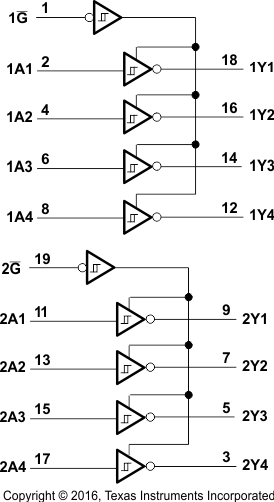
SN54LS240Military 8-ch, 4.5-V to 5.5-V bipolar inverters with 3-state outputs | Buffers, Drivers, Receivers, Transceivers | 1 | Active | The SNx4LS24x, SNx4S24x octal buffers and line drivers are designed specifically to improve both the performance and density of three-state memory address drivers, clock drivers, and bus-oriented receivers and transmitters. The designer has a choice of selected combinations of inverting and non-inverting outputs, symmetrical, active-low output-control (G) inputs, and complementary output-control (G andG) inputs. These devices feature high fan-out, improved fan-in, and 400-mV noise margin. The SN74LS24x and SN74S24x devices can be used to drive terminated lines down to 133 Ω.
The SNx4LS24x, SNx4S24x octal buffers and line drivers are designed specifically to improve both the performance and density of three-state memory address drivers, clock drivers, and bus-oriented receivers and transmitters. The designer has a choice of selected combinations of inverting and non-inverting outputs, symmetrical, active-low output-control (G) inputs, and complementary output-control (G andG) inputs. These devices feature high fan-out, improved fan-in, and 400-mV noise margin. The SN74LS24x and SN74S24x devices can be used to drive terminated lines down to 133 Ω. |
SN54LS244Military 8-ch, 4.5-V to 5.5-V bipolar buffers with 3-state outputs | Logic | 2 | Active | The SNx4LS24x, SNx4S24x octal buffers and line drivers are designed specifically to improve both the performance and density of three-state memory address drivers, clock drivers, and bus-oriented receivers and transmitters. The designer has a choice of selected combinations of inverting and non-inverting outputs, symmetrical, active-low output-control (G) inputs, and complementary output-control (G andG) inputs. These devices feature high fan-out, improved fan-in, and 400-mV noise margin. The SN74LS24x and SN74S24x devices can be used to drive terminated lines down to 133 Ω.
The SNx4LS24x, SNx4S24x octal buffers and line drivers are designed specifically to improve both the performance and density of three-state memory address drivers, clock drivers, and bus-oriented receivers and transmitters. The designer has a choice of selected combinations of inverting and non-inverting outputs, symmetrical, active-low output-control (G) inputs, and complementary output-control (G andG) inputs. These devices feature high fan-out, improved fan-in, and 400-mV noise margin. The SN74LS24x and SN74S24x devices can be used to drive terminated lines down to 133 Ω. |
SN54LS244-SPSpace 8-ch, 4.5-V to 5.5-V bipolar buffers with 3-state outputs | Logic | 1 | Active | The SNx4LS24x, SNx4S24x octal buffers and line drivers are designed specifically to improve both the performance and density of three-state memory address drivers, clock drivers, and bus-oriented receivers and transmitters. The designer has a choice of selected combinations of inverting and non-inverting outputs, symmetrical, active-low output-control (G) inputs, and complementary output-control (G andG) inputs. These devices feature high fan-out, improved fan-in, and 400-mV noise margin. The SN74LS24x and SN74S24x devices can be used to drive terminated lines down to 133 Ω.
The SNx4LS24x, SNx4S24x octal buffers and line drivers are designed specifically to improve both the performance and density of three-state memory address drivers, clock drivers, and bus-oriented receivers and transmitters. The designer has a choice of selected combinations of inverting and non-inverting outputs, symmetrical, active-low output-control (G) inputs, and complementary output-control (G andG) inputs. These devices feature high fan-out, improved fan-in, and 400-mV noise margin. The SN74LS24x and SN74S24x devices can be used to drive terminated lines down to 133 Ω. |
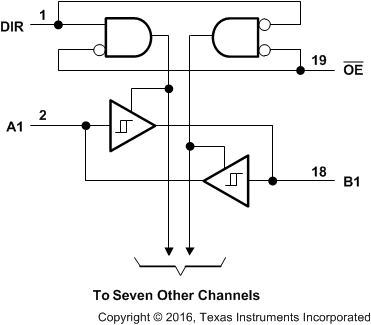
SN54LS245Octal Bus Transceivers With 3-State Outputs | Integrated Circuits (ICs) | 3 | Active | These octal bus transceivers are designed for asynchronous two-way communication between data buses. The control-function implementation minimizes external timing requirements.
The SNx4LS245 devices allow data transmission from the A bus to the B bus or from the B bus to the A bus, depending on the logic level at the direction-control (DIR) input. The output-enable (OE) input can disable the device so that the buses are effectively isolated.
These octal bus transceivers are designed for asynchronous two-way communication between data buses. The control-function implementation minimizes external timing requirements.
The SNx4LS245 devices allow data transmission from the A bus to the B bus or from the B bus to the A bus, depending on the logic level at the direction-control (DIR) input. The output-enable (OE) input can disable the device so that the buses are effectively isolated. |
SN54LS251Data Selectors/Multiplexers With 3-State Outputs | Logic | 1 | Active | These monolithic data selectors/multiplexers contain full on-chip binary decoding to select one-of-eight data sources and feature a strobe-controlled three-state output. The strobe must be at a low logic level to enable these devices. The three-state outputs permit a number of outputs to be connected to a common bus. When the strobe input is high, both outputs are in a high-impedance state in which both the upper and lower transistors of each totem-pole output are off, and the output neither drives nor loads the bus significantly. When the strobe is low, the outputs are activated and operate as standard TTL totem-pole outputs.
To minimize the possibility that two outputs will attempt to take a common bus to opposite logic levels, the output control circuitry is designed so that the average output disable time is shorter than the average output enable time. The SN54251 and SN74251 have output clamp diodes to attenuate reflections on the bus line.
These monolithic data selectors/multiplexers contain full on-chip binary decoding to select one-of-eight data sources and feature a strobe-controlled three-state output. The strobe must be at a low logic level to enable these devices. The three-state outputs permit a number of outputs to be connected to a common bus. When the strobe input is high, both outputs are in a high-impedance state in which both the upper and lower transistors of each totem-pole output are off, and the output neither drives nor loads the bus significantly. When the strobe is low, the outputs are activated and operate as standard TTL totem-pole outputs.
To minimize the possibility that two outputs will attempt to take a common bus to opposite logic levels, the output control circuitry is designed so that the average output disable time is shorter than the average output enable time. The SN54251 and SN74251 have output clamp diodes to attenuate reflections on the bus line. |
SN54LS273Octal D-type Flip-Flop With Clear | Integrated Circuits (ICs) | 7 | Active | These monolithic, positive-edge-triggered flip-flops utilize TTL circuitry to implement D-type flip-flop logic with a direct clear input.
Information at the D inputs meeting the setup time requirements is transferred to the Q outputs on the positive-going edge of the clock pulse. Clock triggering occurs at a particular voltage level and is not directly related to the transition time of the positive-going pulse. When the clock input is at either the high or low level, the D input signal has no effect at the output.
These flip-flops are guaranteed to respond to clock frequencies ranging form 0 to 30 megahertz while maximum clock frequency is typically 40 megahertz. Typical power dissipation is 39 milliwatts per flip-flop for the ´273 and 10 milliwatts for the ´LS273.
These monolithic, positive-edge-triggered flip-flops utilize TTL circuitry to implement D-type flip-flop logic with a direct clear input.
Information at the D inputs meeting the setup time requirements is transferred to the Q outputs on the positive-going edge of the clock pulse. Clock triggering occurs at a particular voltage level and is not directly related to the transition time of the positive-going pulse. When the clock input is at either the high or low level, the D input signal has no effect at the output.
These flip-flops are guaranteed to respond to clock frequencies ranging form 0 to 30 megahertz while maximum clock frequency is typically 40 megahertz. Typical power dissipation is 39 milliwatts per flip-flop for the ´273 and 10 milliwatts for the ´LS273. |
SN54LS279AQuadruple /S-/R Latches | Logic | 5 | Active | The ’279 offers 4 basic S\-R\ flip-flop latches in one 16-pin, 300-mil package. Under conventional operation, the S\-R\ inputs are normally held high. When the S\ input is pulsed low, the Q output will be set high. When R\ is pulsed low, the Q output will be reset low. Normally, the S\-R\ inputs should not be taken low simultaneously. The Q output will be unpredictable in this condition.
The ’279 offers 4 basic S\-R\ flip-flop latches in one 16-pin, 300-mil package. Under conventional operation, the S\-R\ inputs are normally held high. When the S\ input is pulsed low, the Q output will be set high. When R\ is pulsed low, the Q output will be reset low. Normally, the S\-R\ inputs should not be taken low simultaneously. The Q output will be unpredictable in this condition. |