A
Analog Devices
| Series | Category | # Parts | Status | Description |
|---|---|---|---|---|
| Part | Spec A | Spec B | Spec C | Spec D | Description |
|---|---|---|---|---|---|



| Series | Category | # Parts | Status | Description |
|---|---|---|---|---|
| Part | Spec A | Spec B | Spec C | Spec D | Description |
|---|---|---|---|---|---|
| Part | Category | Description |
|---|---|---|
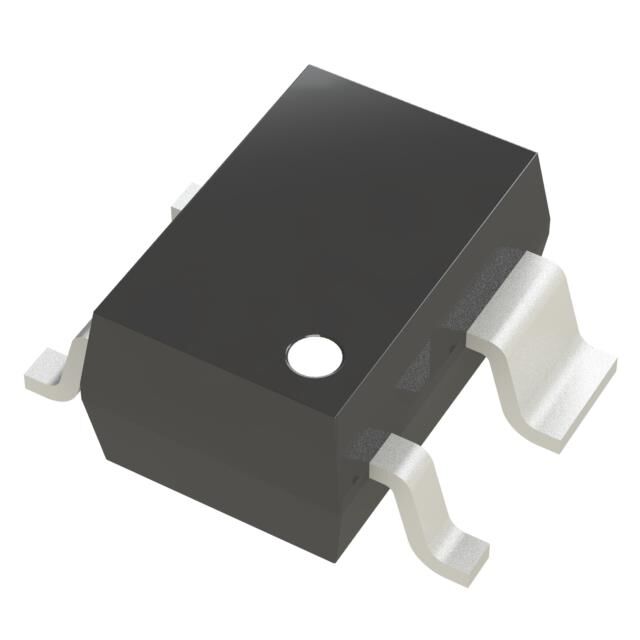 Analog Devices ADM6713RAKSZ-REELObsolete | Integrated Circuits (ICs) | IC SUPERVISOR 1 CHANNEL SC70-4 |
Analog Devices | RF and Wireless | RF AMP SINGLE GENERAL PURPOSE RF AMPLIFIER 20GHZ 3.6V 22-PIN DIE TRAY |
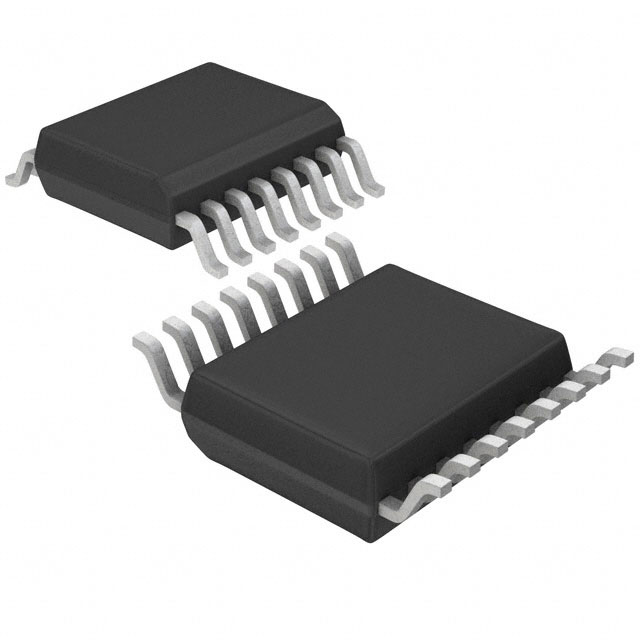 Analog Devices | Integrated Circuits (ICs) | LOW NOISE, SWITCHED CAPACITOR REGULATED VOLTAGE INVERTERS |
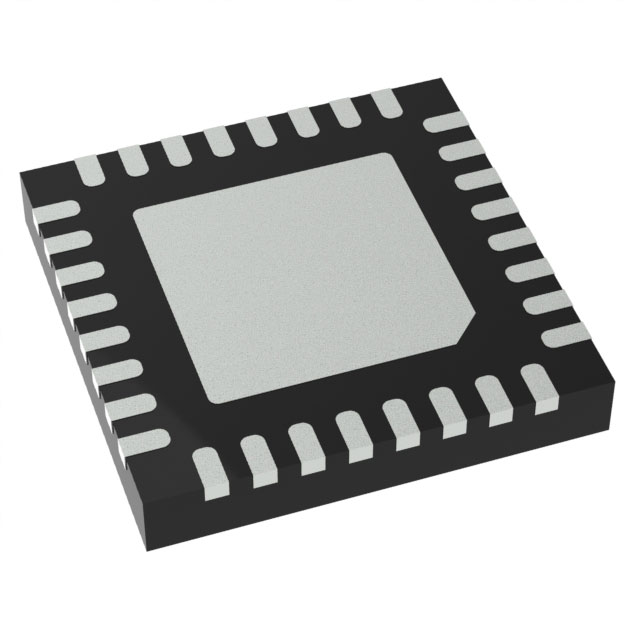 Analog Devices | Integrated Circuits (ICs) | QUAD 16-BIT/12-BIT ±10V VOUTSOFTSPAN DACS WITH 10PPM/°C MAX REFERENCE |
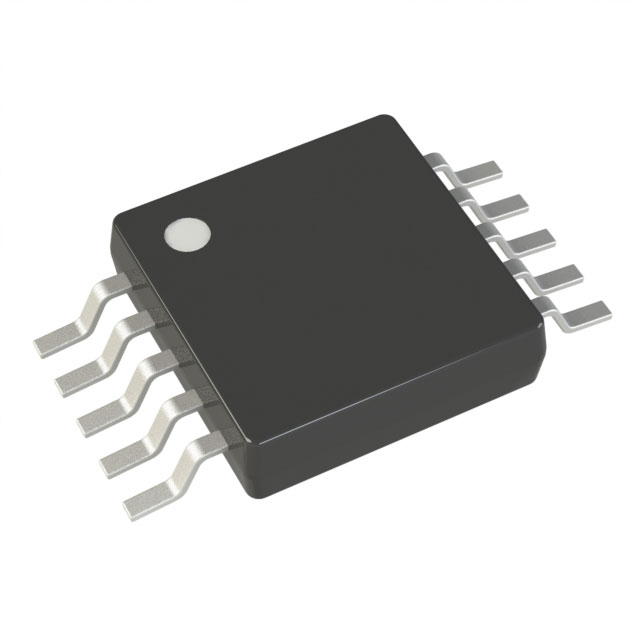 Analog Devices | Integrated Circuits (ICs) | SERIAL 14-BIT, 3.5MSPS SAMPLING ADC WITH BIPOLAR INPUTS |
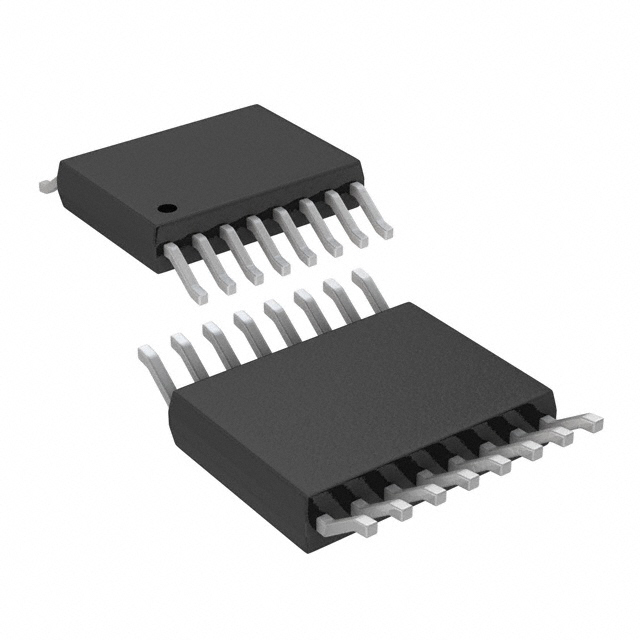 Analog Devices | Integrated Circuits (ICs) | ISOSPI ISOLATED COMMUNICATIONS INTERFACE |
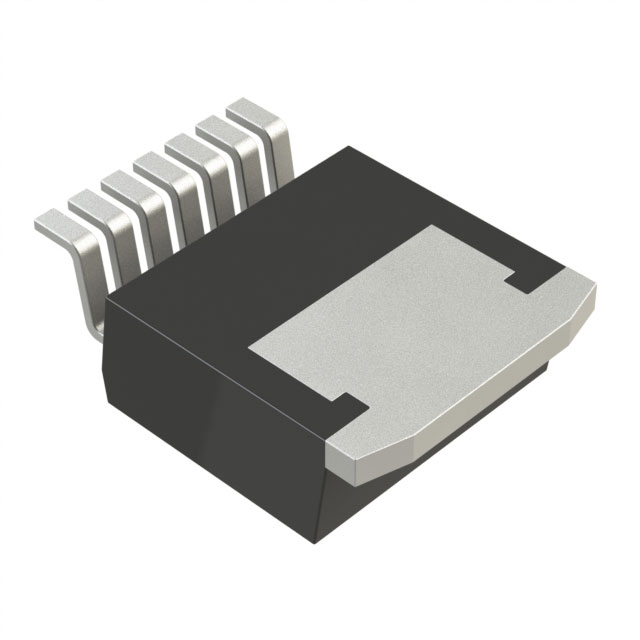 Analog Devices | Integrated Circuits (ICs) | 4.5A, 500KHZ STEP-DOWN SWITCHING REGULATOR |
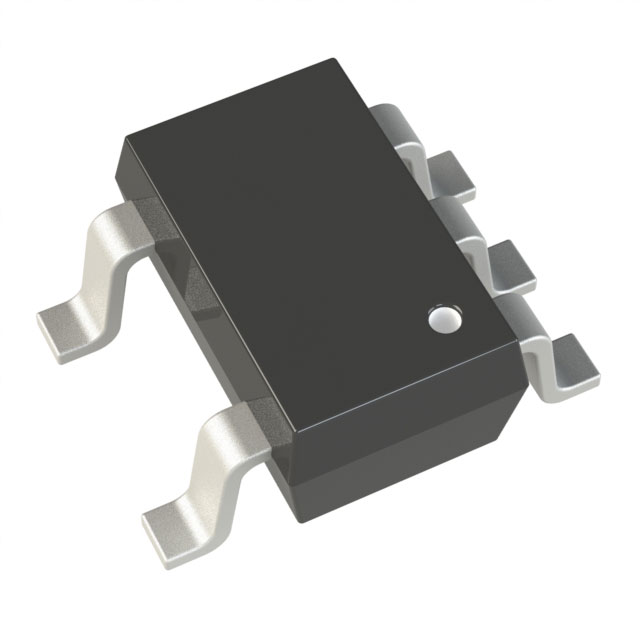 Analog Devices | Integrated Circuits (ICs) | 300 MA, LOW QUIESCENT CURRENT, ADJUSTABLE OUTPUT, CMOS LINEAR REGULATOR |
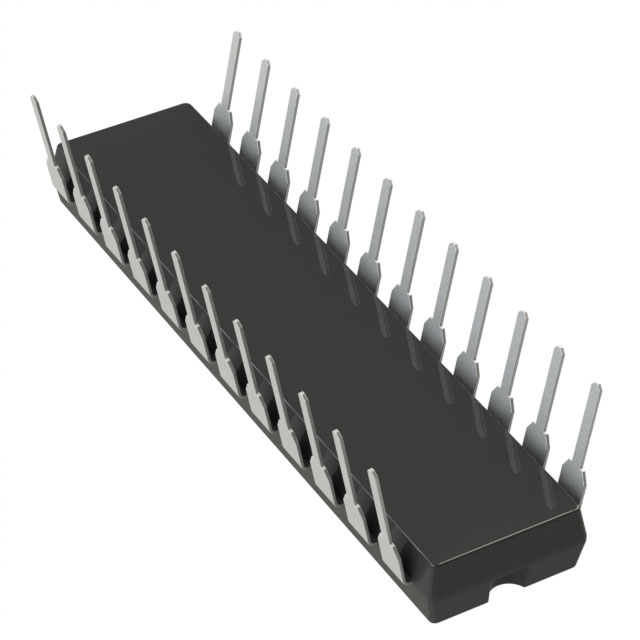 Analog Devices AD767KNObsolete | Integrated Circuits (ICs) | IC DAC 12BIT V-OUT 24DIP |
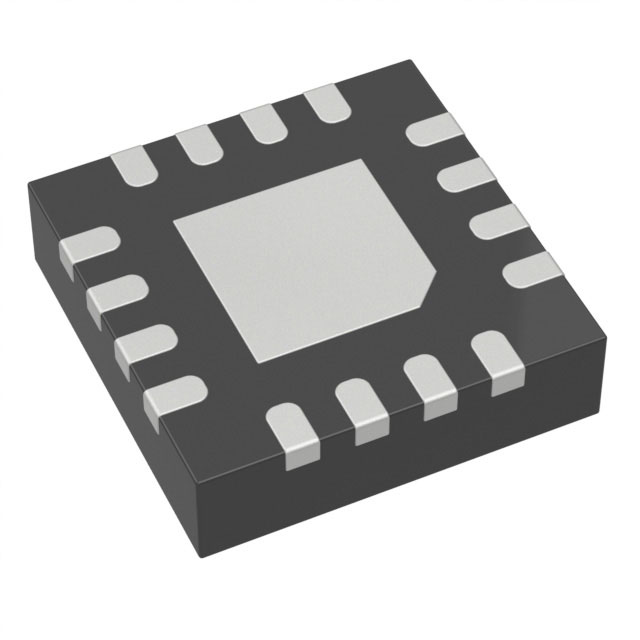 Analog Devices | Integrated Circuits (ICs) | QUAD 12-/10-/8-BIT RAIL-TO-RAIL DACS WITH 10PPM/°C REFERENCE |
| Series | Category | # Parts | Status | Description |
|---|---|---|---|---|
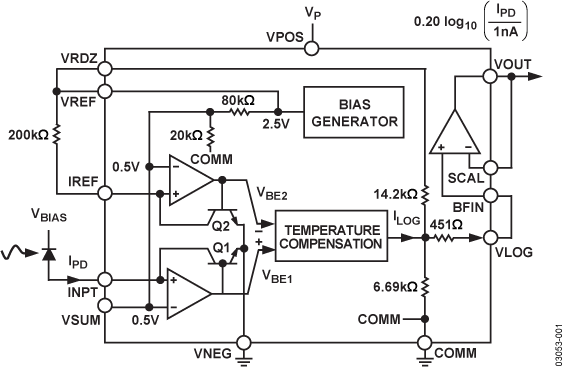
AD8304160dBLogarithmic Amplifier with Photo-Diode Interface | Amplifiers | 1 | Active | The AD8304 is a monolithic logarithmic detector optimized for the measurement of low frequency signal power in fiber optic systems. It uses an advanced translinear technique to provide an exceptionally large dynamic range in a versatile and easily used form. Its wide measurement range and accuracy are achieved using proprietary design techniques and precise laser trimming. In most applications only a single positive supply, VP, of 5 V will be required, but 3.0 V to 5.5 V can be used, and certain applications benefit from the added use of a negative supply, VN. When using low supply voltages, the log slope is readily altered to fit the available span. The low quiescent current and chip disable features facilitate use in battery-operated applications.The AD8304 is available in a 14-lead TSSOP package and specified for operation from -40°C to +85°C. |
| Special Purpose Amplifiers | 2 | Obsolete | ||
| Special Purpose Amplifiers | 2 | Active | ||
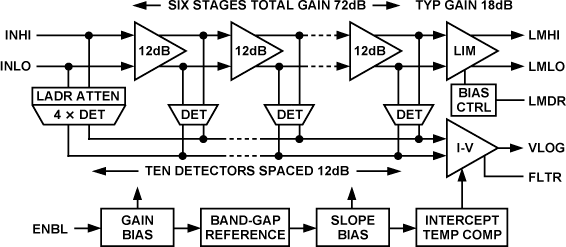
AD83095 MHzTO 500 MHz, 100dB Demodulating Logarithmic Amplifier with Limiter Output | RF, RFID, Wireless Evaluation Boards | 2 | Active | The AD8309 is a 500 MHz detecting logarithmic amplifier, based on the successive detection technique. This "log amp" is useful for received signal strength indication (RSSI) and phase detection in cellular base stations, radar and other radio transceiver applications.It provides a dynamic range of 100 dB with an accuracy of ±0.4 dB over the central 80 dB and operates up to 500 MHz. The logarithmic output is proportional to the logarithm of the input signal, providing a 0.4 V to 2.5 V DC signal over the 100 dB input range. A limiter output is also provided which amplifies the input signal by 100 dB, providing a stable limited output with a maximum of ±100 ps phase skew. This limiter output is useful for demodulating FSK and PSK modulated signals.The AD8309 operates from a single 2.7 V to 5.5 V dc power supply, drawing 20 mA typical. It is supplied in a 16 pin plastic TSSOP package.An evaluation board is available for this product and may be ordered using the following product number: AD8309-EVAL. Schematic and layout for this evaluation board is contained in the product datasheet. |
| RF and Wireless | 4 | Active | ||
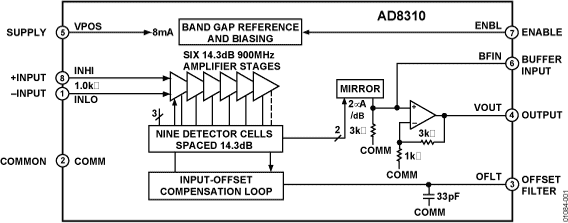
AD8310Fast, Voltage-Out, DC to 440 MHz, 95dB Logarithmic Amplifier | Evaluation Boards | 5 | Active | The AD8310 is a complete, dc to 440 MHz demodulating logarithmic amplifier (log amp) with a very fast voltage mode output, capable of driving up to 25 mA into a grounded load in under 15 ns. It uses the progressive compression (successive detection) technique to provide a dynamic range of up to 95 dB to ±3 dB law conformance or 90 dB to a ±1 dB error bound up to 100 MHz. It is extremely stable and easy to use, requiring no significant external components. A single-supply voltage of 2.7 V to 5.5 V at 8 mA is needed, corresponding to a power consumption of only 24 mW at 3 V. A fast-acting CMOS-compatible enable pin is provided.Each of the six cascaded amplifier/limiter cells has a small-signal gain of 14.3 dB, with a −3 dB bandwidth of 900 MHz. A total of nine detector cells are used to provide a dynamic range that extends from −91 dBV (where 0 dBV is defined as the amplitude of a 1 V rms sine wave), an amplitude of about ±40 μV, up to +4 dBV (or ±2.2 V). The demodulated output is accurately scaled, with a log slope of 24 mV/dB and an intercept of −108 dBV. The scaling parameters are supply- and temperature-independent.The fully differential input offers a moderately high impedance (1 kΩ in parallel with about 1 pF). A simple network can match the input to 50 Ω and provide a power sensitivity of −78 dBm to +17 dBm. The logarithmic linearity is typically within ±0.4 dB up to 100 MHz over the central portion of the range, but it is somewhat greater at 440 MHz. There is no minimum frequency limit; the AD8310 can be used down to low audio frequencies. Special filtering features are provided to support this wide range.The output voltage runs from a noise-limited lower boundary of 400 mV to an upper limit within 200 mV of the supply voltage for light loads. The slope and intercept can be readily altered using external resistors. The output is tolerant of a wide variety of load conditions and is stable with capacitive loads of 100 pF.The AD8310 provides a unique combination of low cost, small size, low power consumption, high accuracy and stability, high dynamic range, a frequency range encompassing audio to UHF, fast response time, and good load-driving capabilities, making this product useful in numerous applications that require the reduction of a signal to its decibel equivalent.The AD8310 is available in the industrial temperature range of −40°C to +85°C in an 8-lead MSOP package.ApplicationsConversion of signal level to decibel formTransmitter antenna power measurementReceiver signal strength indication (RSSI)Low cost radar and sonar signal processingNetwork and spectrum analyzersSignal-level determination down to 20 HzTrue-decibel ac mode for multimeters |
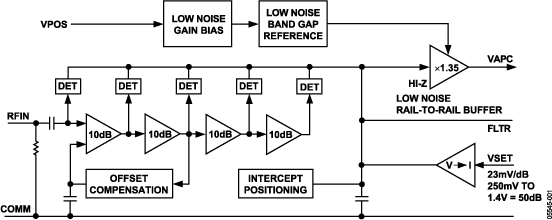
AD831150dB GSM PA Controller | RF Power Controller ICs | 1 | Active | The AD8311 is a complete low cost subsystem for the precise control of RF power amplifiers operating in the frequency range 0.1 GHz to 2.5 GHz and over a typical dynamic range of 50 dB. It is intended for use in cellular handsets and other battery-operated wireless devices. The log amp technique provides a much wider measurement range and better accuracy than controllers using diode detectors. In particular, its temperature stability is excellent over a specified range of −40°C to +85°C.Its high sensitivity allows control at low signal levels, thus reducing the amount of power that needs to be coupled to the detector. For convenience, the signal is internally ac-coupled. This high-pass coupling, with a corner at approximately 0.016 GHz, determines the lowest operating frequency. Thus, the source can be dc-grounded.The AD8311 provides a voltage output, VAPC, which has the voltage range and current drive to directly connect to the gain control pin of most handset power amplifiers. VAPC can swing from 300 mV above ground to within 200 mV below the supply voltage. Load currents of up to 6 mA can be supported.The setpoint control input is applied to pin VSET and has an operating range of 0.25 V to 1.4 V. The associated circuit determines the slope and intercept of the linear-in-dB measurement system; these are nominally 23.6 mV/dB and −59.7 dBm at 0.9 GHz. Further simplifying the application of the AD8311, the input resistance of the setpoint interface is over 35 MΩ, and the bias current is typically 0.26 μA.The AD8311 is available in a 6-ball wafer-level chip scale package (WLCSP), 1.0 mm × 1.5 mm, and consumes 7.6 mA from a 2.7 V to 5.5 V supply.ApplicationsSingle, dual, and triple band mobile handset (GSM, DCS, EDGE)Transmitter power control |
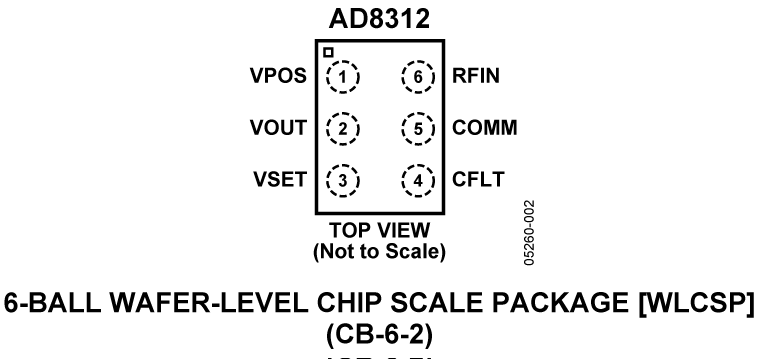
AD831250 MHzTO 3.5 GHz, 45dB RF Detector | RF Detectors | 1 | Active | The AD8312 is a complete, low cost subsystem for the measurement of RF signals in the frequency range of 50 MHz to 3.5 GHz. It has a typical dynamic range of 45 dB and is intended for use in a wide variety of cellular handsets and other wireless devices. It provides a wider dynamic range and better accuracy than possible using discrete diode detectors. In particular, its temperature stability is excellent over the full operating range of −40°C to +85°C.Its high sensitivity allows measurement at low power levels, thus reducing the amount of power that needs to be coupled to the detector. It is essentially a voltage-responding device, with a typical signal range of 1.25 mV to 224 mV rms or −45 dBm to 0 dBm, referencing 50 Ω.For convenience, the signal is internally ac-coupled, using a 5 pF capacitor to a load of 3 kΩ in shunt with 1.3 pF. This high-pass coupling, with a corner at approximately 16 MHz, determines the lowest operating frequency. Therefore, the source may be dc grounded.The AD8312 output, VOUT, increases from close to ground to about 1.2 V because the input signal level increases from 1.25 mV to 224 mV. A capacitor may be connected between the VOUT and CFLT pins when it is desirable to increase the time interval over which averaging of the input waveform occurs.The AD8312 is available in a 6-ball, 1.0 mm × 1.5 mm, wafer-level chip scale package and consumes 4.2 mA from a 2.7 V to 5.5 V supply.ApplicationsCellular handsets (GSM, CDMA, WCDMA)RSSI and TSSI for wireless terminal devicesTransmitter power measurement |
| RF and Wireless | 3 | Active | ||
| RF Detectors | 5 | Active | ||