A
Analog Devices Inc./Maxim Integrated
| Series | Category | # Parts | Status | Description |
|---|---|---|---|---|
| Part | Spec A | Spec B | Spec C | Spec D | Description |
|---|---|---|---|---|---|



| Series | Category | # Parts | Status | Description |
|---|---|---|---|---|
| Part | Spec A | Spec B | Spec C | Spec D | Description |
|---|---|---|---|---|---|
| Part | Category | Description |
|---|---|---|
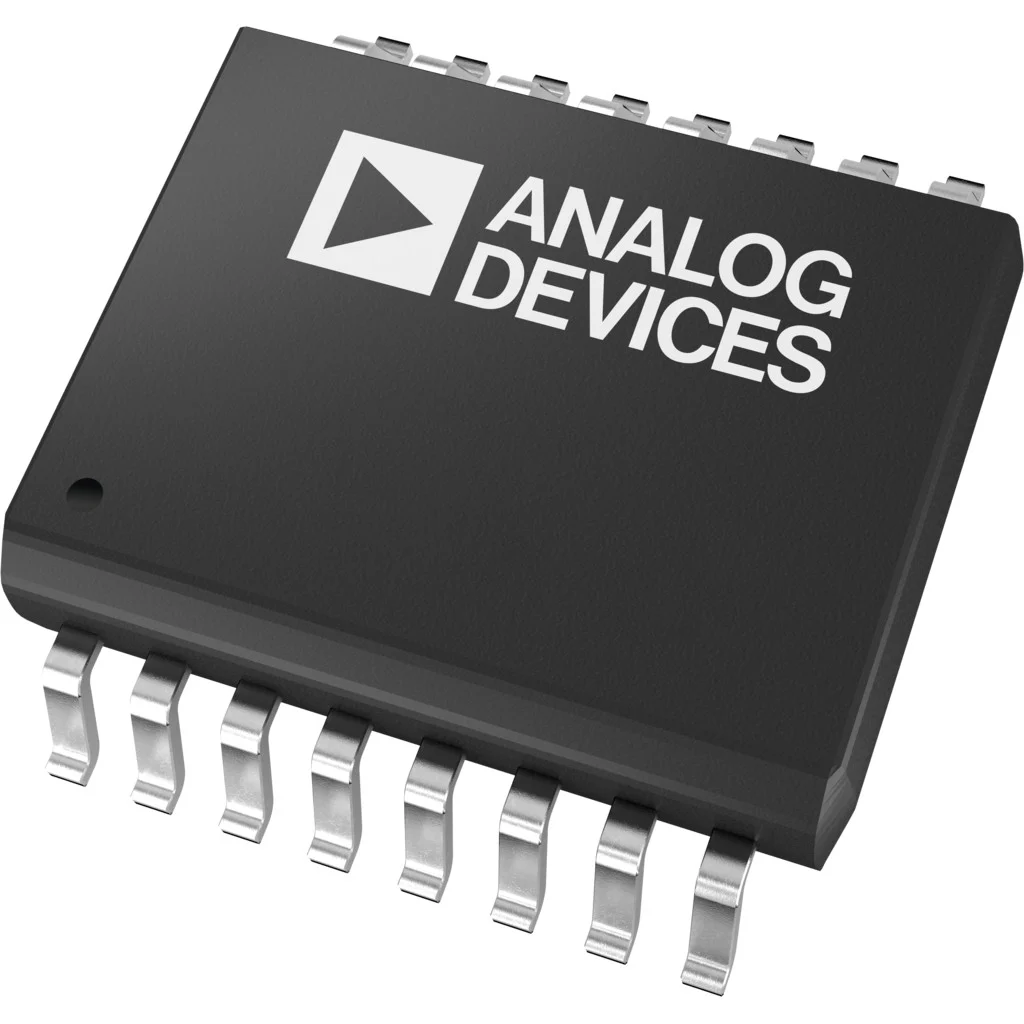 Analog Devices Inc./Maxim Integrated LTC1879EGN#TRUnknown | Integrated Circuits (ICs) | IC REG BUCK ADJ 1.2A 16SSOP |
 Analog Devices Inc./Maxim Integrated LTC2208CUP#TRUnknown | Integrated Circuits (ICs) | IC ADC 16BIT 130MSPS 64-QFN |
 Analog Devices Inc./Maxim Integrated ADP2108ACBZ-1.1-R7Obsolete | Integrated Circuits (ICs) | IC REG BUCK 1.1V 600MA 5WLCSP |
 Analog Devices Inc./Maxim Integrated EV1HMC832ALP6GObsolete | Development Boards Kits Programmers | EVAL BOARD FOR HMC832ALP6GE |
 Analog Devices Inc./Maxim Integrated LTC488ISWUnknown | Integrated Circuits (ICs) | IC LINE RCVR RS485 QUAD 16-SOIC |
 Analog Devices Inc./Maxim Integrated LTC6946IUFD-2Obsolete | Integrated Circuits (ICs) | IC CLK/FREQ SYNTH 28QFN |
 Analog Devices Inc./Maxim Integrated MAX5556ESA+TObsolete | Integrated Circuits (ICs) | IC DAC/AUDIO 16BIT 50K 8SOIC |
 Analog Devices Inc./Maxim Integrated EVAL-FLTR-LD-1RZUnknown | Unclassified | EVAL BRD FOR AD800 SERIES |
 Analog Devices Inc./Maxim Integrated | Development Boards Kits Programmers | BOARD EVAL FOR AD9963 |
 Analog Devices Inc./Maxim Integrated LTC1296CCSW#TRUnknown | Integrated Circuits (ICs) | IC DATA ACQ SYS 12BIT 5V 20SOIC |
| Series | Category | # Parts | Status | Description |
|---|---|---|---|---|
| Data Acquisition | 21 | Active | ||
| Integrated Circuits (ICs) | 3 | Active | ||
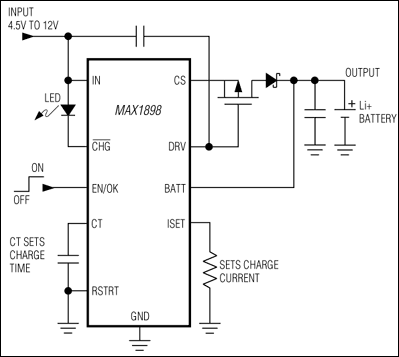
MAX1898Linear Charger for Single-Cell Li+ Battery | Power Management (PMIC) | 5 | Active | The MAX1898, with an external PNP or PMOS transistor, forms a complete charger for 1-cell lithium-ion (Li+) batteries. The MAX1898 provides accurate constant-current/constant-voltage charging. Battery regulation voltage accuracy is ±0.75% for optimum battery performance and cycle life. Charging current is user set, but is sensed internally so no external current-sense resistor is needed. The MAX1898 also provides outputs to monitor charge status, presence-of-input power source, and charge current. Additional features include shutdown, optional charge-cycle restart without input-power cycling, selectable charge termination safety timer, and low-current preconditioning for deeply discharged cells.The MAX1898 offers the maximum integration and functionality in the smallest, most basic application circuit possible. Very few external components are required.The MAX1898 offers two versions to safely charge all Li+ battery chemistries. The battery regulation voltage is 4.2V for the MAX1898EUB42 and 4.1V for the MAX1898EUB41. Both are available in a 10-pin ultra-thin µMAX package.ApplicationsCell PhonesCradle ChargersPDAsSelf-Charging Battery PacksSingle-Cell Li+ Powered Portables |
| Development Boards, Kits, Programmers | 14 | Active | ||
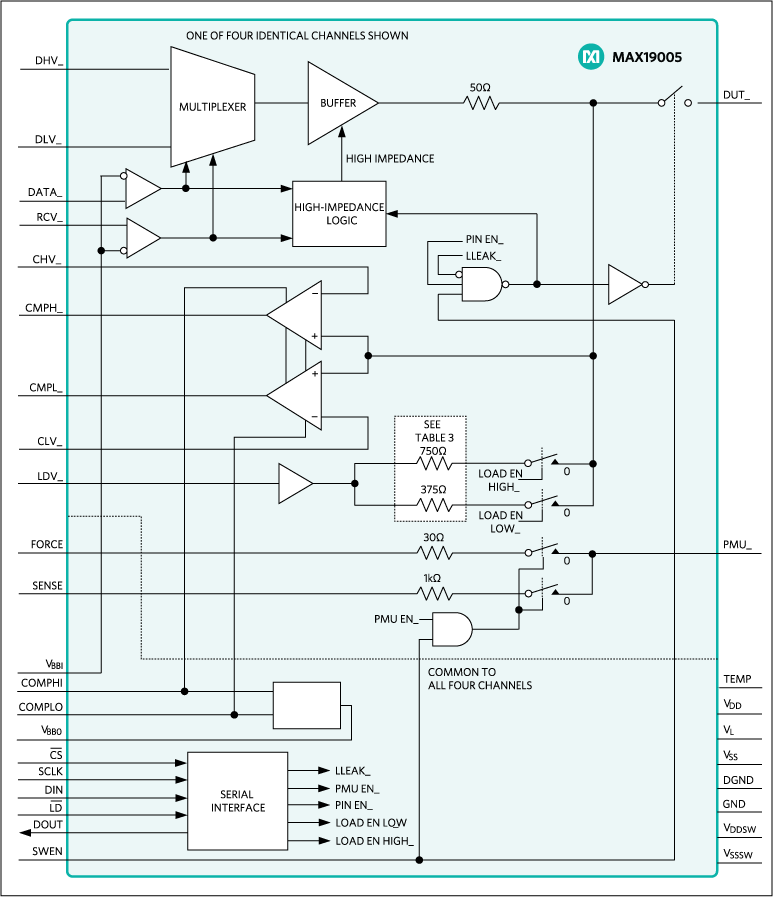
MAX19005Quad, Ultra-Low-Power, 200Mbps ATE Drivers/Comparators | Logic | 2 | Active | The MAX19005 four-channel, ultra-low-power, pin-electronics IC includes a two-level pin driver, a window comparator, a passive load, and force-and-sense Kelvin-switched parametric measurement unit (PMU) connections for each channel. The driver features a -1V to +5.2V voltage range, includes high-impedance modes, and is highly linear even at low voltage swings. The window comparator features 240MHz equivalent input bandwidth and programmable output voltage levels. The passive load provides pullup and pulldown voltages to the device-under-test (DUT).Low leakage and high impedance are operational configurations that are programmed through a 3-wire, low-voltage, CMOS-compatible serial interface. High-speed PMU switching is realized through dedicated digital control inputs.This device is available in an 80-pin, 12mm x 12mm body, 0.5mm pitch TQFP with an exposed 6mm × 6mm die pad on the bottom of the package for efficient heat removal. The device is specified to operate over the 0°C to +70°C commercial temperature range and features a die temperature monitor output.ApplicationsActive Burn-In SystemsDRAM Probe TestersLow-Cost Mixed-Signal/System-on-Chip (SoC) TestersNAND Flash TestersStructural Testers |
| Integrated Circuits (ICs) | 3 | Active | ||
| Integrated Circuits (ICs) | 1 | Obsolete | ||
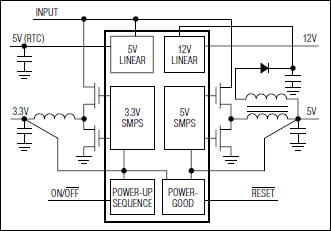
MAX1904500kHz Multi-Output, Low-Noise Power-Supply Controllers for Notebook Computers | Integrated Circuits (ICs) | 5 | Active | The MAX1901/MAX1902/MAX1904 are buck-topology, step-down, switch-mode, power-supply controllers that generate logic-supply voltages in battery-powered systems. These high-performance, dual/triple-output devices include on-board power-up sequencing, power-good signaling with delay, digital soft-start, secondary winding control, low dropout circuitry, internal frequency-compensation networks, and automatic bootstrapping.Up to 97% efficiency is achieved through synchronous rectification and Maxim's proprietary Idle Mode™ control scheme. Efficiency is greater than 80% over a 1000:1 load-current range, which extends battery life in system suspend or standby mode. Excellent dynamic response corrects output load transients within five clock cycles. Strong 1A on-board gate drivers ensure fast external N-channel MOSFET switching.These devices feature a logic-controlled and synchronizable, fixed-frequency, pulse-width modulation (PWM) operating mode. This reduces noise and RF interference in sensitive mobile communications and pen-entry applications. Asserting the active-low SKIP pin enables fixed-frequency mode, for lowest noise under all load conditions.The MAX1901/MAX1902/MAX1904 include two PWM regulators, adjustable from 2.5V to 5.5V with fixed 5.0V and 3.3V modes. All these devices include secondary feedback regulation, and the MAX1902 contains a 12V/120mA linear regulator. The MAX1901/MAX1904 include a secondary feedback input (SECFB), plus a control pin (STEER) that selects which PWM (3.3V or 5V) receives the secondary feedback signal. SECFB provides a method for adjusting the secondary winding voltage regulation point with an external resistor divider, and is intended to aid in creating auxiliary voltages other than fixed 12V.The MAX1901/MAX1902 contain internal output overvoltage and undervoltage protection features.ApplicationsDesktop CPU Local DC-DC ConvertersNotebook and Subnotebook ComputersPDAs and Mobile Communicators |
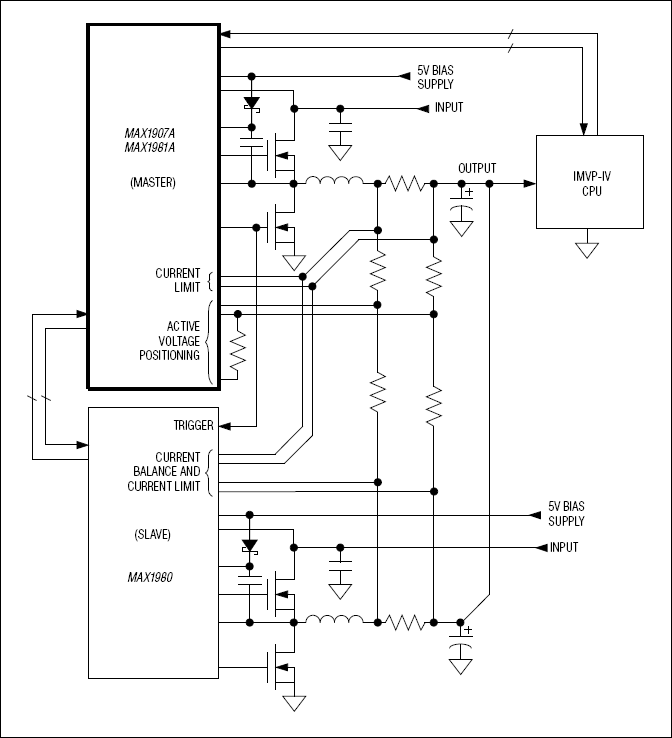
MAX1907AQuick-PWM Master Controllers for Voltage-Positioned CPU Core Power Supplies (IMVP-IV) | Integrated Circuits (ICs) | 2 | Unknown | The MAX1907A/MAX1981A are single-phase, Quick-PWM™ master controllers for IMVP-IV™ CPU core supplies. Multiphase operation is achieved using a Quick-PWM slave controller (MAX1980). Multiphase operation reduces input ripple current requirements and output voltage ripple while easing component selection and layout difficulties. The MAX1907A/MAX1981A include active voltage positioning with adjustable gain and offset, reducing power dissipation and bulk output capacitance requirements.The MAX1907A/MAX1981A are intended for two different notebook CPU core applications: either bucking down the battery directly, or 5V system supply to create the core voltage. The single-stage conversion method allows these devices to directly step down high-voltage batteries for the highest possible efficiency. Alternatively, two-stage conversion (stepping down the 5V system supply instead of the battery) at higher switching frequency provides the minimum possible physical size.The MAX1907A/MAX1981A meet the IMVP-IV specifications and include logic to interface with the CPU power good signals from the VCCPand VCCMCHrails within the system. The regulator features power-up sequencing, automatically ramping up to the Intel-specified boot voltage. The MAX1907A/MAX1981A feature independent four-level logic inputs for setting the boot voltage (B0–B2) and the suspend voltage (S0–S2).The MAX1907A/MAX1981A include output undervoltage protection, thermal protection, and system power-OK (SYSPOK) input/output. When any of these protection features detect a fault, the MAX1907A/MAX1981A immediately shut down. Additionally, the MAX1907A includes overvoltage protection.The MAX1907A/MAX1981A are available in a thin 40-pin QFN package.ApplicationsServers/Desktop ComputersVoltage-Positioned Step-Down Converters |
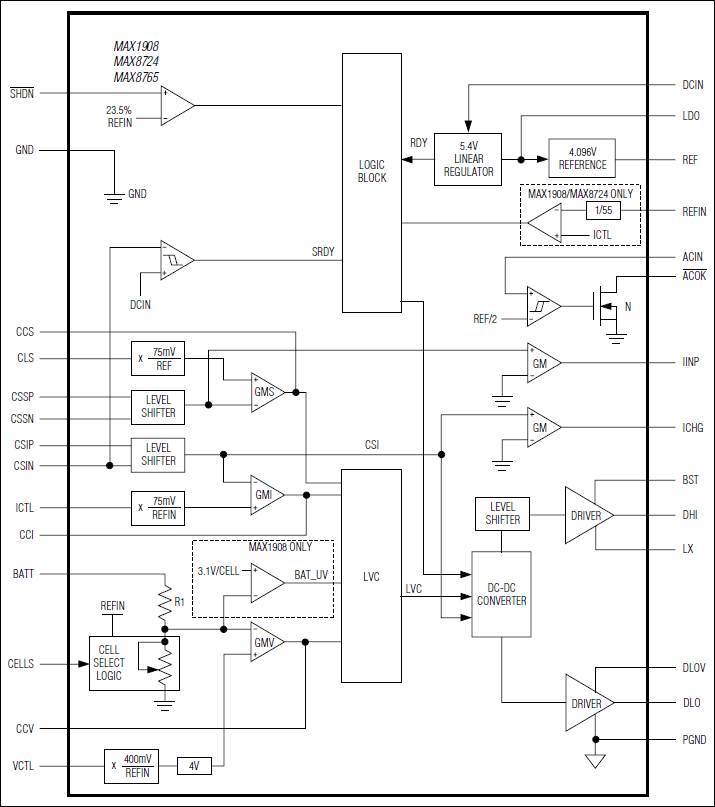
MAX1908Low-Cost Multichemistry Battery Chargers | Power Management (PMIC) | 3 | Active | The MAX1908/MAX8724/MAX8765/MAX8765A highly integrated, multichemistry battery-charger control ICs simplify the construction of accurate and efficient chargers. These devices use analog inputs to control charge current and voltage, and can be programmed by the host or hardwired. The MAX1908/MAX8724/MAX8765/MAX8765A achieve high efficiency using a buck topology with synchronous rectification.The MAX1908/MAX8724/MAX8765/MAX8765A feature input current limiting. This feature reduces battery charge current when the input current limit is reached to avoid overloading the AC adapter when supplying the load and the battery charger simultaneously. The MAX1908/MAX8724/MAX8765/MAX8765A provide outputs to monitor current drawn from the AC adapter (DC input source), battery-charging current, and the presence of an AC adapter. The MAX1908's conditioning charge feature provides 300mA to safely charge deeply discharged lithium-ion (Li+) battery packs.The MAX1908 includes a conditioning charge feature while the MAX8724/MAX8765/MAX8765A do not.The MAX1908/MAX8724/MAX8765/MAX8765A charge two to four series Li+ cells, providing more than 5A, and are available in a space-saving, 28-pin, thin QFN package (5mm x 5mm). An evaluation kit is available to speed designs.ApplicationsHandheld TerminalsNotebook and Subnotebook ComputersPersonal Digital Assistants (PDAs) |