TLC272BIP
ActiveDUAL, 16-V, 2-MHZ, 2-MV OFFSET VOLTAGE, IN TO V- OPERATIONAL AMPLIFIER
Deep-Dive with AI
Search across all available documentation for this part.
TLC272BIP
ActiveDUAL, 16-V, 2-MHZ, 2-MV OFFSET VOLTAGE, IN TO V- OPERATIONAL AMPLIFIER
Technical Specifications
Parameters and characteristics for this part
| Specification | TLC272BIP |
|---|---|
| Amplifier Type | CMOS |
| Current - Input Bias | 0.7 pA |
| Current - Output / Channel | 30 mA |
| Gain Bandwidth Product | 2.2 MHz |
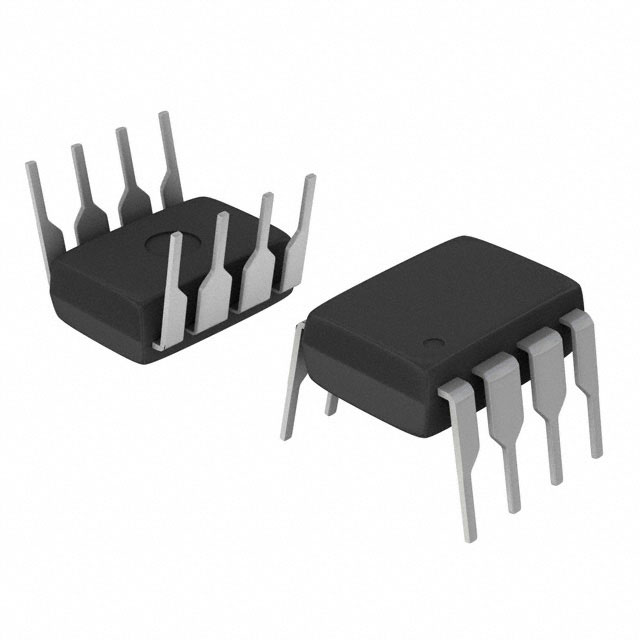
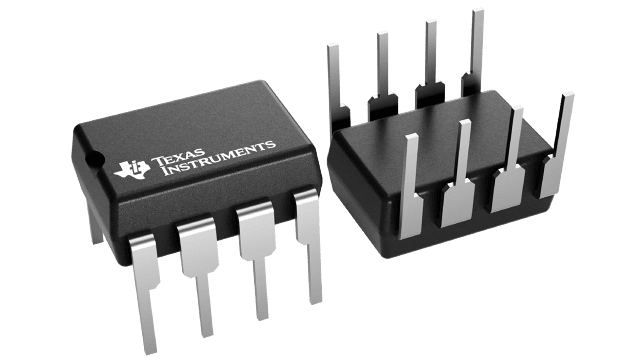
| Mounting Type | Through Hole |
| Number of Circuits | 2 |
| Operating Temperature [Max] | 85 °C |
| Operating Temperature [Min] | -40 °C |
| Package / Case | 0.3 in |
| Package / Case | 8-DIP |
| Package / Case | 7.62 mm |
| Slew Rate | 5.3 V/µs |
| Supplier Device Package | 8-PDIP |
| Voltage - Input Offset | 290 µV |
| Voltage - Supply Span (Max) [Max] | 16 V |
| Voltage - Supply Span (Min) [Min] | 4 V |
Pricing
Prices provided here are for design reference only. For realtime values and availability, please visit the distributors directly
| Distributor | Package | Quantity | $ | |
|---|---|---|---|---|
| Digikey | Tube | 1 | $ 1.73 | |
| 10 | $ 1.56 | |||
| 50 | $ 1.47 | |||
| 100 | $ 1.25 | |||
| 250 | $ 1.18 | |||
| 500 | $ 1.03 | |||
| 1000 | $ 0.85 | |||
| 2500 | $ 0.79 | |||
| 5000 | $ 0.76 | |||
| Texas Instruments | TUBE | 1 | $ 1.44 | |
| 100 | $ 1.11 | |||
| 250 | $ 0.81 | |||
| 1000 | $ 0.58 | |||
Description
General part information
TLC272B Series
The TLC272 and TLC277 precision dual operational amplifiers combine a wide range of input offset voltage grades with low offset voltage drift, high input impedance, low noise, and speeds approaching those of general-purpose BiFET devices.
These devices use Texas Instruments silicon-gate LinCMOS™ technology, which provides offset voltage stability far exceeding the stability available with conventional metal-gate processes.
The extremely high input impedance, low bias currents, and high slew rates make these cost-effective devices ideal for applications previously reserved for BiFET and NFET products. Four offset voltage grades are available (C-suffix and I-suffix types), ranging from the low-cost TLC272 (10 mV) to the high-precision TLC277 (500 uV). These advantages, in combination with good common-mode rejection and supply voltage rejection, make these devices a good choice for new state-of-the-art designs as well as for upgrading existing designs.