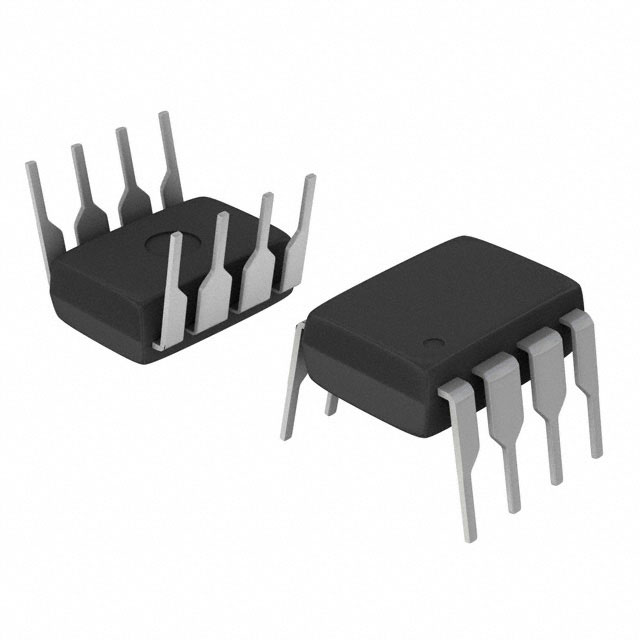
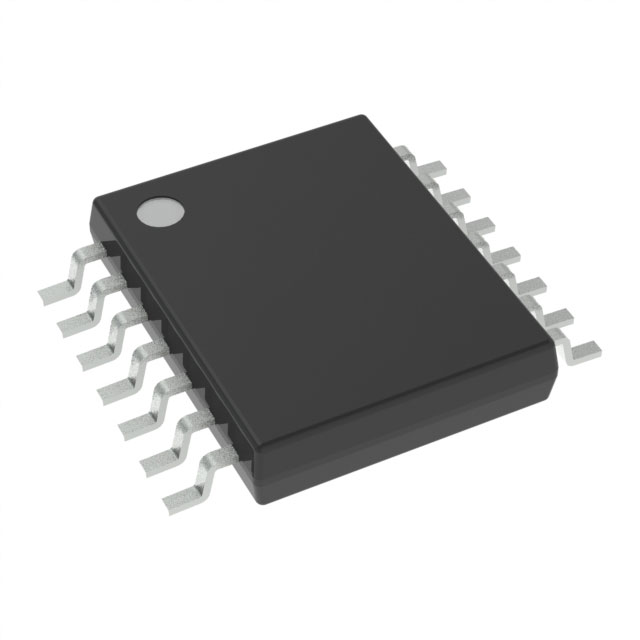
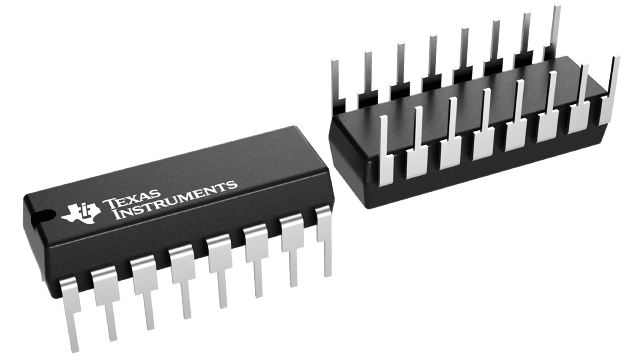
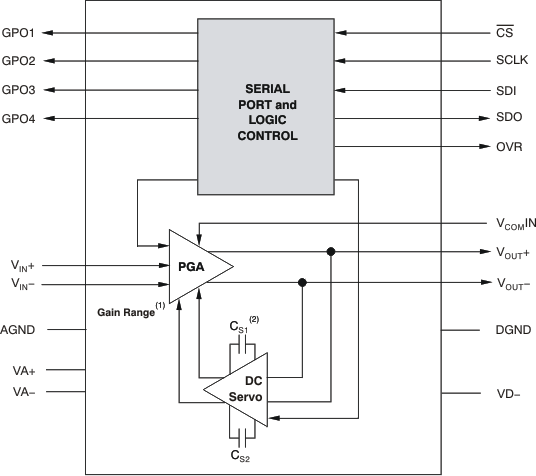
PGA2311+/-5V Stereo Audio Volume Control | Audio Special Purpose | 6 | Active | The PGA2311 device is a high-performance, stereo audio volume control designed for professional and high-end consumer audio systems. The PGA2311 uses an internal high-performance operational amplifier to yield low noise and distortion. The PGA2311 also provides the capability to drive 660-Ω loads directly without buffering. The 3-wire serial control interface allows for connection to a wide variety of host controllers, in addition to support for daisy-chaining of multiple PGA2311 devices.
The PGA2311 device is a high-performance, stereo audio volume control designed for professional and high-end consumer audio systems. The PGA2311 uses an internal high-performance operational amplifier to yield low noise and distortion. The PGA2311 also provides the capability to drive 660-Ω loads directly without buffering. The 3-wire serial control interface allows for connection to a wide variety of host controllers, in addition to support for daisy-chaining of multiple PGA2311 devices. |
PGA2320+/-15-V stereo audio volume control with low gain error (0.1) | Audio Special Purpose | 3 | Active | The PGA2320 is a high-performance, stereo audio volume control designed for professional and high-end consumer audio systems. The ability to operate from ±15V analog power supplies enables the PGA2320 to process input signals with large voltage swings, thereby preserving the dynamic range available in the overall signal path. Using high performance operational amplifier stages internal to the PGA2320 yields low noise and distortion, while providing the capability to drive 600loads directly without buffering. The three-wire serial control interface allows for connection to a wide variety of host controllers, in addition to support for daisy-chaining of multiple PGA2320 devices.
The PGA2320 is a high-performance, stereo audio volume control designed for professional and high-end consumer audio systems. The ability to operate from ±15V analog power supplies enables the PGA2320 to process input signals with large voltage swings, thereby preserving the dynamic range available in the overall signal path. Using high performance operational amplifier stages internal to the PGA2320 yields low noise and distortion, while providing the capability to drive 600loads directly without buffering. The three-wire serial control interface allows for connection to a wide variety of host controllers, in addition to support for daisy-chaining of multiple PGA2320 devices. |
| Evaluation Boards | 4 | Active | |
| Audio Amplifiers | 2 | Active | |
PGA280Zero Drift, HV Programmable Gain Amplifier | Amplifiers | 2 | Active | The PGA280 is a high-precision instrumentation amplifier with digitally-controllable gain and signal integrity test capability. This device offers low offset voltage, near-zero offset and gain drift, excellent linearity, and nearly no 1/f noise with superior common-mode and supply rejection to support high-resolution precision measurement. The 36-V supply capability and wide, high-impedance input range comply with requirements for universal signal measurement.
Special circuitry prevents inrush currents from multiplexer (MUX) switching. In addition, the input switch matrix enables easy reconfiguration and system-level diagnostics—overload conditions are indicated.
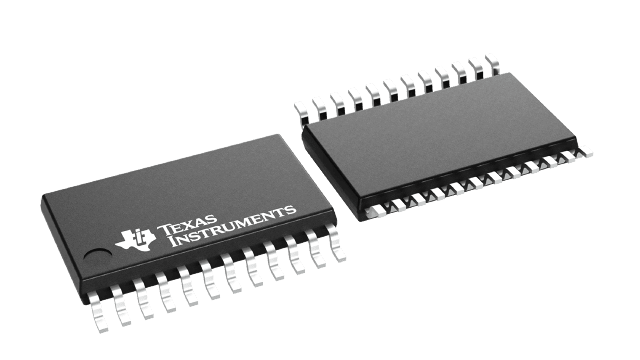
The configurable general-purpose input/output (GPIO) offers several control and communication features. The SPI can be expanded to communicate with more devices, supporting isolation with only four ISO couplers. The PGA280 is available in a TSSOP-24 package and is specified from –40°C to +105°C. For all available packages, see the package option addendum at the end of the data sheet.
The PGA280 is a high-precision instrumentation amplifier with digitally-controllable gain and signal integrity test capability. This device offers low offset voltage, near-zero offset and gain drift, excellent linearity, and nearly no 1/f noise with superior common-mode and supply rejection to support high-resolution precision measurement. The 36-V supply capability and wide, high-impedance input range comply with requirements for universal signal measurement.
Special circuitry prevents inrush currents from multiplexer (MUX) switching. In addition, the input switch matrix enables easy reconfiguration and system-level diagnostics—overload conditions are indicated.
The configurable general-purpose input/output (GPIO) offers several control and communication features. The SPI can be expanded to communicate with more devices, supporting isolation with only four ISO couplers. The PGA280 is available in a TSSOP-24 package and is specified from –40°C to +105°C. For all available packages, see the package option addendum at the end of the data sheet. |
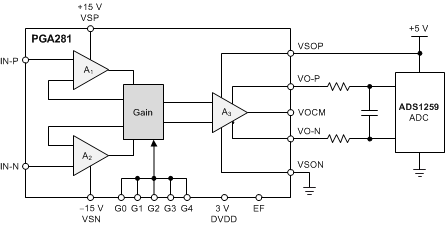
PGA281Zero-Drift, High Voltage Programmable Gain Amplifier | Instrumentation, Op Amps, Buffer Amps | 1 | Active | The PGA281 is a high-precision instrumentation amplifier with a digitally-controllable gain and signal-integrity test capability. This device uses proprietary autozeroing techniques to offer low offset voltage, near-zero offset and gain drift, excellent linearity, and nearly no 1/f noise.
The PGA281 is optimized to provide an excellent common-mode rejection of greater than 110 dB (G = 1) over a wide frequency range. Superior common-mode and supply rejection supports high-resolution, precise measurement. The 36-V supply capability and wide, high-impedance input range comply with requirements for universal signal measurement.
The PGA281 offers multiple internal gain options from ⅛ V/V (attenuation) to 176 V/V, making this a universal, high-performance, analog front-end suitable for a wide variety of applications. The fully differential, rail-to-rail output is designed to easily interface a wide range of input signals to the low-voltage domain of high-resolution analog-to-digital converters (ADCs).
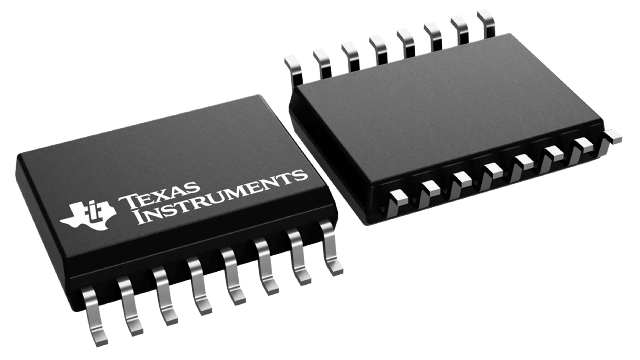
The PGA281 is available in a TSSOP-16 package and is specified over a temperature range of –40°C to +105°C.
The PGA281 is a high-precision instrumentation amplifier with a digitally-controllable gain and signal-integrity test capability. This device uses proprietary autozeroing techniques to offer low offset voltage, near-zero offset and gain drift, excellent linearity, and nearly no 1/f noise.
The PGA281 is optimized to provide an excellent common-mode rejection of greater than 110 dB (G = 1) over a wide frequency range. Superior common-mode and supply rejection supports high-resolution, precise measurement. The 36-V supply capability and wide, high-impedance input range comply with requirements for universal signal measurement.
The PGA281 offers multiple internal gain options from ⅛ V/V (attenuation) to 176 V/V, making this a universal, high-performance, analog front-end suitable for a wide variety of applications. The fully differential, rail-to-rail output is designed to easily interface a wide range of input signals to the low-voltage domain of high-resolution analog-to-digital converters (ADCs).
The PGA281 is available in a TSSOP-16 package and is specified over a temperature range of –40°C to +105°C. |
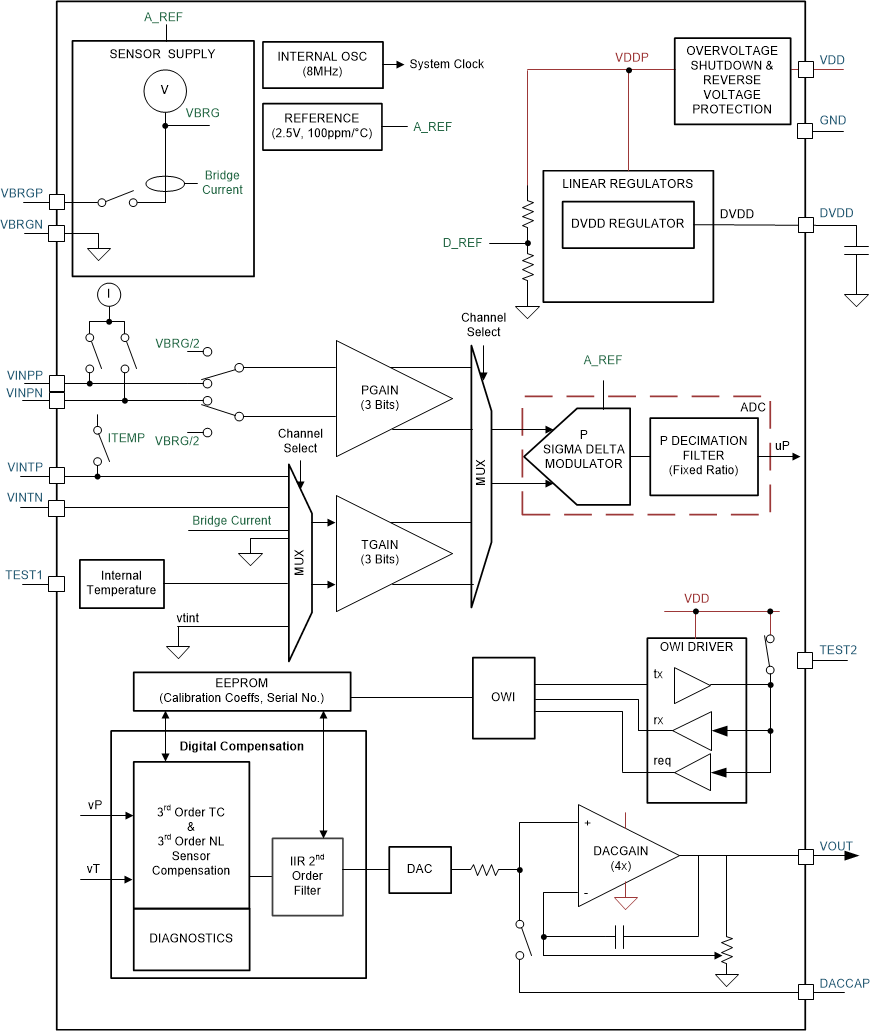
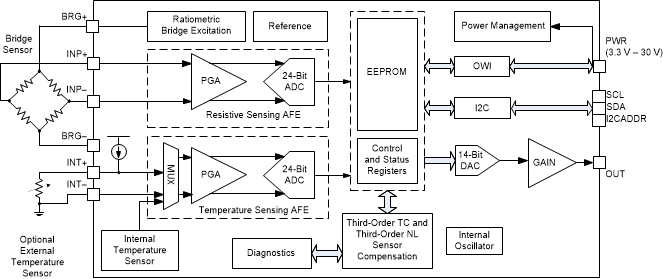
PGA300PGA300 Signal Conditioner and Transmitter for Pressure Sensors | Development Boards, Kits, Programmers | 3 | Active | The PGA300 provides an interface for piezoresistive and strain-gauge pressure-sense elements. The device is a full system-on-chip (SoC) solution that incorporates a programmable analog front-end (AFE), ADC, and digital signal processing that enable direct connection to the sense element. Further, the PGA300 includes integrated voltage regulators and an oscillator, thus minimizing the number of external components. The device achieves high accuracy by employing third-order temperature and nonlinearity compensation. External communication is achieved by using a one-wire serial interface (OWI) through the power-supply pin to simplify the system calibration process. An Integrated DAC supports absolute-voltage, ratiometric-voltage, and 4mA to 20mA current-loop outputs.
The PGA300 provides an interface for piezoresistive and strain-gauge pressure-sense elements. The device is a full system-on-chip (SoC) solution that incorporates a programmable analog front-end (AFE), ADC, and digital signal processing that enable direct connection to the sense element. Further, the PGA300 includes integrated voltage regulators and an oscillator, thus minimizing the number of external components. The device achieves high accuracy by employing third-order temperature and nonlinearity compensation. External communication is achieved by using a one-wire serial interface (OWI) through the power-supply pin to simplify the system calibration process. An Integrated DAC supports absolute-voltage, ratiometric-voltage, and 4mA to 20mA current-loop outputs. |
| Interface | 2 | Active | |
| Sensor and Detector Interfaces | 3 | Active | |
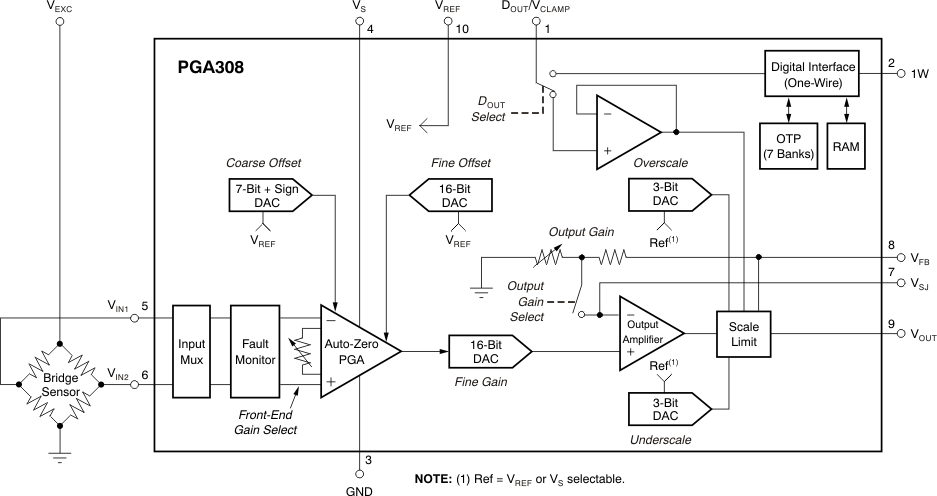
PGA308-DIESingle-Supply, Auto-Zero Sensor Amplifier with Programmable Gain and Offset. | Interface | 5 | Active | The PGA308 is a programmable analog sensor signal conditioner. The analog signal path amplifies the sensor signal and provides digital calibration for offset and gain. Calibration is done via the 1W pin, a digital One-Wire, UART-compatible interface. For three-terminal sensor modules, 1W may be connected to VOUTand the assembly programmed through the VOUTpin. Gain and offset calibration parameters are stored onboard in seven banks of one-time programmable (OTP) memory. The power-on reset (POR) OTP bank may be programmed a total of four times.
The all-analog signal path contains a 2×2 input multiplexer (mux) to allow electronic sensor lead swapping, a coarse offset adjust, an auto-zero programmable gain instrumentation amplifier (PGA), a fine gain adjust, a fine offset adjust, and a programmable gain output amplifier. Fault monitor circuitry detects and signals sensor burnout, overload, and system fault conditions. Over/under-scale limits provide additional means for system level diagnostics. The dual-use DOUT/VCLAMPpin can be used as a programmable digital output or as a VOUTover-voltage clamp.
For detailed application information, see the PGA308 User's Guide (SBOU069) available for download at www.ti.com.
The PGA308 is a programmable analog sensor signal conditioner. The analog signal path amplifies the sensor signal and provides digital calibration for offset and gain. Calibration is done via the 1W pin, a digital One-Wire, UART-compatible interface. For three-terminal sensor modules, 1W may be connected to VOUTand the assembly programmed through the VOUTpin. Gain and offset calibration parameters are stored onboard in seven banks of one-time programmable (OTP) memory. The power-on reset (POR) OTP bank may be programmed a total of four times.
The all-analog signal path contains a 2×2 input multiplexer (mux) to allow electronic sensor lead swapping, a coarse offset adjust, an auto-zero programmable gain instrumentation amplifier (PGA), a fine gain adjust, a fine offset adjust, and a programmable gain output amplifier. Fault monitor circuitry detects and signals sensor burnout, overload, and system fault conditions. Over/under-scale limits provide additional means for system level diagnostics. The dual-use DOUT/VCLAMPpin can be used as a programmable digital output or as a VOUTover-voltage clamp.
For detailed application information, see the PGA308 User's Guide (SBOU069) available for download at www.ti.com. |