| Integrated Circuits (ICs) | 2 | Obsolete | |
| Evaluation Boards | 3 | Obsolete | |
| Power Management - Specialized | 1 | Obsolete | |
LP5560programmable single LED driver with simple single wire control and small solution size | Evaluation Boards | 2 | Active | The LP5560 is a programmable LED driver that can generate variety of blinking sequences with up to three pulses of different length per sequence. Blinking sequences can be programmed through a single-wire interface. Programmable parameters include on and off times as well as rise and fall times. Default sequence is programmed into the LP5560 to enable the use of device in simple systems without programming capabilities.
Very low headroom voltage eliminates the need for a boost converter. Indicator LEDs can be driven directly from the battery. Small package size combined with zero external components minimizes the solution size.
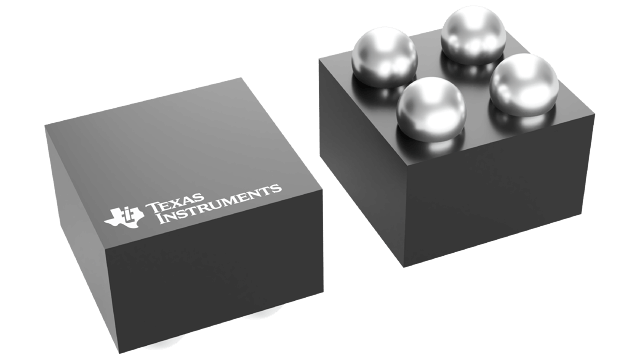
LP5560 is available in TI’s tiny 4-pin DSBGA package with 0.4-mm pitch.
The LP5560 is a programmable LED driver that can generate variety of blinking sequences with up to three pulses of different length per sequence. Blinking sequences can be programmed through a single-wire interface. Programmable parameters include on and off times as well as rise and fall times. Default sequence is programmed into the LP5560 to enable the use of device in simple systems without programming capabilities.
Very low headroom voltage eliminates the need for a boost converter. Indicator LEDs can be driven directly from the battery. Small package size combined with zero external components minimizes the solution size.
LP5560 is available in TI’s tiny 4-pin DSBGA package with 0.4-mm pitch. |
| Power Management (PMIC) | 2 | Active | |
LP5569Nine-channel I2C RGB LED driver with engine control and charge pump | Evaluation Boards | 3 | Active | The LP5569 device is a programmable, easy-to-use 9-channel I2C LED driver designed to produce lighting effects for various applications. The LED driver is equipped with an internal SRAM memory for user-programmed sequences and three programmable LED engines, which allow operation without processor control. Autonomous operation reduces system power consumption when the processor is put in sleep mode.
A high-efficiency charge pump enables the driving of LEDs with high VF, even with 2.5-V input voltage. The LP5569 LED driver maintains good efficiency over a wide operational voltage range by autonomously selecting the best charge-pump gain based on LED forward voltage requirements.
The LP5569 device enters power-save mode when LEDs are not active, lowering idle-current consumption considerably. A flexible digital interface allows the connection of up to eight LP5569 devices with a unique I2C slave address for each device in the same system, which supports synchronization of the lighting effects among all devices.
The LP5569 device is a programmable, easy-to-use 9-channel I2C LED driver designed to produce lighting effects for various applications. The LED driver is equipped with an internal SRAM memory for user-programmed sequences and three programmable LED engines, which allow operation without processor control. Autonomous operation reduces system power consumption when the processor is put in sleep mode.
A high-efficiency charge pump enables the driving of LEDs with high VF, even with 2.5-V input voltage. The LP5569 LED driver maintains good efficiency over a wide operational voltage range by autonomously selecting the best charge-pump gain based on LED forward voltage requirements.
The LP5569 device enters power-save mode when LEDs are not active, lowering idle-current consumption considerably. A flexible digital interface allows the connection of up to eight LP5569 devices with a unique I2C slave address for each device in the same system, which supports synchronization of the lighting effects among all devices. |
| LED Driver Evaluation Boards | 2 | Active | |
LP58104-channel RGBW LED driver with I2C and auto animation control | Integrated Circuits (ICs) | 6 | Active | The LP5810 is a 4-channel RGBW LED driver with autonomous animation engine control. The device has ultra-low normal operation current with 0.4mA (typical) when illuminate LEDs.
Both analog dimming and PWM dimming methods are adopted to achieve powerful dimming performance. The output current of each LED can be adjusted with 256 steps from 0.1mA to 25.5mA or 0.2mA to 51mA. The 8-bit PWM generator enables smooth and audible-noise-free dimming control for LED brightness.
The autonomous animation engine can significantly reduce the real-time loading of controller. Each LED can be configured through the related registers to realize vivid and fancy lighting effects. The device can generate 6MHz clock signal and use it for synchronizing the lighting effects among multiple devices.
The LP5810 is a 4-channel RGBW LED driver with autonomous animation engine control. The device has ultra-low normal operation current with 0.4mA (typical) when illuminate LEDs.
Both analog dimming and PWM dimming methods are adopted to achieve powerful dimming performance. The output current of each LED can be adjusted with 256 steps from 0.1mA to 25.5mA or 0.2mA to 51mA. The 8-bit PWM generator enables smooth and audible-noise-free dimming control for LED brightness.
The autonomous animation engine can significantly reduce the real-time loading of controller. Each LED can be configured through the related registers to realize vivid and fancy lighting effects. The device can generate 6MHz clock signal and use it for synchronizing the lighting effects among multiple devices. |
LP5811Synchronous boost 4-channel RGBW LED driver with I2C and auto animation control | Power Management (PMIC) | 3 | Active | The LP5811 is a synchronous boost 4-channel RGBW LED driver with autonomous animation engine control. The device is ideal to support battery-powered applications with 0.5V to 5.5V input voltage range, and it has ultra-low normal operation current with 0.4mA (typical) when illuminate LEDs.
The integrated synchronous boost converter maintains excellent efficiency and keeps the brightness of LEDs stable over a wide operating voltage range. Output voltage can be selected for different LED forward voltage from 3V to 5.5V with 0.1V step. The boost converter can power not only the LEDs driven by the device itself, but also other loads in the system. If the boost converter need to be bypassed, VOUT is used as the power supply input for the LED driver blocks.
Both analog dimming and PWM dimming methods are adopted to achieve powerful dimming performance. The output current of each LED can be adjusted with 256 steps from 0.1mA to 25.5mA or 0.2mA to 51mA. The 8-bit PWM generator enables smooth and audible-noise-free dimming control for LED brightness.
The autonomous animation engine can significantly reduce the real-time loading of controller. Each LED can be configured through the related registers to realize vivid and fancy lighting effects. The device can generate 6MHz clock signal and use it for synchronizing the lighting effects among multiple devices.
The LP5811 is a synchronous boost 4-channel RGBW LED driver with autonomous animation engine control. The device is ideal to support battery-powered applications with 0.5V to 5.5V input voltage range, and it has ultra-low normal operation current with 0.4mA (typical) when illuminate LEDs.
The integrated synchronous boost converter maintains excellent efficiency and keeps the brightness of LEDs stable over a wide operating voltage range. Output voltage can be selected for different LED forward voltage from 3V to 5.5V with 0.1V step. The boost converter can power not only the LEDs driven by the device itself, but also other loads in the system. If the boost converter need to be bypassed, VOUT is used as the power supply input for the LED driver blocks.
Both analog dimming and PWM dimming methods are adopted to achieve powerful dimming performance. The output current of each LED can be adjusted with 256 steps from 0.1mA to 25.5mA or 0.2mA to 51mA. The 8-bit PWM generator enables smooth and audible-noise-free dimming control for LED brightness.
The autonomous animation engine can significantly reduce the real-time loading of controller. Each LED can be configured through the related registers to realize vivid and fancy lighting effects. The device can generate 6MHz clock signal and use it for synchronizing the lighting effects among multiple devices. |
LP58124 x 3 matrix RGB LED driver with I2C and auto animation control | Power Management (PMIC) | 7 | Active | The LP5812 is a 4 × 3 matrix RGB LED driver with autonomous animation engine control. The device has ultra-low normal operation current with 0.4mA (typical) when illuminate LEDs.
The time-cross-multiplexing (TCM) structure is adopted, which uses 4 output pins to control 12 LED dots individually. Both high-side scan switch and low-side current sink are contained in one output. The total solution size are minimized for space limited system.
The autonomous animation engine can significantly reduce the real-time loading of controller. Each LED can be configured through the related registers to realize vivid and fancy lighting effects. The device can generate 6MHz clock signal and use it for synchronizing the lighting effects among multiple devices.
The LP5812 is a 4 × 3 matrix RGB LED driver with autonomous animation engine control. The device has ultra-low normal operation current with 0.4mA (typical) when illuminate LEDs.
The time-cross-multiplexing (TCM) structure is adopted, which uses 4 output pins to control 12 LED dots individually. Both high-side scan switch and low-side current sink are contained in one output. The total solution size are minimized for space limited system.
The autonomous animation engine can significantly reduce the real-time loading of controller. Each LED can be configured through the related registers to realize vivid and fancy lighting effects. The device can generate 6MHz clock signal and use it for synchronizing the lighting effects among multiple devices. |