HD3SS2125.4-Gbps DisplayPort 1.2a 1-to-2 / 2-to-1 differential mux support AUX switching | Integrated Circuits (ICs) | 2 | Active | The HD3SS212 is a high-speed passive switch capable of switching two full DisplayPort 4 lane ports from one of two sources to one target location in an application. For DisplayPort applications that HD3SS212 also supports switching of the Auxiliary (AUX) and Hot Plug Detect (HPD) signals. HPD path is a buffer which requires a 125kΩ pull-down resistor on the HPDC line.
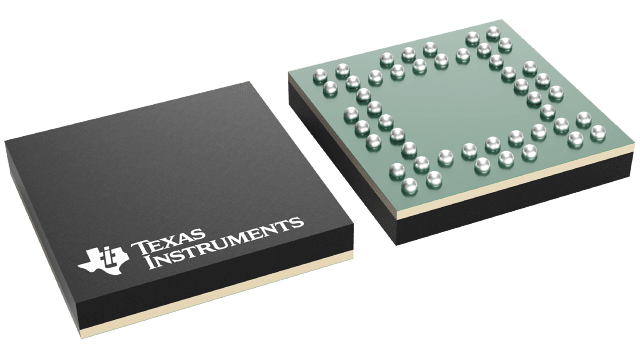
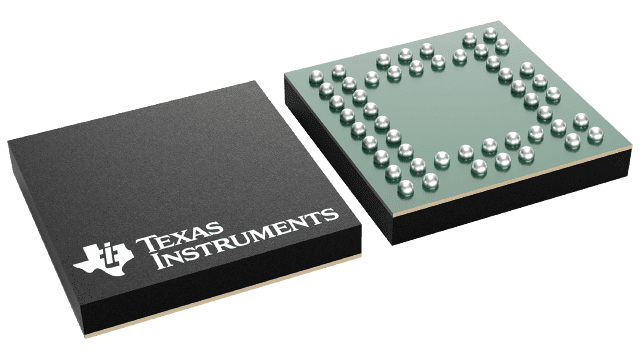
A typical application would be a mother board that includes two GPUs that need to drive one DisplayPort sink. The GPU is selected by the Dx_SEL pin. The HD3SS212 is offered in a 48-ball bfBGA package and specified to operate from a single supply voltage of 3.3V over full industrial temperature range of –40°C to 105°C.
The HD3SS212 is a high-speed passive switch capable of switching two full DisplayPort 4 lane ports from one of two sources to one target location in an application. For DisplayPort applications that HD3SS212 also supports switching of the Auxiliary (AUX) and Hot Plug Detect (HPD) signals. HPD path is a buffer which requires a 125kΩ pull-down resistor on the HPDC line.
A typical application would be a mother board that includes two GPUs that need to drive one DisplayPort sink. The GPU is selected by the Dx_SEL pin. The HD3SS212 is offered in a 48-ball bfBGA package and specified to operate from a single supply voltage of 3.3V over full industrial temperature range of –40°C to 105°C. |
| Development Boards, Kits, Programmers | 2 | Active | |
| Interface | 3 | Active | |
HD3SS2156-Gbps HDMI 2.0/5.4-Gbps DisplayPort 1.2a 1-to-2 /2-to-1 differential mux supports DDC/AUX switching | Development Boards, Kits, Programmers | 10 | Active | HD3SS215 is a high-speed wide common mode passive switch capable of supporting DisplayPort HBR2 and high definition multimedia interface (HDMI) applications requiring 4k2k 60Hz refresh rates. The HD3SS215 can be configured to support two sources to one sink or one source to two sinks. To support these video standards the HD3SS215 also switches the display data channel (DDC) and hot plug detect (HPD) signals for HDMI or digital video interface (DVI) applications. It also switches the auxiliary (AUX) and hot plug detect (HPD) signals for DisplayPort applications. The flexibility the HD3SS215 provides by supporting both wide common mode and AC or DC coupled links makes it ideal for many applications.
HD3SS215 is a high-speed wide common mode passive switch capable of supporting DisplayPort HBR2 and high definition multimedia interface (HDMI) applications requiring 4k2k 60Hz refresh rates. The HD3SS215 can be configured to support two sources to one sink or one source to two sinks. To support these video standards the HD3SS215 also switches the display data channel (DDC) and hot plug detect (HPD) signals for HDMI or digital video interface (DVI) applications. It also switches the auxiliary (AUX) and hot plug detect (HPD) signals for DisplayPort applications. The flexibility the HD3SS215 provides by supporting both wide common mode and AC or DC coupled links makes it ideal for many applications. |
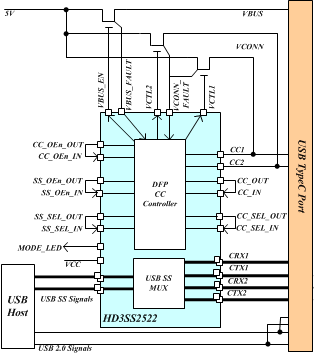
HD3SS252210Gbps USB 3.1 Type-C MUX with DFP Controller | Analog Switches - Special Purpose | 1 | Active | HD3SS2522 is a 2:1 USB mux with Configuration Channel (CC) logic with Downstream Facing Port (DFP) support. The HD3SS2522 presents itself as a DFP according to the USB Type-C Spec. The CC logic block monitors the CC1 and CC2 pins voltages to determine when a USB port has been attached. Once a USB port has been attached, the CC logic also determines the orientation of the cable and configures the USB SS mux accordingly.
The HD3SS2522 provides an VBUS_EN signal to control legacy power switch to provide 5 V to VBUS. The device also provides control signals needed to support 5 V VCONN sourcing for ecosystems implementing USB Type-C.
Excellent dynamic characteristics of the device allow high speed switching with minimum attenuation to the signal eye diagram and little added jitter. The device also has low current consumption in Standby mode.
HD3SS2522 is a 2:1 USB mux with Configuration Channel (CC) logic with Downstream Facing Port (DFP) support. The HD3SS2522 presents itself as a DFP according to the USB Type-C Spec. The CC logic block monitors the CC1 and CC2 pins voltages to determine when a USB port has been attached. Once a USB port has been attached, the CC logic also determines the orientation of the cable and configures the USB SS mux accordingly.
The HD3SS2522 provides an VBUS_EN signal to control legacy power switch to provide 5 V to VBUS. The device also provides control signals needed to support 5 V VCONN sourcing for ecosystems implementing USB Type-C.
Excellent dynamic characteristics of the device allow high speed switching with minimum attenuation to the signal eye diagram and little added jitter. The device also has low current consumption in Standby mode. |
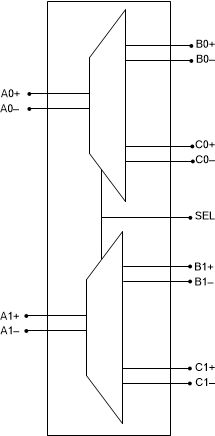
HD3SS32022-channel 10-Gbps 2:1/1:2 USB 3.1 differential mux/demux | Analog Switches - Special Purpose | 3 | Active | The HD3SS3202 is a high-speed bidirectional passive switch in mux or demux configurations suited for USB Type-C™ applications that support USB 3.1 Gen 1 and Gen 2 data rates. Based on control pin SEL, the device supplies switching on differential channels between Port B or Port C to Port A.
The HD3SS3202 is a generic analog differential passive switch. It works with any high-speed interface application that requires a common mode voltage range of 0 to 2 V, and requires a differential signaling with differential amplitude at a maximum of 1800 mVpp. The device has adaptive tracking that makes sure the channel stays unchanged for the full common mode voltage range.
The device allows high-speed switching with minimum attenuation to the signal eye diagram with little added jitter. It uses < 1.65 mW (typical) of power when in operation. It has a shutdown mode that is used by the OEn pin resulting < .02 µW (typical).
The HD3SS3202 is a high-speed bidirectional passive switch in mux or demux configurations suited for USB Type-C™ applications that support USB 3.1 Gen 1 and Gen 2 data rates. Based on control pin SEL, the device supplies switching on differential channels between Port B or Port C to Port A.
The HD3SS3202 is a generic analog differential passive switch. It works with any high-speed interface application that requires a common mode voltage range of 0 to 2 V, and requires a differential signaling with differential amplitude at a maximum of 1800 mVpp. The device has adaptive tracking that makes sure the channel stays unchanged for the full common mode voltage range.
The device allows high-speed switching with minimum attenuation to the signal eye diagram with little added jitter. It uses < 1.65 mW (typical) of power when in operation. It has a shutdown mode that is used by the OEn pin resulting < .02 µW (typical). |
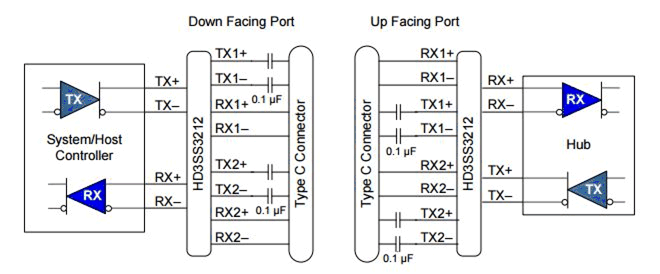
HD3SS32122-channel 10-Gbps 2:1/1:2 USB 3.1 differential mux/demux | Development Boards, Kits, Programmers | 5 | Active | The HD3SS3212 is a high-speed bidirectional passive switch in mux or demux configurations suited for USB Type-C™ application supporting USB 3.1 Gen 1 and Gen 2 data rates. Based on control pin SEL, the device provides switching on differential channels between Port B or Port C to Port A.
The HD3SS3212 is a generic analog differential passive switch that can work for any high-speed interface applications requiring a common mode voltage range of 0 to 2 V and differential signaling with differential amplitude up to 1800 mVpp. It employs adaptive tracking that ensures the channel remains unchanged for the entire common mode voltage range.
Excellent dynamic characteristics of the device allow high-speed switching with minimum attenuation to the signal eye diagram with very little added jitter. It consumes <2 mW of power when operational and has a shutdown mode exercisable by OEn pin resulting <20 µW.
The HD3SS3212 is a high-speed bidirectional passive switch in mux or demux configurations suited for USB Type-C™ application supporting USB 3.1 Gen 1 and Gen 2 data rates. Based on control pin SEL, the device provides switching on differential channels between Port B or Port C to Port A.
The HD3SS3212 is a generic analog differential passive switch that can work for any high-speed interface applications requiring a common mode voltage range of 0 to 2 V and differential signaling with differential amplitude up to 1800 mVpp. It employs adaptive tracking that ensures the channel remains unchanged for the entire common mode voltage range.
Excellent dynamic characteristics of the device allow high-speed switching with minimum attenuation to the signal eye diagram with very little added jitter. It consumes <2 mW of power when operational and has a shutdown mode exercisable by OEn pin resulting <20 µW. |
HD3SS322010-Gbps USB 3.1 Type-C 2:1 mux with DRP Controller | Power Management - Specialized | 4 | Active | HD3SS3220 is a USB SuperSpeed (SS) 2:1 mux with DRP port controller. The device provides Channel Configuration (CC) logic and 5V VCONN sourcing for ecosystems implementing USB Type-C. The HD3SS3220 can be configured as a Downstream Facing Port (DFP), Upstream Facing Port (UFP) or a Dual Role Port (DRP) making it ideal for any application.
The HD3SS3220, in DRP mode, alternates presenting itself as a DFP or UFP according to the Type-C specifications. The CC logic block monitors the CC1 and CC2 pins for pull-up or pull-down resistances to determine when a USB port has been attached and its port role. Once a USB port has been attached, the CC logic also determines the orientation of the cable and configures the USB SS mux accordingly. Finally, CC logic advertises or detects Type-C current mode – Default, Mid, or High in DFP and UFP modes respectively.
Excellent dynamic characteristics of the integrated mux allow switching with minimum attenuation to the SS signal eye diagram and very little added jitter. The device’s switch paths deploy adaptive common mode voltage tracking resulting identical channel despite different common mode voltage for RX and TX channels.
HD3SS3220 is a USB SuperSpeed (SS) 2:1 mux with DRP port controller. The device provides Channel Configuration (CC) logic and 5V VCONN sourcing for ecosystems implementing USB Type-C. The HD3SS3220 can be configured as a Downstream Facing Port (DFP), Upstream Facing Port (UFP) or a Dual Role Port (DRP) making it ideal for any application.
The HD3SS3220, in DRP mode, alternates presenting itself as a DFP or UFP according to the Type-C specifications. The CC logic block monitors the CC1 and CC2 pins for pull-up or pull-down resistances to determine when a USB port has been attached and its port role. Once a USB port has been attached, the CC logic also determines the orientation of the cable and configures the USB SS mux accordingly. Finally, CC logic advertises or detects Type-C current mode – Default, Mid, or High in DFP and UFP modes respectively.
Excellent dynamic characteristics of the integrated mux allow switching with minimum attenuation to the SS signal eye diagram and very little added jitter. The device’s switch paths deploy adaptive common mode voltage tracking resulting identical channel despite different common mode voltage for RX and TX channels. |
HD3SS3411-Q13.3-V automotive PCI Express 3.0 1-channel analog differential switch | Evaluation and Demonstration Boards and Kits | 3 | Active | The HD3SS3411-Q1 is a high-speed bi-directional passive switch in multiplexer or demultiplexer configurations. Based on control pin SEL, the device provides switching of differential channels between Port B to Port A or Port C to Port A.
The HD3SS3411-Q1 is a generic analog differential passive switch that can work for any high speed interface application as long as it is biased at a common-mode voltage range of 0V to 2V and has differential signaling with differential amplitude up to 1800mVpp. The device offers adaptive tracking that allows users to keep the channel unchanged for the entire common-mode voltage range.
Excellent dynamic characteristics of the device allow high speed switching with minimum attenuation to the signal eye diagram with little added jitter. The HD3SS3411-Q1 consumes < 2mW of power when operational and has a shutdown mode exercisable by OEn pin resulting < 2µW.
The HD3SS3411-Q1 is a high-speed bi-directional passive switch in multiplexer or demultiplexer configurations. Based on control pin SEL, the device provides switching of differential channels between Port B to Port A or Port C to Port A.
The HD3SS3411-Q1 is a generic analog differential passive switch that can work for any high speed interface application as long as it is biased at a common-mode voltage range of 0V to 2V and has differential signaling with differential amplitude up to 1800mVpp. The device offers adaptive tracking that allows users to keep the channel unchanged for the entire common-mode voltage range.
Excellent dynamic characteristics of the device allow high speed switching with minimum attenuation to the signal eye diagram with little added jitter. The HD3SS3411-Q1 consumes < 2mW of power when operational and has a shutdown mode exercisable by OEn pin resulting < 2µW. |
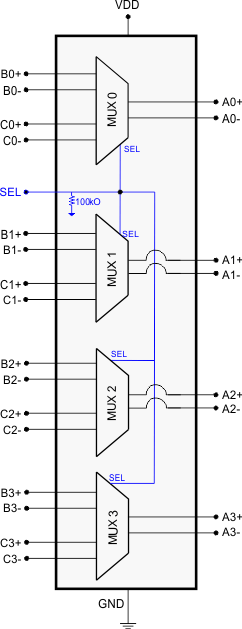
HD3SS3412A4-channel high-performance differential switch | Integrated Circuits (ICs) | 4 | Active | The HD3SS3412A device is a high-speed passive switch capable of switching four differential channels, including applications such as two full PCI Express x1 lanes from one source to one of two target locations in a PC or server application. With its bidirectional capability, the HD3SS3412A also supports applications that allow connections between one target and two source devices, such as a shared peripheral between two platforms. The HD3SS3412A has a single control line (SEL pin) which can be used to control the signal path between Port A and either Port B or Port C.
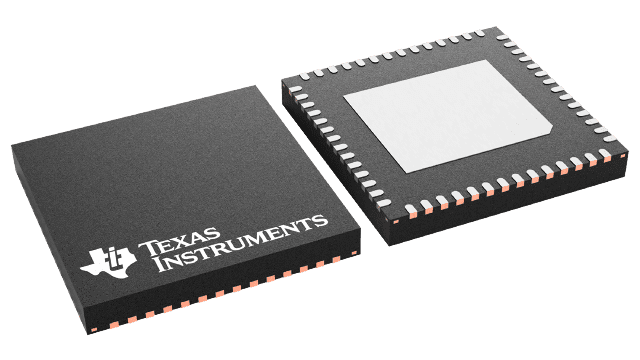
The HD3SS3412A is offered in an industry standard 42-pin WQFN package available in a common footprint shared by several other vendors. The device is specified to operate from a single supply voltage of 3.3 V over the full temperature range of 0°C to 70ºC.
The HD3SS3412A is a generic 4-CH high-speed MUX/de-MUX type of switch that can be used for routing high-speed signals between two different locations on a circuit board. Although it was designed specifically to address PCI Express Gen III applications, the HD3SS3412A will also support several other high-speed data protocols with a differential amplitude of <1800 mVpp and a common-mode voltage of < 2.0 V, as with USB 3.0 and DisplayPort 1.2. The device’s one select input (SEL) pin can easily be controlled by an available GPIO pin within a system or from a microcontroller.
The HD3SS3412A device is a high-speed passive switch capable of switching four differential channels, including applications such as two full PCI Express x1 lanes from one source to one of two target locations in a PC or server application. With its bidirectional capability, the HD3SS3412A also supports applications that allow connections between one target and two source devices, such as a shared peripheral between two platforms. The HD3SS3412A has a single control line (SEL pin) which can be used to control the signal path between Port A and either Port B or Port C.
The HD3SS3412A is offered in an industry standard 42-pin WQFN package available in a common footprint shared by several other vendors. The device is specified to operate from a single supply voltage of 3.3 V over the full temperature range of 0°C to 70ºC.
The HD3SS3412A is a generic 4-CH high-speed MUX/de-MUX type of switch that can be used for routing high-speed signals between two different locations on a circuit board. Although it was designed specifically to address PCI Express Gen III applications, the HD3SS3412A will also support several other high-speed data protocols with a differential amplitude of <1800 mVpp and a common-mode voltage of < 2.0 V, as with USB 3.0 and DisplayPort 1.2. The device’s one select input (SEL) pin can easily be controlled by an available GPIO pin within a system or from a microcontroller. |