T
Texas Instruments
| Series | Category | # Parts | Status | Description |
|---|---|---|---|---|
| Part | Spec A | Spec B | Spec C | Spec D | Description |
|---|---|---|---|---|---|



| Series | Category | # Parts | Status | Description |
|---|---|---|---|---|
| Part | Spec A | Spec B | Spec C | Spec D | Description |
|---|---|---|---|---|---|
| Part | Category | Description |
|---|---|---|
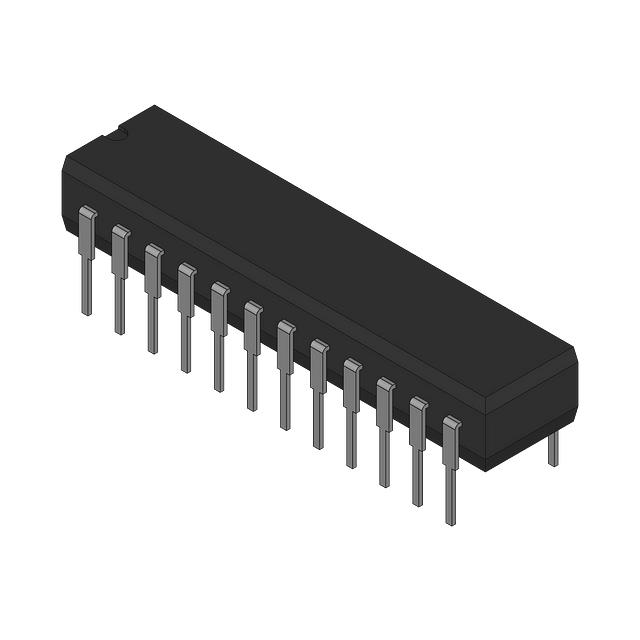 Texas Instruments | Integrated Circuits (ICs) | BUS DRIVER, BCT/FBT SERIES |
 Texas Instruments | Integrated Circuits (ICs) | 12BIT 3.3V~3.6V 210MHZ PARALLEL VQFN-48-EP(7X7) ANALOG TO DIGITAL CONVERTERS (ADC) ROHS |
Texas Instruments | Integrated Circuits (ICs) | TMX320DRE311 179PIN UBGA 200MHZ |
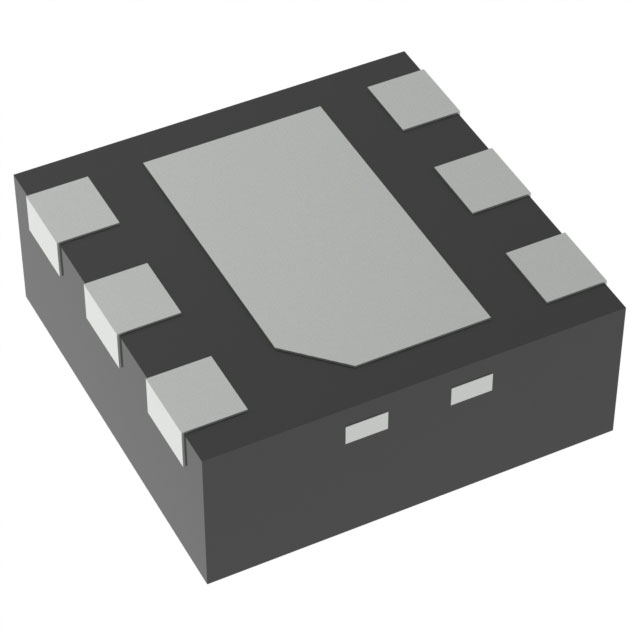 Texas Instruments TPS61040DRVTG4Unknown | Integrated Circuits (ICs) | IC LED DRV RGLTR PWM 350MA 6WSON |
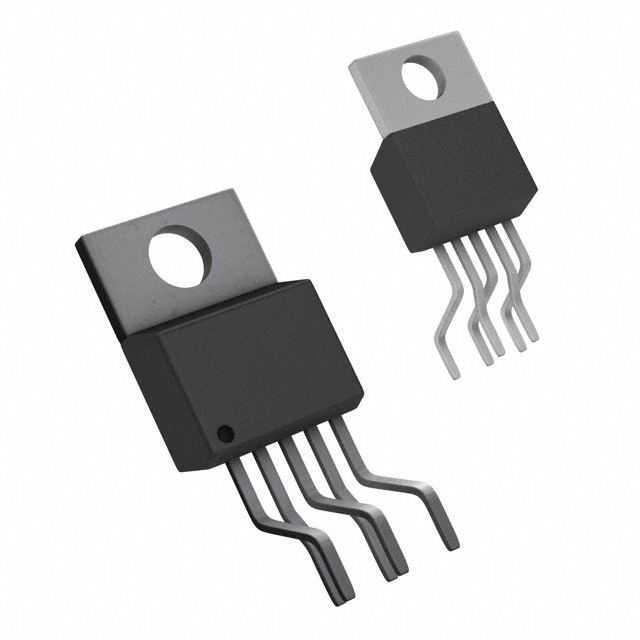 Texas Instruments LP3876ET-2.5Obsolete | Integrated Circuits (ICs) | IC REG LINEAR 2.5V 3A TO220-5 |
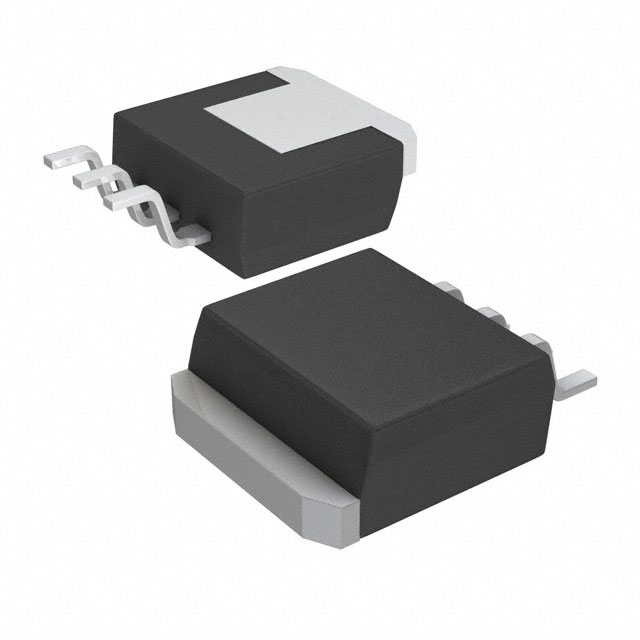 Texas Instruments LMS1585ACSX-ADJObsolete | Integrated Circuits (ICs) | IC REG LIN POS ADJ 5A DDPAK |
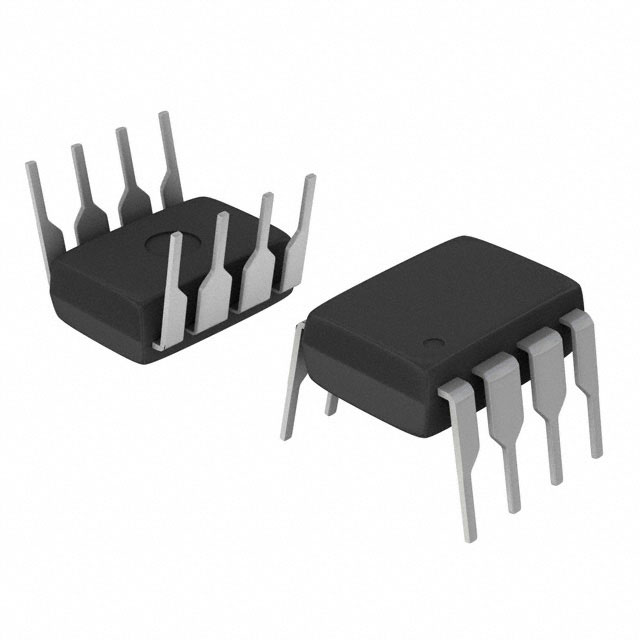 Texas Instruments INA111APG4Obsolete | Integrated Circuits (ICs) | IC INST AMP 1 CIRCUIT 8DIP |
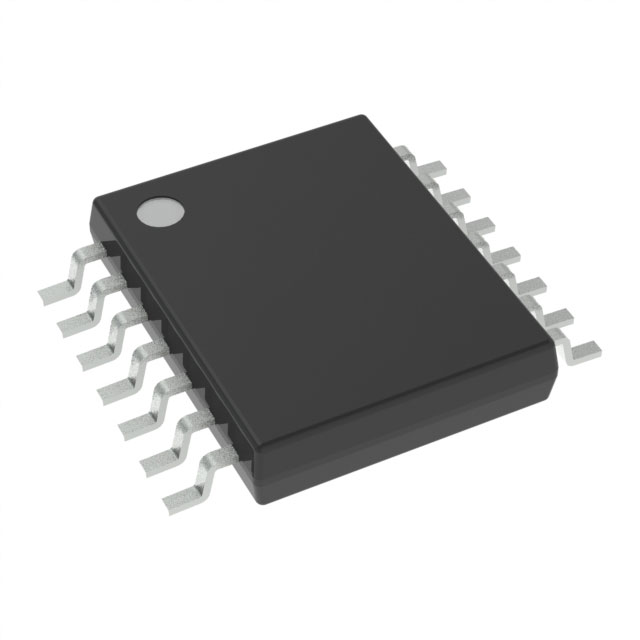 Texas Instruments | Integrated Circuits (ICs) | AUTOMOTIVE, QUAD 36V 1.2MHZ OPERATIONAL AMPLIFIER |
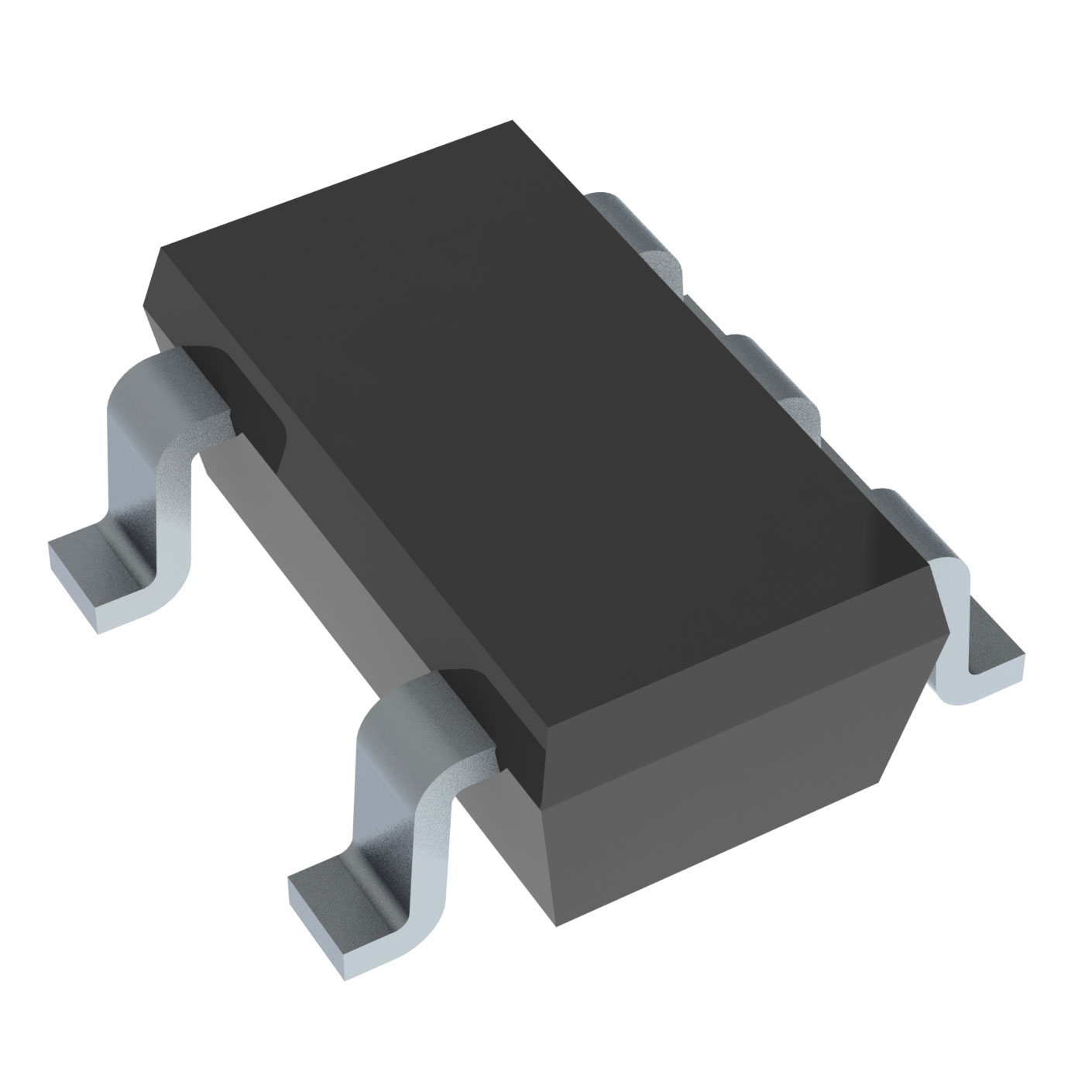 Texas Instruments OPA340NA/3KG4Unknown | Integrated Circuits (ICs) | IC OPAMP GP 1 CIRCUIT SOT23-5 |
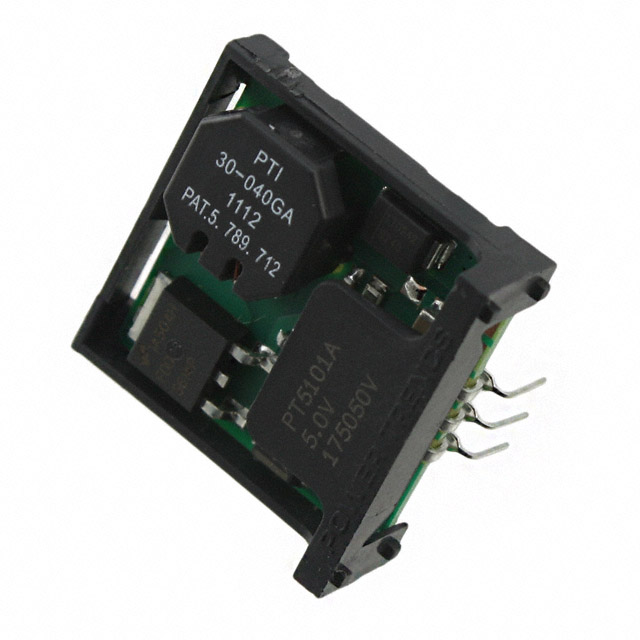 Texas Instruments PT5112AObsolete | Power Supplies - Board Mount | DC DC CONVERTER 8V 8W |
| Series | Category | # Parts | Status | Description |
|---|---|---|---|---|
DP83TD510EIEEE 802.3cg 10BASE-T1L Ethernet PHY | Integrated Circuits (ICs) | 1 | Active | The DP83TD510E is an ultra-low power Ethernet physical layer transceiver compliant with the IEEE 802.3cg 10Base-T1L specification. The PHY has very low noise coupled receiver architecture enabling long cable reach and very low power dissipation. The DP83TD510E has external MDI termination to support intrinsic safety requirements. It interfaces with MAC layer through MII, Reduced MII (RMII) , RGMII, and RMII low power 5-MHz master mode. It also supports RMII back-to-back mode for applications that require cable reach extension beyond 2000 meters. It supports a 25MHz reference clock output to clock other modules on the system. The DP83TD510E offers integrated cable diagnostic tools; built-in self-test, and loopback capabilities for ease of design or debug.
The DP83TD510E is an ultra-low power Ethernet physical layer transceiver compliant with the IEEE 802.3cg 10Base-T1L specification. The PHY has very low noise coupled receiver architecture enabling long cable reach and very low power dissipation. The DP83TD510E has external MDI termination to support intrinsic safety requirements. It interfaces with MAC layer through MII, Reduced MII (RMII) , RGMII, and RMII low power 5-MHz master mode. It also supports RMII back-to-back mode for applications that require cable reach extension beyond 2000 meters. It supports a 25MHz reference clock output to clock other modules on the system. The DP83TD510E offers integrated cable diagnostic tools; built-in self-test, and loopback capabilities for ease of design or debug. |
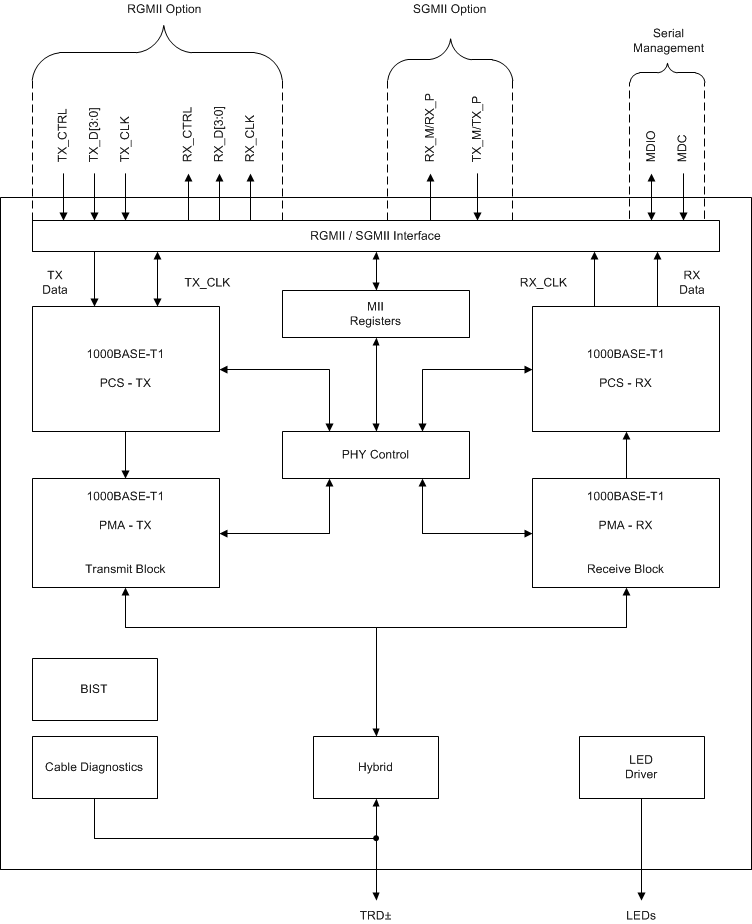
DP83TG720S-Q11000BASE-T1 automotive Ethernet PHY with RGMII & SGMII | Integrated Circuits (ICs) | 2 | Active | The DP83TG720S-Q1 device is an IEEE 802.3bp and Open Alliance compliant automotive Ethernet physical layer transceiver. The device provides all physical layer functions needed to transmit and receive data over unshielded/shielded single twisted-pair cables. The device provides xMII flexibility with support for RGMII and SGMII MAC interfaces.
DP83TG720 is compliant to Open Alliance EMC and interoperable specifications over unshielded twisted cable. DP83TG720 is front print compatible to TI’s 100BASE-T1 PHY enabling design scalability with single board for both speeds. This device offers the Diagnostic Tool Kit, with an extensive list of real-time monitoring tools, debug tools and test modes. Within the tool kit is the first integrated electrostatic discharge (ESD) monitoring tool. The device is capable of counting ESD events on both the xMII and MDI as well as providing real-time monitoring through the use of a programmable interrupt. Additionally, the DP83TG720S-Q1 includes a data generator and checker tool to generate customizable MAC packets and check the errors on incoming packets. This enables system level datapath tests/optimizations without dependency on MAC.
The DP83TG720S-Q1 device is an IEEE 802.3bp and Open Alliance compliant automotive Ethernet physical layer transceiver. The device provides all physical layer functions needed to transmit and receive data over unshielded/shielded single twisted-pair cables. The device provides xMII flexibility with support for RGMII and SGMII MAC interfaces.
DP83TG720 is compliant to Open Alliance EMC and interoperable specifications over unshielded twisted cable. DP83TG720 is front print compatible to TI’s 100BASE-T1 PHY enabling design scalability with single board for both speeds. This device offers the Diagnostic Tool Kit, with an extensive list of real-time monitoring tools, debug tools and test modes. Within the tool kit is the first integrated electrostatic discharge (ESD) monitoring tool. The device is capable of counting ESD events on both the xMII and MDI as well as providing real-time monitoring through the use of a programmable interrupt. Additionally, the DP83TG720S-Q1 includes a data generator and checker tool to generate customizable MAC packets and check the errors on incoming packets. This enables system level datapath tests/optimizations without dependency on MAC. |
| Integrated Circuits (ICs) | 4 | Obsolete | ||
| Integrated Circuits (ICs) | 3 | Obsolete | ||
DP8570ATimer control peripheral (TCP) | Integrated Circuits (ICs) | 4 | Active | The DP8570A is intended for use in microprocessor based systems where information is required for multi-tasking, data logging or general time of day/date information. This device is implemented in low voltage silicon gate microCMOS technology to provide low standby power in battery back-up environments. The circuit's architecture is such that it looks like a contiguous block of memory or I/O ports. The address space is organized as 2 software selectable pages of 32 bytes. This includes the Control Registers, the Clock Counters, the Alarm Compare RAM, the Timers and their data RAM, and the Time Save RAM. Any of the RAM locations that are not being used for their intended purpose may be used as general purpose CMOS RAM.
Time and date are maintained from 1/100 of a second to year and leap year in a BCD format, 12 or 24 hour modes. Day of week, day of month and day of year counters are provided. Time is controlled by an on-chip crystal oscillator requiring only the addition of the crystal and two capacitors. The choice of crystal frequency is program selectable.
Two independent multifunction 10 MHz 16-bit timers are provided. These timers operate in four modes. Each has its own prescaler and can select any of 8 possible clock inputs. Thus, by programming the input clocks and the timer counter values a very wide range of timing durations can be achieved. The range is from about 400 ns (4.915 MHz oscillator) to 65,535 seconds (18 hrs., 12 min.).
Power failure logic and control functions have been integrated on chip. This logic is used by the TCP to issue a power fail
interrupt, and lock out the µp interface. The time power fails may be logged into RAM automatically when VBB> VCC. Additionally, two supply pins are provided. When VBB> VCC, internal circuitry will automatically switch from the main supply to the battery supply. Status bits are provided to indicate initial application of battery power, system power, and low battery detect.
The DP8570A is intended for use in microprocessor based systems where information is required for multi-tasking, data logging or general time of day/date information. This device is implemented in low voltage silicon gate microCMOS technology to provide low standby power in battery back-up environments. The circuit's architecture is such that it looks like a contiguous block of memory or I/O ports. The address space is organized as 2 software selectable pages of 32 bytes. This includes the Control Registers, the Clock Counters, the Alarm Compare RAM, the Timers and their data RAM, and the Time Save RAM. Any of the RAM locations that are not being used for their intended purpose may be used as general purpose CMOS RAM.
Time and date are maintained from 1/100 of a second to year and leap year in a BCD format, 12 or 24 hour modes. Day of week, day of month and day of year counters are provided. Time is controlled by an on-chip crystal oscillator requiring only the addition of the crystal and two capacitors. The choice of crystal frequency is program selectable.
Two independent multifunction 10 MHz 16-bit timers are provided. These timers operate in four modes. Each has its own prescaler and can select any of 8 possible clock inputs. Thus, by programming the input clocks and the timer counter values a very wide range of timing durations can be achieved. The range is from about 400 ns (4.915 MHz oscillator) to 65,535 seconds (18 hrs., 12 min.).
Power failure logic and control functions have been integrated on chip. This logic is used by the TCP to issue a power fail
interrupt, and lock out the µp interface. The time power fails may be logged into RAM automatically when VBB> VCC. Additionally, two supply pins are provided. When VBB> VCC, internal circuitry will automatically switch from the main supply to the battery supply. Status bits are provided to indicate initial application of battery power, system power, and low battery detect. |
DP8573AReal-time clock (RTC) | Clock/Timing | 5 | Active | The DP8573A is intended for use in microprocessor based systems where information is required for multi-tasking, data logging or general time of day/date information. This device is implemented in low voltage silicon gate microCMOS technology to provide low standby power in battery back-up environments. The circuit's architecture is such that it looks like a contiguous block of memory or I/O ports organized as one block of 32 bytes. This includes the Control Registers, the Clock Counters, the Alarm Compare RAM, and the Time Save RAM.
Time and date are maintained from 1/100 of a second to year and leap year in a BCD format, 12 or 24 hour modes. Day of week and day of month counters are provided. Time is controlled by an on-chip crystal oscillator requiring only the addition of the 32.768 kHz crystal and two capacitors.
Power failure logic and control functions have been integrated on chip. This logic is used by the RTC to issue a power fail interrupt, and lock out the µP interface. The time power fails may be logged into RAM automatically when VBB> VCC. Additionally, two supply pins are provided. When VBB> VCC, internal circuitry will automatically switch from the main supply to the battery supply.
The DP8573A's interrupt structure provides three basic types of interrupts: Periodic, Alarm/Compare, and Power Fail. Interrupt mask and status registers enable the masking and easy determination of each interrupt.
The DP8573A is intended for use in microprocessor based systems where information is required for multi-tasking, data logging or general time of day/date information. This device is implemented in low voltage silicon gate microCMOS technology to provide low standby power in battery back-up environments. The circuit's architecture is such that it looks like a contiguous block of memory or I/O ports organized as one block of 32 bytes. This includes the Control Registers, the Clock Counters, the Alarm Compare RAM, and the Time Save RAM.
Time and date are maintained from 1/100 of a second to year and leap year in a BCD format, 12 or 24 hour modes. Day of week and day of month counters are provided. Time is controlled by an on-chip crystal oscillator requiring only the addition of the 32.768 kHz crystal and two capacitors.
Power failure logic and control functions have been integrated on chip. This logic is used by the RTC to issue a power fail interrupt, and lock out the µP interface. The time power fails may be logged into RAM automatically when VBB> VCC. Additionally, two supply pins are provided. When VBB> VCC, internal circuitry will automatically switch from the main supply to the battery supply.
The DP8573A's interrupt structure provides three basic types of interrupts: Periodic, Alarm/Compare, and Power Fail. Interrupt mask and status registers enable the masking and easy determination of each interrupt. |
| Integrated Circuits (ICs) | 1 | Active | ||
| Evaluation and Demonstration Boards and Kits | 1 | Active | ||
| Embedded | 2 | Active | ||
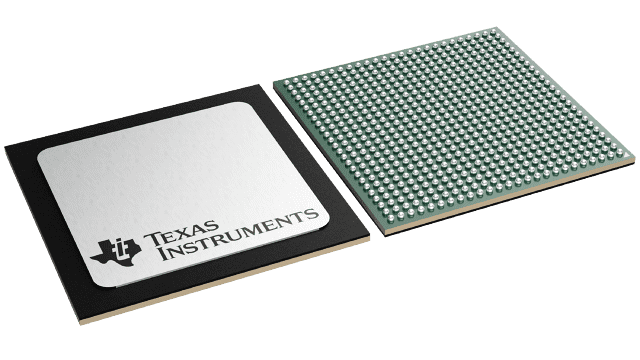
DRA712600 MHz Arm Cortex-A15 SoC processor with graphics & dual Arm Cortex-M4 for infotainment & cluster | Microprocessors | 1 | Active | The DRA71x processor is offered in a 538-ball, 17×17-mm, 0.65-mm ball pitch (0.8mm spacing rules can be used on signals) with Via Channel™ Array (VCA) technology, ball grid array (BGA) package.
The architecture is designed to deliver high-performance concurrencies for automotive applications in a cost-effective solution, providing full scalability from the DRA75x ("Jacinto 6 EP" and "Jacinto 6 Ex"), DRA74x "Jacinto 6" and DRA72x "Jacinto 6 Eco" family of infotainment processors, including graphics, voice, HMI, multimedia and smartphone projection mode capabilities.
Programmability is provided by a single-core Arm Cortex-A15 RISC CPU with Arm Neon™ extensions and a TI C66x VLIW floating-point DSP core. The Arm processor lets developers keep control functions separate from other algorithms programmed on the DSP and coprocessors, thus reducing the complexity of the system software.
Additionally, TI provides a complete set of development tools for the Arm, and DSP, including C compilers and a debugging interface for visibility into source code execution.
Cryptographic acceleration is available in all devices. All other supported security features, including support for secure boot, debug security and support for trusted execution environment are available on High-Security (HS) devices. For more information about HS devices, contact your TI representative.
The DRA71x Jacinto 6 Entry processor family is qualified according to the AEC-Q100 standard.
The device features a simplified power supply rail mapping which enables lower cost PMIC solutions.
The DRA71x processor is offered in a 538-ball, 17×17-mm, 0.65-mm ball pitch (0.8mm spacing rules can be used on signals) with Via Channel™ Array (VCA) technology, ball grid array (BGA) package.
The architecture is designed to deliver high-performance concurrencies for automotive applications in a cost-effective solution, providing full scalability from the DRA75x ("Jacinto 6 EP" and "Jacinto 6 Ex"), DRA74x "Jacinto 6" and DRA72x "Jacinto 6 Eco" family of infotainment processors, including graphics, voice, HMI, multimedia and smartphone projection mode capabilities.
Programmability is provided by a single-core Arm Cortex-A15 RISC CPU with Neon extensions and a TI C66x VLIW floating-point DSP core. The Arm processor lets developers keep control functions separate from other algorithms programmed on the DSP and coprocessors, thus reducing the complexity of the system software.
Additionally, TI provides a complete set of development tools for the Arm, and DSP, including C compilers and a debugging interface for visibility into source code execution.
Cryptographic acceleration is available in all devices. All other supported security features, including support for secure boot, debug security and support for trusted execution environment are available on High-Security (HS) devices. For more information about HS devices, contact your TI representative.
The DRA71x Jacinto 6 Entry processor family is qualified according to the AEC-Q100 standard.
The device features are simplified power supply rail mapping which enables lower cost PMIC solutions.
The DRA71x processor is offered in a 538-ball, 17×17-mm, 0.65-mm ball pitch (0.8mm spacing rules can be used on signals) with Via Channel™ Array (VCA) technology, ball grid array (BGA) package.
The architecture is designed to deliver high-performance concurrencies for automotive applications in a cost-effective solution, providing full scalability from the DRA75x ("Jacinto 6 EP" and "Jacinto 6 Ex"), DRA74x "Jacinto 6" and DRA72x "Jacinto 6 Eco" family of infotainment processors, including graphics, voice, HMI, multimedia and smartphone projection mode capabilities.
Programmability is provided by a single-core Arm Cortex-A15 RISC CPU with Arm Neon™ extensions and a TI C66x VLIW floating-point DSP core. The Arm processor lets developers keep control functions separate from other algorithms programmed on the DSP and coprocessors, thus reducing the complexity of the system software.
Additionally, TI provides a complete set of development tools for the Arm, and DSP, including C compilers and a debugging interface for visibility into source code execution.
Cryptographic acceleration is available in all devices. All other supported security features, including support for secure boot, debug security and support for trusted execution environment are available on High-Security (HS) devices. For more information about HS devices, contact your TI representative.
The DRA71x Jacinto 6 Entry processor family is qualified according to the AEC-Q100 standard.
The device features a simplified power supply rail mapping which enables lower cost PMIC solutions.
The DRA71x processor is offered in a 538-ball, 17×17-mm, 0.65-mm ball pitch (0.8mm spacing rules can be used on signals) with Via Channel™ Array (VCA) technology, ball grid array (BGA) package.
The architecture is designed to deliver high-performance concurrencies for automotive applications in a cost-effective solution, providing full scalability from the DRA75x ("Jacinto 6 EP" and "Jacinto 6 Ex"), DRA74x "Jacinto 6" and DRA72x "Jacinto 6 Eco" family of infotainment processors, including graphics, voice, HMI, multimedia and smartphone projection mode capabilities.
Programmability is provided by a single-core Arm Cortex-A15 RISC CPU with Neon extensions and a TI C66x VLIW floating-point DSP core. The Arm processor lets developers keep control functions separate from other algorithms programmed on the DSP and coprocessors, thus reducing the complexity of the system software.
Additionally, TI provides a complete set of development tools for the Arm, and DSP, including C compilers and a debugging interface for visibility into source code execution.
Cryptographic acceleration is available in all devices. All other supported security features, including support for secure boot, debug security and support for trusted execution environment are available on High-Security (HS) devices. For more information about HS devices, contact your TI representative.
The DRA71x Jacinto 6 Entry processor family is qualified according to the AEC-Q100 standard.
The device features are simplified power supply rail mapping which enables lower cost PMIC solutions. |