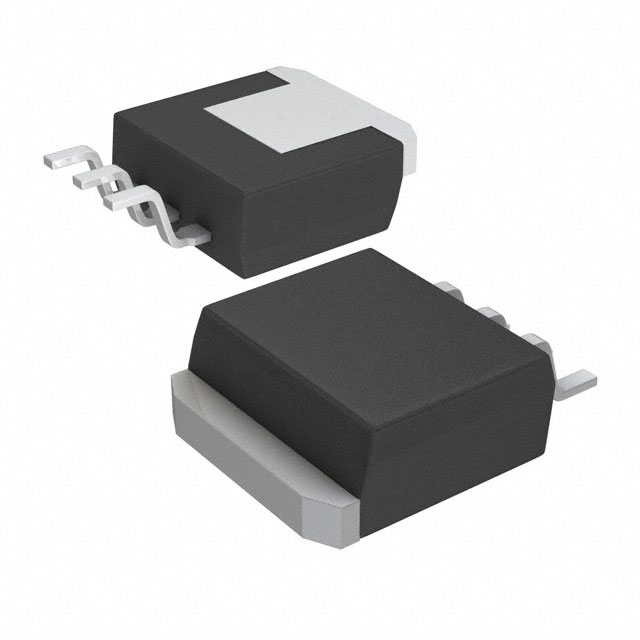
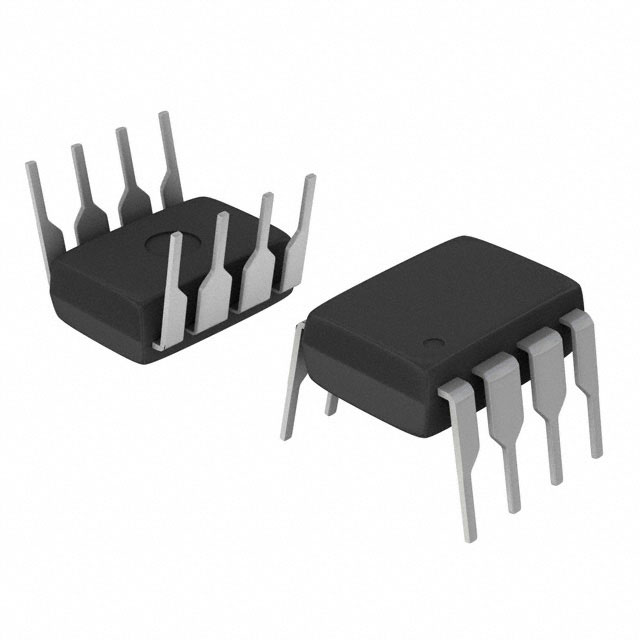
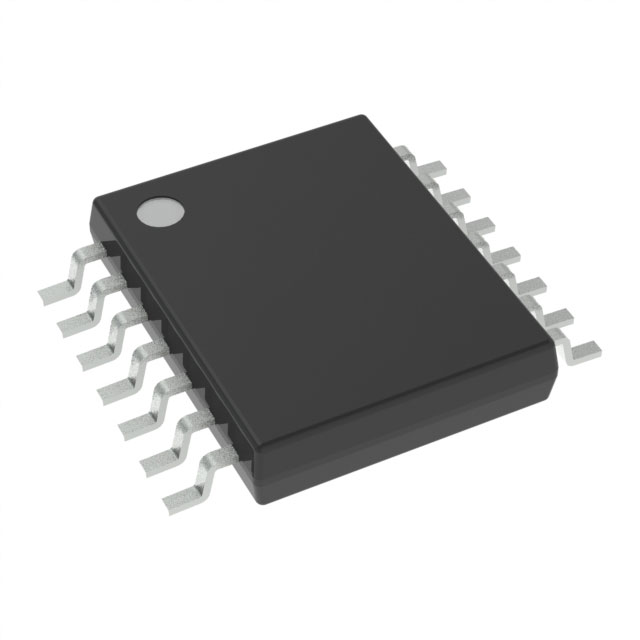
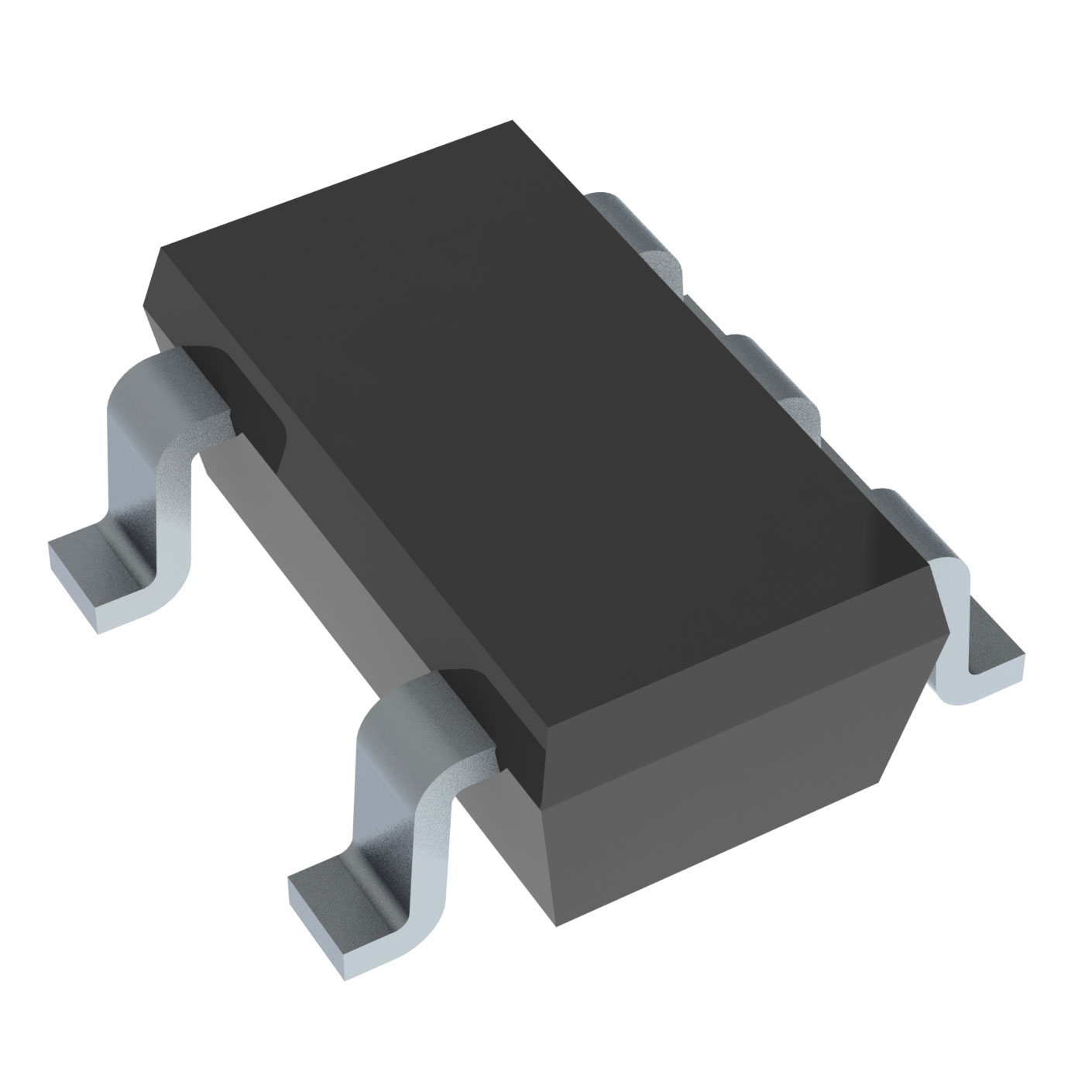
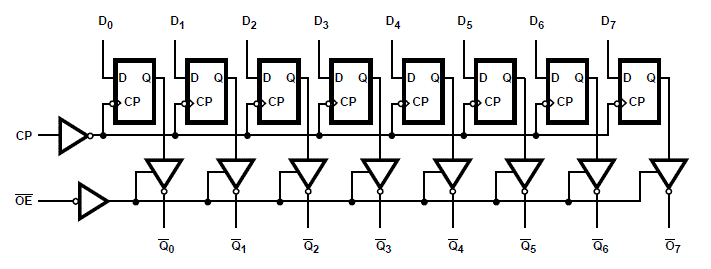
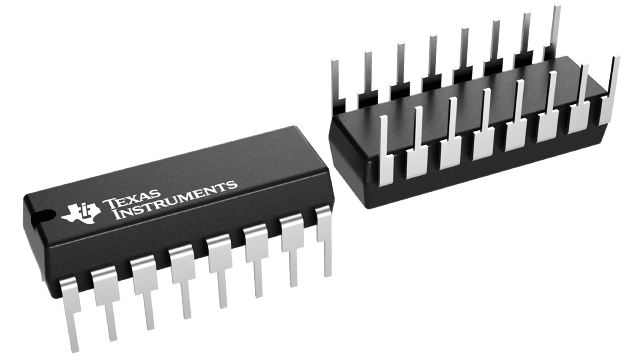
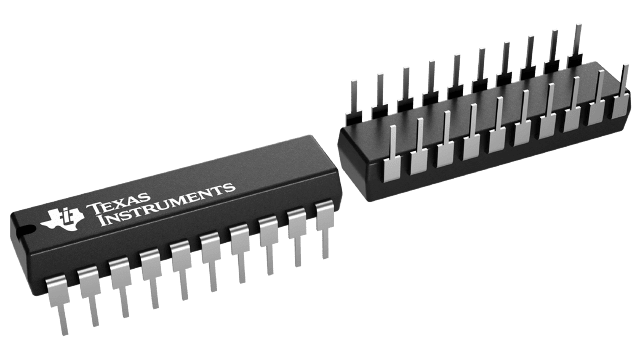
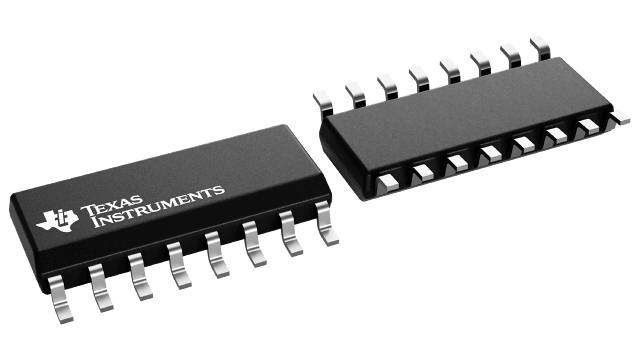
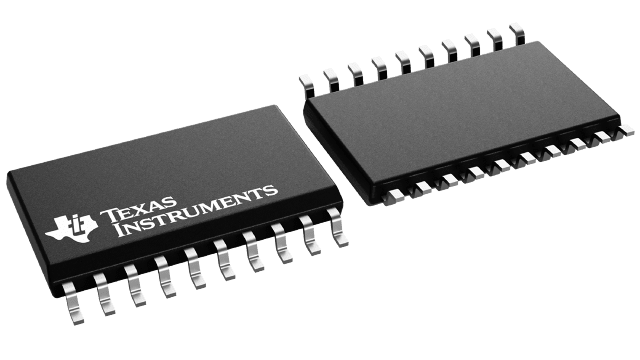
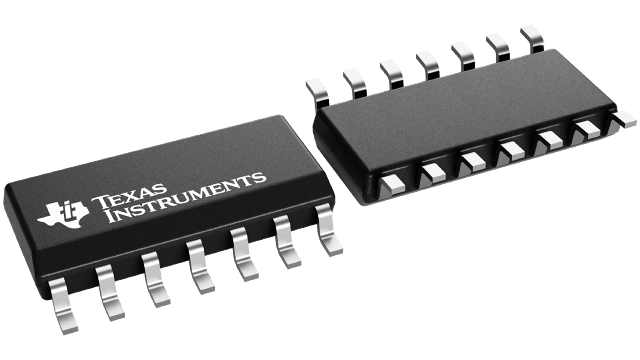
CD74HCT564High Speed CMOS Logic Octal Positive-Edge-Triggered D-Type Inverting Flip-Flops with 3-State Outputs | Integrated Circuits (ICs) | 3 | Active | High Speed CMOS Logic Octal Positive-Edge-Triggered D-Type Inverting Flip-Flops with 3-State Outputs |
CD74HCT573High Speed CMOS Logic Octal Transparent Latches with 3-State Outputs | Latches | 13 | Active | High Speed CMOS Logic Octal Transparent Latches with 3-State Outputs |
CD74HCT574-EPAutomotive Catalog High Speed CMOS Logic Octal Positive-Edge-Triggered D-Type Flip-Flops with 3-Stat | Logic | 19 | Active | The CD74HCT574 is an octal D-type flip-flop with 3-state outputs and the capability to drive 15 LSTTL loads. The eight edge-triggered flip-flops enter data into their registers on the low-to-high transition of the clock (CP). The output enable (OE)\ controls the 3-state outputs and is independent of the register operation. When OE\ is high, the outputs are in the high-impedance state.
The CD74HCT574 is an octal D-type flip-flop with 3-state outputs and the capability to drive 15 LSTTL loads. The eight edge-triggered flip-flops enter data into their registers on the low-to-high transition of the clock (CP). The output enable (OE)\ controls the 3-state outputs and is independent of the register operation. When OE\ is high, the outputs are in the high-impedance state. |
CD74HCT597High Speed CMOS Logic 8-Bit Shift Register with Input Storage | Integrated Circuits (ICs) | 3 | Active | The ’HC597 and CD74HCT597 are high-speed silicon gate CMOS devices that are pin compatible with the LSTTL 597 devices. Each device consists of an 8-flip-flop input register and an 8-bit parallel-in/serial-in, serial-out shift register. Each register is controlled by its own clock. A "low" on the parallel load input (PL\) shifts parallel stored data asynchronously into the shift register. A "low" master input (MR\) clears the shift register. Serial input data can also be synchronously shifted through the shift register when PL\ is high.
The ’HC597 and CD74HCT597 are high-speed silicon gate CMOS devices that are pin compatible with the LSTTL 597 devices. Each device consists of an 8-flip-flop input register and an 8-bit parallel-in/serial-in, serial-out shift register. Each register is controlled by its own clock. A "low" on the parallel load input (PL\) shifts parallel stored data asynchronously into the shift register. A "low" master input (MR\) clears the shift register. Serial input data can also be synchronously shifted through the shift register when PL\ is high. |
CD74HCT640High Speed CMOS Logic Octal Inverting Bus Transceiver with 3-State Outputs | Integrated Circuits (ICs) | 2 | Active | High Speed CMOS Logic Octal Inverting Bus Transceiver with 3-State Outputs |
CD74HCT670High Speed CMOS Logic 4-by-4 Register File | Logic | 8 | Active | The ’HC670 and CD74HCT670 are 16-bit register files organized as 4 words x 4 bits each. Read and write address and enable inputs allow simultaneous writing into one location while reading another. Four data inputs are provided to store the 4-bit word. The write address inputs (WA0 and WA1) determine the location of the stored word in the register. When write enable (WE\) is low the word is entered into the address location and it remains transparent to the data. The outputs will reflect the true form of the input data. When (WE\) is high data and address inputs are inhibited. Data acquisition from the four registers is made possible by the read address inputs (RA1 and RA0). The addressed word appears at the output when the read enable (RE\) is low. The output is in the high impedance state when the (RE\) is high. Outputs can be tied together to increase the word capacity to 512 x 4 bits.
The ’HC670 and CD74HCT670 are 16-bit register files organized as 4 words x 4 bits each. Read and write address and enable inputs allow simultaneous writing into one location while reading another. Four data inputs are provided to store the 4-bit word. The write address inputs (WA0 and WA1) determine the location of the stored word in the register. When write enable (WE\) is low the word is entered into the address location and it remains transparent to the data. The outputs will reflect the true form of the input data. When (WE\) is high data and address inputs are inhibited. Data acquisition from the four registers is made possible by the read address inputs (RA1 and RA0). The addressed word appears at the output when the read enable (RE\) is low. The output is in the high impedance state when the (RE\) is high. Outputs can be tied together to increase the word capacity to 512 x 4 bits. |
CD74HCT6888-Bit Identity/Magnitude Comparators (P=Q) with Enable | Logic | 5 | Active | 8-Bit Identity/Magnitude Comparators (P=Q) with Enable |
CD74HCT7046AHigh Speed CMOS Logic Phase-Locked Loop with VCO and Lock Detector | Clock Generators, PLLs, Frequency Synthesizers | 4 | Active | The CD74HC7046A and CD74HCT7046A high-speed silicon-gate CMOS devices, specified in compliance with JEDEC Standard No. 7A, are phase-locked-loop (PLL) circuits that contain a linear voltage-controlled oscillator (VCO), two-phase comparators (PC1, PC2), and a lock detector. A signal input and a comparator input are common to each comparator. The lock detector gives a HIGH level at pin 1 (LD) when the PLL is locked. The lock detector capacitor must be connected between pin 15 (CLD) and pin 8 (Gnd). For a frequency range of 100kHz to 10MHz, the lock detector capacitor should be 1000pF to 10pF, respectively.
The signal input can be directly coupled to large voltage signals, or indirectly coupled (with a series capacitor) to small voltage signals. A self-bias input circuit keeps small voltage signals within the linear region of the input amplifiers. With a passive low-pass filter, the 7046A forms a second-order loop PLL. The excellent VCO linearity is achieved by the use of linear op-amp techniques.
The CD74HC7046A and CD74HCT7046A high-speed silicon-gate CMOS devices, specified in compliance with JEDEC Standard No. 7A, are phase-locked-loop (PLL) circuits that contain a linear voltage-controlled oscillator (VCO), two-phase comparators (PC1, PC2), and a lock detector. A signal input and a comparator input are common to each comparator. The lock detector gives a HIGH level at pin 1 (LD) when the PLL is locked. The lock detector capacitor must be connected between pin 15 (CLD) and pin 8 (Gnd). For a frequency range of 100kHz to 10MHz, the lock detector capacitor should be 1000pF to 10pF, respectively.
The signal input can be directly coupled to large voltage signals, or indirectly coupled (with a series capacitor) to small voltage signals. A self-bias input circuit keeps small voltage signals within the linear region of the input amplifiers. With a passive low-pass filter, the 7046A forms a second-order loop PLL. The excellent VCO linearity is achieved by the use of linear op-amp techniques. |
CD74HCT73High speed CMOS logic dual negative-edge-triggered J-K flip-flops with reset | Flip Flops | 3 | Active | High speed CMOS logic dual negative-edge-triggered J-K flip-flops with reset |
CD74HCT75High Speed CMOS Logic Dual 2-Bit Bistable Transparent Latch | Integrated Circuits (ICs) | 2 | Active | The ’HC75 and ’HCT75 are dual 2-bit bistable transparent latches. Each one of the 2-bit latches is controlled by separate Enable inputs (1E\ and 2E\) which are active LOW. When the Enable input is HIGH data enters the latch and appears at the Q output. When the Enable input (1E\ and 2E\) is LOW the output is not affected.
The ’HC75 and ’HCT75 are dual 2-bit bistable transparent latches. Each one of the 2-bit latches is controlled by separate Enable inputs (1E\ and 2E\) which are active LOW. When the Enable input is HIGH data enters the latch and appears at the Q output. When the Enable input (1E\ and 2E\) is LOW the output is not affected. |