T
Texas Instruments
| Series | Category | # Parts | Status | Description |
|---|---|---|---|---|
| Part | Spec A | Spec B | Spec C | Spec D | Description |
|---|---|---|---|---|---|

| Series | Category | # Parts | Status | Description |
|---|---|---|---|---|
| Part | Spec A | Spec B | Spec C | Spec D | Description |
|---|---|---|---|---|---|

| Part | Category | Description |
|---|---|---|
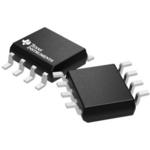
![]() Texas Instruments | Integrated Circuits (ICs) | BUS DRIVER, BCT/FBT SERIES |
![]() Texas Instruments | Integrated Circuits (ICs) | 12BIT 3.3V~3.6V 210MHZ PARALLEL VQFN-48-EP(7X7) ANALOG TO DIGITAL CONVERTERS (ADC) ROHS |
Texas Instruments | Integrated Circuits (ICs) | TMX320DRE311 179PIN UBGA 200MHZ |
![]() Texas Instruments TPS61040DRVTG4Unknown | Integrated Circuits (ICs) | IC LED DRV RGLTR PWM 350MA 6WSON |
![]() Texas Instruments LP3876ET-2.5Obsolete | Integrated Circuits (ICs) | IC REG LINEAR 2.5V 3A TO220-5 |
![]() Texas Instruments LMS1585ACSX-ADJObsolete | Integrated Circuits (ICs) | IC REG LIN POS ADJ 5A DDPAK |
![]() Texas Instruments INA111APG4Obsolete | Integrated Circuits (ICs) | IC INST AMP 1 CIRCUIT 8DIP |
![]() Texas Instruments | Integrated Circuits (ICs) | AUTOMOTIVE, QUAD 36V 1.2MHZ OPERATIONAL AMPLIFIER |
![]() Texas Instruments OPA340NA/3KG4Unknown | Integrated Circuits (ICs) | IC OPAMP GP 1 CIRCUIT SOT23-5 |
![]() Texas Instruments PT5112AObsolete | Power Supplies - Board Mount | DC DC CONVERTER 8V 8W |
| Series | Category | # Parts | Status | Description |
|---|---|---|---|---|
5962-9321701Octal Edge-Triggered D-type Flip-Flops With Clear | Flip Flops | 1 | Active | The 'ABT273 are 8-bit positive-edge-triggered D-type flip-flops with a direct clear () input. They are particularly suitable for implementing buffer and storage registers, shift registers, and pattern generators.
Information at the data (D) inputs meeting the setup time requirements is transferred to the Q outputs on the positive-going edge of the clock pulse. Clock triggering occurs at a particular voltage level and is not directly related to the transition time of the positive-going pulse. When the clock (CLK) input is at either the high or low level, the D input signal has no effect at the output.
The SN54ABT273 is characterized for operation over the full military temperature range of -55°C to 125°C. The SN74ABT273 is characterized for operation from -40°C to 85°C.
The 'ABT273 are 8-bit positive-edge-triggered D-type flip-flops with a direct clear () input. They are particularly suitable for implementing buffer and storage registers, shift registers, and pattern generators.
Information at the data (D) inputs meeting the setup time requirements is transferred to the Q outputs on the positive-going edge of the clock pulse. Clock triggering occurs at a particular voltage level and is not directly related to the transition time of the positive-going pulse. When the clock (CLK) input is at either the high or low level, the D input signal has no effect at the output.
The SN54ABT273 is characterized for operation over the full military temperature range of -55°C to 125°C. The SN74ABT273 is characterized for operation from -40°C to 85°C. |
5962-9322001Octal Edge-Triggered D-type Flip-Flops With 3-State Outputs | Logic | 2 | Active | These 8-bit flip-flops feature 3-state outputs designed specifically for driving highly capacitive or relatively low-impedance loads. They are particularly suitable for implementing buffer registers, I/O ports, bidirectional bus drivers, and working registers.
The eight flip-flops of the SN54ABT574 and SN74ABT574A are edge-triggered D-type flip-flops. On the positive transition of the clock (CLK) input, the Q outputs are set to the logic levels set up at the data (D) inputs.
A buffered output-enable (OE)\ input can be used to place the eight outputs in either a normal logic state (high or low logic levels) or the high-impedance state. In the high-impedance state, the outputs neither load nor drive the bus lines significantly. The high-impedance state and increased drive provide the capability to drive bus lines without need for interface or pullup components.
OE\ does not affect the internal operations of the flip-flops. Old data can be retained or new data can be entered while the outputs are in the high-impedance state.
To ensure the high-impedance state during power up or power down, OE\ should be tied to VCCthrough a pullup resistor; the minimum value of the resistor is determined by the current-sinking capability of the driver.
This device is fully specified for partial-power-down applications using Ioff. The Ioffcircuitry disables the outputs, preventing damaging current backflow through the device when it is powered down.
These 8-bit flip-flops feature 3-state outputs designed specifically for driving highly capacitive or relatively low-impedance loads. They are particularly suitable for implementing buffer registers, I/O ports, bidirectional bus drivers, and working registers.
The eight flip-flops of the SN54ABT574 and SN74ABT574A are edge-triggered D-type flip-flops. On the positive transition of the clock (CLK) input, the Q outputs are set to the logic levels set up at the data (D) inputs.
A buffered output-enable (OE)\ input can be used to place the eight outputs in either a normal logic state (high or low logic levels) or the high-impedance state. In the high-impedance state, the outputs neither load nor drive the bus lines significantly. The high-impedance state and increased drive provide the capability to drive bus lines without need for interface or pullup components.
OE\ does not affect the internal operations of the flip-flops. Old data can be retained or new data can be entered while the outputs are in the high-impedance state.
To ensure the high-impedance state during power up or power down, OE\ should be tied to VCCthrough a pullup resistor; the minimum value of the resistor is determined by the current-sinking capability of the driver.
This device is fully specified for partial-power-down applications using Ioff. The Ioffcircuitry disables the outputs, preventing damaging current backflow through the device when it is powered down. |
5962-9323901Military 4-ch, 4.5-V to 5.5-V inverters with TTL-compatible CMOS inputs and 3-state outputs | Specialty Logic | 1 | Active | The 'ACT8997 are members of the Texas Instruments SCOPETMtestability integrated-circuit family. This family of components facilitates testing of complex circuit-board assemblies.
The 'ACT8997 enhance the scan capability of TI's SCOPETMfamily by allowing augmentation of a system's primary scan path with secondary scan paths (SSPs), which can be individually selected by the 'ACT8997 for inclusion in the primary scan path. These devices also provide buffering of test signals to reduce the need for external logic.
By loading the proper values into the instruction register and data registers, the user can select up to four SSPs to be included in a primary scan path. Any combination of the SSPs can be selected at a time. Any of the device's six data registers or the instruction register can be placed in the device's scan path, i.e., placed between test data input (TDI) and test data output (TDO) for subsequent shift and scan operations.
All operations of the device except counting are synchronous to the test clock pin (TCK). The 8-bit programmable up/down counter can be used to count transitions on the device condition input (DCI) pin and output interrupt signals via the device condition output (DCO) pin. The device can be configured to count on either the rising or falling edge of DCI.
The test access port (TAP) controller is a finite-state machine compatible with IEEE Standard 1149.1.
The SN54ACT8997 is characterized for operation over the full military temperature range of -55°C to 125°C. The SN74ACT8997 is characterized for operation from 0°C to 70°C.
The 'ACT8997 are members of the Texas Instruments SCOPETMtestability integrated-circuit family. This family of components facilitates testing of complex circuit-board assemblies.
The 'ACT8997 enhance the scan capability of TI's SCOPETMfamily by allowing augmentation of a system's primary scan path with secondary scan paths (SSPs), which can be individually selected by the 'ACT8997 for inclusion in the primary scan path. These devices also provide buffering of test signals to reduce the need for external logic.
By loading the proper values into the instruction register and data registers, the user can select up to four SSPs to be included in a primary scan path. Any combination of the SSPs can be selected at a time. Any of the device's six data registers or the instruction register can be placed in the device's scan path, i.e., placed between test data input (TDI) and test data output (TDO) for subsequent shift and scan operations.
All operations of the device except counting are synchronous to the test clock pin (TCK). The 8-bit programmable up/down counter can be used to count transitions on the device condition input (DCI) pin and output interrupt signals via the device condition output (DCO) pin. The device can be configured to count on either the rising or falling edge of DCI.
The test access port (TAP) controller is a finite-state machine compatible with IEEE Standard 1149.1.
The SN54ACT8997 is characterized for operation over the full military temperature range of -55°C to 125°C. The SN74ACT8997 is characterized for operation from 0°C to 70°C. |
5962-9326101High Power Factor Preregulator | Power Management (PMIC) | 1 | Active | The UC1854 provides active-power factor correction for power systems that otherwise would draw non-sinusoidal current from sinusoidal power lines. This device implements all the control functions necessary to build a power supply capable of optimally using available power-line current while minimizing line-current distortion. To do this, the UC1854 contains a voltage amplifier, an analog multiplier and divider, a current amplifier, and a fixed-frequency PWM.
In addition, the UC1854 contains a power MOSFET-compatible gate driver, 7.5-V reference, line anticipator, load-enable comparator, low-supply detector, and overcurrent comparator.
The UC1854 uses average current-mode control to accomplish fixed-frequency current control with stability and low distortion. Unlike peak current-mode, average current control accurately maintains sinusoidal line current without slope compensation and with minimal response to noise transients.
The high reference voltage and high oscillator amplitude of the UC1854 minimize noise sensitivity while fast PWM elements permit chopping frequencies above 200 kHz. The UC1854 is used in single-phase and three-phase systems with line voltages that vary from 75 V to 275 V and line frequencies across the 50-Hz to 400-Hz range. To reduce the burden on the circuitry that supplies power to this device, the UC1854 features low starting supply current.
These devices are available packaged in 16-pin plastic and ceramic dual in-line packages, and a variety of surface-mount packages.
The UC1854 provides active-power factor correction for power systems that otherwise would draw non-sinusoidal current from sinusoidal power lines. This device implements all the control functions necessary to build a power supply capable of optimally using available power-line current while minimizing line-current distortion. To do this, the UC1854 contains a voltage amplifier, an analog multiplier and divider, a current amplifier, and a fixed-frequency PWM.
In addition, the UC1854 contains a power MOSFET-compatible gate driver, 7.5-V reference, line anticipator, load-enable comparator, low-supply detector, and overcurrent comparator.
The UC1854 uses average current-mode control to accomplish fixed-frequency current control with stability and low distortion. Unlike peak current-mode, average current control accurately maintains sinusoidal line current without slope compensation and with minimal response to noise transients.
The high reference voltage and high oscillator amplitude of the UC1854 minimize noise sensitivity while fast PWM elements permit chopping frequencies above 200 kHz. The UC1854 is used in single-phase and three-phase systems with line voltages that vary from 75 V to 275 V and line frequencies across the 50-Hz to 400-Hz range. To reduce the burden on the circuitry that supplies power to this device, the UC1854 features low starting supply current.
These devices are available packaged in 16-pin plastic and ceramic dual in-line packages, and a variety of surface-mount packages. |
5962-9450901Military 10-ch, 4.5-V to 5.5-V buffers with TTL-compatible CMOS inputs and 3-state outputs | Logic | 2 | Active | These 10-bit buffers or bus drivers provide a high-performance bus interface for wide data paths or buses carrying parity.
The 3-state control gate is a 2-input AND gate with active-low inputs so that if either output-enable (OE1\ or OE2\) input is high, all ten outputs are in the high-impedance state. The 'ABT827 provide true data at the outputs.
When VCCis between 0 and 2.1 V, the device is in the high-impedance state during power up or power down. However, to ensure the high-impedance state above 2.1 V, OE\ should be tied to VCCthrough a pullup resistor; the minimum value of the resistor is determined by the current-sinking capability of the driver.
The SN54ABT827 is characterized for operation over the full military temperature range of -55°C to 125°C. The SN74ABT827 is characterized for operation from -40°C to 85°C.
These 10-bit buffers or bus drivers provide a high-performance bus interface for wide data paths or buses carrying parity.
The 3-state control gate is a 2-input AND gate with active-low inputs so that if either output-enable (OE1\ or OE2\) input is high, all ten outputs are in the high-impedance state. The 'ABT827 provide true data at the outputs.
When VCCis between 0 and 2.1 V, the device is in the high-impedance state during power up or power down. However, to ensure the high-impedance state above 2.1 V, OE\ should be tied to VCCthrough a pullup resistor; the minimum value of the resistor is determined by the current-sinking capability of the driver.
The SN54ABT827 is characterized for operation over the full military temperature range of -55°C to 125°C. The SN74ABT827 is characterized for operation from -40°C to 85°C. |
5962-9451301Low-Power BiCMOS Current-Mode PWM | DC DC Switching Controllers | 2 | Active | The UCC280x family of high-speed, low-power integrated circuits contain all of the control and drive components required for off-line and DC-to-DC fixed frequency current-mode switching mode power supplies with minimal parts count.
These devices have the same pin configuration as the UCx84x family, and also offer the added features of internal full-cycle soft start and internal leading-edge blanking of the current-sense input.
The UCC280x family of high-speed, low-power integrated circuits contain all of the control and drive components required for off-line and DC-to-DC fixed frequency current-mode switching mode power supplies with minimal parts count.
These devices have the same pin configuration as the UCx84x family, and also offer the added features of internal full-cycle soft start and internal leading-edge blanking of the current-sense input. |
5962-9451305Low-Power BiCMOS Current-Mode PWM | DC DC Switching Controllers | 1 | Active | The UCC280x family of high-speed, low-power integrated circuits contain all of the control and drive components required for off-line and DC-to-DC fixed frequency current-mode switching mode power supplies with minimal parts count.
These devices have the same pin configuration as the UCx84x family, and also offer the added features of internal full-cycle soft start and internal leading-edge blanking of the current-sense input.
The UCC280x family of high-speed, low-power integrated circuits contain all of the control and drive components required for off-line and DC-to-DC fixed frequency current-mode switching mode power supplies with minimal parts count.
These devices have the same pin configuration as the UCx84x family, and also offer the added features of internal full-cycle soft start and internal leading-edge blanking of the current-sense input. |
5962-9453001Improved Current Mode PWM Controller | Power Management (PMIC) | 1 | Active | The UC3856 is a high performance version of the popular UC3846 series of current mode controllers, and is intended for both design upgrades and new applications where speed and accuracy are important. All input to output delays have been minimized, and the current sense output is slew rate limited to reduce noise sensitivity. Fast 1.5A peak output stages have been added to allow rapid switching of power FETs.
A low impedance TTL compatible sync output has been implemented with a tri-state function when used as a sync input.
Internal chip grounding has been improved to minimize internal \x93noise\x94 caused when driving large capacitive loads. This, in conjunction with the improved differential current sense amplifier results in enhanced noise immunity.
Other features include a trimmed oscillator current (8%) for accurate frequency and dead time control; a 1V, 5% shutdown threshold; and 4kV minimum ESD protection on all pins.
The UC3856 is a high performance version of the popular UC3846 series of current mode controllers, and is intended for both design upgrades and new applications where speed and accuracy are important. All input to output delays have been minimized, and the current sense output is slew rate limited to reduce noise sensitivity. Fast 1.5A peak output stages have been added to allow rapid switching of power FETs.
A low impedance TTL compatible sync output has been implemented with a tri-state function when used as a sync input.
Internal chip grounding has been improved to minimize internal \x93noise\x94 caused when driving large capacitive loads. This, in conjunction with the improved differential current sense amplifier results in enhanced noise immunity.
Other features include a trimmed oscillator current (8%) for accurate frequency and dead time control; a 1V, 5% shutdown threshold; and 4kV minimum ESD protection on all pins. |
5962-9457702Octal Bus Transceivers And Registers With 3-State Outputs | Logic | 2 | Active | These devices consist of bus-transceiver circuits, D-type flip-flops, and control circuitry arranged for multiplexed transmission of data directly from the input bus or from the internal registers. Data on the A or B bus is clocked into the registers on the low-to-high transition of the appropriate clock (CLKAB or CLKBA) input. Figure 1 illustrates the four fundamental bus-management functions that can be performed with the ’ABT646A devices.
Output-enable (OE\) and direction-control (DIR) inputs are provided to control the transceiver functions. In the transceiver mode, data present at the high-impedance port can be stored in either register or in both.
The select-control (SAB and SBA) inputs can multiplex stored and real-time (transparent mode) data. The direction control (DIR) determines which bus receives data when OE\ is low. In the isolation mode (OE\ high), A data can be stored in one register and/or B data can be stored in the other register.
When an output function is disabled, the input function still is enabled and can be used to store and transmit data. Only one of the two buses, A or B, can be driven at a time.
These devices are fully specified for partial-power-down applications using Ioff. The Ioffcircuitry disables the outputs, preventing damaging current backflow through the devices when they are powered down.
To ensure the high-impedance state during power up or power down, OE\ should be tied to VCCthrough a pullup resistor; the minimum value of the resistor is determined by the current-sinking capability of the driver.
These devices consist of bus-transceiver circuits, D-type flip-flops, and control circuitry arranged for multiplexed transmission of data directly from the input bus or from the internal registers. Data on the A or B bus is clocked into the registers on the low-to-high transition of the appropriate clock (CLKAB or CLKBA) input. Figure 1 illustrates the four fundamental bus-management functions that can be performed with the ’ABT646A devices.
Output-enable (OE\) and direction-control (DIR) inputs are provided to control the transceiver functions. In the transceiver mode, data present at the high-impedance port can be stored in either register or in both.
The select-control (SAB and SBA) inputs can multiplex stored and real-time (transparent mode) data. The direction control (DIR) determines which bus receives data when OE\ is low. In the isolation mode (OE\ high), A data can be stored in one register and/or B data can be stored in the other register.
When an output function is disabled, the input function still is enabled and can be used to store and transmit data. Only one of the two buses, A or B, can be driven at a time.
These devices are fully specified for partial-power-down applications using Ioff. The Ioffcircuitry disables the outputs, preventing damaging current backflow through the devices when they are powered down.
To ensure the high-impedance state during power up or power down, OE\ should be tied to VCCthrough a pullup resistor; the minimum value of the resistor is determined by the current-sinking capability of the driver. |
5962-9458601Scan Test Devices With Octal Bus Transceivers And Registers | Logic | 1 | Active | The ’ABT8646 and scan test devices with octal bus transceivers and registers are members of the Texas Instruments SCOPE™ testability integrated-circuit family. This family of devices supports IEEE Standard 1149.1-1990 boundary scan to facilitate testing of complex circuit-board assemblies. Scan access to the test circuitry is accomplished via the 4-wire test access port (TAP) interface.
In the normal mode, these devices are functionally equivalent to the ’F646 and ’ABT646 octal bus transceivers and registers. The test circuitry can be activated by the TAP to take snapshot samples of the data appearing at the device pins or to perform a self test on the boundary-test cells. Activating the TAP in normal mode does not affect the functional operation of the SCOPE™ octal bus transceivers and registers.
Transceiver function is controlled by output-enable (OE)\ and direction (DIR) inputs. When OE\ is low, the transceiver is active and operates in the A-to-B direction when DIR is high or in the B-to-A direction when DIR is low. When OE\ is high, both the A and B outputs are in the high-impedance state, effectively isolating both buses.
Data flow is controlled by clock (CLKAB and CLKBA) and select (SAB and SBA) inputs. Data on the A bus is clocked into the associated registers on the low-to-high transition of CLKAB. When SAB is low, real-time A data is selected for presentation to the B bus (transparent mode). When SAB is high, stored A data is selected for presentation to the B bus (registered mode). The function of the CLKBA and SBA inputs mirrors that of CLKAB and SAB, respectively. Figure 1 shows the four fundamental bus-management functions that can be performed with the ’ABT8646.
In the test mode, the normal operation of the SCOPE™ bus transceivers and registers is inhibited, and the test circuitry is enabled to observe and control the I/O boundary of the device. When enabled, the test circuitry performs boundary-scan test operations as described in IEEE Standard 1149.1-1990.
Four dedicated test pins control the operation of the test circuitry: test data input (TDI), test data output (TDO), test mode select (TMS), and test clock (TCK). Additionally, the test circuitry performs other testing functions such as parallel-signature analysis (PSA) on data inputs and pseudorandom pattern generation (PRPG) from data outputs. All testing and scan operations are synchronized to the TAP interface.
The SN54ABT8646 is characterized for operation over the full military temperature range of –55°C to 125°C. The SN74ABT8646 is characterized for operation from –40°C to 85°C.
The ’ABT8646 and scan test devices with octal bus transceivers and registers are members of the Texas Instruments SCOPE™ testability integrated-circuit family. This family of devices supports IEEE Standard 1149.1-1990 boundary scan to facilitate testing of complex circuit-board assemblies. Scan access to the test circuitry is accomplished via the 4-wire test access port (TAP) interface.
In the normal mode, these devices are functionally equivalent to the ’F646 and ’ABT646 octal bus transceivers and registers. The test circuitry can be activated by the TAP to take snapshot samples of the data appearing at the device pins or to perform a self test on the boundary-test cells. Activating the TAP in normal mode does not affect the functional operation of the SCOPE™ octal bus transceivers and registers.
Transceiver function is controlled by output-enable (OE)\ and direction (DIR) inputs. When OE\ is low, the transceiver is active and operates in the A-to-B direction when DIR is high or in the B-to-A direction when DIR is low. When OE\ is high, both the A and B outputs are in the high-impedance state, effectively isolating both buses.
Data flow is controlled by clock (CLKAB and CLKBA) and select (SAB and SBA) inputs. Data on the A bus is clocked into the associated registers on the low-to-high transition of CLKAB. When SAB is low, real-time A data is selected for presentation to the B bus (transparent mode). When SAB is high, stored A data is selected for presentation to the B bus (registered mode). The function of the CLKBA and SBA inputs mirrors that of CLKAB and SAB, respectively. Figure 1 shows the four fundamental bus-management functions that can be performed with the ’ABT8646.
In the test mode, the normal operation of the SCOPE™ bus transceivers and registers is inhibited, and the test circuitry is enabled to observe and control the I/O boundary of the device. When enabled, the test circuitry performs boundary-scan test operations as described in IEEE Standard 1149.1-1990.
Four dedicated test pins control the operation of the test circuitry: test data input (TDI), test data output (TDO), test mode select (TMS), and test clock (TCK). Additionally, the test circuitry performs other testing functions such as parallel-signature analysis (PSA) on data inputs and pseudorandom pattern generation (PRPG) from data outputs. All testing and scan operations are synchronized to the TAP interface.
The SN54ABT8646 is characterized for operation over the full military temperature range of –55°C to 125°C. The SN74ABT8646 is characterized for operation from –40°C to 85°C. |
