BQ25890I2C 1cell 5A buck battery charger Maxcharge™ tech for high input with D+/D- | Evaluation and Demonstration Boards and Kits | 3 | Active | The BQ25890, BQ25892 are highly-integrated 5-A switch-mode battery charge management and system power path management device for single cell Li-Ion and Li-polymer battery. The devices support high input voltage fast charging. The low impedance power path optimizes switch-mode operation efficiency, reduces battery charging time and extends battery life during discharging phase.
The BQ25890, BQ25892 are highly-integrated 5-A switch-mode battery charge management and system power path management device for single cell Li-Ion and Li-polymer battery. The devices support high input voltage fast charging. The low impedance power path optimizes switch-mode operation efficiency, reduces battery charging time and extends battery life during discharging phase. |
BQ25892I2C 1cell 5A buck battery charger with NVDC Power Path and PSEL | Power Management (PMIC) | 2 | Active | The BQ25890, BQ25892 are highly-integrated 5-A switch-mode battery charge management and system power path management device for single cell Li-Ion and Li-polymer battery. The devices support high input voltage fast charging. The low impedance power path optimizes switch-mode operation efficiency, reduces battery charging time and extends battery life during discharging phase.
The BQ25890, BQ25892 are highly-integrated 5-A switch-mode battery charge management and system power path management device for single cell Li-Ion and Li-polymer battery. The devices support high input voltage fast charging. The low impedance power path optimizes switch-mode operation efficiency, reduces battery charging time and extends battery life during discharging phase. |
BQ25895MI2C 1cell 5A buck battery charger with high input voltage and 3.1-A boost with HVDCP enabled | Evaluation and Demonstration Boards and Kits | 6 | Active | The BQ25895M is a highly-integrated 5-A switch-mode battery charge management and system power path management device for single cell Li-Ion and Li-polymer battery. The devices support high input voltage fast charging. The low impedance power path optimizes switch-mode operation efficiency, reduces battery charging time and extends battery life during discharging phase. The I2C Serial interface with charging and system settings makes the device a truly flexible solution.
The BQ25895M is a highly-integrated 5-A switch-mode battery charge management and system power path management device for single cell Li-Ion and Li-polymer battery. The devices support high input voltage fast charging. The low impedance power path optimizes switch-mode operation efficiency, reduces battery charging time and extends battery life during discharging phase. The I2C Serial interface with charging and system settings makes the device a truly flexible solution. |
BQ25896I2C 1cell 3A buck battery charger with power path and PSEL | Integrated Circuits (ICs) | 1 | Active | The bq25896 is a highly-integrated 3-A switch-mode battery charge management and system power path management device for single cell Li-Ion and Li-polymer battery. The devices support high input voltage fast charging. The low impedance power path optimizes switch-mode operation efficiency, reduces battery charging time and extends battery life during discharging phase. The I2C Serial interface with charging and system settings makes the device a truly flexible solution.
The bq25896 is a highly-integrated 3-A switch-mode battery charge management and system power path management device for single cell Li-Ion and Li-polymer battery. It features fast charging with high input voltage support for a wide range of smartphone, tablet and portable devices. Its low impedance power path optimizes switch-mode operation efficiency, reduces battery charging time and extends battery life during discharging phase. It also integrates Input Current Optimizer (ICO) and Resistance Compensation (IRCOMP) to deliver maximum charging power to battery. The solution is highly integrated with input reverse-blocking FET (RBFET, Q1), high-side switching FET (HSFET, Q2), low-side switching FET (LSFET, Q3), and battery FET (BATFET, Q4) between system and battery. It also integrates the bootstrap diode for the high-side gate drive and battery monitor for simplified system design. The I2C serial interface with charging and system settings makes the device a truly flexible solution.
The device supports a wide range of input sources and takes the result from detection circuit in the system, such as USB PHY device. The input current and voltage regulation selection is compactible with USB 2.0 and USB 3.0 power spec. In addition, the Input Current Optimizer (ICO) supports the detection of maximum power point detection of the input source without overload. The device also meets USB On-the-Go (OTG) operation power rating specification by supplying 5 V (Adjustable 4.5V-5.5V) on VBUS with current limit up to 2 A.
The power path management regulates the system slightly above battery voltage but does not drop below 3.5V minimum system voltage (programmable). With this feature, the system maintains operation even when the battery is completely depleted or removed. When the input current limit or voltage limit is reached, the power path management automatically reduces the charge current to zero. As the system load continues to increase, the power path discharges the battery until the system power requirement is met. ThisSupplemental Modeoperation prevents overloading the input source.
The device initiates and completes a charging cycle without software control. It automatically detects the battery voltage and charges the battery in three phases: pre-conditioning, constant current and constant voltage. At the end of the charging cycle, the charger automatically terminates when the charge current is below a preset limit in the constant voltage phase. When the full battery falls below the recharge threshold, the charger will automatically start another charging cycle.
The charger provides various safety features for battery charging and system operations, including battery temperature negative thermistor monitoring, charging safety timer and overvoltage/overcurrent protections. The thermal regulation reduces charge current when the junction temperature exceeds 120°C (programmable). The STAT output reports the charging status and any fault conditions. ThePGoutput indicates if a good power source is present. The INT immediately notifies host when fault occurs.
The device also provides a 7-bit analog-to-digital converter (ADC) for monitoring charge current and input/battery/system (VBUS, BAT, SYS, TS) voltages. The QON pin provides BATFET enable/reset control to exit low power ship mode or full system reset function.
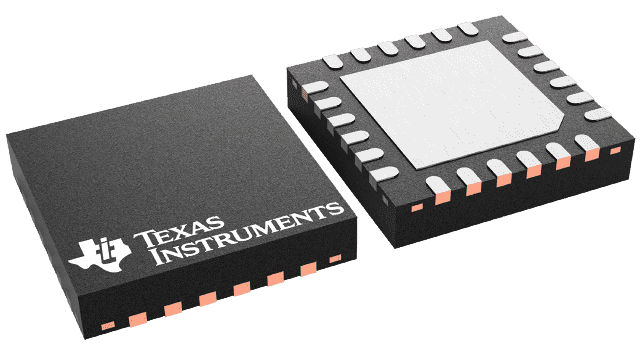
The device family is available in 24-pin, 4 x 4 mm2x 0.75 mm thin WQFN package.
The bq25896 is a highly-integrated 3-A switch-mode battery charge management and system power path management device for single cell Li-Ion and Li-polymer battery. The devices support high input voltage fast charging. The low impedance power path optimizes switch-mode operation efficiency, reduces battery charging time and extends battery life during discharging phase. The I2C Serial interface with charging and system settings makes the device a truly flexible solution.
The bq25896 is a highly-integrated 3-A switch-mode battery charge management and system power path management device for single cell Li-Ion and Li-polymer battery. It features fast charging with high input voltage support for a wide range of smartphone, tablet and portable devices. Its low impedance power path optimizes switch-mode operation efficiency, reduces battery charging time and extends battery life during discharging phase. It also integrates Input Current Optimizer (ICO) and Resistance Compensation (IRCOMP) to deliver maximum charging power to battery. The solution is highly integrated with input reverse-blocking FET (RBFET, Q1), high-side switching FET (HSFET, Q2), low-side switching FET (LSFET, Q3), and battery FET (BATFET, Q4) between system and battery. It also integrates the bootstrap diode for the high-side gate drive and battery monitor for simplified system design. The I2C serial interface with charging and system settings makes the device a truly flexible solution.
The device supports a wide range of input sources and takes the result from detection circuit in the system, such as USB PHY device. The input current and voltage regulation selection is compactible with USB 2.0 and USB 3.0 power spec. In addition, the Input Current Optimizer (ICO) supports the detection of maximum power point detection of the input source without overload. The device also meets USB On-the-Go (OTG) operation power rating specification by supplying 5 V (Adjustable 4.5V-5.5V) on VBUS with current limit up to 2 A.
The power path management regulates the system slightly above battery voltage but does not drop below 3.5V minimum system voltage (programmable). With this feature, the system maintains operation even when the battery is completely depleted or removed. When the input current limit or voltage limit is reached, the power path management automatically reduces the charge current to zero. As the system load continues to increase, the power path discharges the battery until the system power requirement is met. ThisSupplemental Modeoperation prevents overloading the input source.
The device initiates and completes a charging cycle without software control. It automatically detects the battery voltage and charges the battery in three phases: pre-conditioning, constant current and constant voltage. At the end of the charging cycle, the charger automatically terminates when the charge current is below a preset limit in the constant voltage phase. When the full battery falls below the recharge threshold, the charger will automatically start another charging cycle.
The charger provides various safety features for battery charging and system operations, including battery temperature negative thermistor monitoring, charging safety timer and overvoltage/overcurrent protections. The thermal regulation reduces charge current when the junction temperature exceeds 120°C (programmable). The STAT output reports the charging status and any fault conditions. ThePGoutput indicates if a good power source is present. The INT immediately notifies host when fault occurs.
The device also provides a 7-bit analog-to-digital converter (ADC) for monitoring charge current and input/battery/system (VBUS, BAT, SYS, TS) voltages. The QON pin provides BATFET enable/reset control to exit low power ship mode or full system reset function.
The device family is available in 24-pin, 4 x 4 mm2x 0.75 mm thin WQFN package. |
BQ25898CI2C 1cell 3A buck battery charger for Parallel Charging Applications | Evaluation Boards | 8 | Active | The bq25898, bq25898D are highly-integrated 4-A switch-mode battery charge management and system power path management devices for single cell Li-Ion and Li-polymer battery. The devices support high input voltage fast charging.
The low impedance power path optimizes switch-mode operation efficiency, reduces battery charging time and extends battery life during discharging phase. The I2C Serial interface with charging and system settings makes the device a truly flexible solution.
The bq25898/98D is a highly-integrated 4-A switch-mode battery charge management and system power path management device for single cell Li-Ion and Li-polymer battery. It features fast charging with high input voltage support for a wide range of smartphone, tablet and portable devices. Its low impedance power path optimizes switch-mode operation efficiency, reduces battery charging time and extends battery life during discharging phase. It also integrates Input Current Optimizer (ICO) and Resistance Compensation (IRCOMP) to deliver maximum charging power to battery. The solution is highly integrated with input reverse-blocking FET (RBFET, Q1), high-side switching FET (HSFET, Q2), low-side switching FET (LSFET, Q3), and battery FET (BATFET, Q4) between system and battery. It also integrates the bootstrap diode for the high-side gate drive and battery monitor for simplified system design. The I2C serial interface with charging and system settings makes the device a truly flexible solution.
The device supports a wide range of input sources, including standard USB host port, USB charging port, and USB compliant adjustable high voltage adapter. To support fast charging using adjustable high voltage adapter, the bq25898D provides support for MaxCharge™ handshake using D+/D- pins and DSEL pin for USB switch control. In addition, both bq25898D and bq25898 include interface to support adjustable high voltage adapter using input current pulse protocol. To set the default input current limit, device uses the built-in USB interface (bq25898D) or takes the result from detection circuit in the system (bq25898), such as USB PHY device. The device is compliant with USB 2.0 and USB 3.0 power spec with input current and voltage regulation. In addition, the Input Current Optimizer (ICO) supports the detection of maximum power point detection of the input source without overload. The device also meets USB On-the-Go (OTG) operation power rating specification by supplying 5 V (Adjustable 4.5V-5.5V) on VBUS with current limit up to 2.4 A.
The power path management regulates the system slightly above battery voltage but does not drop below 3.5V minimum system voltage (programmable). With this feature, the system maintains operation even when the battery is completely depleted or removed. When the input current limit or voltage limit is reached, the power path management automatically reduces the charge current to zero. As the system load continues to increase, the power path discharges the battery until the system power requirement is met. This operation prevents overloading the input source.
The device initiates and completes a charging cycle without software control. It automatically detects the battery voltage and charges the battery in three phases: pre-conditioning, constant current and constant voltage. At the end of the charging cycle, the charger automatically terminates when the charge current is below a preset limit in the constant voltage phase. When the full battery falls below the recharge threshold, the charger will automatically start another charging cycle.
The charger provides various safety features for battery charging and system operations, including battery temperature negative thermistor monitoring, charging safety timer and overvoltage/overcurrent protections. The thermal regulation reduces charge current when the junction temperature exceeds 120°C (programmable). The STAT output reports the charging status and any fault conditions. ThePGoutput (bq25898) indicates if a good power source is present. The INT immediately notifies host when fault occurs.
The device also provides a 7-bit analog-to-digital converter (ADC) for monitoring charge current and input/battery/system (VBUS, BAT, SYS, TS) voltages. The QON pin provides BATFET enable/reset control to exit low power ship mode or full system reset function.
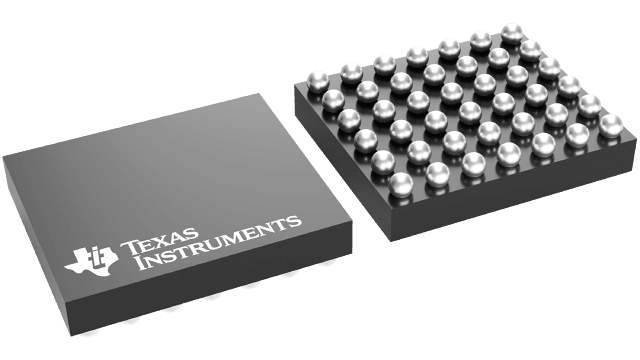
The devices are available in a 42-ball, 2.8 mm x 2.5 mm DSBGA package.
The bq25898, bq25898D are highly-integrated 4-A switch-mode battery charge management and system power path management devices for single cell Li-Ion and Li-polymer battery. The devices support high input voltage fast charging.
The low impedance power path optimizes switch-mode operation efficiency, reduces battery charging time and extends battery life during discharging phase. The I2C Serial interface with charging and system settings makes the device a truly flexible solution.
The bq25898/98D is a highly-integrated 4-A switch-mode battery charge management and system power path management device for single cell Li-Ion and Li-polymer battery. It features fast charging with high input voltage support for a wide range of smartphone, tablet and portable devices. Its low impedance power path optimizes switch-mode operation efficiency, reduces battery charging time and extends battery life during discharging phase. It also integrates Input Current Optimizer (ICO) and Resistance Compensation (IRCOMP) to deliver maximum charging power to battery. The solution is highly integrated with input reverse-blocking FET (RBFET, Q1), high-side switching FET (HSFET, Q2), low-side switching FET (LSFET, Q3), and battery FET (BATFET, Q4) between system and battery. It also integrates the bootstrap diode for the high-side gate drive and battery monitor for simplified system design. The I2C serial interface with charging and system settings makes the device a truly flexible solution.
The device supports a wide range of input sources, including standard USB host port, USB charging port, and USB compliant adjustable high voltage adapter. To support fast charging using adjustable high voltage adapter, the bq25898D provides support for MaxCharge™ handshake using D+/D- pins and DSEL pin for USB switch control. In addition, both bq25898D and bq25898 include interface to support adjustable high voltage adapter using input current pulse protocol. To set the default input current limit, device uses the built-in USB interface (bq25898D) or takes the result from detection circuit in the system (bq25898), such as USB PHY device. The device is compliant with USB 2.0 and USB 3.0 power spec with input current and voltage regulation. In addition, the Input Current Optimizer (ICO) supports the detection of maximum power point detection of the input source without overload. The device also meets USB On-the-Go (OTG) operation power rating specification by supplying 5 V (Adjustable 4.5V-5.5V) on VBUS with current limit up to 2.4 A.
The power path management regulates the system slightly above battery voltage but does not drop below 3.5V minimum system voltage (programmable). With this feature, the system maintains operation even when the battery is completely depleted or removed. When the input current limit or voltage limit is reached, the power path management automatically reduces the charge current to zero. As the system load continues to increase, the power path discharges the battery until the system power requirement is met. This operation prevents overloading the input source.
The device initiates and completes a charging cycle without software control. It automatically detects the battery voltage and charges the battery in three phases: pre-conditioning, constant current and constant voltage. At the end of the charging cycle, the charger automatically terminates when the charge current is below a preset limit in the constant voltage phase. When the full battery falls below the recharge threshold, the charger will automatically start another charging cycle.
The charger provides various safety features for battery charging and system operations, including battery temperature negative thermistor monitoring, charging safety timer and overvoltage/overcurrent protections. The thermal regulation reduces charge current when the junction temperature exceeds 120°C (programmable). The STAT output reports the charging status and any fault conditions. ThePGoutput (bq25898) indicates if a good power source is present. The INT immediately notifies host when fault occurs.
The device also provides a 7-bit analog-to-digital converter (ADC) for monitoring charge current and input/battery/system (VBUS, BAT, SYS, TS) voltages. The QON pin provides BATFET enable/reset control to exit low power ship mode or full system reset function.
The devices are available in a 42-ball, 2.8 mm x 2.5 mm DSBGA package. |
BQ25910I2C 1cell 6A Three-Level buck battery charger for Parallel Charging Applications | Evaluation and Demonstration Boards and Kits | 3 | Active | The BQ25910 is an integrated three-level switch-mode parallel battery charge management device for single cell Li-ion and Li-polymer batteries. Utilization of the three-level converter maintains highest switch-mode operation efficiency while reducing solution footprint and increasing power density. The device supports fast charging with high input voltage for a wide range of portable devices. The solution integrates reverse-blocking FET (QBLK), and four switching FETs (QHSA, QHSB, QLSB, QLSA). The I2C serial interface with charging and system settings makes the device a truly flexible solution.
The BQ25910 is an integrated three-level switch-mode parallel battery charge management device for single cell Li-ion and Li-polymer batteries. Utilization of the three-level converter maintains highest switch-mode operation efficiency while reducing solution footprint and increasing power density. The device supports fast charging with high input voltage for a wide range of portable devices. The solution integrates reverse-blocking FET (QBLK), and four switching FETs (QHSA, QHSB, QLSB, QLSA). The I2C serial interface with charging and system settings makes the device a truly flexible solution. |
BQ25960HI²C, controlled, single-cell, 8-A, switched capacitor parallel battery charger with 1.2-V IO | Power Management (PMIC) | 1 | Active | The BQ25960H is a 98.1% peak efficiency, 8-A battery charging solution using switch capacitor architecture for 1-cell Li-ion battery. The switched cap architecture allows the cable current to be half the charging current, reducing the cable power loss, and limiting temperature rise. The dual-phase architecture increases charging efficiency and reduces the input and output cap requirements. When used with a main charger such as BQ2561x or BQ2589x, the system enables full charging cycle from trickle charge to termination with low power loss at Constant Current (CC) and Constant Voltage (CV) Mode.
The BQ25960H supports 5-A Bypass Mode charge (previously called battery switch charge) through internal MOSFETs. The Rdson in Bypass Mode charging path is 21 mΩ for high-current operation. The integrated Bypass Mode allows backward compatibility of 5-V fast charging adapter to charge 1-cell battery.
The device supports dual input configuration through integrated mux control and driver for external N-FETs. It also allows single input with no external N-FET or single N-FET.
The device integrates all the necessary protection features to support safe charging, including input overvoltage and overcurrent protection, output overvoltage and overcurrent protection, input undercurrent and reverse-current protection, temperature sensing for the battery and cable, and junction overtemperature protection in both Switched Cap and Bypass Mode.
The device includes a 16-bit analog-to-digital converter (ADC) to provide VAC voltage, bus voltage, bus current, output voltage, battery voltage, battery current, input connector temperature, battery temperature, junction temperature, and other calculated measurements needed to manage the charging of the battery from the adapter, or wireless input, or power bank.
The BQ25960H is a 98.1% peak efficiency, 8-A battery charging solution using switch capacitor architecture for 1-cell Li-ion battery. The switched cap architecture allows the cable current to be half the charging current, reducing the cable power loss, and limiting temperature rise. The dual-phase architecture increases charging efficiency and reduces the input and output cap requirements. When used with a main charger such as BQ2561x or BQ2589x, the system enables full charging cycle from trickle charge to termination with low power loss at Constant Current (CC) and Constant Voltage (CV) Mode.
The BQ25960H supports 5-A Bypass Mode charge (previously called battery switch charge) through internal MOSFETs. The Rdson in Bypass Mode charging path is 21 mΩ for high-current operation. The integrated Bypass Mode allows backward compatibility of 5-V fast charging adapter to charge 1-cell battery.
The device supports dual input configuration through integrated mux control and driver for external N-FETs. It also allows single input with no external N-FET or single N-FET.
The device integrates all the necessary protection features to support safe charging, including input overvoltage and overcurrent protection, output overvoltage and overcurrent protection, input undercurrent and reverse-current protection, temperature sensing for the battery and cable, and junction overtemperature protection in both Switched Cap and Bypass Mode.
The device includes a 16-bit analog-to-digital converter (ADC) to provide VAC voltage, bus voltage, bus current, output voltage, battery voltage, battery current, input connector temperature, battery temperature, junction temperature, and other calculated measurements needed to manage the charging of the battery from the adapter, or wireless input, or power bank. |
BQ25970I2C 1cell 8A switched cap battery charger for Parallel Charging Application and external OVP support | Power Management (PMIC) | 1 | Active | The BQ2597x is a 97% efficient, 8-A battery charging solution using a switched cap architecture. This architecture and the integrated FETs are optimized to enable a 50% duty cycle, allowing the cable current to be half the current delivered to the battery, reducing the losses over the charging cable as well as limiting the temperature rise in the application.
The dual-phase architecture reduces the input cap requirements as well as reducing the output voltage ripple. When used with a standard charger such as the BQ2589x, the system enables the fastest charging at the lowest power loss from pre-charge through CC, CV, and termination.
The device integrates all the necessary protection features to ensure safe charging, including input over-voltage and over-current protection, output over-voltage and over-current protection, temperature sensing for the battery and cable, and monitoring the die temperature.
The device includes a 12-bit effective analog-to-digital converter (ADC) to provide bus voltage, bus current, output voltage, battery voltage, battery current, bus temperature, bat temperature, die temperature, and other calculated measurements needed to manage the charging of the battery from the smart wall adapter or power bank.
The BQ2597x is a 97% efficient, 8-A battery charging solution using a switched cap architecture. This architecture and the integrated FETs are optimized to enable a 50% duty cycle, allowing the cable current to be half the current delivered to the battery, reducing the losses over the charging cable as well as limiting the temperature rise in the application.
The dual-phase architecture reduces the input cap requirements as well as reducing the output voltage ripple. When used with a standard charger such as the BQ2589x, the system enables the fastest charging at the lowest power loss from pre-charge through CC, CV, and termination.
The device integrates all the necessary protection features to ensure safe charging, including input over-voltage and over-current protection, output over-voltage and over-current protection, temperature sensing for the battery and cable, and monitoring the die temperature.
The device includes a 12-bit effective analog-to-digital converter (ADC) to provide bus voltage, bus current, output voltage, battery voltage, battery current, bus temperature, bat temperature, die temperature, and other calculated measurements needed to manage the charging of the battery from the smart wall adapter or power bank. |
BQ25971I2C 1cell 8A switched cap battery charger for Parallel Charging Application | Battery Chargers | 2 | Active | The BQ2597x is a 97% efficient, 8-A battery charging solution using a switched cap architecture. This architecture and the integrated FETs are optimized to enable a 50% duty cycle, allowing the cable current to be half the current delivered to the battery, reducing the losses over the charging cable as well as limiting the temperature rise in the application.
The dual-phase architecture reduces the input cap requirements as well as reducing the output voltage ripple. When used with a standard charger such as the BQ2589x, the system enables the fastest charging at the lowest power loss from pre-charge through CC, CV, and termination.
The device integrates all the necessary protection features to ensure safe charging, including input over-voltage and over-current protection, output over-voltage and over-current protection, temperature sensing for the battery and cable, and monitoring the die temperature.
The device includes a 12-bit effective analog-to-digital converter (ADC) to provide bus voltage, bus current, output voltage, battery voltage, battery current, bus temperature, bat temperature, die temperature, and other calculated measurements needed to manage the charging of the battery from the smart wall adapter or power bank.
The BQ2597x is a 97% efficient, 8-A battery charging solution using a switched cap architecture. This architecture and the integrated FETs are optimized to enable a 50% duty cycle, allowing the cable current to be half the current delivered to the battery, reducing the losses over the charging cable as well as limiting the temperature rise in the application.
The dual-phase architecture reduces the input cap requirements as well as reducing the output voltage ripple. When used with a standard charger such as the BQ2589x, the system enables the fastest charging at the lowest power loss from pre-charge through CC, CV, and termination.
The device integrates all the necessary protection features to ensure safe charging, including input over-voltage and over-current protection, output over-voltage and over-current protection, temperature sensing for the battery and cable, and monitoring the die temperature.
The device includes a 12-bit effective analog-to-digital converter (ADC) to provide bus voltage, bus current, output voltage, battery voltage, battery current, bus temperature, bat temperature, die temperature, and other calculated measurements needed to manage the charging of the battery from the smart wall adapter or power bank. |
BQ26100SHA-1/HMAC Based Security & Authentication IC w/SDQ Interface | Development Boards, Kits, Programmers | 2 | Active | The bq26100 device provides a method to authenticate battery packs, ensuring that only packs manufactured by authorized sub-contractors are used in the end application. The security is achieved using the SHA-1 hash function inside the widely adopted keyed-hash message authentication code (HMAC) construction. A unique 128-bit key is stored in each bq26100 device, allowing the host to authenticate each pack.
The bq26100 device communicates to the system over a simple one-wire bi-directional serial interface. The 5-kbits/s SDQ bus interface reduces communications overhead in the external microcontroller. The bq26100 device also derives power over the SDQ bus line via an external capacitor.
The bq26100 device provides a method to authenticate battery packs, ensuring that only packs manufactured by authorized sub-contractors are used in the end application. The security is achieved using the SHA-1 hash function inside the widely adopted keyed-hash message authentication code (HMAC) construction. A unique 128-bit key is stored in each bq26100 device, allowing the host to authenticate each pack.
The bq26100 device communicates to the system over a simple one-wire bi-directional serial interface. The 5-kbits/s SDQ bus interface reduces communications overhead in the external microcontroller. The bq26100 device also derives power over the SDQ bus line via an external capacitor. |