T
Texas Instruments
| Series | Category | # Parts | Status | Description |
|---|---|---|---|---|
| Part | Spec A | Spec B | Spec C | Spec D | Description |
|---|---|---|---|---|---|



| Series | Category | # Parts | Status | Description |
|---|---|---|---|---|
| Part | Spec A | Spec B | Spec C | Spec D | Description |
|---|---|---|---|---|---|
| Part | Category | Description |
|---|---|---|
 Texas Instruments BQ2002CSNTRG4Unknown | Integrated Circuits (ICs) | LINEAR BATTERY CHARGER NICD/NIMH 2000MA 0V TO 6V 8-PIN SOIC T/R |
 Texas Instruments LM3676SDX-3.3Obsolete | Integrated Circuits (ICs) | IC REG BUCK 3.3V 600MA 8WSON |
 Texas Instruments | Integrated Circuits (ICs) | TMX320DRE311 179PIN UBGA 200MHZ |
 Texas Instruments UCC3580N-1G4Obsolete | Integrated Circuits (ICs) | IC REG CTRLR FWRD CONV 16DIP |
 Texas Instruments LM2831YMF EVALObsolete | Development Boards Kits Programmers | EVAL BOARD FOR LM2831 |
 Texas Instruments | Integrated Circuits (ICs) | BUFFER/LINE DRIVER 8-CH NON-INVERTING 3-ST CMOS 20-PIN SSOP T/R |
 Texas Instruments | Integrated Circuits (ICs) | ANALOG OTHER PERIPHERALS |
Texas Instruments | Integrated Circuits (ICs) | RADIATION-HARDENED, QMLP 60V HAL |
 Texas Instruments SN75LVDS051DRObsolete | Integrated Circuits (ICs) | IC TRANSCEIVER FULL 2/2 16SOIC |
 Texas Instruments | Integrated Circuits (ICs) | AUTOMOTIVE OCTAL D-TYPE FLIP-FLO |
| Series | Category | # Parts | Status | Description |
|---|---|---|---|---|
TRS2325-V dual channel 250kbps RS-232 line driver/receiver with +/-9V output & +/-15-kV IEC-ESD protection | Interface | 20 | Active | The TRS232 is a dual driver/receiver that includes a capacitive voltage generator to supply TIA/RS-232-F voltage levels from a single 5-V supply. Each receiver converts TIA/RS-232-F inputs to 5-V TTL/CMOS levels. This receiver has a typical threshold of 1.3 V, a typical hysteresis of 0.5 V, and can accept ±30-V inputs. Each driver converts TTL/CMOS input levels into TIA/RS-232-F levels. The driver, receiver, and voltage-generator functions are available as cells in the Texas Instruments LinASIC™ library.
The TRS232 is a dual driver/receiver that includes a capacitive voltage generator to supply TIA/RS-232-F voltage levels from a single 5-V supply. Each receiver converts TIA/RS-232-F inputs to 5-V TTL/CMOS levels. This receiver has a typical threshold of 1.3 V, a typical hysteresis of 0.5 V, and can accept ±30-V inputs. Each driver converts TTL/CMOS input levels into TIA/RS-232-F levels. The driver, receiver, and voltage-generator functions are available as cells in the Texas Instruments LinASIC™ library. |
TRS232E5-V dual channel 250kbps RS-232 line driver/receiver with +/-9V output & +/-15-kV IEC-ESD protection | Drivers, Receivers, Transceivers | 1 | Obsolete | The TRS232E is a dual driver/receiver that includes a capacitive voltage generator to supply TIA/RS-232-F voltage levels from a single 5-V supply. Each receiver converts TIA/RS-232-F inputs to 5V TTL/CMOS levels. This receiver has a typical threshold of 1.3V, a typical hysteresis of 0.5V, and can accept ±30V inputs. Each driver converts TTL/CMOS input levels into TIA/RS-232-F levels. The driver, receiver, and voltage-generator functions are available as cells in the Texas Instruments LinASIC™ library.
The TRS232E is a dual driver/receiver that includes a capacitive voltage generator to supply TIA/RS-232-F voltage levels from a single 5-V supply. Each receiver converts TIA/RS-232-F inputs to 5V TTL/CMOS levels. This receiver has a typical threshold of 1.3V, a typical hysteresis of 0.5V, and can accept ±30V inputs. Each driver converts TTL/CMOS input levels into TIA/RS-232-F levels. The driver, receiver, and voltage-generator functions are available as cells in the Texas Instruments LinASIC™ library. |
| Development Boards, Kits, Programmers | 3 | Active | ||
| Interface | 90 | Obsolete | ||
| Evaluation and Demonstration Boards and Kits | 18 | Active | ||
TRS3221E3- to 5.5-V single channel 250kbps RS-232 line driver/receiver with +/-15-kV IEC-ESD protection | Interface | 1 | Active | The TRS3221E is a single driver, single receiver RS-232 solution operating from a single VCC supply. The RS-232 pins provide IEC G1000-4-2 ESD protection. The device meets the requirements of TIA/EIA-232-F and provides the electrical interface between an asynchronous communication controller and the serial-port connector. The charge pump and four small external capacitors allow operation from a single 3V to 5.5V supply. These devices operate at data signaling rates up to 250kbit/s and a maximum of 30V/µs driver output slew rate.
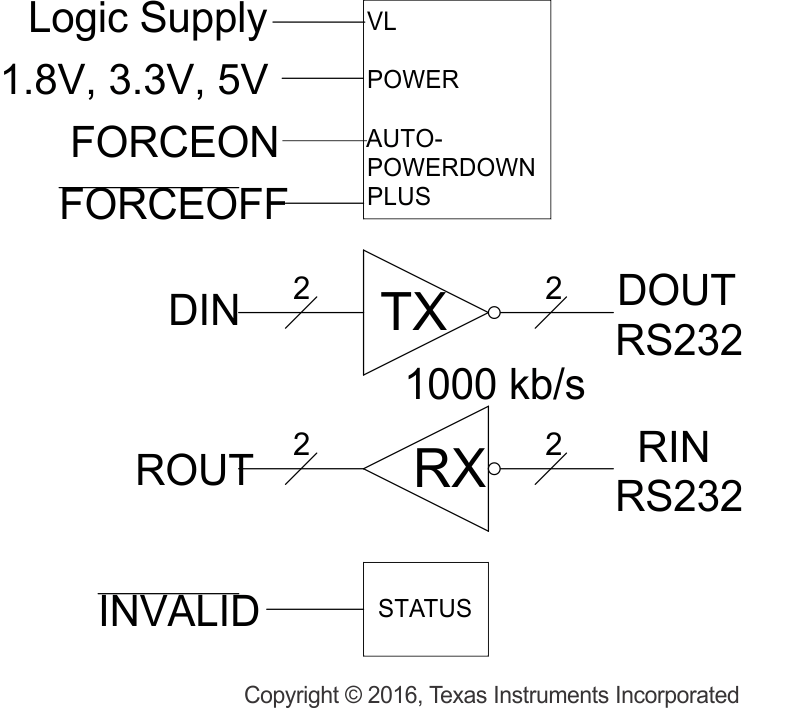
Flexible control options for power management are available when the serial port is inactive. The auto-powerdown feature functions when FORCEON is low and FORCEOFF is high. During this mode of operation, if the device does not sense a valid RS-232 signal on the receiver input, the driver output is disabled. If FORCEOFF is set low and EN is high, both the driver and receiver are shut off, and the supply current is reduced to 1 µA. Disconnecting the serial port or turning off the peripheral drivers causes the auto-powerdown condition to occur. Auto-powerdown can be disabled when FORCEON and FORCEOFF are high.
With auto-powerdown enabled, the device is activated automatically when a valid signal is applied to the receiver input. The INVALID output notifies the user if an RS-232 signal is present at the receiver input. INVALID is high (valid data) if the receiver input voltage is greater than 2.7V or less than –2.7V, or has been between –0.3V and 0.3V for less than 30µs. INVALID is low (invalid data) if the receiver input voltage is between –0.3V and 0.3V for more than 30µs. Refer to Figure 6-5 for receiver input levels.
The TRS3221E is a single driver, single receiver RS-232 solution operating from a single VCC supply. The RS-232 pins provide IEC G1000-4-2 ESD protection. The device meets the requirements of TIA/EIA-232-F and provides the electrical interface between an asynchronous communication controller and the serial-port connector. The charge pump and four small external capacitors allow operation from a single 3V to 5.5V supply. These devices operate at data signaling rates up to 250kbit/s and a maximum of 30V/µs driver output slew rate.
Flexible control options for power management are available when the serial port is inactive. The auto-powerdown feature functions when FORCEON is low and FORCEOFF is high. During this mode of operation, if the device does not sense a valid RS-232 signal on the receiver input, the driver output is disabled. If FORCEOFF is set low and EN is high, both the driver and receiver are shut off, and the supply current is reduced to 1 µA. Disconnecting the serial port or turning off the peripheral drivers causes the auto-powerdown condition to occur. Auto-powerdown can be disabled when FORCEON and FORCEOFF are high.
With auto-powerdown enabled, the device is activated automatically when a valid signal is applied to the receiver input. The INVALID output notifies the user if an RS-232 signal is present at the receiver input. INVALID is high (valid data) if the receiver input voltage is greater than 2.7V or less than –2.7V, or has been between –0.3V and 0.3V for less than 30µs. INVALID is low (invalid data) if the receiver input voltage is between –0.3V and 0.3V for more than 30µs. Refer to Figure 6-5 for receiver input levels. |
TRS32223- to 5.5-V dual channel 250kbps RS-232 line driver/receiver with +/-15-kV ESD protection | Interface | 11 | Active | The TRS3222 consists of two line drivers, two line receivers, and a dual charge-pump circuit with ±15-kV ESD protection pin to pin (serial-port connection pins, including GND). The device meets the requirements of TIA/EIA-232-F and provides the electrical interface between an asynchronous communication controller and the serial-port connector. The charge pump and four small external capacitors allow operation from a single 3-V to 5.5-V supply. The device operates at data signaling rates up to 250 kbit/s and a maximum of 30-V/µ s driver output slew rate.
The TRS3222 can be placed in the power-down mode by settingPWRDOWNlow, which draws only 1 µ A from the power supply. When the device is powered down, the receivers remain active while the drivers are placed in the high-impedance state. Also, during power down, the onboard charge pump is disabled; V+ is lowered to VCC, and V- is raised toward GND. Receiver outputs also can be placed in the high-impedance state by settingENhigh.
The TRS3222 consists of two line drivers, two line receivers, and a dual charge-pump circuit with ±15-kV ESD protection pin to pin (serial-port connection pins, including GND). The device meets the requirements of TIA/EIA-232-F and provides the electrical interface between an asynchronous communication controller and the serial-port connector. The charge pump and four small external capacitors allow operation from a single 3-V to 5.5-V supply. The device operates at data signaling rates up to 250 kbit/s and a maximum of 30-V/µ s driver output slew rate.
The TRS3222 can be placed in the power-down mode by settingPWRDOWNlow, which draws only 1 µ A from the power supply. When the device is powered down, the receivers remain active while the drivers are placed in the high-impedance state. Also, during power down, the onboard charge pump is disabled; V+ is lowered to VCC, and V- is raised toward GND. Receiver outputs also can be placed in the high-impedance state by settingENhigh. |
TRS3222E3- to 5.5-V dual channel 500kbps RS-232 line driver/receiver with +/-15-kV IEC-ESD protection | Integrated Circuits (ICs) | 1 | Obsolete | The TRS3222E consists of two line drivers, two line receivers, and a dual charge-pump circuit with ±15-kV ESD protection pin to pin (serial-port connection pins, including GND).
The device meets the requirements of TIA/EIA-232-F and provides the electrical interface between an asynchronous communication controller and the serial-port connector. The charge pump and four small external capacitors allow operation from a single 3-V to 5.5-V supply. The device operates at typical data signaling rates up to 500 kbit/s and a maximum of 30-V/µs driver output slew rate.
The TRS3222E can be placed in the power-down mode by setting the power-down (PWRDOWN) input low, which draws only 1 µA from the power supply. When the device is powered down, the receivers remain active while the drivers are placed in the high-impedance state. Also, during power down, the onboard charge pump is disabled; V+ is lowered to VCC, and V– is raised toward GND. Receiver outputs also can be placed in the high-impedance state by setting enable (EN) high.
The TRS3222E consists of two line drivers, two line receivers, and a dual charge-pump circuit with ±15-kV ESD protection pin to pin (serial-port connection pins, including GND).
The device meets the requirements of TIA/EIA-232-F and provides the electrical interface between an asynchronous communication controller and the serial-port connector. The charge pump and four small external capacitors allow operation from a single 3-V to 5.5-V supply. The device operates at typical data signaling rates up to 500 kbit/s and a maximum of 30-V/µs driver output slew rate.
The TRS3222E can be placed in the power-down mode by setting the power-down (PWRDOWN) input low, which draws only 1 µA from the power supply. When the device is powered down, the receivers remain active while the drivers are placed in the high-impedance state. Also, during power down, the onboard charge pump is disabled; V+ is lowered to VCC, and V– is raised toward GND. Receiver outputs also can be placed in the high-impedance state by setting enable (EN) high. |
TRS32233- to 5.5-V dual channel 500kbps RS-232 line driver/receiver with +/-15-kV IEC-ESD protection | Integrated Circuits (ICs) | 7 | Active | The TRS3223 consists of two line drivers, two line receivers, and a dual charge-pump circuit with ±15-kV ESD protection pin to pin (serial-port connection pins, including GND). The device meets the requirements of TIA/EIA-232-F and provides the electrical interface between an asynchronous communication controller and the serial-port connector. The charge pump and four small external capacitors allow operation from a single 3-V to 5.5-V supply. The device operates at data signaling rates up to 250 kbit/s and a maximum of 30-V/µs driver output slew rate.
Flexible control options for power management are available when the serial port is inactive. The auto-powerdown feature functions when FORCEON is low andFORCEOFFis high. During this mode of operation, if the device does not sense a valid RS-232 signal, the driver outputs are disabled. IfFORCEOFFis set low andENis high, both drivers and receivers are shut off, and the supply current is reduced to 1 µA. Disconnecting the serial port or turning off the peripheral drivers causes auto-powerdown to occur. Auto-powerdown can be disabled when FORCEON andFORCEOFFare high. With auto-powerdown enabled, the device is activated automatically when a valid signal is applied to any receiver input. TheINVALIDoutput is used to notify the user if an RS-232 signal is present at any receiver input.INVALIDis high (valid data) if any receiver input voltage is greater than 2.7 V or less than –2.7 V, or has been between –0.3 V and 0.3 V for less than 30 µs.INVALIDis low (invalid data) if the receiver input voltage is between –0.3 V and 0.3 V for more than 30 µs. See Figure 4 for receiver input levels.
The TRS3223 consists of two line drivers, two line receivers, and a dual charge-pump circuit with ±15-kV ESD protection pin to pin (serial-port connection pins, including GND). The device meets the requirements of TIA/EIA-232-F and provides the electrical interface between an asynchronous communication controller and the serial-port connector. The charge pump and four small external capacitors allow operation from a single 3-V to 5.5-V supply. The device operates at data signaling rates up to 250 kbit/s and a maximum of 30-V/µs driver output slew rate.
Flexible control options for power management are available when the serial port is inactive. The auto-powerdown feature functions when FORCEON is low andFORCEOFFis high. During this mode of operation, if the device does not sense a valid RS-232 signal, the driver outputs are disabled. IfFORCEOFFis set low andENis high, both drivers and receivers are shut off, and the supply current is reduced to 1 µA. Disconnecting the serial port or turning off the peripheral drivers causes auto-powerdown to occur. Auto-powerdown can be disabled when FORCEON andFORCEOFFare high. With auto-powerdown enabled, the device is activated automatically when a valid signal is applied to any receiver input. TheINVALIDoutput is used to notify the user if an RS-232 signal is present at any receiver input.INVALIDis high (valid data) if any receiver input voltage is greater than 2.7 V or less than –2.7 V, or has been between –0.3 V and 0.3 V for less than 30 µs.INVALIDis low (invalid data) if the receiver input voltage is between –0.3 V and 0.3 V for more than 30 µs. See Figure 4 for receiver input levels. |
TRS3223E3- to 5.5-V dual channel 500kbps RS-232 line driver/receiver with +/-15-kV IEC-ESD protection | Drivers, Receivers, Transceivers | 1 | Obsolete | The TRS3223E consists of two line drivers, two line receivers, and a dual charge-pump circuit with ±15-kV ESD protection pin to pin (serial-port connection pins, including GND). The device meets the requirements of TIA/EIA-232-F and provides the electrical interface between an asynchronous communication controller and the serial-port connector. The charge pump and four small external capacitors allow operation from a single 3-V to 5.5-V supply. The device operates at typical data signaling rates up to 500 kbit/s and a maximum of 30-V/µs driver output slew rate.
Flexible control options for power management are available when the serial port is inactive. The auto-powerdown feature functions when FORCEON is low andFORCEOFFis high. During this mode of operation, if the device does not sense a valid RS-232 signal, the driver outputs are disabled. IfFORCEOFFis set low and EN is high, both drivers and receivers are shut off, and the supply current is reduced to 1 mA. Disconnecting the serial port or turning off the peripheral drivers causes auto-powerdown to occur. Auto-powerdown can be disabled when FORCEON andFORCEOFFare high. With auto-powerdown enabled, the device is activated automatically when a valid signal is applied to any receiver input. TheINVALIDoutput is used to notify the user if an RS-232 signal is present at any receiver input.INVALIDis high (valid data) if any receiver input voltage is greater than 2.7 V or less than -2.7 V, or has been between -0.3 V and 0.3 V for less than 30 µs.INVALIDis low (invalid data) if the receiver input voltage is between -0.3 V and 0.3 V for more than 30 µs. Refer to Figure 4 for receiver input levels.
The TRS3223E consists of two line drivers, two line receivers, and a dual charge-pump circuit with ±15-kV ESD protection pin to pin (serial-port connection pins, including GND). The device meets the requirements of TIA/EIA-232-F and provides the electrical interface between an asynchronous communication controller and the serial-port connector. The charge pump and four small external capacitors allow operation from a single 3-V to 5.5-V supply. The device operates at typical data signaling rates up to 500 kbit/s and a maximum of 30-V/µs driver output slew rate.
Flexible control options for power management are available when the serial port is inactive. The auto-powerdown feature functions when FORCEON is low andFORCEOFFis high. During this mode of operation, if the device does not sense a valid RS-232 signal, the driver outputs are disabled. IfFORCEOFFis set low and EN is high, both drivers and receivers are shut off, and the supply current is reduced to 1 mA. Disconnecting the serial port or turning off the peripheral drivers causes auto-powerdown to occur. Auto-powerdown can be disabled when FORCEON andFORCEOFFare high. With auto-powerdown enabled, the device is activated automatically when a valid signal is applied to any receiver input. TheINVALIDoutput is used to notify the user if an RS-232 signal is present at any receiver input.INVALIDis high (valid data) if any receiver input voltage is greater than 2.7 V or less than -2.7 V, or has been between -0.3 V and 0.3 V for less than 30 µs.INVALIDis low (invalid data) if the receiver input voltage is between -0.3 V and 0.3 V for more than 30 µs. Refer to Figure 4 for receiver input levels. |