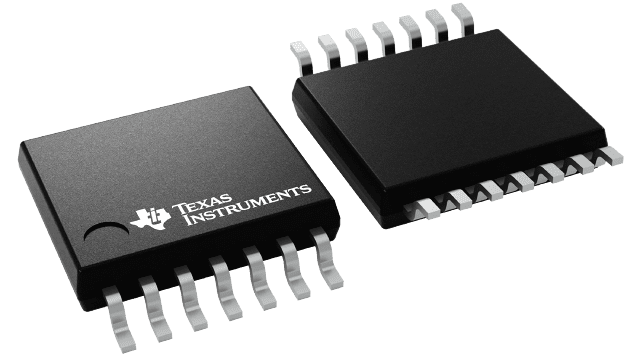
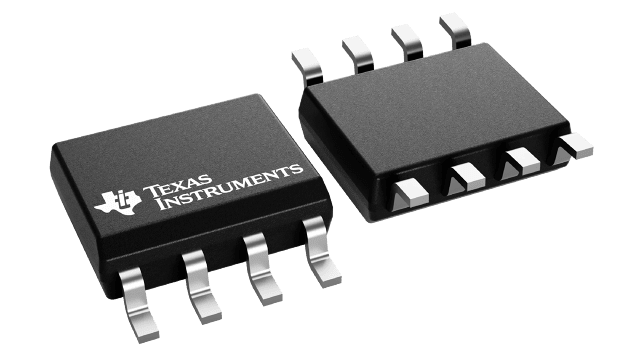
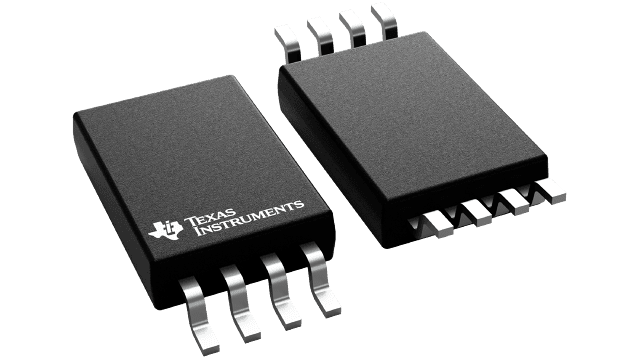
TPS2398-36-V to -80-V hot swap controller with power good | Hot Swap Controllers | 4 | Active | The TPS2398 and TPS2399 integrated circuits are hot swap power managers optimized for use in nominal –48-V systems. For redundant-supply systems, they incorporate an improved circuit breaker response that provides rapid protection from short circuits, while still enabling plug-ins to tolerate large transients that can be generated by the sudden switchover to a higher voltage supply. They are designed for supply voltage ranges up to –80 V, and are rated to withstand spikes to –100 V. In conjunction with an external N-channel FET and sense resistor, they can be used to enable live insertion of plug-in cards and modules in powered systems. Both devices provide load current slew rate and peak magnitude limiting, easily programmed by sense resistor value and a single-external capacitor.
They also provide single-line fault reporting, electrical isolation of faulty cards, and protection against nuisance overcurrent trips. The TPS2398 latches off in response to current faults, while the TPS2399 periodically retries the load in the event of a fault.
The TPS2398 and TPS2399 integrated circuits are hot swap power managers optimized for use in nominal –48-V systems. For redundant-supply systems, they incorporate an improved circuit breaker response that provides rapid protection from short circuits, while still enabling plug-ins to tolerate large transients that can be generated by the sudden switchover to a higher voltage supply. They are designed for supply voltage ranges up to –80 V, and are rated to withstand spikes to –100 V. In conjunction with an external N-channel FET and sense resistor, they can be used to enable live insertion of plug-in cards and modules in powered systems. Both devices provide load current slew rate and peak magnitude limiting, easily programmed by sense resistor value and a single-external capacitor.
They also provide single-line fault reporting, electrical isolation of faulty cards, and protection against nuisance overcurrent trips. The TPS2398 latches off in response to current faults, while the TPS2399 periodically retries the load in the event of a fault. |
TPS2399-36-V to -80-V hot swap controller with enable | Power Management (PMIC) | 4 | Active | The TPS2398 and TPS2399 integrated circuits are hot swap power managers optimized for use in nominal –48-V systems. For redundant-supply systems, they incorporate an improved circuit breaker response that provides rapid protection from short circuits, while still enabling plug-ins to tolerate large transients that can be generated by the sudden switchover to a higher voltage supply. They are designed for supply voltage ranges up to –80 V, and are rated to withstand spikes to –100 V. In conjunction with an external N-channel FET and sense resistor, they can be used to enable live insertion of plug-in cards and modules in powered systems. Both devices provide load current slew rate and peak magnitude limiting, easily programmed by sense resistor value and a single-external capacitor.
They also provide single-line fault reporting, electrical isolation of faulty cards, and protection against nuisance overcurrent trips. The TPS2398 latches off in response to current faults, while the TPS2399 periodically retries the load in the event of a fault.
The TPS2398 and TPS2399 integrated circuits are hot swap power managers optimized for use in nominal –48-V systems. For redundant-supply systems, they incorporate an improved circuit breaker response that provides rapid protection from short circuits, while still enabling plug-ins to tolerate large transients that can be generated by the sudden switchover to a higher voltage supply. They are designed for supply voltage ranges up to –80 V, and are rated to withstand spikes to –100 V. In conjunction with an external N-channel FET and sense resistor, they can be used to enable live insertion of plug-in cards and modules in powered systems. Both devices provide load current slew rate and peak magnitude limiting, easily programmed by sense resistor value and a single-external capacitor.
They also provide single-line fault reporting, electrical isolation of faulty cards, and protection against nuisance overcurrent trips. The TPS2398 latches off in response to current faults, while the TPS2399 periodically retries the load in the event of a fault. |
| Power Supply Controllers, Monitors | 3 | Active | |
| Evaluation Boards | 1 | Obsolete | |
| Evaluation Boards | 6 | Active | |
TPS24110.8-V to 16.5-V 1.2A IQ 293-uA Igate source N+1 and OR-ing power rail controller | Development Boards, Kits, Programmers | 6 | Active | The TPS241x controller, in conjunction with an external N-channel MOSFET, emulates the function of a low forward-voltage diode. The device can be used to combine multiple power supplies to a common bus in an N+1 configuration, or to combine redundant input power buses. The TPS2410 provides a linear turn-on control while the TPS2411 has an on/off control method.
Applications for the TPS2410x include a wide range of systems including servers and telecom. These applications often have either N+1 redundant power supplies, redundant power buses, or both. These redundant power sources must have the equivalent of a diode OR to prevent reverse current during faults and hotplug. A TPS241x and N-channel MOSFET provide this function with less power loss than a schottky diode.
Accurate voltage sensing, programmable fast turn-off threshold, and input filtering allow operations to be tailored for a wide range of implementations and bus characteristics.
A number of monitoring features are provided to indicate voltage bus UV/OV, ON/OFF state, and a shorted MOSFET gate.
The TPS241x controller, in conjunction with an external N-channel MOSFET, emulates the function of a low forward-voltage diode. The device can be used to combine multiple power supplies to a common bus in an N+1 configuration, or to combine redundant input power buses. The TPS2410 provides a linear turn-on control while the TPS2411 has an on/off control method.
Applications for the TPS2410x include a wide range of systems including servers and telecom. These applications often have either N+1 redundant power supplies, redundant power buses, or both. These redundant power sources must have the equivalent of a diode OR to prevent reverse current during faults and hotplug. A TPS241x and N-channel MOSFET provide this function with less power loss than a schottky diode.
Accurate voltage sensing, programmable fast turn-off threshold, and input filtering allow operations to be tailored for a wide range of implementations and bus characteristics.
A number of monitoring features are provided to indicate voltage bus UV/OV, ON/OFF state, and a shorted MOSFET gate. |
TPS24120.8-V to 16.5-V 1.2A IQ 292-uA Igate source N+1 and OR-ing power rail controller | Evaluation and Demonstration Boards and Kits | 7 | Active | The TPS2412/13 controller, in conjunction with an external N-channel MOSFET, emulates the function of a low forward voltage diode. The TPS2412/13 can be used to combine multiple power supplies to a common bus in an N+1 configuration, or to combine redundant input power buses. The TPS2412 provides a linear turnon control while the TPS2413 has an on/off control method.
Applications for the TPS2412/13 include a wide range of systems including servers and telecom. These applications often have either N+1 redundant power supplies, redundant power buses, or both. Redundant power sources must have the equivalent of a diode OR to prevent reverse current during faults and hotplug. A TPS2412/13 and N-channel MOSFET provide this function with less power loss than a schottky diode.
Accurate voltage sensing and a programmable turnoff threshold allows operation to be tailored for a wide range of implementations and bus characteristics. The TPS2412/13 are lower pin count, reduced feature versions of the TPS2410/11.
The TPS2412/13 controller, in conjunction with an external N-channel MOSFET, emulates the function of a low forward voltage diode. The TPS2412/13 can be used to combine multiple power supplies to a common bus in an N+1 configuration, or to combine redundant input power buses. The TPS2412 provides a linear turnon control while the TPS2413 has an on/off control method.
Applications for the TPS2412/13 include a wide range of systems including servers and telecom. These applications often have either N+1 redundant power supplies, redundant power buses, or both. Redundant power sources must have the equivalent of a diode OR to prevent reverse current during faults and hotplug. A TPS2412/13 and N-channel MOSFET provide this function with less power loss than a schottky diode.
Accurate voltage sensing and a programmable turnoff threshold allows operation to be tailored for a wide range of implementations and bus characteristics. The TPS2412/13 are lower pin count, reduced feature versions of the TPS2410/11. |
| Evaluation Boards | 7 | Active | |
| Power Management (PMIC) | 4 | Active | |
TPS24203-V to 20-V, 30mΩ, 1-5A eFuse | Evaluation and Demonstration Boards and Kits | 3 | Active | The TPS2420 device provides highly integrated load protection for applications up to 20-V. The maximum UV turn-on threshold of 2.9 V makes the TPS2420 well suited to standard bus voltages as low as 3.3 V. The TPS2420 device protects loads, minimizes inrush current, and safely shuts down in the event of a fault. The programmable fault current threshold starts the fault timer while allowing the current to pass to the load uninhibited. The programmable current limit threshold sets the maximum current allowed into the load, for both inrush and severe load faults. Both events use the programmable timer which inhibits all current to the load when it expires.
The dual protection thresholds are useful in applications such as disk drives. The start-up and seek currents are typically higher than the nominal current and during this time the load needs a low impedance path to deliver the power. If a failure at the load occurs, the current limit does not allow the current to exceed the programmed threshold. This protects both the load and the integrity of the power supply. The internal MOSFET is protected by power limit circuitry which ensures that the MOSFET remains within its safe operating area (SOA) during all operating states.
The TPS2420 device also allows the system to monitor load currents with no need for a shunt in the power path. The gain of the current monitor can be scaled to the application. Fault and power good outputs are provided for improved system management and sequencing control.
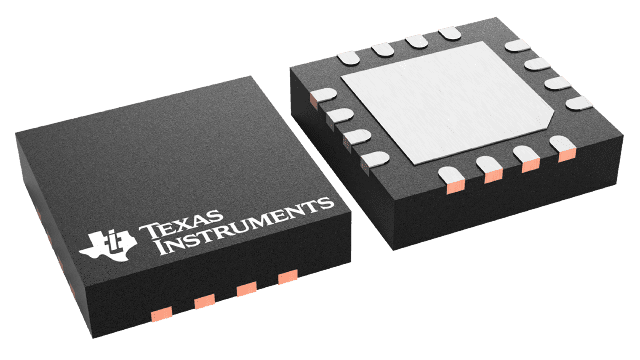
This device can be programmed to either latch-off or retry in the event of a fault. All of this functionality is packed into a 16-pin 4 × 4 mm QFN package.
The TPS2420 device provides highly integrated load protection for applications up to 20-V. The maximum UV turn-on threshold of 2.9 V makes the TPS2420 well suited to standard bus voltages as low as 3.3 V. The TPS2420 device protects loads, minimizes inrush current, and safely shuts down in the event of a fault. The programmable fault current threshold starts the fault timer while allowing the current to pass to the load uninhibited. The programmable current limit threshold sets the maximum current allowed into the load, for both inrush and severe load faults. Both events use the programmable timer which inhibits all current to the load when it expires.
The dual protection thresholds are useful in applications such as disk drives. The start-up and seek currents are typically higher than the nominal current and during this time the load needs a low impedance path to deliver the power. If a failure at the load occurs, the current limit does not allow the current to exceed the programmed threshold. This protects both the load and the integrity of the power supply. The internal MOSFET is protected by power limit circuitry which ensures that the MOSFET remains within its safe operating area (SOA) during all operating states.
The TPS2420 device also allows the system to monitor load currents with no need for a shunt in the power path. The gain of the current monitor can be scaled to the application. Fault and power good outputs are provided for improved system management and sequencing control.
This device can be programmed to either latch-off or retry in the event of a fault. All of this functionality is packed into a 16-pin 4 × 4 mm QFN package. |