SN74AUC1264-ch, 0.8-V to 2.7-V high speed buffers with 3-state outputs | Integrated Circuits (ICs) | 1 | Active | This quadruple bus buffer gate is designed for 0.8-V to 2.7-V VCCoperation, but is designed specifically for 1.6-V to 1.95-V VCCoperation.
The SN74AUC126 contains four independent line drivers with 3-state outputs. Each output is disabled when the associated output-enable (OE) input is low.
To ensure the high-impedance state during power up or power down, OE should be tied to GND through a pulldown resistor; the minimum value of the resistor is determined by the current-sourcing capability of the driver.
This device is fully specified for partial-power-down applications using Ioff. The Ioffcircuitry disables the outputs, preventing damaging current backflow through the device when it is powered down.
This quadruple bus buffer gate is designed for 0.8-V to 2.7-V VCCoperation, but is designed specifically for 1.6-V to 1.95-V VCCoperation.
The SN74AUC126 contains four independent line drivers with 3-state outputs. Each output is disabled when the associated output-enable (OE) input is low.
To ensure the high-impedance state during power up or power down, OE should be tied to GND through a pulldown resistor; the minimum value of the resistor is determined by the current-sourcing capability of the driver.
This device is fully specified for partial-power-down applications using Ioff. The Ioffcircuitry disables the outputs, preventing damaging current backflow through the device when it is powered down. |
SN74AUC146-ch, 0.8-V to 2.7-V high speed inverters with Schmitt-Trigger inputs | Integrated Circuits (ICs) | 1 | Active | This hex Schmitt-trigger inverter is operational at 0.8-V to 2.7-V VCC, but is designed specifically for 1.65-V to 1.95-V VCCoperation.
The SN74AUC14 contains six independent inverters and performs the Boolean function Y =A. The device functions as six independent inverters, but because of Schmitt action, it may have different input threshold levels for positive-going (VT+) and negative-going (VT–) signals.
This device is fully specified for partial-power-down applications using Ioff. The Ioffcircuitry disables the outputs, preventing damaging current backflow through the device when it is powered down.
This hex Schmitt-trigger inverter is operational at 0.8-V to 2.7-V VCC, but is designed specifically for 1.65-V to 1.95-V VCCoperation.
The SN74AUC14 contains six independent inverters and performs the Boolean function Y =A. The device functions as six independent inverters, but because of Schmitt action, it may have different input threshold levels for positive-going (VT+) and negative-going (VT–) signals.
This device is fully specified for partial-power-down applications using Ioff. The Ioffcircuitry disables the outputs, preventing damaging current backflow through the device when it is powered down. |
SN74AUC1624016-ch, 0.8-V to 2.7-V high speed inverters with 3-state outputs | Integrated Circuits (ICs) | 2 | Active | This 16-bit buffer/driver is operational at 0.8-V to 2.7-V VCC, but is designed specifically for 1.65-V to 1.95-V VCCoperation.
The SN74AUC16240 is designed specifically to improve the performance and density of 3-state memory address drivers, clock drivers, and bus-oriented receivers and transmitters.
The device can be used as four 4-bit buffers, two 8-bit buffers, or one 16-bit buffer. It provides inverting outputs and symmetrical active-low output-enable (OE)\ inputs.
To ensure the high-impedance state during power up or power down, OE\ should be tied to VCCthrough a pullup resistor; the minimum value of the resistor is determined by the current-sinking capability of the driver.
This device is fully specified for partial-power-down applications using Ioff. The Ioffcircuitry disables the outputs, preventing damaging current backflow through the device when it is powered down.
This 16-bit buffer/driver is operational at 0.8-V to 2.7-V VCC, but is designed specifically for 1.65-V to 1.95-V VCCoperation.
The SN74AUC16240 is designed specifically to improve the performance and density of 3-state memory address drivers, clock drivers, and bus-oriented receivers and transmitters.
The device can be used as four 4-bit buffers, two 8-bit buffers, or one 16-bit buffer. It provides inverting outputs and symmetrical active-low output-enable (OE)\ inputs.
To ensure the high-impedance state during power up or power down, OE\ should be tied to VCCthrough a pullup resistor; the minimum value of the resistor is determined by the current-sinking capability of the driver.
This device is fully specified for partial-power-down applications using Ioff. The Ioffcircuitry disables the outputs, preventing damaging current backflow through the device when it is powered down. |
SN74AUC1624416-ch, 0.8-V to 2.7-V high speed buffers with 3-state outputs | Logic | 3 | Active | This 16-bit buffer/driver is operational at 0.8-V to 2.7-V VCC, but is designed specifically for 1.65-V to 1.95-V VCCoperation.
The SN74AUC16244 is designed specifically toimprove the performance and density of 3-statememory address drivers, clock drivers, and bus-oriented receivers and transmitters.
The device can be used as four 4-bit buffers, two 8-bit buffers, or one 16-bit buffer. It provides true outputs and symmetrical active-low output-enable (OE) inputs.
To ensure the high-impedance state during power up or power down,OEshould be tied to VCCthrough a pullup resistor; the minimum value of the resistor is determined by the current-sinking capability of the driver.
This device is fully specified for partial-power-down applications using Ioff. The Ioffcircuitry disables the outputs, preventing damaging current backflow through the device when it is powered down.
This 16-bit buffer/driver is operational at 0.8-V to 2.7-V VCC, but is designed specifically for 1.65-V to 1.95-V VCCoperation.
The SN74AUC16244 is designed specifically toimprove the performance and density of 3-statememory address drivers, clock drivers, and bus-oriented receivers and transmitters.
The device can be used as four 4-bit buffers, two 8-bit buffers, or one 16-bit buffer. It provides true outputs and symmetrical active-low output-enable (OE) inputs.
To ensure the high-impedance state during power up or power down,OEshould be tied to VCCthrough a pullup resistor; the minimum value of the resistor is determined by the current-sinking capability of the driver.
This device is fully specified for partial-power-down applications using Ioff. The Ioffcircuitry disables the outputs, preventing damaging current backflow through the device when it is powered down. |
| Buffers, Drivers, Receivers, Transceivers | 2 | Active | This 16-bit (dual-octal) noninverting bus transceiver is operational at 0.8-V to 2.7-V VCC, but is designed specifically for 1.65-V to 1.95-V VCCoperation.
The SN74AUC16245 is designed for asynchronous communication between data buses. The control-function implementation minimizes external timing requirements.
This device can be used as two 8-bit transceivers or one 16-bit transceiver. It allows data transmission from the A bus to the B bus or from the B bus to the A bus, depending on the logic level at the direction-control (DIR) input. The output-enable (OE)\ input can be used to disable the device so that the buses are effectively isolated.
To ensure the high-impedance state during power up or power down, OE\ should be tied to VCCthrough a pullup resistor; the minimum value of the resistor is determined by the current-sinking capability of the driver.
This device is fully specified for partial-power-down applications using Ioff. The Ioffcircuitry disables the outputs, preventing damaging current backflow through the device when it is powered down.
This 16-bit (dual-octal) noninverting bus transceiver is operational at 0.8-V to 2.7-V VCC, but is designed specifically for 1.65-V to 1.95-V VCCoperation.
The SN74AUC16245 is designed for asynchronous communication between data buses. The control-function implementation minimizes external timing requirements.
This device can be used as two 8-bit transceivers or one 16-bit transceiver. It allows data transmission from the A bus to the B bus or from the B bus to the A bus, depending on the logic level at the direction-control (DIR) input. The output-enable (OE)\ input can be used to disable the device so that the buses are effectively isolated.
To ensure the high-impedance state during power up or power down, OE\ should be tied to VCCthrough a pullup resistor; the minimum value of the resistor is determined by the current-sinking capability of the driver.
This device is fully specified for partial-power-down applications using Ioff. The Ioffcircuitry disables the outputs, preventing damaging current backflow through the device when it is powered down. |
SN74AUC1637316-Bit Transparent D-Type Latch With 3-State Outputs | Latches | 1 | Active | This 16-bit transparent D-type latch is operational at 0.8-V to 2.7-V VCC, but is designed specifically for 1.65-V to 1.95-V VCCoperation.
The SN74AUC16373 is particularly suitable for implementing buffer registers, I/O ports, bidirectional bus drivers, and working registers. The device can be used as two 8-bit latches or one 16-bit latch. When the latch-enable (LE) input is high, the Q outputs follow the data (D) inputs. When LE is taken low, the Q outputs are latched at the levels set up at the D inputs.
A buffered output-enable (OE)\ input can be used to place the eight outputs in either a normal logic state (high or low logic levels) or the high-impedance state. In the high-impedance state, the outputs neither load nor drive the bus lines significantly. The high-impedance state and increased drive provide the capability to drive bus lines without interface or pullup components.
OE\ does not affect internal operations of the latch. Old data can be retained or new data can be entered while the outputs are in the high-impedance state.
To ensure the high-impedance state during power up or power down, OE\ should be tied to VCCthrough a pullup resistor; the minimum value of the resistor is determined by the current-sinking capability of the driver.
This device is fully specified for partial-power-down applications using Ioff. The Ioffcircuitry disables the outputs, preventing damaging current backflow through the device when it is powered down.
This 16-bit transparent D-type latch is operational at 0.8-V to 2.7-V VCC, but is designed specifically for 1.65-V to 1.95-V VCCoperation.
The SN74AUC16373 is particularly suitable for implementing buffer registers, I/O ports, bidirectional bus drivers, and working registers. The device can be used as two 8-bit latches or one 16-bit latch. When the latch-enable (LE) input is high, the Q outputs follow the data (D) inputs. When LE is taken low, the Q outputs are latched at the levels set up at the D inputs.
A buffered output-enable (OE)\ input can be used to place the eight outputs in either a normal logic state (high or low logic levels) or the high-impedance state. In the high-impedance state, the outputs neither load nor drive the bus lines significantly. The high-impedance state and increased drive provide the capability to drive bus lines without interface or pullup components.
OE\ does not affect internal operations of the latch. Old data can be retained or new data can be entered while the outputs are in the high-impedance state.
To ensure the high-impedance state during power up or power down, OE\ should be tied to VCCthrough a pullup resistor; the minimum value of the resistor is determined by the current-sinking capability of the driver.
This device is fully specified for partial-power-down applications using Ioff. The Ioffcircuitry disables the outputs, preventing damaging current backflow through the device when it is powered down. |
SN74AUC1637416-Bit Edge-Triggered D-Type Flip-Flop With 3-State Outputs | Integrated Circuits (ICs) | 2 | Active | This 16-bit edge-triggered D-type flip-flop is operational at 0.8-V to 2.7-V VCC, but is designed specifically for 1.65-V to 1.95-V VCCoperation.
The SN74AUC16374 is particularly suitable for implementing buffer registers, I/O ports, bidirectional bus drivers, and working registers. It can be used as two 8-bit flip-flops or one 16-bit flip-flop. On the positive transition of the clock (CLK) input, the Q outputs of the flip-flop take on the logic levels set up at the data (D) inputs.
A buffered output-enable (OE) input can be used to place the eight outputs in either a normal logic state (high or low logic levels) or the high-impedance state. In the high-impedance state, the outputs neither load nor drive the bus lines significantly. The high-impedance state and increased drive provide the capability to drive bus lines without interface or pullup components.
OEdoes not affect internal operations of the latch. Old data can be retained or new data can be entered while the outputs are in the high-impedance state.
To ensure the high-impedance state during power up or power down,OEshould be tied to VCCthrough a pullup resistor; the minimum value of the resistor is determined by the current-sinking capability of the driver.
This device is fully specified for partial-power-down applications using Ioff. The Ioffcircuitry disables the outputs, preventing damaging current backflow through the device when it is powered down.
This 16-bit edge-triggered D-type flip-flop is operational at 0.8-V to 2.7-V VCC, but is designed specifically for 1.65-V to 1.95-V VCCoperation.
The SN74AUC16374 is particularly suitable for implementing buffer registers, I/O ports, bidirectional bus drivers, and working registers. It can be used as two 8-bit flip-flops or one 16-bit flip-flop. On the positive transition of the clock (CLK) input, the Q outputs of the flip-flop take on the logic levels set up at the data (D) inputs.
A buffered output-enable (OE) input can be used to place the eight outputs in either a normal logic state (high or low logic levels) or the high-impedance state. In the high-impedance state, the outputs neither load nor drive the bus lines significantly. The high-impedance state and increased drive provide the capability to drive bus lines without interface or pullup components.
OEdoes not affect internal operations of the latch. Old data can be retained or new data can be entered while the outputs are in the high-impedance state.
To ensure the high-impedance state during power up or power down,OEshould be tied to VCCthrough a pullup resistor; the minimum value of the resistor is determined by the current-sinking capability of the driver.
This device is fully specified for partial-power-down applications using Ioff. The Ioffcircuitry disables the outputs, preventing damaging current backflow through the device when it is powered down. |
SN74AUC176-ch, 0.8-V to 2.7-V high speed buffers with Schmitt-Trigger inputs | Logic | 2 | Active | This hex Schmitt-trigger buffer is operational at 0.8-V to 2.7-V VCC, but is designed specifically for 1.65-V to 1.95-V VCCoperation.
The SN74AUC17 contains six independent buffers and performs the Boolean function Y = A. The device functions as six independent buffers, but because of Schmitt action, it may have different input threshold levels for positive-going (VT+) and negative-going (VT-) signals.
This device is fully specified for partial-power-down applications using Ioff. The Ioffcircuitry disables the outputs, preventing damaging current backflow through the device when it is powered down.
This hex Schmitt-trigger buffer is operational at 0.8-V to 2.7-V VCC, but is designed specifically for 1.65-V to 1.95-V VCCoperation.
The SN74AUC17 contains six independent buffers and performs the Boolean function Y = A. The device functions as six independent buffers, but because of Schmitt action, it may have different input threshold levels for positive-going (VT+) and negative-going (VT-) signals.
This device is fully specified for partial-power-down applications using Ioff. The Ioffcircuitry disables the outputs, preventing damaging current backflow through the device when it is powered down. |
SN74AUC1G00Single 2-input, 0.8-V to 2.7-V high speed NAND gate | Logic | 5 | Active | This single 2-input positive-NAND gate is operational at 0.8-V to 2.7-V VCC, but is designed specifically for 1.65-V to 1.95-V VCCoperation.
The SN74AUC1G00 performs the Boolean function Y =A • Bor Y =A+Bin positive logic.
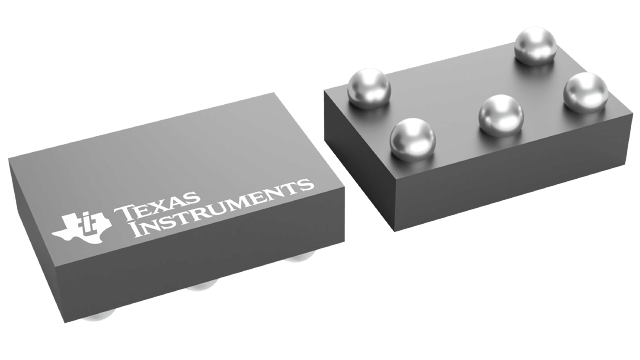
NanoFree™ package technology is a major breakthrough in IC packaging concepts, using the die as the package.
This device is fully specified for partial-power-down applications using Ioff. The Ioffcircuitry disables the outputs, preventing damaging current backflow through the device when it is powered down.
For more information about AUC Little Logic devices, please refer to the TI application report,Applications of Texas Instruments AUC Sub-1-V Little Logic Devices, literature number SCEA027.
This single 2-input positive-NAND gate is operational at 0.8-V to 2.7-V VCC, but is designed specifically for 1.65-V to 1.95-V VCCoperation.
The SN74AUC1G00 performs the Boolean function Y =A • Bor Y =A+Bin positive logic.
NanoFree™ package technology is a major breakthrough in IC packaging concepts, using the die as the package.
This device is fully specified for partial-power-down applications using Ioff. The Ioffcircuitry disables the outputs, preventing damaging current backflow through the device when it is powered down.
For more information about AUC Little Logic devices, please refer to the TI application report,Applications of Texas Instruments AUC Sub-1-V Little Logic Devices, literature number SCEA027. |
SN74AUC1G02Single 2-input, 0.8-V to 2.7-V high speed NOR gate | Gates and Inverters | 3 | Active | This single 2-input positive-NOR gate is operational at 0.8-V to 2.7-V VCC, but is designed specifically for 1.65-V to 1.95-V VCCoperation.
The SN74AUC1G02 performs the Boolean function Y =A + Bor Y =A•Bin positive logic.
NanoFree™ package technology is a major breakthrough in IC packaging concepts, using the die as the package.
This device is fully specified for partial-power-down applications using Ioff. The Ioffcircuitry disables the outputs, preventing damaging current backflow through the device when it is powered down.
For more information about AUC Little Logic devices, please refer to the TI application report,Applications of Texas Instruments AUC Sub-1-V Little Logic Devices, literature number SCEA027.
This single 2-input positive-NOR gate is operational at 0.8-V to 2.7-V VCC, but is designed specifically for 1.65-V to 1.95-V VCCoperation.
The SN74AUC1G02 performs the Boolean function Y =A + Bor Y =A•Bin positive logic.
NanoFree™ package technology is a major breakthrough in IC packaging concepts, using the die as the package.
This device is fully specified for partial-power-down applications using Ioff. The Ioffcircuitry disables the outputs, preventing damaging current backflow through the device when it is powered down.
For more information about AUC Little Logic devices, please refer to the TI application report,Applications of Texas Instruments AUC Sub-1-V Little Logic Devices, literature number SCEA027. |