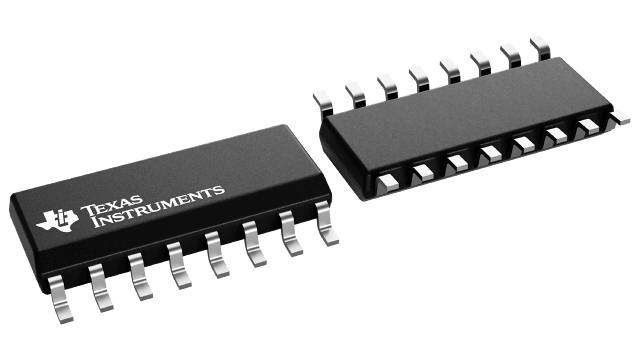
| Signal Switches, Multiplexers, Decoders | 4 | Active | The SN65LVCP23 is a 2x2 LVPECL crosspoint switch. The dual channels incorporate wide common-mode (0 V to 4 V) receivers, allowing for the receipt of LVDS, LVPECL, and CML signals. The dual outputs are LVPECL drivers to provide high-speed operation. The SN65LVCP23 provides a single device supporting 2:2 buffering (repeating), 1:2 splitting, 2:1 multiplexing, 2x2 switching, and LVDS/CML to LVPECL level translation on each channel. The flexible operation of the SN65LVCP23 provides a single device to support the redundant serial bus transmission needs (working and protection switching cards) of fault-tolerant switch systems found in optical networking, wireless infrastructure, and data communications systems. TI offers an additional gigabit repeater/translator in the SN65LVDS101.
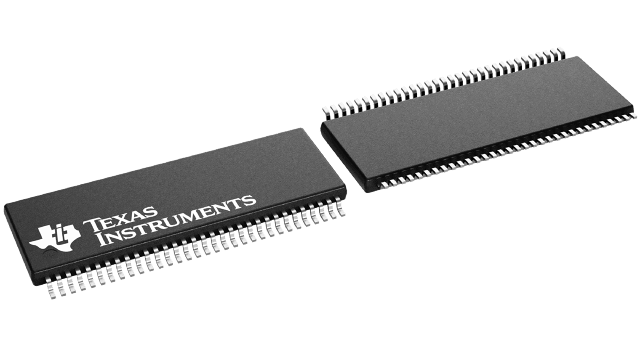
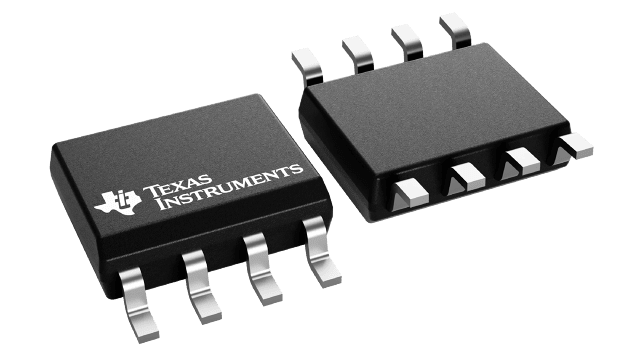
The SN65LVCP23 uses a fully differential data path to ensure low-noise generation, fast switching times, low pulse width distortion, and low jitter. Output channel-to-channel skew is less than 10 ps (typ) and 50 ps (max) to ensure accurate alignment of outputs in all applications. Both SOIC and TSSOP package options are available.
The SN65LVCP23 is a 2x2 LVPECL crosspoint switch. The dual channels incorporate wide common-mode (0 V to 4 V) receivers, allowing for the receipt of LVDS, LVPECL, and CML signals. The dual outputs are LVPECL drivers to provide high-speed operation. The SN65LVCP23 provides a single device supporting 2:2 buffering (repeating), 1:2 splitting, 2:1 multiplexing, 2x2 switching, and LVDS/CML to LVPECL level translation on each channel. The flexible operation of the SN65LVCP23 provides a single device to support the redundant serial bus transmission needs (working and protection switching cards) of fault-tolerant switch systems found in optical networking, wireless infrastructure, and data communications systems. TI offers an additional gigabit repeater/translator in the SN65LVDS101.
The SN65LVCP23 uses a fully differential data path to ensure low-noise generation, fast switching times, low pulse width distortion, and low jitter. Output channel-to-channel skew is less than 10 ps (typ) and 50 ps (max) to ensure accurate alignment of outputs in all applications. Both SOIC and TSSOP package options are available. |
SN65LVCP40DC to 4-Gbps dual 1:2 mux/repeater/equalizer | Integrated Circuits (ICs) | 3 | Obsolete | The SN65LVCP40 is a signal conditioner and data multiplexer optimized for backplanes. Input equalization and programmable output preemphasis support data rates up to 4 Gbps. Common applications are redundancy switching, signal buffering, or performance improvements on legacy backplane hardware.
The SN65LVCP40 combines a pair of 1:2 buffers with a pair of 2:1 multiplexers (mux). Selectable switch-side loopback supports system testing. System interconnects and serial backplane applications of up to 4 Gbps are supported. Each of the two independent channels consists of a transmitter with a fan-out of two, and a receiver with a 2:1 input multiplexer.
The drivers provide four selectable levels of preemphasis to compensate for transmission line losses. The receivers incorporates receive equalization and compensates for input transmission line loss. This minimizes deterministic jitter in the link. The equalization is optimized to compensate for a FR-4 backplane trace with 5-dB, high-frequency loss between 375 MHz and 1.875 GHz. This corresponds to a 24-inch long FR-4 trace with 6-mil trace width.
This device operates from a single 3.3-V supply. The device has integrated 100-line impedance. The inputs and outputs may be ac coupled for best interconnectivity with other devices such as SERDES I/O or additional XAUI multiplexer buffer. With ac coupling, jitter is the lowest.
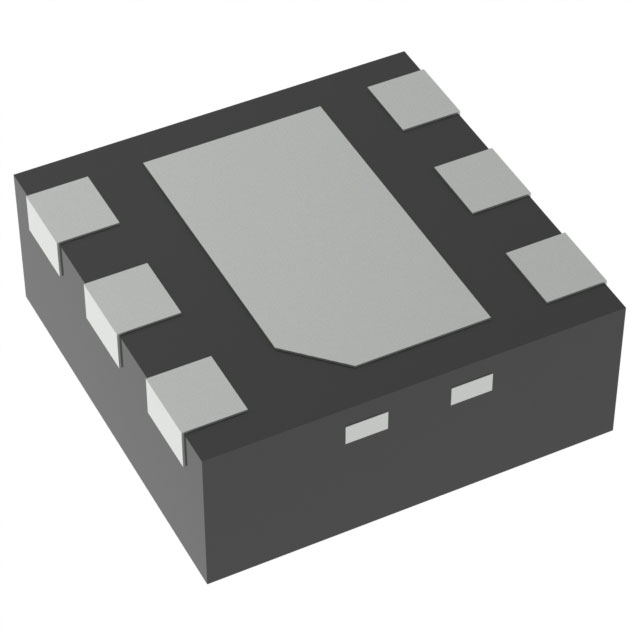
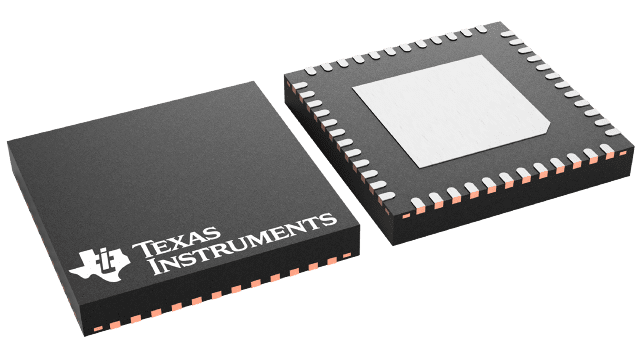
The SN65LVCP40 is packaged in a 7 mm × 7 mm × 1 mm QFN (quad flatpack no-lead) lead-free package, and is characterized for operation from -40°C to 85°C.
The SN65LVCP40 is a signal conditioner and data multiplexer optimized for backplanes. Input equalization and programmable output preemphasis support data rates up to 4 Gbps. Common applications are redundancy switching, signal buffering, or performance improvements on legacy backplane hardware.
The SN65LVCP40 combines a pair of 1:2 buffers with a pair of 2:1 multiplexers (mux). Selectable switch-side loopback supports system testing. System interconnects and serial backplane applications of up to 4 Gbps are supported. Each of the two independent channels consists of a transmitter with a fan-out of two, and a receiver with a 2:1 input multiplexer.
The drivers provide four selectable levels of preemphasis to compensate for transmission line losses. The receivers incorporates receive equalization and compensates for input transmission line loss. This minimizes deterministic jitter in the link. The equalization is optimized to compensate for a FR-4 backplane trace with 5-dB, high-frequency loss between 375 MHz and 1.875 GHz. This corresponds to a 24-inch long FR-4 trace with 6-mil trace width.
This device operates from a single 3.3-V supply. The device has integrated 100-line impedance. The inputs and outputs may be ac coupled for best interconnectivity with other devices such as SERDES I/O or additional XAUI multiplexer buffer. With ac coupling, jitter is the lowest.
The SN65LVCP40 is packaged in a 7 mm × 7 mm × 1 mm QFN (quad flatpack no-lead) lead-free package, and is characterized for operation from -40°C to 85°C. |
| Signal Switches, Multiplexers, Decoders | 2 | Active | The SN65LVCP402 is a 2x2 non-blocking crosspoint switch in a flow-through pin-out allowing for ease in PCB layout. VML signaling is used to achieve a high-speed data throughput while using low power. Each of the output drivers includes a 2:1 multiplexer to allow any input to be routed to any output. Internal signal paths are fully differential to achieve the high signaling speeds while maintaining low signal skews. The SN65LVCP402 incorporates 100-termination resistors for those applications where board space is a premium. Built-in transmit pre-emphasis and receive equalization for superior signal integrity performance.
The SN65LVCP402 is characterized for operation from -40°C to 85°C.
The SN65LVCP402 is a 2x2 non-blocking crosspoint switch in a flow-through pin-out allowing for ease in PCB layout. VML signaling is used to achieve a high-speed data throughput while using low power. Each of the output drivers includes a 2:1 multiplexer to allow any input to be routed to any output. Internal signal paths are fully differential to achieve the high signaling speeds while maintaining low signal skews. The SN65LVCP402 incorporates 100-termination resistors for those applications where board space is a premium. Built-in transmit pre-emphasis and receive equalization for superior signal integrity performance.
The SN65LVCP402 is characterized for operation from -40°C to 85°C. |
| Logic | 1 | Active | The SN65LVCP404 is a 4x4 non-blocking crosspoint switch in a flow-through pin-out allowing for ease in PCB layout. VML signaling is used to achieve a high-speed data throughput while using low power. Each of the output drivers includes a 4:1 multiplexer to allow any input to be routed to any output. Internal signal paths are fully differential to achieve the high signaling speeds while maintaining low signal skews. The SN65LVCP404 incorporates 100-termination resistors for those applications where board space is a premium. Built-in transmit pre-emphasis and receive equalization for superior signal integrity performance.
The SN65LVCP404 is characterized for operation from -40°C to 85°C.
The SN65LVCP404 is a 4x4 non-blocking crosspoint switch in a flow-through pin-out allowing for ease in PCB layout. VML signaling is used to achieve a high-speed data throughput while using low power. Each of the output drivers includes a 4:1 multiplexer to allow any input to be routed to any output. Internal signal paths are fully differential to achieve the high signaling speeds while maintaining low signal skews. The SN65LVCP404 incorporates 100-termination resistors for those applications where board space is a premium. Built-in transmit pre-emphasis and receive equalization for superior signal integrity performance.
The SN65LVCP404 is characterized for operation from -40°C to 85°C. |
| Signal Buffers, Repeaters, Splitters | 1 | Active | The SN65LVCP418 is an 8 Channel signal conditioning buffer in a flow-through pin-out allowing for ease in PCB layout. VML signaling is used to achieve a high-speed data throughput while using low power. Internal signal paths are fully differential to achieve the high signaling speeds while maintaining low signal skews. The SN65LVCP418 incorporates 100-Ω termination resistors for those applications where board space is a premium. Built-in transmit pre-emphasis and receive equalization for superior signal integrity performance.
The SN65LVCP418 is characterized for operation from –40°C to 85°C.
The SN65LVCP418 is an 8 Channel signal conditioning buffer in a flow-through pin-out allowing for ease in PCB layout. VML signaling is used to achieve a high-speed data throughput while using low power. Internal signal paths are fully differential to achieve the high signaling speeds while maintaining low signal skews. The SN65LVCP418 incorporates 100-Ω termination resistors for those applications where board space is a premium. Built-in transmit pre-emphasis and receive equalization for superior signal integrity performance.
The SN65LVCP418 is characterized for operation from –40°C to 85°C. |
| Integrated Circuits (ICs) | 8 | Active | The SN65LVDM179, SN65LVDM180, SN65LVDM050, and SN65LVDM051 are differential line drivers and receivers that use low-voltage differential signaling (LVDS) to achieve high signaling rates. These circuits are similar to TIA/EIA-644 standard compliant devices (SN65LVDS) counterparts, except that the output current of the drivers is doubled. This modification provides a minimum differential output voltage magnitude of 247 mV across a 50-load simulating two transmission lines in parallel. This allows having data buses with more than one driver or with two line termination resistors. The receivers detect a voltage difference of 50 mV with up to 1 V of ground potential difference between a transmitter and receiver.
The intended application of these devices and signaling techniques is point-to-point half duplex, baseband data transmission over a controlled impedance media of approximately 100characteristic impedance.
The transmission media may be printed-circuit board traces, backplanes, or cables. The ultimate rate and distance of data transfer is dependent upon the attenuation characteristics of the media, the noise coupling to the environment, and other application-specific characteristics.
The SN65LVDM179, SN65LVDM180, SN65LVDM050, and SN65LVDM051 are characterized for operation from –40°C to 85°C.
The SN65LVDM179, SN65LVDM180, SN65LVDM050, and SN65LVDM051 are differential line drivers and receivers that use low-voltage differential signaling (LVDS) to achieve high signaling rates. These circuits are similar to TIA/EIA-644 standard compliant devices (SN65LVDS) counterparts, except that the output current of the drivers is doubled. This modification provides a minimum differential output voltage magnitude of 247 mV across a 50-load simulating two transmission lines in parallel. This allows having data buses with more than one driver or with two line termination resistors. The receivers detect a voltage difference of 50 mV with up to 1 V of ground potential difference between a transmitter and receiver.
The intended application of these devices and signaling techniques is point-to-point half duplex, baseband data transmission over a controlled impedance media of approximately 100characteristic impedance.
The transmission media may be printed-circuit board traces, backplanes, or cables. The ultimate rate and distance of data transfer is dependent upon the attenuation characteristics of the media, the noise coupling to the environment, and other application-specific characteristics.
The SN65LVDM179, SN65LVDM180, SN65LVDM050, and SN65LVDM051 are characterized for operation from –40°C to 85°C. |
SN65LVDM051-Q1Automotive catalog high-speed differential line drivers and receivers | Integrated Circuits (ICs) | 9 | Active | The SN65LVDM179, SN65LVDM180, SN65LVDM050, and SN65LVDM051 are differential line drivers and receivers that use low-voltage differential signaling (LVDS) to achieve high signaling rates. These circuits are similar to TIA/EIA-644 standard compliant devices (SN65LVDS) counterparts, except that the output current of the drivers is doubled. This modification provides a minimum differential output voltage magnitude of 247 mV across a 50-load simulating two transmission lines in parallel. This allows having data buses with more than one driver or with two line termination resistors. The receivers detect a voltage difference of 50 mV with up to 1 V of ground potential difference between a transmitter and receiver.
The intended application of these devices and signaling techniques is point-to-point half duplex, baseband data transmission over a controlled impedance media of approximately 100characteristic impedance.
The transmission media may be printed-circuit board traces, backplanes, or cables. The ultimate rate and distance of data transfer is dependent upon the attenuation characteristics of the media, the noise coupling to the environment, and other application-specific characteristics.
The SN65LVDM179, SN65LVDM180, SN65LVDM050, and SN65LVDM051 are characterized for operation from –40°C to 85°C.
The SN65LVDM179, SN65LVDM180, SN65LVDM050, and SN65LVDM051 are differential line drivers and receivers that use low-voltage differential signaling (LVDS) to achieve high signaling rates. These circuits are similar to TIA/EIA-644 standard compliant devices (SN65LVDS) counterparts, except that the output current of the drivers is doubled. This modification provides a minimum differential output voltage magnitude of 247 mV across a 50-load simulating two transmission lines in parallel. This allows having data buses with more than one driver or with two line termination resistors. The receivers detect a voltage difference of 50 mV with up to 1 V of ground potential difference between a transmitter and receiver.
The intended application of these devices and signaling techniques is point-to-point half duplex, baseband data transmission over a controlled impedance media of approximately 100characteristic impedance.
The transmission media may be printed-circuit board traces, backplanes, or cables. The ultimate rate and distance of data transfer is dependent upon the attenuation characteristics of the media, the noise coupling to the environment, and other application-specific characteristics.
The SN65LVDM179, SN65LVDM180, SN65LVDM050, and SN65LVDM051 are characterized for operation from –40°C to 85°C. |
| Integrated Circuits (ICs) | 3 | Active | The SN65LVDM1676 and SN65LVDM1677 (integrated termination) are sixteen differential line transmitters or receivers (tranceivers) that use low-voltage differential signaling (LVDS) to achieve signaling rates up to 200 Mbps per transceiver configured as a receiver and up to 650 Mbps per transceiver configured as a transmitter. These products are similar to TIA/EIA-644 standard compliant devices (SN65LVDS) counterparts except that the output current of the drivers are doubled. This modification provides a minimum differential output voltage magnitude of 247 mV into a 50-load and allows double-terminated lines and half-duplex operation. The receivers detect a voltage difference of 100 mV with up to 1 V of ground potential difference between a transmitter and receiver.
The intended application of this device and signaling technique is for point-to-point baseband data transmission over controlled impedance media of approximately 100. The transmission media may be printed-circuit board traces, backplanes, or cables. The large number of transceivers integrated into the same substrate along with the low pulse skew of balanced signaling, allows extremely precise timing alignment of clock and data for synchronous parallel data transfers. (Note: The ultimate rate and distance of data transfer is dependent upon the attenuation characteristics of the media, the noise coupling to the environment, and other system characteristics.)
The SN65LVDM1676 and SN65LVDM1677 are characterized for operation from -40°C to 85°C.
The SN65LVDM1676 and SN65LVDM1677 (integrated termination) are sixteen differential line transmitters or receivers (tranceivers) that use low-voltage differential signaling (LVDS) to achieve signaling rates up to 200 Mbps per transceiver configured as a receiver and up to 650 Mbps per transceiver configured as a transmitter. These products are similar to TIA/EIA-644 standard compliant devices (SN65LVDS) counterparts except that the output current of the drivers are doubled. This modification provides a minimum differential output voltage magnitude of 247 mV into a 50-load and allows double-terminated lines and half-duplex operation. The receivers detect a voltage difference of 100 mV with up to 1 V of ground potential difference between a transmitter and receiver.
The intended application of this device and signaling technique is for point-to-point baseband data transmission over controlled impedance media of approximately 100. The transmission media may be printed-circuit board traces, backplanes, or cables. The large number of transceivers integrated into the same substrate along with the low pulse skew of balanced signaling, allows extremely precise timing alignment of clock and data for synchronous parallel data transfers. (Note: The ultimate rate and distance of data transfer is dependent upon the attenuation characteristics of the media, the noise coupling to the environment, and other system characteristics.)
The SN65LVDM1676 and SN65LVDM1677 are characterized for operation from -40°C to 85°C. |
| Drivers, Receivers, Transceivers | 2 | Active | The SN65LVDM1676 and SN65LVDM1677 (integrated termination) are sixteen differential line transmitters or receivers (tranceivers) that use low-voltage differential signaling (LVDS) to achieve signaling rates up to 200 Mbps per transceiver configured as a receiver and up to 650 Mbps per transceiver configured as a transmitter. These products are similar to TIA/EIA-644 standard compliant devices (SN65LVDS) counterparts except that the output current of the drivers are doubled. This modification provides a minimum differential output voltage magnitude of 247 mV into a 50-load and allows double-terminated lines and half-duplex operation. The receivers detect a voltage difference of 100 mV with up to 1 V of ground potential difference between a transmitter and receiver.
The intended application of this device and signaling technique is for point-to-point baseband data transmission over controlled impedance media of approximately 100. The transmission media may be printed-circuit board traces, backplanes, or cables. The large number of transceivers integrated into the same substrate along with the low pulse skew of balanced signaling, allows extremely precise timing alignment of clock and data for synchronous parallel data transfers. (Note: The ultimate rate and distance of data transfer is dependent upon the attenuation characteristics of the media, the noise coupling to the environment, and other system characteristics.)
The SN65LVDM1676 and SN65LVDM1677 are characterized for operation from -40°C to 85°C.
The SN65LVDM1676 and SN65LVDM1677 (integrated termination) are sixteen differential line transmitters or receivers (tranceivers) that use low-voltage differential signaling (LVDS) to achieve signaling rates up to 200 Mbps per transceiver configured as a receiver and up to 650 Mbps per transceiver configured as a transmitter. These products are similar to TIA/EIA-644 standard compliant devices (SN65LVDS) counterparts except that the output current of the drivers are doubled. This modification provides a minimum differential output voltage magnitude of 247 mV into a 50-load and allows double-terminated lines and half-duplex operation. The receivers detect a voltage difference of 100 mV with up to 1 V of ground potential difference between a transmitter and receiver.
The intended application of this device and signaling technique is for point-to-point baseband data transmission over controlled impedance media of approximately 100. The transmission media may be printed-circuit board traces, backplanes, or cables. The large number of transceivers integrated into the same substrate along with the low pulse skew of balanced signaling, allows extremely precise timing alignment of clock and data for synchronous parallel data transfers. (Note: The ultimate rate and distance of data transfer is dependent upon the attenuation characteristics of the media, the noise coupling to the environment, and other system characteristics.)
The SN65LVDM1676 and SN65LVDM1677 are characterized for operation from -40°C to 85°C. |
| Drivers, Receivers, Transceivers | 5 | Active | The SN65LVDM176 is a differential line driver and receiver configured as a transceiver that uses low-voltage differential signaling (LVDS) to achieve signaling rates as high as 400 Mbit/s. These circuits are similar to TIA/EIA-644 standard compliant devices (SN65LVDS) counterparts except that the output current of the drivers is doubled. This modification provides a minimum differential output voltage magnitude of 247 mV into a 50-load and allows double-terminated lines and half-duplex operation. The receivers detect a voltage difference of less than 50 mV with up to 1 V of ground potential difference between a transmitter and receiver.
The intended application of this device and signaling technique is for half-duplex or multiplex baseband data transmission over controlled impedance media of approximately 100-characteristic impedance. The transmission media may be printed-circuit board traces, backplanes, or cables. (Note: The ultimate rate and distance of data transfer is dependent upon the attenuation characteristics of the media, the noise coupling to the environment, and other application specific characteristics).
The SN65LVDM176 is characterized for operation from \x9640°C to 85°C.
The SN65LVDM176 is a differential line driver and receiver configured as a transceiver that uses low-voltage differential signaling (LVDS) to achieve signaling rates as high as 400 Mbit/s. These circuits are similar to TIA/EIA-644 standard compliant devices (SN65LVDS) counterparts except that the output current of the drivers is doubled. This modification provides a minimum differential output voltage magnitude of 247 mV into a 50-load and allows double-terminated lines and half-duplex operation. The receivers detect a voltage difference of less than 50 mV with up to 1 V of ground potential difference between a transmitter and receiver.
The intended application of this device and signaling technique is for half-duplex or multiplex baseband data transmission over controlled impedance media of approximately 100-characteristic impedance. The transmission media may be printed-circuit board traces, backplanes, or cables. (Note: The ultimate rate and distance of data transfer is dependent upon the attenuation characteristics of the media, the noise coupling to the environment, and other application specific characteristics).
The SN65LVDM176 is characterized for operation from \x9640°C to 85°C. |