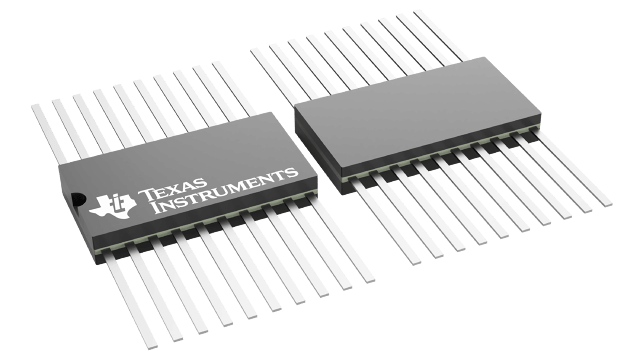
| Logic | 1 | Active | The ’ABT162245 devices are 16-bit noninverting 3-state transceivers designed for synchronous two-way communication between data buses. The control-function implementation minimizes external timing requirements.
These devices can be used as two 8-bit transceivers or one 16-bit transceiver. They allow data transmission from the A bus to the B bus or from the B bus to the A bus, depending on the logic level at the direction-control (DIR) input. The output-enable (OE)\ input can be used to disable the device so that the buses effectively are isolated.
The A-port outputs, which are designed to source or sink up to 12 mA, include equivalent 25-series resistors to reduce overshoot and undershoot.
These devices are fully specified for partial-power-down applications using Ioff. The Ioffcircuitry disables the outputs, preventing damaging current backflow through the devices when they are powered down.
To ensure the high-impedance state during power up or power down, OE\ should be tied to VCCthrough a pullup resistor; the minimum value of the resistor is determined by the current-sinking capability of the driver.
The ’ABT162245 devices are 16-bit noninverting 3-state transceivers designed for synchronous two-way communication between data buses. The control-function implementation minimizes external timing requirements.
These devices can be used as two 8-bit transceivers or one 16-bit transceiver. They allow data transmission from the A bus to the B bus or from the B bus to the A bus, depending on the logic level at the direction-control (DIR) input. The output-enable (OE)\ input can be used to disable the device so that the buses effectively are isolated.
The A-port outputs, which are designed to source or sink up to 12 mA, include equivalent 25-series resistors to reduce overshoot and undershoot.
These devices are fully specified for partial-power-down applications using Ioff. The Ioffcircuitry disables the outputs, preventing damaging current backflow through the devices when they are powered down.
To ensure the high-impedance state during power up or power down, OE\ should be tied to VCCthrough a pullup resistor; the minimum value of the resistor is determined by the current-sinking capability of the driver. |
| Buffers, Drivers, Receivers, Transceivers | 1 | Active | 16-Bit Buffer/Drivers With 3-State Outputs |
SN54ABT2952AOctal Bus Transceivers And Registers With 3-State Outputs | Logic | 1 | Active | The 'ABT2952A transceivers consist of two 8-bit back-to-back registers that store data flowing in both directions between two bidirectional buses. Data on the A or B bus is stored in the registers on the low-to-high transition of the clock (CLKAB or CLKBA) input provided that the clock-enable (CLKENAB\ or CLKENBA\) input is low. Taking the output-enable (OEAB\ or OEBA\) input low accesses the data on either port.
To ensure the high-impedance state during power up or power down, OE\ should be tied to VCCthrough a pullup resistor; the minimum value of the resistor is determined by the current-sinking capability of the driver.
The SN54ABT2952A is characterized for operation over the full military temperature range of -55°C to 125°C. The SN74ABT2952A is characterized for operation from -40°C to 85°C.
The 'ABT2952A transceivers consist of two 8-bit back-to-back registers that store data flowing in both directions between two bidirectional buses. Data on the A or B bus is stored in the registers on the low-to-high transition of the clock (CLKAB or CLKBA) input provided that the clock-enable (CLKENAB\ or CLKENBA\) input is low. Taking the output-enable (OEAB\ or OEBA\) input low accesses the data on either port.
To ensure the high-impedance state during power up or power down, OE\ should be tied to VCCthrough a pullup resistor; the minimum value of the resistor is determined by the current-sinking capability of the driver.
The SN54ABT2952A is characterized for operation over the full military temperature range of -55°C to 125°C. The SN74ABT2952A is characterized for operation from -40°C to 85°C. |
SN54ABT543AOctal Registered Transceiver With 3-State Outputs | Logic | 1 | Active | The 'ABT543A octal transceivers contain two sets of D-type latches for temporary storage of data flowing in either direction. Separate latch-enable (LEAB\ or LEBA\) and output-enable (OEAB\ or OEBA\) inputs are provided for each register to permit independent control in either direction of data flow.
The A-to-B enable (CEAB\) input must be low to enter data from A or to output data from B. If CEAB\ is low and LEAB\ is low, the A-to-B latches are transparent; a subsequent low-to-high transition of LEAB\ puts the A latches in the storage mode. With CEAB\ and OEAB\ both low, the 3-state B outputs are active and reflect the data present at the output of the A latches. Data flow from B to A is similar, but requires using the CEBA\, LEBA\, and OEBA\ inputs.
To ensure the high-impedance state during power up or power down, OE\ should be tied to VCCthrough a pullup resistor; the minimum value of the resistor is determined by the current-sinking capability of the driver.
The SN54ABT543A is characterized for operation over the full military temperature range of -55°C to 125°C. The SN74ABT543A is characterized for operation from -40°C to 85°C.
The 'ABT543A octal transceivers contain two sets of D-type latches for temporary storage of data flowing in either direction. Separate latch-enable (LEAB\ or LEBA\) and output-enable (OEAB\ or OEBA\) inputs are provided for each register to permit independent control in either direction of data flow.
The A-to-B enable (CEAB\) input must be low to enter data from A or to output data from B. If CEAB\ is low and LEAB\ is low, the A-to-B latches are transparent; a subsequent low-to-high transition of LEAB\ puts the A latches in the storage mode. With CEAB\ and OEAB\ both low, the 3-state B outputs are active and reflect the data present at the output of the A latches. Data flow from B to A is similar, but requires using the CEBA\, LEBA\, and OEBA\ inputs.
To ensure the high-impedance state during power up or power down, OE\ should be tied to VCCthrough a pullup resistor; the minimum value of the resistor is determined by the current-sinking capability of the driver.
The SN54ABT543A is characterized for operation over the full military temperature range of -55°C to 125°C. The SN74ABT543A is characterized for operation from -40°C to 85°C. |
SN54ABT573Octal Transparent D-type Latches With 3-State Outputs | Integrated Circuits (ICs) | 1 | Active | These 8-bit latches feature 3-state outputs designed specifically for driving highly capacitive or relatively low-impedance loads. They are particularly suitable for implementing buffer registers, I/O ports, bidirectional bus drivers, and working registers.
The eight latches of the SN54ABT573 and SN74ABT573A are transparent D-type latches. While the latch-enable (LE) input is high, the Q outputs follow the data (D) inputs. When LE is taken low, the Q outputs are latched at the logic levels set up at the D inputs.
A buffered output-enable (OE)\ input can be used to place the eight outputs in either a normal logic state (high or low logic levels) or the high-impedance state. In the high-impedance state, the outputs neither load nor drive the bus lines significantly. The high-impedance state and increased drive provide the capability to drive bus lines without need for interface or pullup components.
OE\ does not affect the internal operations of the latches. Old data can be retained or new data can be entered while the outputs are in the high-impedance state.
To ensure the high-impedance state during power up or power down, OE\ should be tied to VCCthrough a pullup resistor; the minimum value of the resistor is determined by the current-sinking capability of the driver.
This device is fully specified for partial-power-down applications using Ioff. The Ioffcircuitry disables the outputs, preventing damaging current backflow through the device when it is powered down.
These 8-bit latches feature 3-state outputs designed specifically for driving highly capacitive or relatively low-impedance loads. They are particularly suitable for implementing buffer registers, I/O ports, bidirectional bus drivers, and working registers.
The eight latches of the SN54ABT573 and SN74ABT573A are transparent D-type latches. While the latch-enable (LE) input is high, the Q outputs follow the data (D) inputs. When LE is taken low, the Q outputs are latched at the logic levels set up at the D inputs.
A buffered output-enable (OE)\ input can be used to place the eight outputs in either a normal logic state (high or low logic levels) or the high-impedance state. In the high-impedance state, the outputs neither load nor drive the bus lines significantly. The high-impedance state and increased drive provide the capability to drive bus lines without need for interface or pullup components.
OE\ does not affect the internal operations of the latches. Old data can be retained or new data can be entered while the outputs are in the high-impedance state.
To ensure the high-impedance state during power up or power down, OE\ should be tied to VCCthrough a pullup resistor; the minimum value of the resistor is determined by the current-sinking capability of the driver.
This device is fully specified for partial-power-down applications using Ioff. The Ioffcircuitry disables the outputs, preventing damaging current backflow through the device when it is powered down. |
SN54ABT652AOctal Bus Transceivers And Registers With 3-State Outputs | Buffers, Drivers, Receivers, Transceivers | 1 | Active | These devices consist of bus-transceiver circuits, D-type flip-flops, and control circuitry arranged for multiplexed transmission of data directly from the data bus or from the internal storage registers.
Output-enable (OEAB and OEBA\) inputs are provided to control the transceiver functions. Select-control (SAB and SBA) inputs are provided to select either real-time or stored data for transfer. The circuitry used for select control eliminates the typical decoding glitch that occurs in a multiplexer during the transition between stored and real-time data. A low input selects real-time data, and a high input selects stored data. Figure 1 illustrates the four fundamental bus-management functions that can be performed with the 'ABT652A.
Data on the A- or B-data bus, or both, can be stored in the internal D-type flip-flops by low-to-high transitions at the appropriate clock (CLKAB or CLKBA) inputs, regardless of the select- or enable-control inputs. When SAB and SBA are in the real-time transfer mode, it is possible to store data without using the internal D-type flip-flops by simultaneously enabling OEAB and OEBA\. In this configuration, each output reinforces its input. When all other data sources to the two sets of bus lines are at high impedance, each set of bus lines remains at its last state.
To ensure the high-impedance state during power up or power down, OEBA\ should be tied to VCCthrough a pullup resistor; the minimum value of the resistor is determined by the current-sinking capability of the driver (B to A). OEAB should be tied to GND through a pulldown resistor; the minimum value of the resistor is determined by the current-sourcing capability of the driver (A to B).
The SN54ABT652A is characterized for operation over the full military temperature range of -55°C to 125°C. The SN74ABT652A is characterized for operation from -40°C to 85°C.
These devices consist of bus-transceiver circuits, D-type flip-flops, and control circuitry arranged for multiplexed transmission of data directly from the data bus or from the internal storage registers.
Output-enable (OEAB and OEBA\) inputs are provided to control the transceiver functions. Select-control (SAB and SBA) inputs are provided to select either real-time or stored data for transfer. The circuitry used for select control eliminates the typical decoding glitch that occurs in a multiplexer during the transition between stored and real-time data. A low input selects real-time data, and a high input selects stored data. Figure 1 illustrates the four fundamental bus-management functions that can be performed with the 'ABT652A.
Data on the A- or B-data bus, or both, can be stored in the internal D-type flip-flops by low-to-high transitions at the appropriate clock (CLKAB or CLKBA) inputs, regardless of the select- or enable-control inputs. When SAB and SBA are in the real-time transfer mode, it is possible to store data without using the internal D-type flip-flops by simultaneously enabling OEAB and OEBA\. In this configuration, each output reinforces its input. When all other data sources to the two sets of bus lines are at high impedance, each set of bus lines remains at its last state.
To ensure the high-impedance state during power up or power down, OEBA\ should be tied to VCCthrough a pullup resistor; the minimum value of the resistor is determined by the current-sinking capability of the driver (B to A). OEAB should be tied to GND through a pulldown resistor; the minimum value of the resistor is determined by the current-sourcing capability of the driver (A to B).
The SN54ABT652A is characterized for operation over the full military temperature range of -55°C to 125°C. The SN74ABT652A is characterized for operation from -40°C to 85°C. |
SN54ABT82110-Bit Bus Interface Flip-Flops With 3-State Outputs | Integrated Circuits (ICs) | 1 | Active | These 10-bit flip-flops feature 3-state outputs designed specifically for driving highly capacitive or relatively low-impedance loads. They are particularly suitable for implementing wider buffer registers, I/O ports, bidirectional bus drivers with parity, and working registers.
The ten flip-flops are edge-triggered D-type flip-flops. On the positive transition of the clock (CLK) input, the devices provide true data at the Q outputs.
A buffered output-enable (OE\) input can be used to place the ten outputs in either a normal logic state (high or low logic levels) or a high-impedance state. In the high-impedance state, the outputs neither load nor drive the bus lines significantly. The high-impedance state and increased drive provide the capability to drive bus lines without need for interface or pullup components.
OE\ does not affect the internal operations of the latch. Previously stored data can be retained or new data can be entered while the outputs are in the high-impedance state.
When VCCis between 0 and 2.1 V, the device is in the high-impedance state during power up or power down. However, to ensure the high-impedance state above 2.1 V, OE\ should be tied to VCCthrough a pullup resistor; the minimum value of the resistor is determined by the current-sinking capability of the driver.
The SN54ABT821 is characterized for operation over the full military temperature range of -55°C to 125°C. The SN74ABT821A is characterized for operation from -40°C to 85°C.
These 10-bit flip-flops feature 3-state outputs designed specifically for driving highly capacitive or relatively low-impedance loads. They are particularly suitable for implementing wider buffer registers, I/O ports, bidirectional bus drivers with parity, and working registers.
The ten flip-flops are edge-triggered D-type flip-flops. On the positive transition of the clock (CLK) input, the devices provide true data at the Q outputs.
A buffered output-enable (OE\) input can be used to place the ten outputs in either a normal logic state (high or low logic levels) or a high-impedance state. In the high-impedance state, the outputs neither load nor drive the bus lines significantly. The high-impedance state and increased drive provide the capability to drive bus lines without need for interface or pullup components.
OE\ does not affect the internal operations of the latch. Previously stored data can be retained or new data can be entered while the outputs are in the high-impedance state.
When VCCis between 0 and 2.1 V, the device is in the high-impedance state during power up or power down. However, to ensure the high-impedance state above 2.1 V, OE\ should be tied to VCCthrough a pullup resistor; the minimum value of the resistor is determined by the current-sinking capability of the driver.
The SN54ABT821 is characterized for operation over the full military temperature range of -55°C to 125°C. The SN74ABT821A is characterized for operation from -40°C to 85°C. |
SN54ABT8239-Bit Bus-Interface Flip-Flops With 3-State Outputs | Logic | 1 | Active | These 9-bit flip-flops feature 3-state outputs designed specifically for driving highly capacitive or relatively low-impedance loads. They are particularly suitable for implementing wider buffer registers, I/O ports, bidirectional bus drivers with parity, and working registers.
With the clock-enable (CLKEN\) input low, the nine D-type edge-triggered flip-flops enter data on the low-to-high transitions of the clock. Taking CLKEN\ high disables the clock buffer, thus latching the outputs. Taking the clear (CLR\) input low causes the nine Q outputs to go low, independently of the clock.
A buffered output-enable (OE\) input can be used to place the nine outputs in either a normal logic state (high or low logic level) or a high-impedance state. In the high-impedance state, the outputs neither load nor drive the bus lines significantly. The high-impedance state and increased drive provide the capability to drive bus lines without need for interface or pullup components.
When VCCis between 0 and 2.1 V, the device is in the high-impedance state during power up or power down. However, to ensure the high-impedance state above 2.1 V, OE\ should be tied to VCCthrough a pullup resistor; the minimum value of the resistor is determined by the current-sinking capability of the driver.
The SN54ABT823 is characterized for operation over the full military temperature range of -55°C to 125°C. The SN74ABT823 is characterized for operation from -40°C to 85°C.
These 9-bit flip-flops feature 3-state outputs designed specifically for driving highly capacitive or relatively low-impedance loads. They are particularly suitable for implementing wider buffer registers, I/O ports, bidirectional bus drivers with parity, and working registers.
With the clock-enable (CLKEN\) input low, the nine D-type edge-triggered flip-flops enter data on the low-to-high transitions of the clock. Taking CLKEN\ high disables the clock buffer, thus latching the outputs. Taking the clear (CLR\) input low causes the nine Q outputs to go low, independently of the clock.
A buffered output-enable (OE\) input can be used to place the nine outputs in either a normal logic state (high or low logic level) or a high-impedance state. In the high-impedance state, the outputs neither load nor drive the bus lines significantly. The high-impedance state and increased drive provide the capability to drive bus lines without need for interface or pullup components.
When VCCis between 0 and 2.1 V, the device is in the high-impedance state during power up or power down. However, to ensure the high-impedance state above 2.1 V, OE\ should be tied to VCCthrough a pullup resistor; the minimum value of the resistor is determined by the current-sinking capability of the driver.
The SN54ABT823 is characterized for operation over the full military temperature range of -55°C to 125°C. The SN74ABT823 is characterized for operation from -40°C to 85°C. |
SN54ABT8245Scan Test Devices With Octal Bus Transceivers | Logic | 1 | Active | The 'ABT8245 scan test devices with octal bus transceivers are members of the Texas Instruments SCOPETMtestability integrated-circuit family. This family of devices supports IEEE Standard 1149.1-1990 boundary scan to facilitate testing of complex circuit-board assemblies. Scan access to the test circuitry is accomplished via the 4-wire test access port (TAP) interface.
In the normal mode, these devices are functionally equivalent to the 'F245 and 'ABT245 octal bus transceivers. The test circuitry can be activated by the TAP to take snapshot samples of the data appearing at the device pins or to perform a self test on the boundary-test cells. Activating the TAP in normal mode does not affect the functional operation of the SCOPETMoctal bus transceivers.
Data flow is controlled by the direction-control (DIR) and output-enable () inputs. Data transmission is allowed from the A bus to the B bus or from the B bus to the A bus, depending on the logic level at DIR. The output-enable () input can be used to disable the device so that the buses are effectively isolated.
In the test mode, the normal operation of the SCOPETMbus transceivers is inhibited and the test circuitry is enabled to observe and control the I/O boundary of the device. When enabled, the test circuitry can perform boundary-scan test operations as described in IEEE Standard 1149.1-1990.
Four dedicated test pins control the operation of the test circuitry: test data input (TDI), test data output (TDO), test mode select (TMS), and test clock (TCK). Additionally, the test circuitry performs other testing functions such as parallel-signature analysis (PSA) on data inputs and pseudo-random pattern generation (PRPG) from data outputs. All testing and scan operations are synchronized to the TAP interface.
The SN54ABT8245 is characterized for operation over the full military temperature range of -55°C to 125°C. The SN74ABT8245 is characterized for operation from -40°C to 85°C.
The 'ABT8245 scan test devices with octal bus transceivers are members of the Texas Instruments SCOPETMtestability integrated-circuit family. This family of devices supports IEEE Standard 1149.1-1990 boundary scan to facilitate testing of complex circuit-board assemblies. Scan access to the test circuitry is accomplished via the 4-wire test access port (TAP) interface.
In the normal mode, these devices are functionally equivalent to the 'F245 and 'ABT245 octal bus transceivers. The test circuitry can be activated by the TAP to take snapshot samples of the data appearing at the device pins or to perform a self test on the boundary-test cells. Activating the TAP in normal mode does not affect the functional operation of the SCOPETMoctal bus transceivers.
Data flow is controlled by the direction-control (DIR) and output-enable () inputs. Data transmission is allowed from the A bus to the B bus or from the B bus to the A bus, depending on the logic level at DIR. The output-enable () input can be used to disable the device so that the buses are effectively isolated.
In the test mode, the normal operation of the SCOPETMbus transceivers is inhibited and the test circuitry is enabled to observe and control the I/O boundary of the device. When enabled, the test circuitry can perform boundary-scan test operations as described in IEEE Standard 1149.1-1990.
Four dedicated test pins control the operation of the test circuitry: test data input (TDI), test data output (TDO), test mode select (TMS), and test clock (TCK). Additionally, the test circuitry performs other testing functions such as parallel-signature analysis (PSA) on data inputs and pseudo-random pattern generation (PRPG) from data outputs. All testing and scan operations are synchronized to the TAP interface.
The SN54ABT8245 is characterized for operation over the full military temperature range of -55°C to 125°C. The SN74ABT8245 is characterized for operation from -40°C to 85°C. |
SN54AC00-DIERadTolerant Class V, Quadruple 2-Input Positive-NAND Gate | Logic | 1 | Active | The SN54AC00-DIE device contains four independent 2-input NAND gates. Each gate performs the Boolean function of Y =A • Bor Y =A+Bin positive logic.
The SN54AC00-DIE device contains four independent 2-input NAND gates. Each gate performs the Boolean function of Y =A • Bor Y =A+Bin positive logic. |